
Here’s the deal: do a little planting in early fall, and your spring garden could reward you with flowers. No, it’s not a guaranteed deal. Your climate, soil, and planting date matter.
BUT these lovely flowering shrubs are worth considering if there’s still enough mild weather ahead for their roots to start settling in before winter. That’s a rather grand garden bargain.
Why Plant in Fall?
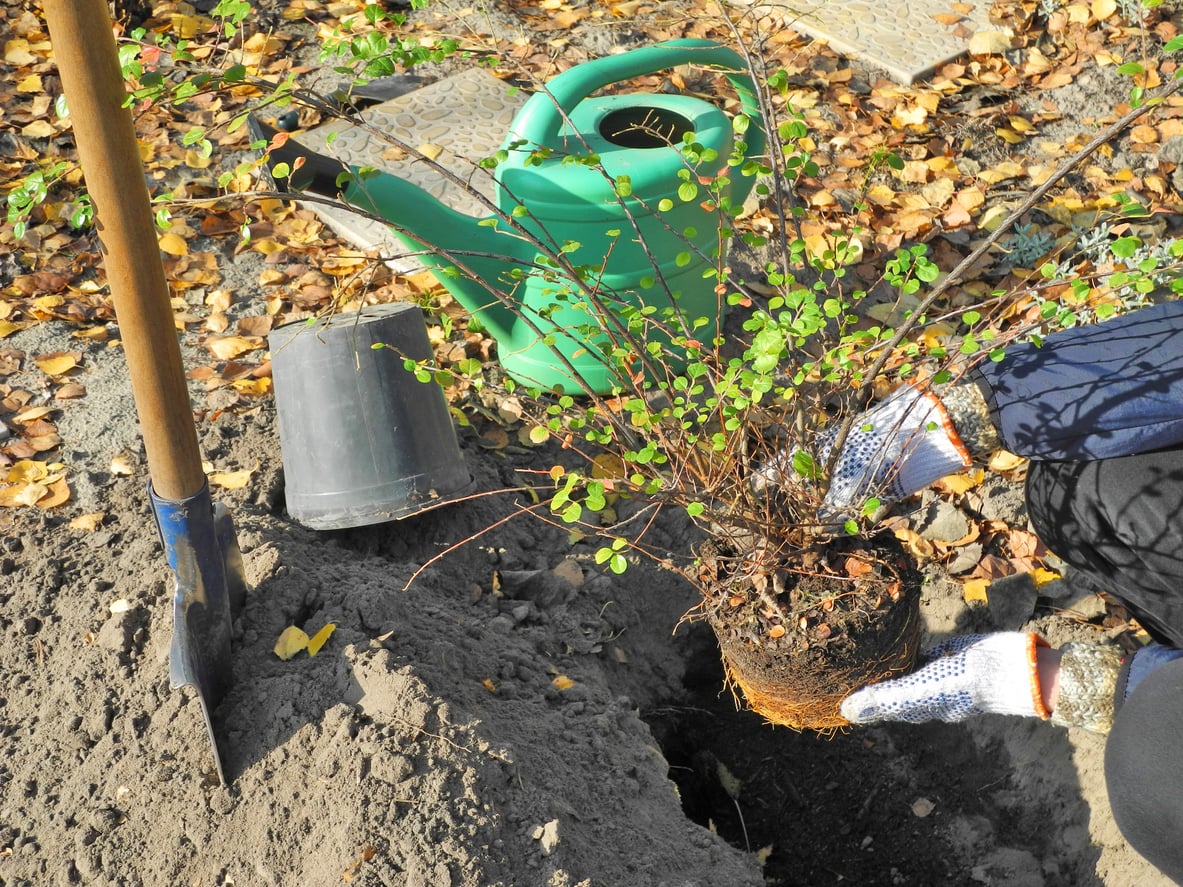
Fall has a lot going for it. There’s still some warmth in the soil, which gives roots a chance to grow. And your newly planted shrubs don’t have to deal with the heat of summer anymore.
Still, they need several weeks to start establishing their roots before the ground freezes. If winter comes early in your area, spring planting may be a better choice.
Quick tip: Check that your chosen cultivars suit your USDA hardiness zone. A shrub can look gorgeous on a nursery label and still be a terrible match for your garden.
And if you’re planning ahead for spring, we also wrote a guide to 10 bulbs you can plant in fall for some of the earliest spring blooms.
1: Forsythia (USDA Zones 5-8)
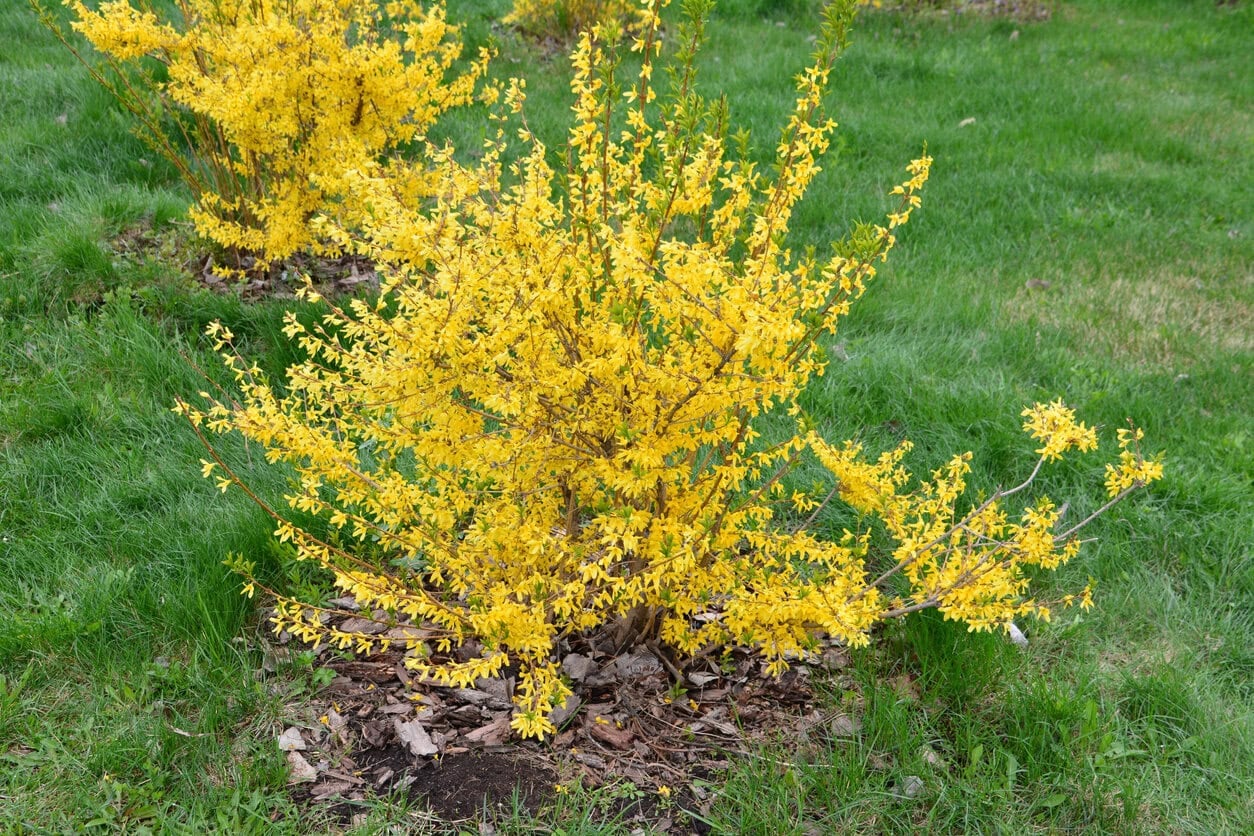
No leaves, no problem. Forsythia can put on quite a show without them. Its bright yellow flowers cover the bare branches in early spring, making it hard to overlook.
Forsythia × intermedia flowers best in full sun, so give it a sunny spot with well-drained soil. Give it room, too. A small plant at the nursery can grow into a rather substantial shrub, often reaching 8-10 feet tall and 10-12 feet wide.
How to plant: Set it at the same depth as in its nursery pot, making sure the root flare isn’t buried. Space full-size shrubs about 10-12 feet apart.
2: Common Lilac (USDA Zones 3-7)
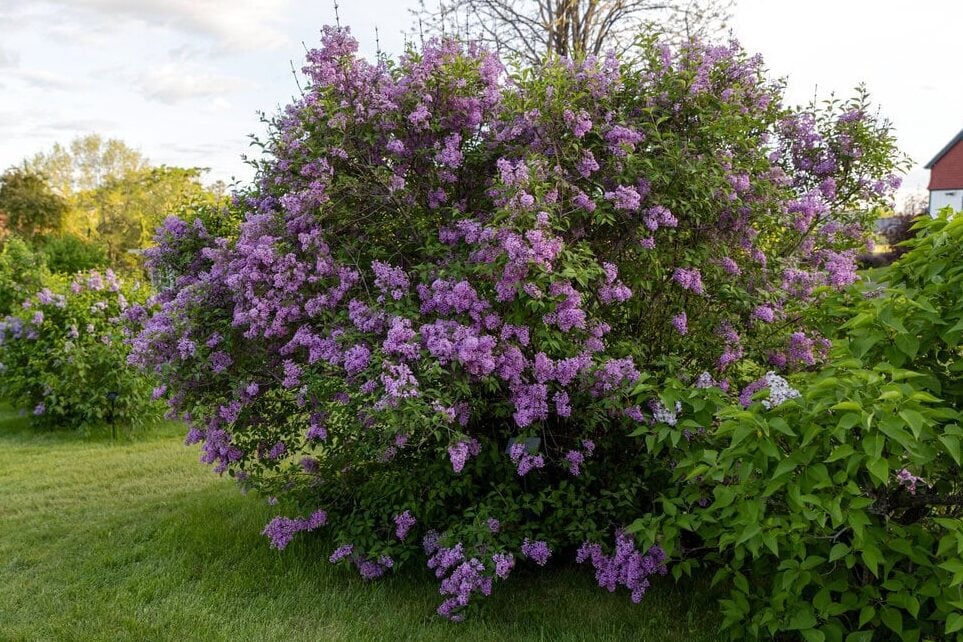
Love the smell of lilacs in spring? You’re certainly not alone. Syringa vulgaris can make you want to spend a little more time outside when its fragrant flowers open. But it won’t be happy just anywhere.
It needs plenty of sun and well-drained soil, plus cold winters to bloom well. It’s a cold-winter shrub, not a plant I’d send off to struggle through the warmest Southern summers.
How to plant: Set it at the same depth as in its nursery pot and space full-size shrubs about 8-10 feet apart for good air circulation.
If you’re thinking of planting lilacs along a fence, we also included them in our guide to 11 plants that work well along fence lines.
3: Weigela (USDA Zones 4-8)
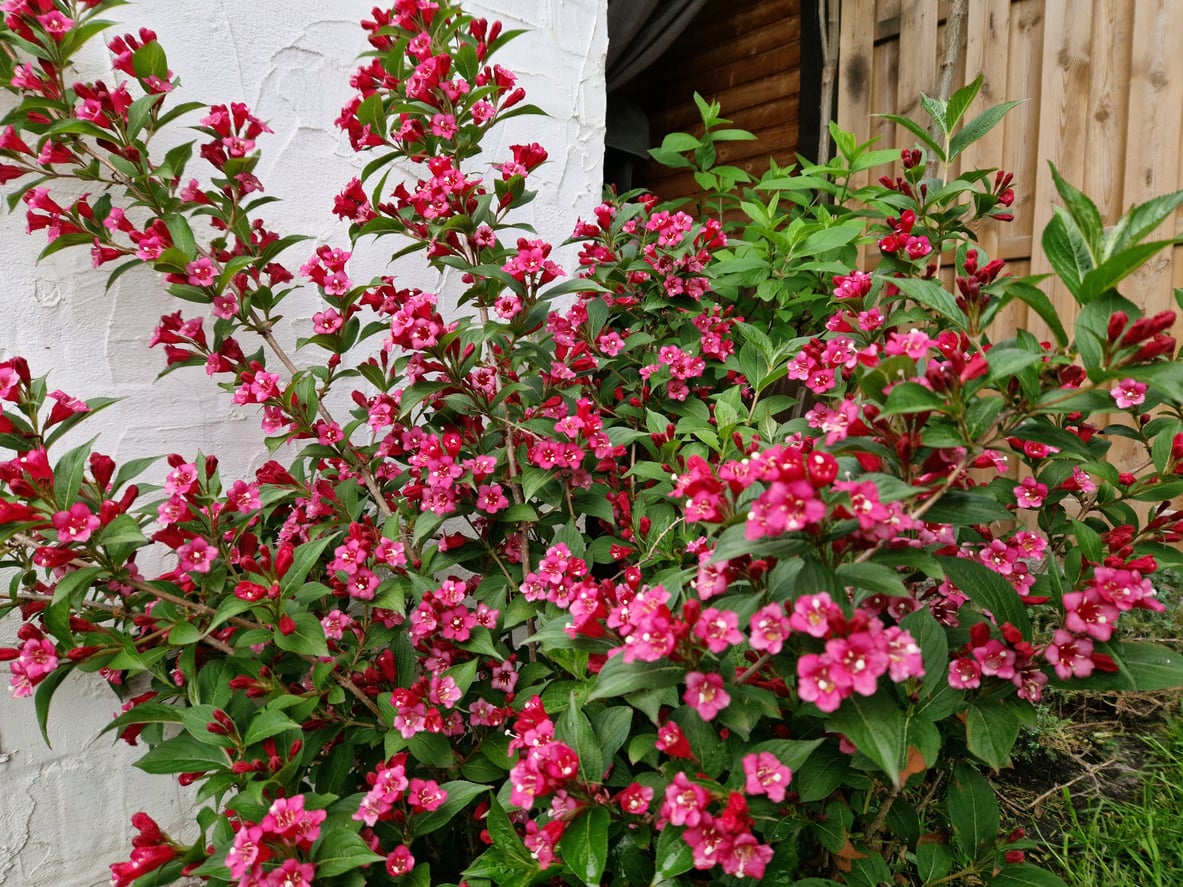
Your spring flowers don’t all have to show up at once. Weigela is happy to take its turn in late spring, when its tubular blooms open along the branches.
You’ll find some rather small cultivars, but they all flower best in full sun and well-drained soil. Look up the mature size before buying, though. Not every weigela is going to be polite enough to stay on its side of the fence.
How to plant: Set it at the same depth as in its nursery pot. Space compact varieties about 2-4 feet apart, while full-size shrubs may need 9-12 feet between plants.
4: Bridal Wreath Spirea (USDA Zones 5-8)
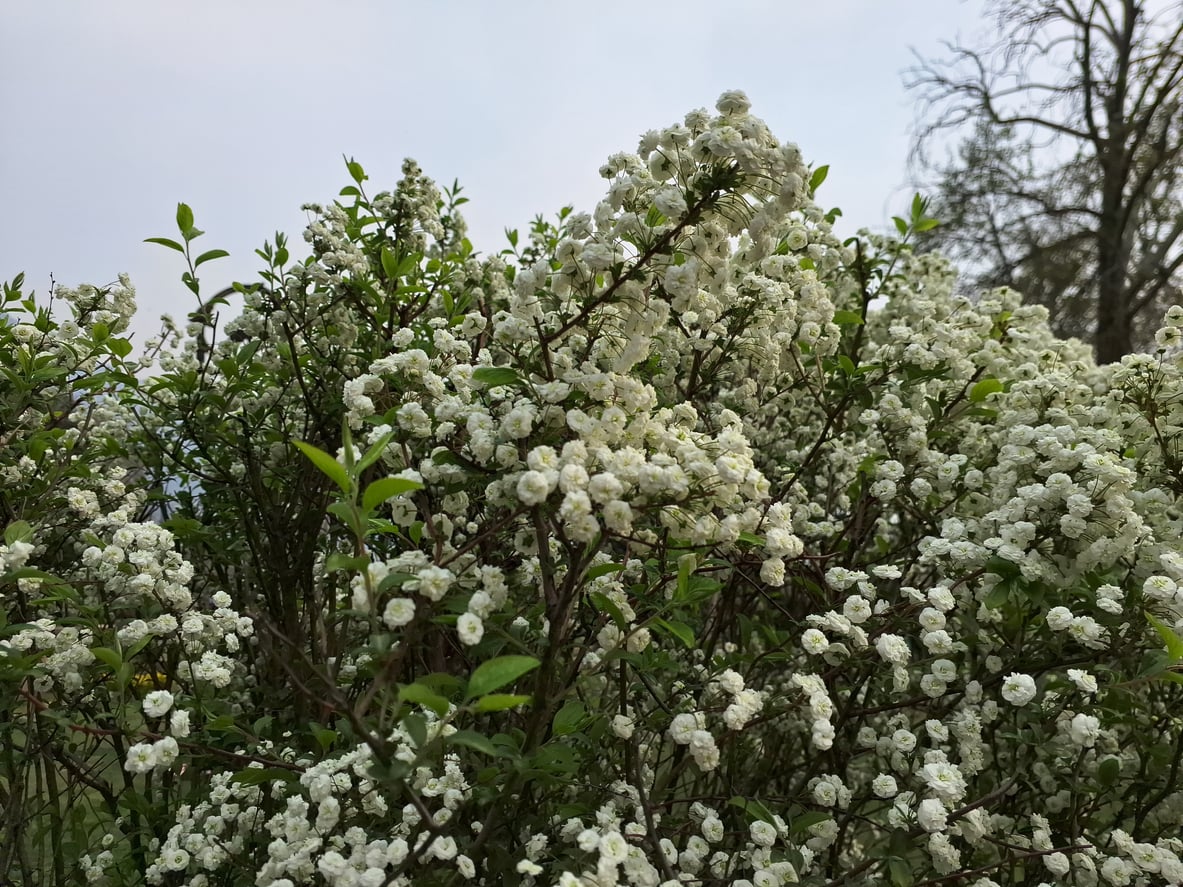
This one’s all about the branches. When bridal wreath spirea flowers in spring, clusters of small white blooms seem to run along its arching branches from end to end.
Look for Spiraea prunifolia, which flowers best in full sun and well-drained soil. Give those arching branches some room, too. This shrub can grow 6-8 feet tall and wide.
How to plant: Set it at the same depth as in its nursery pot and space shrubs about 6-8 feet apart to give their arching branches room to spread.
5: Sweet Mock Orange (USDA Zones 4-8)
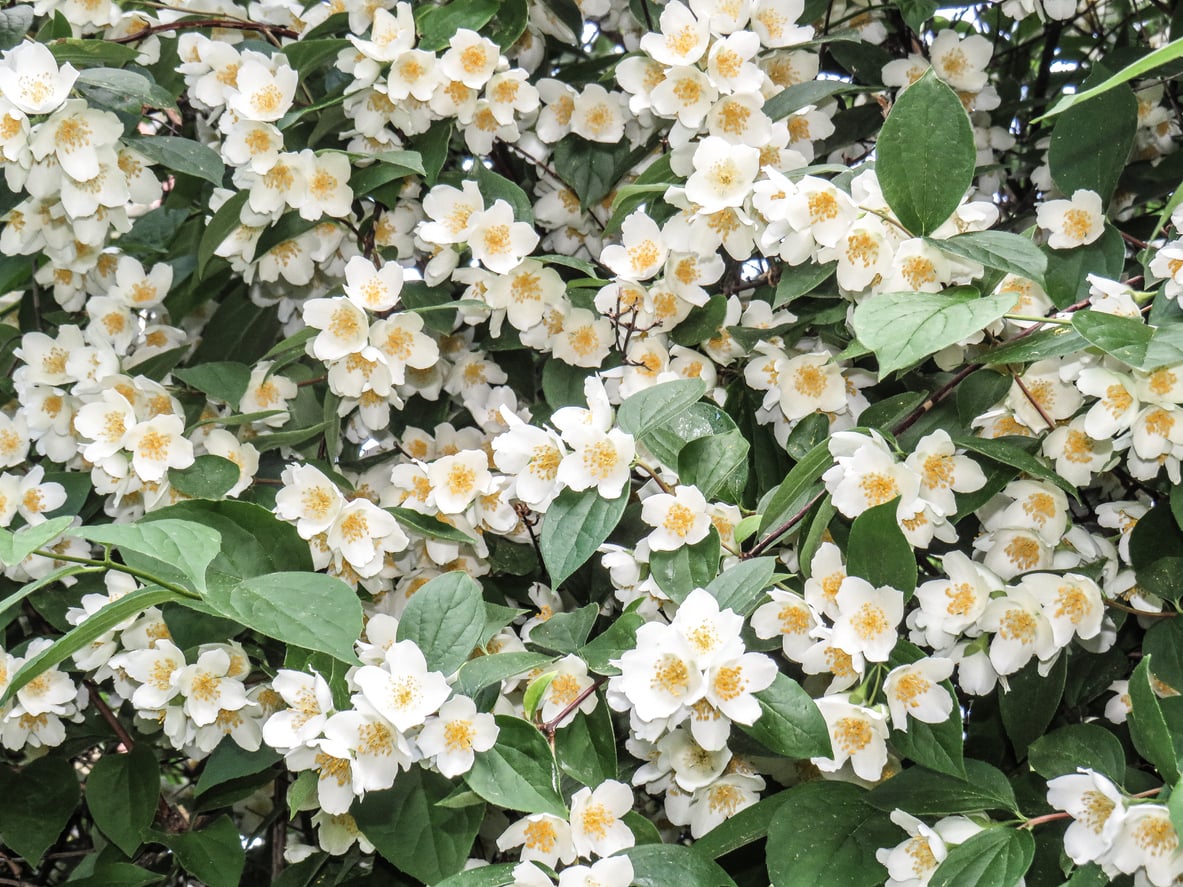
Some late spring flowers are pretty. Others smell good. Philadelphus coronarius belongs in both groups, with fragrant white blooms that smell a little like orange blossoms. But it also needs a rather spacious garden.
By spacious, I mean 10-12 feet tall and 8-12 feet wide! Give it full sun to partial shade and well-drained soil.
For a smaller garden, look for ‘Snowbelle’, another mock orange that grows just 3-4 feet tall and wide, with plenty of fragrant white flowers.
How to plant: Set it at the same depth as in its nursery pot. Space full-size shrubs about 10-12 feet apart, or 3-4 feet for ‘Snowbelle’.
And if you’d like flowers and fragrance a little earlier in the year, we also put together a guide to 11 shrubs that bloom in winter, including the wonderfully fragrant winter daphne.
6: Dwarf Fothergilla (USDA Zones 5-8)
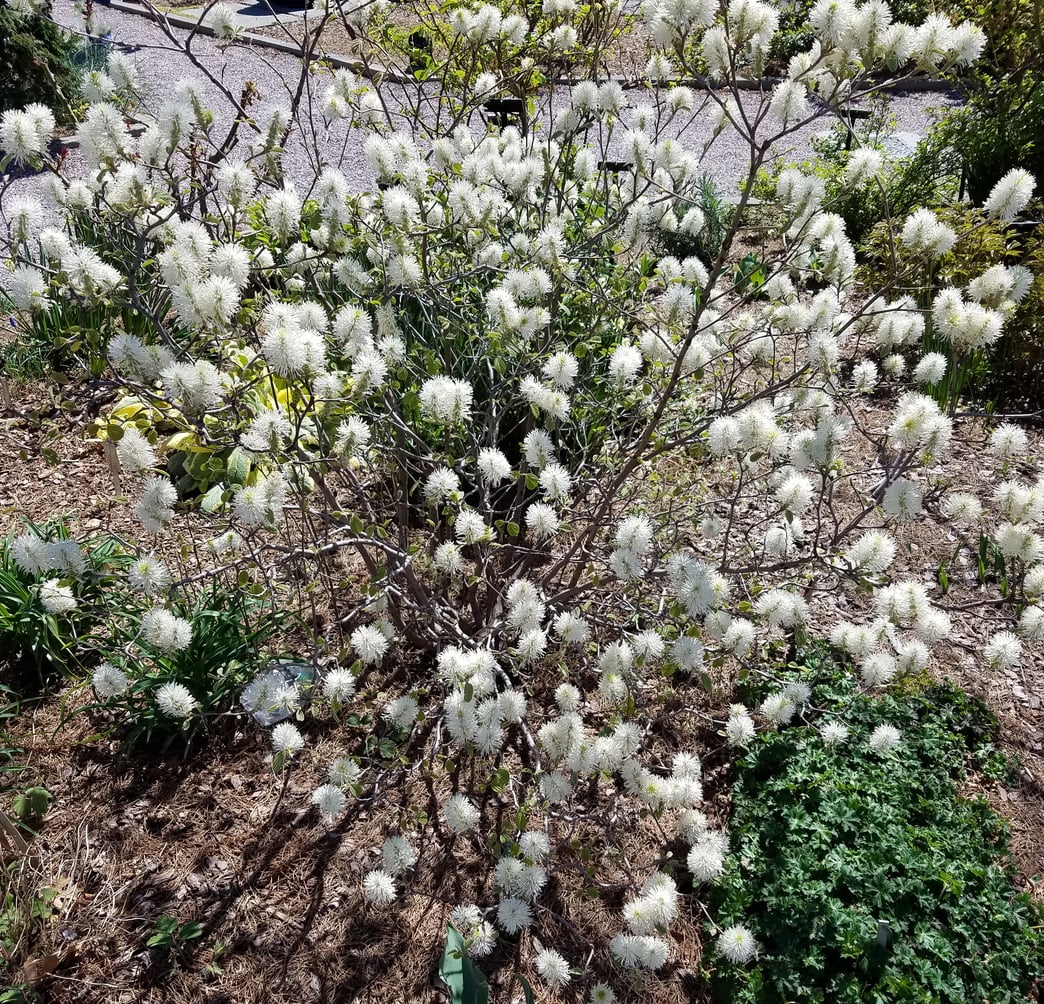
Here’s a shrub that doesn’t pack up after spring flowering. Dwarf fothergilla keeps its appeal through fall, when its leaves turn shades of yellow, orange, and red.
The white, bottlebrush-shaped spring flowers are a lovely bonus. Fothergilla gardenii is native to the southeastern US. It prefers moist, well-drained, acidic soil and full sun to partial shade. I’d give it some afternoon shade in areas with hot summers.
How to plant: Set it at the same depth as in its nursery pot and space shrubs about 3-4 feet apart to allow for their mature spread.
7: Pinxterbloom Azalea (USDA Zones 4-9)
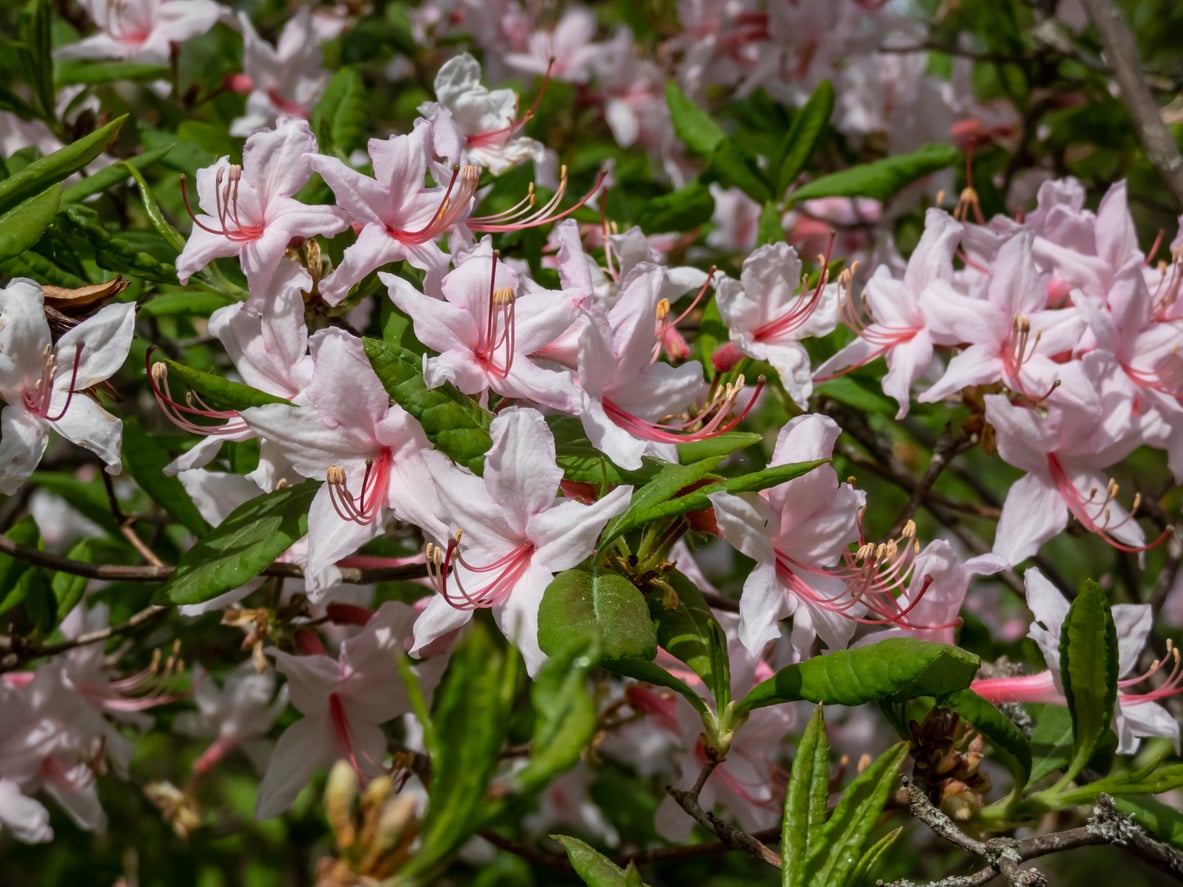
Not all azaleas are evergreen. This one drops its leaves for winter, then puts on pink or sometimes white flowers in spring. The new foliage often starts emerging around the same time, but the flowers steal the show.
It’s native to the eastern U.S., and Rhododendron periclymenoides is also quite a mouthful!
Harsh afternoon summer sun can scorch its leaves, so find it a spot with dappled shade. And make sure the soil is acidic, moist, but well-drained. This isn’t a shrub that enjoys sitting in soggy ground.
How to plant: Set the root ball level with or slightly above the surrounding soil, keeping the root flare exposed. Space shrubs about 4-7 feet apart to accommodate their mature spread.
I’ve also written a guide to 9 spring azalea care tips if you want to know how to keep yours healthy and encourage better blooms once spring arrives
Give Them Room to Grow
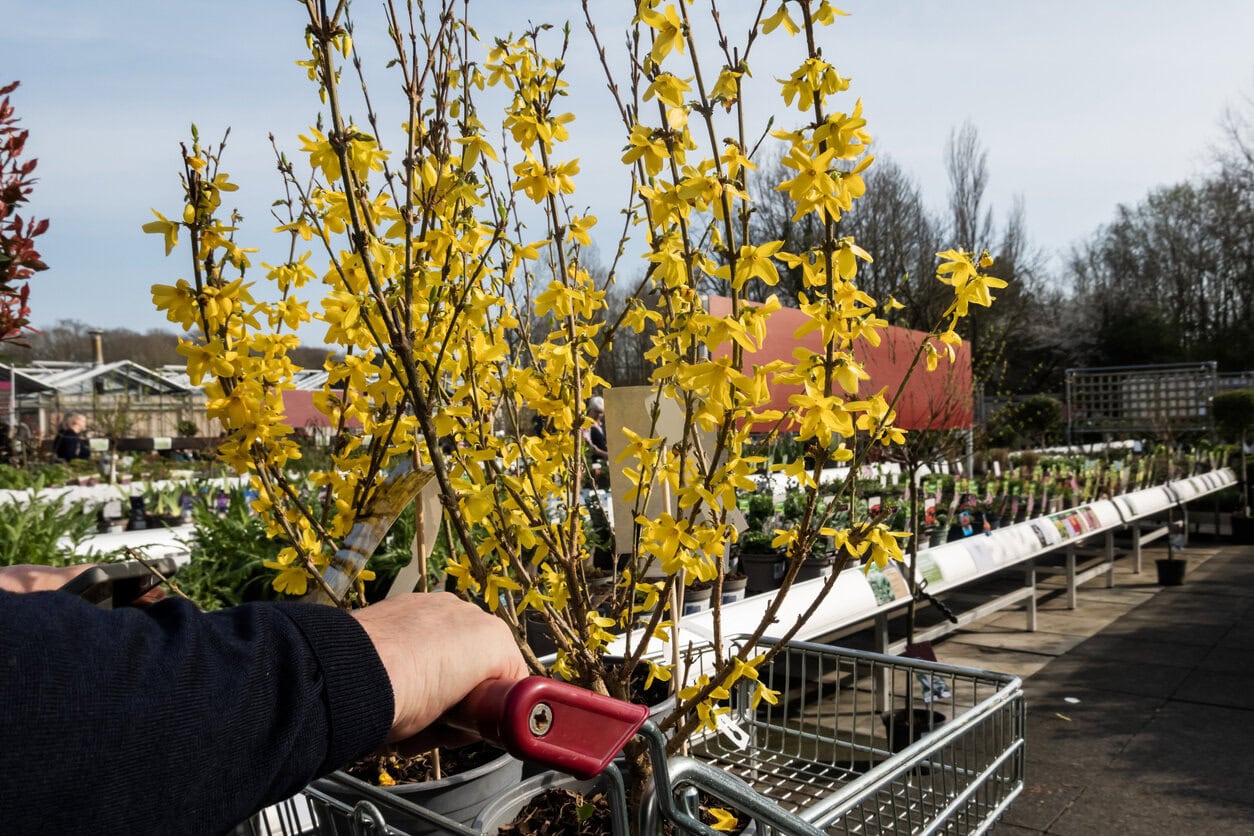
Before you bring a shrub home, look at its nursery label. It should tell you how tall and wide it gets when mature.
No useful information on the label? Ask before you buy. Then take a garden hose or bit of string outside and lay it on the ground to malr how much room your future shrub is going to claim.
Still happy with the spot? Good. No unpleasant surprises a few years down the road. No crowding its neighbours. And no annoying yours.
The Roots Need a Good Start
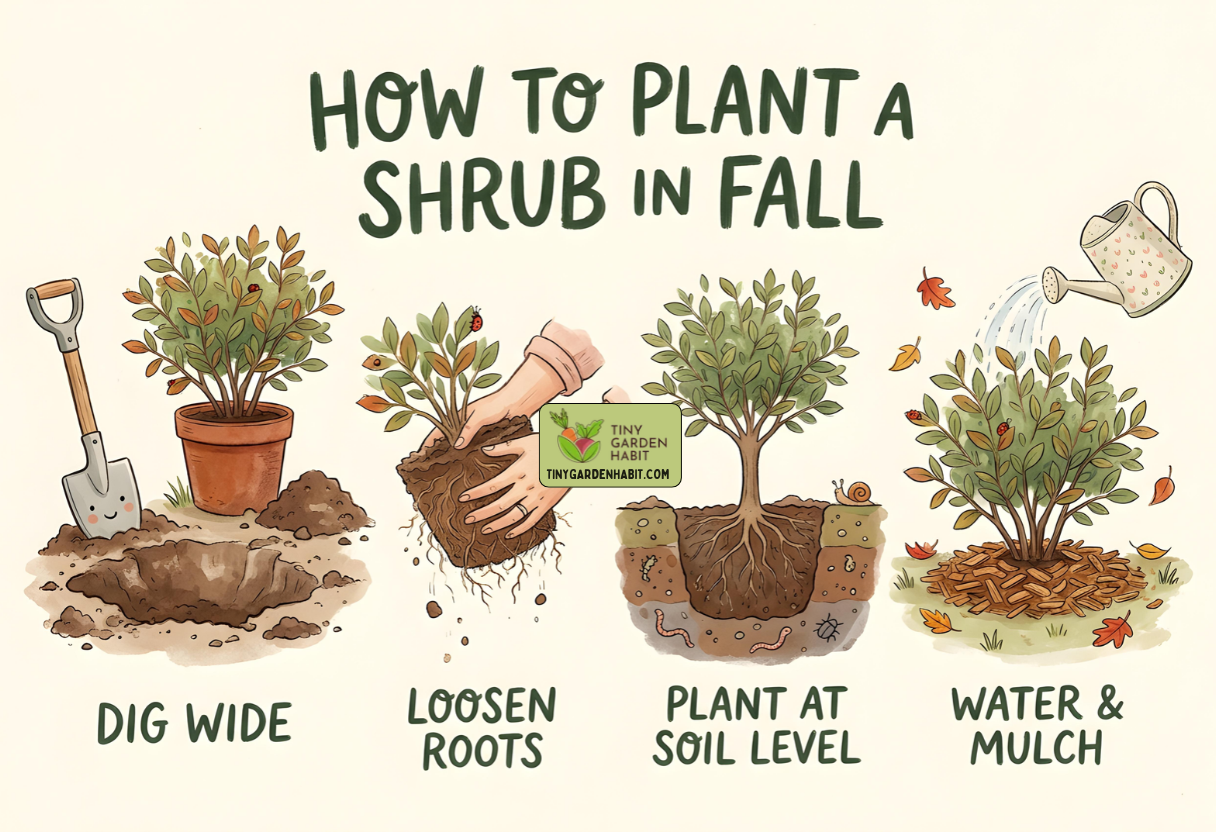
Right, you’ve picked the spot. Now comes the digging. Here’s how to give your new shrub a good start:
Don’t assume one good soaking will keep your new arrival happy until spring. It’s still settling in, after all!
Buds Before Blades
Early fall planting gives roots a chance to establish, but spring flowers in the first year? Wouldn’t say no to that! Want to give those blooms the best chance? Leave the pruners alone for now.
These shrubs form their spring flower buds on the previous season’s growth, so fall pruning can remove them before they ever open. If they need any shaping or thinning, I’d wait until just after flowering. And with newly planted shrubs, there’s usually no rush to prune anyway.
f you’re unsure what else to leave alone, we also wrote a guide to 12 plants you shouldn’t prune in fall, including lilacs, forsythia, azaleas, and mock orange.


