
I’ve spent more time arguing with stubborn soil and dramatic shrubs than I have talking to actual people lately, so yeah, I can give it to you straight. Azaleas are gorgeous when they’re happy, but they’re not the kind of shrub you can ignore and hope for the best.
If you want stronger roots, brighter blooms, and fewer “why is this thing yellow?” moments, spring is when you set them up right. Here’s the practical roadmap I use.
Tip 1: The Post-Show Trim
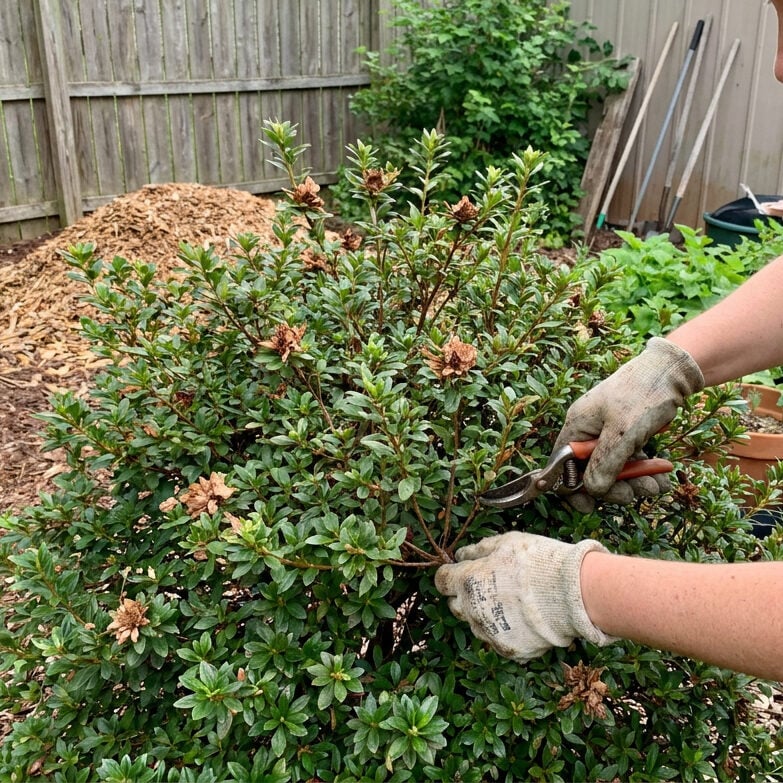
Pruning azaleas involves a brutal deadline. That window of opportunity starts closing once the flowers fade, and if you miss it, you might sabotage next year’s garden party.
These shrubs are fast movers. They start prepping their future blooms the second the current petals hit the grass. Waiting until July to tidy up can put you behind the curve.
How I do it: I grab clean, sharp pruners after the flowers finish and cut out dead, crossing, or crowded branches first. Then I lightly shape the shrub and open the center just enough for airflow. No buzz cut needed!
Tip 2: Mulch Like You Mean It
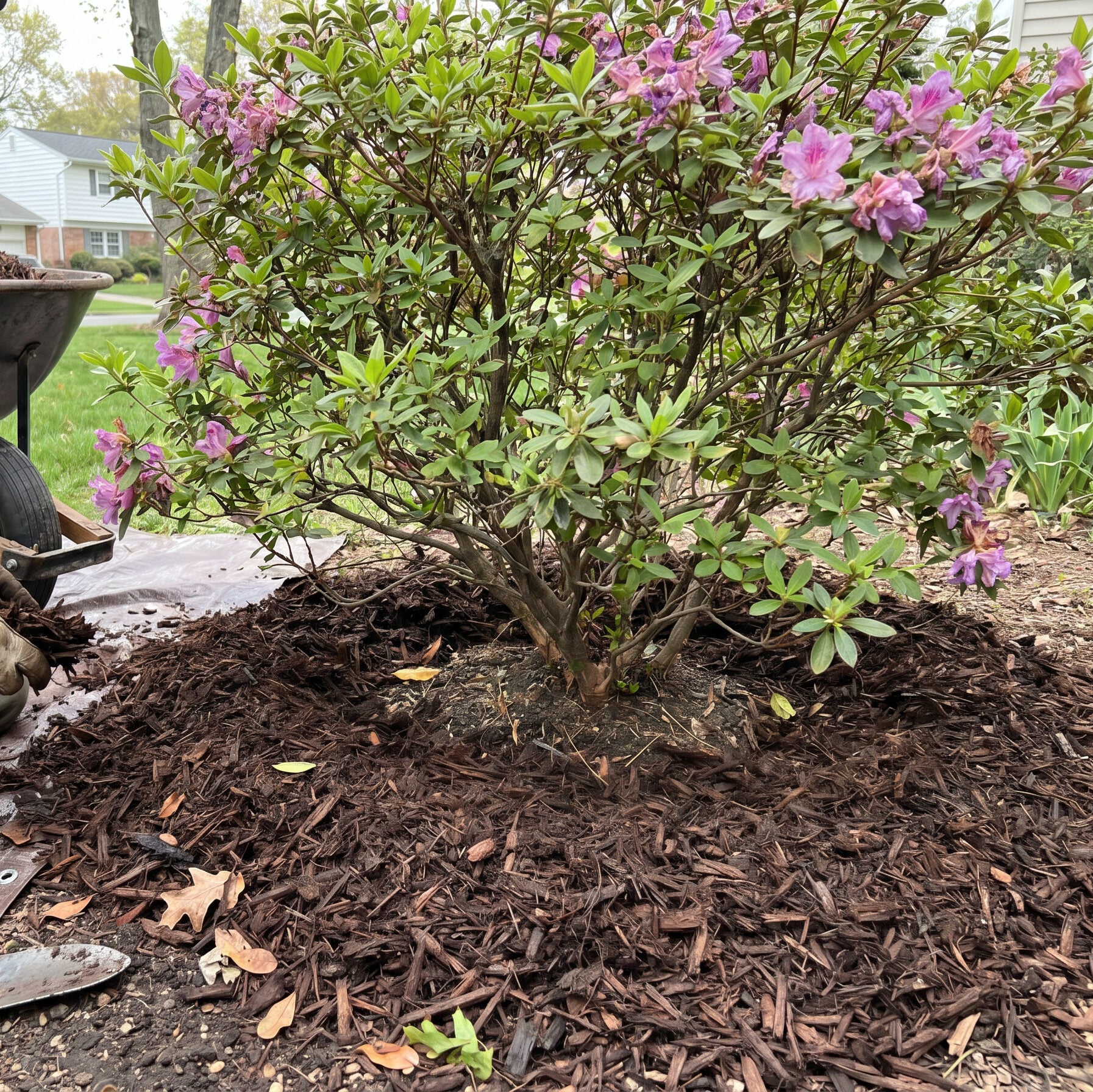
Azaleas have shallow roots. They feel everything. A sudden heatwave can stress them out before you say oops. You need mulch, but not a mountain of it shoved against the stems.
Pine needles, composted pine bark, shredded leaves, or pine straw are all great options for azaleas. They help keep the roots cooler, hold moisture, and make weeds less annoying.
How I do it: I spread about 2 to 3 inches of mulch around the base, then pull it back from the trunk so the stem can breathe. Just don’t volcano mulch, or else, RIP azalea.
Tip 3: Feeding Nutrients, Not Hopes
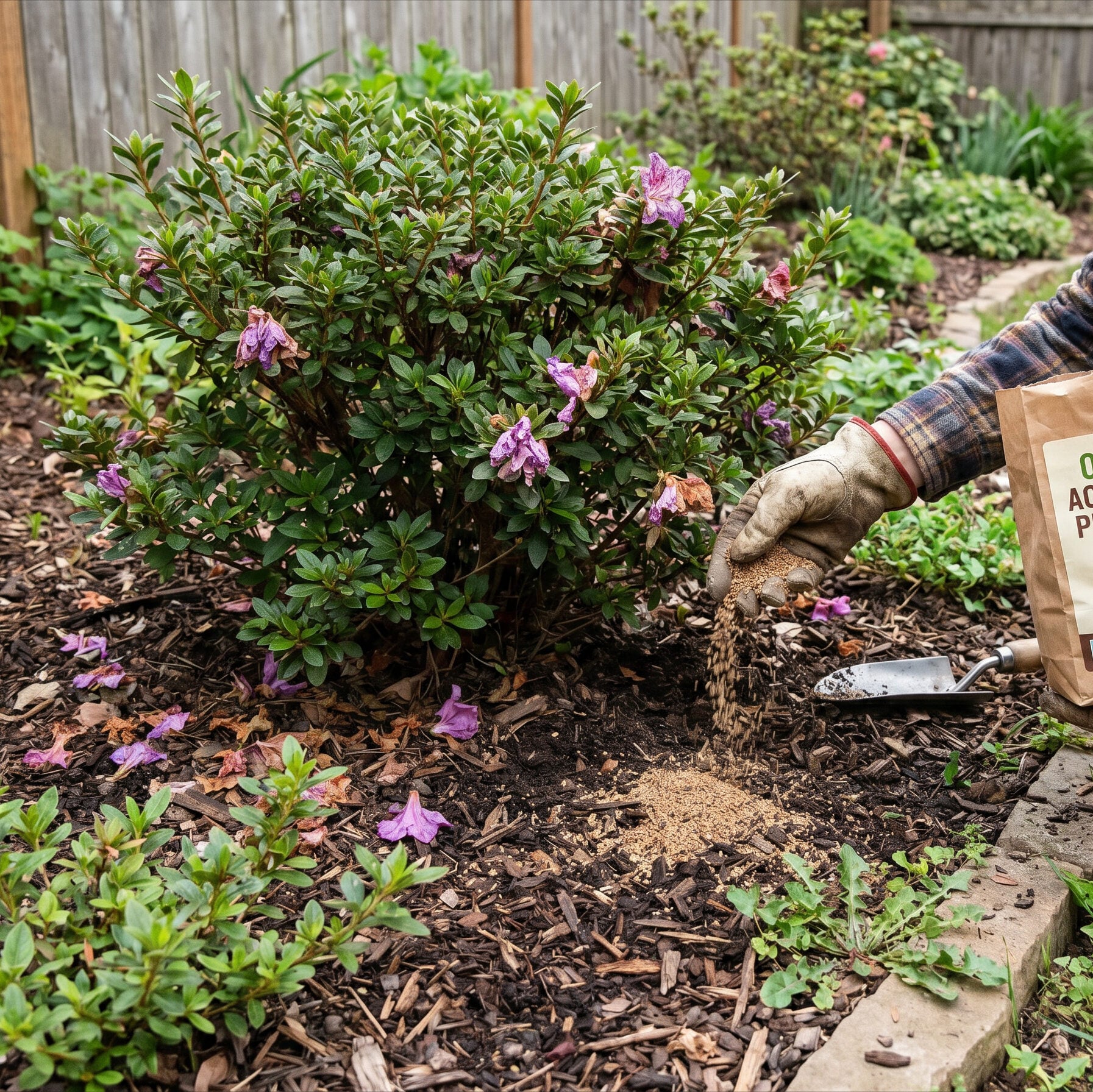
After the bloom is over, your azalea may need a little backup, especially if the growth looks weak or the leaves look pale. This is when you bring in the specialized fertilizer!
You need the stuff labeled for acid-loving plants. But here is the catch: stop by mid-summer! Too much nitrogen too late can push soft new growth that gets smacked around when cold weather shows up.
How I do it: I only feed if the plant looks like it needs it or a soil test shows the soil is low in nutrients. I use a fertilizer labeled for azaleas or acid-loving plants, follow the label and water it in well.
If you like using kitchen scraps, we also wrote a guide on flowers that can benefit from coffee grounds, including acid-loving bloomers like azaleas.
Tip 4: The Morning Drink
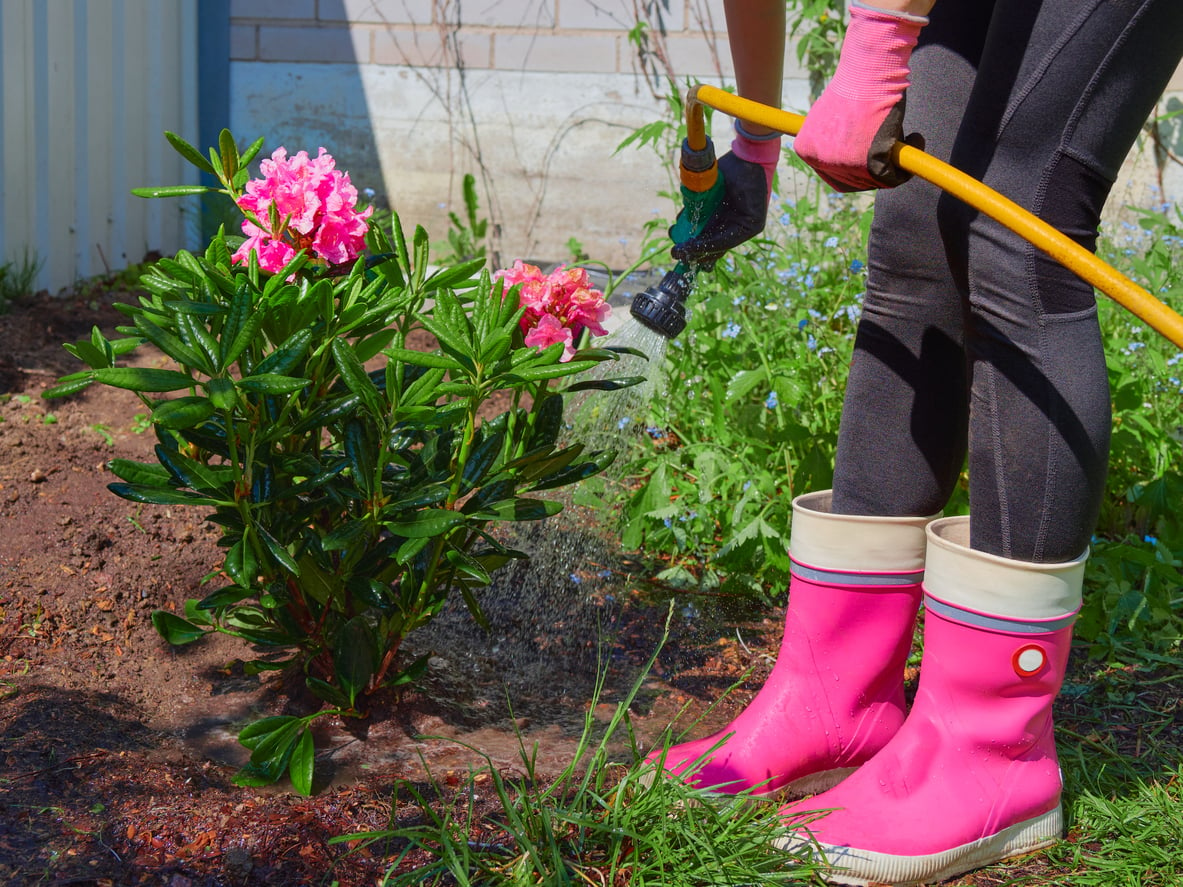
Night watering is a great way to invite a fungus collection. Unless you enjoy watching plants mildew for sport, water in the morning.
Azaleas like steady moisture, but they hate soggy feet. The goal is a slow, deep soak, so forget the light sprinkles. They evaporate before the roots get much help.
How I do it: I check the soil a couple inches down. If it feels dry, I water slowly at the base until the root zone is damp, then let the leaves dry in the sun. In dry weeks, I aim for about 1 inch of water total.
Tip 5: Lace Bug Security
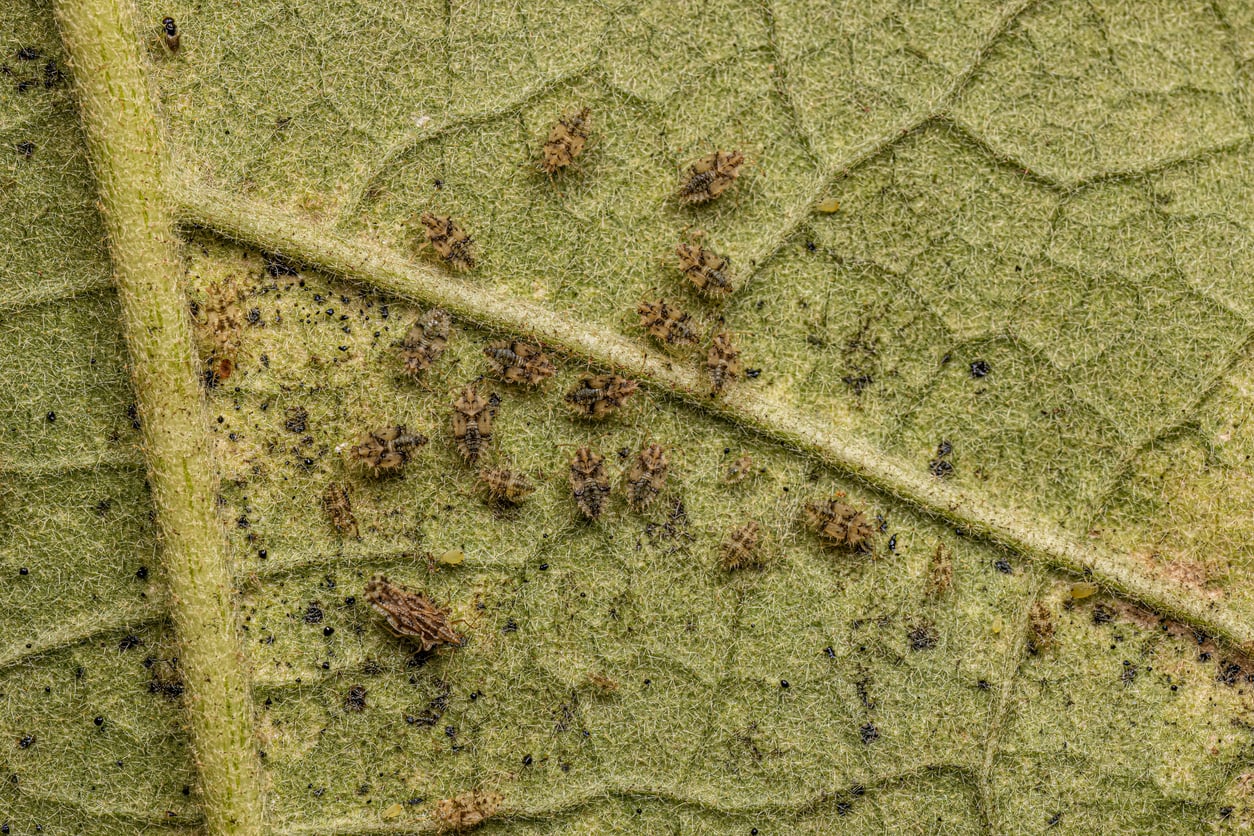
Should lace bugs start looting the life out of your shrubs, skip the part where you panic and pour industrial chemicals into the soil. These pests usually hang out under the leaves, leaving pale speckling on top and tiny black spots underneath.
Begin with the hose. A firm spray can knock some of them loose, and it gives you a fighting chance before things get ugly.
How I do it: I check the undersides of the leaves first. If I see lace bugs or those black spots, I spray the leaves with water. If they need more convincing, I use insecticidal soap, horticultural oil, or neem oil according to the label. I coat the undersides of the leaves and avoid spraying during bloom or when bees are active.
We also wrote a guide on how to use neem oil spray and which garden plants can benefit from it if you want to handle pests without going full chemical warfare.
Tip 6: A Lesson on pH Levels
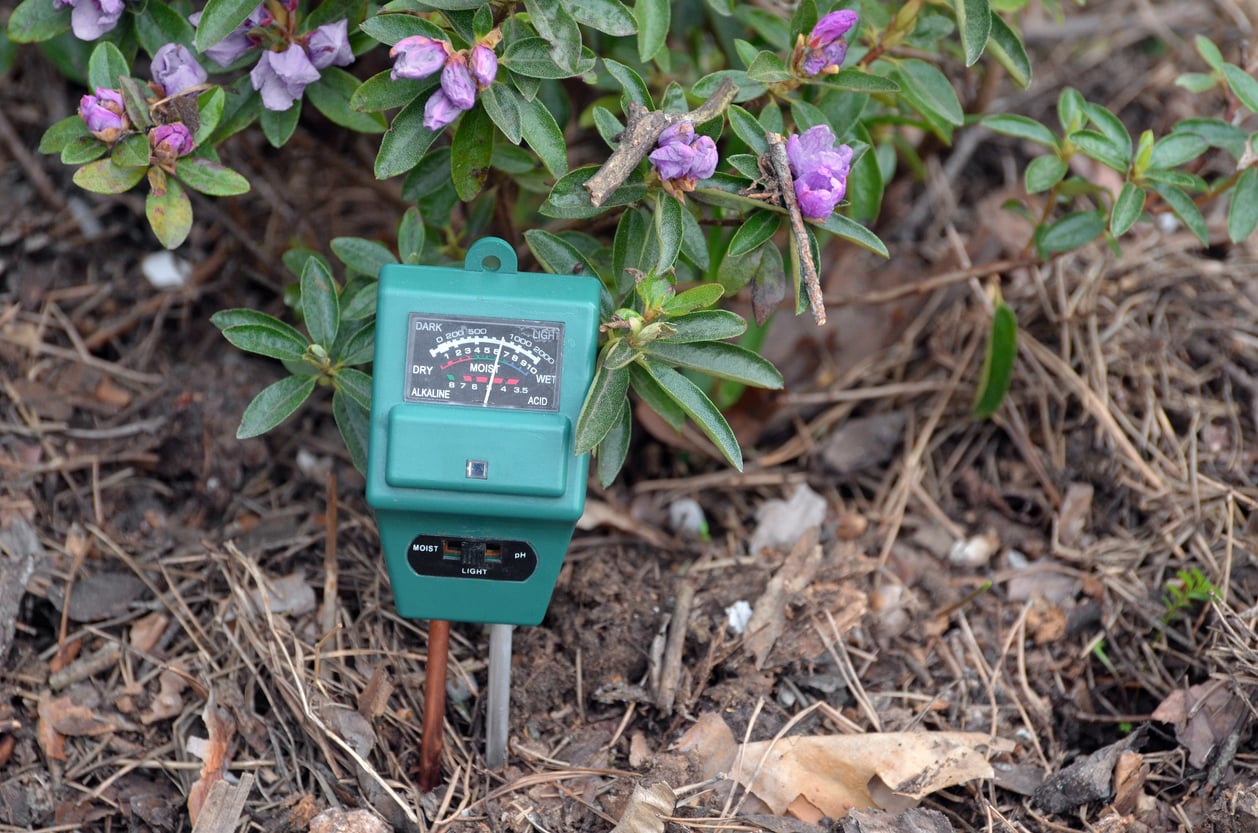
If your soil isn’t acidic enough, your azaleas are going to suffer. High pH levels can lock up iron, which means the plant may struggle even when you swear you’ve been watering and feeding it like royalty.
Washed-out yellow leaves with green veins are one big warning sign. That usually points to iron chlorosis, and with azaleas, the soil pH is often the troublemaker.
How I do it: I test the soil first instead of guessing. Azaleas usually like acidic soil around 4.5 to 6.0. If the pH is too high, I use soil-test recommendations for elemental sulfur or iron sulfate, then give it time to work. This is not an overnight glow-up situation.
We also wrote a guide on other plants that thrive in acidic soil if you want more shrubs and flowers that enjoy the same kind of conditions as azaleas.
Tip 7: Deadheading or Decay
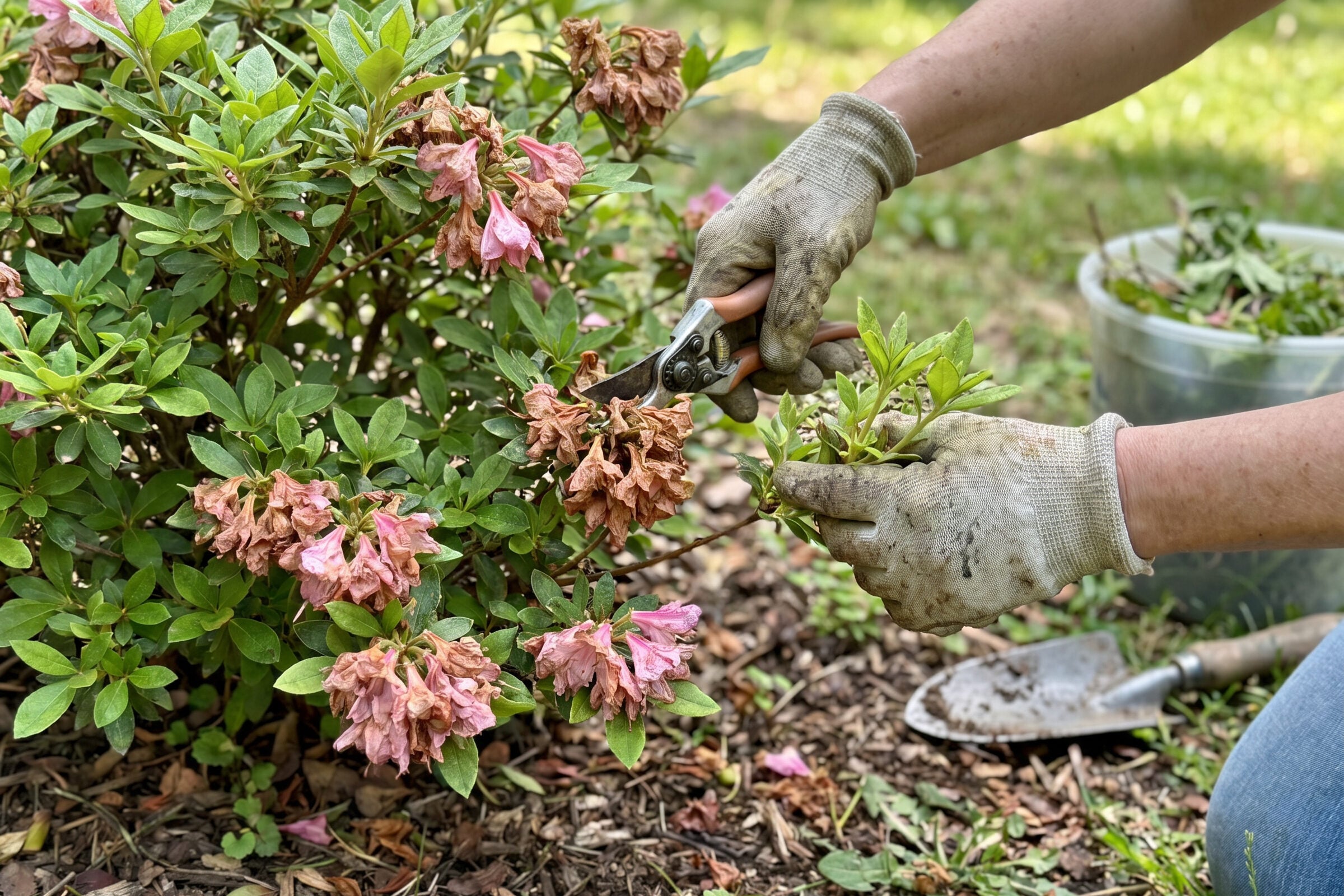
Deadheading azaleas is tedious, sticky, and makes plastic flowers look reasonable. Still, mushy old blossoms are not doing the shrub any favors.
Leaving every spent bloom behind can push the plant toward seed-making, and that is not the goal. You don’t want seeds. You want that energy going back into healthy growth.
How I do it: I pinch or snip off faded flower clusters after bloom, being careful not to damage the new growth underneath. I also remove the mushy ones before they turn into a sad little mess.
Tip 8: Filter the Burn
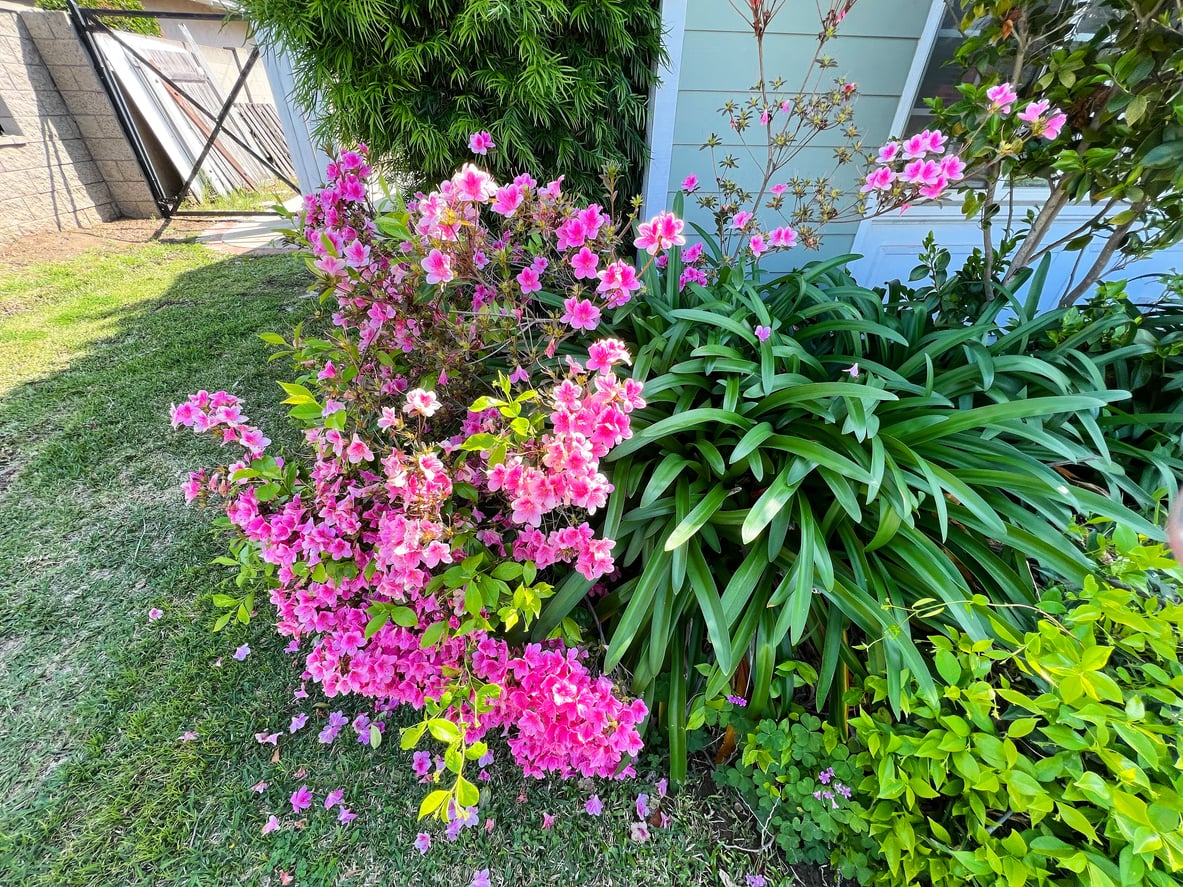
In the U.S., summer sun does not play around. An azalea stuck in the middle of a hot, south-facing yard is going to look like a crispy little disaster by July. These are woodland shrubs. They want filtered light, not a full-day sunburn.
If your azaleas are getting scorched, afternoon shade can make a big difference. Happy leaves should look rich green, not bleached and tired.
How I do it: I aim for dappled shade or morning sun with afternoon protection. If a plant is frying, I add temporary shade, plant something nearby for filtered light, or move the azalea in fall or early spring.
Tip 9: The Yellow Leaf Warning
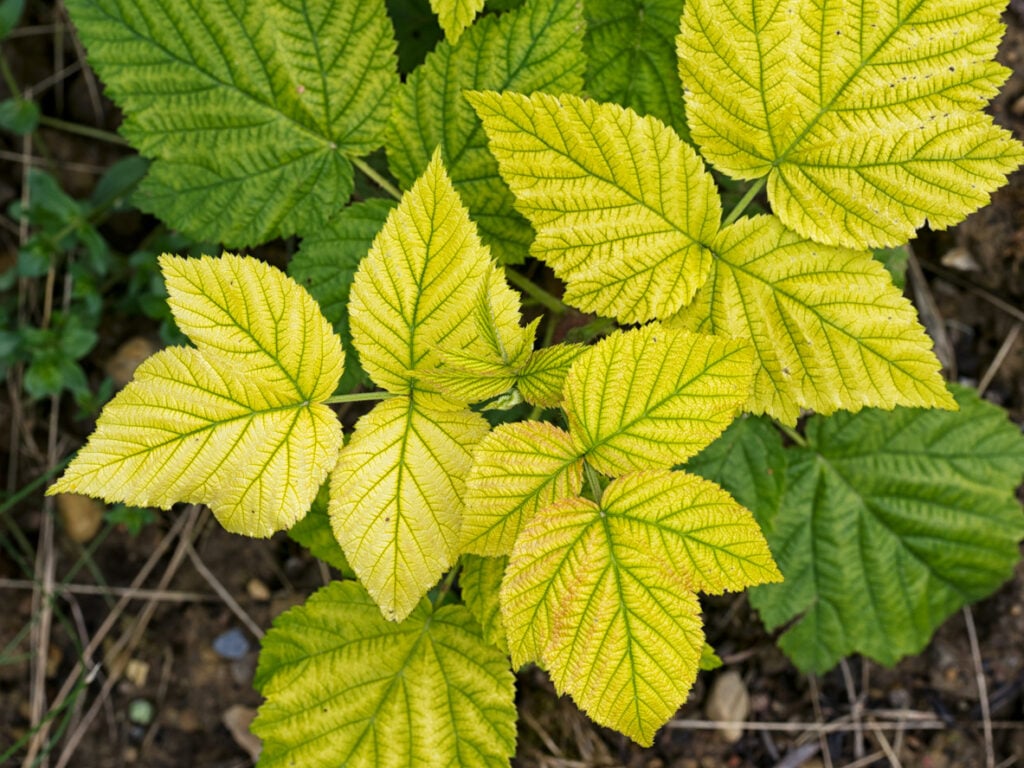
Pay attention to the leaves. Yellow leaves with bright green veins are usually a sign of iron chlorosis. This is the plant’s way of sending a low battery notification.
Most of the time, this does not mean the soil has zero iron. It usually means the pH is too high (see tip #6), so the azalea cannot use the iron that is already there.
How I do it: I treat chelated iron spray like a quick touch-up, not the real fix. If I use it, I follow the label and spray the leaves evenly, usually during the cooler part of the day.
It can green up the leaves for a while, but I still test the soil and correct the pH if needed, or the yellow-leaf drama just comes back next season.
Bush League No More
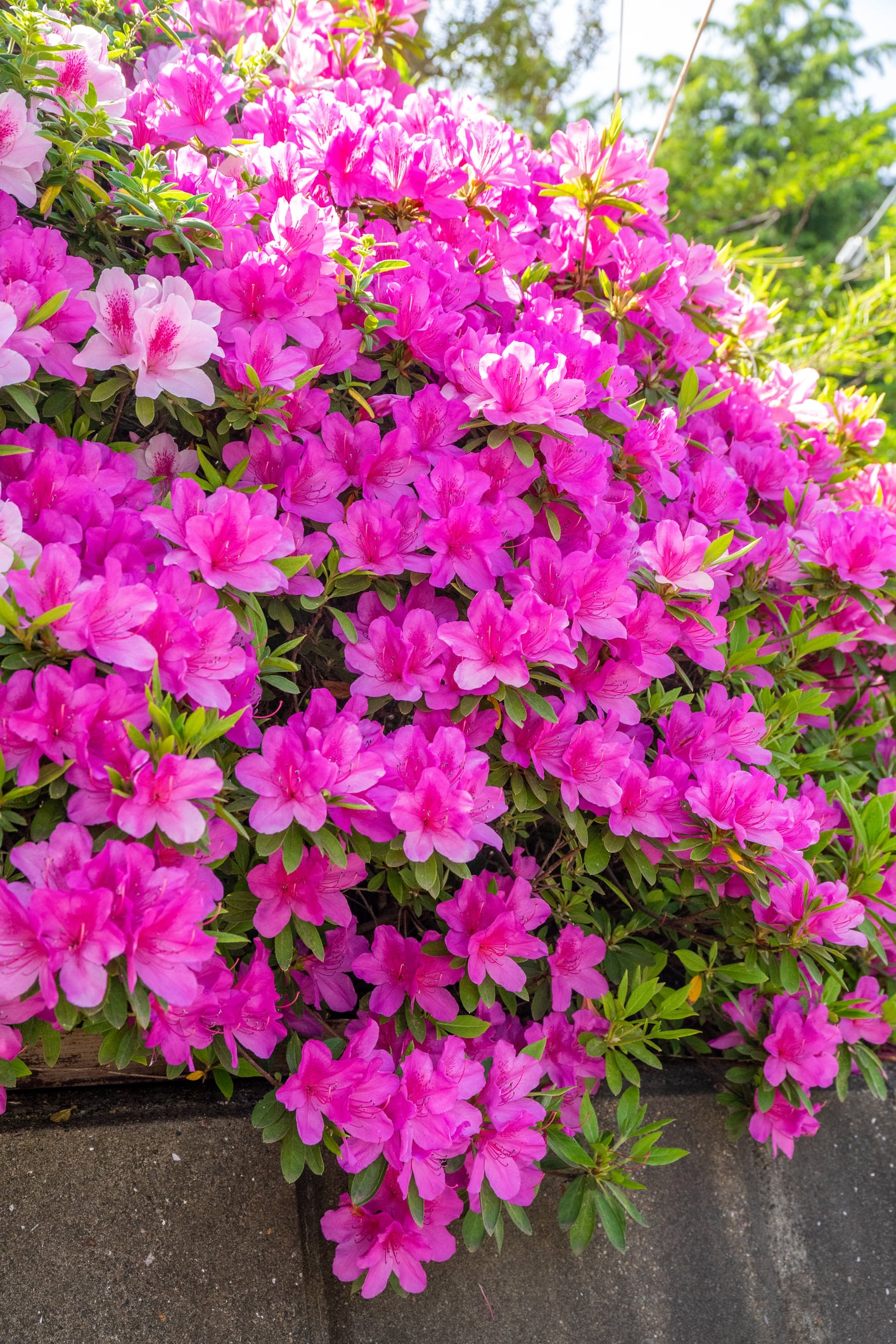
Nobody said keeping a pulse in a snobby azalea would be easy. Between the pH kits, the morning hose-downs, and the post-bloom pruning deadlines, you’ve got enough to keep you busy. Try not to let the lace bugs win.


