Good fences make good neighbors. But gorgeous plants make those same neighbors green with envy. The best defence against a dull yard? Adding privacy, color, and texture where it counts. Ready to jump the barrier into better garden design?
1: Arborvitae
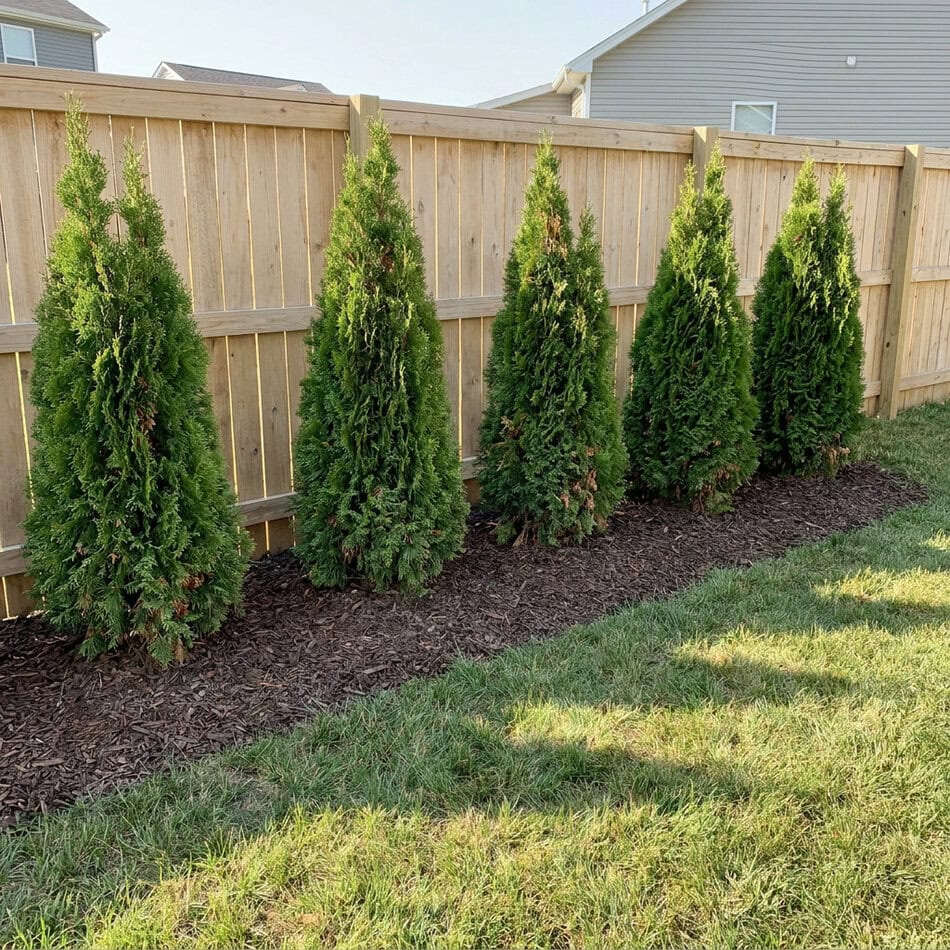
Best for: USDA Zones 3-7 • Full sun to partial shade • Evergreen privacy screening
Thirty-foot screens or bowling-ball blobs. Pick whatever fits your strip. Neighbors who treat your property line like free comedy theater will finally lose their view.
Give these evergreens full sun to partial shade and moist, well-drained soil or watch them turn brown. Just keep deer repellent or netting handy because local deer will gladly visit those lower branches.
If you’d rather not wait forever for a living wall, we also put together a guide to fast-growing privacy bushes that can help.
2: Dwarf Boxwood
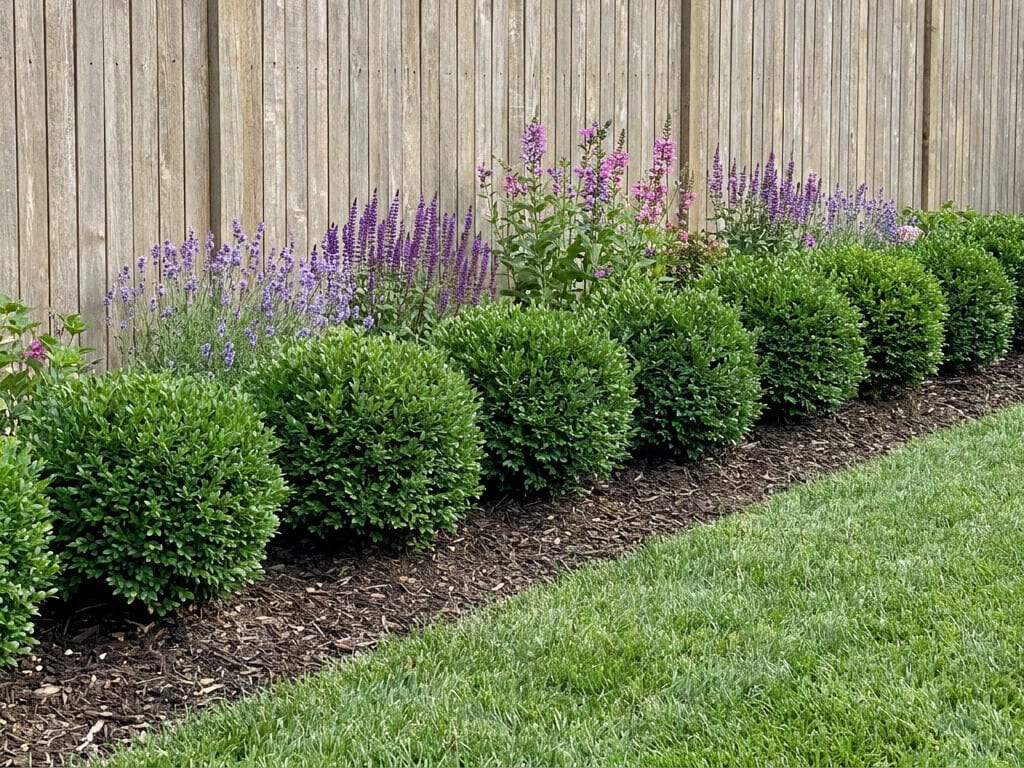
Best for: USDA Zones 5-8 • Full sun to partial shade • Low evergreen borders
Dwarf boxwoods form tidy lines along a partly shaded fence base and keep your weekends free of constant shearing.
Shorter cultivars like Green Gem or Baby Gem naturally hold a tidy form. They sit at the front to cover up the straggly bottom stems of taller perennials, making your border look intentional.
3: Panicle Hydrangeas
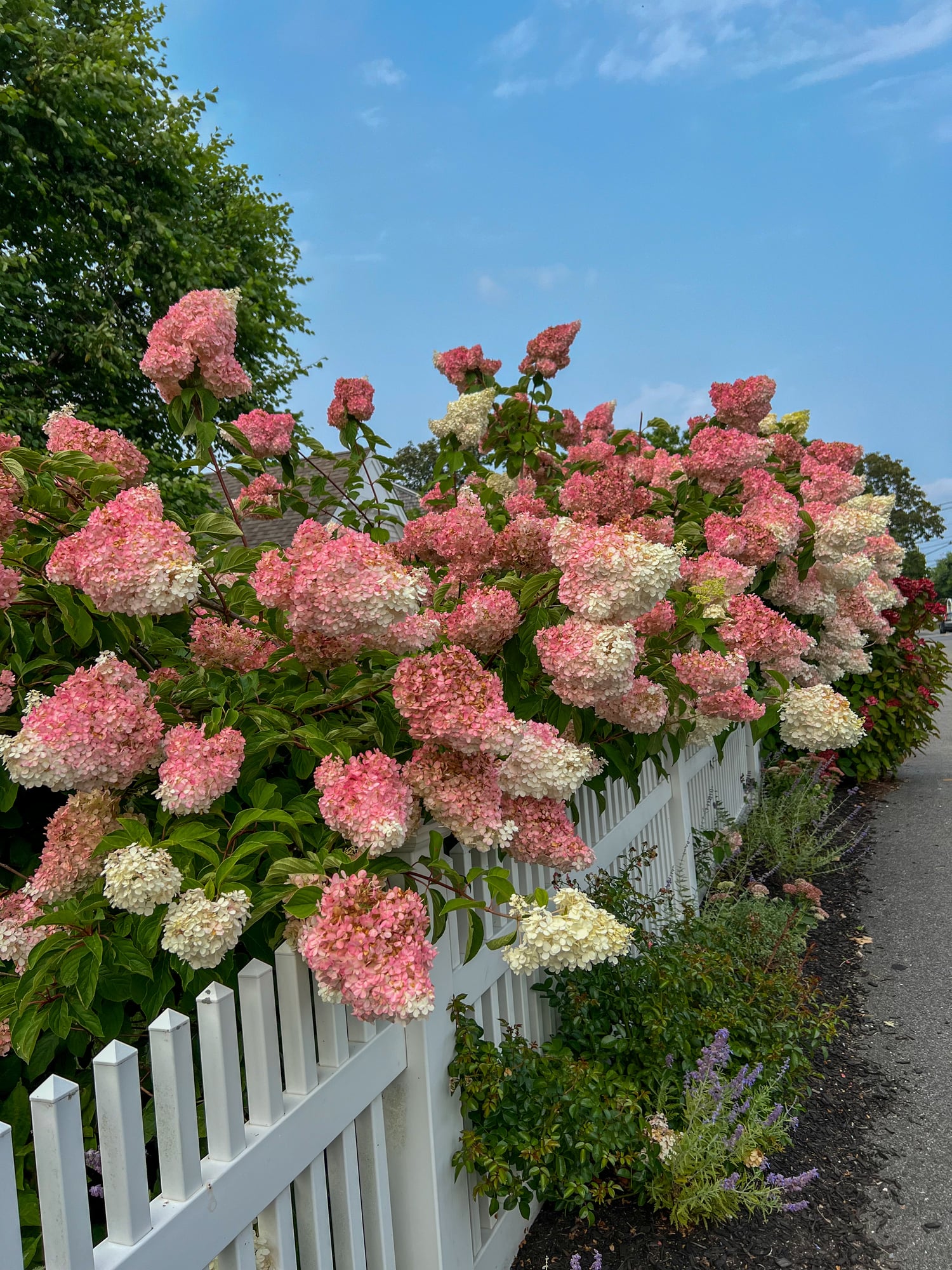
Best for: USDA Zones 3-8 • Full sun to partial shade • Showy flowering borders
Spring frosts love destroying bigleaf hydrangea buds, but panicles flower on brand-new wood. A late freeze is much less likely to ruin the show. They need full sun to partial shade to produce huge, cone-shaped flower heads from midsummer into fall.
Larger varieties can span eight feet wide, so leave enough room between them and the fence for ventilation. And for fence repairs, painting, or counter-spying.
If you’re still nervous about picking up the pruners, we explain when and how to prune hydrangeas without accidentally cutting off next season’s flowers.
4: Knock Out Roses
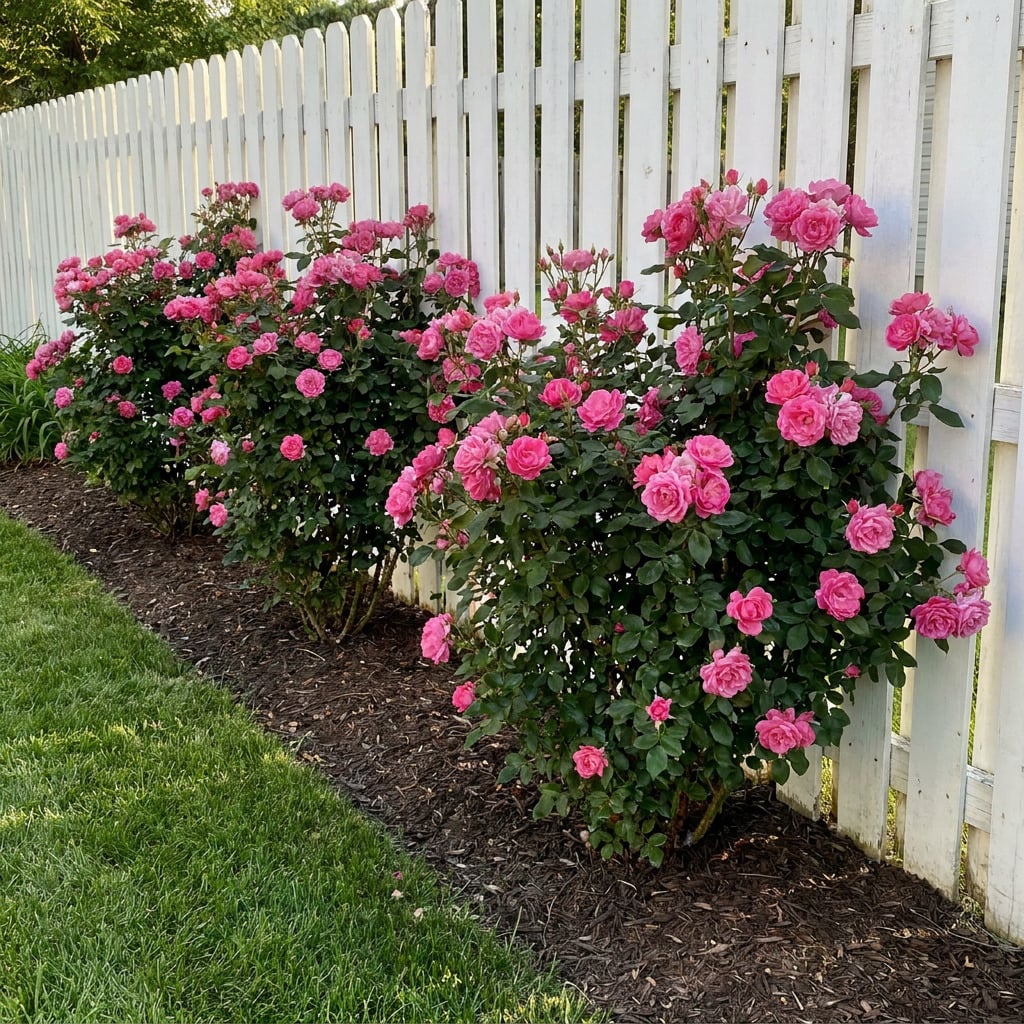
Best for: USDA Zones 5-11 • Full sun • Long-blooming fence borders
Want constant summer color without babysitting a delicate tea rose? Knock yourself Out and line your entire fence with these tough shrub roses.
They don’t mind scorching heat, they resist black spot disease, and they clean up after themselves so you don’t have to cut off spent blooms.
Just give them enough room to spread unless you like tearing your clothes on thorns every time you walk by. Or inviting fungal trouble by crowding them against the fence.
5: Common Lilac

Best for: USDA Zones 3-7 • Full sun • Fragrant spring screening
Common lilacs produce big flower clusters in mid-to-late spring, but require cold winter temperatures (chill hours) to break dormancy and bloom properly.
Getting a few weeks of incredible fragrance in spring means dealing with bare framework of branches all winter long.
Lilacs can expand into huge 15-foot thickets over time. Saw out up to a third of the oldest stems at the ground right after flowering, or the bottom five feet can go bald.
We also included lilacs in our guide to plants worth pruning in May, if that’s when yours finish blooming.
6: English Lavender
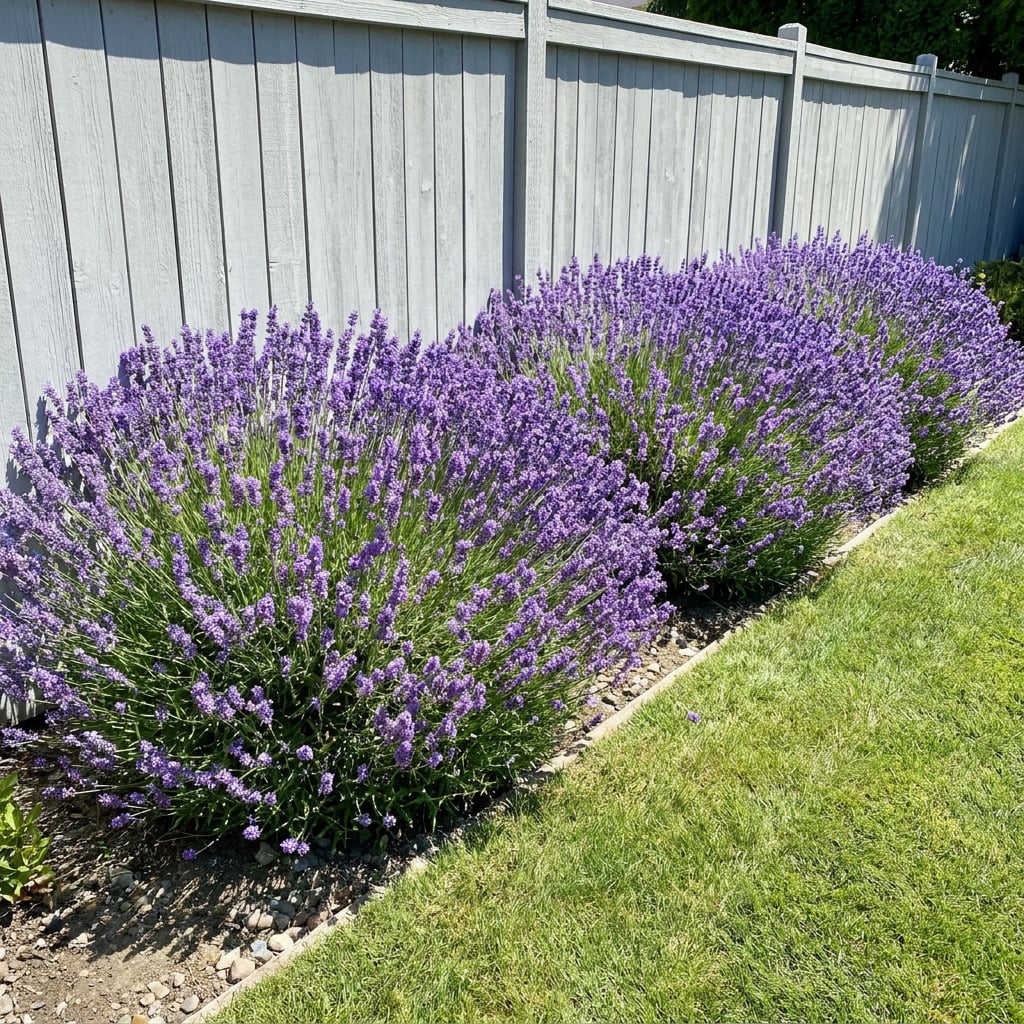
Best for: USDA Zones 5-8 • Full sun • Fragrant fence borders
This is a small purple bush that smells like an old lady’s handbag. Despite its name, it comes from the Mediterranean, made for full baking sun rather than England’s gloomy skies.
It can grow three feet wide, so give it room to spread without pressing against the wood. If you cram it into a damp, poorly drained corner, its roots can turn into a rotting mess.
It won’t stop your neighbor from looking over the fence, but if you rub it on your fingers, they’ll smell like a fancy soap shop. Which is a fair trade.
7: Daylilies
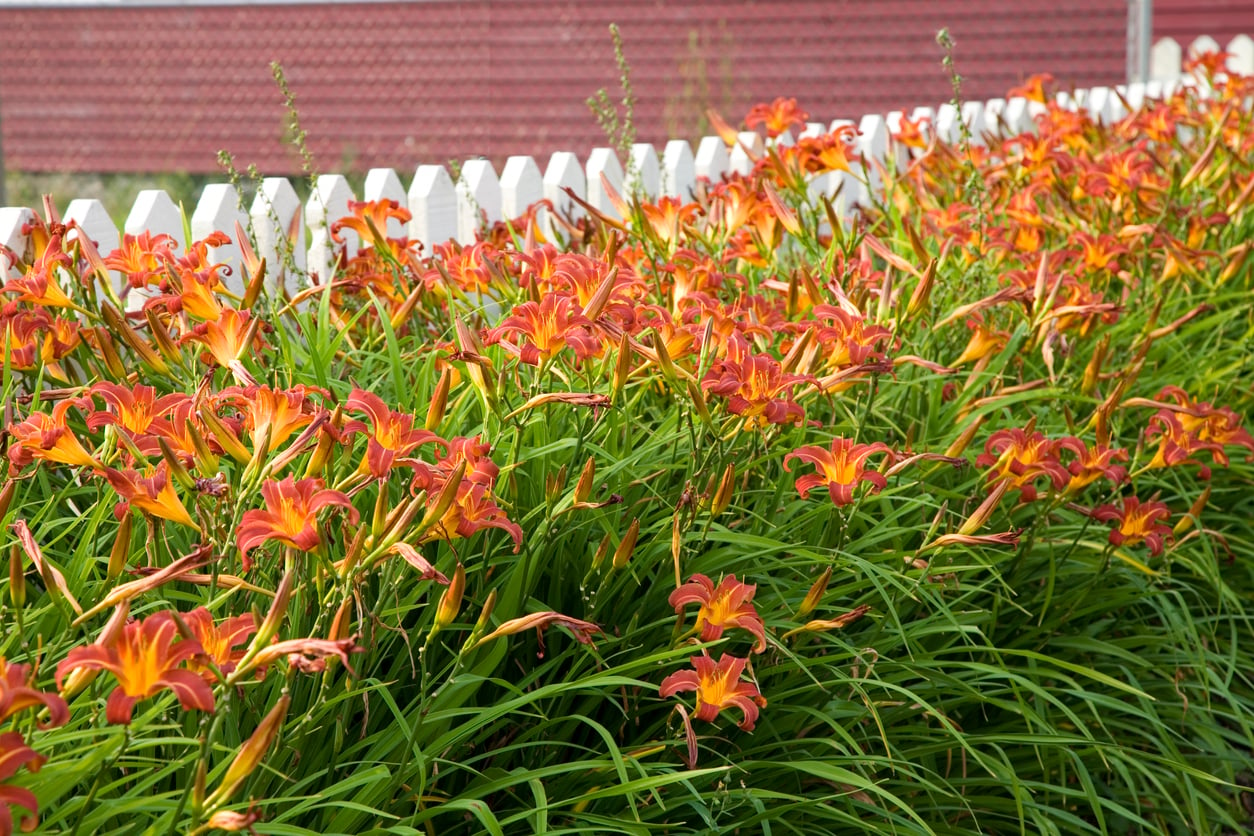
Best for: USDA Zones 3-9 • Full sun to partial shade • Colorful fence borders
Daylilies send up colorful trumpets from grassy green leaves. Each flower dies twenty-four hours later, which seems like a lot of effort for a very short party. Luckily, new buds keep opening for weeks.
Stick to clumping varieties. They’re less likely to march under the fence and colonize the yard next door.
Give daylilies enough room to spread without crowding the fence. Better airflow helps, but dormant varieties naturally die back in fall regardless of distance.
If you’re planning more than a row of daylilies, we’ve also put together a guide to plants for garden borders to help fill in the gaps.
8: Hostas
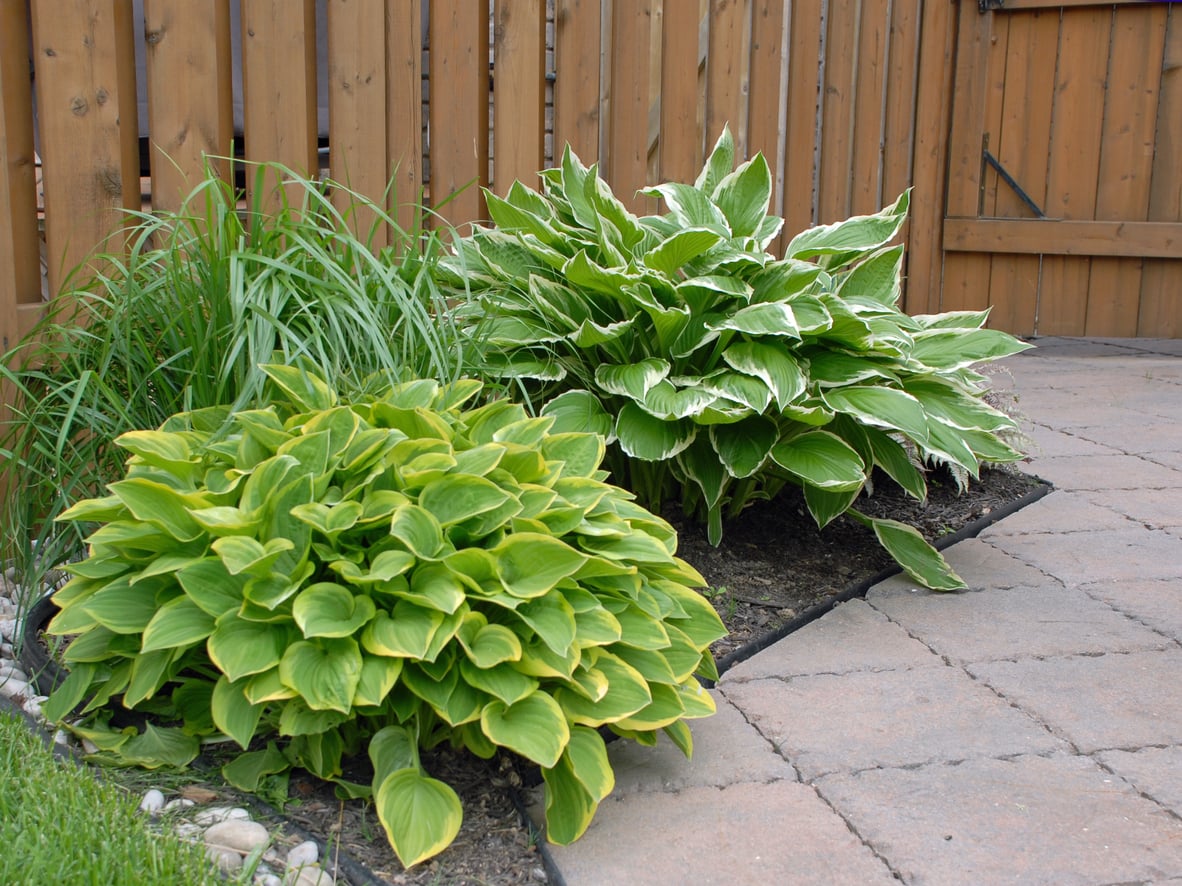
Best for: USDA Zones 3-9 • Partial to full shade • Shady fence borders
You can plant hostas in the gloomy space behind your house where the north-facing fence blocks most of the direct sunlight.
They look like giant cabbage leaves, and some varieties expand four feet wide, so check their mature size before planting them against the boards.
Deer will munch on them wherever you plant them, and damp, shady corners can become a breeding ground for local slugs.
9: Black-Eyed Susans
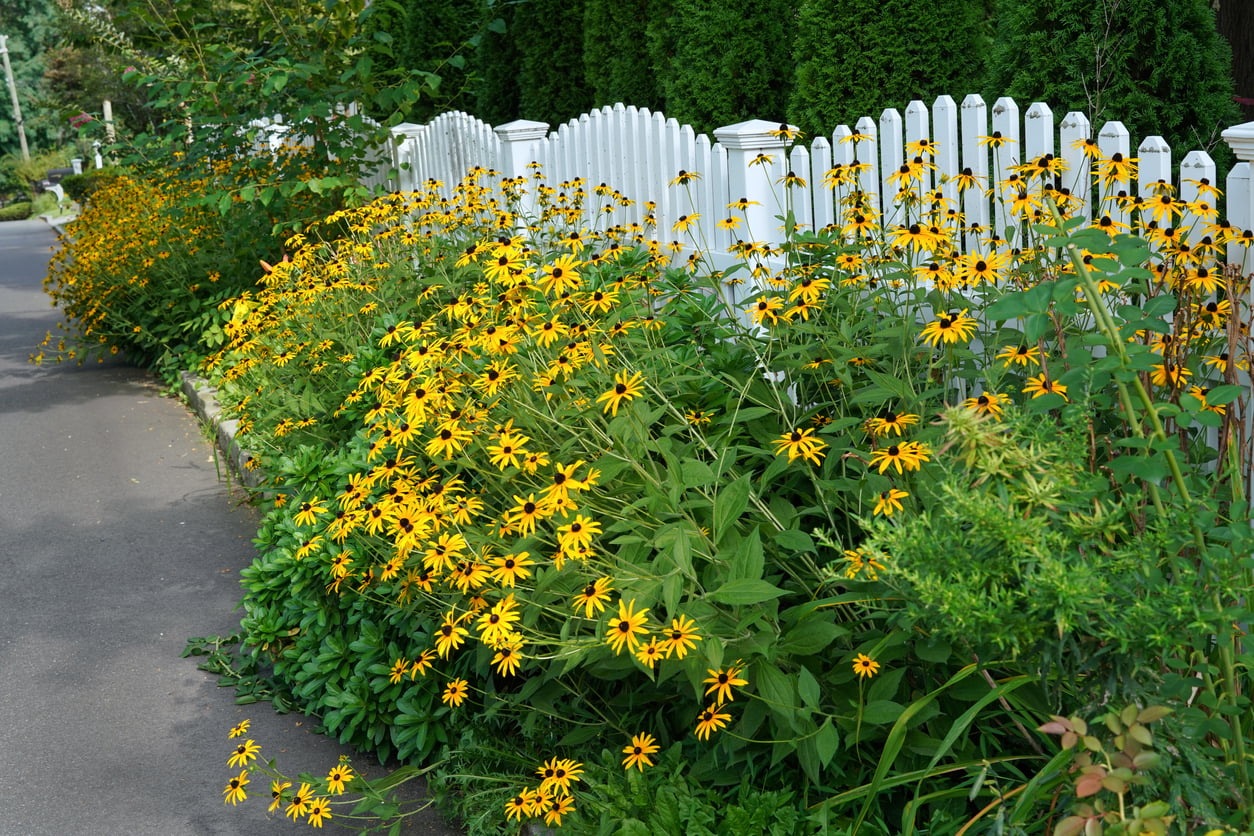
Best for: USDA Zones 3-9 • Full sun to partial shade • Colorful flower borders
Black-Eyed Susans will love their new home next to your fence, especially if it gets six to eight hours of direct sunlight.
Some rudbeckias spread up to three feet wide, like a drunk on a bus, so give them room instead of planting them right against the fence. If you jam them against the timber, poor airflow can encourage powdery mildew.
If mildew shows up anyway, we explain what to do (and how to get more flowers) in our Black-Eyed Susan care guide.
10: Clematis ‘Jackmanii’
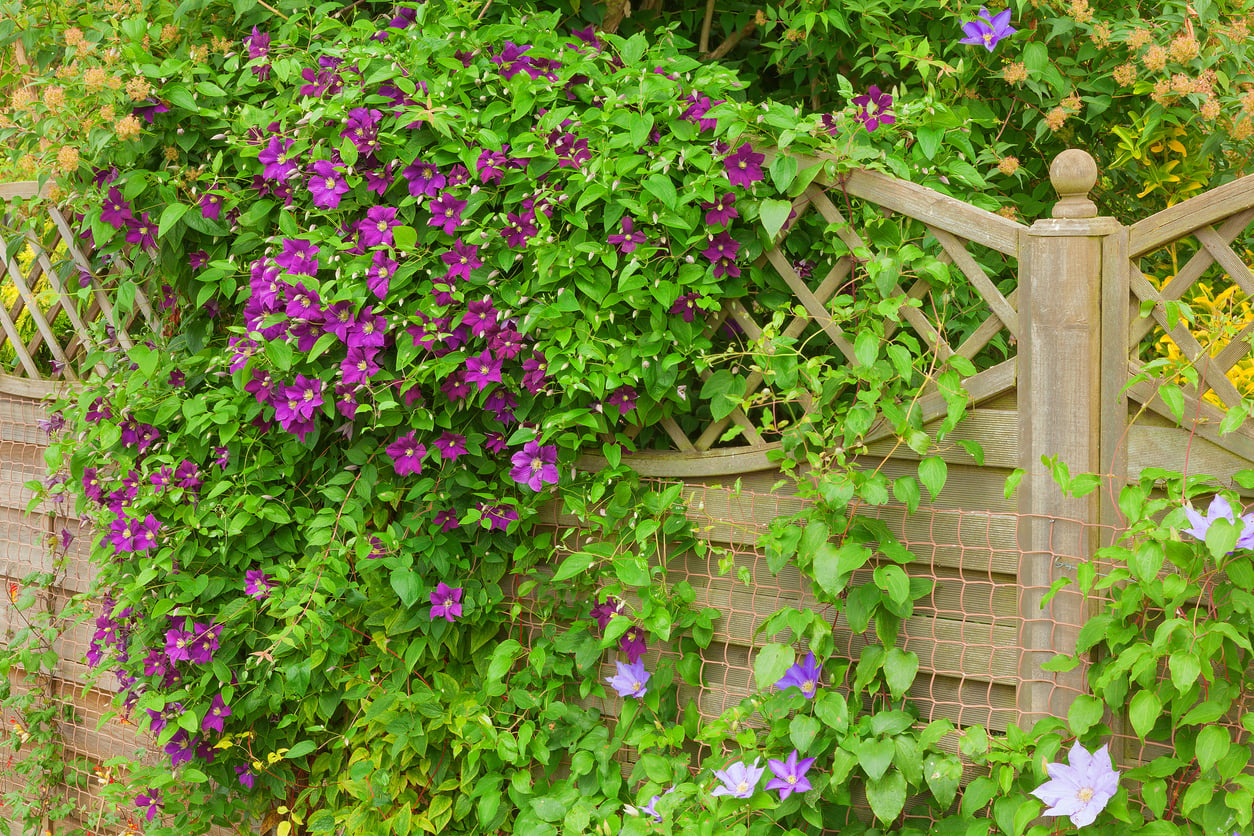
Best for: USDA Zones 4-9 • Full sun to partial shade • Flowering fence coverage
This vine covers boundary panels in massive purple blooms, yet it is incapable of gripping a fence by itself. It uses tiny leaf stalks that need thin wire or a trellis to wrap around. Without a thin support frame, it gives up completely and sprawls across the ground.
The top part of the plant needs plenty of sunlight to make flowers. The bottom part has no idea how to protect the roots from drying out, which seems like a huge design oversight. Go help with a 2-inch layer of bark mulch, keeping it away from the stems.
For everything after the trellis is up, we wrote a guide on clematis pruning and care to help keep those flowers coming.
11: Northwind Switchgrass
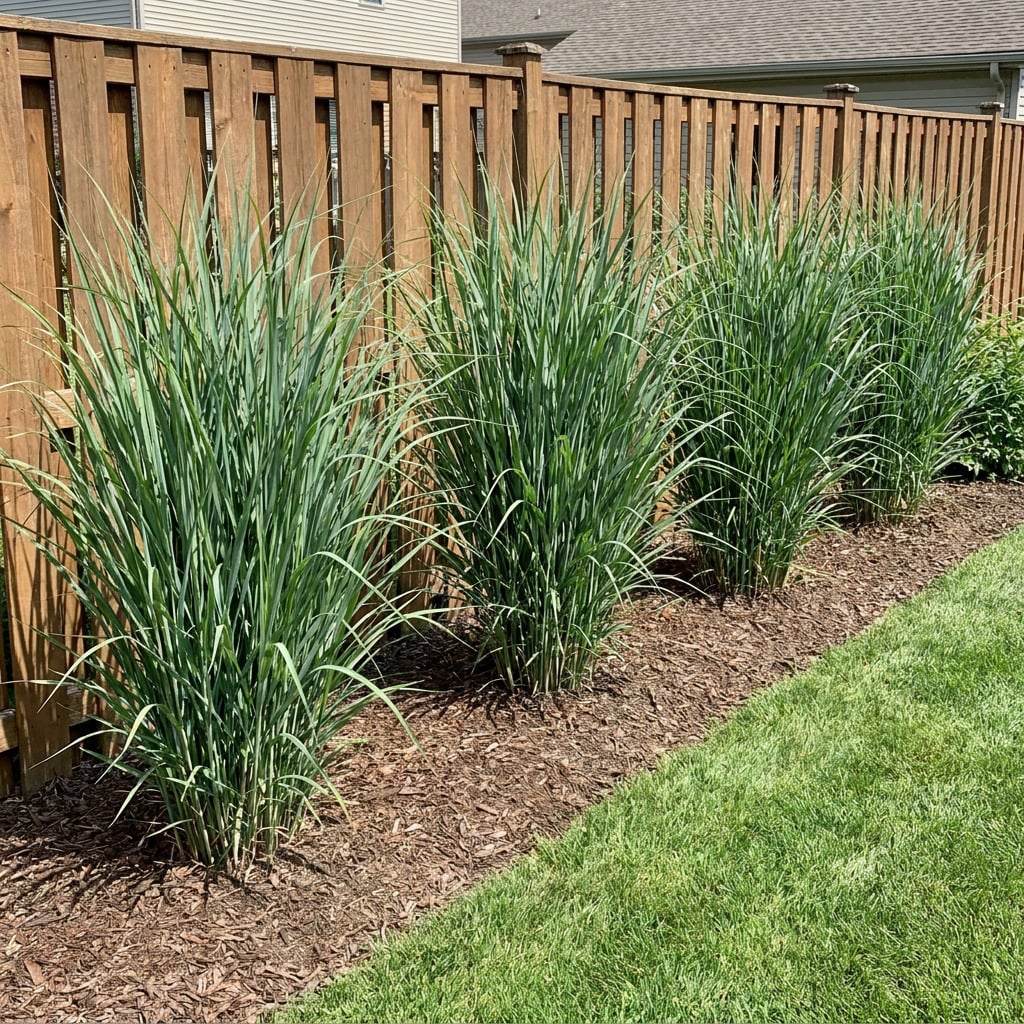
Best for: USDA Zones 5-9 • Full sun • Seasonal privacy screening
It got its name from Northwind Perennial Farm, but it can still take an icy blast to the face without falling over.
By midsummer and once established, a row of it shoots straight up into a thick green wall. Then winter comes; it turns tan and just stands there like a tall, dried-out broom.
The stiff stems can rattle against the wood during a storm. Your fence isn’t haunted; just plant switchgrass about two feet back to give it room to spread.
The only time you’re exposed to neighborly scrutiny is in early spring, when you have to chop the dead stalks down near the ground so the new ones can sprout.
No Offense, Just a Better Fence
A boring fence doesn’t need replacing. It just needs some botanical camouflage. Pick plants that suit your sunlight, give them room to grow, and let nature handle the decorating.
With any luck, your neighbors will spend more time admiring your garden than spying on your barbecue. Which is about as much privacy as gardening can promise.
And if you need something that hides the neighbors through winter, we also rounded up evergreen trees for year-round privacy.