
Your mail carrier spends all day passing boring metal boxes stuck in patchy turf. Let’s trade the weeds for tough, jaw-dropping blooms and give that little curbside box something better to sit in than sad grass and sunbaked dirt.
One quick rule: don’t plant a curbside jungle! The mailbox still needs to be easy to reach, and your mail carrier shouldn’t need a machete just to deliver your electric bill.
1. Cottage-Style Mailbox Combo
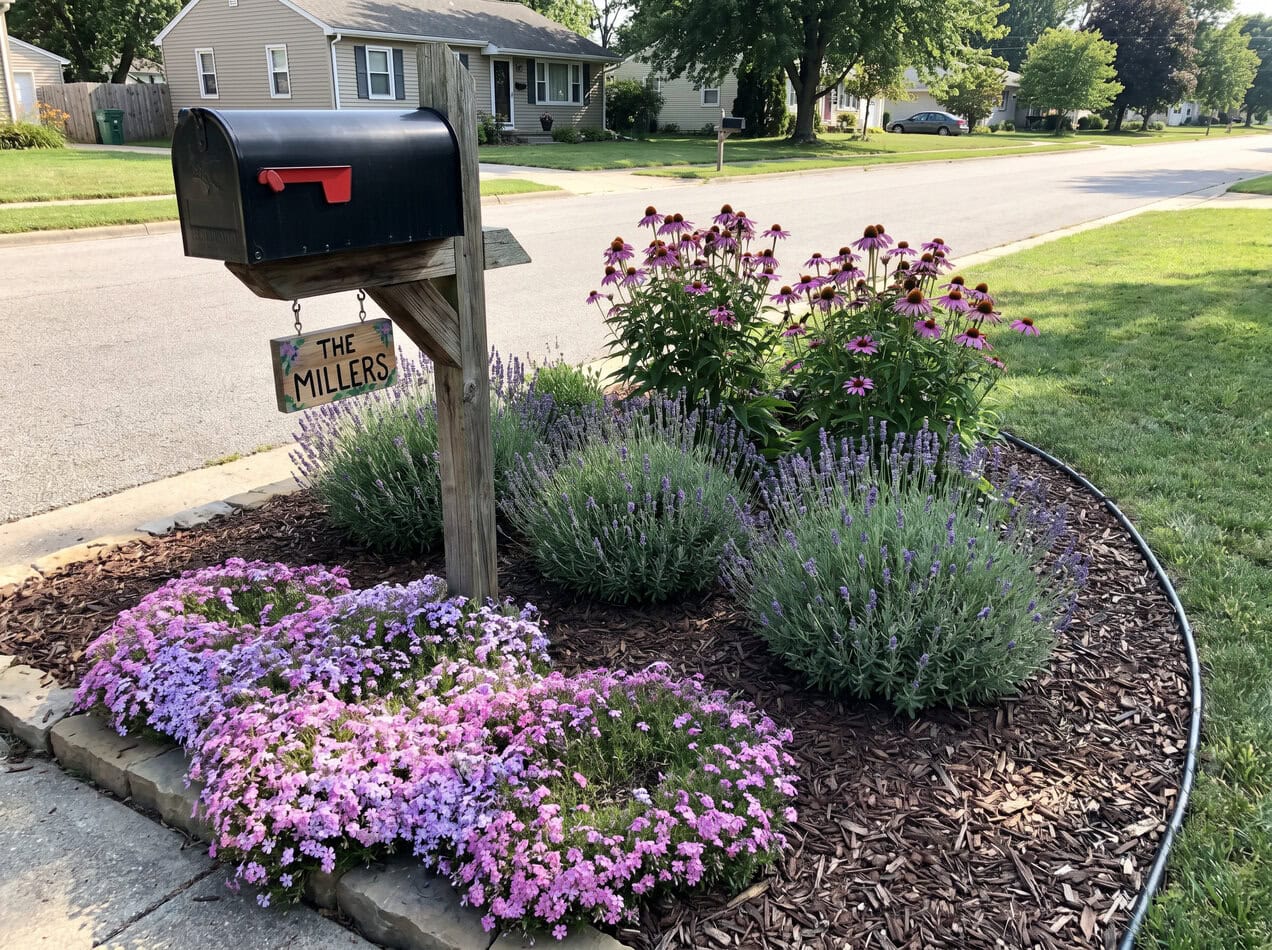
The look here is: Lavender, creeping phlox, and coneflowers. Best for USDA Zones 5-8, with the right lavender variety and sharp drainage.
Roadside clay bakes hard by July, then turns soggy after a downpour. For lavender, loosen a wider patch of soil and mix in compost with coarse sand or fine gravel, or plant it on a low mound so the roots don’t sit in a wet clay bathtub.
Creeping phlox spreads early, covering bare soil before weeds get too comfortable. Then coneflowers muscle in for the July heat.
And if you like the idea of replacing sad grass with something useful, we put together a guide on no-mow ground covers that can make bare spots look intentional.
2. Bright Summer Color Combo
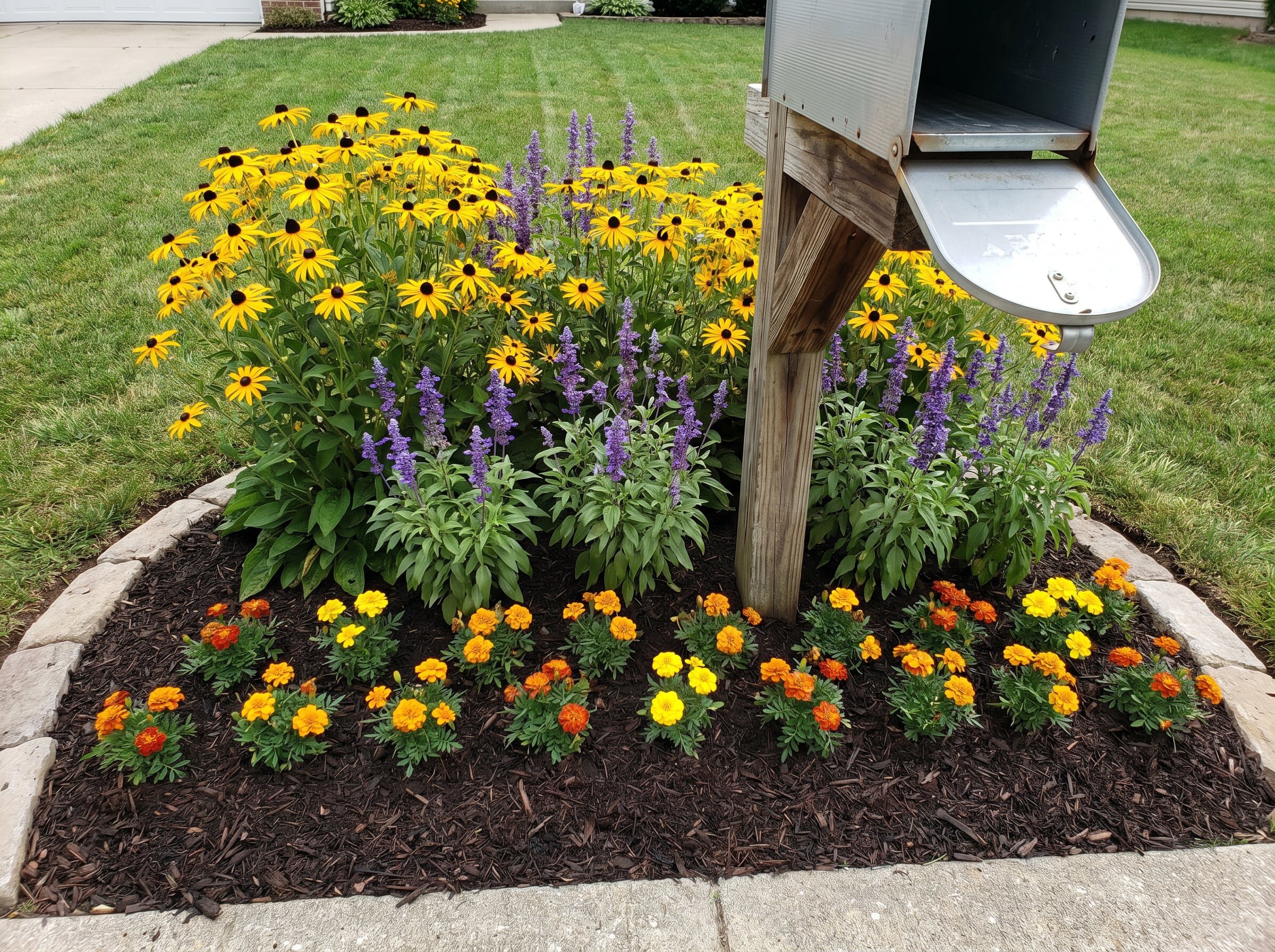
The look here is: Black-eyed Susans, perennial salvia, and marigolds. Best for USDA Zones 4-8, with marigolds added as annual color.
This mix brings loud summer color for almost zero effort. Black-eyed Susans and perennial salvia can handle full sun and roadside heat once they’re settled in.
Tuck marigolds into the lower gaps. They hide bare stems of the taller plants, add color and repel nasty garden pests with that heavy, pungent scent.
If your curb gets blasted all day, we also wrote a guide on full-sun border plants that still look good when summer gets rude.
3. Low-Maintenance Green Combo
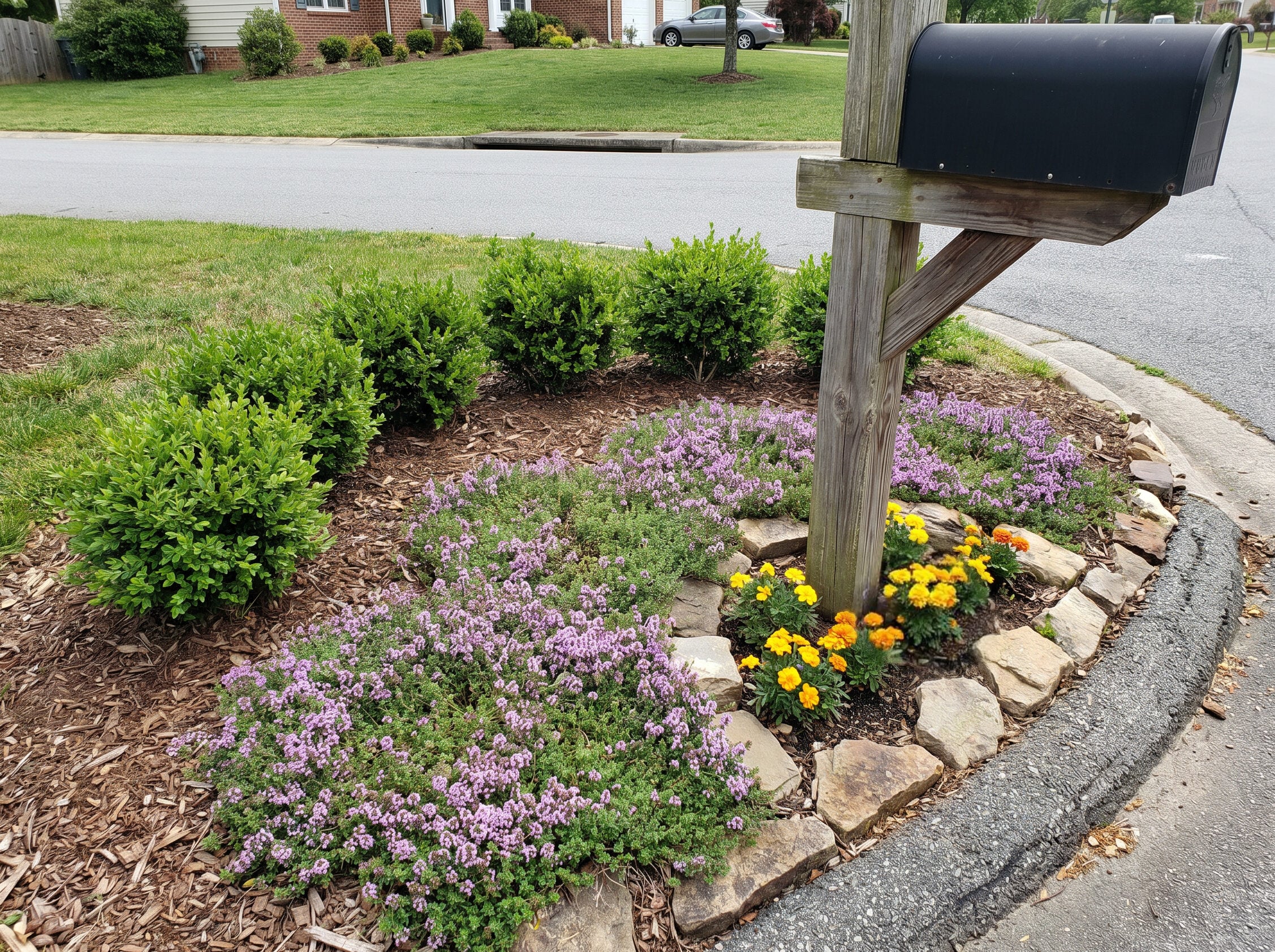
The look here is: Boxwood, creeping thyme, and a few easy annuals. Best for USDA Zones 5-8, depending on the boxwood variety and winter exposure.
Let the evergreen foliage do the heavy lifting out by the curb. Boxwood keeps the bed looking clean even when everything else has given up for winter.
Plant creeping thyme underneath where it gets sun and sharp drainage. It can handle dry, baked soil once established, and it releases that strong herbal smell when it gets brushed or stepped on lightly.
For more curb-friendly ideas like this, we explain more easy-care border plants that don’t need constant fussing.
4. Pollinator Hub Combo
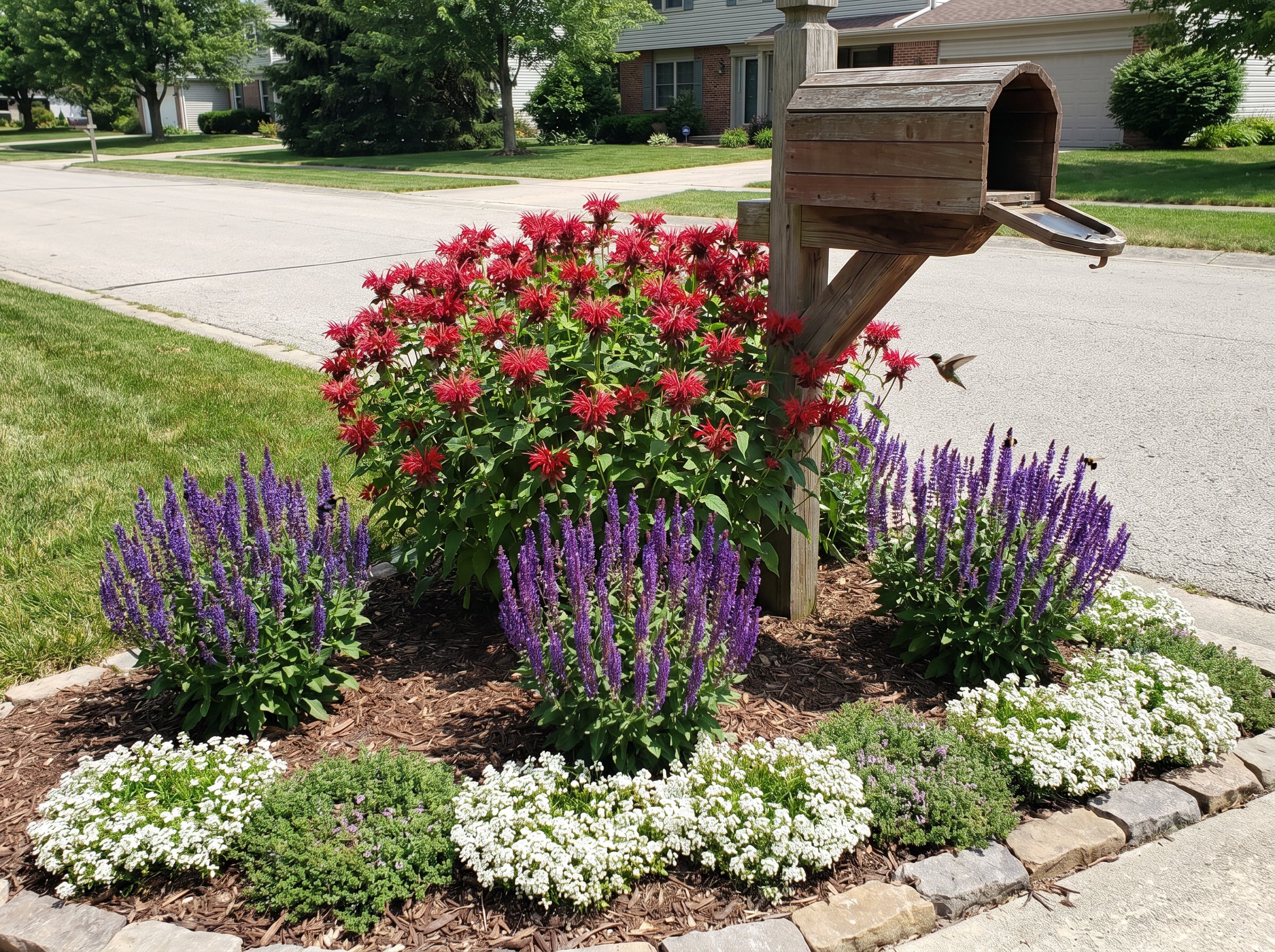
The look here is: Bee balm, perennial salvia, and a little edging thyme or alyssum. Best for USDA Zones 4-8, with room to keep bee balm in check.
This layout turns the mailbox bed into a full-blown nectar bar. Bee balm punches up through the middle, while salvia keeps the purple spikes coming around it.
Bumblebees and hummingbirds will find it fast, so don’t cram the busiest flowers right against the mailbox door. Pretty is good. Making the mail carrier reach through a buzzing buffet is not.
5. Brutal Heat Roadside Combo
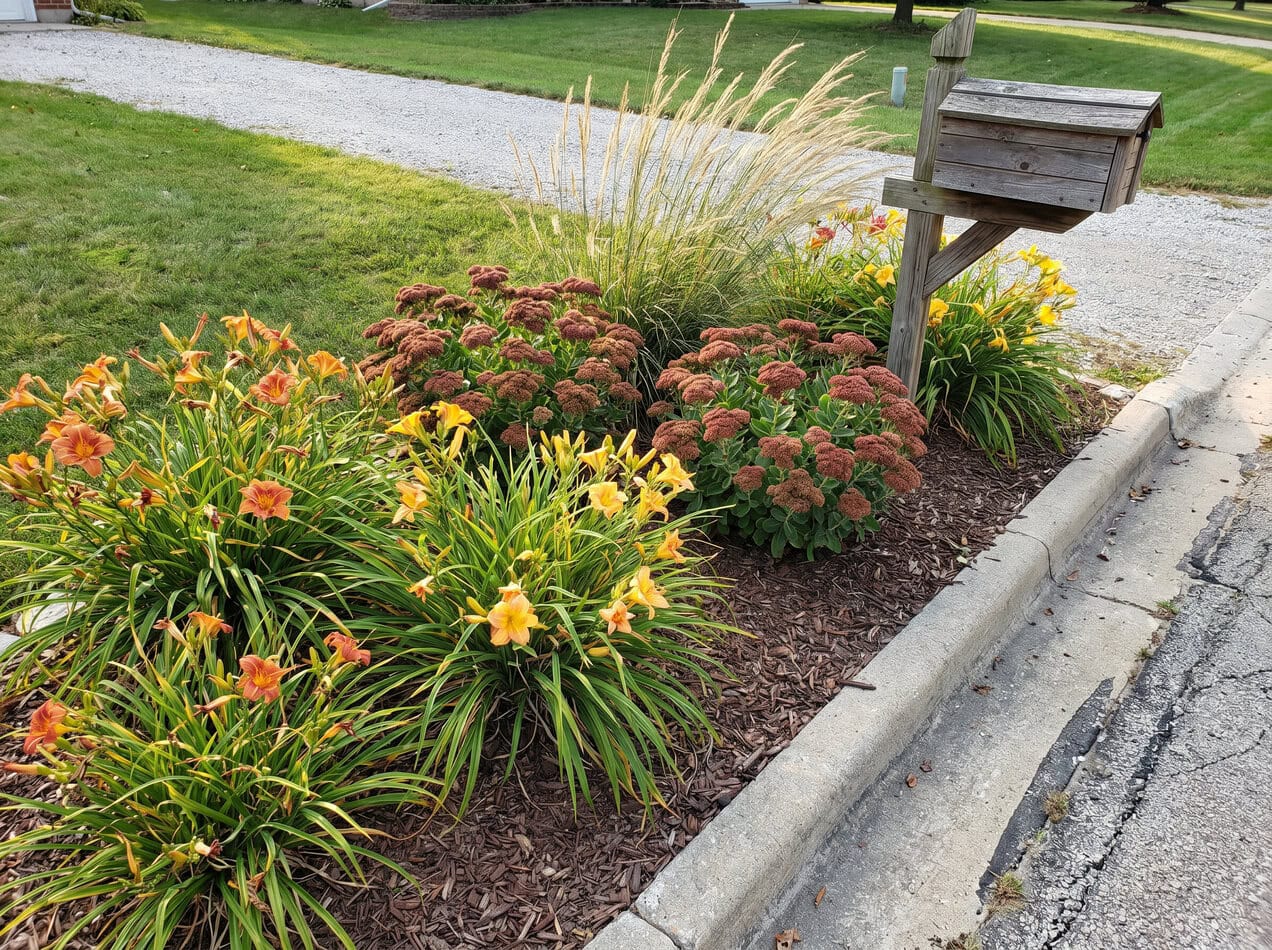
The look here is: Daylilies, ornamental grass, and upright sedum. Best for USDA Zones 4-9, depending on the grass variety.
Curb strips get blasted by baking blacktop glare, tire splash, and winter road salt, so this is where the soft little drama plants go to die.
Daylilies push out fresh blooms through summer and use thick roots to help hold the soil when storms try to send it into the street.
Plant a tough ornamental grass (such as little bluestem or switchgrass) behind them for height and movement, then let upright sedum carry the bed into fall with those bronze-pink seed heads.
This setup stays clean, tough and readable so the carrier can clearly find the address while pulling over in a blinding July heatwave.
If your curb cooks even harder than mine, we have a guide on drought-tolerant flowers that still bring real color.
6. Tailored Boundary Combo
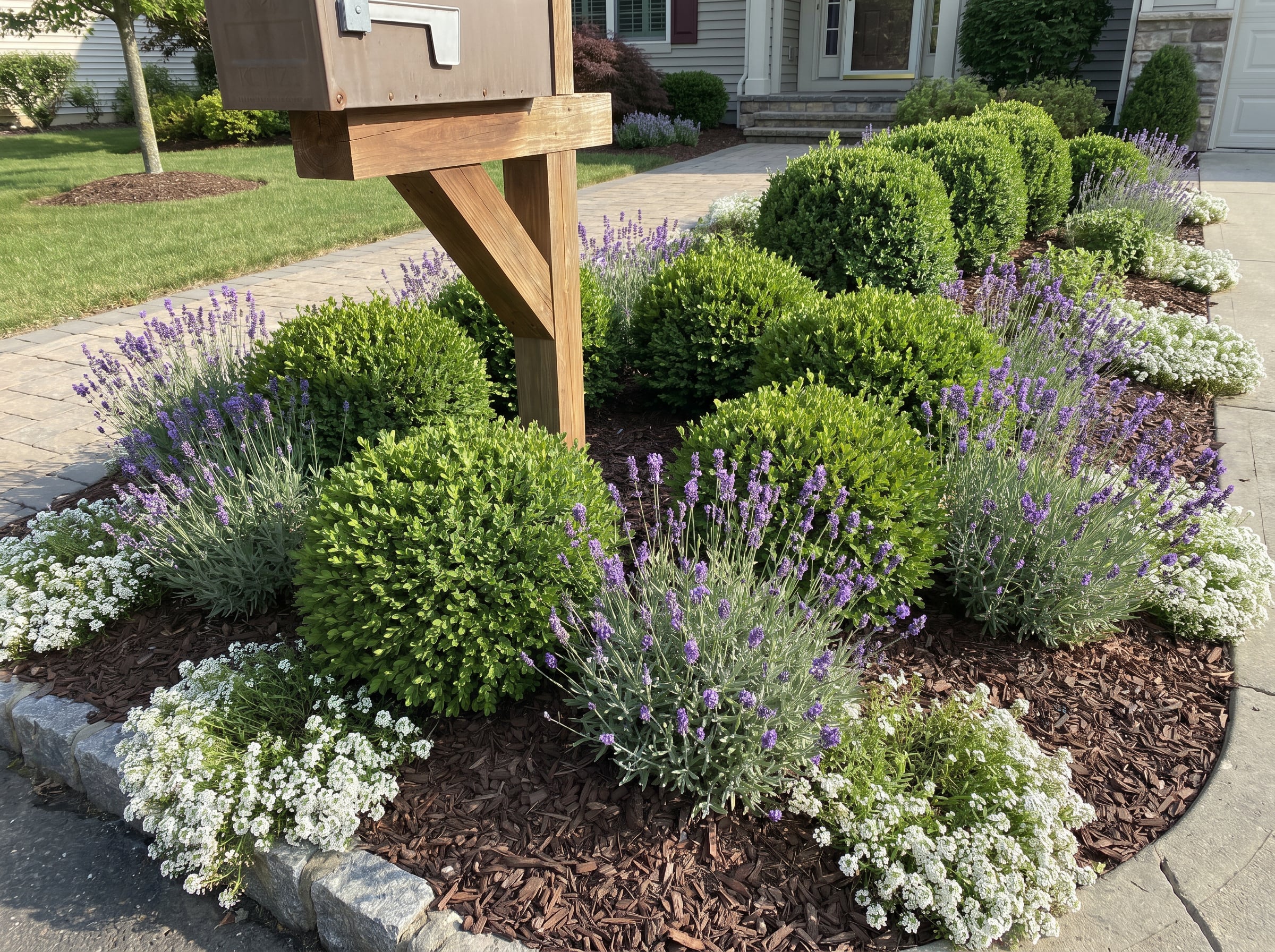
The look here is: Boxwood, lavender, and sweet alyssum. Best for USDA Zones 5-8, with alyssum treated as a cool-season annual in many areas.
Boxwood anchors the edge so the bed looks intentional instead of like it wandered over from the neighbor’s yard. Lavender then flops over to soften the line, proving you meant to be exclusive, not just aggressive.
Tuck alyssum into the gaps for a low white spill of flowers. It can bloom for ages in cool weather, but in hot-summer areas, expect it to slow down or sulk until fall.
7. Dirt-Cheap Annual Blanket Combo
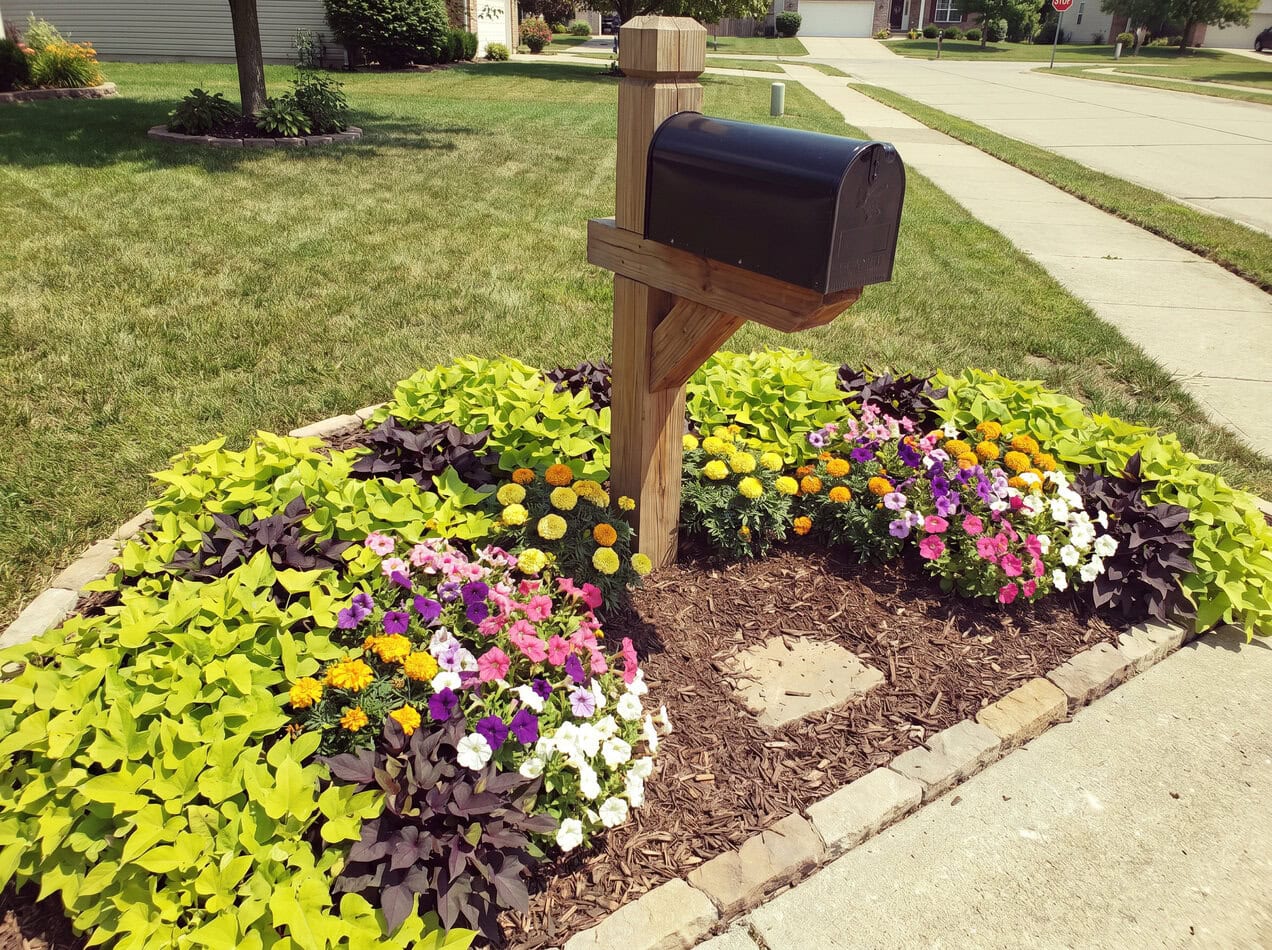
The look here is: Sweet potato vine, petunias, and marigolds. Best for USDA Zones 9-11 if overwintering sweet potato vine, but easy as an annual almost anywhere after frost.
Sweet potato vine grows fast once summer heat kicks in, spreading over bare dirt before the sun can turn it into curbside concrete.
Drop cheap petunias and marigolds into the blank spaces to get a non-stop bloom factory running until frost, just keep them watered and cleaned up.
8. Soft Purple and White Combo
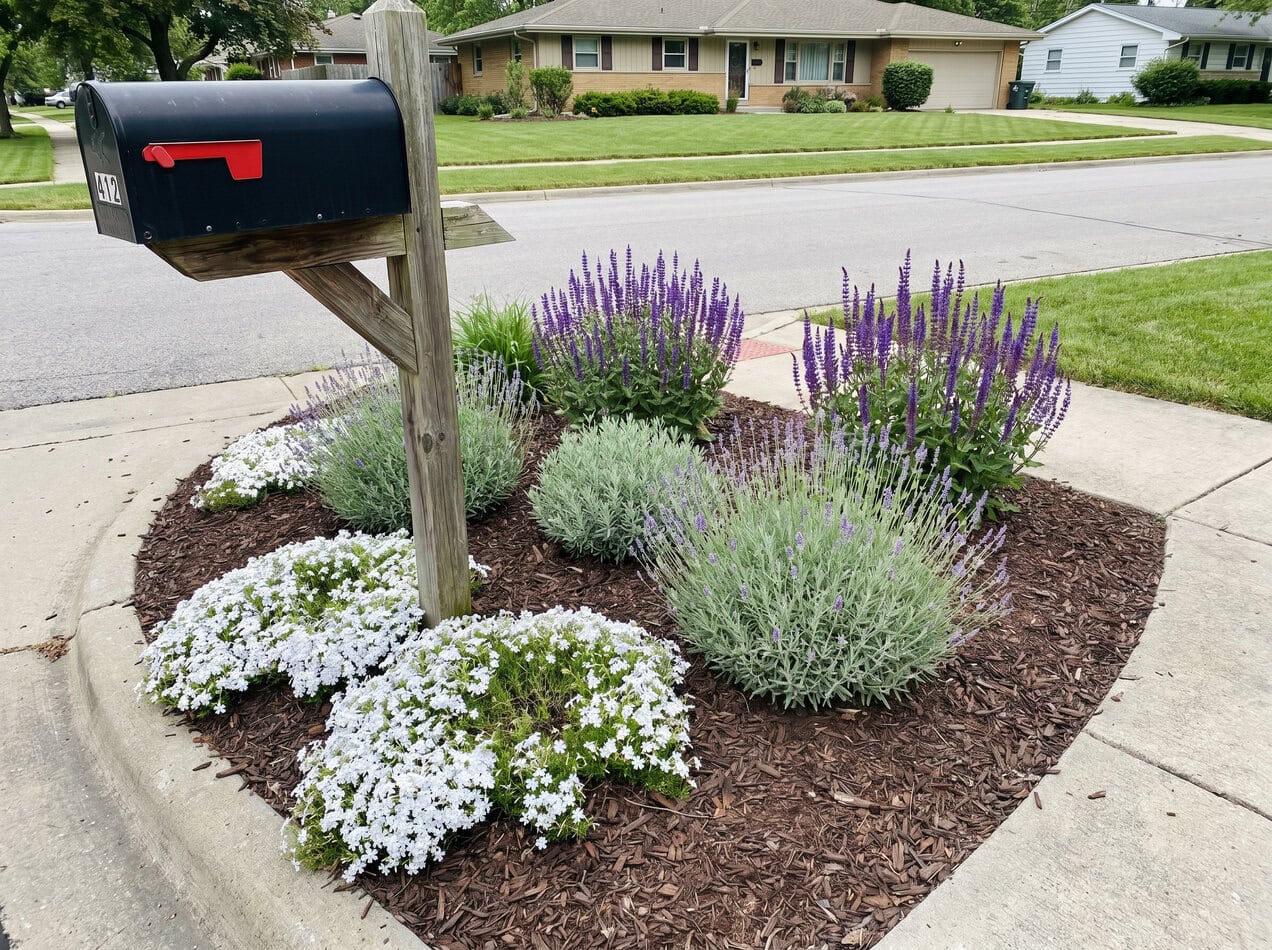
The look here is: White creeping phlox, lavender, and perennial salvia. Best for USDA Zones 5-8, with sharp drainage for the lavender.
Stick to purple and white to avoid a visual circus. Layering a single color over white pulls off a polished look that makes people assume you hired a pro.
White creeping phlox blankets the soil early, giving you that clean little spring carpet before retiring into a green background. Then lavender and salvia take over with purple spikes through the warmer stretch.
The repeating upright blooms make a tight space feel taller and calmer, which is exactly the energy you need before opening a jury duty notice.
9. Total Novice Starter Combo
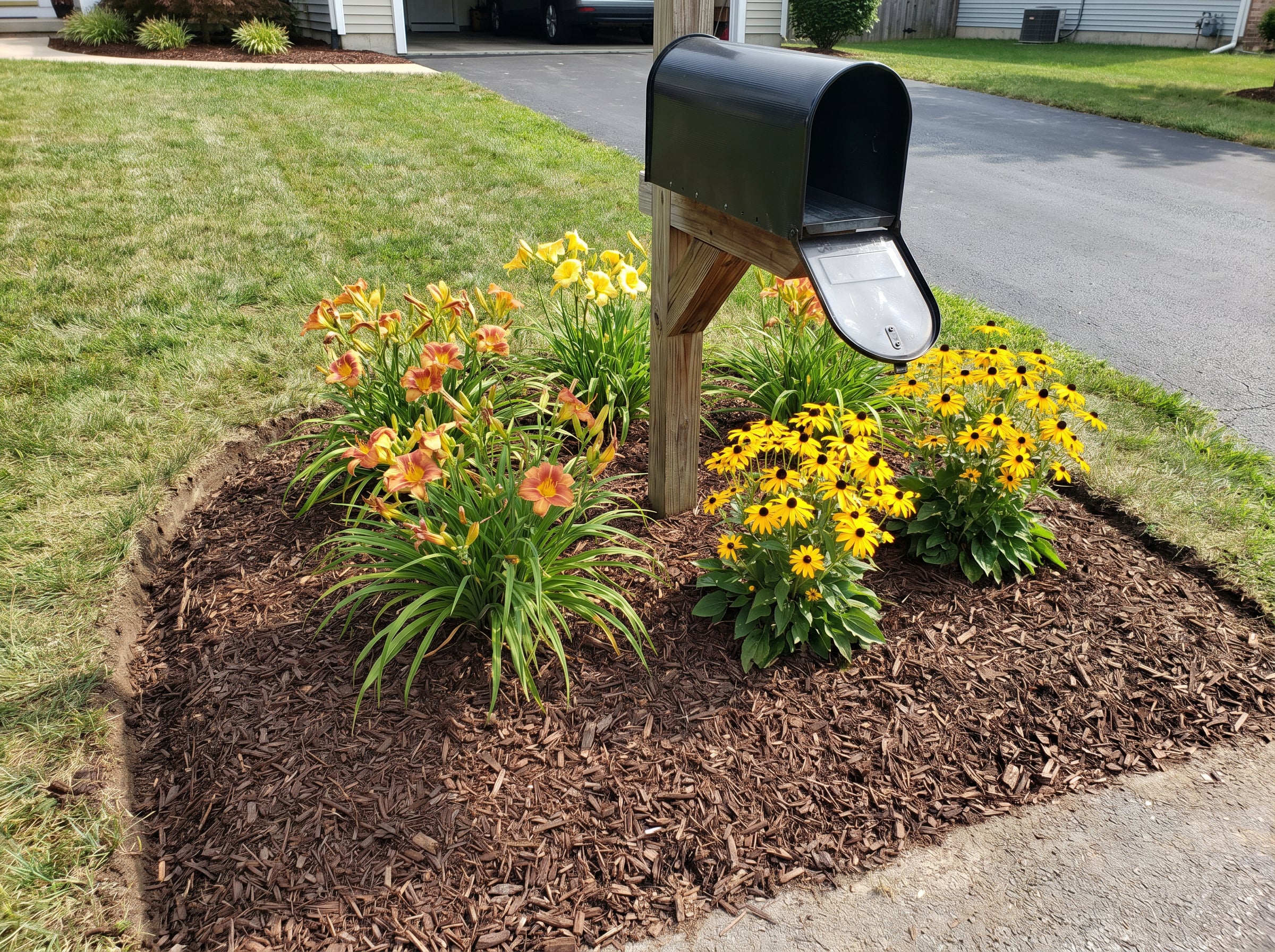
The look here is: Daylilies, black-eyed Susans, and hardwood mulch. Best for USDA Zones 4-9, depending on the daylily and Susan variety.
This layout rewards lazy execution, tailor-made for people who traditionally default to plastic flowers or who want flowers without turning mailbox care into a second job.
Daylilies and black-eyed Susans can handle serious summer heat once established. Water them well their first season so they can build roots, then you can start ignoring them.
If you want more plants with that same “please don’t make me babysit you” energy, we have a full guide on flowers that thrive on neglect.
Partners in Grime
You need plants that can survive a brutal summer bake, blinding glare from the asphalt, and the sheer emotional weight of whatever is inside that tax document.
Pick tough curbside plants, keep the mailbox reachable, and you’ll get a little bloom show instead of another sad patch of fried grass.


Thanks. Good advice but nothing I can use here in zone 3. Last three summers I planted one SunDaisy in a decorative planter. It creates a beautiful sight! The neighborhood walkers loves it. I surround it with fall pumpkins.
Hi Gloria 🙂 That sounds beautiful, and you’re right that Zone 3 needs a tougher approach. A planter is a great idea there. For in-ground options, you might have better luck with cold-hardy choices like coneflowers, yarrow, catmint, sedum, hardy asters, or daylilies. Annuals like marigolds, petunias, zinnias, or your SunDaisy in a pot can also give that full summer color without worrying as much about winter survival.