Summer’s in full force, and your cosmos are tall enough to swat down drones.
Does it look like six-foot radioactive celery? No flowers, just aggressive green entitlement? Or claims AncestryDNA results of 50% Daisy, 50% Shrek? Gotcha. Here’s how to get them back on track.
Why Are My Cosmos All Leaves?
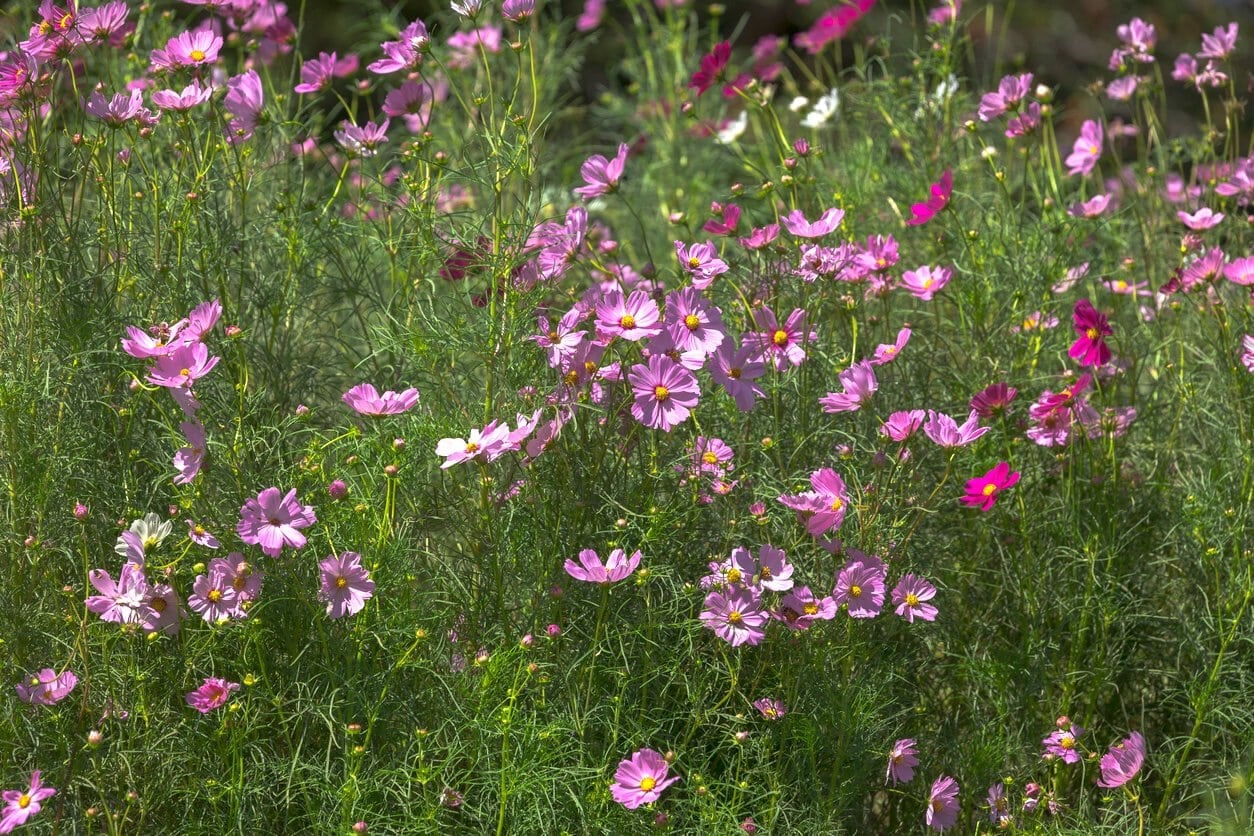
Your plants look healthy enough to survive the end times, yet they still won’t produce a single bud. So what’s going on?
Blame the classic beginner’s panic. You notice a slightly spindly seedling in May and drown it in balanced fertilizer from the shed because you’re a helicopter plant mom.
High-nitrogen fertilizer pushes the plant into leafy growth. The plant keeps making taller stems, softer growth, and more feathery foliage, but very few flowers. You basically gave your cosmos a massive trust fund, and now it sees no reason to get a job.
Why Cosmos Prefer Lean Soil
Cosmos are not delicate greenhouse princesses. Many garden cosmos trace back to Mexico and the southern U.S., where they are used to sunny, open conditions and soil that is not especially rich. That is why pampering them can backfire.
If you’re planning the bed around them, we also wrote a guide on companion plants that grow well with cosmos so they are not surrounded by plants that want totally different treatment.
When to Fertilize Cosmos in Mid-Summer
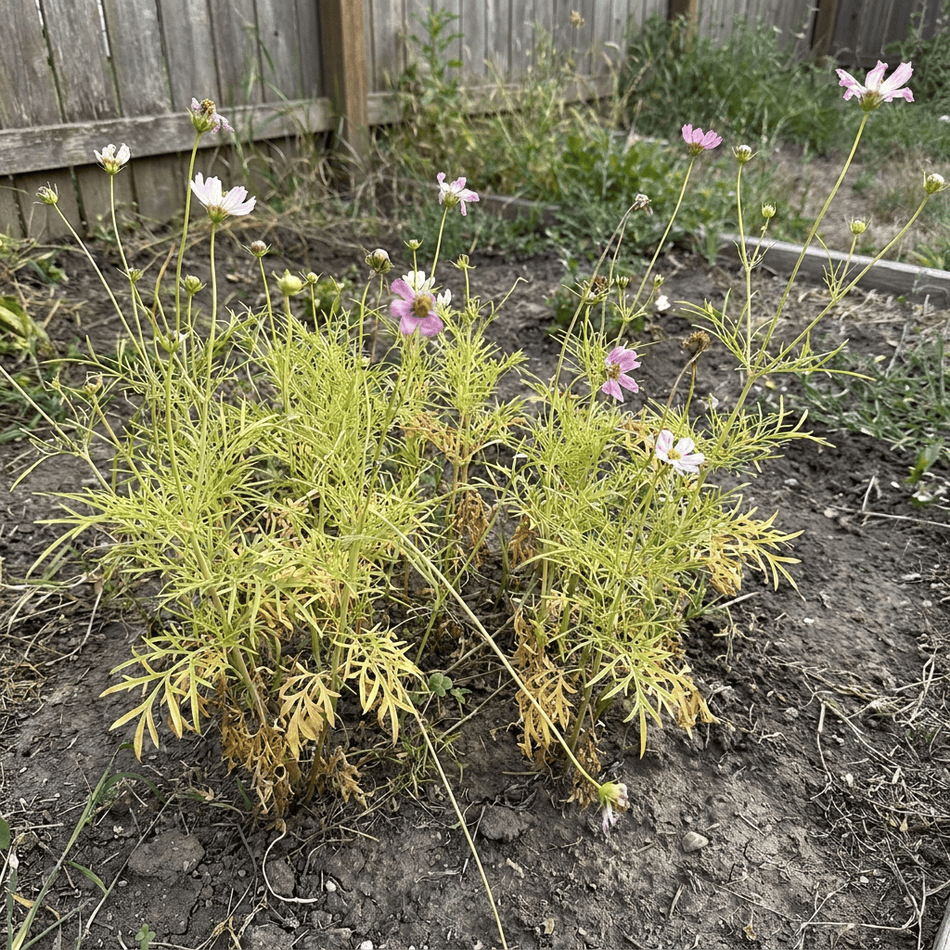
No visible buds by early July? Before you start dumping fertilizer around like a panicked raccoon, read the plant first. It requires zero psychic ability. So before you reach for fertilizer, look for these signs:
But what about deep green foliage on a massive six-foot frame? That is not hunger. That usually means too much nitrogen, rich soil, or not enough direct sun. Do not throw more balanced fertilizer at it.
How to Feed Cosmos for More Blooms

Feeding cosmos is not about dumping fertilizer and hoping for a flower explosion. Apply fertilizer the wrong way, and you can end up with more leaves instead of the blooms you were trying to bribe out of them.
Step 1: Water the Roots First
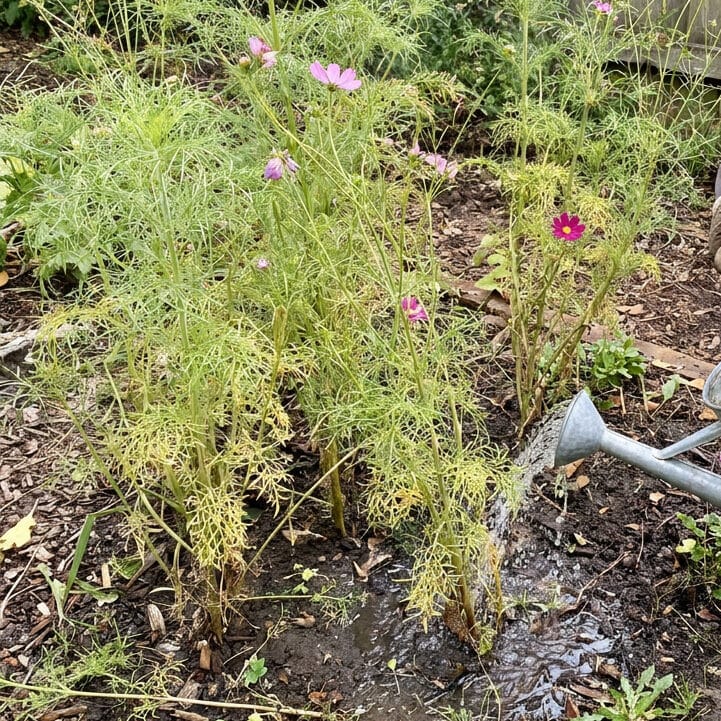
Never pour fertilizer onto bone-dry soil and hope for the best. Dry roots are already stressed, and concentrated nutrients can burn those fine little root hairs. Soak the root zone with plain water first!
Step 2: Base Application Only
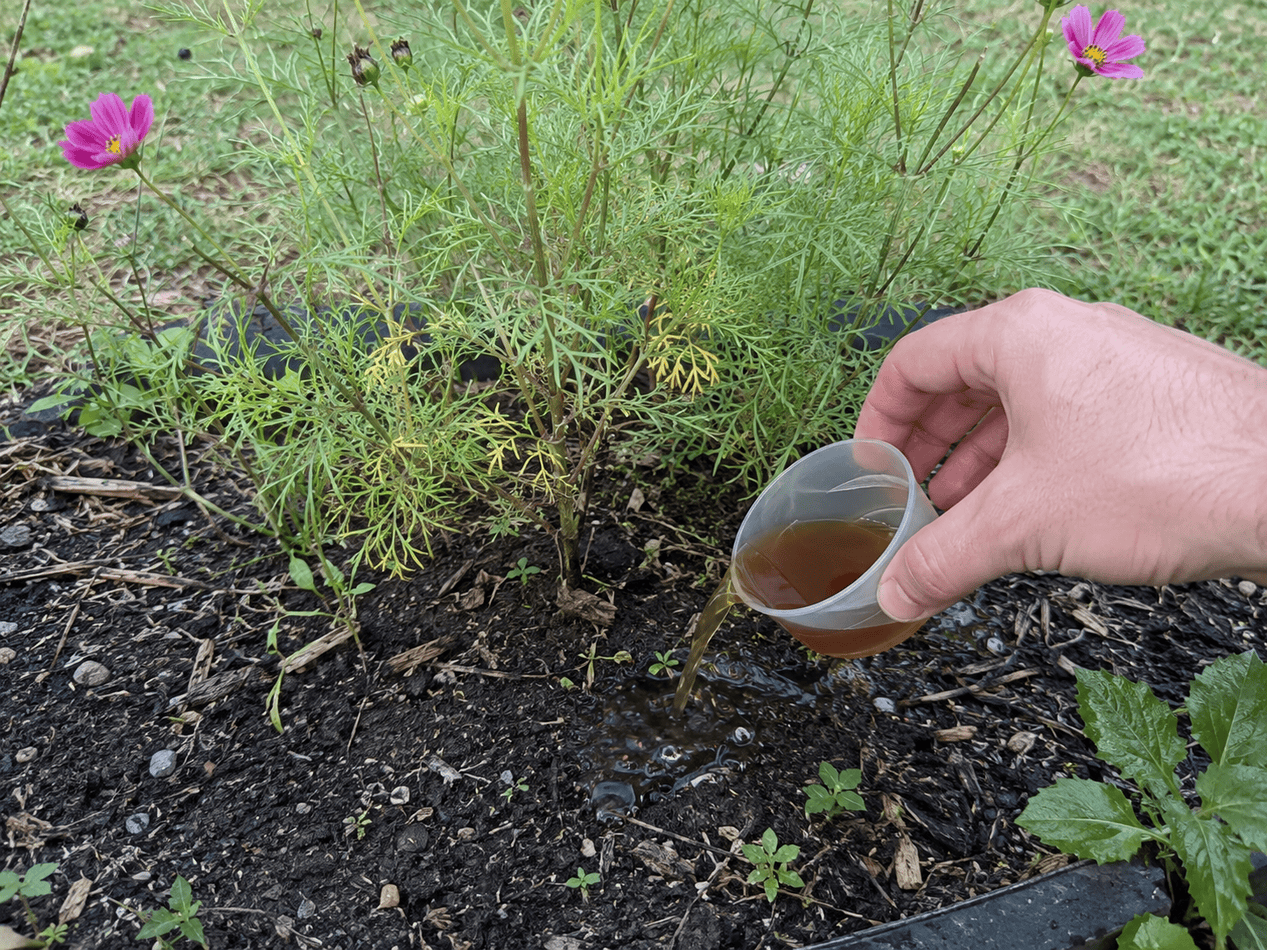
Once the soil is evenly moist, apply your diluted fertilizer around the base of the plant, not right against the stem.
Keep it off the greenery as much as possible. Cosmos have fine, lacy foliage, and wet leaves can encourage mildew or other fungal issues when the weather is humid and the airflow is poor.
Prefer not to turn your cosmos white and fuzzy and thus ruin the entire garden aesthetic? Keep the liquid on the soil, not the leaves!
Step 3: Mulch Multi-Tasking
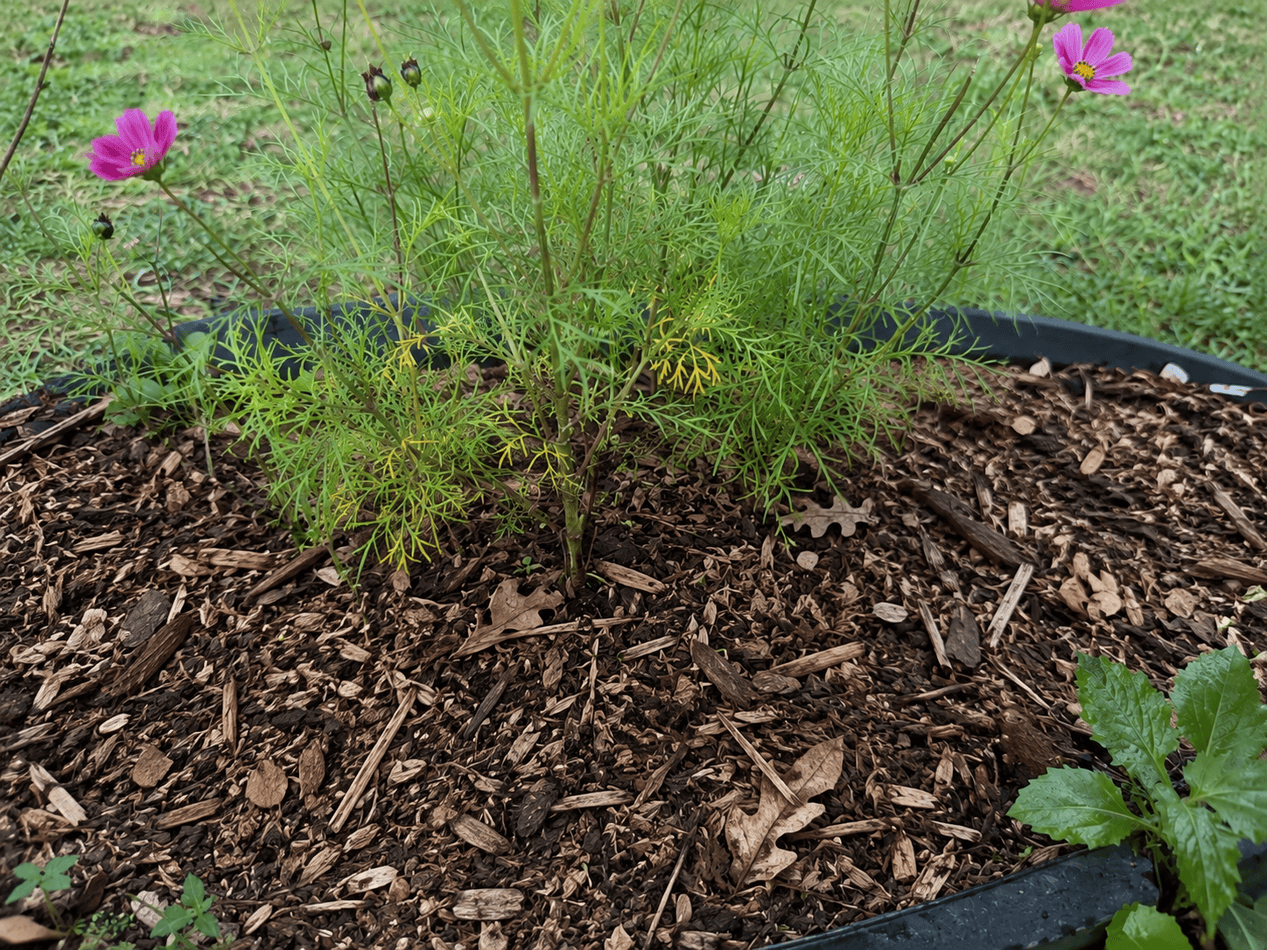
After feeding, add about an inch of straw, shredded leaves, or fine bark around the base of the plant. Not a giant mulch volcano. Just a light blanket.
Mulch helps keep the soil evenly moist, protects shallow roots from brutal summer heat, and stops the ground from drying out five minutes after you water.
Quick tip: Keep it pulled back from the stem so the plant does not sit there stewing like a damp little goblin.
If your garden turns crispy every summer, we also explain more options in our guide on drought-tolerant flowers that still bring plenty of color.
The Best Fertilizer Types for Cosmos
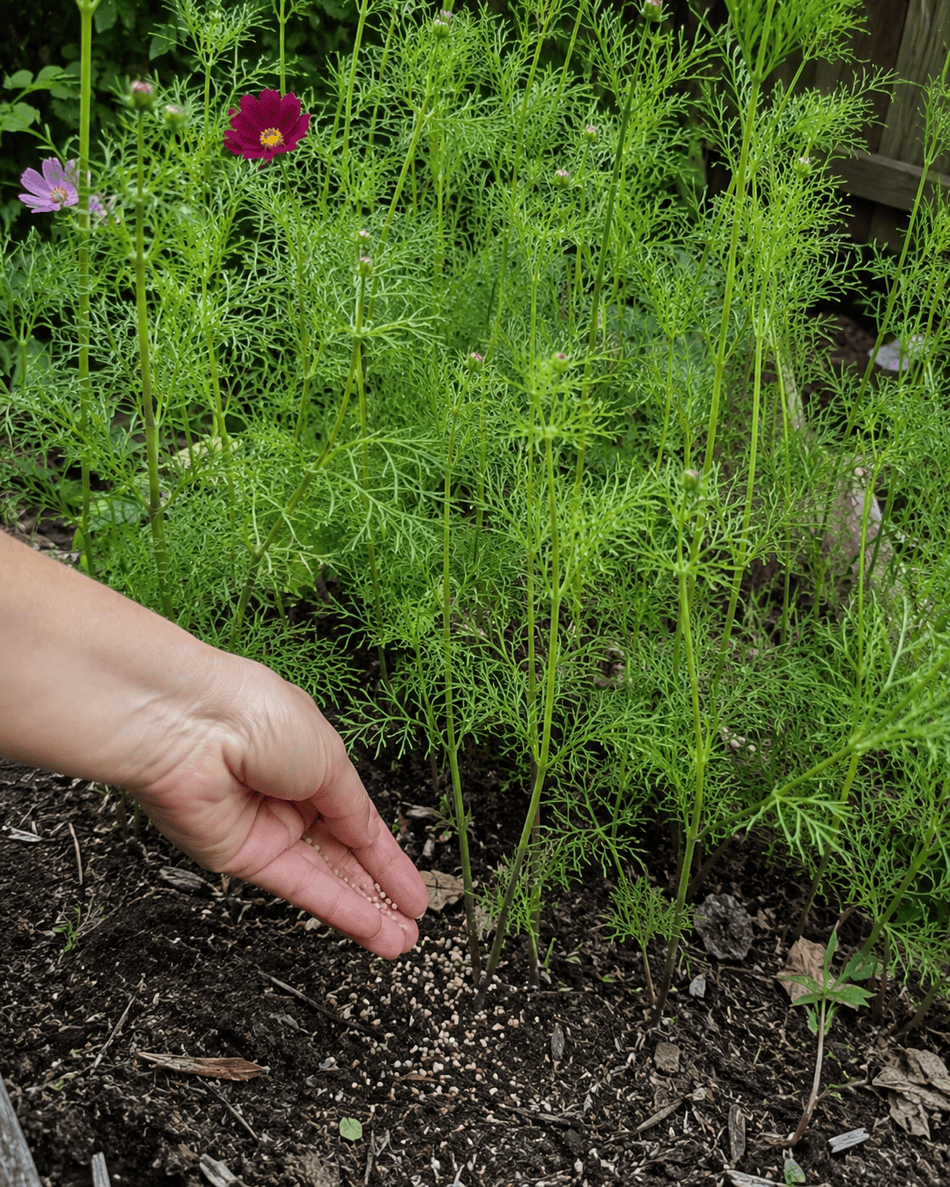
Fixing a bloom strike starts with the N-P-K numbers on the fertilizer label.
For leafy cosmos, the first number is the one to watch because that’s nitrogen, and too much of it can keep the plant stuck in green giant mode. Look for lighter, bloom-friendly options like:
Just remember: cosmos are light feeders, not fertilizer addicts. Never use more than the label recommends, and when in doubt, cut the dose in half.
Cosmos are not the only flowers that prefer life a little leaner either; we have a full guide on flowers that grow in poor soil and still look amazing if you want more plants that do not need constant feeding.
The August Cutoff

Feeding cosmos cannot become a permanent lifestyle choice. In colder zones, stop feeding by late August so the plant is not pushing soft new growth right before frost.
That late-season growth is usually weak, floppy, and wildly attractive to aphids. And trust me, they cannot wait to munch on fresh, tender stems. At this point, your cosmos need sun, deadheading, and restraint, not another snack.
The Deadheading Trick
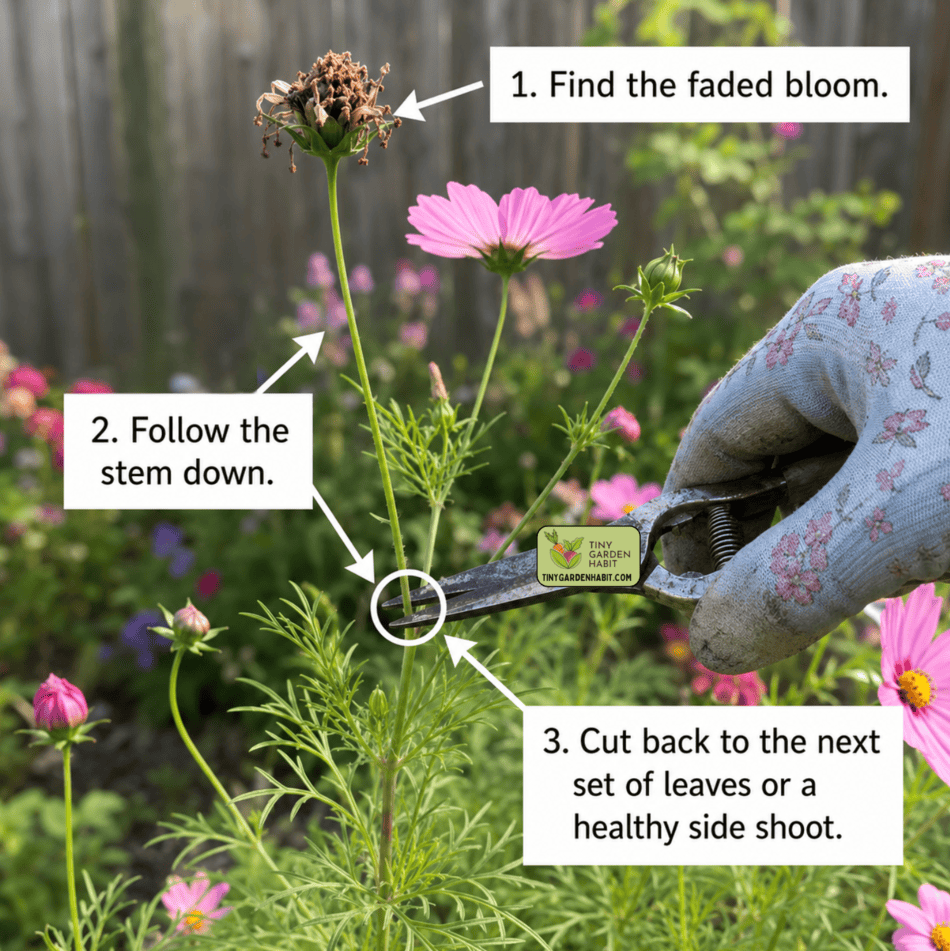
Fertilizer remains entirely useless if the plant is busy ripening old seeds.
Once a cosmos bloom fades, it stops trying to look pretty and pours every single ounce of energy into ripening seeds. Deadheading breaks that cycle and encourages it to keep making new buds instead.
Pruning cosmos is not the gentle plucking of “loves me, loves me not.” Use clean pruners or garden snips and cut the faded flower stem back to the next set of leaves or a healthy side shoot.
Look for the little joint where new growth is already waiting to take over the branch. As famous florist Pat Benatar wisely warned us, love is a battlefield. Of cosmos.
Tough Love, Tough Stems
Your six-foot green ogres of cosmos will keep flopping around if you let them. The Mexican desert bred them to be the ultimate burros of the summer garden, built to pack heavy color across dry, rocky terrain on zero rations. There’s a reason we like Donkey more.