Garden edge in summer. Full-sun border. Most plants scream for mercy once the temperature hits triple digits, especially beside hot concrete or stone. Not these.
These little green machines take reflected heat, blazing sun, and dry edges better than the delicate stuff, then ask if that’s all you’ve got.
9 Pretty Full-Sun Border Plants
For the hot, exposed edges where weaker flowers go to suffer, these are the plants that actually show up. If the plants are only half the battle, we also wrote a guide on low-maintenance border materials that help flower beds look cleaner without constant fussing.
1. Dwarf Garden Phlox (USDA Zones 4 to 8)
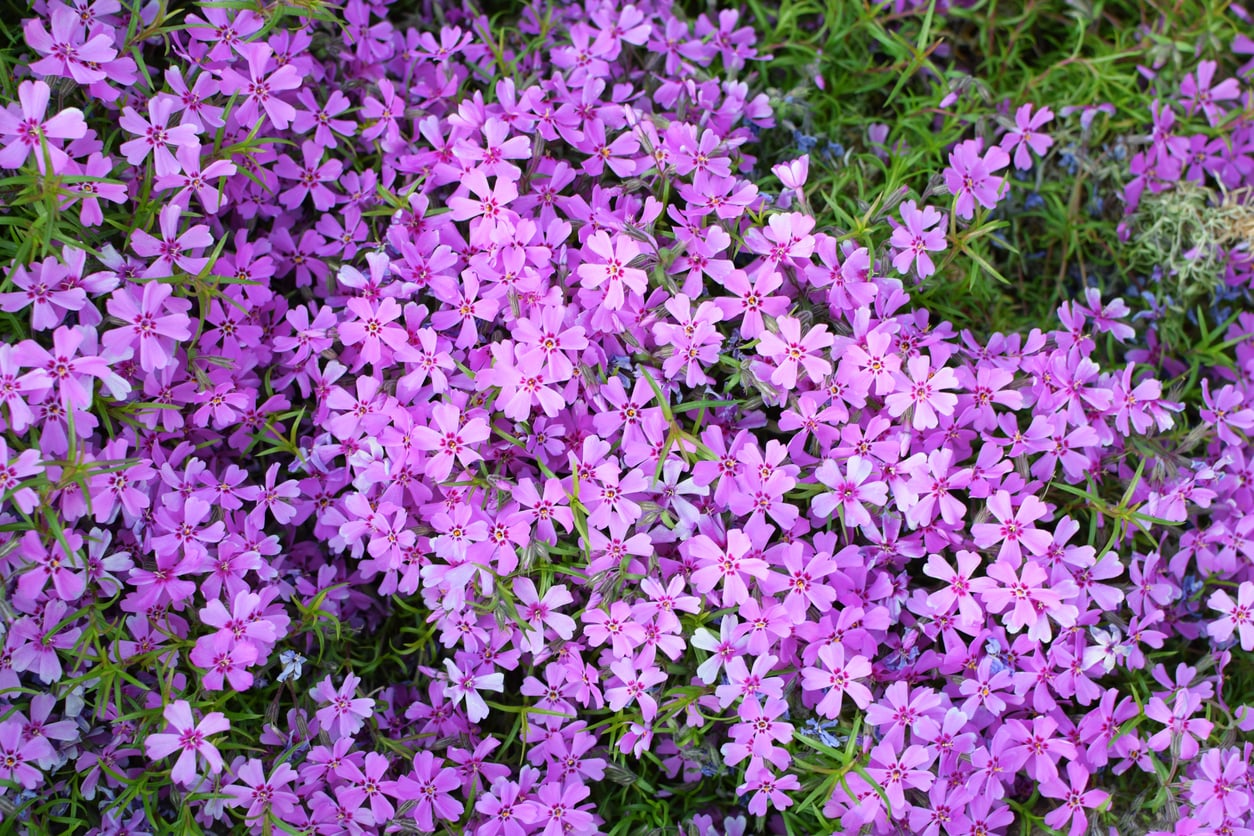
Standard garden phlox can get too top-heavy. One hard summer storm and those tall stems start leaning, flopping, or snapping like toothpicks. Go with dwarf cultivars instead. They pack those big, sweetly scented flower clusters onto shorter, sturdier little mounds.
Dwarf and compact varieties like Paparazzi® Gaga still want plenty of sun for strong lavender-pink blooms. The soil underneath can’t turn into dry dust, though. Keep it evenly moist and well-drained, or the lower leaves start looking crispy.
Quick tip: Give them some breathing room and avoid soaking the leaves late in the day or they’ll punish you with powdery mildew!
If you still want height behind the front edge, we wrote another article about tall flowers to plant at the back of garden borders.
2. Drift Roses (USDA Zones 4 to 11)
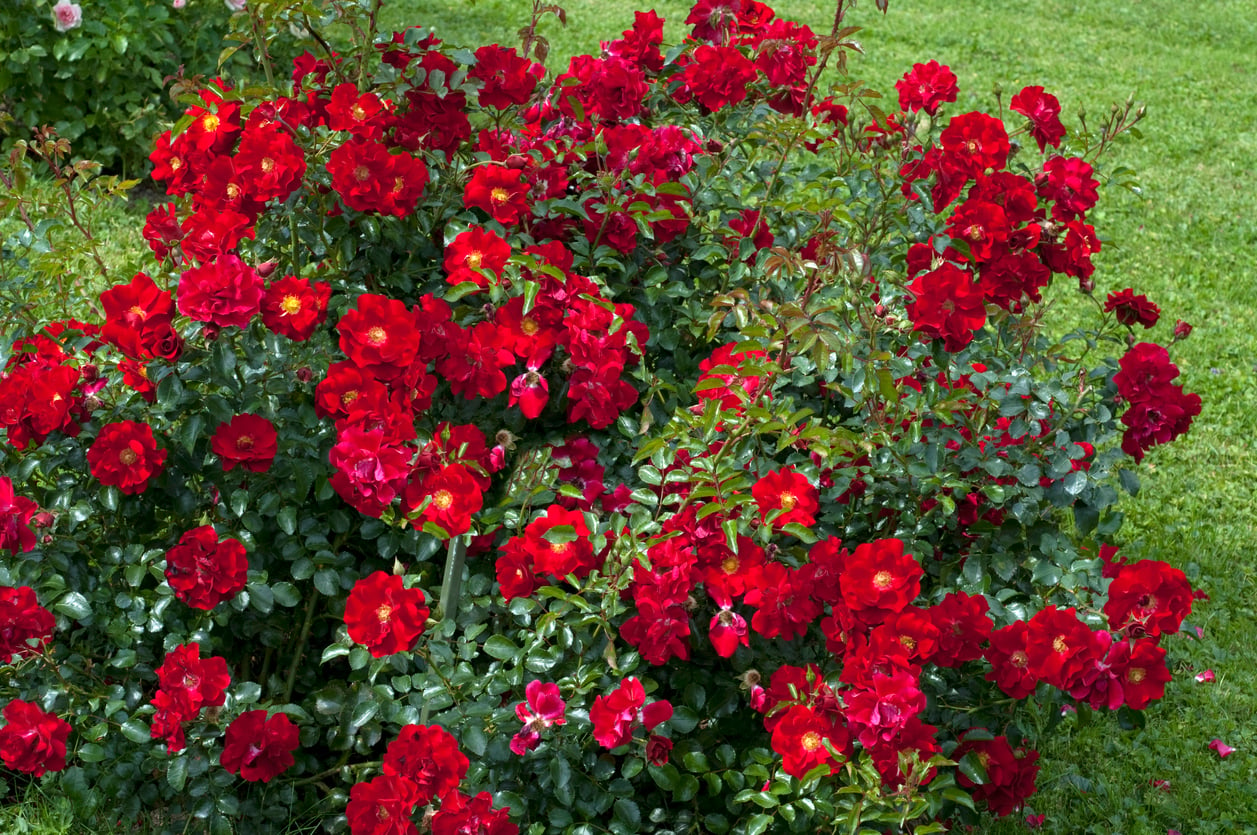
These ground-hugging solar panels turn blistering concrete walkways into pure color. No stretching. No reaching. They stay low, spread wide, and carpet the edge instead.
With Red Drift, you get the romance of a rose garden without the weekly chemical cocktail. They’re much more disease-resistant than many old-school roses.
Quick tip: Cut them back hard in late winter or early spring, usually to about 6 to 8 inches tall. Skip that deadline, and you get a chaotic thorny tangle by June.
3. Supertunia Petunias (Annual in most USDA zones)

I must admit, I actually like deadheading spent flowers. I find it weirdly relaxing… But if you hate that job, Supertunias are your friend!
Unlike standard petunias that turn into sad, sticky sludge after summer storms, Supertunias keep pushing out color without constant pinching. Especially Supertunia Vista Bubblegum.
They’re the heavy-duty upgrade. They grow with ridiculous speed, knitting together fast enough to shade the soil and crowd out plenty of baby weeds.
The only catch? They eat like teen athletes. Don’t skip feeding for too long or they slow down, pale out, and sulk. Keep them fed and watered, and they’ll swallow your whole border.
If low-mess flowers are your love language, we also put together a guide on flowers that keep borders looking neat without turning into a cleanup project.
4. Lantana (USDA Zones 9 to 11, annual elsewhere)
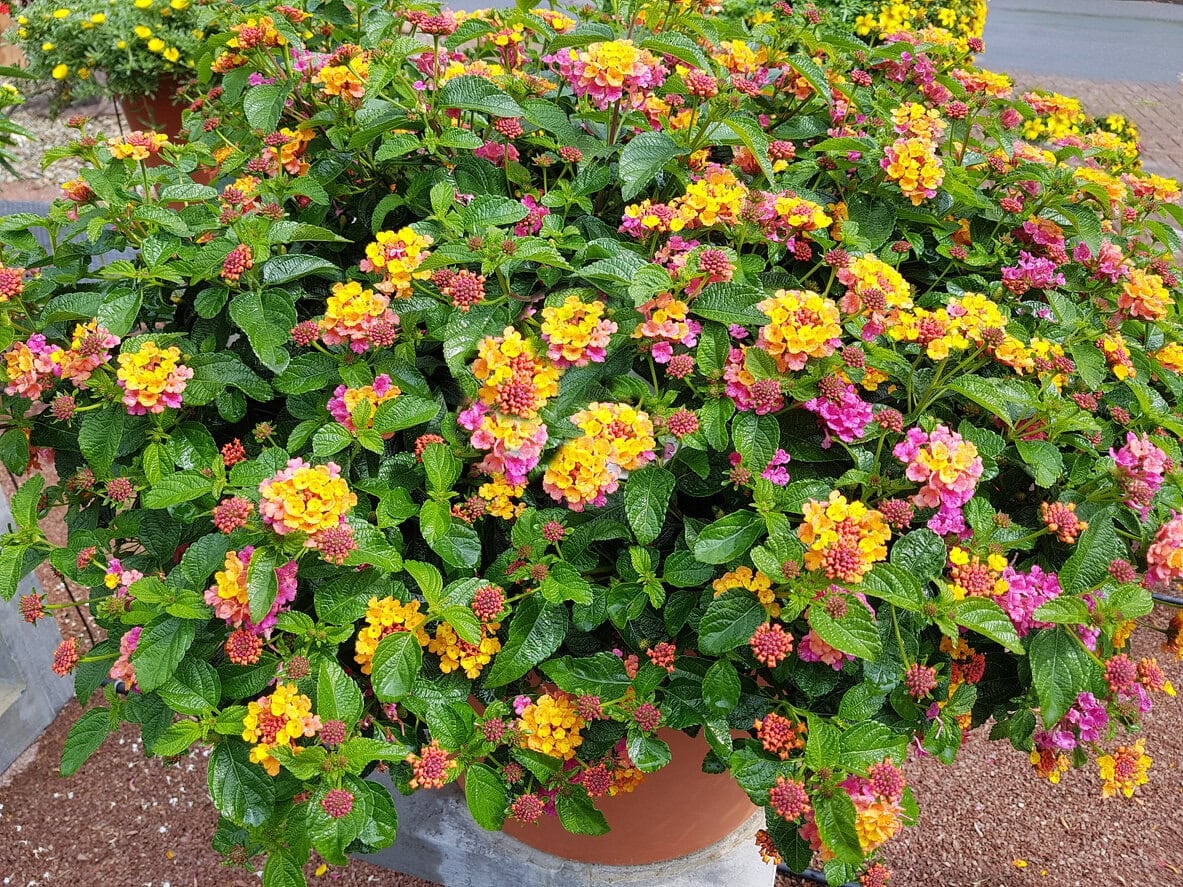
Gravel-pit survivor. Lantana wants full sun, lean soil and relentless, baking heat to bloom its head off.
The leaves feel like coarse sandpaper and have that sharp, citrusy, gasoline-ish smell. Deer usually don’t love that combo, which lets Lantana build a dense, colorful buffer that handles summer without melting into a crispy mess.
Be ready for the fall cleanup, though. Because once a hard frost finally hits this tropical beast, the whole thing turns brown and brittle overnight.
Quick tip: Don’t pamper it with too much rich compost or daily watering or it gets leafy and lazy instead of throwing flowers everywhere.
If this is your kind of plant, we explain more easy-care border plants that thrive on neglect in another guide.
5. Verbena (USDA Zones 8 to 11, annual elsewhere)
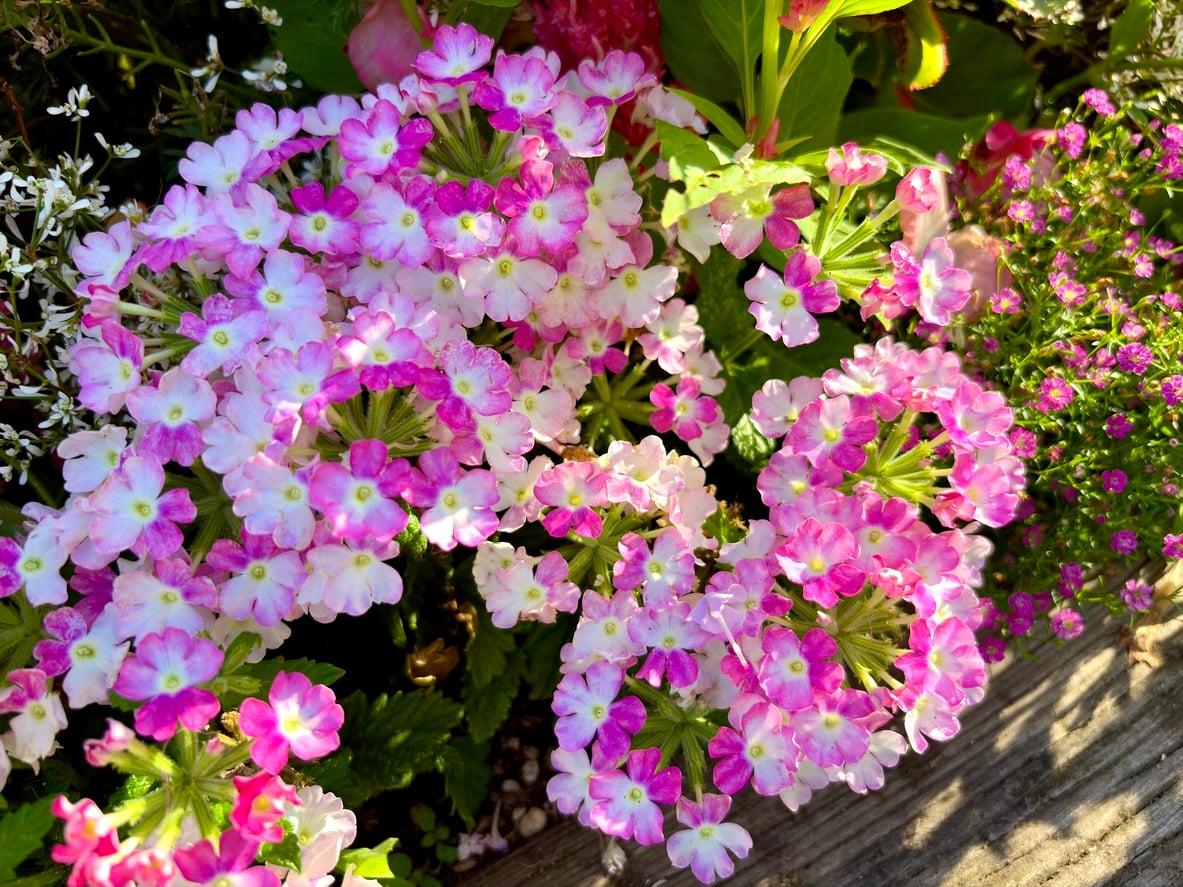
Trailing verbena grows like a slow-motion green waterfall. Plant it right on the hard masonry edge to soften those rigid stone lines. Its stems crawl forward like your spine after sitting for eight hours.
Give it blistering sun and well-drained soil, and it thrives. Give it soggy, stagnant soil and it sulks itself to death. Wet leaves and stale air can invite powdery mildew, so water at the base.
Quick tip: If it starts looking tired by midsummer, chop the stems back and let it launch a fresh round of bloom.
6. Angelonia (USDA Zones 9 to 11, annual elsewhere)

Most soft border plants turn into floppy green blobs by August. Angelonia brings the backbone. Its upright flower spires usually won’t tip over during summer storms.
Marketed as summer snapdragons, these tough little plants are self-cleaning, so wave your pruning shears elsewhere. They just keep pumping out fresh flower spikes while the old ones quietly shrivel up and disappear into the mulch.
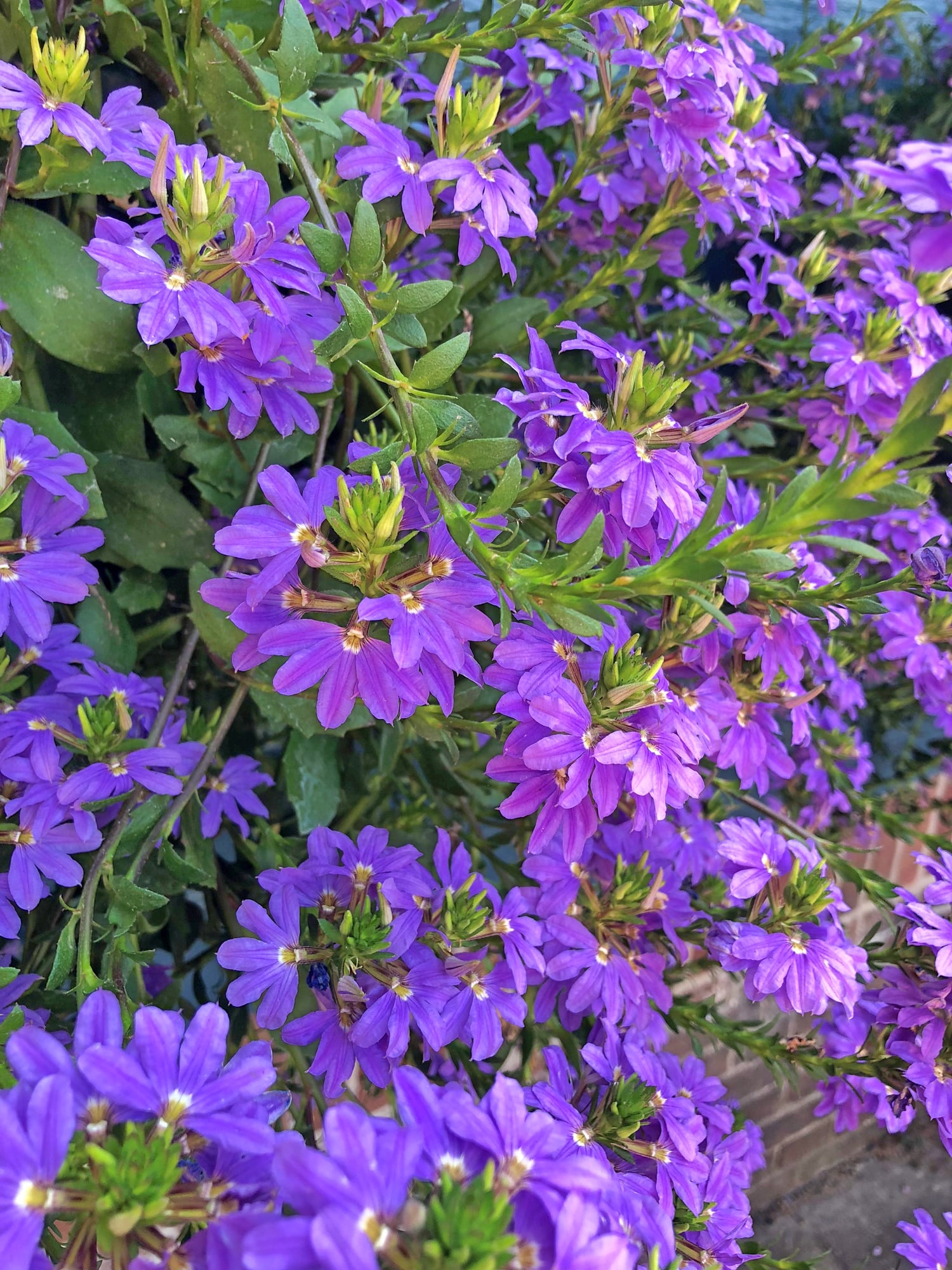
7. Fan Flower (USDA Zones 10 to 11, annual elsewhere)
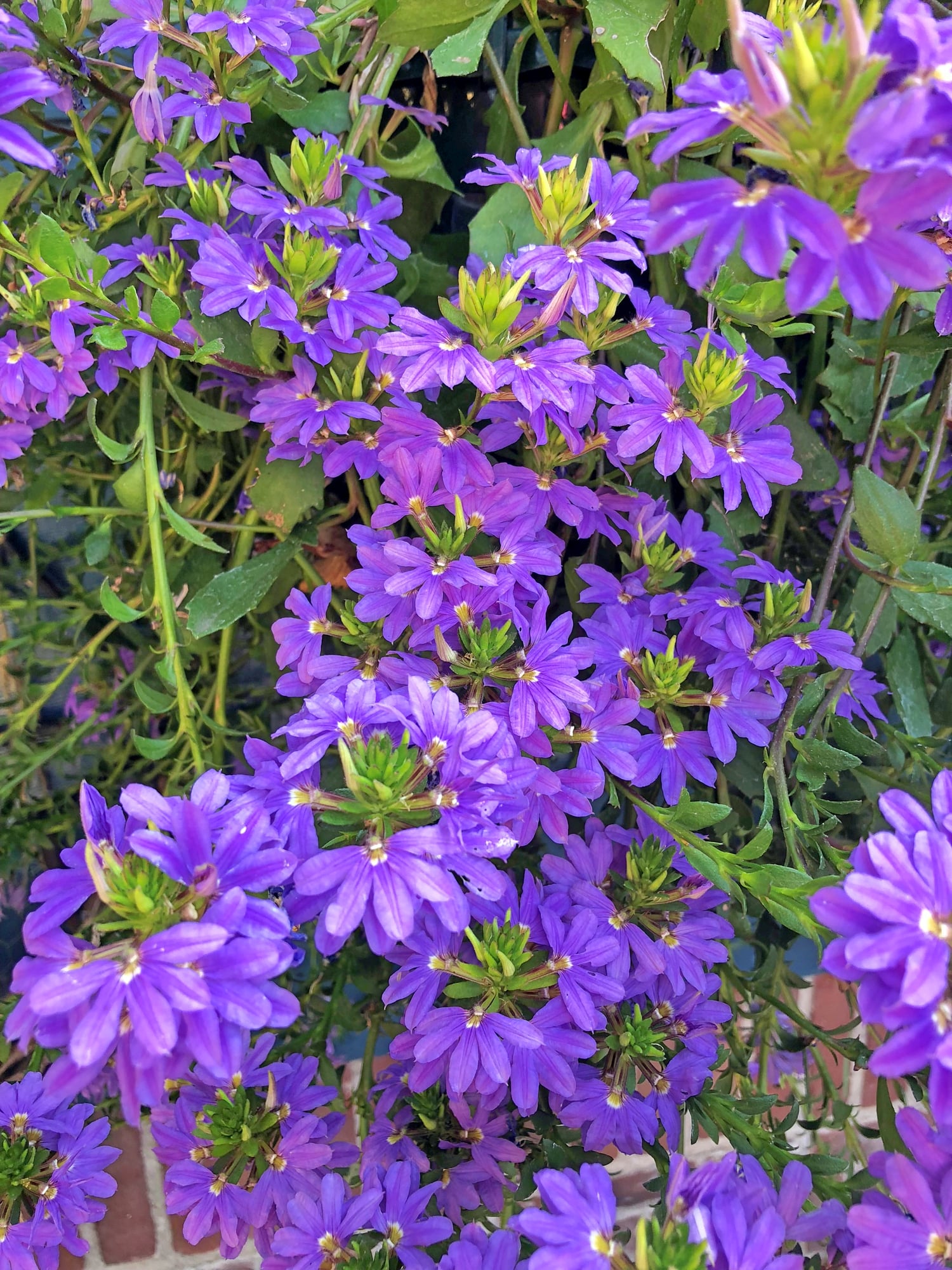
Fan flower takes brutal summer heat in stride, which makes sense for an Australian native. Scaevola blooms are lopsided little things, opening like tiny fans along the stems.
It’s a fantastic filler plant that weaves into bare spots and keeps the border looking tight. Even better, it drops its own spent flowers, so you’re not stuck picking at it every weekend.
Quick tip: Don’t overthink this one. Buy nursery-grown plants instead of fussing with seed, since many modern varieties are selected for performance and may not come true from seed!
8. Dwarf Coreopsis (USDA Zones 4 to 9)
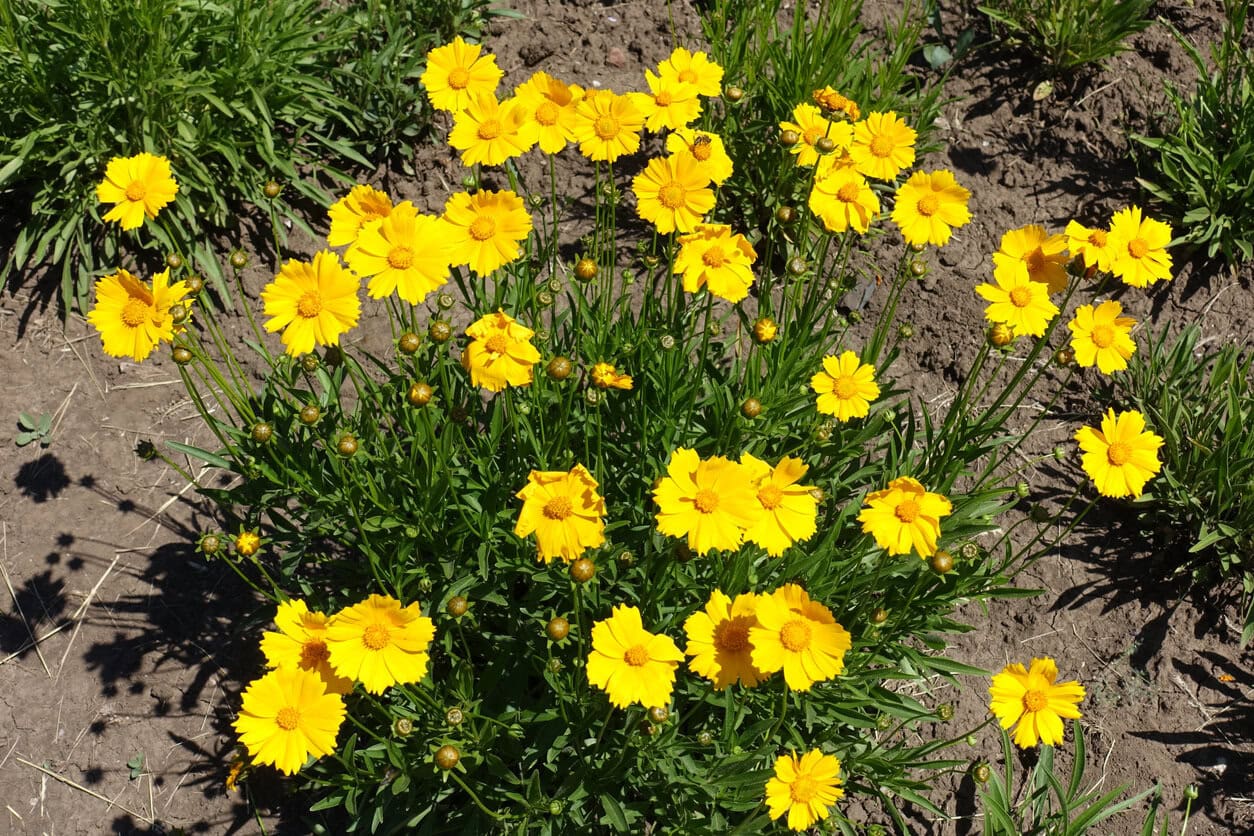
Dwarf coreopsis builds a dense, compact wall of gold with almost no hand-holding. Because it pours so much energy into an intense volume of daisy-like flowers, the plant usually runs out of gas by mid-season.
It handles heat and lean, less-than-perfect soil like Nicolas Cage in most of his roles. Unhinged, dramatic and somehow still standing.
Quick tip: Give the whole mound a rough haircut when the first big flush fades. It feels wrong and looks a little bald for a week, but that fresh autumn bloom is worth the ugly stage.
9. Sweet Alyssum (USDA Zones 9 to 11, annual elsewhere)

A living carpet that smells rich like warm honey and looks sweet like old money. Alyssum hugs the soil, spreading into a soft white froth along the edge.
Older varieties often give up once summer gets brutal. Modern, heat-tough selections like Snow Princess push deeper into the season, especially if you keep them watered through the worst hot spells.
For summer staying power, use the tougher modern types and let them tie the whole border together like a little floral blanket.
Quick tip: If you want a cheaper spring edge, buy regular alyssum multi-packs and tuck them between larger perennials.
If you like that soft, low edging look, we also wrote a guide on low-growing ornamental grasses for garden borders.
Pretty Unkillable
Every spring, garden centers sell gorgeous, delicate flowers that are basically destined to look trashy by late summer. You need the kind of plants that would smoke a cig in the middle of a house fire just to stay relaxed. That’s what all these have in common. Cute savages.
Pet note: If you have pets that nibble everything, I’d skip lantana or plant it somewhere they can’t reach. Most of the others on this list are generally considered pet-safe.