Midsummer gardening isn’t a nurturing hobby; it’s a corporate restructuring. Once their first round of blooms fades, plenty of perennials start sending resources into seed production instead of fresh flowers. Fire the spent upper growth on the right plants now or face a fall bankrupt of flowers.
The Three Degrees of Pruning Violence
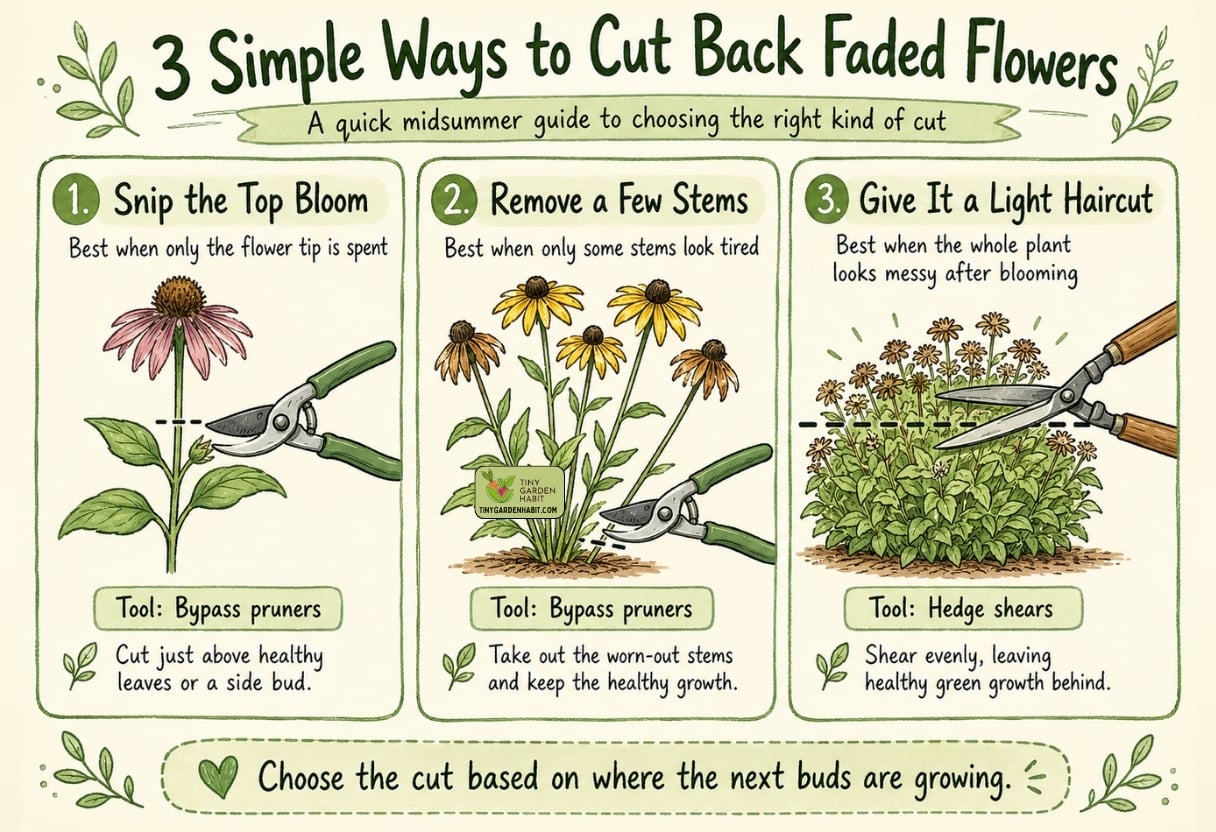
To make sense of the July cutback, start only with flowers whose first flush has actually faded. Then sort them by how much spent growth they need removed and where they keep their next buds.
Some only need a tactical strike at the very top; others need a few tired stems pulled out from deep in the clump. The last group responds best to a hard, even haircut.
Pick your weapon based on the job. Use clean, sharp bypass pruners for precision snips, or grab the hedge shears for plants that need an all-over haircut.
Category 1: Removing Spent Terminal Blooms
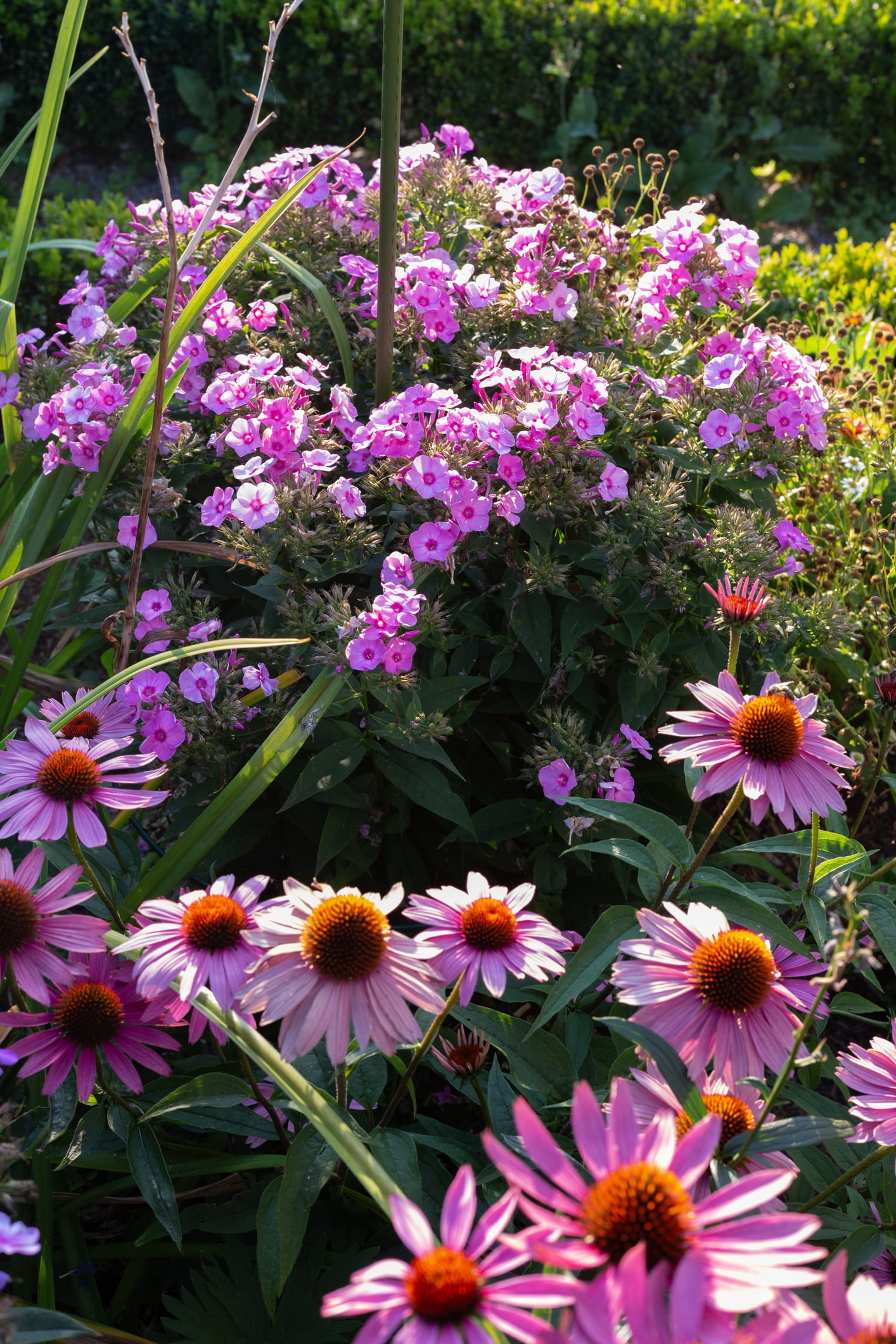
This first bunch still operates on a strict corporate hierarchy. The growing shoot tips produce a hormone called auxin, which essentially keeps nearby side buds sitting quietly on standby.
Once that main bloom is spent and you cut its stem back, the lower buds may get their chance to take over. Cut off the leader, and middle management suddenly gets the funding to bloom.
1: Perennial Salvia (‘May Night’ and ‘Caradonna’)
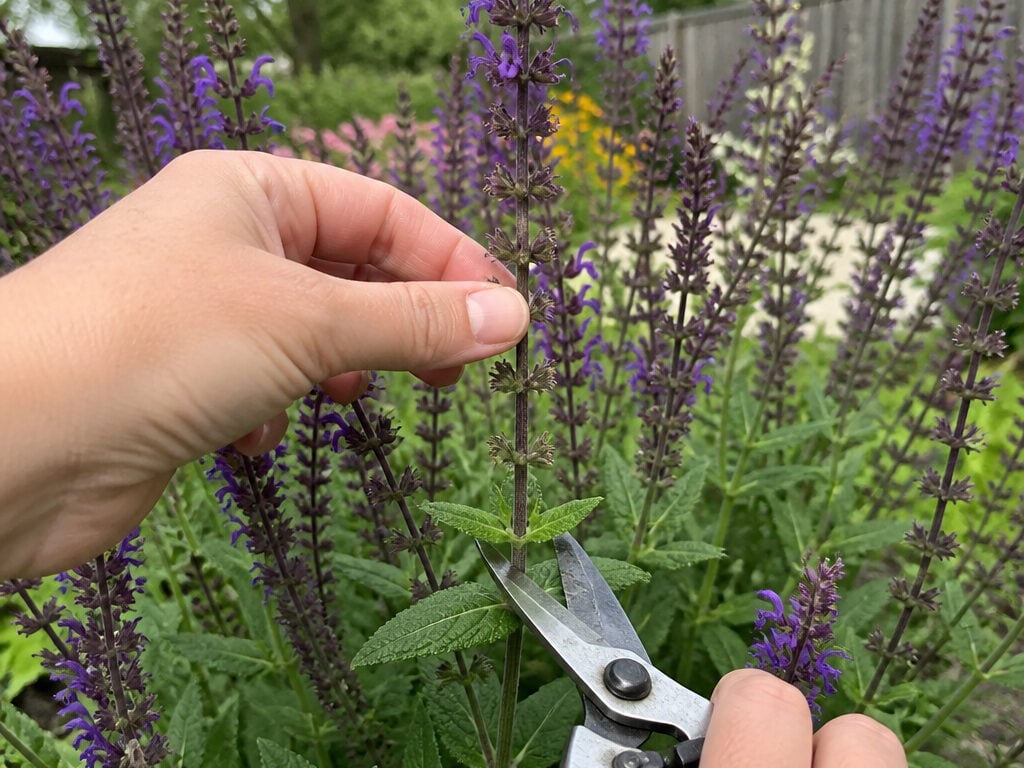
Slide down each faded purple spike past the dry, crunchy flowers until you reach a healthy pair of leaves or a side shoot. Cut just above it.
But, if the entire first flush is finished and the plant looks tired, you can remove the spent flower stems right back to the basal foliage for a cleaner reset.
If your salvia needs more than one quick trim, we also explain how to keep salvia blooming nonstop through midsummer.
2: Garden Phlox (‘David’ and ‘Jeana’)
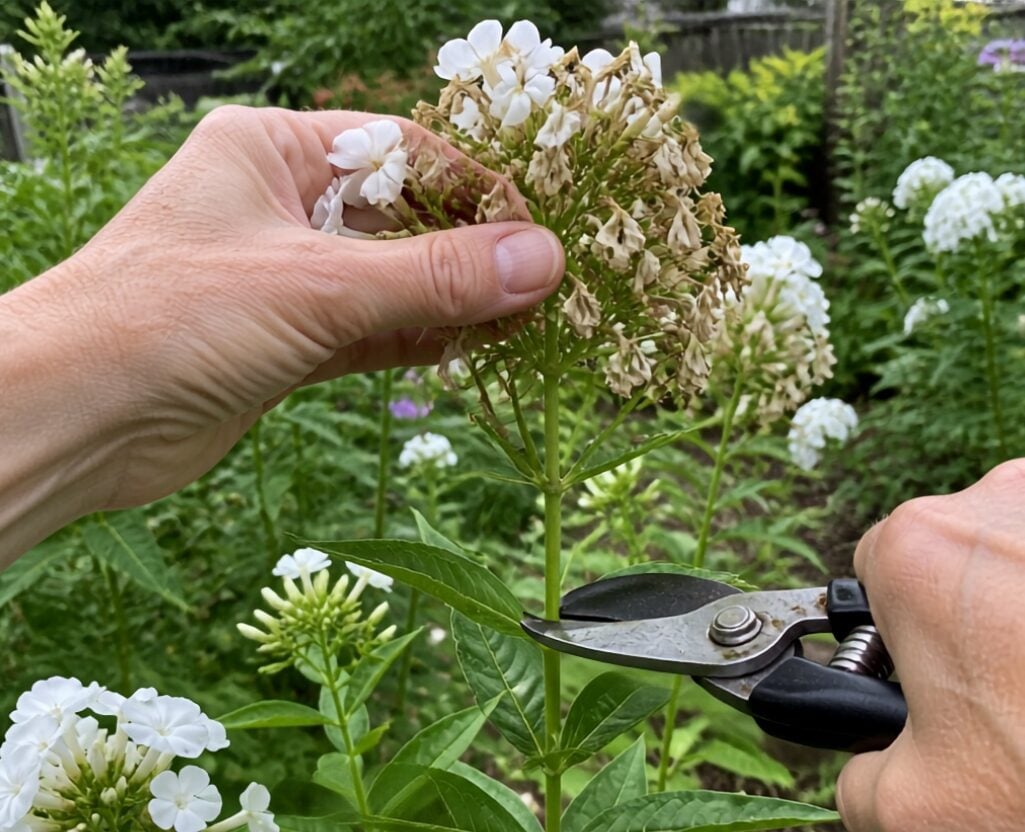
Wait until the whole flower cluster is fading, then cut the spent cluster just above the next healthy pair of leaves or a lateral bud. Leave the rest of the garden phlox stem alone.
Check before you snip, because there may already be smaller side buds or flowers lower on the stem waiting for their promotion. Deadheading can also encourage a smaller late-summer flush.
3: Purple Coneflower (‘Magnus’ and ‘PowWow Wild Berry’)
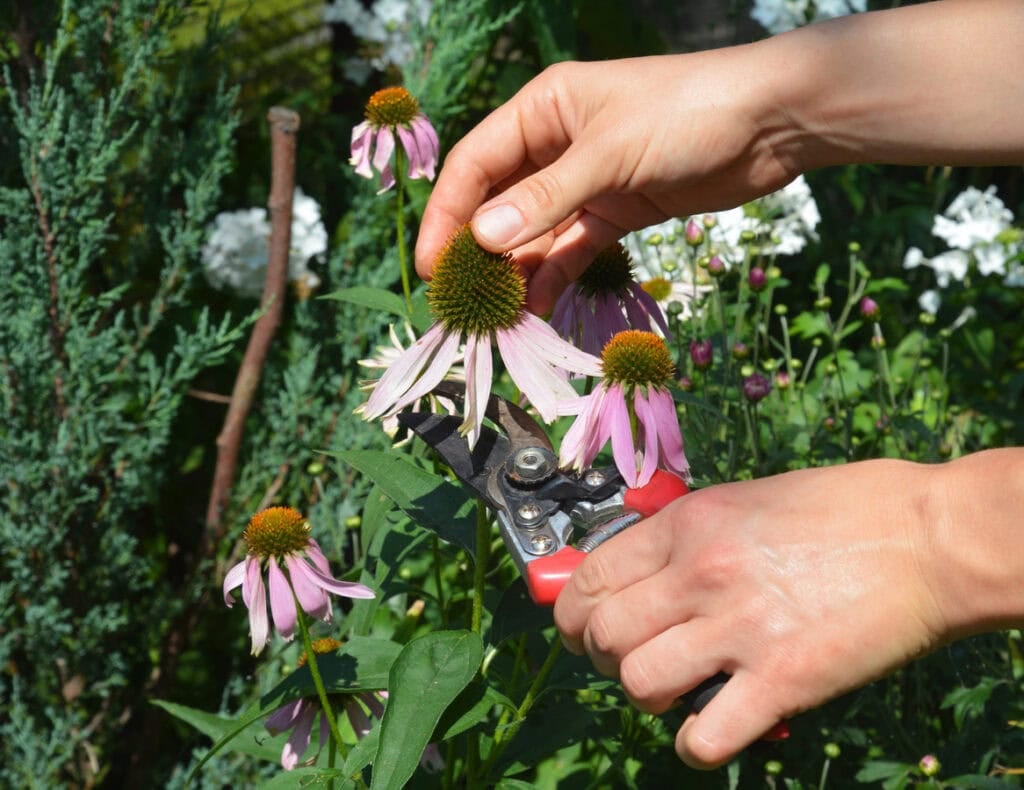
Cut individual faded flower stems back to the next healthy leaf set or lateral bud. Some cultivars may send out more side blooms; for others, deadheading mainly keeps the plant tidy while the remaining buds keep opening.
Quick tip: If you want seed heads for birds later in the season, leave the final round standing.
We explain exactly what to cut and what to leave in our coneflower deadheading guide, especially if you want to keep a few seed heads for birds.
Category 2: Cutting Selected Stalks
The next tier of management involves plants that you can’t shave them completely bald, but you can’t just snip the tips. If you are tackling a bigger July cleanup, we also put together a guide to perennials to prune in July for healthier late-season growth.
4: Bee Balm (‘Jacob Cline’ and ‘Balmy Purple’)
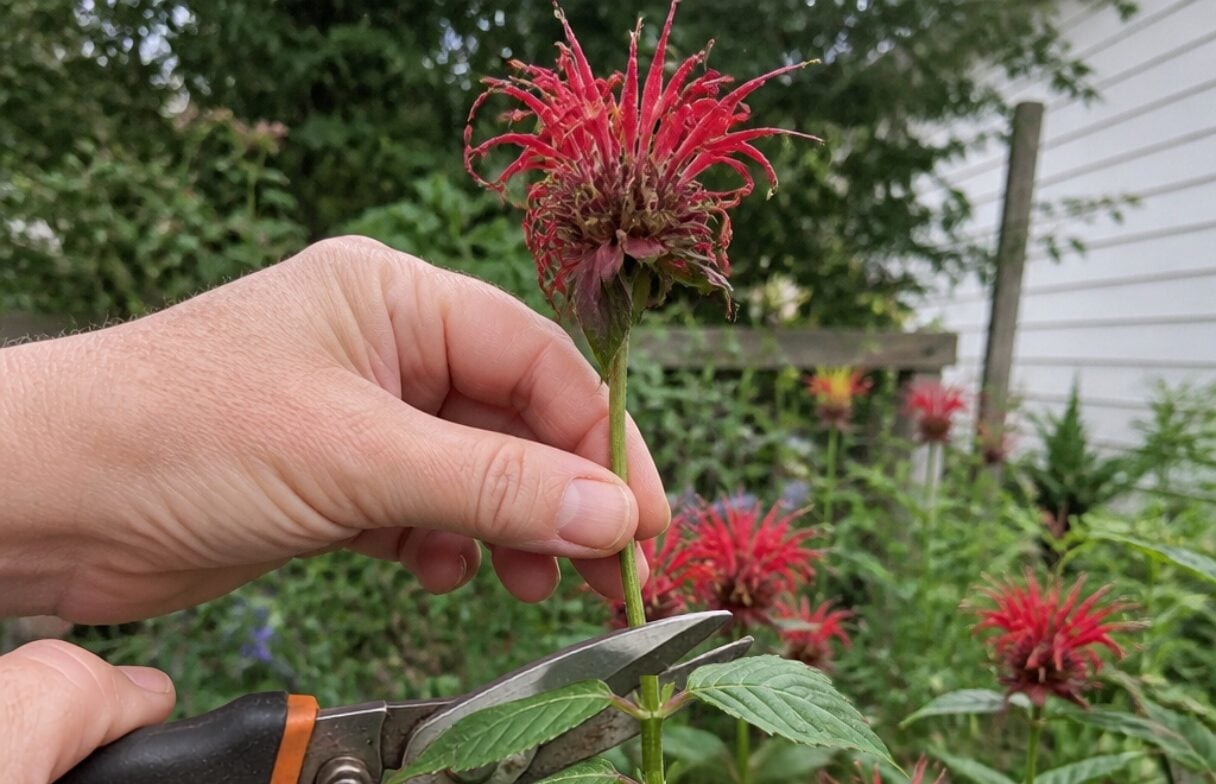
When a flower head is finished, trace the stem down to the next healthy set of leaves or lateral bud and cut just above it. This keeps bee balm tidy and may extend its bloom time.
5: Yarrow (‘Moonshine’ and ‘Paprika’)
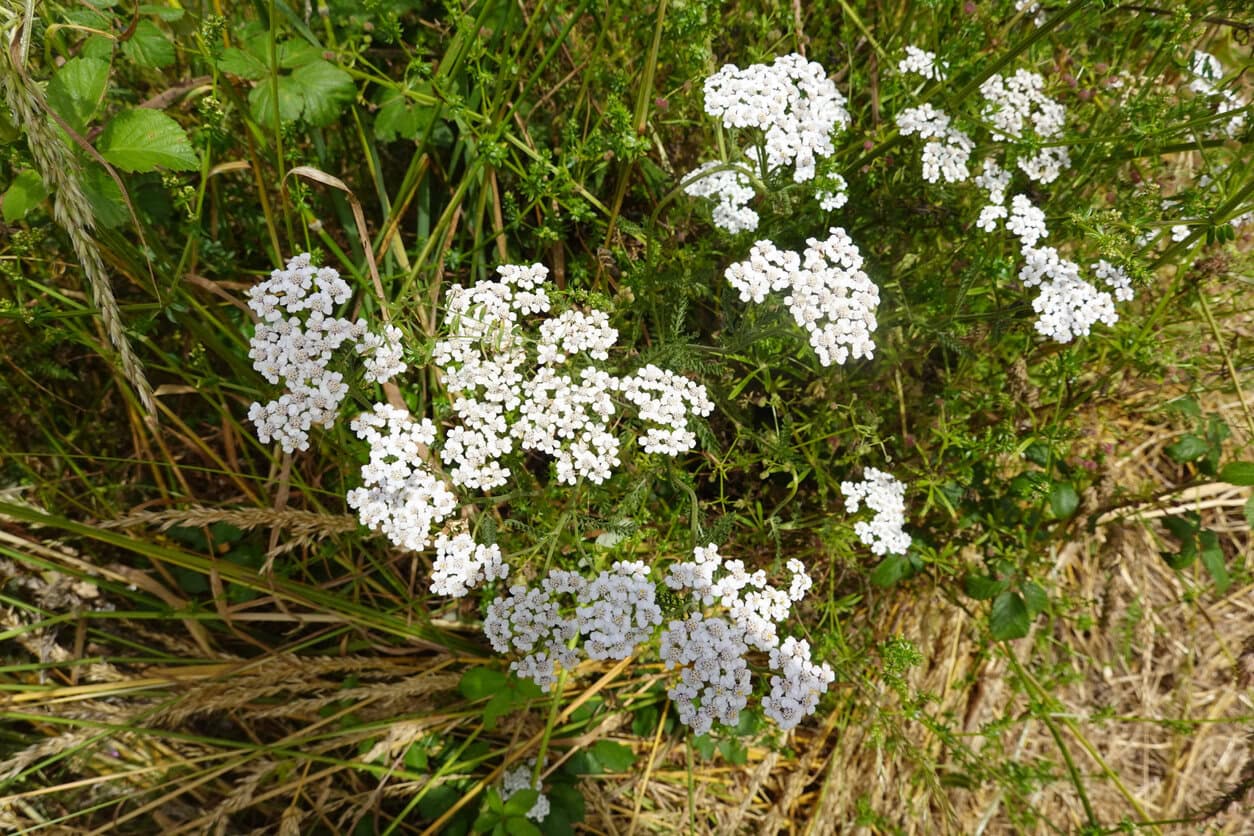
Once the flat flower clusters have faded, take the entire flowering stem down to the basal foliage.
Quick tip: Do not cut into the green, feathery mound at the bottom. You are clearing out the old management, not firing the whole department.
6: Shasta Daisy (‘Becky’ and ‘Snowcap’)
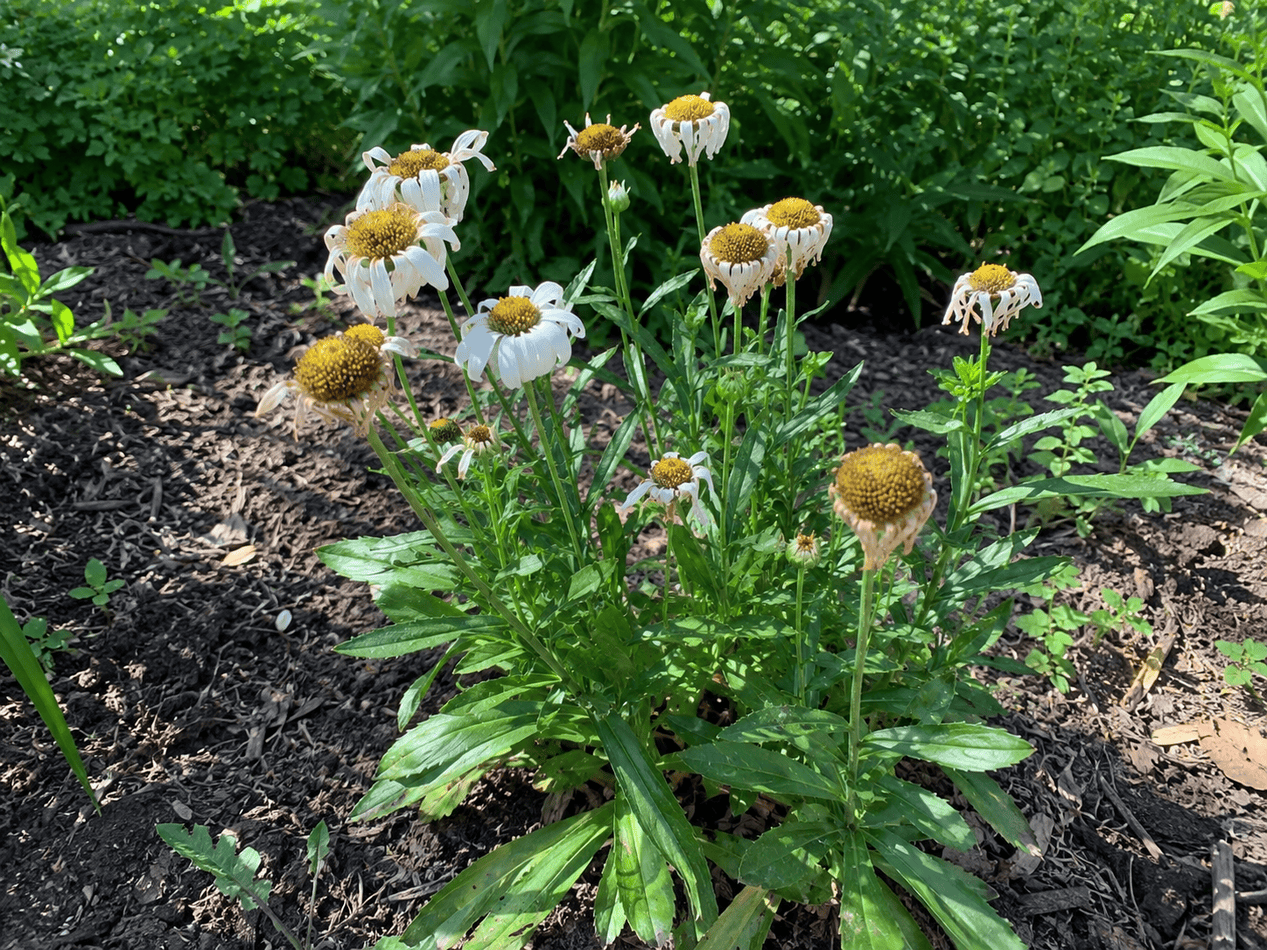
Follow a fully spent flower stem down to the green basal foliage and remove it cleanly.
If there are still side buds or fresh flowers lower on that stem, cut just above them instead.
If your Shasta daisies have already given you their first big show, we also wrote a full guide on keeping them blooming longer after the first flush.
7: Black-Eyed Susan (‘Goldsturm’ and ‘Little Goldstar’)
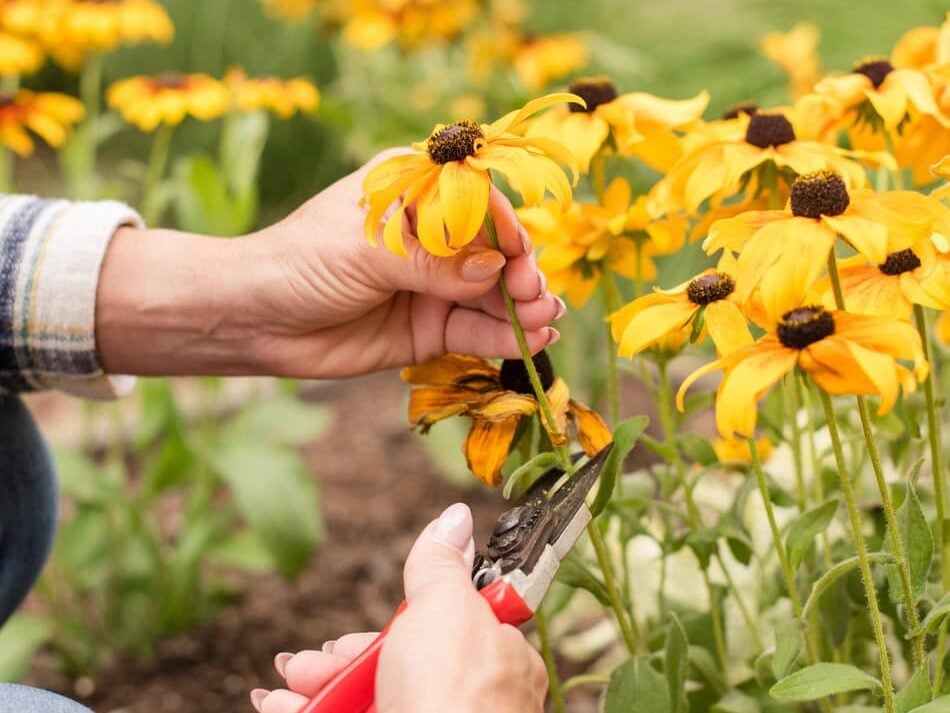
When individual flowers fade, cut their stalks back to the next healthy leaf or side bud. Deadheading can encourage continued flowering (especially while the plant is still actively producing buds).
Quick tip: If you want seed heads for birds later in the season, leave the final round of dark centers standing.
Once the cleanup is done, we also put together 8 Black-Eyed Susan care tips for bigger, brighter blooms.
Category 3: Total Shearing
The last group can run out of gas after its first flush, flopping open at the center, or tangling itself in faded stems and seed heads. Selective snipping becomes a tedious waste of time.
When the plant is not heat- or drought-stressed, a clean, even haircut is often the fastest way to clear the old growth and make room for fresh foliage.
8: Catmint (‘Walker’s Low’)
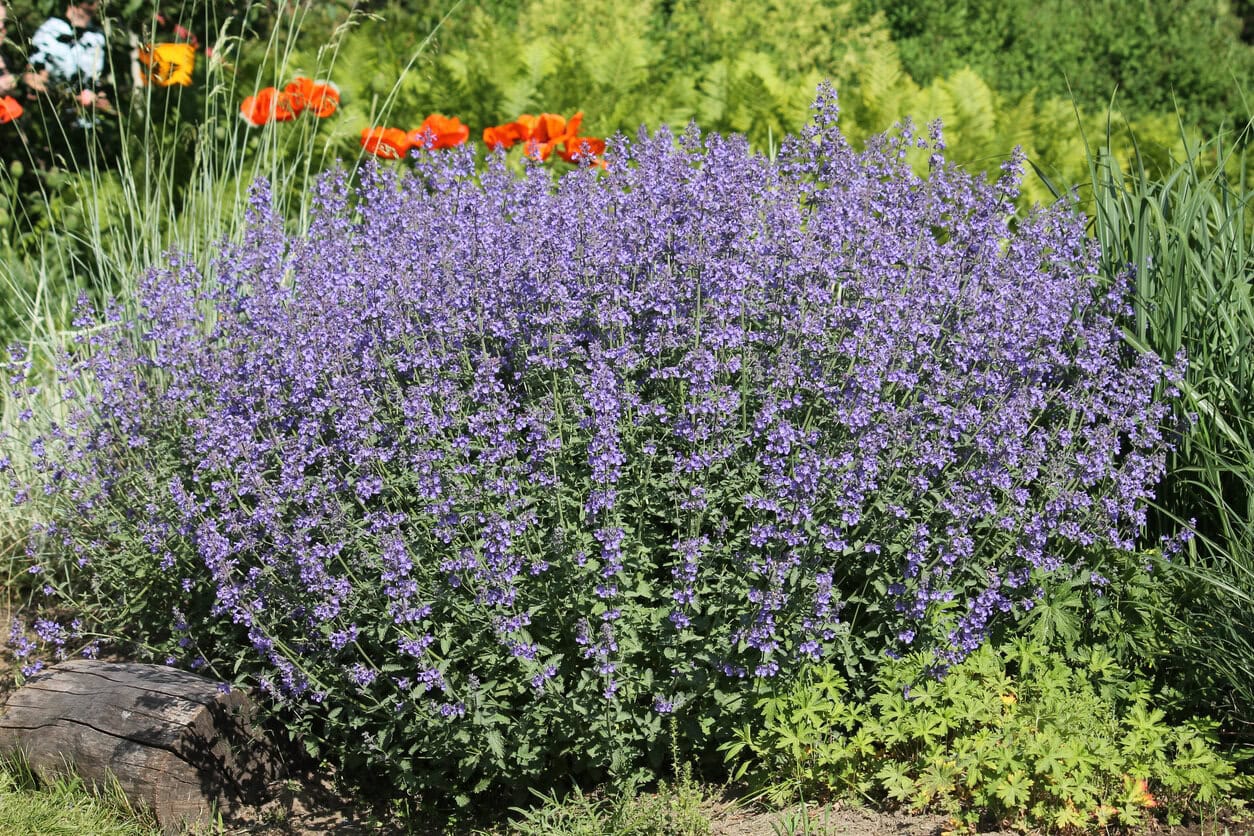
After the first flush fades, shear catmint back by about half, leaving roughly 4 to 6 inches of healthy green growth.
Expect it to look a little rough for a week or two before it pushes out a fresh gray-green mound and may follow with more purple flower spikes.
9: Tickseed (Coreopsis verticillata ‘Moonbeam’)
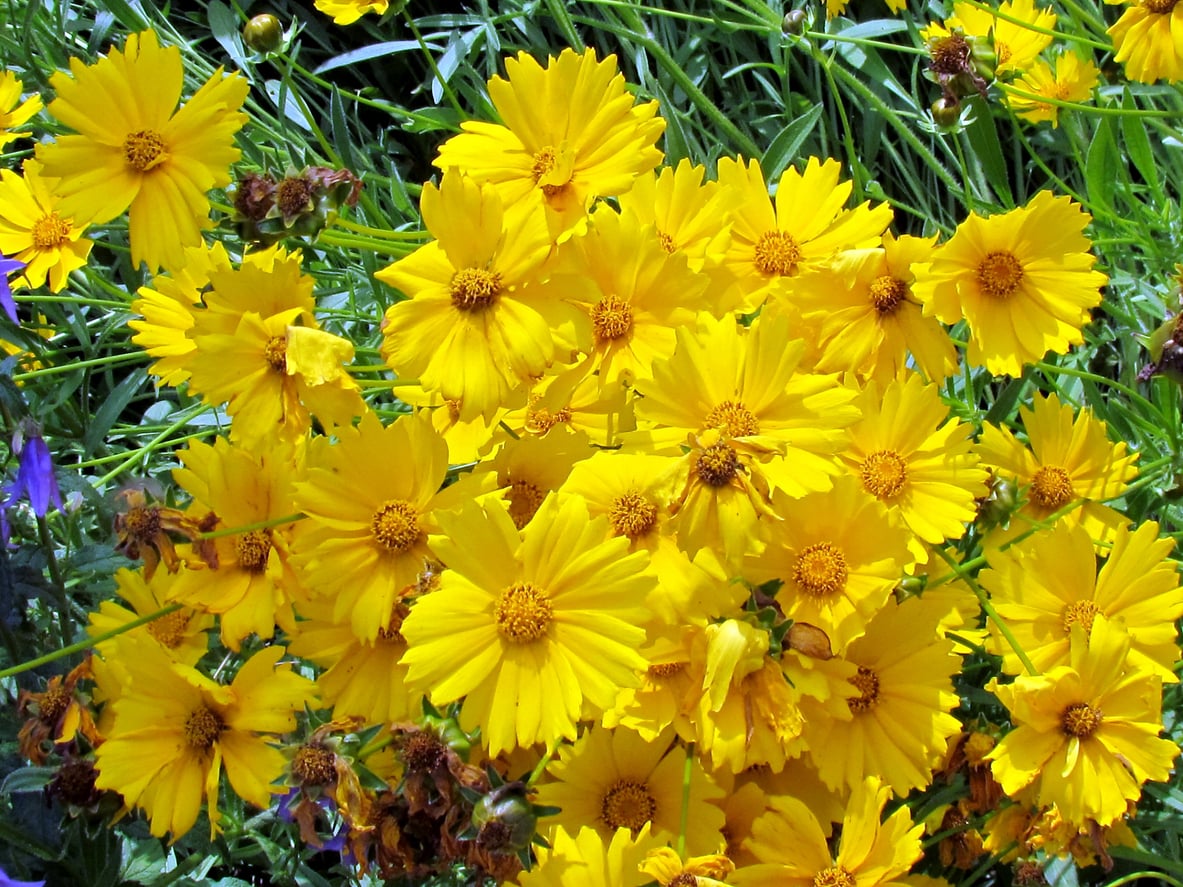
This variety produces so many tiny flowers that selective deadheading would be a mental health hazard. Once the main flush is fading, shear the whole plant back by one-third to one-half.
You will clear out the spent flowers and you may trigger a fresh round of yellow blooms.
If your coreopsis needs more than a haircut, we also explain 7 coreopsis care tips for more blooms and healthier plants.
10: Hardy Geranium (‘Rozanne’ and ‘Max Frei’)
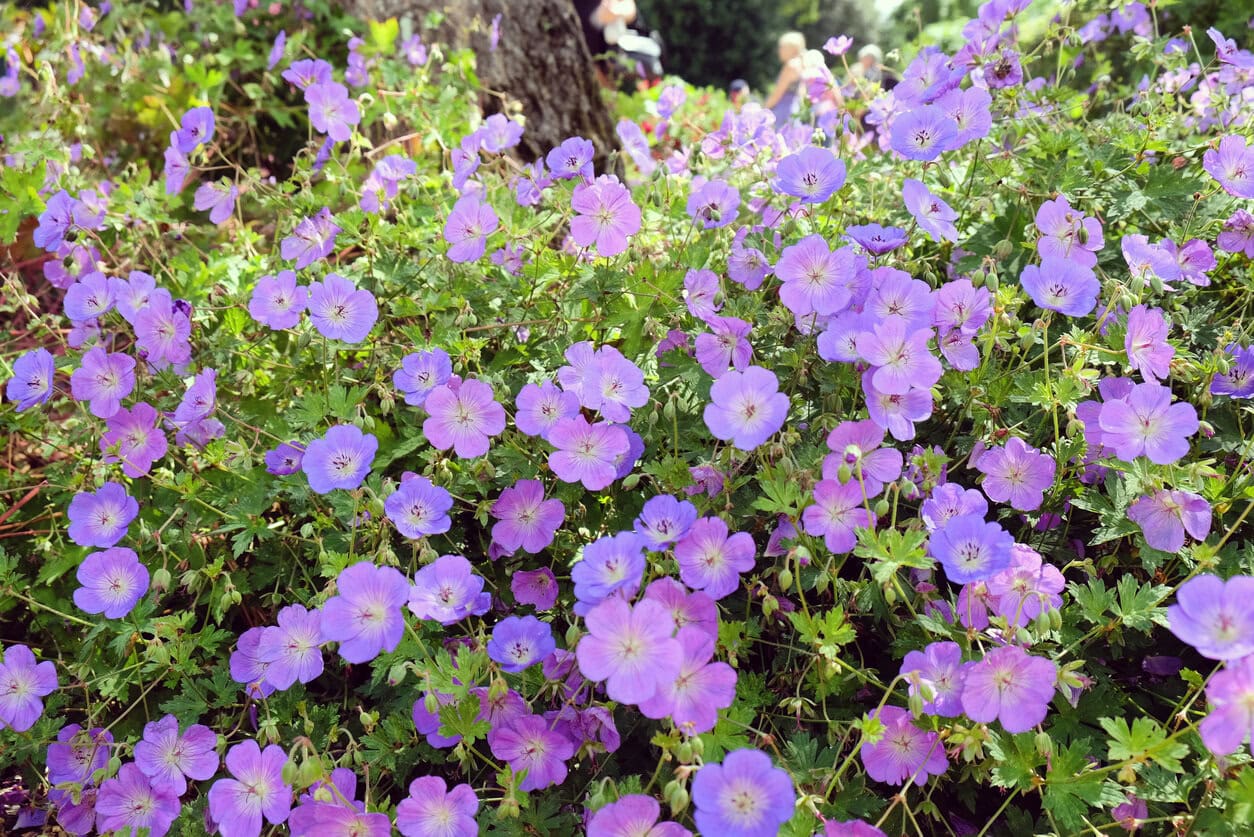
Do not treat these two like identical employees.
‘Rozanne’ usually blooms for months and only needs a haircut if it has become too sprawling or flowering has slowed in summer heat. Cut it back by about one-third to one-half, leaving plenty of healthy foliage behind.
‘Max Frei’ is more likely to finish a flush and look tired. Once it has finished flowering, shear it back to the fresh basal foliage to tidy the plant and encourage new growth.
Seed Ya Later
These plants are not actually trying to go to sleep; most are simply moving on from their first show. If you want seed heads for birds or winter interest, leave the final round standing.
Keeping their crusty brown stems around won’t earn you a gardening medal. What will, however, is stripping away the dead weight, opening up the clump for airflow, and give any waiting buds room to clock in. So, get a grip and clip.
If you are unsure which final seed heads are worth leaving up, we also put together a guide to plants you should not cut in fall because birds need them for winter.