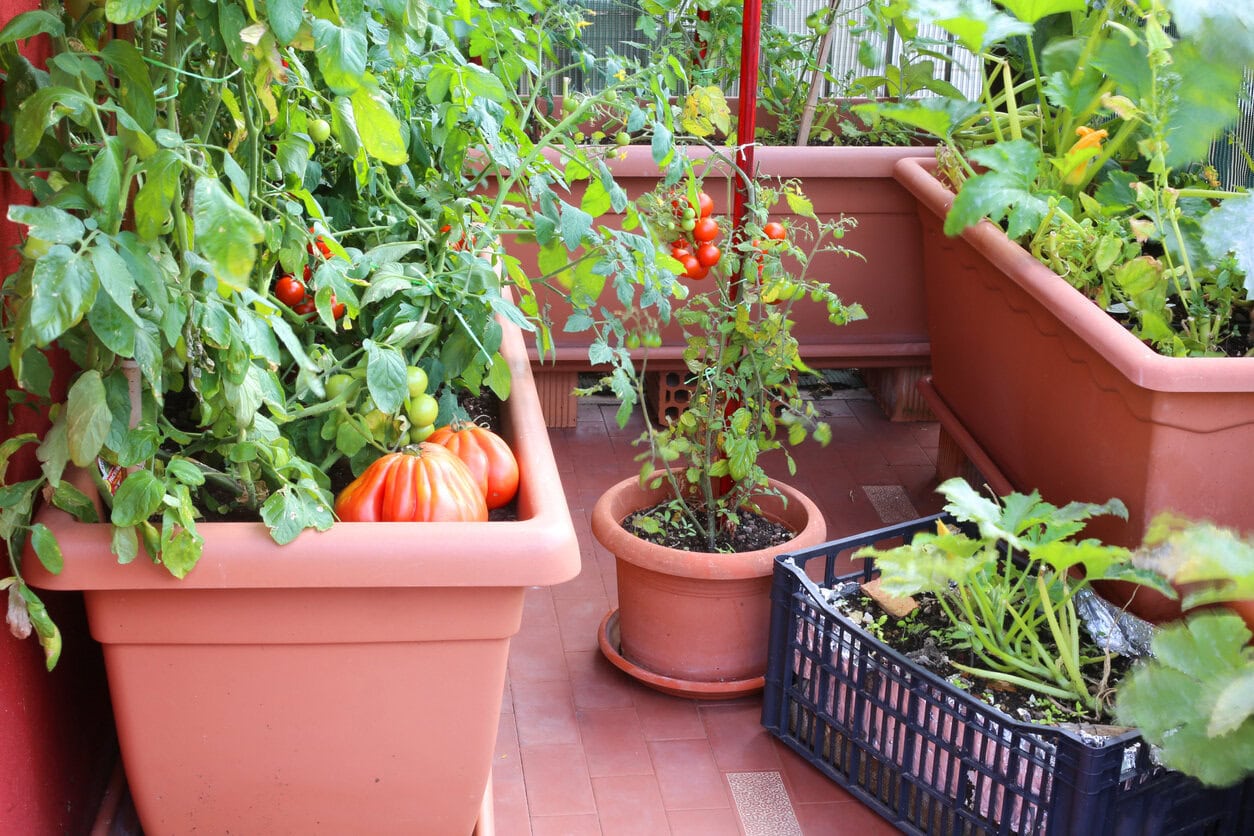
Agriculture usually implies tractors and endless horizons. And tight balconies often host dead succulents, gnomes, and rusted chairs. Somewhere between lies your vertical empire.
I’ve learned that space is a luxury, but efficiency is a choice. Pick a pot. Plant a seed. Watch it grow up, not out.
The Best Crops for High-Density Living
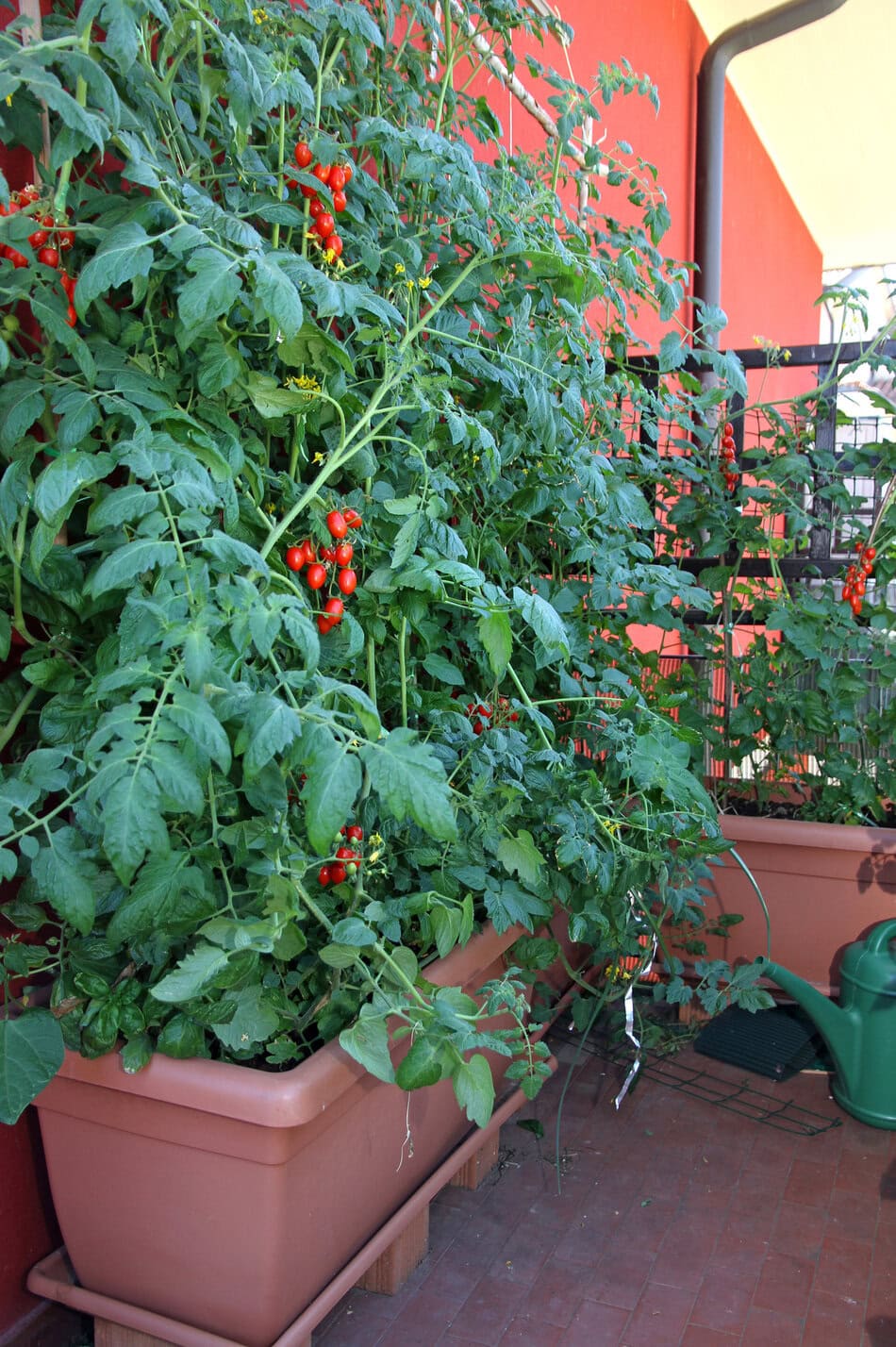
Acreage is overrated. With the right space-saving varietie, your small balcony or even your fire escape can become a surprisingly productive growing space.
1: Cordon Cherry Tomatoes (USDA Zones 3-11)
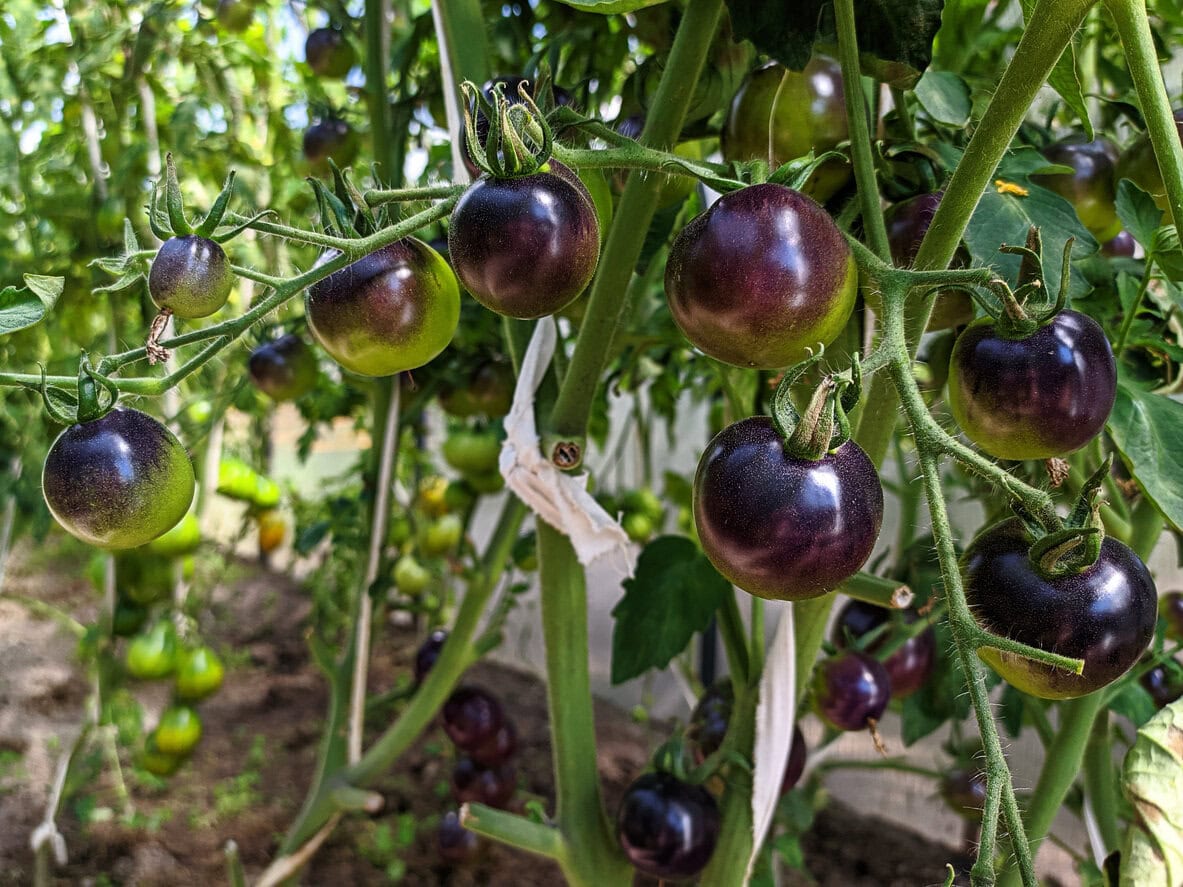
Indeterminate cherry tomatoes like “Sungold” or “Black Cherry” naturally want to grow tall rather than wide, making them ideal for small spaces.
When planting, bury the seedling deep, right up to the first set of leaves, to encourage a strong, extensive root system.
Your main mission involves pinching, AKA removing tiny suckers growing in the leaf “armpits” so the plant stays focused on a single, efficient vine. I usually secure the stem to a tall stake using soft twine in a loose figure-eight to provide a solid backbone without strangling the stem.
Quick tip: Keep the soil evenly moist (not soggy) so the skins stay supple and don’t split. Steady hydration leads to sweeter tomatoes that actually taste like summer.
If tomatoes are your main crop, Rita has shared a full breakdown of what’s actually worked for her when it comes to growing bigger, more reliable harvests.
2: Climbing Pole Beans (USDA Zones 3-10)
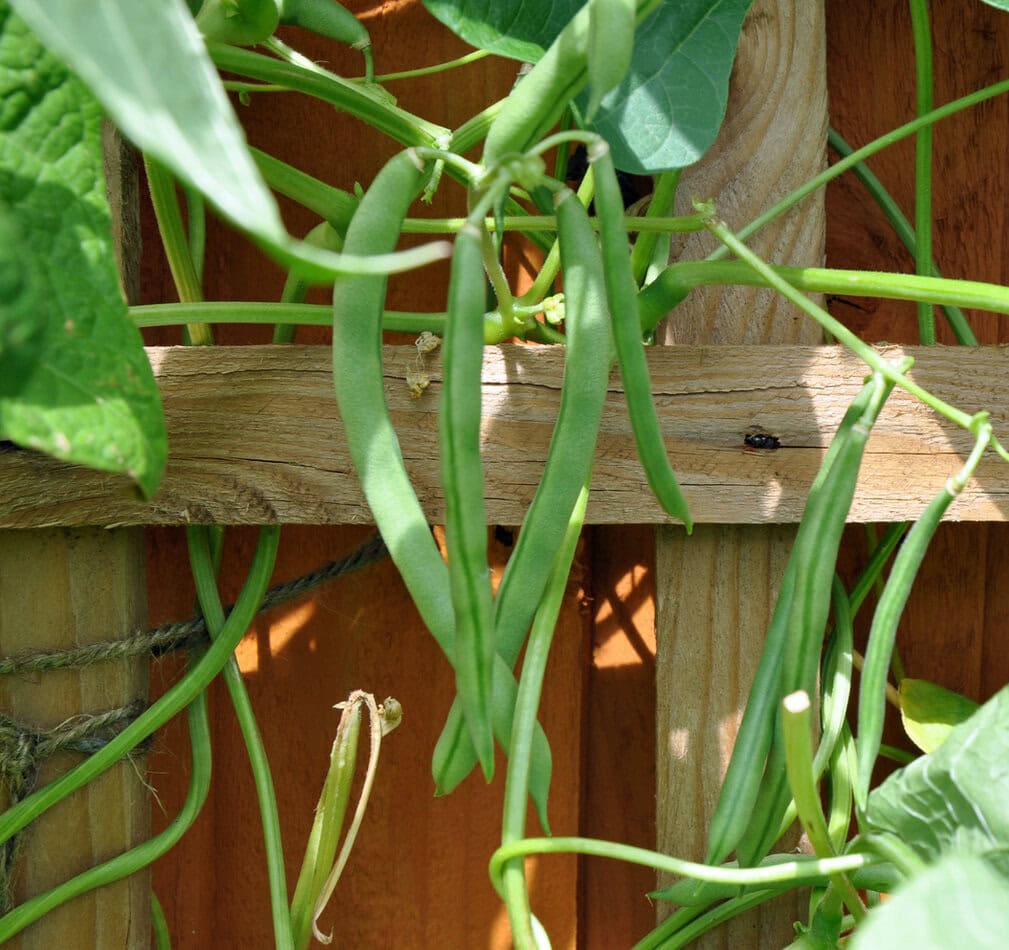
Skip the bush varieties and grab “Blue Lake S-7” seeds to seriously boost your harvest on the same patch of dirt. I always sow the seeds directly into a deep pot, since beans don’t appreciate having their roots disturbed later.
Construct a sturdy tripod or a tall trellis for the vines to climb, then gently guide the first few shoots around the support so they know where to go.
Quick tip: Daily harvesting is my secret weapon here. Snap off the pods while they’re pencil-thin and tender. The more I pick, the more flowers keep coming, and the plants stay productive right up until the first frost.
We go into a lot more detail on getting maximum harvests from beans in another article we wrote, especially if you’re working with just a few plants.
3: Salad Leaves (USDA Zones 2-9)

“Black Seeded Simpson” seeds doesn’t mind a crowd. I scatter the seeds over the soil like salt on a steak and add a thin dusting of soil on top. Shallow containers work well here since these greens focus on leaf growth over deep roots.
During a scorching July, I move these pots into the shadow of my taller tomato vines to keep the flavor sweet and delay the bitter bolt toward seeding.
Quick tip: I treat this patch like a lawn. When the leaves reach about four inches tall, I snip the entire canopy horizontally, about one to two inches of stem poking out of the soil. It triggers the plant to regrow, and I usually get three or four solid bowls of salad from one small container.
If you’re already growing salad greens, herbs are an easy add-on. I’ve shared my favorite container-friendly herbs for balconies in another guide if you want to expand a bit further.
4: Swiss Chard (USDA Zones 2-10)
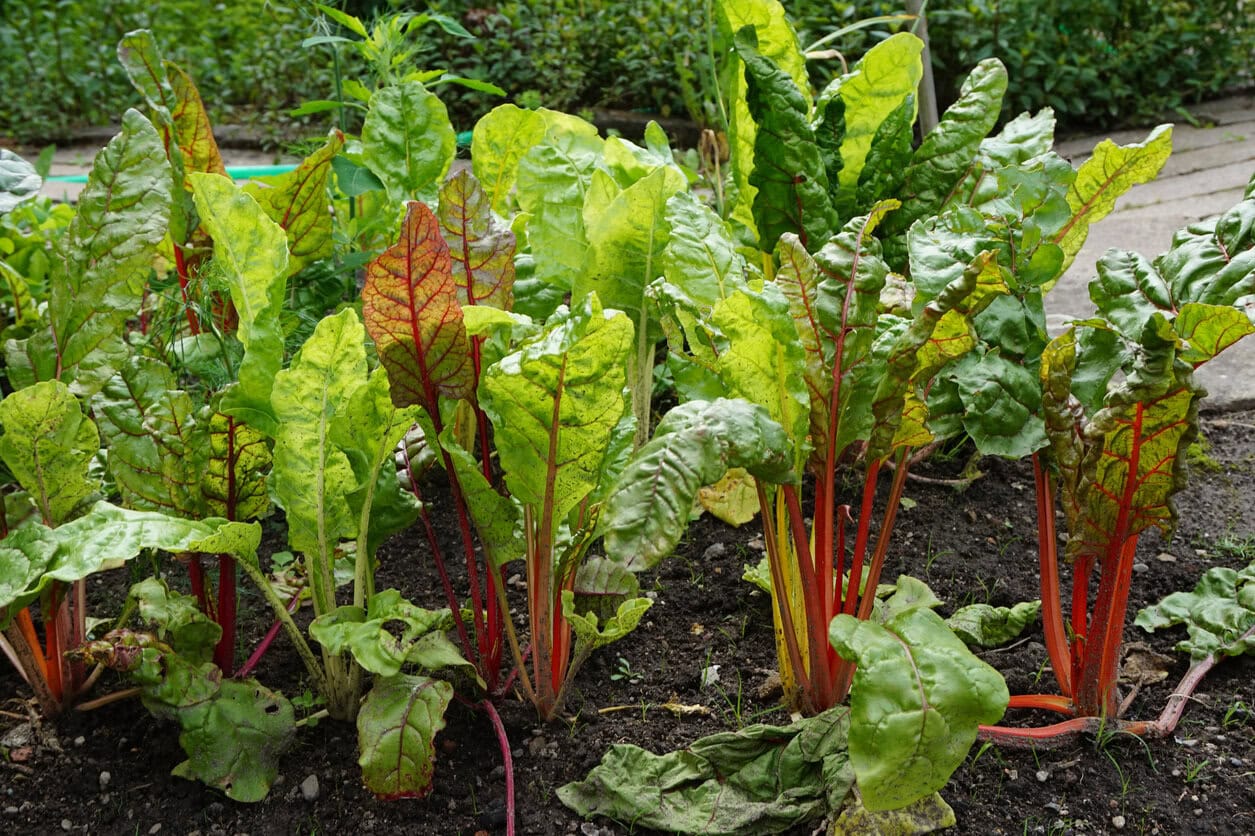
The “Bright Lights” chard grows in a tight, upright clump and produces neon-colored stalks. I’ve learned that every seed is really a small cluster, so expect a small crowd to sprout in one spot. Snip the weaker seedlings early and let the strongest plant claim the pot.
The magic lies in the outer-ring harvest strategy. I never pull the whole plant. Instead, I peel the largest outer stalks away from the base one by one until they pop free. Keep the center growth point intact so the plant continues to deliver fresh leaves for months.
5: Radishes (USDA Zones 2-10)
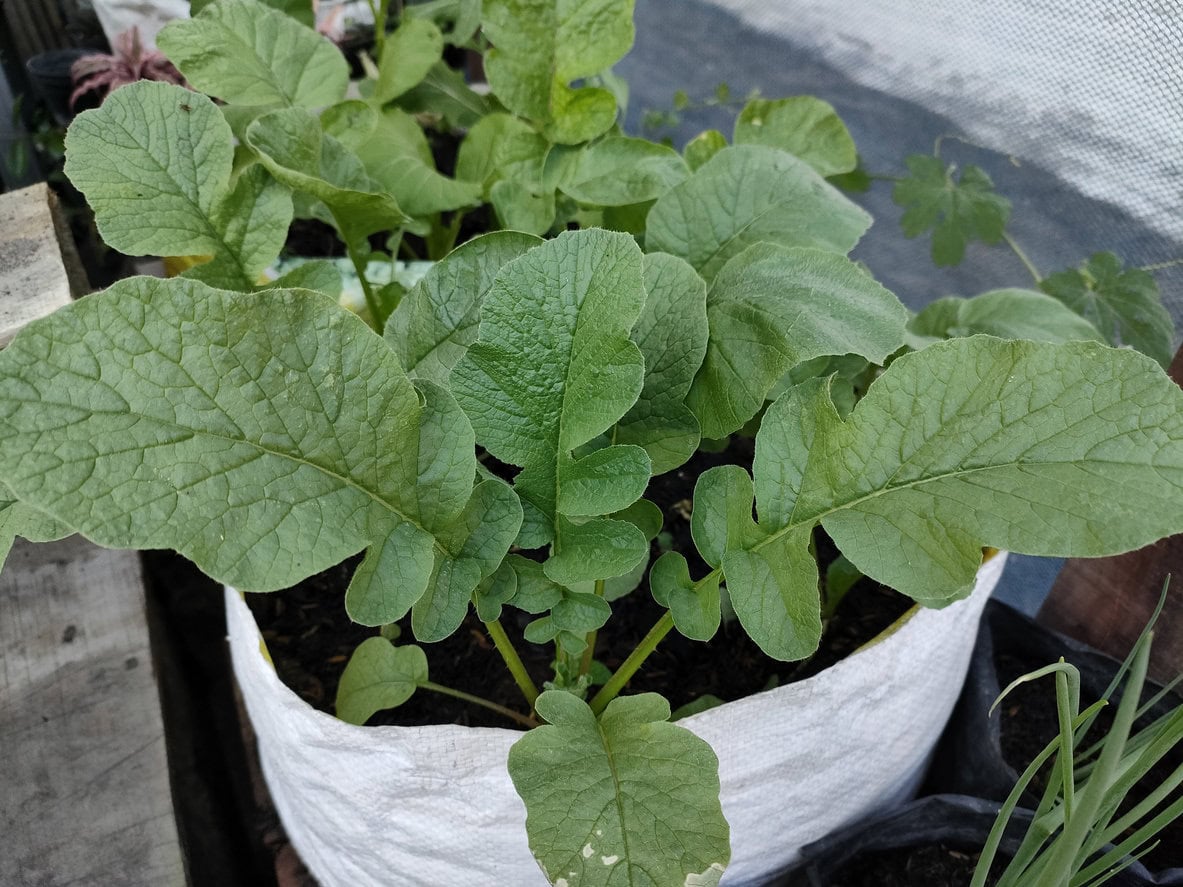
A mix of “Cherry Belle” and “18-Day” radish seeds turns a shallow tray into a steady harvest. These varieties prioritize speed over depth, so they don’t need a massive pot to thrive.
I space the seeds about two inches apart to give each root room to form. Because they grow so fast, I sow a small pinch of seeds every week.
And while “8-Day” radishes live up to their name, “Cherry Belle” needs 22 to 27 days to reach a perfect crunch.
Quick tip: As soon as the crimson crown pops above the soil line, I pull it immediately. Radishes have a short window of perfection. Waiting even forty-eight hours too long quickly turns a crisp bite into a spongy one.
6: Chili Peppers (USDA Zones 3-11)
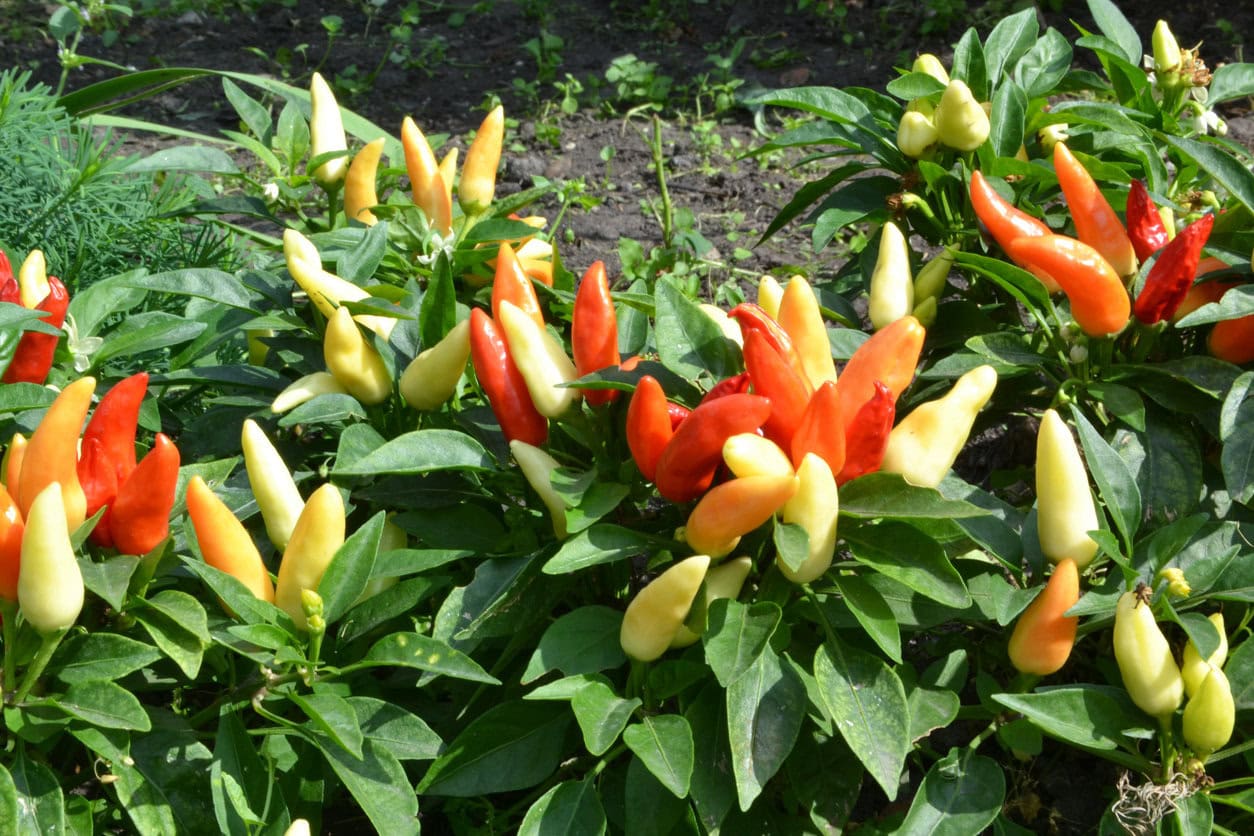
Space is a rare commodity, so choose “Basket of Fire” that spills downward in a spicy waterfall, and keeps walkways clear. These compact plants can produce loads of upright pods that shift from purple to a fiery red as they ripen.
Once the first buds appear, I switch to a high-potassium liquid feed to support flowering and fruiting.
If you chose the “Apache” variety, move indoor-started seedlings outside once the soil has warmed. I also use the dark pebbles trick, placing them on the soil surface to hold warmth around the roots, which accelerates the ripening process.
Quick tip: I’m careful not to overwater, since too much moisture leads to bland, swollen peppers and yellowing leaves.
We’ve learned a few things the hard way with container peppers, so we put all our best tips into a separate guide if you want to push yields a bit further.
7: Cucumbers (USDA Zones 3-10)
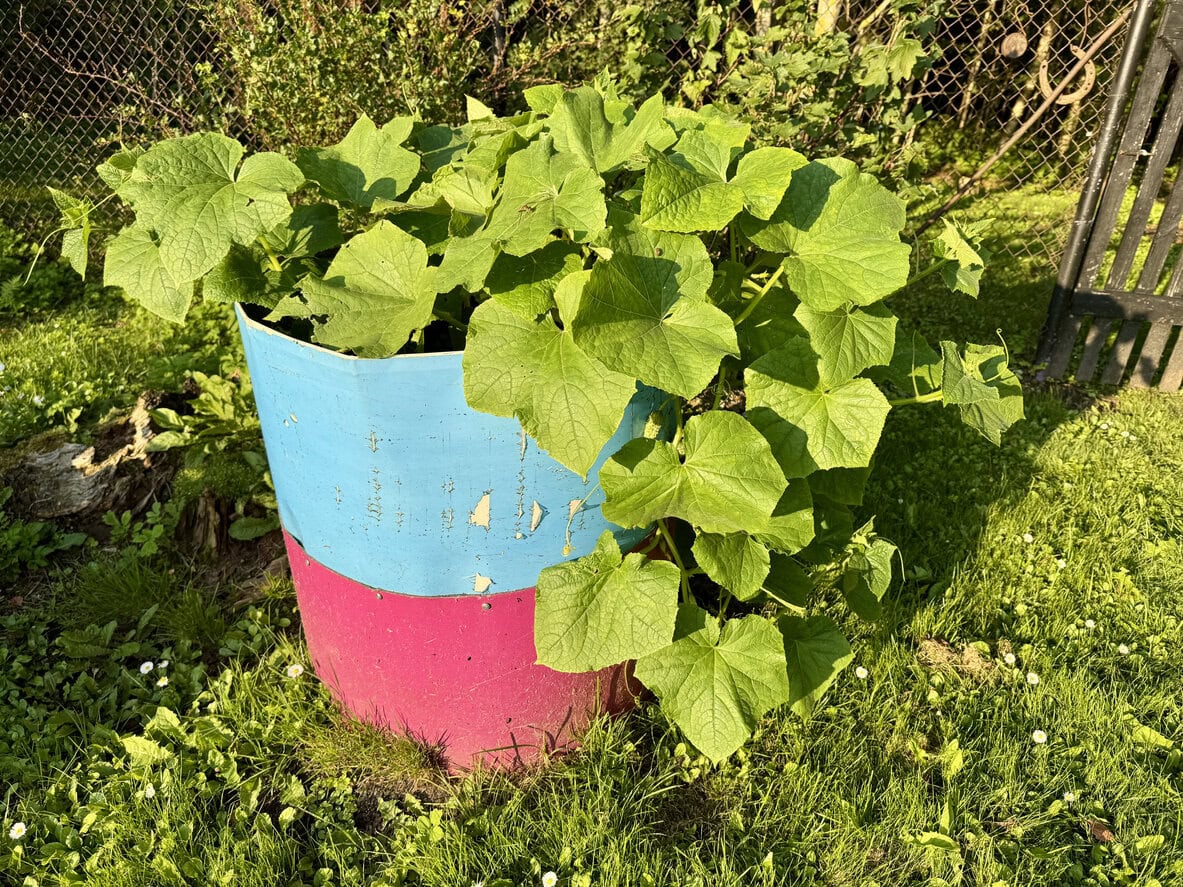
Plant “Spacemaster” to keep your cucumber empire contained in a two-foot container, but remember to water it every morning. Cucumbers are basically crunchy water, and I’ve noticed that uneven watering is what usually leads to bitter fruit.
Quick tip: If bees ignore my balcony garden, I step in. I gently rub the center of a male flower against the tiny baby cucumber at the base of a female bloom to handle pollination myself. It’s quick, simple, and surprisingly effective.
It might feel a little awkward at first, but it’s simple manual pollination. Playing Cupid channels every ounce of plant energy into swelling juicy fruit instead of dropping those baby cucumbers. Without this, unfertilized buds will only shrivel and drop.
If cucumbers are a staple for you, Rita has written a full guide covering watering, feeding, and training them in small spaces.
Ready to Grow Up?
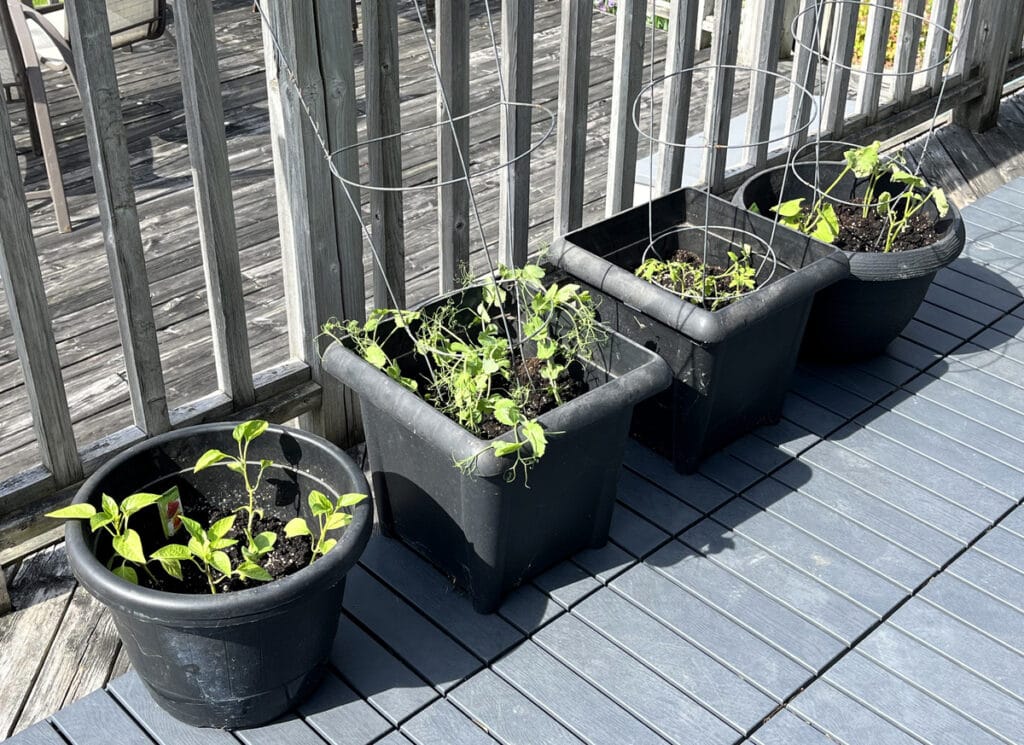
Gardening on a balcony is a high-stakes game of Tetris where winners feast, and losers grow bitter. Perhaps, not so high-stakes after all. These varieties are specifically bred to play nice in tight quarters, provided you keep them hydrated and help them… get lucky.