Although herbs can be a total nightmare for many new gardeners, I personally found them pretty easy to grow in my early gardening days.

Now that the size of my herb patches has grown substantially, they’re obviously a little more challenging to manage, but still require much less work and effort compared to regular flowering plants and shrubs. 

In today’s article, we’ll take a look at herbs that can be grown indoors all winter long, and to make things even simpler, classify them by their ideal planting zones, so that you’re able to pick your favorites with caution. 

Let’s jump right into the good stuff! 

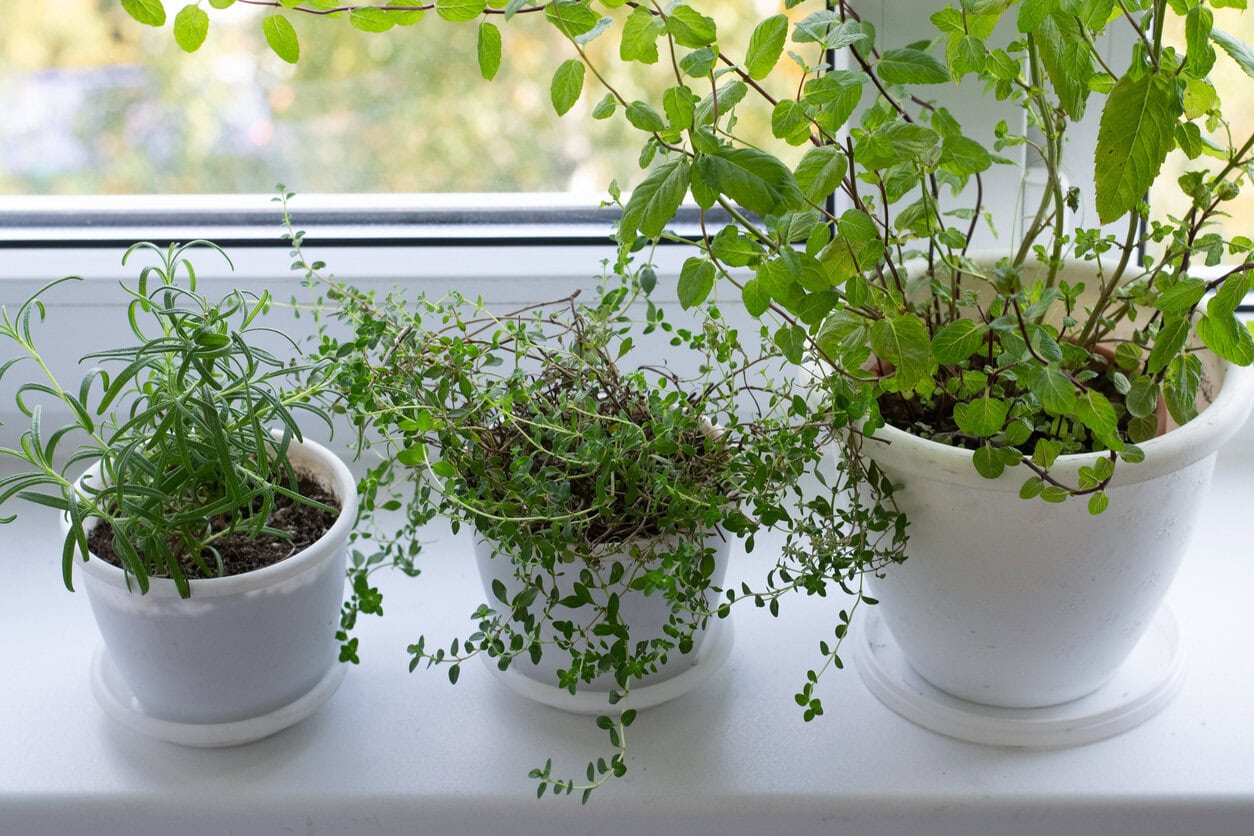
Rosemary, thyme and mint in pots on window sill

Fortunately for us, herbs are super easy to grow and care for. They only need good light, moderate watering, and a deep enough pot with sufficient drainage holes at the bottom.

In milder zones, certain herb varieties will continue to grow outside, but if you bring them indoors, they’ll thrive indoors all winter long!

Think of zones as your guide for which herbs should be moved inside before frost, but once they’re indoors, success depends on light, water, and drainage, not your climate.

While hardy ones may survive outside in milder regions, growing them indoors is the surest way to keep fresh herbs going all winter.

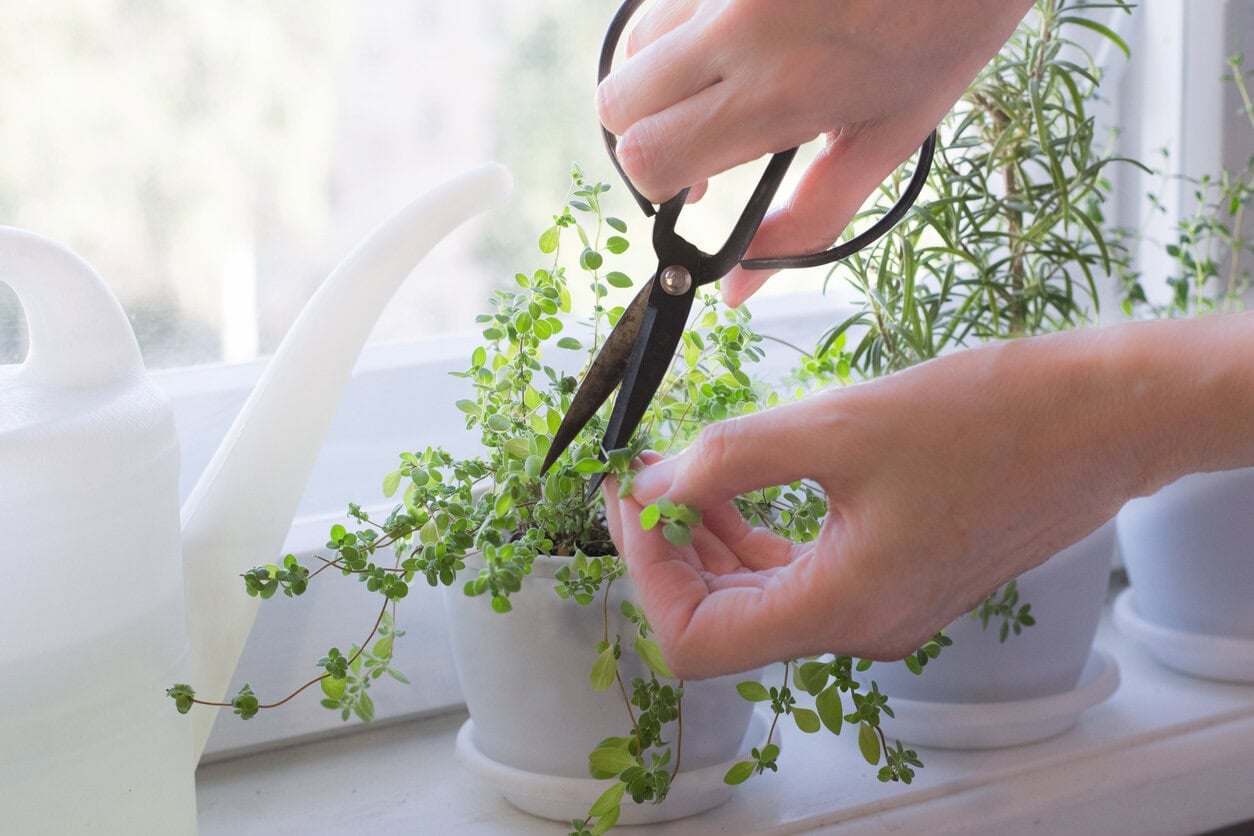
Cutting marjoram
  • Keep your herb pots near south-facing windows and provide them with at least 8-10 hours of sunlight on a daily basis. 
  • Herbs like evenly moist soil but can’t tolerate soggy roots. Most herbs hate waterlogged roots! 
  • For pots or containers, ensure there are enough drainage holes to allow for excess water to leave the soil and not create a puddle. 
  • Snip only a few leaves at a time when harvesting and avoid cutting more than one-third of the plant at once. 
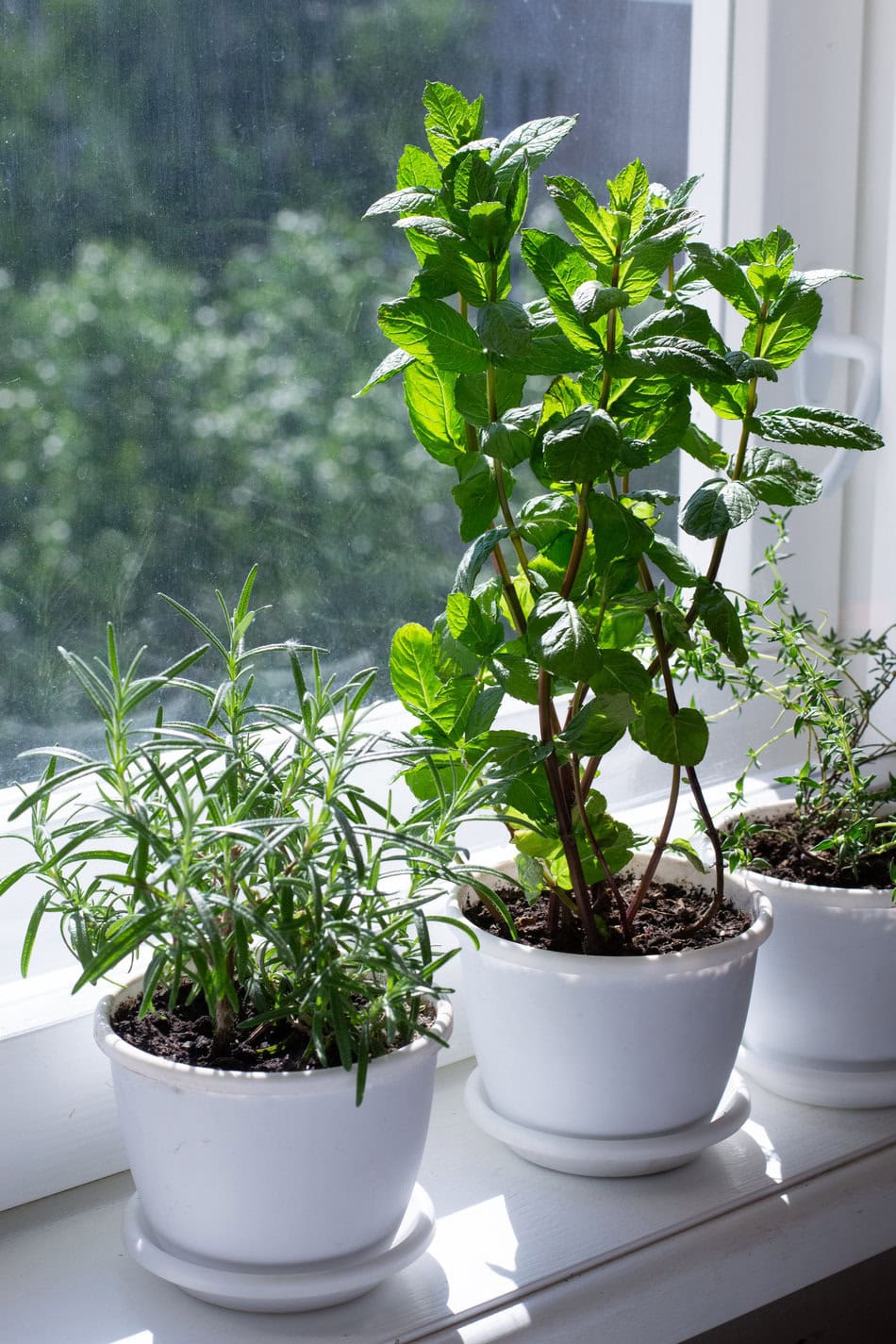
Rosemary, mint, thyme in pots on window sill
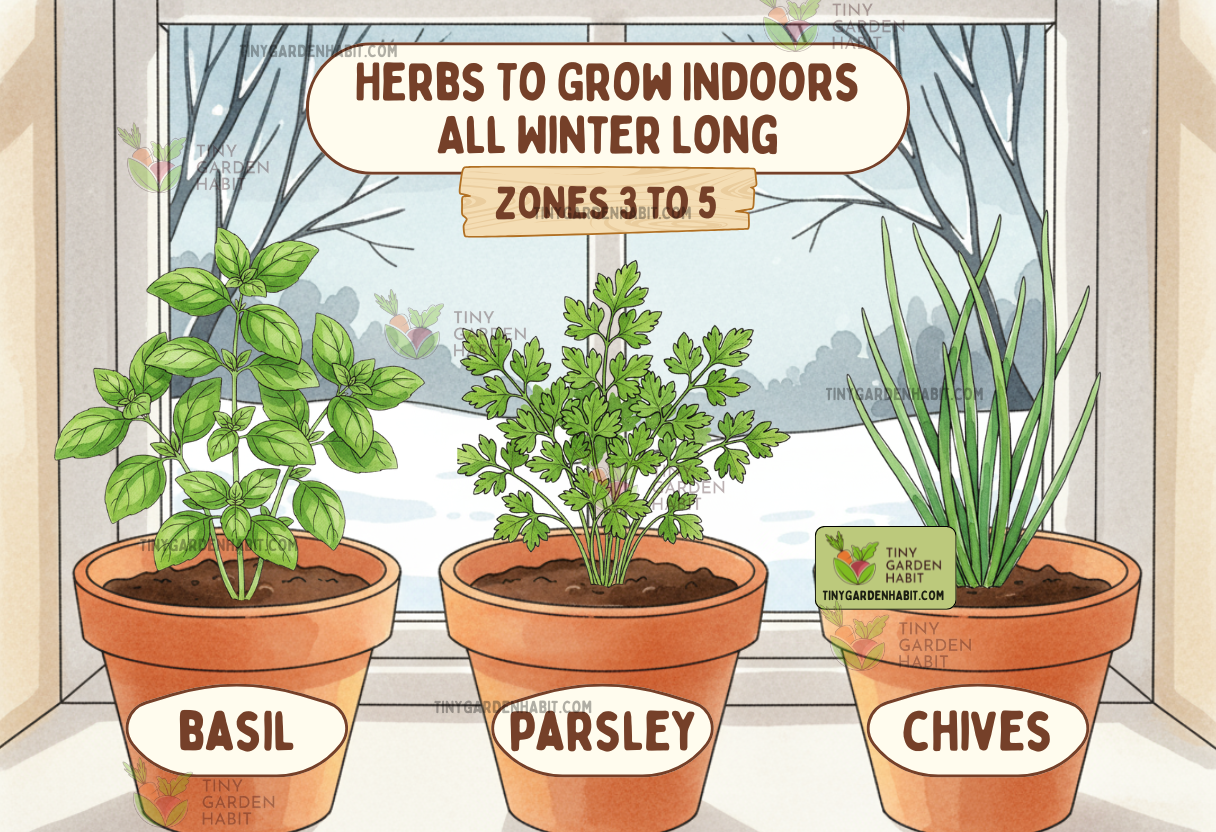
Herbs Grow Indoors Winter Zones 3 to 5
  • Basil: Basil is a herb that needs a truckload of sunlight. Placing it in strong light, near a south-facing window, or close to grow lights is ideal. Harvest basil leaves often to encourage bushier growth. Since basil is an annual, you’ll need to keep reseeding or pruning regularly indoors to have a steady supply all winter!
  • Parsley: Parsley grows extremely well in pots and tight spaces. I’d suggest opting for a flat-leaf parsley variety for a stronger flavor. 
  • Chives: Chives can easily be dug up from the garden and transplanted into pots. It’s better to grow them indoors in winter, especially with frequent trimming.

Tip: Place your herb pots on a warm windowsill that has light coming in either directly or indirectly. Rotate the pot weekly for even growth.

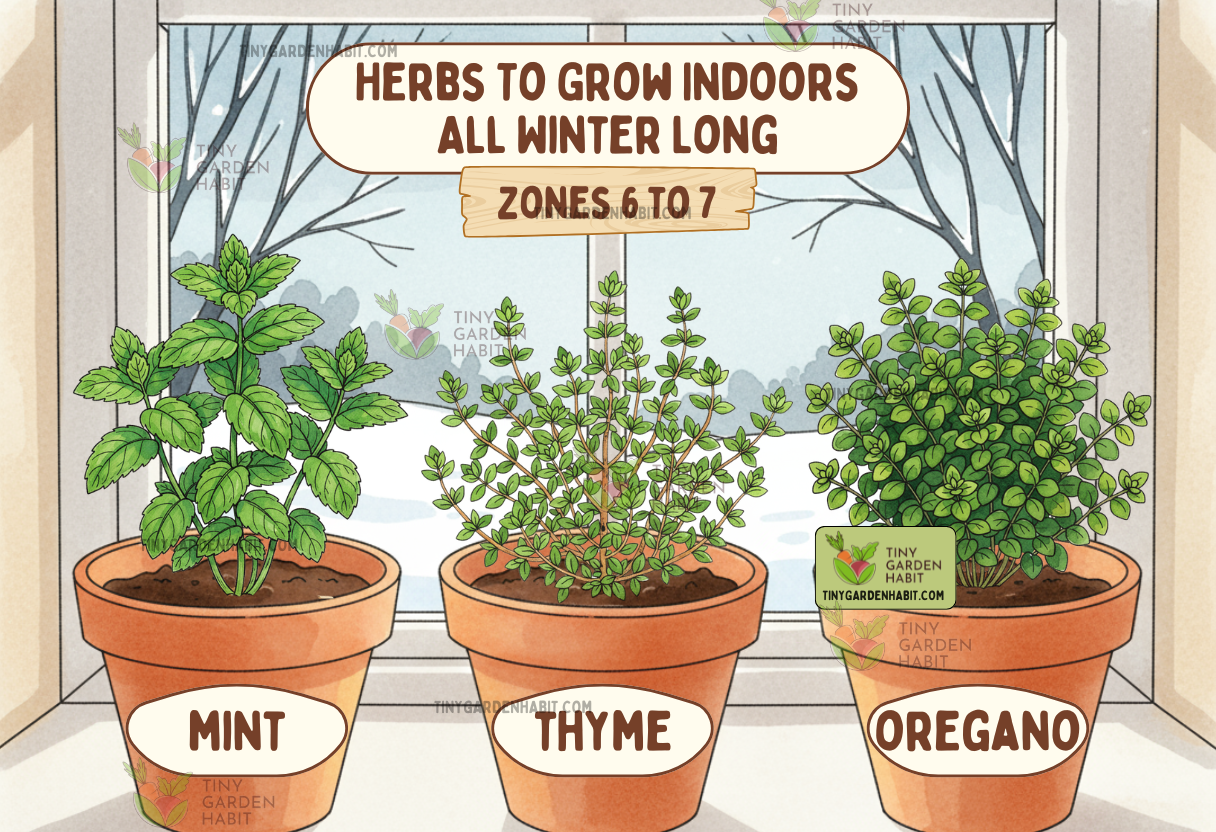
Herbs Grow Indoors Winter Zones 6 to 7
  • Mint: Mint thrives in pots and can withstand cooler indoor conditions fairly well. Just make sure to provide them with enough moisture to keep their soil constantly moist. 
  • Thyme: Thyme is a super hardy perennial that can keep producing leaves indoors if given steady, reliable lighting. 
  • Oregano: This classic earthy herb can overwinter outdoors pretty easily in milder regions and is able to maintain its vibrant flavor the whole time. 

Tip: Clip these classic herbs often. Consistent harvests encourage denser, bushier plants, which is what we’re after. 

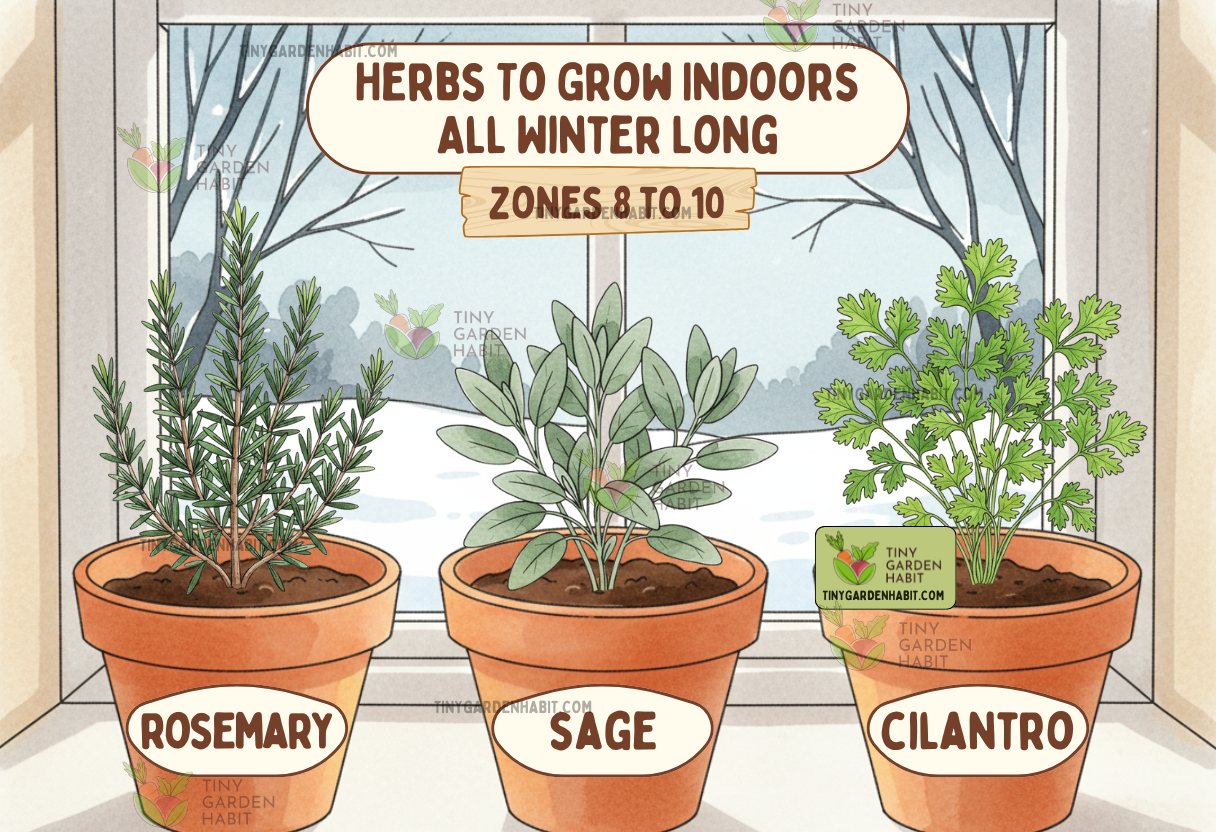
Herbs Grow Indoors Winter Zones 8 to 10
  • Rosemary: Rosemary loves bright, direct sunlight and doesn’t require as much watering as some of the other herbs on this list. They’re great for growing near windowsills. Rosemary can be tricky indoors unless it gets very bright light or supplemental grow lighting!
  • Sage: Sage offers compact growth in pots and an aroma that can fill indoor spaces. You only need to harvest 2-3 sage leaves at a time since a little goes a long way in cooking with this one. 
  • Cilantro: Although cilantro has a relatively short growth span, it does grow super fast indoors. You can sow new cilantro seeds every week to achieve a steady supply. Because cilantro tends to bolt fast, reseeding every couple of weeks will keep your harvest going strong indoors

Rosemary, thyme and mint in pots and in jars for rooting on window sill

While many new gardeners today get caught up in the complexities and challenges of growing herbs, the truth is that they’re much simpler to overcome than you might think

As a matter of fact, herbs don’t really need much except basic watering, proper lighting, and good drainage. 

If you have kids, growing herbs with them can be a fun activity that helps you bond with them and teaches them about the magic of nature.

My own 7-year-old nephew helped me with planting basil and oregano in my mom’s garden last summer, and it turned out to be something we both enjoyed very much. Since then, we both look forward to every planting season with great excitement in our hearts! 

Similar Posts

Leave a Reply

Your email address will not be published. Required fields are marked *