More than effort, hydrangeas require quick decision-making and action. One of the biggest confusions new hydrangea growers have is whether or not they should cut back their perennials in the fall.
Instead of just answering the question generally, in today’s article, let’s take a look at the whole situation in depth and try to understand why you should or shouldn’t cut your hydrangeas back during the fall period.
First Of All, Deadhead vs. Pruning
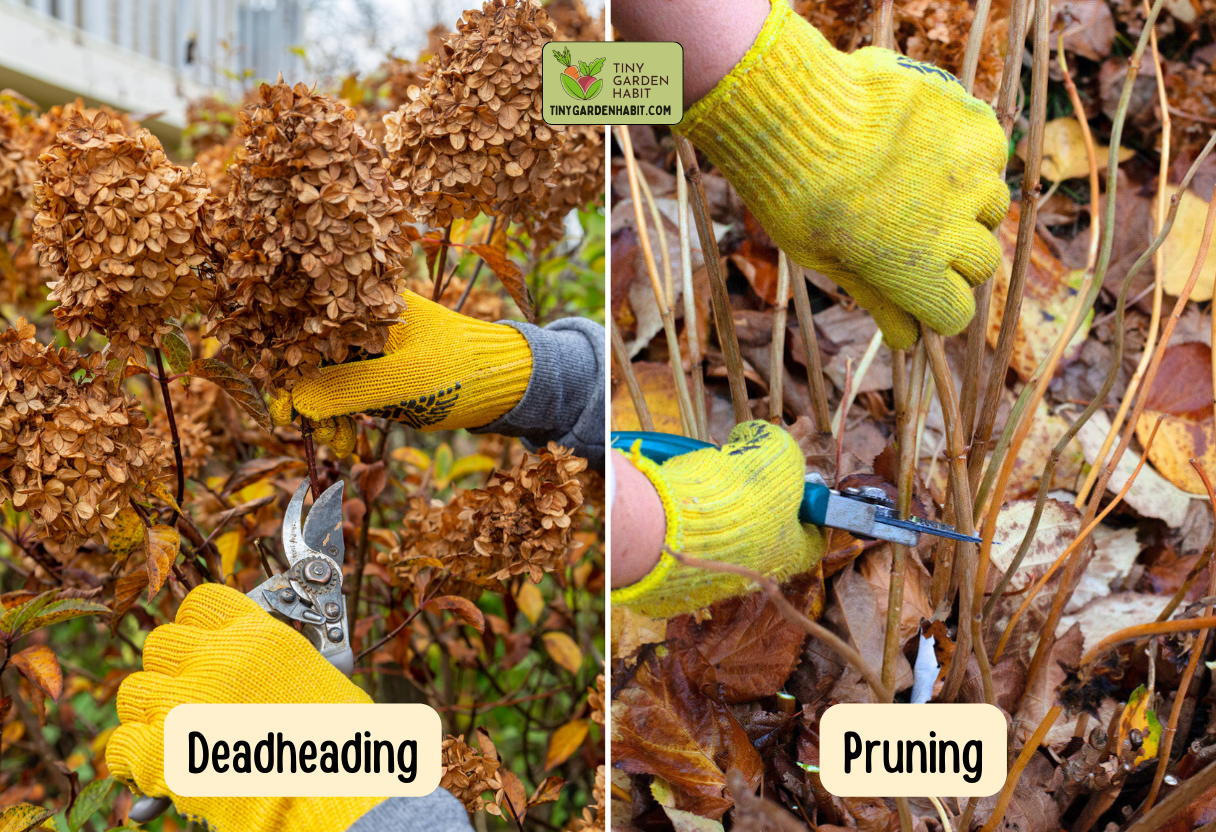
Yeah…if you didn’t already know, deadheading and pruning are two completely different concepts and are done for subtly different purposes.
Simple rule: The best way to distinguish one from another is that deadheading is safe any time, whereas pruning depends on the type of hydrangeas you’re working with.
Hydrangeas You Shouldn’t Cut In Fall

Hydrangea varieties that bloom on old wood definitely shouldn’t be cut back in fall, as you risk cutting off or severely injuring next year’s buds, decreasing overall plant health and flower yield.
That’s actually one of the most common reasons hydrangeas don’t bloom the next year. I’ve listed more reasons why your hydrangeas aren’t flowering if you’re curious.
Some examples include:
Instead of cutting back these varieties heavily in fall, only remove the weak or diseased stems after the hydrangeas are done blooming and leave the rest for spring. Also, with old wood types, it’s best to leave the spent flowers in place over winter. They help protect the tender buds that have or are already forming for next year’s flowers.
Hydrangeas You Can Cut Back In Fall

Hydrangea varieties that bloom on new wood are more forgiving and can be lightly cut back in fall. They set fresh buds each year, so you don’t risk losing next season’s flowers if you cut them back.
Examples in this category include:
In the fall season, you can lightly tidy these varieties by remove spent blooms as well as any weak, crossingor damaged portions if you prefer a neat look. However, DO NOT overdo it though; save the heavy pruning for late winter/early spring.
If you want a clear walkthrough of what heavy pruning looks like, I’ve shared my step-by-step process of how and when to prune your hydrangea.
Now, General Fall Hydrangea Care Tips

Friendly tip: Your USDA zone matters too! If you live in a colder zone (3-6), I recommend leaving the old blooms in place so they can protect next year’s buds from frost. If you live in a warmer zone (7-9), you can lightly tidy them up in fall. Still, it’s best to save the heavier pruning for late winter or early spring!
If you’re unsure when to prune in your area, check out my guide on the best time to prune hydrangeas by growing zone.
Let’s Conclude
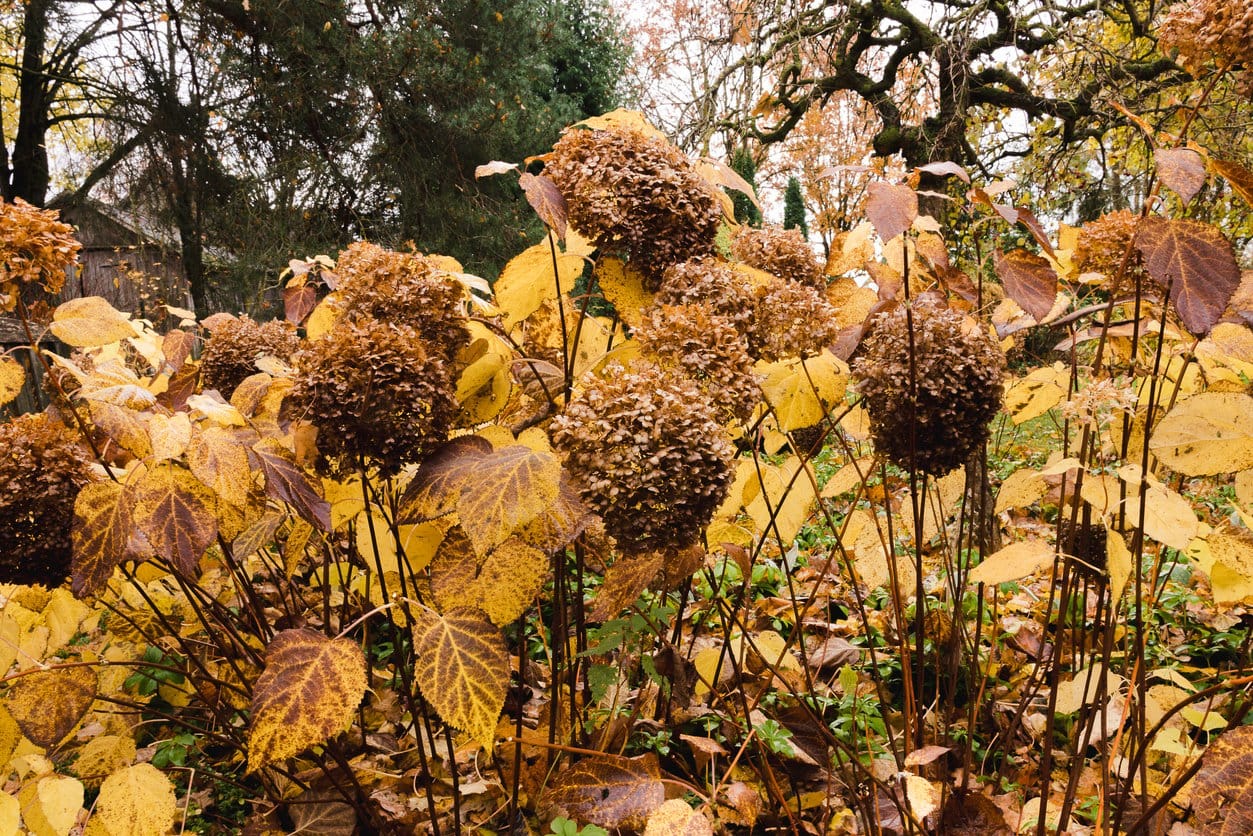
While many gardeners are fully aware of all the growth stages that lead to blooming, they don’t really think about what comes next. And, that is what confuses the heck out of them – what should be their next move? Should they deadhead their plants, prune them, or leave them alone?
But don’t worry if you’ve ever cut your hydrangeas too far back, here’s what actually happens when hydrangeas are cut down.
I hope this article provided some clarity on the whole situation and helped you assess your next move. The “right” course of action will vary for different people depending on the type of hydrangea they’re working with, as well as their particular climate conditions.
Assess yours and follow the guidelines I laid out. Best of luck!