
Right about now, our Shasta daisies have finished their first big show and look like half-disintegrated badminton birdies I haven’t touched since childhood.
And since it’s about a hundred-degrees-of-hell outside, and I feel pretty much like burnt toast, I’d rather not mingle with plants any longer than necessary. Still, I want that second flush, plantdamn it!
Tip 1: The “Ugly Phase” Myth and When to Strike
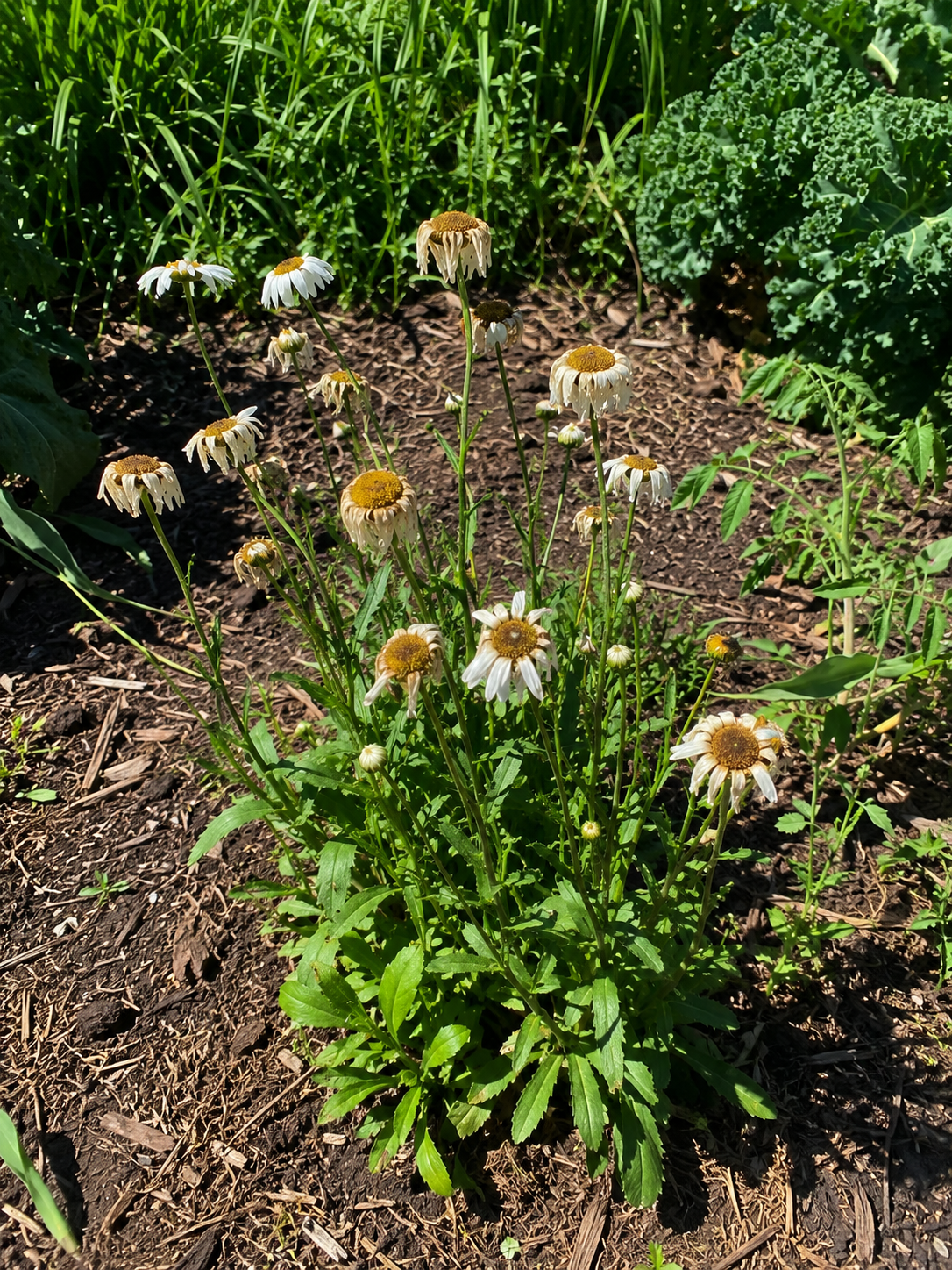
Daisies don’t need some long, graceful rest period after June. Let the crunchy heads sit too long and the plant starts wasting energy on seed instead of giving you more flowers.
Don’t wait until the petals turn to rags. The better tell is the yellow disc in the middle. Once that center starts going from flat and bright to domed, dull, and golden-brown, the bloom is aging out. Cut it then, before the plant fully commits to seed mode.
Sometimes a main stem has two tiny buds sitting right under the main flower. If you wait for the main bloom to totally die, those side buds will stall, turn brown or drop (especially in hot, dry weather).
So yes, you have to sacrifice the fading main bloom early to give the twins a fighting chance.
If you’re still figuring out which flowers are worth this little deadheading drama, we wrote a simple guide on which flowers benefit most from deadheading and which ones don’t really need it.
Tip 2: Advanced Deadheading Tactics
Unofficially, the heat melts our IQ exponentially, but forget the brainless snapping of dead flower heads. If you want more blooms after the first flush, you need a little strategy, not blind hacking.
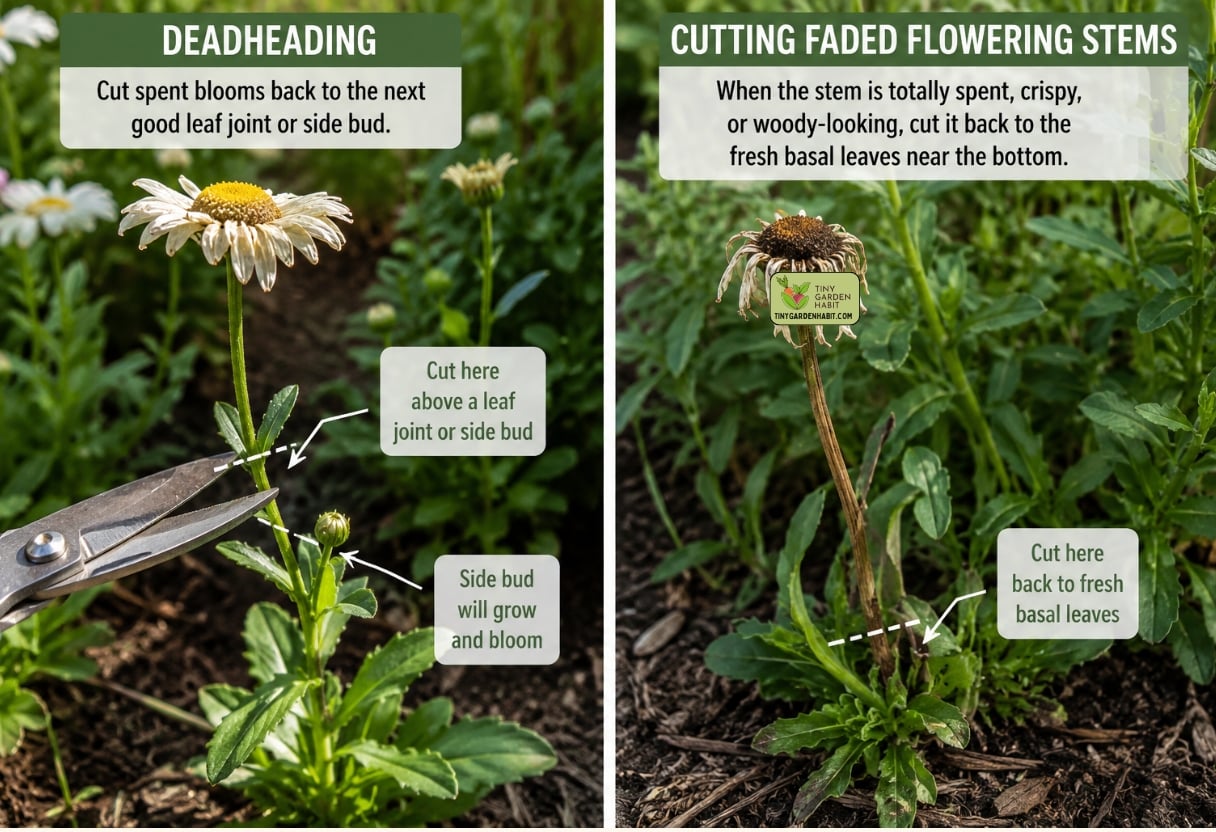
In early summer, I like to play the polite barber and cut spent blooms back to the next good leaf joint or side bud. That keeps the plant tidy and saves any smaller buds already waiting on the stem.
But once a flowering stem is totally spent, crispy, or woody-looking, I stop trying to make it useful.
At that point, I cut the old stem back to the fresh basal leaves near the bottom of the plant. Don’t cut into the crown like a maniac! Just down to the leafy growth that can actually fuel another round, and make the cut clean instead of leaving a chewed-up little stump.
We explain this same mid-summer cutback idea in our guide on perennials that can bloom again after being cut back, because Shasta daisies are not the only plants that appreciate a well-timed haircut.
Tip 3: Sanitization Reality
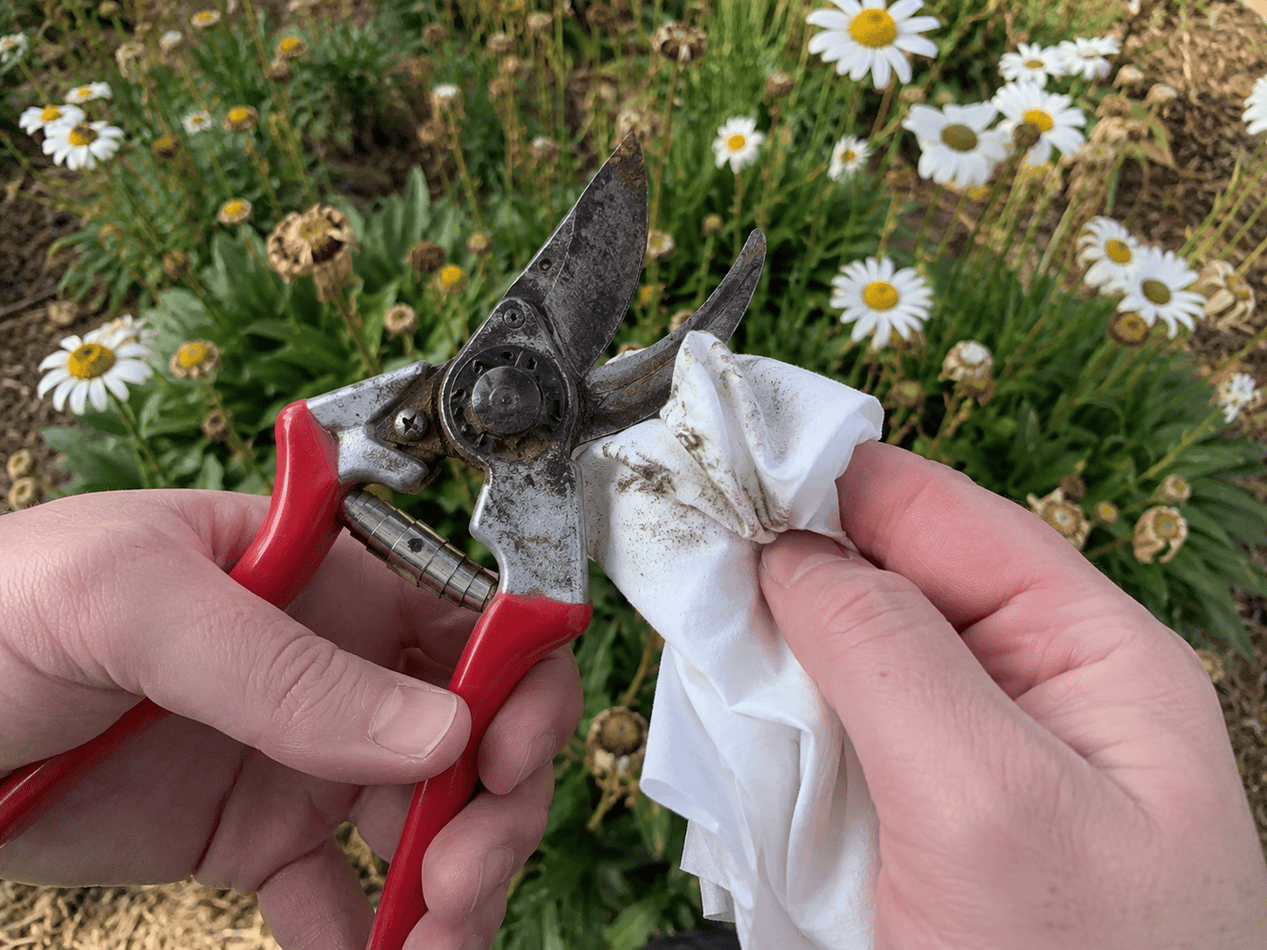
Shasta daisies can get leaf spots, especially in humid, crowded beds, and cutting through spotted stems before moving to clean ones is a great way to help the mess travel.
You don’t need a lab setup, but I do wipe the blades with rubbing alcohol between clumps, especially if any leaves look diseased. It literally takes ten seconds and saves me from pretending I’m surprised when the fungus starts sightseeing.
Tip 4: Cool the Roots Before You Beg for More Blooms
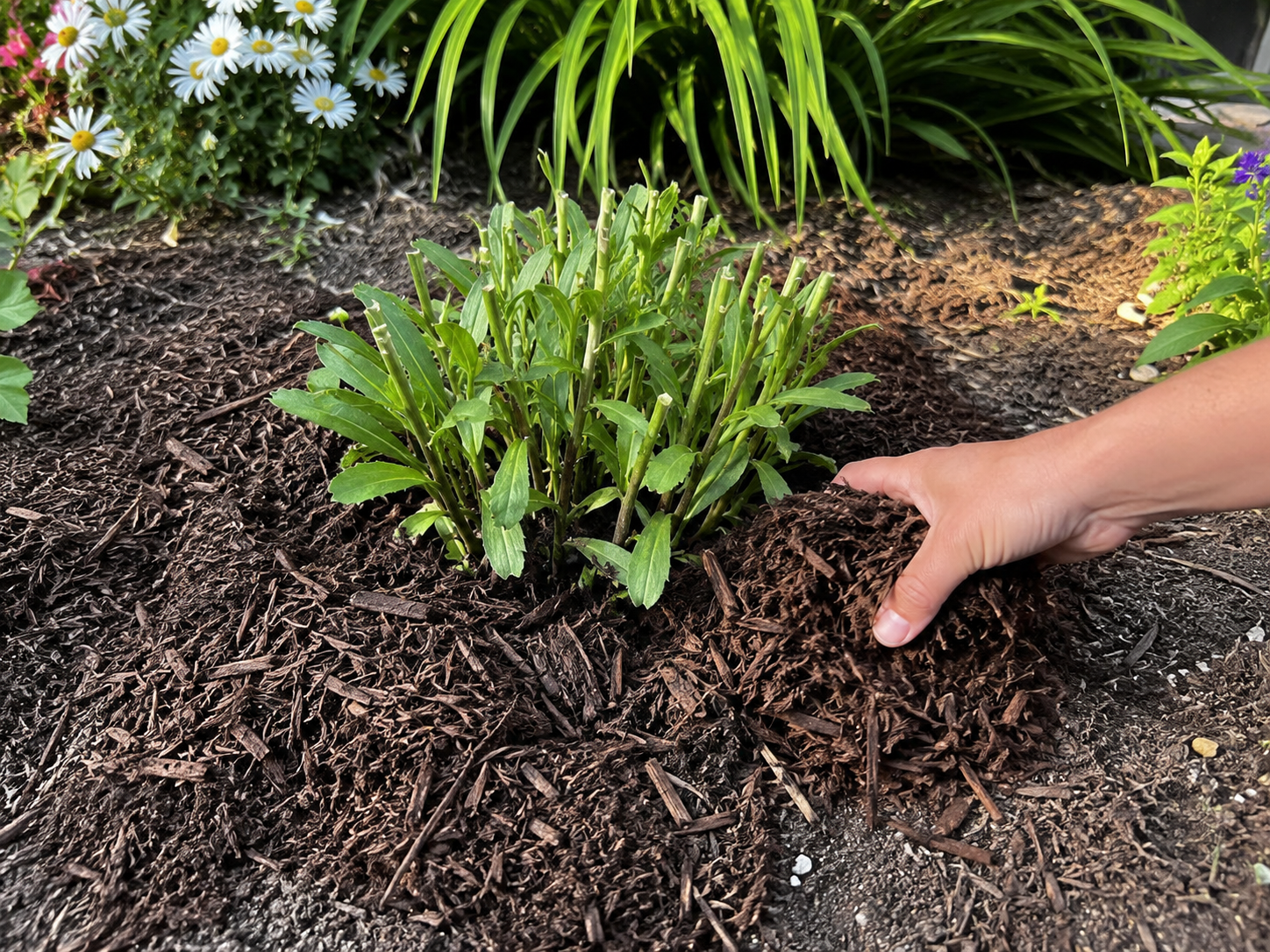
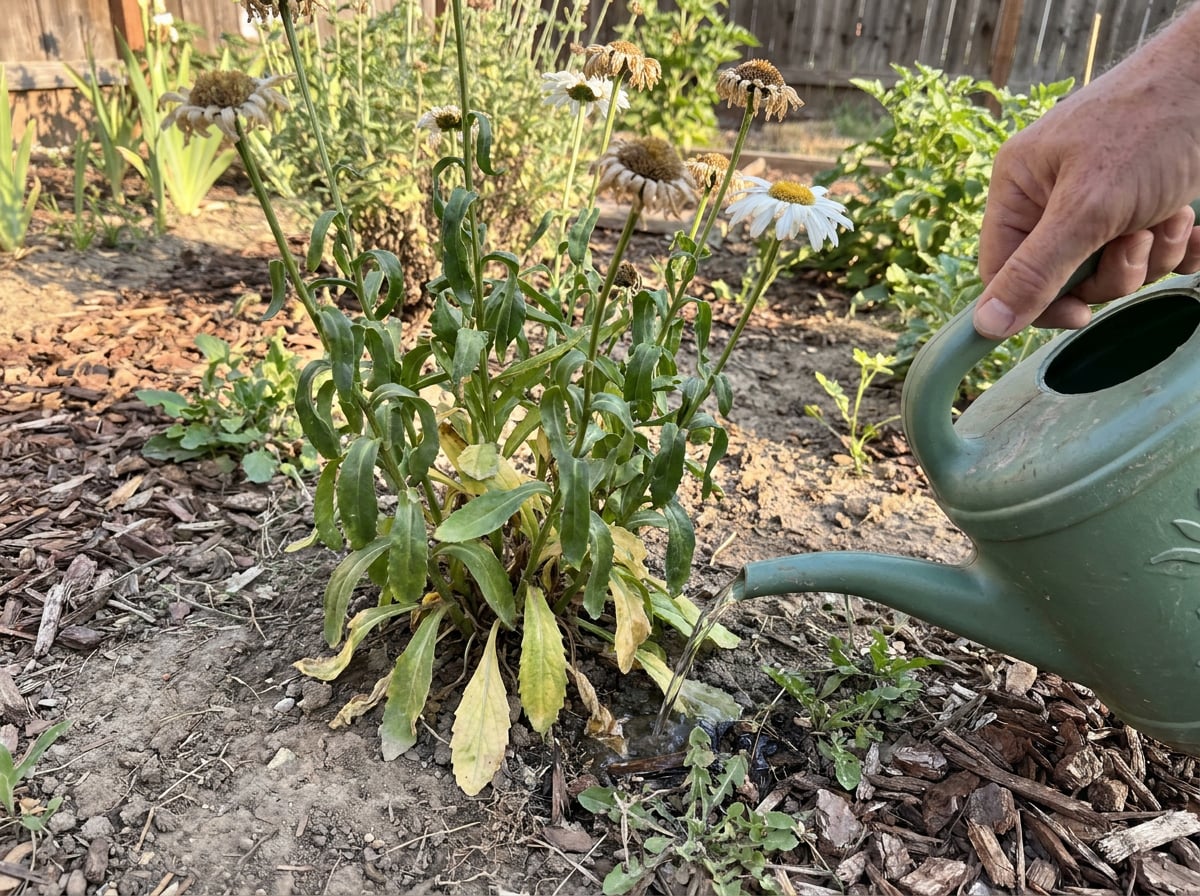
After the big chop, I stop fussing over every sad leaf and start protecting the root zone. Shasta daisies have shallow roots, and they do not rebloom happily when the top few inches of soil feel like a skillet.
During dry spells, I give them a deep soak once or twice a week, then cover the drip line with compost or mulch to keep the soil cooler and more evenly moist.
Quick tip: Don’t let the mulch choke the crown, and don’t let weeds shade out the fresh basal leaves. Those newly exposed leaves need direct sun to fuel the reboot.
Tip 5: Feed Lightly, Not Like a Maniac
This is not the moment for a heavy fertilizer tantrum. Too much nitrogen after the first flush can push floppy green growth instead of flowers, and nobody asked for a daisy salad.
If the plant looks hungry after the big chop, I use a weak dose, about half-strength or even less, of liquid kelp, seaweed feed, or a low-nitrogen bloom fertilizer. Pour it around the root zone after watering, not onto bone-dry soil like a monster.
The goal is not to force-feed the plant into glory. It’s just to help it recover, push fresh stems, and maybe give you another round of blooms before summer fully cooks everyone’s personality.
And for the earlier part of the season, we also have a guide on perennials to fertilize in early spring for bigger summer blooms, because spring feeding and emergency July feeding are very different beasts.
Tip 6: Cultivar Quirks and What to Expect
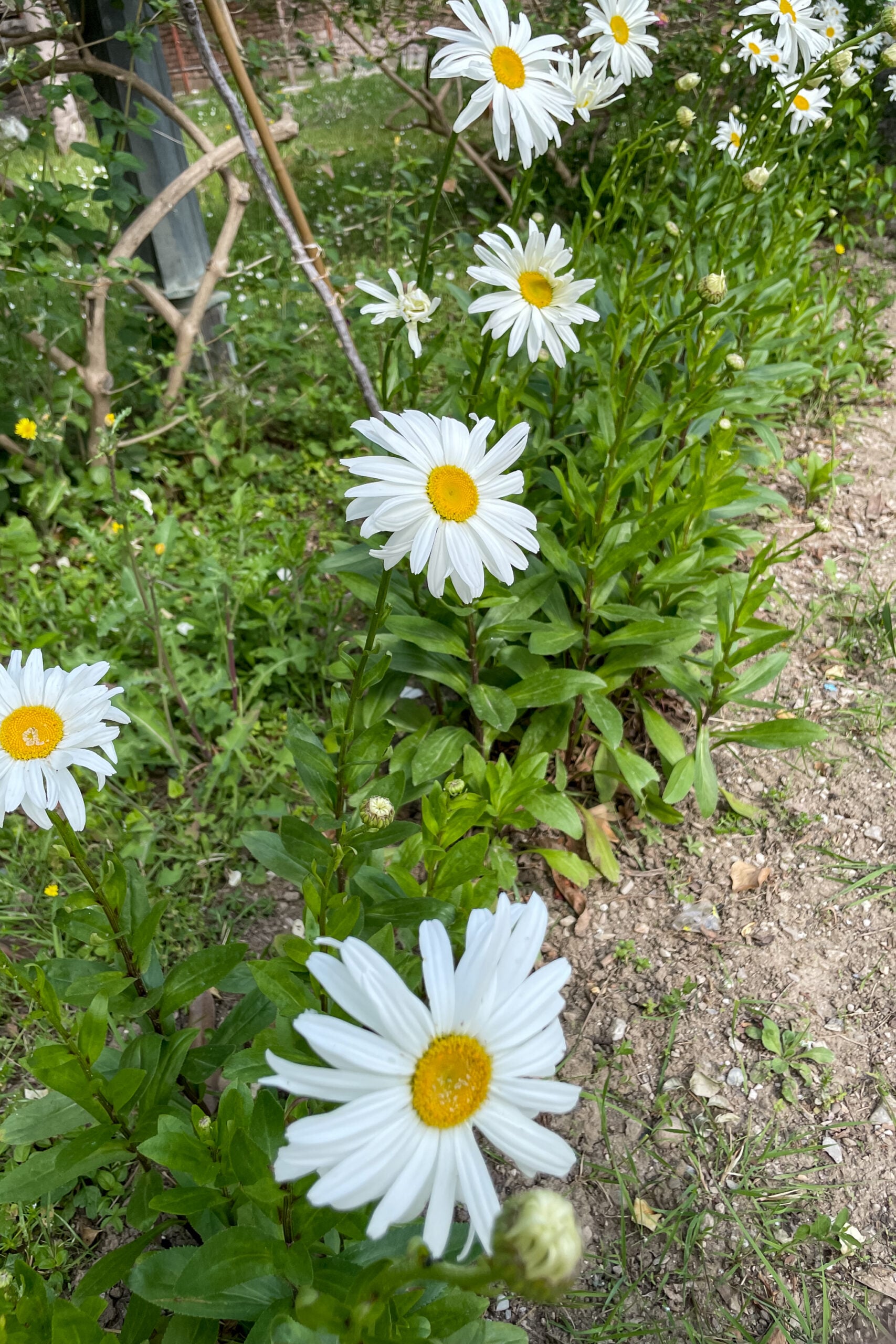
Not every Shasta daisy hails from the same generic assembly line, so don’t expect every plant to bounce back with the exact same level of drama.
Forgot what you planted? If the flowering stalks hit your thighs or waist (around 3 to 4 feet tall), you’re probably dealing with a classic tall variety. If the whole cushion stays below your knees, around 12 to 18 inches, you’re more likely dealing with a dwarf.
Either way, the rule is the same: cut what’s spent, protect the fresh basal growth, and don’t expect every cultivar to perform the same circus trick in August.
Over and Out (Of the Heat)
That is all the yard work you’re getting out of me until the temperature drops below half a hell. Roots insulated? Check. Spent stems cleared? Check. Crown not buried alive under mulch? Also check. The countdown to the second flush has officially begun.



How do you know when I need advice or reassurance? Thank you! Now I’m ready for the second flush.
– Susie 😊
Hi Susie, I’m so glad this came at the right time 😊 Here’s hoping your daisies reward you with a beautiful second flush!