
Do you feel your hostas are lacking the enthusiasm and vigor you expected from them? Well, the problem might be that you’re not dividing them timely.
In today’s article, we’ll discuss hostas in detail and go over a step-by-step tutorial on how you can divide your hostas this fall season to achieve bigger, healthier plants by next year.
If this sounds like something you’d find helpful, keep reading because I’ll be dropping some golden nuggets you definitely don’t want to miss!
Should You Really Divide Hostas This Fall?

Yes, you definitely should! Hostas are typically divided in the fall season because, similar to early spring, it offers the perfect environmental conditions that favor successful completion of the job.
Cooler surrounding air combined with moist soil results in lower overall stress on the plant, which is what we want when dividing.
Because of the way they grow, hostas can become crowded over time, so dividing them every 3-7 years is a good idea.
For more options, here’s a list of other perennials you can divide in early fall.
Before You Start, Choose The Right Time!

Hostas are hardy in Zones 3–9, and division timing will look a little different depending on your region. Aim for early September in cooler zones and mid–late October in warmer ones.
In general, divide when nights are cool. Cool nights indicate slowing hosta growth, and that’s your cue to divide. When the environment is cool and the soil is sufficiently moist, the severity of any transplant shocks is drastically reduced.
Hostas are far from the only plant that benefits, take a look at these perennials you can divide in September to refresh your garden.
What You’ll Need To Divide Hostas This Fall

For successful hosta division, you’ll need tools like:
To prepare your hostas for division, water them deeply 24-48 hours before you plan to divide them. This will make the soil much softer and ensure easy digging.
Golden tip: Tie up the leafy hosta stems to keep them out of the way while you cut underneath them.
And for quick seasonal upkeep, here’s how to trim yellowing leaves on hostas without harming the crown.
How To Divide Hostas: Easy Step-By-step For Beginners

Step 1: Dig Around the Clump
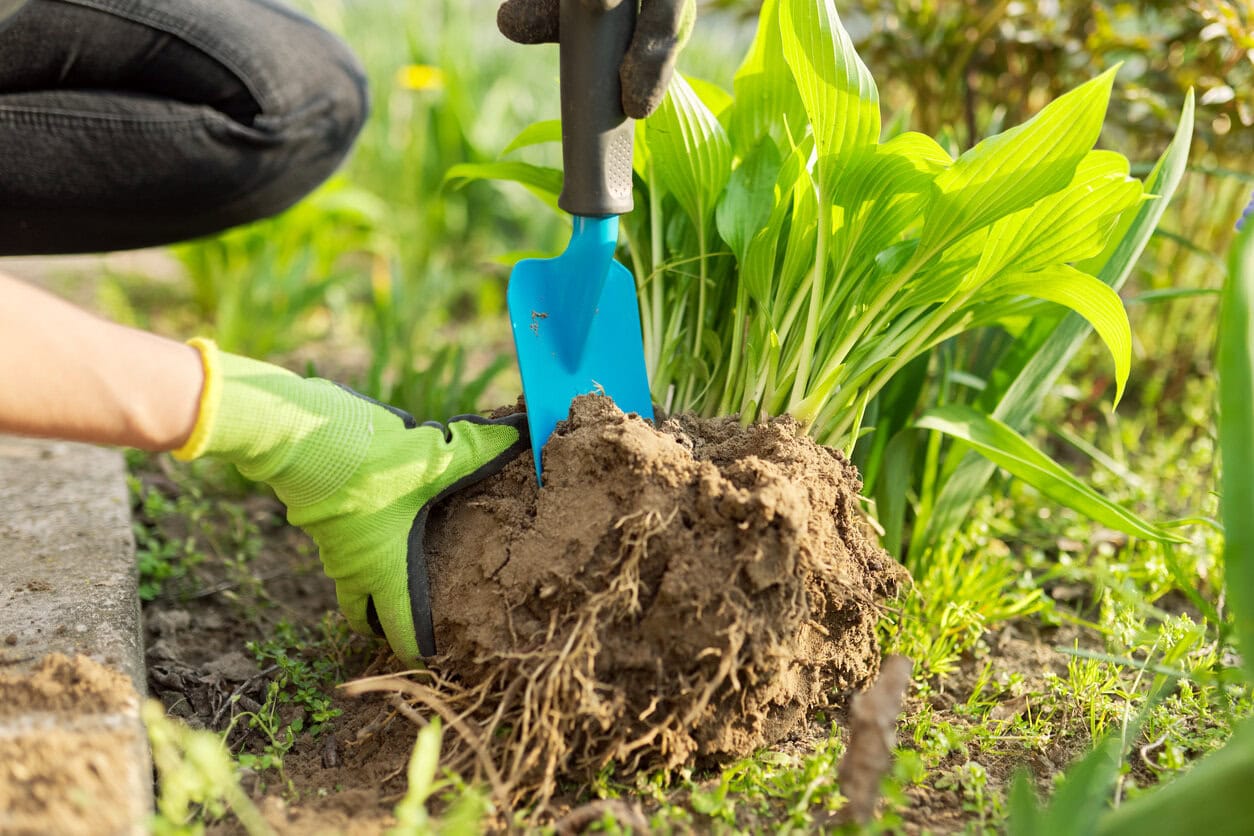
Dig around the clump. Pull out a scale and measure 3-6 inches from the base of your hostas. Keep in mind that you’ll probably need to go deeper for bigger cultivars and varieties. Then, dig around the base to pull out the entire root ball.
Step 2: Lift the Root Ball Safely

Lift the root ball and gently place it on the ground (or tarp). You can even use some sort of board for placing the root ball safely. Try to keep things neat and separate clumps quickly.
Wildlife tip: When lifting clumps, check the soil for toads, earthworms, or other little critters before replanting.
Step 3: Divide the Sections
Carefully divide the clump! If the root system feels loose, shake the soil and pull it apart gently. However, if it’s dense and compacted, you may want to use a sharp knife or the edges of a gardening spade to separate sections.
Each section should ideally have 2-3 leaf shoots as well as some visibly healthy roots.
And if you’re trimming back other perennials this month, here’s a guide on which ones to cut in September for a better show next spring.
Step 4: Replant at the Same Depth
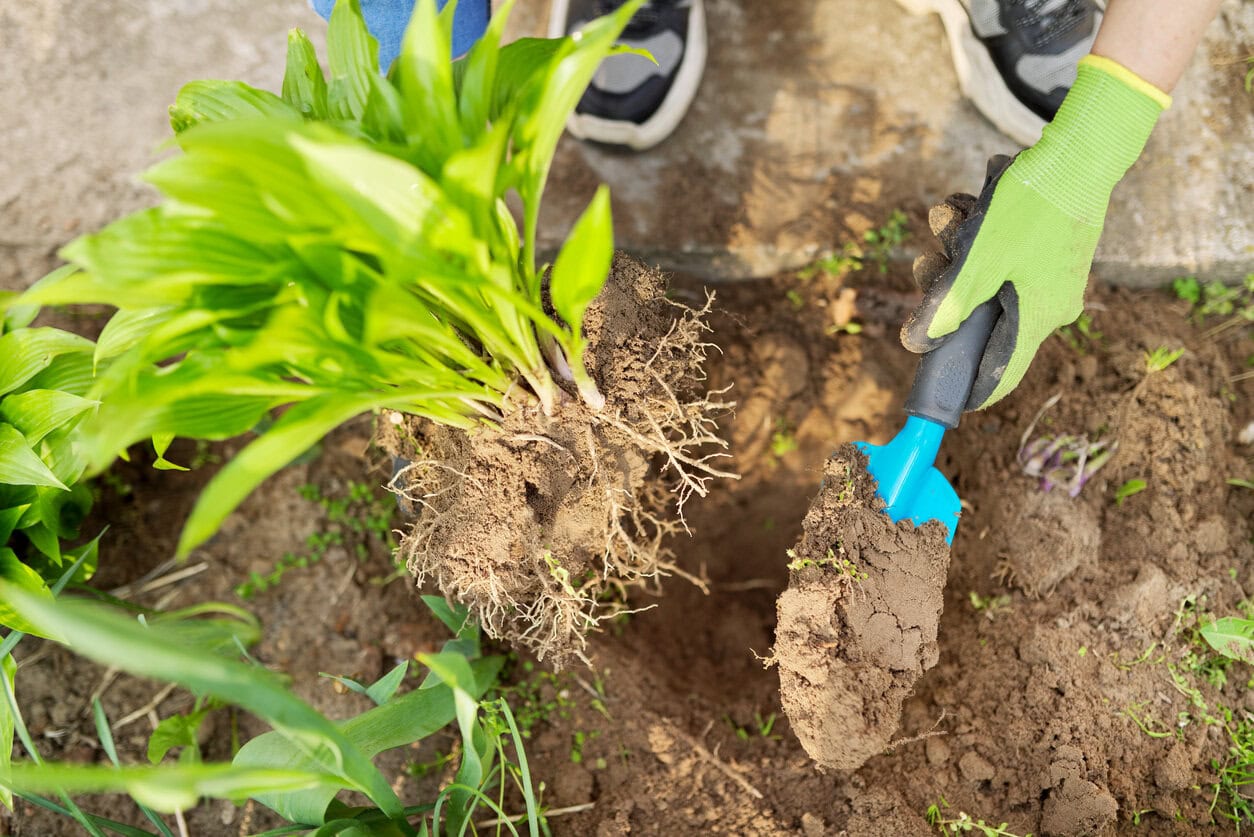
Replant the sections. Dig holes in the soil that are approximately the root mass width and replant the sections at the same depth.
If there are some patchy, unfilled areas, it may be a good idea to fill them with some compost. Also, don’t forget to water deeply after replanting!
Step 5: Focus on Aftercare

Aftercare is important! Water the newly replanted sections regularly to keep the soil moist, and mulch around the base of the plants to help conserve that moisture for a longer duration.
Keep the soil moist until frost, then stop watering. Hostas don’t like sitting in soggy winter soil.
Note: The photos in this step-by-step were taken during a spring division, but the process is exactly the same in fall. The only difference is that by September, your hostas will look more mature and the foliage may be starting to decline.
Don’t Get Excited! Here Are Some Mistakes To Avoid

Also, not all plants take well to division, here’s a list of perennials you should leave alone.
Let’s Conclude
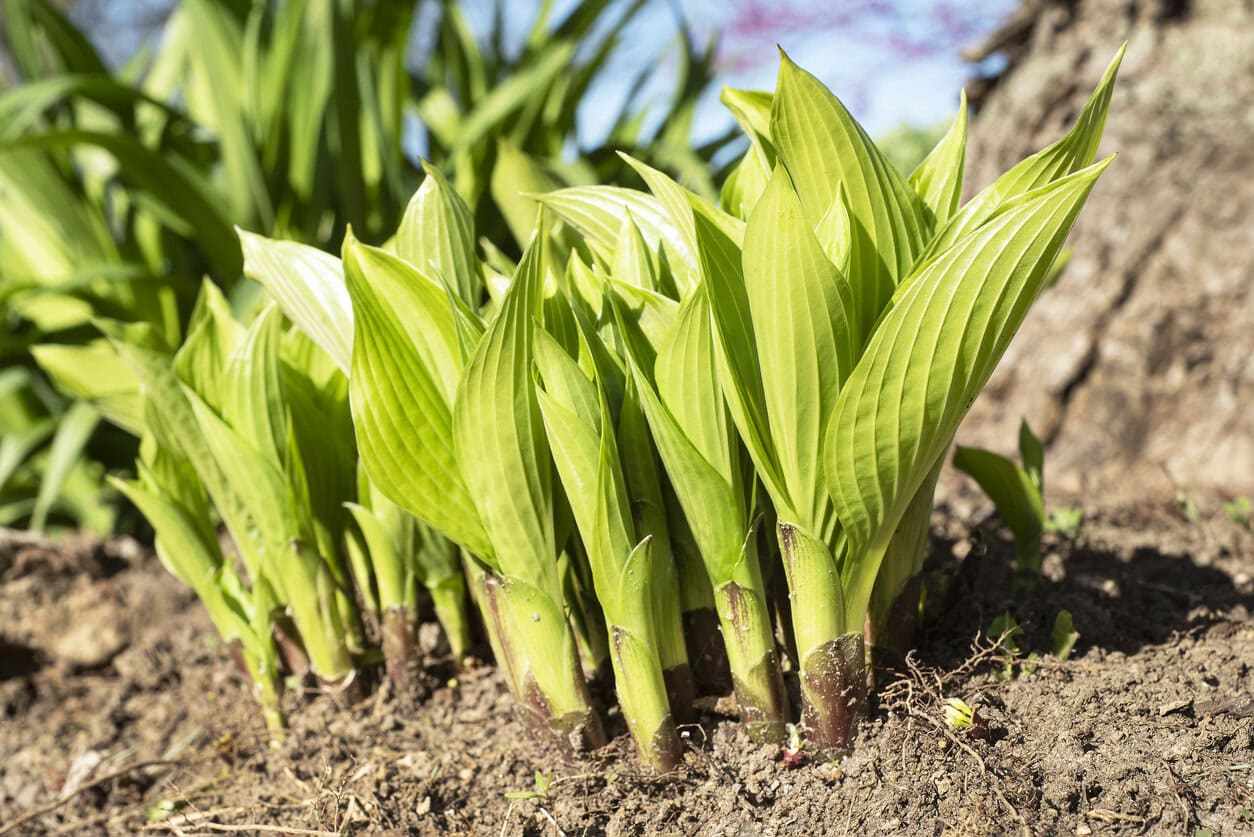
As fun and exciting as growing hostas can be, they do require a lot of work and effort to maintain
One of the most important aspects of their maintenance is timely division, which can keep them strong and healthy for years to come. Division is one of the simplest ways to keep your hostas vigorous, tidy, and ready to put on an even bigger show next year.




Why are my hostas gone? I’m in San Antonio zone 8b -9 I planted them in spring now there gone will they come back? August has been dry and hot. 2026 I hope you tell me yes!
Hi Arthur 🙂 That combination of extreme August heat and dry soil can make hostas disappear early, especially ones only planted this spring. If the crowns and roots survived, they can absolutely come back next spring even though all the leaves are gone now! 😁
I wouldn’t dig them up. Keep the area from staying bone dry, add a little mulch, and wait for spring. Going forward, give them plenty of shade, especially from the afternoon sun, and more consistent moisture through your Texas summers.
How can you transplant black eye flowers
Hi Denyse 🙂 If you mean black-eyed Susans, the best time to transplant them is in early fall or spring. Dig around the clump with as much root as you can, lift it gently, and replant at the same depth in its new spot. Water it well after moving and keep the soil evenly moist for the first couple of weeks while it settles in.
Should we trim the hostas before we divide them in the fall? Thanks!
Hi Kristen 🙂 You don’t have to trim them before dividing. I usually leave healthy foliage in place and tie it up to keep it out of the way, just like the article suggests. If the leaves are already yellowing or damaged, you can trim them back after dividing.