
Look at the hosta leaves, look how they shine for you! And everything you do, yeah, they were all… yellow. Is the solution to coldplay their leaves, prevent the yellowing, or both? Is this more a Fix You scenario, or a Don’t Panic situation? Stay tuned (and keep your eyes on the screen).
Why Hostas Turn Yellow (And When It’s Normal)

Widespread yellowing across the entire plant, especially if it’s out of season (the season for yellowing being late summer or fall), usually points to some underlying issue.
Hostas don’t use sign language to protest (your questionable taste in garden gnomes) but tell you there are:
It’s time to figure out which “trouble” track they’re playing.
Yellow leaves don’t always mean doom, sometimes it’s just aging. That’s true for other houseplants too, like peace lilies, which can also turn yellow for all kinds of reasons.
What’s Causing the Yellow Leaves on My Hostas?
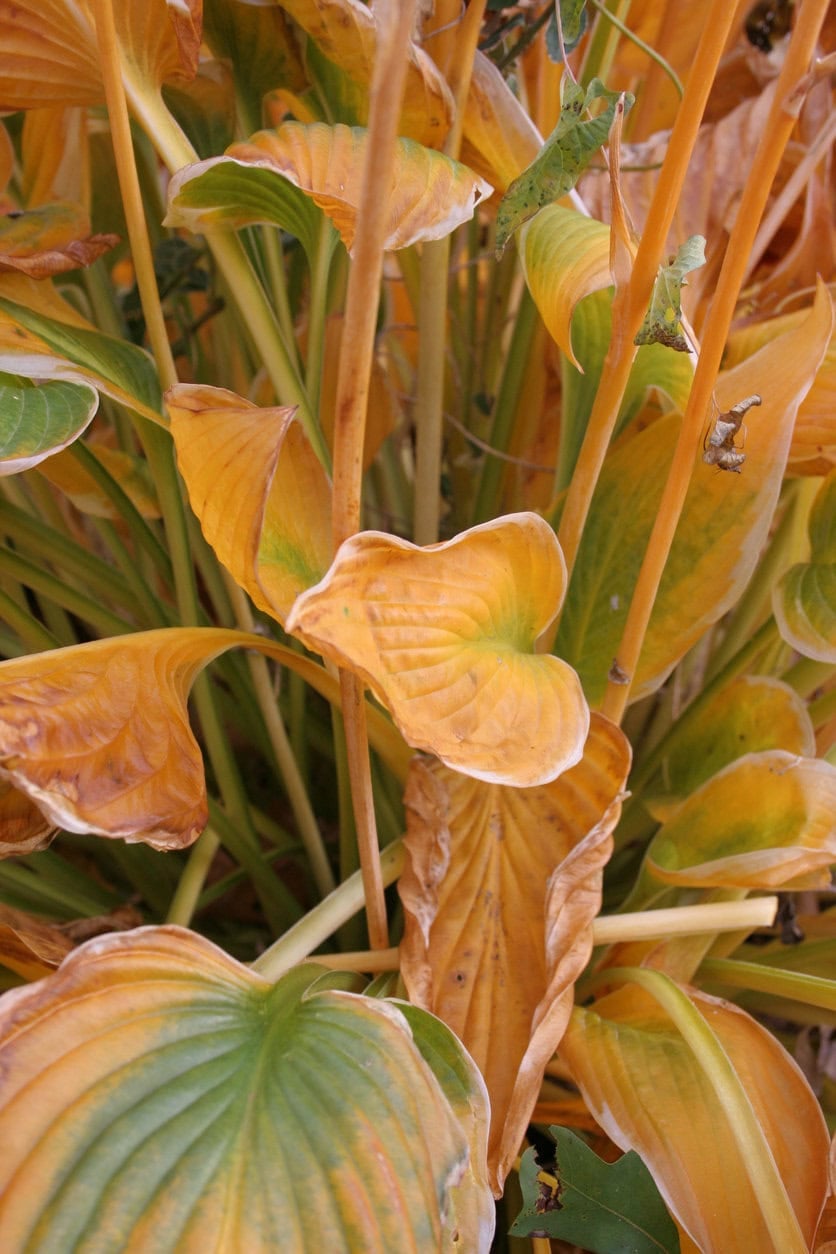
What hosta-cles are preventing your plants from showing their true colors, shining through? Don’t be afraid to let them show. This is how.
Normal Aging:
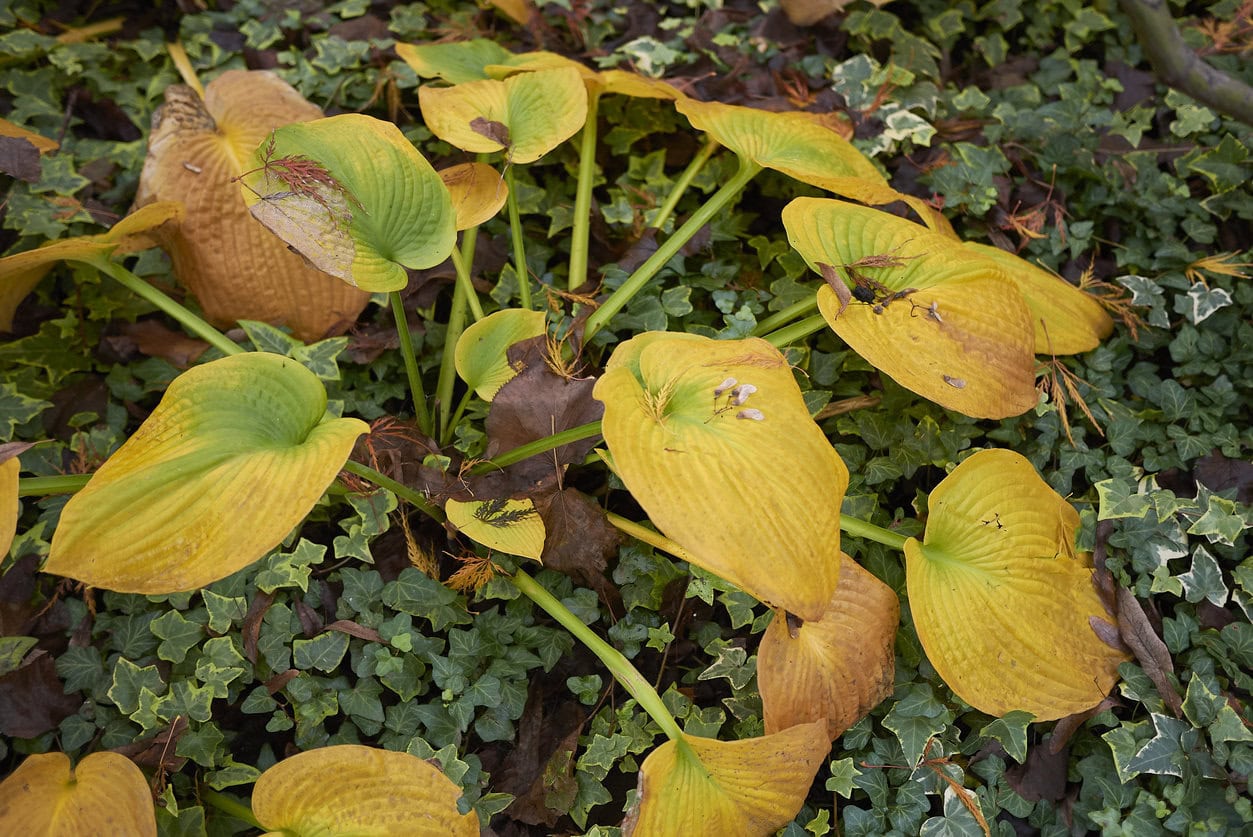
This is the most forgiving explanation. No need for drastic measures here, just regular cleanup.
The oldest leaves at the bottom will yellow and die back naturally in late summer or early fall. It’s a normal part of the life cycle of any aging performer to fade, unless it’s Keith Richards.
Yellow leaves can sneak up on all kinds of garden favorites, gardenias included. Here’s how to stop your gardenia from yellowing and dropping leaves.
Excessive Sun Exposure:
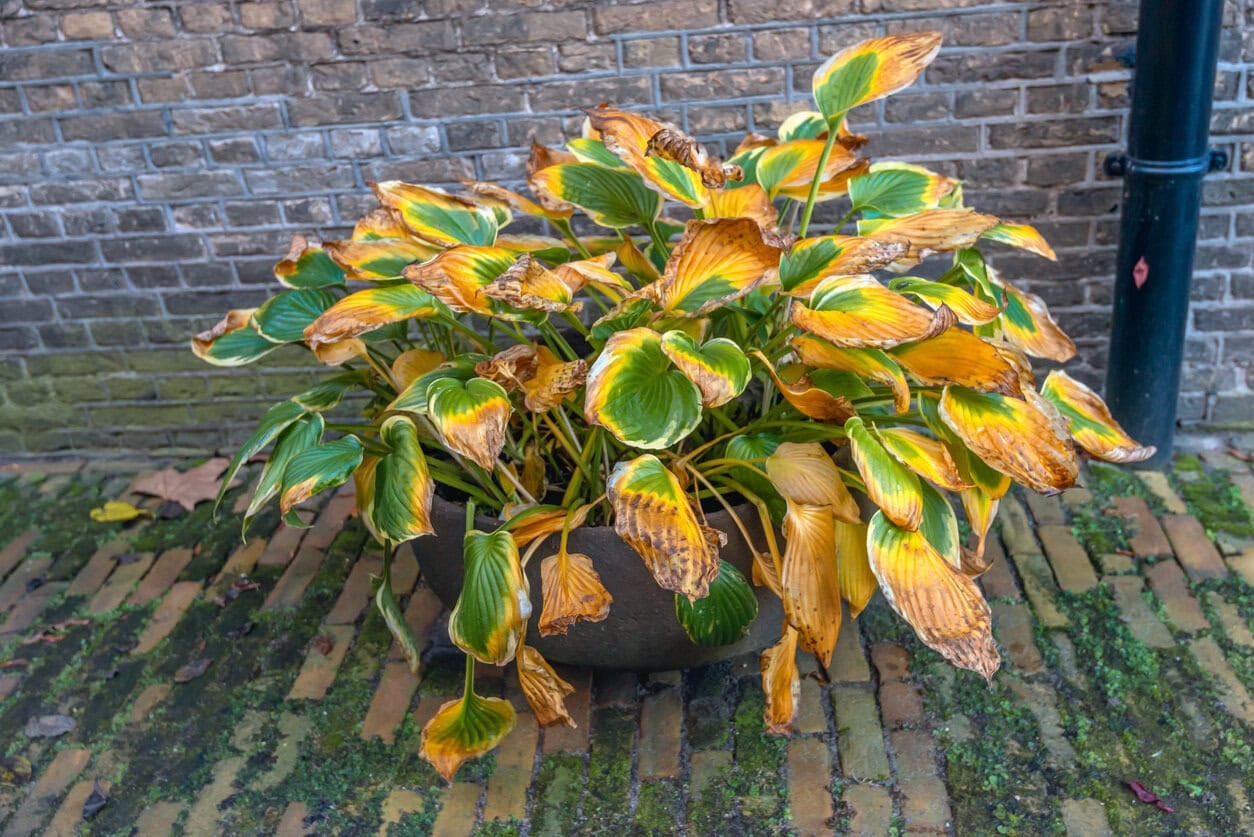
Hostas are dedicated shade enthusiasts. They thrive in diffused light or accept only the gentle caress of morning sun.
Should your plants consistently endure the intense glare of the afternoon sun their leaves will likely blanch to yellow or even develop unsightly brown burns and crispy edges.
This isn’t merely an aesthetic setback. It genuinely harms the plant causing it to falter with the speed of a fleeting pop single.
Water Imbalance:

It often creates a real hosta-ge situation. Both excesses will cause yellowing.
On one hand, overwatering drowns the roots and blocks their access to vital nutrients. The result is typically yellow leaves, often soft to the touch.
On the other, underwatering starves the foliage of essential moisture. That causes leaves to shrivel, dry out, and assume a brittle yellow-brown hue, mainly along their outer edges.
Overwatering vs underwatering is a common problem, not just for hostas, even delicate orchids will protest by turning yellow when their roots are stressed. Here’s what yellow leaves mean on orchids.
Pests or Disease:
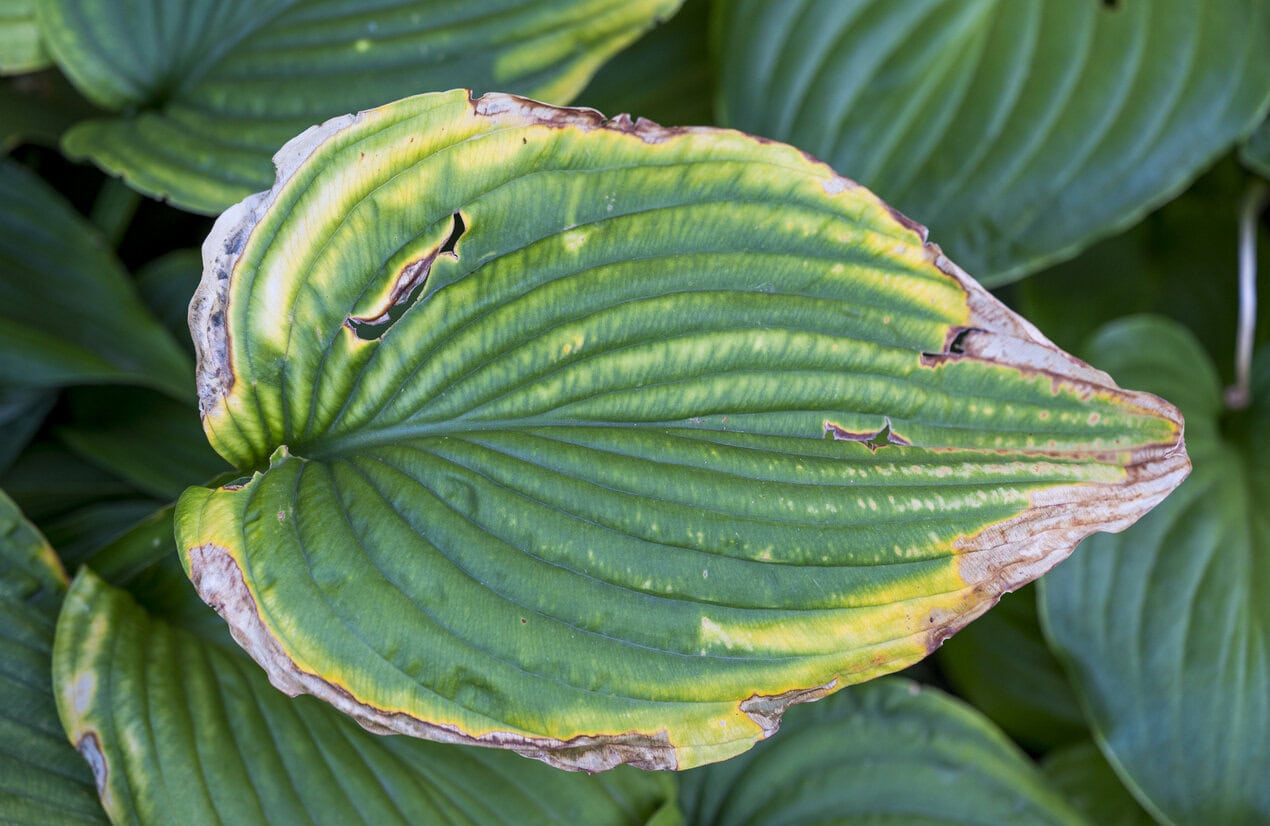
Sometimes, the yellowing is a symptom of something more insidious. Slugs and snails are infamous hosta stalkers. Ones that leave behind chewed holes and often stress the plant enough for yellowing to appear.
Crown rot or various leaf spots are fungal diseases that can also lead to discolored and dying foliage. Sometimes they’re also accompanied by a soft and squishy base. So always keep an eye out for other suspicious signs that suggest an unwelcome guest has joined the tour.
Hibiscus plants, like hostas, are prone to yellowing when pests or fungal issues creep in. Here’s what yellow leaves on hibiscus actually mean.
When to Trim Hostas? Always Without Harming the Plant!

Deciding when to trim your hostas is simpler than deciphering a concert lineup.
If you spot a yellow or brown leaf during the growing season so your plant looks messy, go ahead and snip it off. You won’t harm your plant doing so.
Wait until late fall for a full cutback. That’s when frost has delivered its final blow and the leaves naturally collapse. At that point, you can take them all down to the ground. The idea is to prevent overwintering pests and diseases.
Whatever you do, never trim all the green leaves mid-season. It’s a surefire way to weaken your hosta and drain its energy faster than GPS on a phone. A plant needs its green foliage for photosynthesis and if you cut it all off mid-growth… you put its survival on hiatus.
How to Trim Yellow Hosta Leaves – Easy Step-by-Step
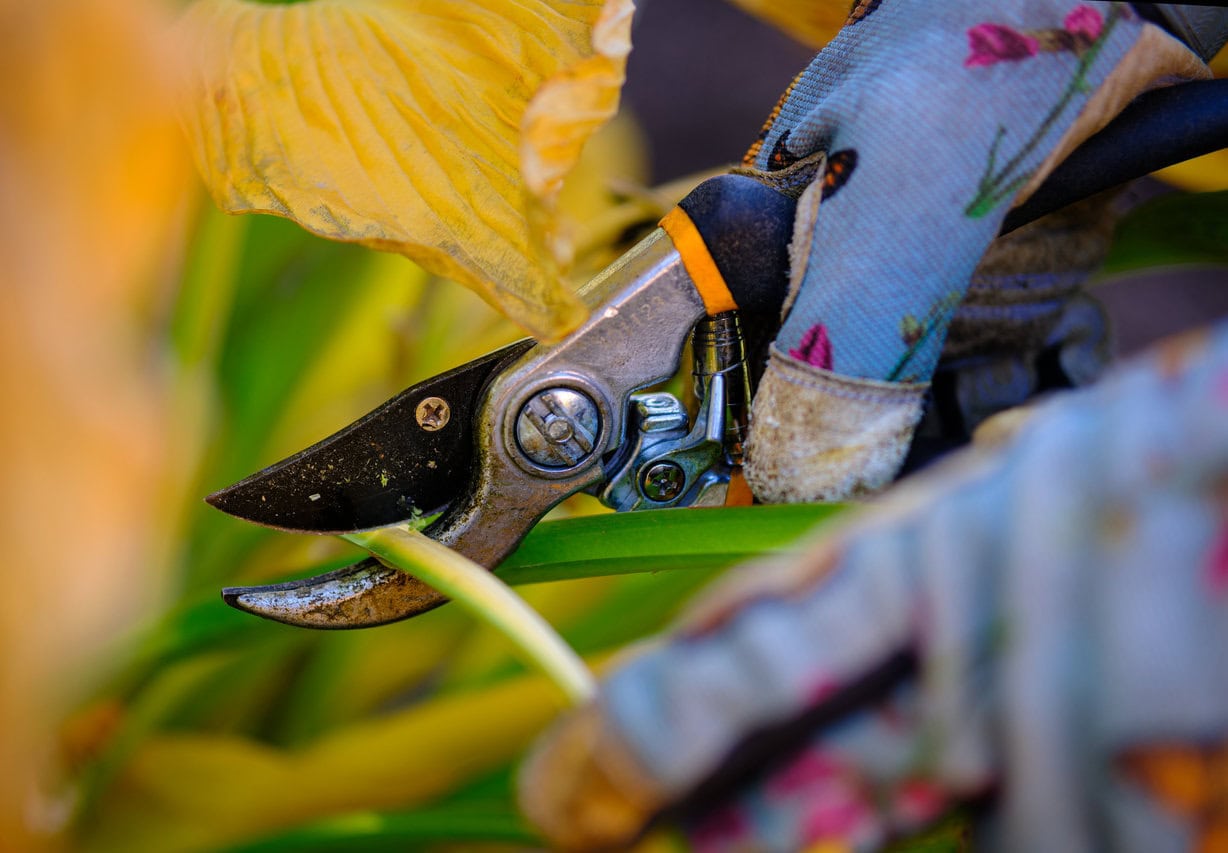
Get ready to give your hostas a sharp new look. These are the steps to clean up their act:
You must conquer the core cause of stubborn yellowing if you want your hostas to flourish.
And in case the slugs caused the damage, trim away the worst chewed leaves to tidy up. Then make sure to implement a robust slug defense strategy afterward, this guide covers all the natural ways I keep them away for good.
Quick Parting Tips to Keep Hostas Looking Tidy Longer!

Keeping your hostas in top shape simply demands consistent action. Water them generously once a week, let the soil dry out before you do it again, and always aim the water at the soil to discourage plant sickness.
Site them in shade or where they get only the gentle morning light. Intense afternoon sun is simply too much for them. Stick to these practical pointers, and your garden will hosta great show.




Thanks for your helpful information on transplanting hostas in the fall! Besides the good advice I enjoyed your play on words? Laughed all the way through!😂
Hi Judy! Haha thank you!! 😄 So glad it gave you a laugh and some helpful tips. Hostas can be dramatic, but at least they keep things interesting!