The secret to feeding marigolds for bigger blooms? Knowing when not to do it! So before you reach for the fertilizer, here’s when marigolds actually need feeding, and when they’re better off ignored.
Marigolds want to get drunk on sunshine, throw out flowers, make seeds, and call it a life. If you feed them too much, especially nitrogen, they’ll turn into leafy drama queens: all green growth, barely any flowers.
The Planting Phase
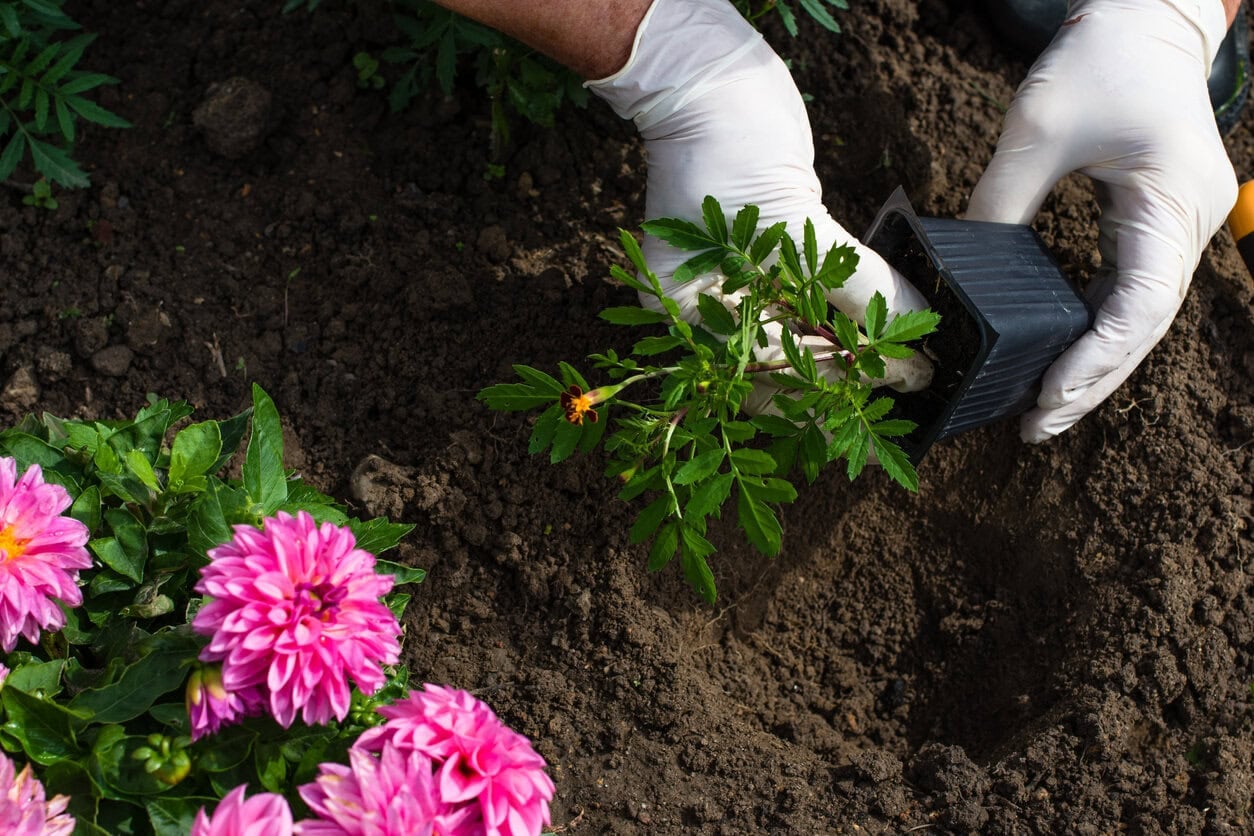
Marigolds are built for lean, no-fuss soil, not a luxury buffet. They like average, well-drained ground with a pH around 6.0 to 7.0.
If you’re using pre-fertilized soil, watch the first number on the fertilizer label, whether it says 10-10-10 or something similar. That first number is nitrogen, and too much of it can send marigolds into a useless leaf-building spree instead of flowers.
At planting, I like to mix in a small handful of compost if the soil looks tired. If the ground is heavy clay, compost helps loosen it up so water doesn’t sit around the roots.
The Early Growth Phase
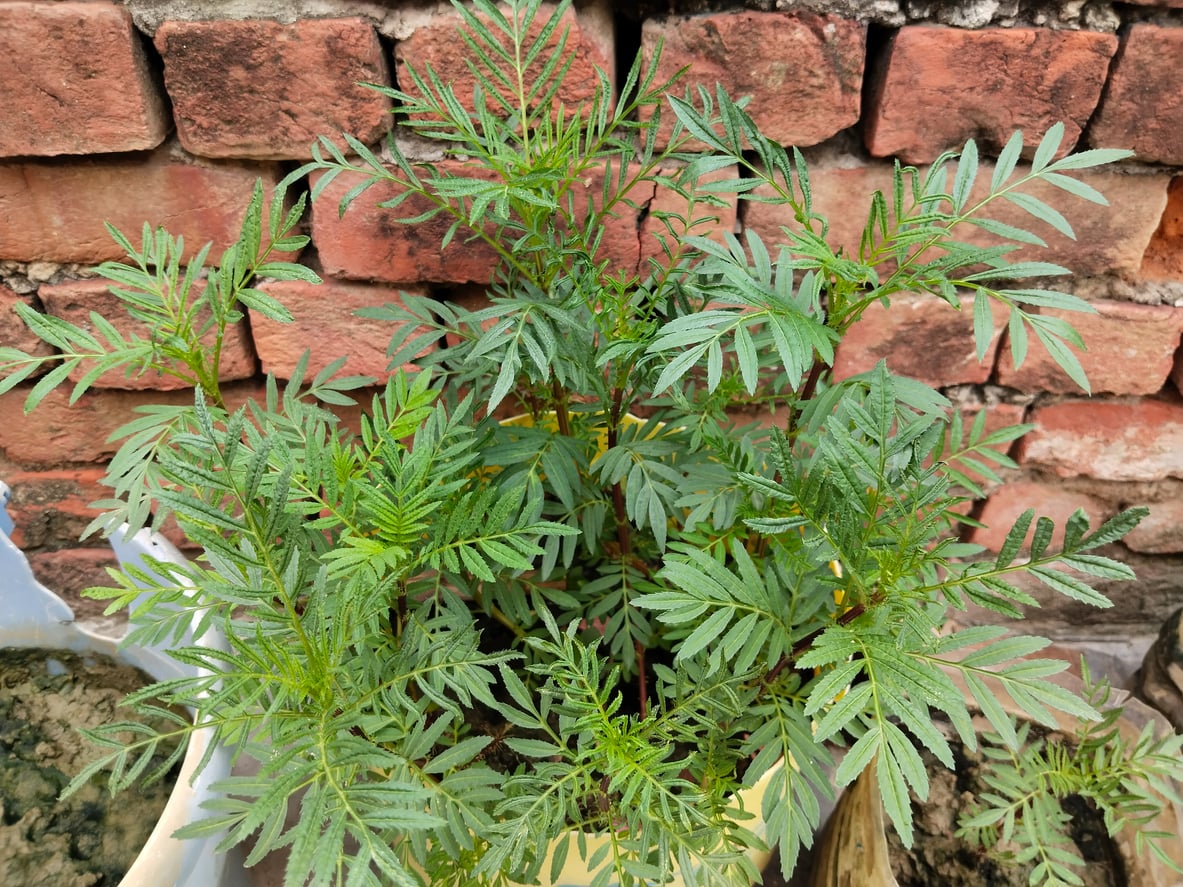
Once your marigolds start growing, resist the urge to keep feeding them!
If they look dark green, leafy, and almost too lush, that is usually your sign to back off. Too much nitrogen can make them look impressive for a minute, but it often steals the show from the flowers.
At this stage, I leave the liquid fertilizer alone and let the plants stay short, stocky, and a little unspoiled.
If you’re not sure they’re getting enough light, we also wrote a guide about how much full sun marigolds need for healthier blooms.
The Budding Phase
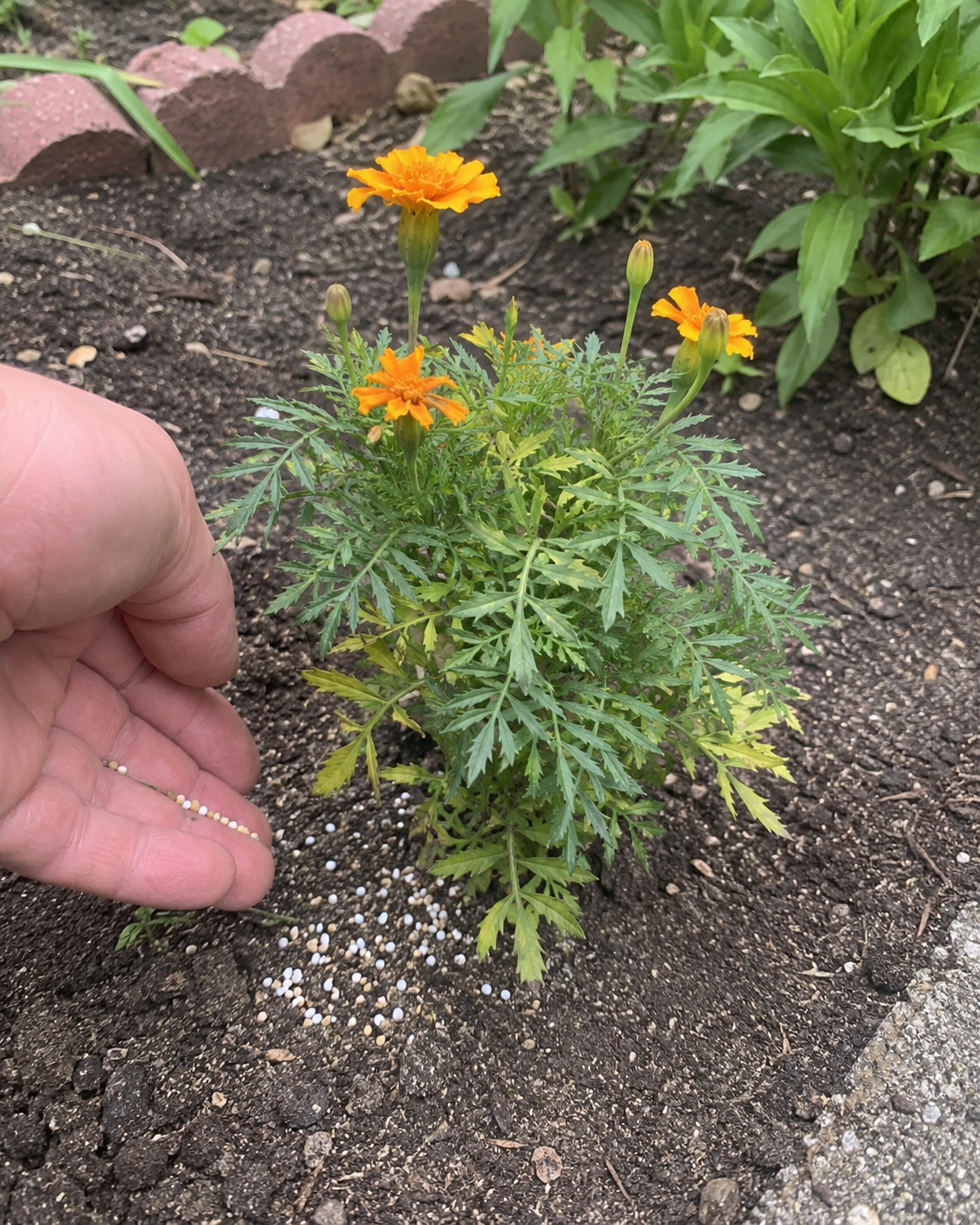
Once you see tight little green buds at the tips, this is one of the few times I actually consider feeding.
If the plants look pale, tired, or stuck, use a small amount of low-nitrogen fertilizer, something like 5-10-5 or 4-8-4. Work it lightly into the surface soil in a circle around the plant (following the label amount).
Avoid getting any on the stem itself to prevent burning. Water the area well right after so the nutrients sink down where the roots can actually reach them.
If the plants already look healthy and full of buds, leave them alone. Marigolds do not need you hovering over them with snacks!
The Mid-Summer Tough-Love Watering
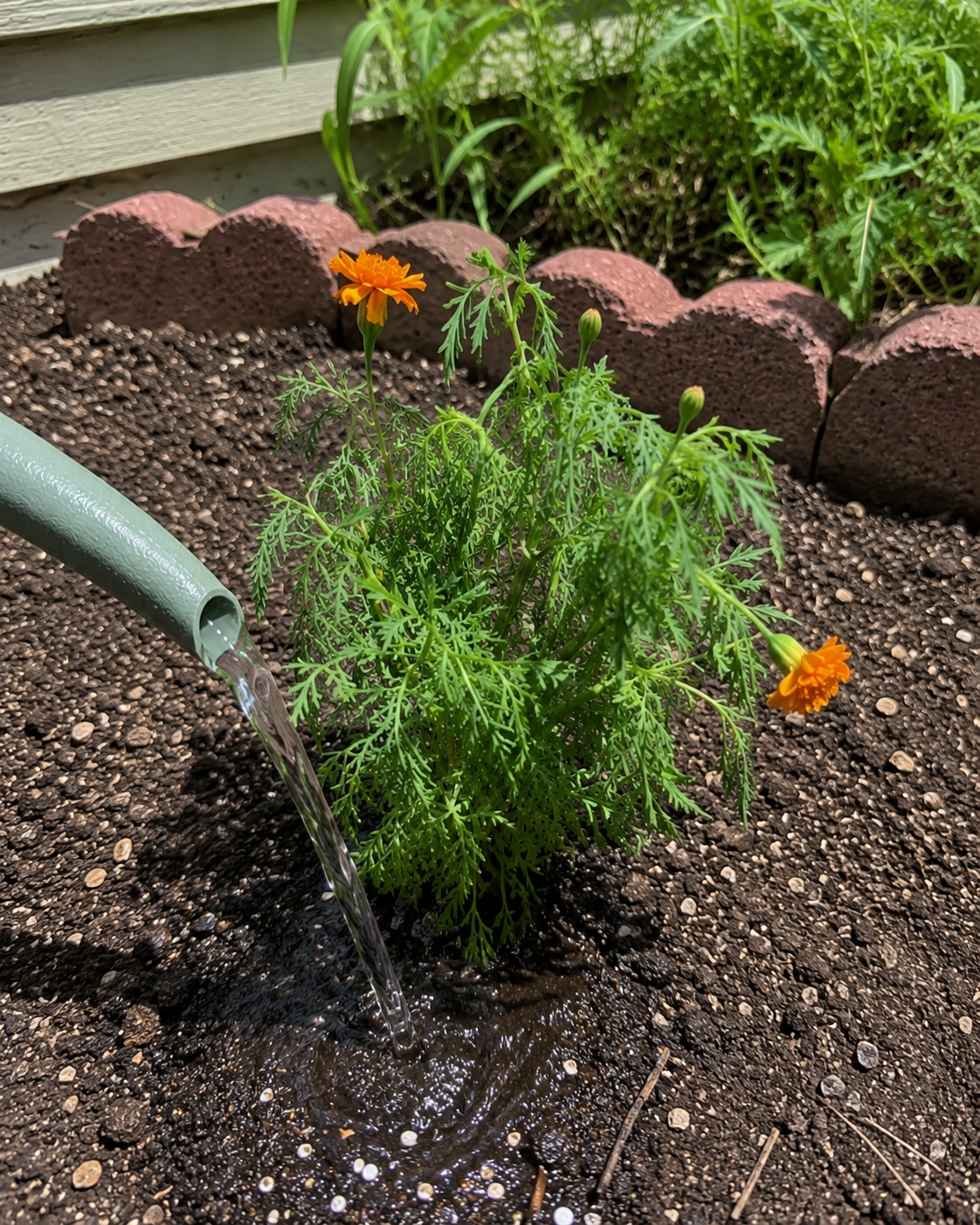
Do not baby these plants when July starts cooking. Emo gardeners like me panic when they see marigolds flag at 2 PM, sprinting for the watering can like it’s an emergency. It’s usually not.
Soggy dirt rots out the roots and practically begs fungus to move in. Wait until the top 1 to 2 inches of soil feel dry, then water straight onto the soil in the morning.
If your plants are already looking crispy or damaged, we explain the most common reasons marigold leaves turn brown and what to check first.
The Deadheading Phase
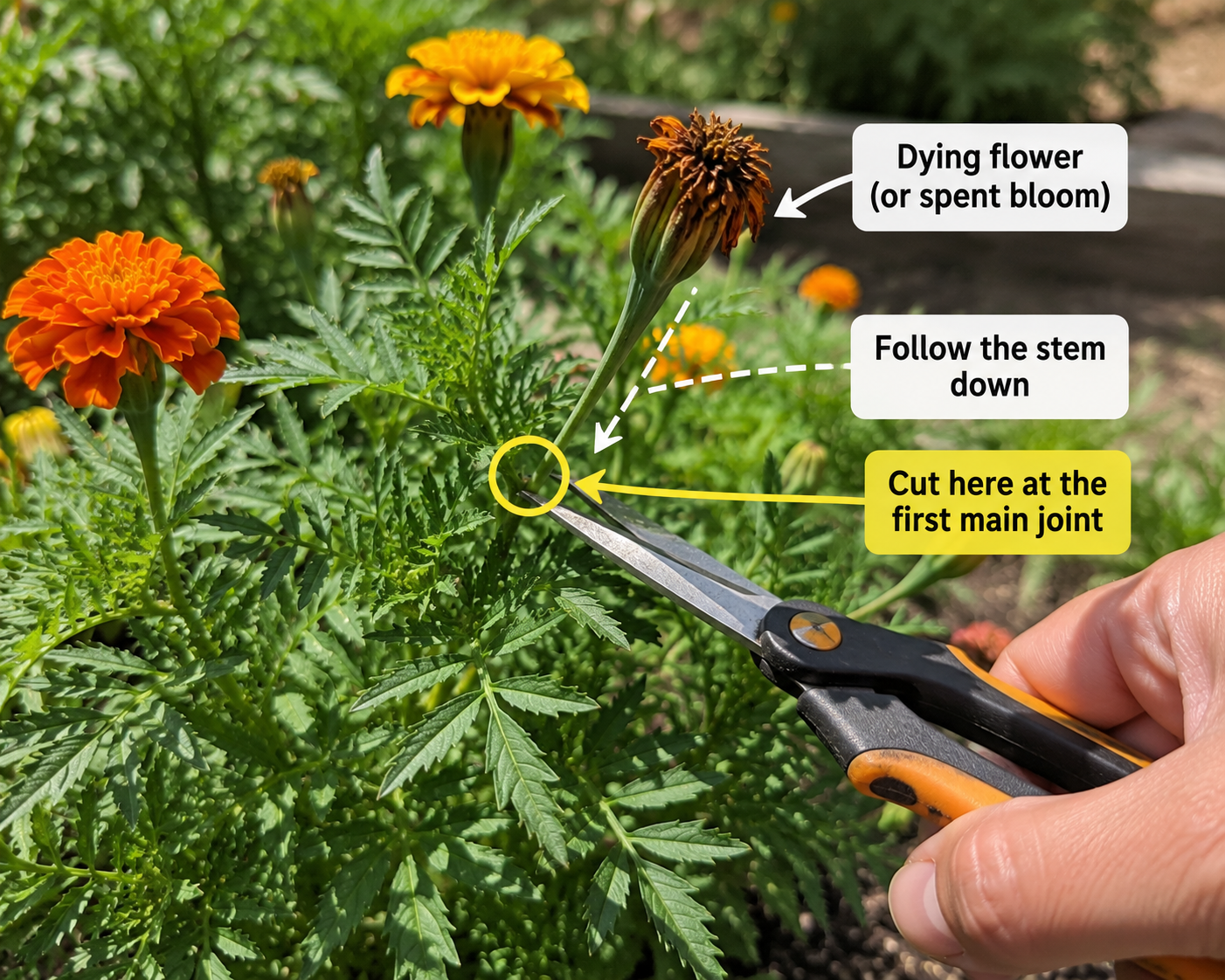
This is where the plant tries to retire early. Once fading flowers start turning into seed heads, marigolds slow down and put their energy into making seeds instead of fresh blooms.
Follow the stem of the dying flower down to the first main joint where leaves branch off. Pinch it there with your thumbnail or snip it with clean shears.
That cut tells the plant to stop wasting energy on the old flower and push those backup buds instead.
We also wrote a full guide about deadheading marigolds if you want to know exactly when it helps and when you can ignore it. If your plants look tired all over, not just a few spent flowers, we also explain how to rejuvenate marigolds with one mid-summer trim.
A Marigold Rush
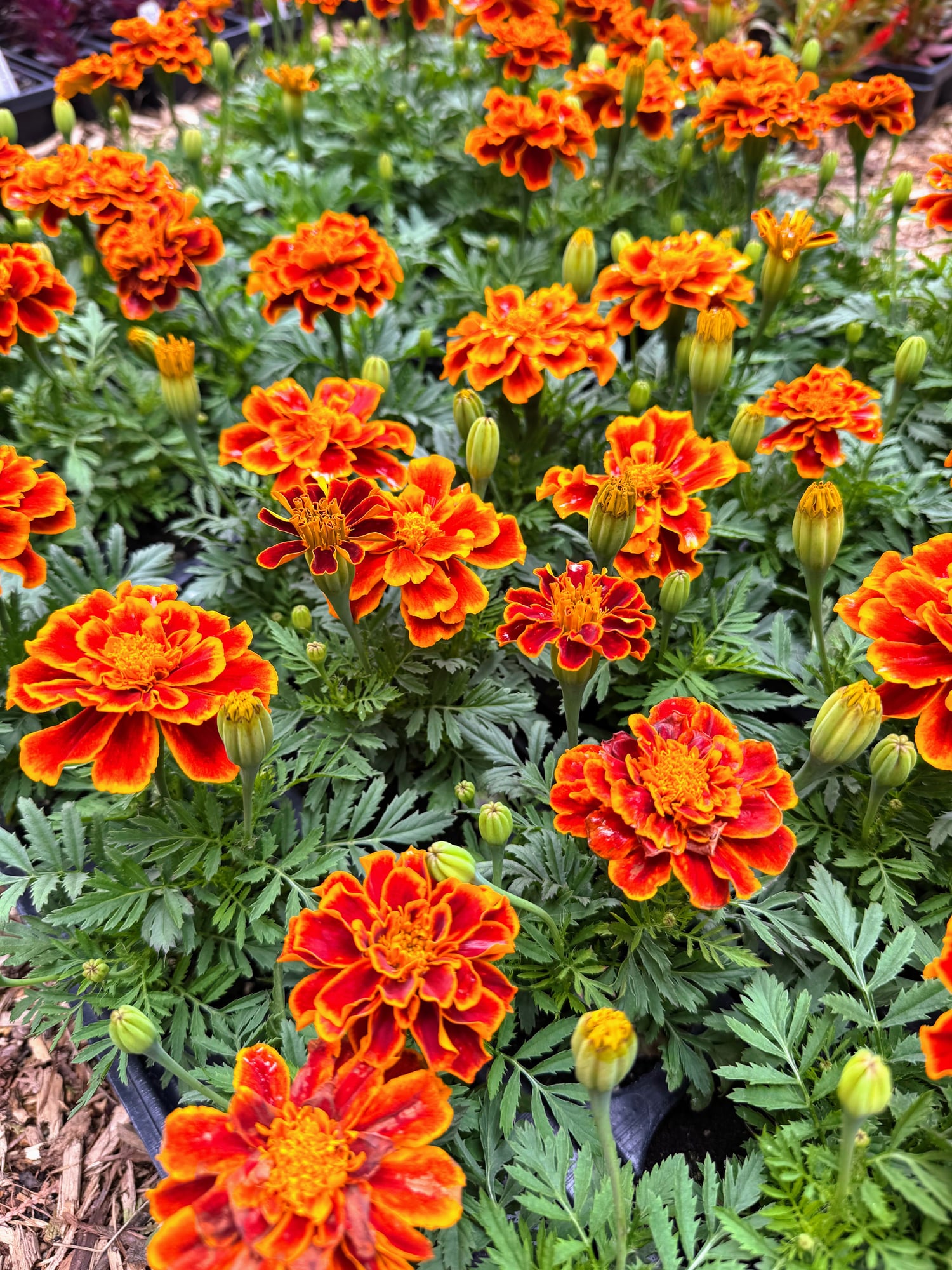
Marigolds run on pure, unadulterated reproductive panic. You just keep them on a diet, stay stingy with the hose and ruthless with the shears, and let that survival mechanism fire.