I’ve written multiple articles in the past discussing potential plants and shrubs one can plant to bring some level of privacy to the garden.
Today, let’s take a slightly deeper dive into plants that not only create privacy but can also complement autumn foliage and make the garden a lot more visually pleasing. Trust me, this is gonna be fun!
Do You Want Privacy? You Don’t Always Need Bushes!
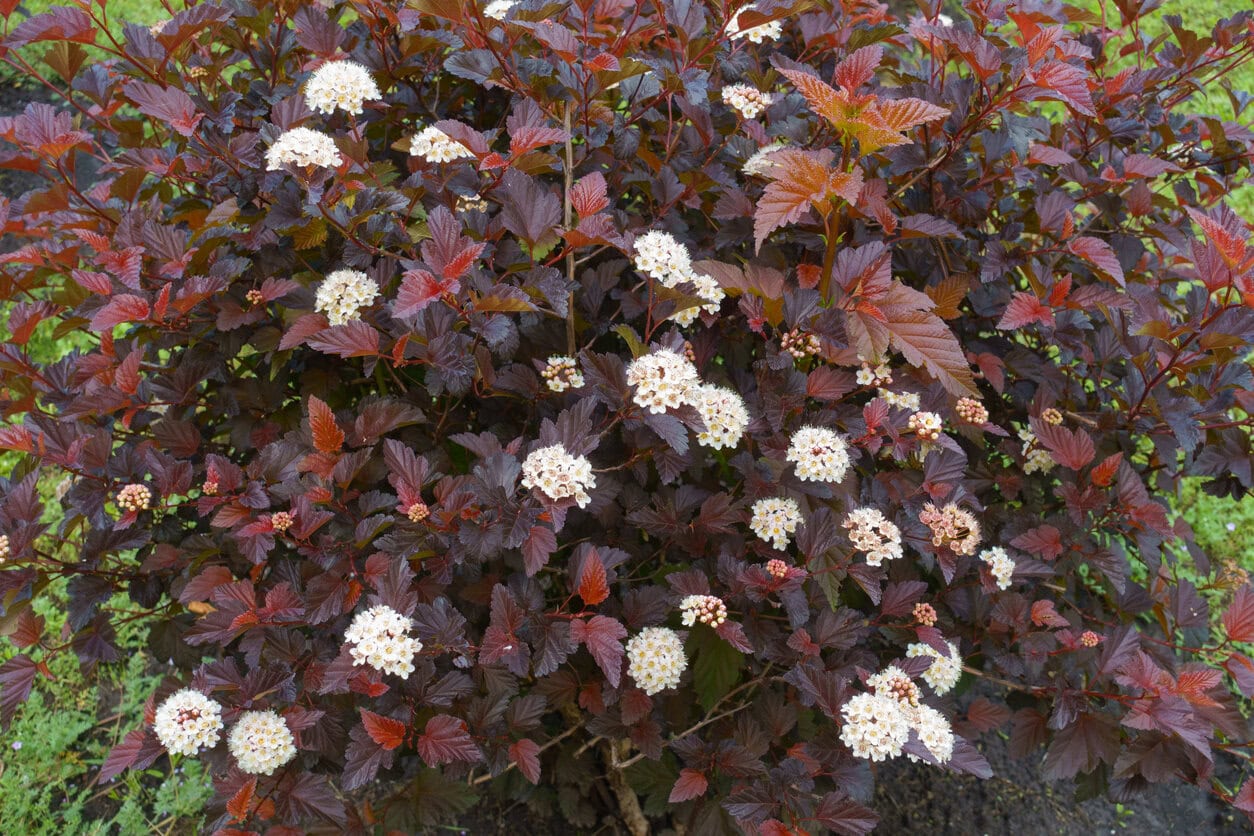
Many people believe privacy in the garden means having to plant those dense bushes and shrubs that not only take up a lot of space but also need frequent trimming. Frankly, this idea is quite outdated.
Many smaller plants offer such dense bloom and foliage yields that they can cover up garden borders easily, especially if they have tall growth. The plants we’re going to discuss today do exactly that!
Keep in mind, not all of these plants will keep their foliage year-round, but you can easily mix in a few evergreen varieties or tall grasses to maintain privacy through winter without sacrificing color in fall.
But, if year-round privacy is your goal, take a look at this list of trees that don’t lose their leaves.
Plants For Privacy & Complementing With Autumn Foliage
1: Oakleaf Hydrangea (Hydrangea Quercifolia)
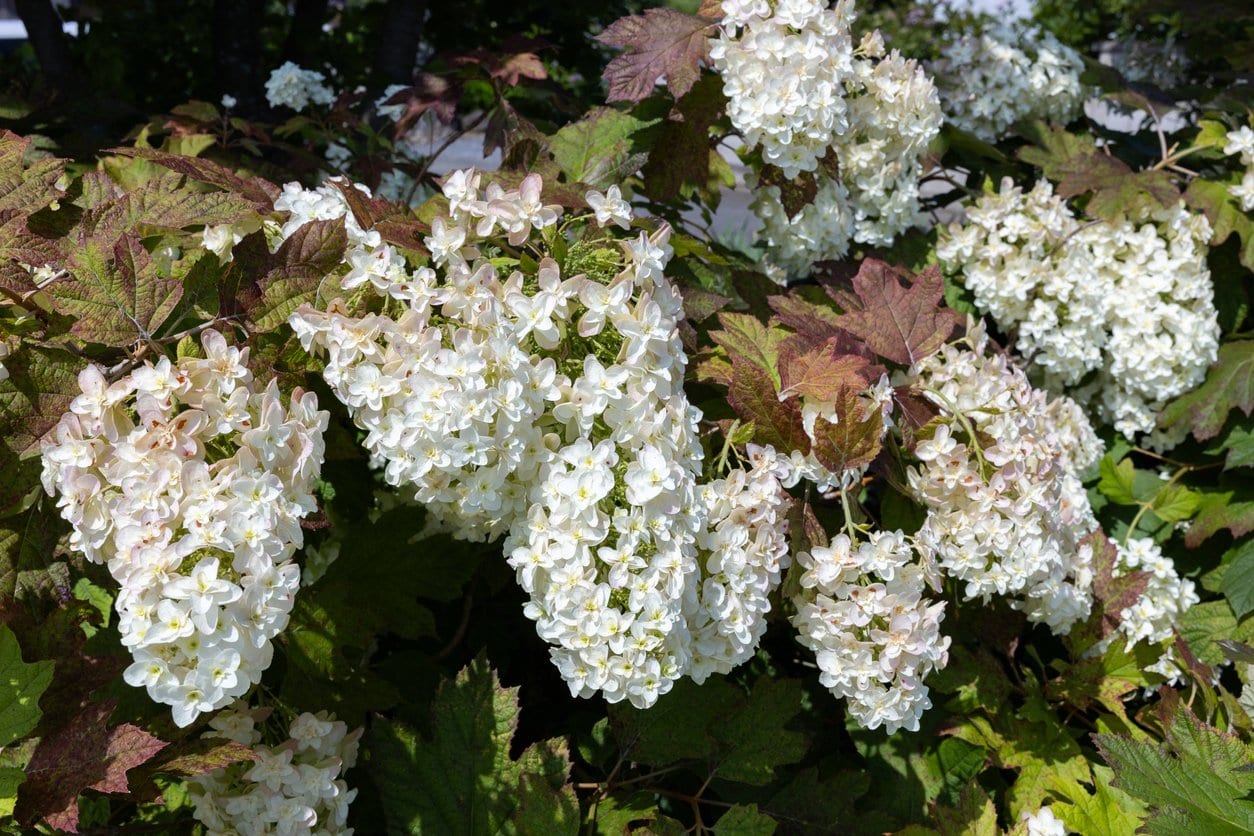
The oakleaf hydrangea is a perennial shrub that grows well in warmer zones like 5-9. It can grow up to 8 feet tall and serve as the perfect midsize privacy screen.
While the hydrangeas do have large, round blooms in a variety of different colors, the foliage is actually the most striking part. Fall foliage can come in deep shades of purple, crimson, and orange.
2: Fragrant Sumac (Rhus Aromatica)
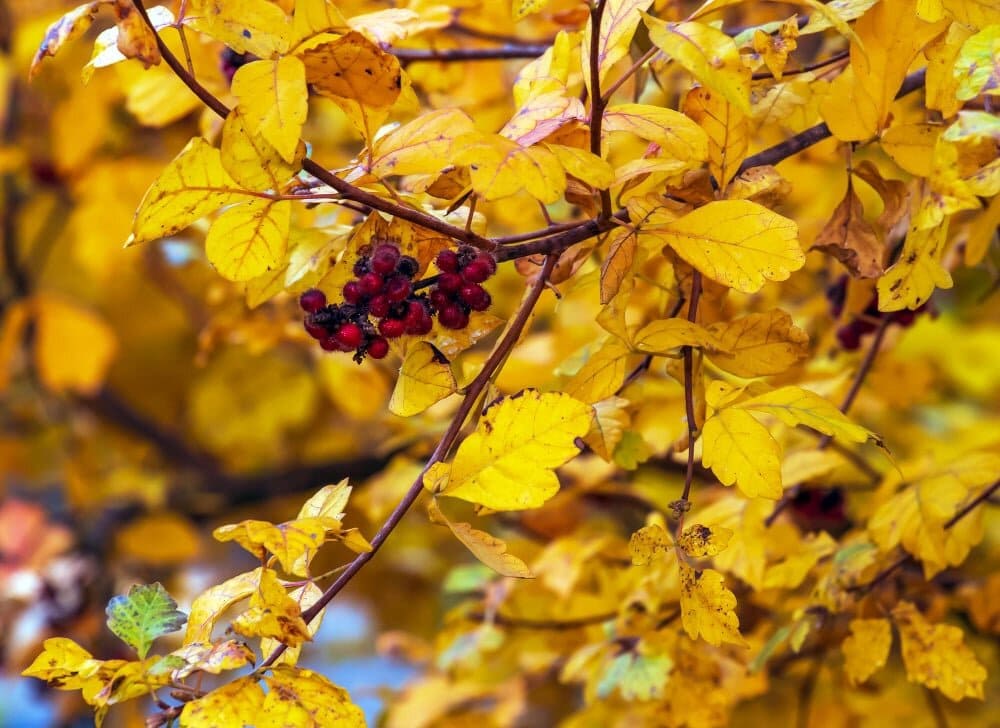
Sumacs usually spread in dense thickets and are ideal for filling up large gaps and bald patches in the garden. You can easily plant them in large quantities, and they’re quick to adapt and easy to maintain. It grows best in zones 3 to 9.
Like the name suggests, this perennial shrub produces extremely fragrant foliage, and that too in bold colors like red and purple that just draw attention in every way possible.
Tip: Make sure to give them room, they spread through suckers and can become aggressive over time if not managed.
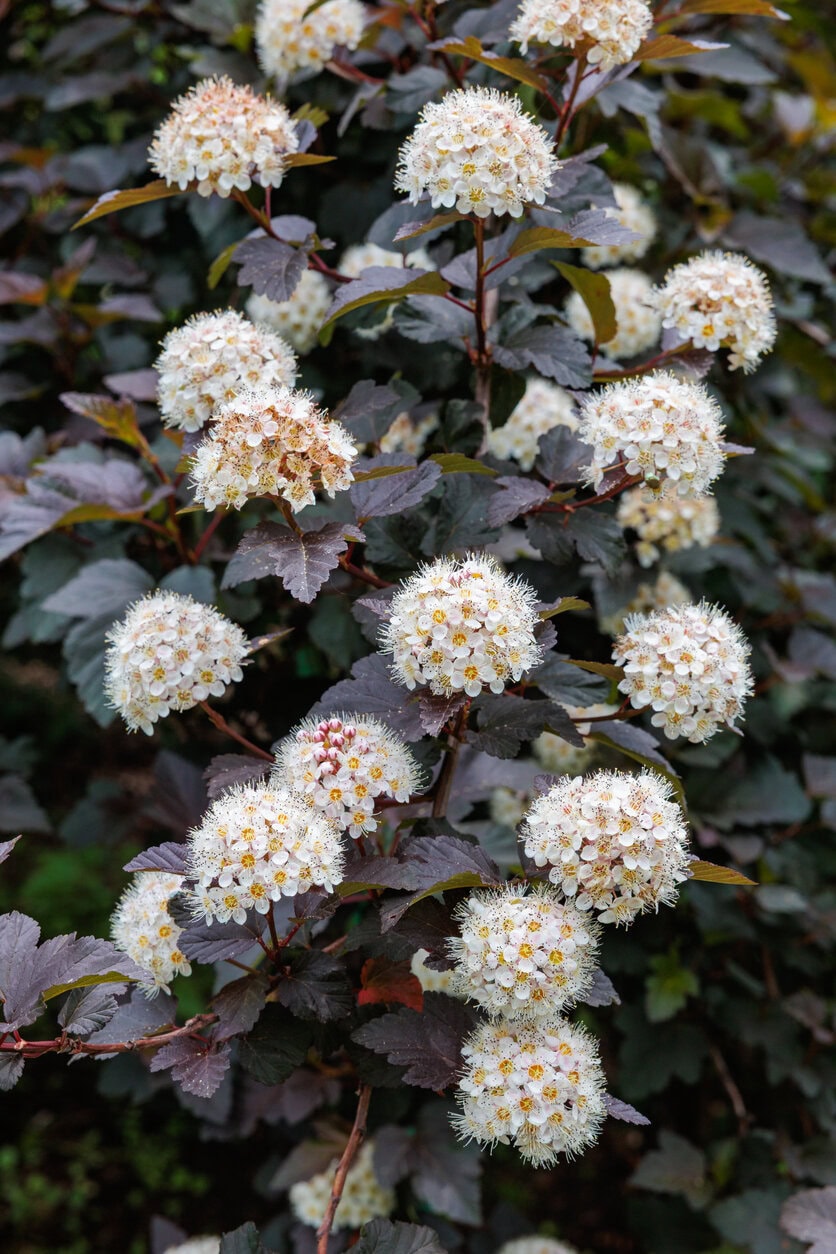
3: Ninebark (Physocarpus Opulifolius)

This native shrub is fast-growing and offers bold golden and yellow foliage in the fall (some ninebark varieties even have purple foliage). Ninebark is best for garden privacy in milder zones like 2-7, and, believe it or not, it can actually tolerate poor soil conditions very well.
If fast growth is a priority, you might want to explore even more options. Here are some of the best fast-growing privacy bushes worth considering.
4: Beautyberry (Callicarpa Spp.)

Like the name suggests, beautyberries offer vibrant purple berries in fall, coupled with striking foliage that really makes the shrub stand out.
Plant these in warmer zones between 5 and 11 (depending on the species, ofcourse) for the best results.
Important: Something you might notice with beautyberry shrubs is that their leaves will often turn yellow or brown and begin dropping, which can seem concerning at first, but it’s completely normal and part of the cycle.
5: Glossy Abelia (Abelia × Grandiflora)

The glossy abelia is a long-lasting privacy hedge option for the garden. It can grow 8-10 feet tall in mild to slightly warm zones between 5-9.
Something I personally love about abelias is their low-maintenance requirements. They can produce beautiful, small, tubular flowers and deeply colorful foliage with little to no intervention except some occasional watering and trimming.
Important: Glossy abelia is semi-evergreen in warmer climates but may lose leaves in colder zones.
6: Fothergilla (Fothergilla major or F. gardenii)

In the fall, fothergilla produce fiery mix of red, orange, and yellow foliage and cute bottlebrush-like white flowers in spring! This native shrub offers dense and bushy growth, perfect for privacy.
It grows well in zones 4 to 8 and thrives in full sun to part shade. Bonus: it’s deer-resistant and pollinator-friendly, win-win!
If you’re designing your borders, you might also want to mix in a few low-maintenance plants that still look good year-round. Here’s a list of options for garden borders that stay interesting in every season.
7: Red-Twig Dogwood (Cornus Sericea/C.alba)
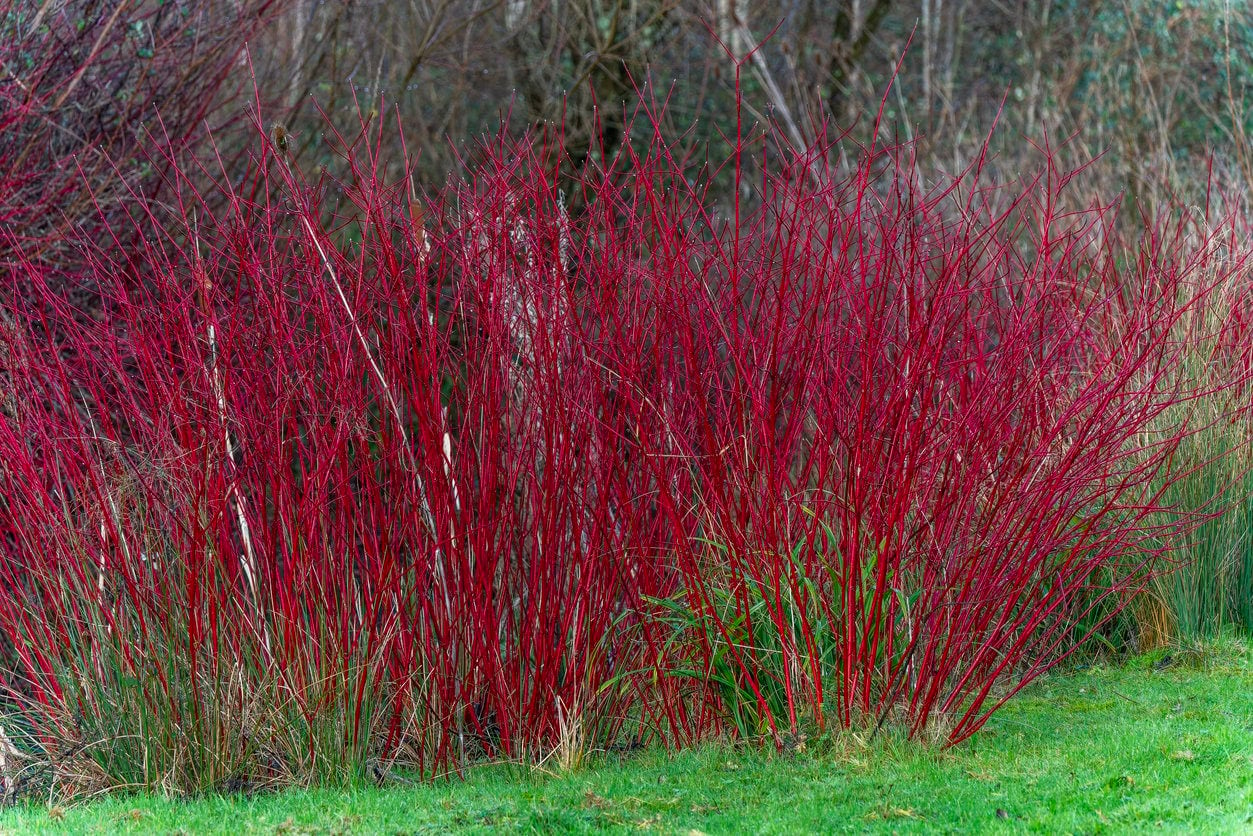
The red-twig dogwood offers bold foliage in various shades of yellow, red, purple, and orange. Combine this with their bright red stems in winter, and that’s a recipe for blissful beauty in the garden.
You might be surprised to find out that red-twig dogwoods are actually quite resilient and hardy, being able to withstand both hot and cool conditions with ease. They should ideally be planted in zones 2-8 as natural garden borders or screens.
Tip: Prune older stems in late winter to encourage the most vibrant red twig color on new growth.
8: Virginia Creeper (Parthenocissus Quinquefolia)

The Virginia creeper, as the name suggests, is a fast-growing vine that is known for its vertical, climbing growth. For privacy, I’d suggest planting the vine around the garden fence or wall, ideally in zones 3-9, where its growth can be accommodated well.
Once established properly, its dense and super colorful growth will ensure people on the other side won’t be able to peek into the garden whatsoever.
Important: Virginia creeper’s name is not random, it grows aggressively and can damage surfaces like siding or gutters if not carefully managed. If you’re a beginner or busy, I recommend you skip this plant!
9: Viburnum (Multiple Species)
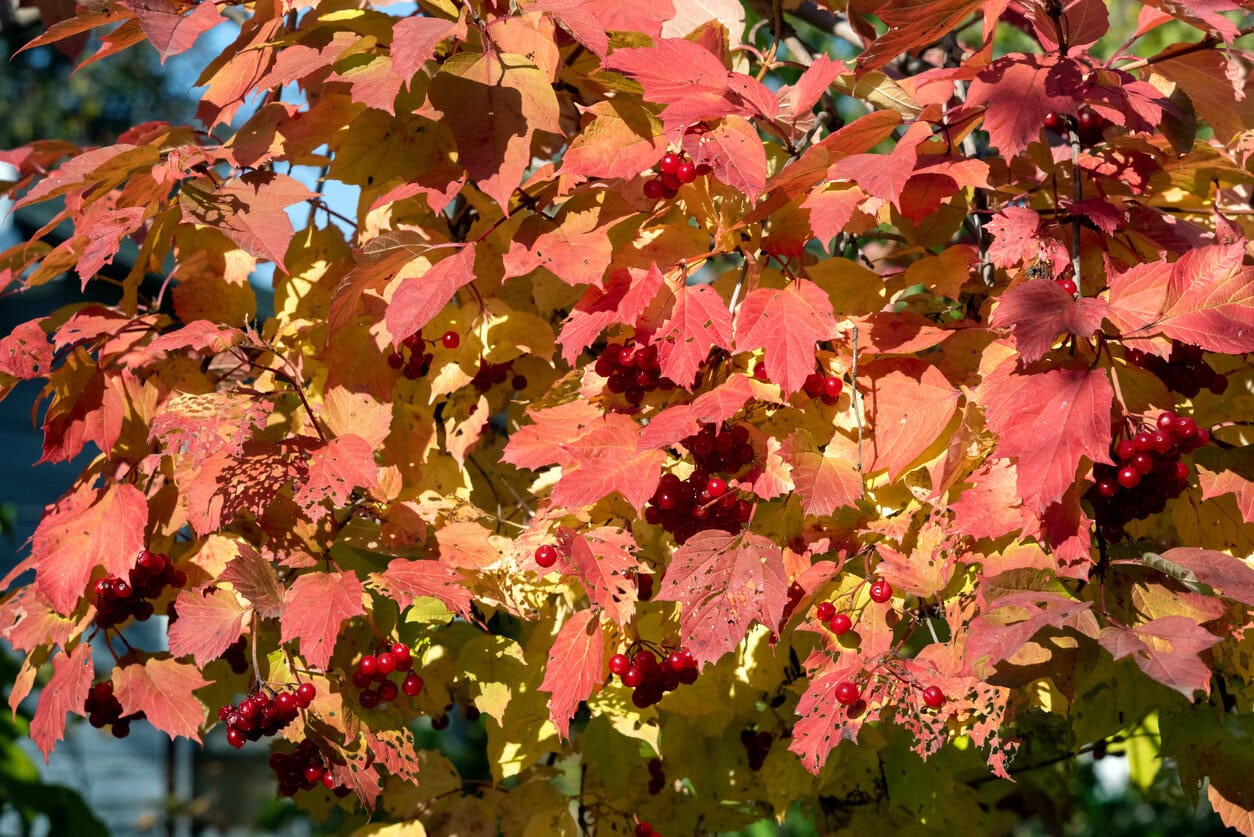
Many vibranum cultivars can grow up to 20 feet tall! Gardeners prefer to plant them as informal hedges or natural privacy screens in mild to hot zones (2-9 ideally). Certain varieties offer mesmerizing spring flowers and fruit that attract lots of birds into the garden.
Tip: Some varieties are evergreen, making them ideal for year-round privacy with seasonal color in spring and fall.
And if attracting pollinators is also important to you, these flowering shrubs are great for bumblebees.
Let’s Conclude
Because the garden is part of the home for many people, it’s natural to want some privacy to spend quality time in there without unwanted interruption. Today, we discussed plants that can help you achieve exactly that with some additional benefits sprinkled in as well.
And don’t forget that some shrubs may need a fall prune for a strong spring growth. Take a look at this list of shrubs to prune in fall.
Now, you have to decide which plants will suit your garden best and bring the kind of privacy you’re looking for. Best of luck!