

If your Christmas cactus has been happily growing for 20 years without ever being pruned, well, congratulations… not all of us are blessed with such a cooperative plant. If yours looks great, leave it alone! Some plants clearly have their lives together better than the rest of us.
But when yours starts looking overgrown, lopsided, crowded, or just plain messy, a little pruning can help tidy things up and encourage fresh branching.
So, how do you know when yours actually needs a trim? These are the seven signs I look for.
7 Signs It’s Time to Prune Your Christmas Cactus
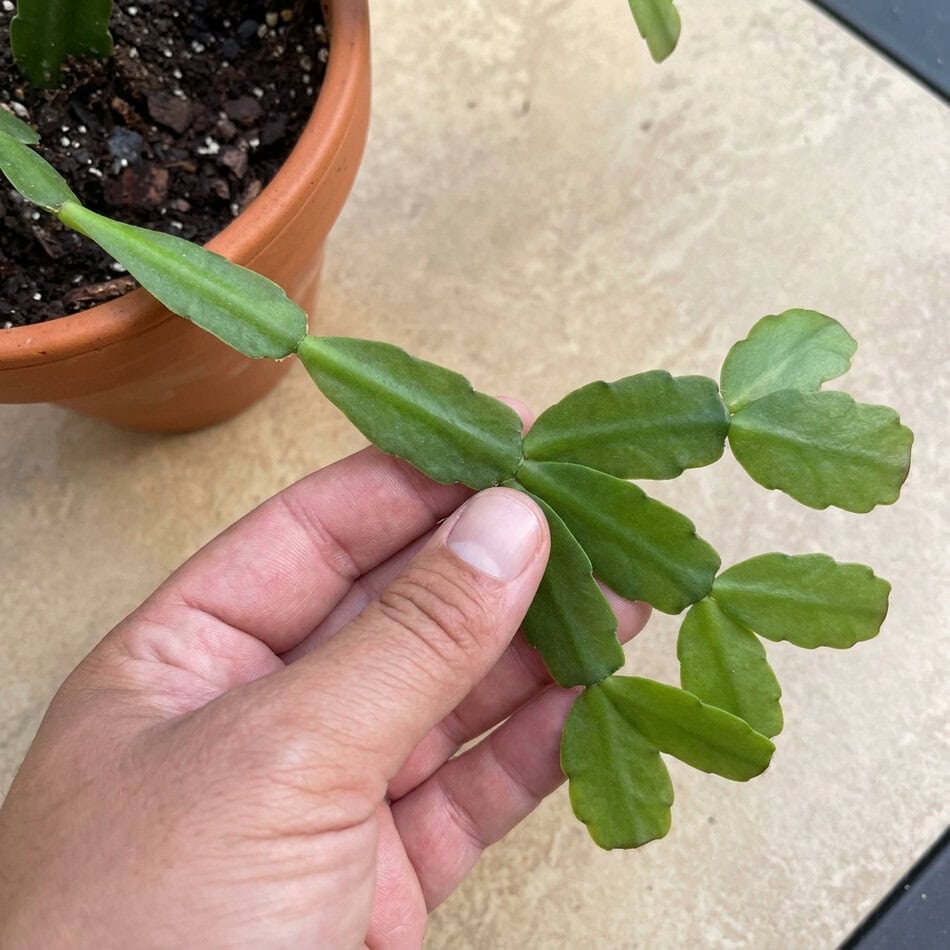
Quick note: These signs also apply to Thanksgiving cactus and Easter cactus. So if you grow one of those instead, the same warning signs are worth watching for.
Sign 7: Overgrown or Too Large

This is actually one of the most common reasons I prune mine. It starts off looking perfectly well behaved, then suddenly the stems are spilling everywhere and taking over half the windowsill.
I know some people love that big, wild, trailing look, but I already own a slightly ridiculous number of plants. If I let every one of them grow however they please, I’ll probably lose my husband or one of the cats behind them eventually…
So when mine gets too big for its space or just starts looking completely overgrown, I trim it back after flowering, taking off a few stem segments at a time until it feels manageable again.
And if yours has outgrown its current spot and you’re thinking about moving it, we also wrote a guide on where to put a Christmas cactus for the best chance of blooms.
Sign 6: Sparse Growth or Too Few Branches

This one always feels a little backwards to me. If a Christmas cactus already looks sparse, the last thing I instinctively want to do is remove even more of it!
But pinching off a few stem segments after flowering can encourage new branching from those points, helping the plant gradually fill out instead of just growing longer.
Quick tip: Don’t go overboard. I only remove a few segments from the stems I want to encourage to branch. The goal is to make a sparse plant fuller, not make it look even balder!
And if your plant is growing just fine but refusing to flower, we wrote a guide on how to get a Christmas cactus blooming again that covers the light, temperature, and watering changes that matter most.
Sign 5: Dead, Damaged, or Dying Segments

Some pruning decisions make me hesitate and wonder whether I should cut or leave things alone, but this one doesn’t!
If a segment is broken, dried out and brown, turning black, mushy, or clearly dying back, I take it off. There’s really no point trying to save something that’s already too far gone.
The only thing I wouldn’t do is assume pruning solved everything. If several segments are going downhill at once, there’s probably another problem behind it (often with watering or the roots) and that needs attention too.
If you’re wondering when to start feeding it again, we also put together a month-by-month Christmas cactus fertilizer guide so you’re not guessing when it actually needs nutrients.
Sign 4: Crowded or Tangled Growth

I love a really full Christmas cactus, but there’s a fine line between “beautifully full” and “I need my husband to hold half the plant out of the way so I can reach the soil“.
Once it gets that crowded, checking whether it needs water becomes a pain, and some of the blooms end up buried or squashed between all those segments. That’s usually my cue to thin out a few of the most tangled or awkward stems once flowering is over and open things up a little.
Nothing dramatic. I’m not trying to make it sparse, just manageable enough that I can actually reach the soil myself and let those flowers have their moment.
Sign 3: Long, Heavy Branches
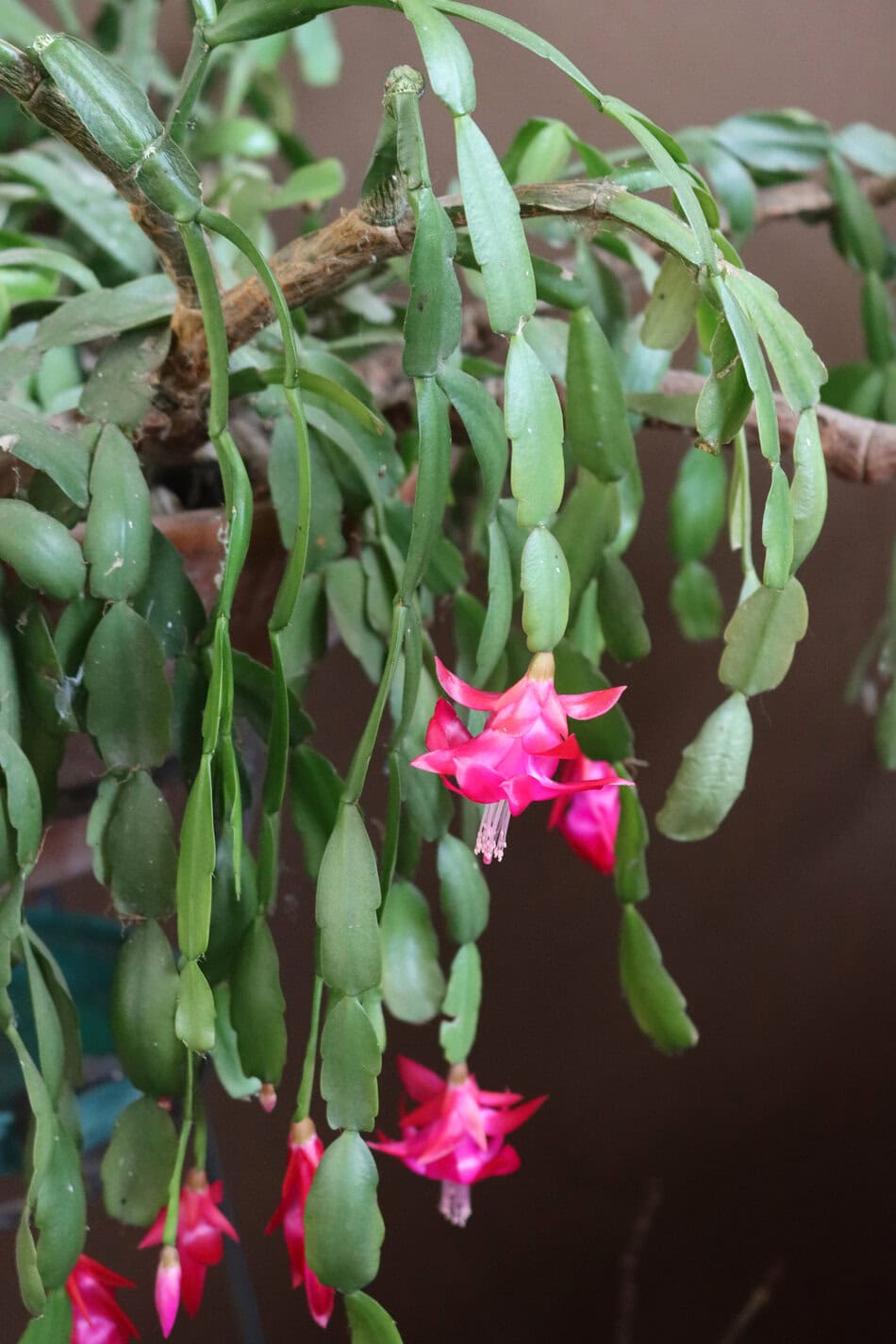
Christmas cactus stems are supposed to trail, but sometimes a few branches get so long they look like I’ve put extensions on the plant.
I’ve had branches get to the point where I’m constantly moving them out of the way or worrying they’ll eventually break or drop off under their own weight, and that’s when I shorten a few of the longest ones rather than waiting for that to happen.
And no, you don’t need to make every branch the same length. I don’t want it looking like it got a bowl cut. I like to keep that natural cascade and just shorten the ones that have gone a little too far.
By “shorten,” I mean removing a few segments at the joints, not taking the entire branch all the way back to the base.
Sign 2: Unbalanced or Lopsided Shape
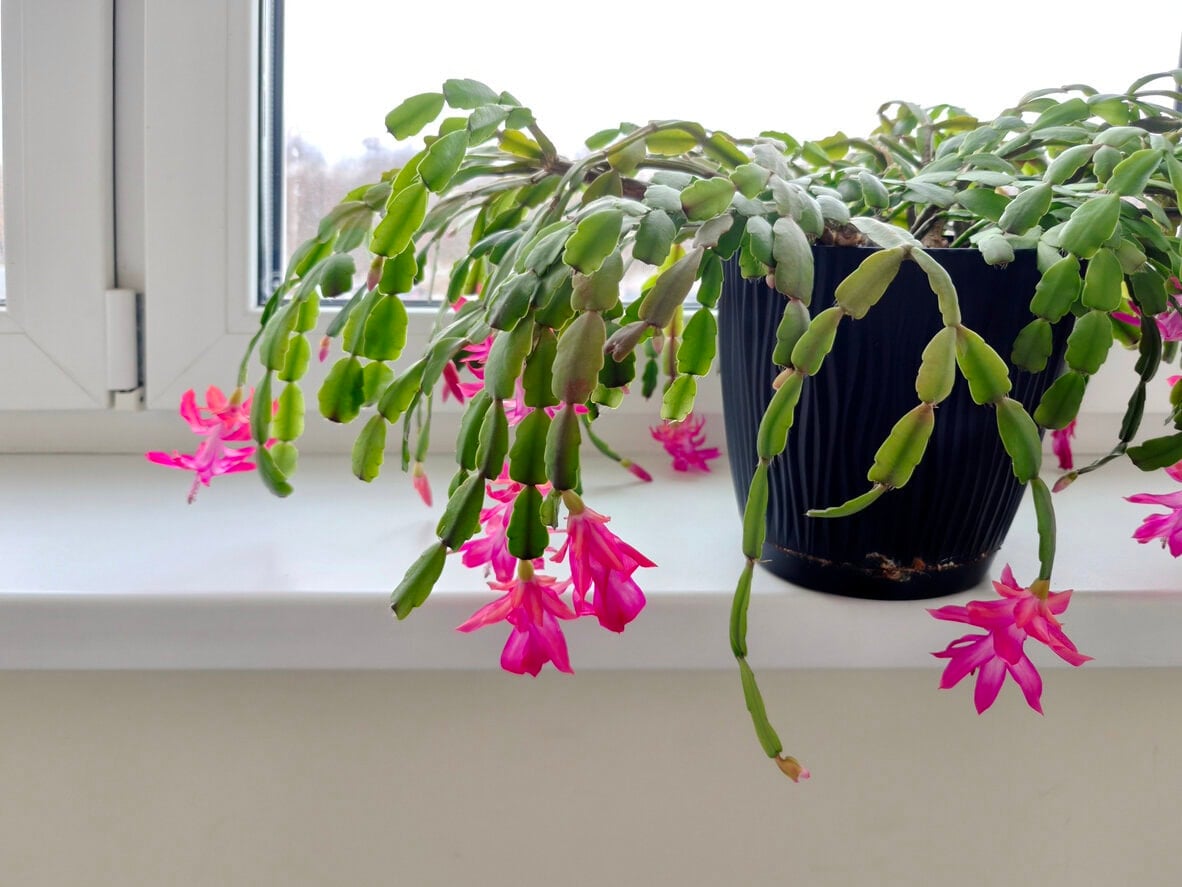
I don’t expect my Christmas cactus to be perfectly symmetrical; that would look a little too neat for my taste anyway. But sometimes one side clearly decides it wants to be the star of the show.
If a few stems are throwing the whole shape off, I’ll shorten them selectively after flowering rather than trying to make every side perfectly even.
Speaking of lopsided… A follower once sent me a video of hers looking absolutely gorgeous… then she turned it around. She warned me first, but I still laughed so hard I teared up. The other side looked like a completely different plant. It had the same energy as a Christmas tree shoved into a corner: gorgeous from the front, and we simply don’t discuss the back.
Sign 1: Localized Pest or Disease Damage

If one section is badly infested, starting to rot, or clearly diseased while the rest of the plant still looks healthy, I remove that growth before the problem has a chance to spread.
Just remember, pruning is only part of the fix. You still need to deal with the pest, moisture issue, or disease that caused the damage in the first place, or you may be back in the same spot a few weeks later.
If bugs are the problem and you’re not sure what you’re looking at, we have a Christmas cactus pest guide that explains what commonly attacks these plants and how to treat it.
How To Prune Your Christmas Cactus Safely?

Once I notice mine actually needs a trim, I keep it simple. Christmas cactus stems are easy to work with, and you usually don’t need to do anything dramatic.
Step 1: Wait Until After Flowering
For routine pruning, I wait until the plant has finished blooming. That gives it time to recover and start putting energy into fresh growth.
There’s one exception, though: dead, rotting, or badly diseased growth. I remove that as soon as I spot it rather than waiting for flowering to finish.
Step 2: Decide What Actually Needs To Go
Before touching anything, I look for overgrown, damaged, crowded, or awkward stems and decide how much I want to remove. I’d rather take off too little and go back than get carried away.
Step 3: Work at the Joints
Christmas cactus stems are made up of connected segments, so I remove growth where those segments meet.
You can usually just pinch or gently twist a segment off at the joint with your fingers. If I’m dealing with tougher or damaged growth, I use clean, sharp pruning shears instead.
Quick tip: For diseased growth, use clean tools and disinfect them before moving on to healthy parts of the plant!
Step 4: Prune a Little at a Time
I work my way around the plant instead of attacking one side all at once. After every few segments, I step back and look at the shape again.
Trust me, this is much easier than realizing five minutes later that you accidentally gave your Christmas cactus the bowl cut we were trying to avoid.
Step 5: Leave It Alone To Recover
Once I’m happy with the shape, I put the plant back in its usual spot and continue its normal care routine. There’s no need to drown it in water or fuss over it afterward. Just keep an eye on it and let it recover in its own time.
But wait… there are two exceptions here.
Don’t Throw Those Pruned Segments Away!
Those pieces you just removed don’t have to go in the trash. Christmas cactus is surprisingly easy to propagate from stem segments, and honestly, it’s one of the more fun parts of pruning.
If you want to turn those cuttings into new plants, we wrote a step-by-step guide on how to propagate a Christmas cactus that walks you through the whole process.
Before You Give It a Bowl Cut…
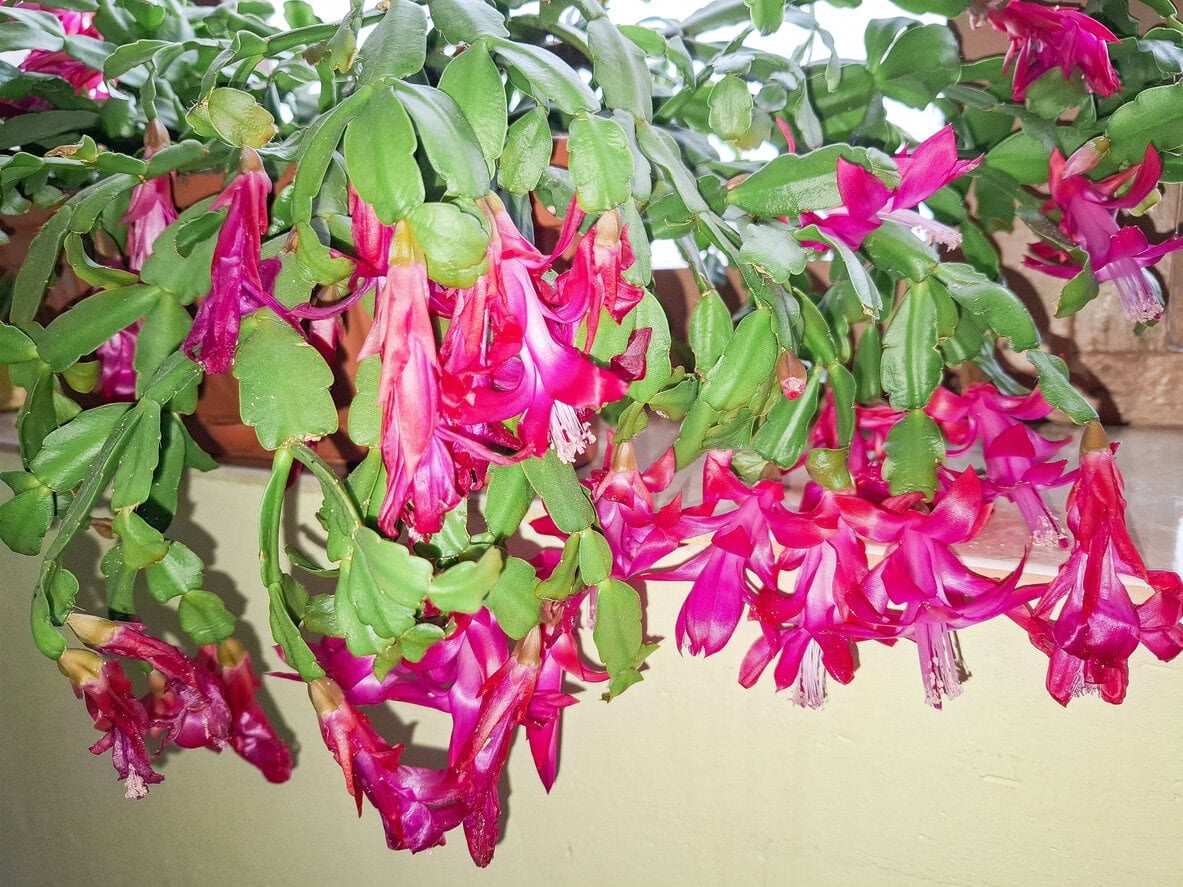
If keeping track of what your plant needs throughout the year gets confusing, we also made a Christmas cactus care calendar that breaks the routine down month by month.
At the end of the day, I only prune my Christmas cactus when it actually gives me a reason to. If it looks healthy, fits its space, and I’m happy with it, I leave it alone.
If it’s taking over the room, tangling itself into a knot, or growing in a way that makes me wonder what on earth it’s trying to achieve, I remove a few segments and call it a day.
The biggest thing is not getting carried away. Start small, you can always take another segment off, but unfortunately, you can’t glue one back on.



My Thanksgiving cactus is only blooming on one side. There are short clades in the middle that never bloom or get new growth. What’s wrong with it?
Hi Linda!
It sounds like your Thanksgiving cactus might need more even light exposure or a bit of pruning to encourage growth in the center. Rotate the plant regularly to ensure all sides get bright, indirect light. You can also prune a few of the longer clades to stimulate new growth in the middle. A little balanced fertilizer during the growing season can help, too. 🌵🌸
Pictures would be very helpful and much appreciated. It would help folks understand what you mean by leggy or brown at least I know I’d appreciate it.
Hi Renee!
Thanks for your feedback! We’ve updated the article to include pictures for each issue, like leggy growth, to make it easier to understand. Hope it’s helpful! 😊
The leaves are purple 😢
Hi Renée ! 😊 Purple leaves on a Christmas cactus usually mean it’s getting too much direct sun or it’s stressed from cold temps. Try moving it to a spot with bright but indirect light, and make sure it’s not near a cold window or draft. The purple should fade back to green once it’s in a better spot!
So, we should not cut them like your first picture shows and not like the Facebook post picture?
It’s a little confusing.
Hi Maryann!
Great question! The pruning method depends on the specific issue your Christmas cactus is facing. You likely won’t need to prune it as shown in the pictures unless your plant has a significant problem. Check out the list of common issues below to identify what your cactus might be experiencing. At the end of the article, we guide you through “How To Prune Your Christmas Cactus Safely?”. Hope this helps clarify things! 🌵🌸
-Yes it is confusing. I think a video of someone pruning would help
Hi Maryann!
Does all this info include the Easter cactus?
Hi! Great question! 😊 While Easter cactus are similar, they have slightly different care needs. But, if you’re wondering about pruning, the same rules generally apply! Let me know if you need more details! 🌿✨
I have my great grandmother’s cactus but it doesn’t bloom I don’t know what to do
Hi Ranae! That’s so special! 🌿✨
Christmas cactus need cool nights, shorter daylight hours, and a little neglect to bloom. Try keeping it in a cool (50-60°F), dark spot for 12-14 hours a day for about 6 weeks. Water sparingly and avoid moving it once buds form. I also have a helpful article on caring for Christmas cactus check it out here: How To Water & Fertilize Your Christmas Cactus For Lasting Blooms!😊🌸
I have several thanksgiving cactus with multiple seed pods from this year. Should some of them be removed
Hi Debbie!
Seed pods take a lot of energy from the plant, so if you want to encourage more blooms and healthy growth, it’s best to remove most of them. You can leave a few if you’re interested in collecting seeds, but otherwise, pruning them off will help your cactus thrive! 😊🌿✨
My Christmas Cactus look wilted. I only water when dry.
Hi Donna! 😊 That happened to mine too! It turned out the soil wasn’t draining well (even though it felt dry on top). I repotted it in cactus mix and gave it a good drink, bounced back in a week or two. Check if it’s rootbound or if the soil’s gone compact!
Like to start one from a friends how can I do it?
Hi Ed! 😊 It’s super easy! Just ask your friend for a few stem segments (2-3 sections each), let the cut ends dry for a day or two, then stick them in some slightly moist potting soil. They root pretty quickly. I’ve started tons of plants this way from friends and family!
I’ve actually got a whole step-by-step guide on it here: How to Propagate a Christmas Cactus: A Step-by-Step Guide!
Mine bloomed like crazy this year. After it finished I noticed it was really sagging. I touched it and huge pieces started dropping off. I’m trying to root them in water now and I’ve repotted it. It’s still not looking as healthy as it did before it bloomed. I’m so disappointed.
Hi Deb! 😊 Aww I totally get that, mine did the same after a big bloom one year. It’s like they give it their all and then need a recovery break 😅 Rooting the pieces in water is a great move! I’d let the main plant rest in bright, indirect light and go easy on watering for a bit. Fingers crossed it bounces back soon! 🤞
So we can start in either water or soil? I’ve got a ton of different Christmas cactus but have never really needed to trim them before. I’m definitely looking forward to trying whichever is best.
Hi Donna 🙂 Yes, you can root Christmas cactus cuttings in either water or soil. I usually prefer soil because the cuttings adjust more easily later.
Same thing happened to me. My plant was thriving one minute and the next many segments have dropped off. I repotted and it still looks bad. I’m crushed.
Hi Jeanne! 😊 I’m sorry you’re going through this too, it’s so frustrating! Don’t give up yet. Sometimes after repotting they need a few weeks to settle in and can look rough for a bit. Make sure it’s not getting too much water (overwatering after repotting is common) and keep it in bright indirect light. Give it some time to recover, they can be surprisingly resilient. Hang in there!
Why is my cactus leaves turning purple? It just started doing this.
Hi Sherry! 😊 Purple leaves usually mean it’s a bit stressed, often from too much sun, cold temps, or needing a little fertilizer. I’d move it to bright indirect light and make sure it’s not getting too cold or too dry.
Do you have an article on how to deal with a root bound Christmas cactus?
Hi! 😊 Not a full article just on that yet, but I do cover repotting tips in my Christmas cactus posts! I go over how to handle a root-bound Christmas cactus in this post: 7 Reasons Your Christmas Cactus Won’t Bloom (And How to Fix Them). It explains when and how to repot without stressing the plant.
Also I am having trouble with my 2 split leaf philodendron- one is very old and 5 ft high and this summer started to get brown tips on the lower leaves and has now spread up the plant and many of the lower leaves have turned yellow. I suspect it is root bound. Should I cutoff the top green part and try to root in water and then replant and throw the bottom part away? If I cut off the top off where should I cut and how should I try to root it?
My second plant is the part I cut off last Spring as the plant was getting too tall- I tried to root it in water but this one didn’t seem to want to root- I finally got desperate as I was going away so stuck it in earth anyways. Now 6 months later the leaves are curling and it is not growing. Should I take it out of the soil and put it back in water to root? It is 3 ft tall.
What are those root like stringy projections that the plant grows and what should I do with them. Sometimes I cut them off- is that okay and sometimes they grow into the soil.
Hi Charlotte! 😊 For your split-leaf philodendron, yes, it’s likely root-bound. You can cut the top just below a node (where a leaf and those aerial roots meet) and root that piece in water or moist soil. Those stringy roots are normal aerial roots, I usually leave them unless they get unruly, since they help the plant absorb moisture and anchor when repotted.
My cactus has the yellow leaves in quite a few areas. Very old cactus that is much smaller now than years ago. The yellow is mostly on the outer tip leaves. You noted a fungal infection is the cause. Any tips on a cure beyond trimming.
Can this spread to other close by cactus? Both my other Christmas cactus show the same issues?
Hi David! 😊 Yes, fungal issues can definitely spread between plants, especially if they’re close together. Beyond trimming the yellow parts, make sure you’re not overwatering and that there’s good air circulation around your plants. You might want to separate them a bit and hold off on watering for a while. If it keeps spreading, a fungicide might help, but usually adjusting watering does the trick!
Based on online photos, the shape of the greenery indicates I have a Thanksgiving cactus. It never blooms, but the foliage is dark green. It is “spread out” looking though, with not much plant in the middle of the pot at all. All of the stems are around the outside of the pot. I tried giving it full darkness for 12 hours a day and cutting back on watering for the recommended 6 weeks, but still no blooms. I’m nervous about pruning/repotting, but I’d love for it to be healthy and bloom! What do you recommend? How do I know which action to take, and what should I do first? Thank you!
Hi Angi 😊 With a Thanksgiving cactus that’s dark green but never blooms, the most common issue is light or temperature during bud set. Even a little lamp light at night can stop buds. In early fall, try cool nights and true darkness every night for a few weeks. Since yours is spread out and bare in the middle, a light prune in spring can help it branch so you get more tip growth, which is where blooms form.
One quick question: is it near a TV, lamp, or kitchen light at night in fall?
I have 2 cactus that have stems coming out of the soil and they look and feel like wood. What is this all about.?
Hi Sandra 😊 Woody looking stems right at the soil line are usually normal “corking” as the plant matures. The only time I worry is if that area is soft, black, or mushy, which can mean rot. If it feels firm and the plant is growing fine, you can leave it alone and just focus on good drainage.
I have a thanksgiving cactus,it’s not very old, bought it in November . I was thinking that it was blooming , due to red showing up on end of leaf, but it looks like a leaf. Is that normal? It looks very healthy,
Hi Michelle 🙂 Yes, that can be normal. Thanksgiving cactus often puts out reddish new growth at the tips, and it can look like a bud at first before it opens into a new segment. If the plant looks healthy, I’d just keep giving it bright indirect light and avoid overwatering.
My cactus belonged to my mom. It has not been repotted in at least 20 years. It did flower this year and previous years. It has woody stems and is overgrown. I know tonrepot in late spring. Should I cut off woody branches? Should I take it to a nursery to repot? It’s quite large.
Hi Martha 😊 If it flowered and is healthy, I would not cut off the thick woody base stems. On older holiday cactus, that “woody” look is normal with age. Instead, prune the long floppy sections by twisting off a few segments at the joints to reshape it and encourage fuller growth.
Repotting in late spring is a good idea after 20 years, but go one pot size up and use a very fast draining mix. If it’s super heavy, a nursery can absolutely help you lift and repot it safely.
My Christmas cactus gets only about 4 blooms. What do I need to increase the amount of flowers?
Hi Robin 🙂 To get more blooms, make sure it gets bright indirect light during the day and long, dark nights for several weeks before bloom time. I’d also avoid overwatering, keep it a little cooler at night if possible, and wait to prune until after it finishes blooming.
Is spring also a good time to repot my Christmas cactus?
Hi Vicki 🙂 Yes, spring is a good time to repot a Christmas cactus, especially after it has finished blooming. I’d only go up one pot size and use a light, well-draining mix, since they don’t like sitting in heavy, soggy soil.
My Christmas cactus is very old. My grandmother had it when I was a child and I’m now 77! It was repotted about 20+ years ago and hasn’t bloomed for the last 2-3 years. Help!
Hi Candance 🙂 What a special plant to still have. Since it hasn’t been repotted in 20+ years, I’d check the roots and refresh the soil in spring after blooming season. Only go up one pot size if it’s very rootbound, use a light well-draining mix, and also make sure it gets bright indirect light with long dark nights before bloom time.
My “Thanksgiving Cactus” has turned a burgandy red. Any recommendations for what to do about this? I thought it was dead but around Thanksgiving it bloomed.
Hi Kari 🙂 Burgundy-red coloring can happen when a Thanksgiving cactus is stressed by too much direct sun, cool temperatures, or dry soil. Since it bloomed around Thanksgiving, it’s definitely alive. I’d move it to bright indirect light, check that the soil isn’t staying bone dry or soggy, and give it steady care while the new growth comes in.