Your lavender is dying to survive this winter, but wet soil can stand in the way. Quite literally. So take these fall tips and give your lavender the best chance of staying strong until spring.
Task 1: Check Winter Hardiness
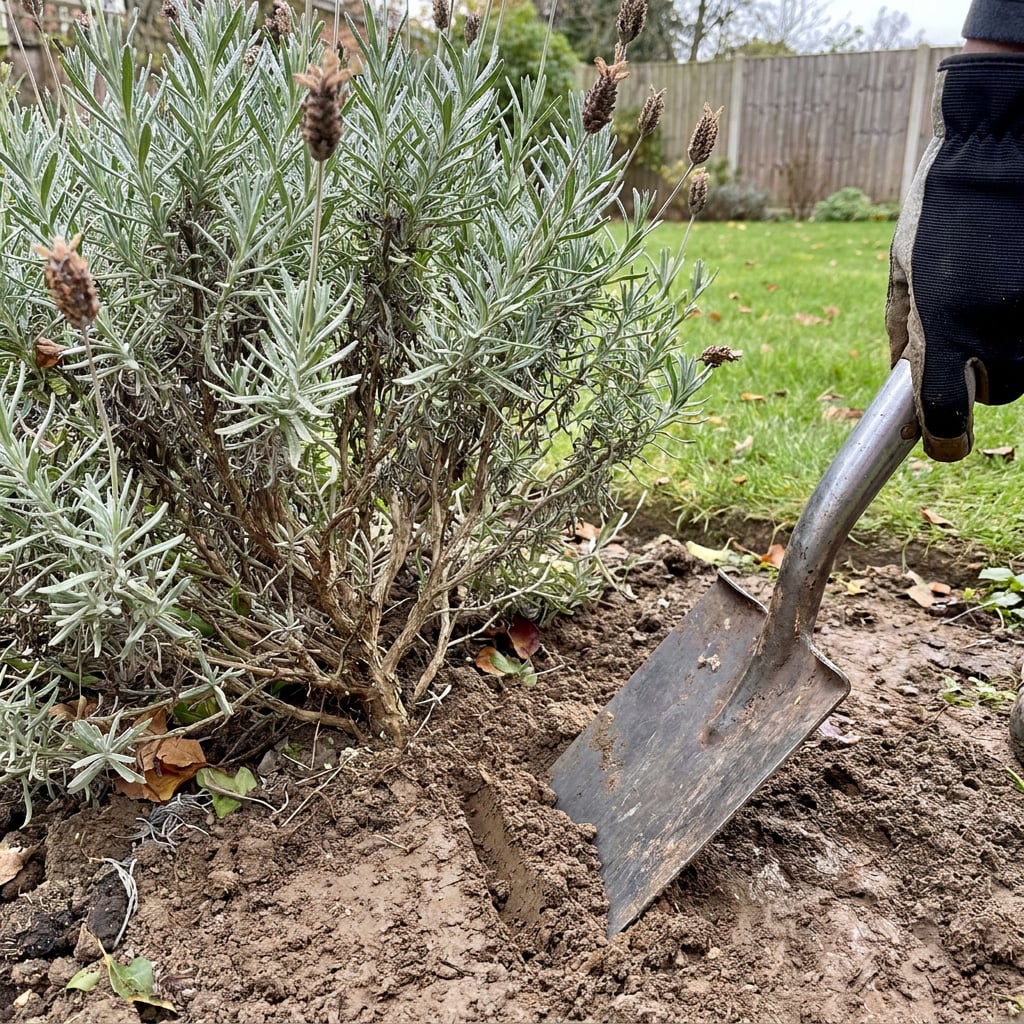
First, figure out what you actually planted. Check your plant tags or look at the foliage and blooms.
If you have a tender type growing outside its hardiness range, lift it before hard freezes arrive. Do not shake off the soil, prune the roots, or bare-root it.
Slice wide outside the root ball, keep as much of it intact as possible, and drop it into a pot with good drainage. Bring it into a cool, frost-free spot with plenty of light before nighttime temperatures crash harder than enthusiasm for a morning workout.
Quick tip: Got English lavender in a Northern or Midwestern yard? Leave it be. If it’s within its hardiness range and the soil drains well, it should be tough enough.
And when January rolls around, we wrote a guide to the lavender tasks worth checking in the middle of winter.
Task 2: Skip Hard Fall Pruning

Cutting lavender hard in fall is a no-go. When you prune this late, you can encourage soft new growth that won’t have enough time to harden off before freezing weather arrives. And if you cut too far into old woody stems, lavender may struggle to grow back at all.
Leave those ragged flower stalks standing through the freeze. That scruffy top growth gives the crown a little extra protection and can catch insulating snow through winter.
Hard-prune it now, and you may be looking at a whole lot more dead wood come spring. Alien sequel material, truly.
Task 3: Check Drainage

Cold air gets the blame, but soggy soil does the killing. Waterlogged soil around angustifolia roots starves them of oxygen and can rot the crown.
Got potted Spanish lavender? Tip the containers slightly and look at the bottom. See any dead leaves, soil, or stray roots blocking those drainage holes? Clear them out.
Elevate those pots now onto bricks or pot feet. Should you leave them flush against flat concrete or sitting in a waterlogged saucer, you’re marooning the root system in a freezing ice-bucket.
For established hardy varieties staying in the ground: do not try to dig up the soil or rebuild a raised bed around the stem in October. Disturbing fine feeder roots this late adds unnecessary stress just as the plant is heading into winter.
If your (well, their) bed doesn’t drain well, divert the surface runoff away from the area, but leave the root ball untouched until spring.
If most of your lavender lives in containers, we also have a full guide to growing lavender successfully in pots.
Task 4: Clear Wet Leaves from the Crown
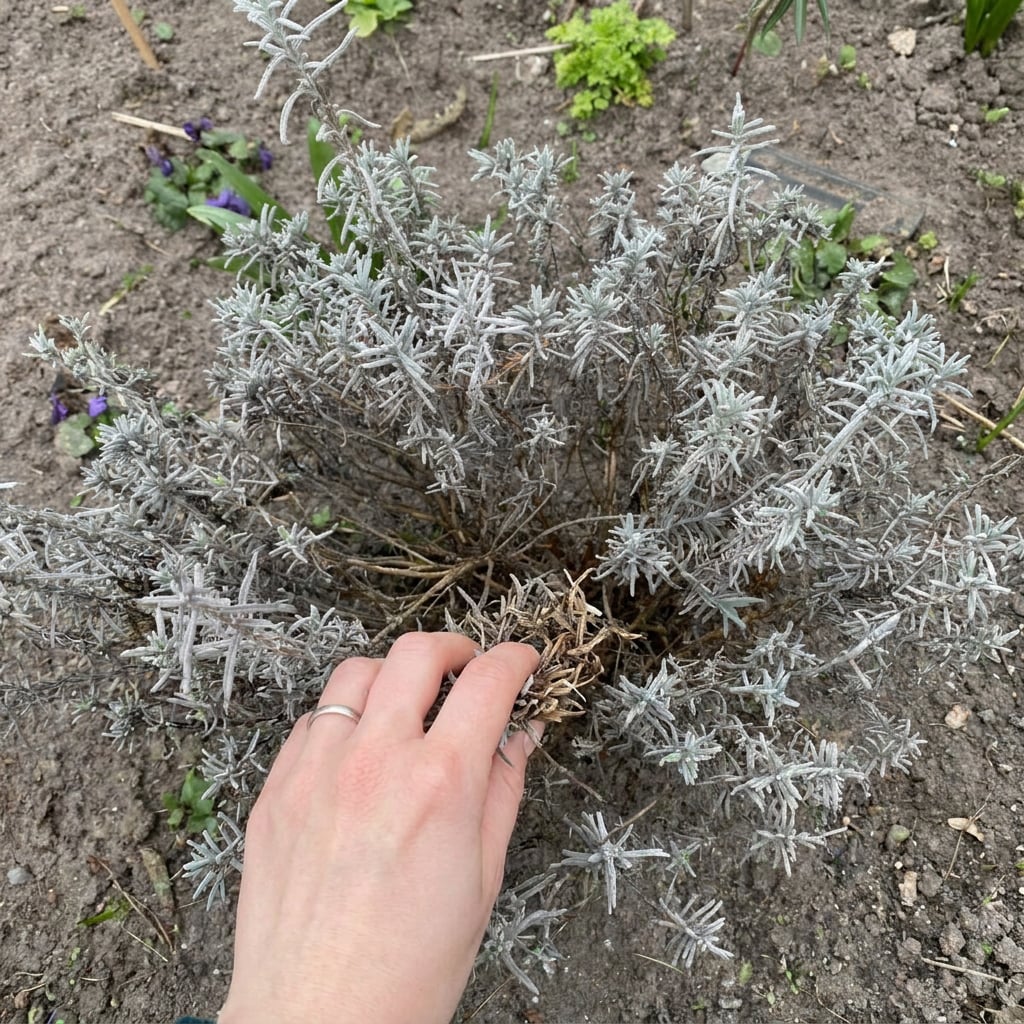
Fall leaves aren’t cozy blankets for lavender; they’re suffocating wet rags you see in mob movies. That damp microclimate traps moisture around the lower stems and encourages fungal rot straight through late fall.
Get on your hands and knees (gently, if you’re 30+) and scrape out every single dead leaf stuck inside the lower branching structure.
Don’t use a metal rake or you’ll just snap brittle lower stems! Pick them out manually or gently blow them clear with a leaf blower on a low setting.
Are you a mulch enthusiast? Keep bark, wood chips, and soggy leaves away from the main stem. Instead, spread about two inches of pea gravel or crushed granite around, but not against, the base to help keep the crown drier.
Task 5: Arrange Suitable Protection

Hammer three or four stakes into the soil around wind-whipped shrubs, then stretch burlap across the posts to construct a crude barrier. Tie or staple the material securely. Keep the fabric off your hardy plants so air can flow through the middle.
Natural, fluffy snow is actually free insulation that protects roots from deep freezes.
But if your plant sits under a roofline, broken gutter, or shoveling zone, heavy snow and ice can crush the center of the bush. Put together a quick, open-sided wooden A-frame out of scrap plywood and set it over the plant.
The Final Mile to Spring Purple
Leave the burlap frames and plywood tents in place through the worst of winter. As spring arrives and new growth begins, remove the protection so the crown gets full sun and plenty of air circulation again.
Brought tender varieties inside? Watch out for dry indoor heat, which can make them more vulnerable to pests. Keep a fan running nearby for airflow, snip off damaged tips, and water only when the soil dries out.
Once winter is finally behind you, we also put together a guide to 8 lavender tasks to tackle in spring before blooming starts.