
My garden is currently a multi-generational daycare. I brought home a fresh baby lavender this year, already full of flowers. Then there are the two teens from two years ago, hitting their awkward growth-spurt phase. Finally, I have the gnarled senior lavenders I married into.
They kept me quite busy last weekend, so if this is also your idea of fun, here’s how I prepped my three lavender generations for the season ahead.
1. Off With Their Flower Heads
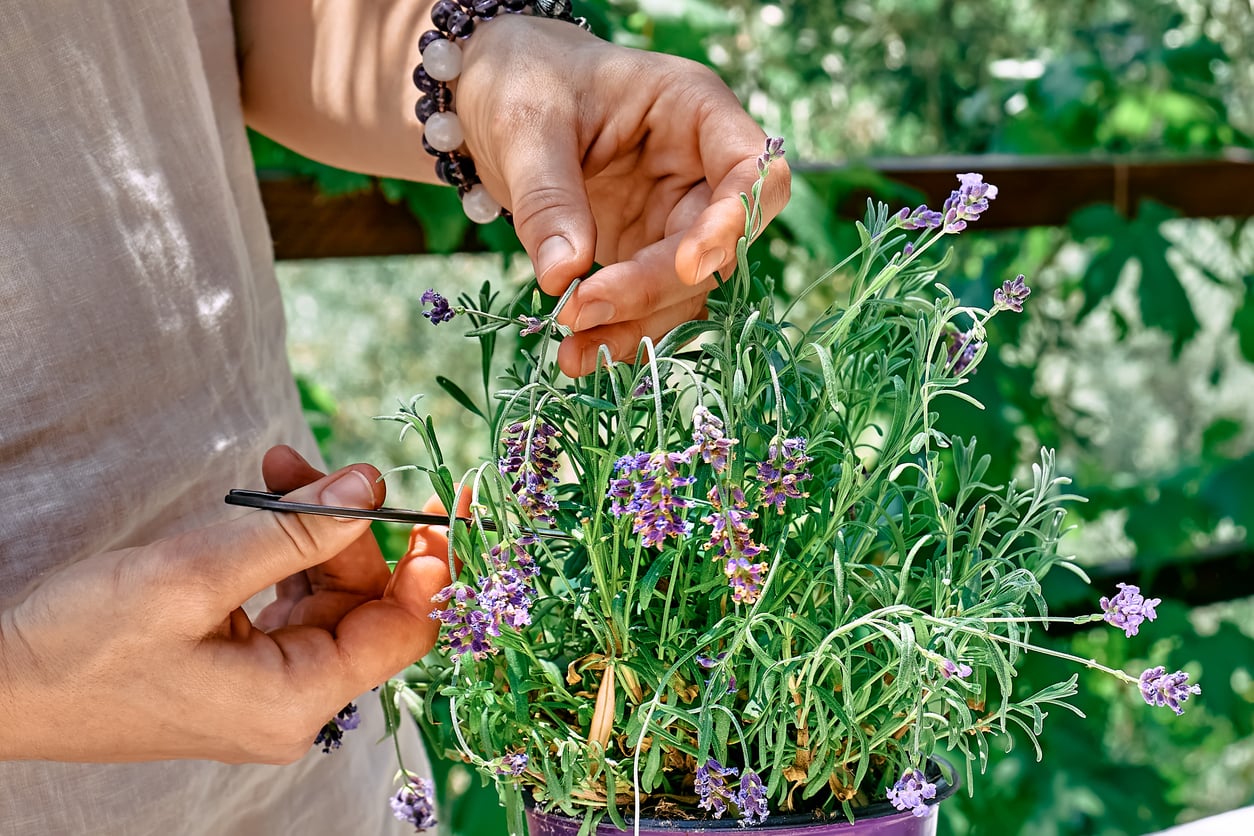
This first task is only for the lavender babies: the ones you bought this spring, or the ones you’re eyeing at the nursery with flower spikes already peeking out. We’re going for a root-first policy this month!
Nursery lavender is often sold already dressed for the party with cute purple flowers. I get it. It’s a baby in a tux, cute for a photo, but not exactly what I want from a plant trying to settle into my garden.
My new baby lavender arrived covered in spikes. I spent Saturday morning cutting every flower stem back to the first healthy set of leaves. It felt a little cruel, but I’d rather have it spend spring building roots than putting on a bloom show before summer heat arrives.
2. Give the Crown Some Room

Lavender can handle a lot, but it hates sitting cold and damp. Spring has a way of turning the plant crown into a trash bin for wet leaves, dead stems, and soggy little surprises. Let that mess sit too long, and you’re asking for rot around the base..
I spent the rest of the morning clawing damp gunk out from the guts of my two-year-old mounds. They’ve grown thick enough now to trap dead leaves and debris against their own stems.
I cleared a 12-inch no-fly zone of bare soil around each plant so every spring breeze can easily reach the main trunk.
3. Mind the Woody Gap
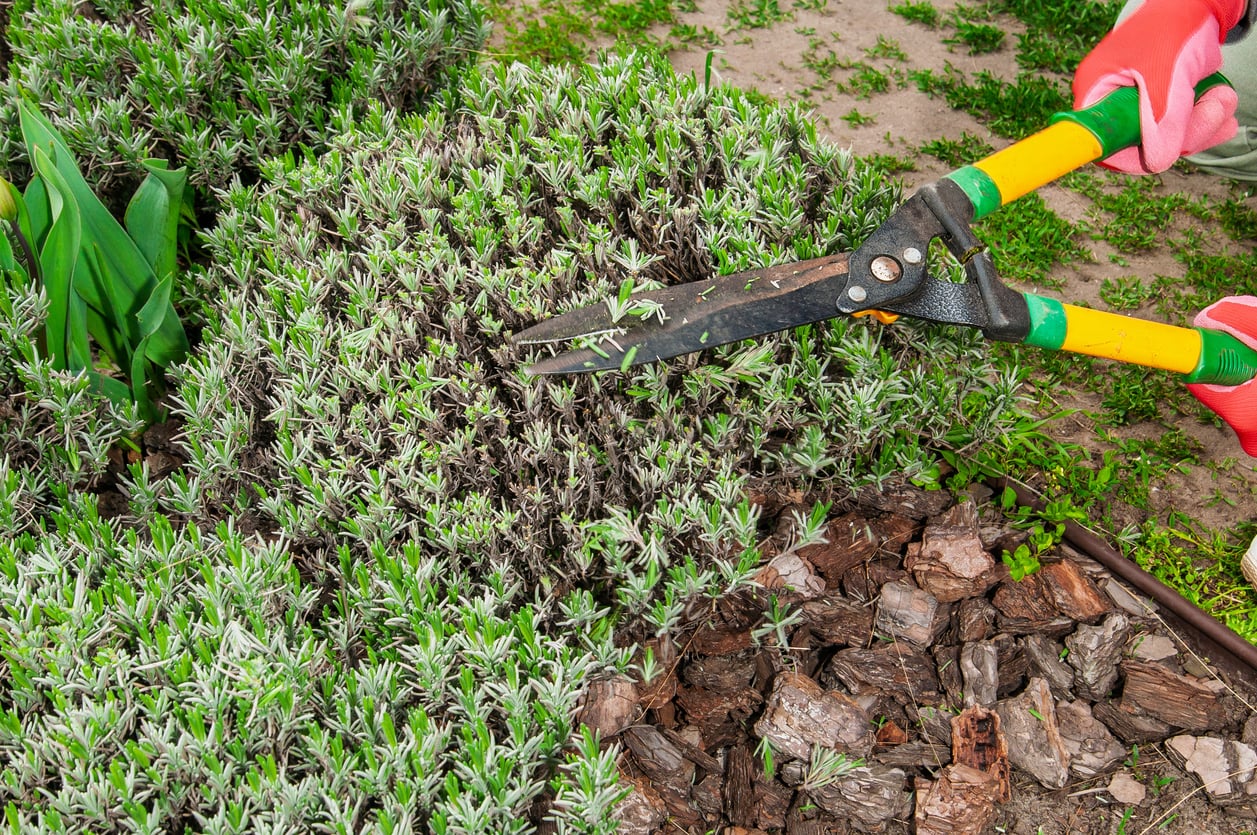
Older lavender plants get leggy. They develop thick and brittle wood that, eventually, starts splitting under its own weight.
You have to be assertive but careful. I pruned the seniors into tighter mounds. Look for tiny signs of green life and cut about an inch above them to encourage fresh growth, but stay above the dead wood! With old lavender, that’s the line between a haircut and a funeral.
Quick tip: Don’t cut into the bare stems with no green growth left on them, otherwise that branch is likely gone for good.
If you’re still nervous about where to cut, we wrote a full guide on whether to prune lavender in spring or fall so you don’t accidentally turn a trim into a tragedy.
4. Drain the Swampy Soil
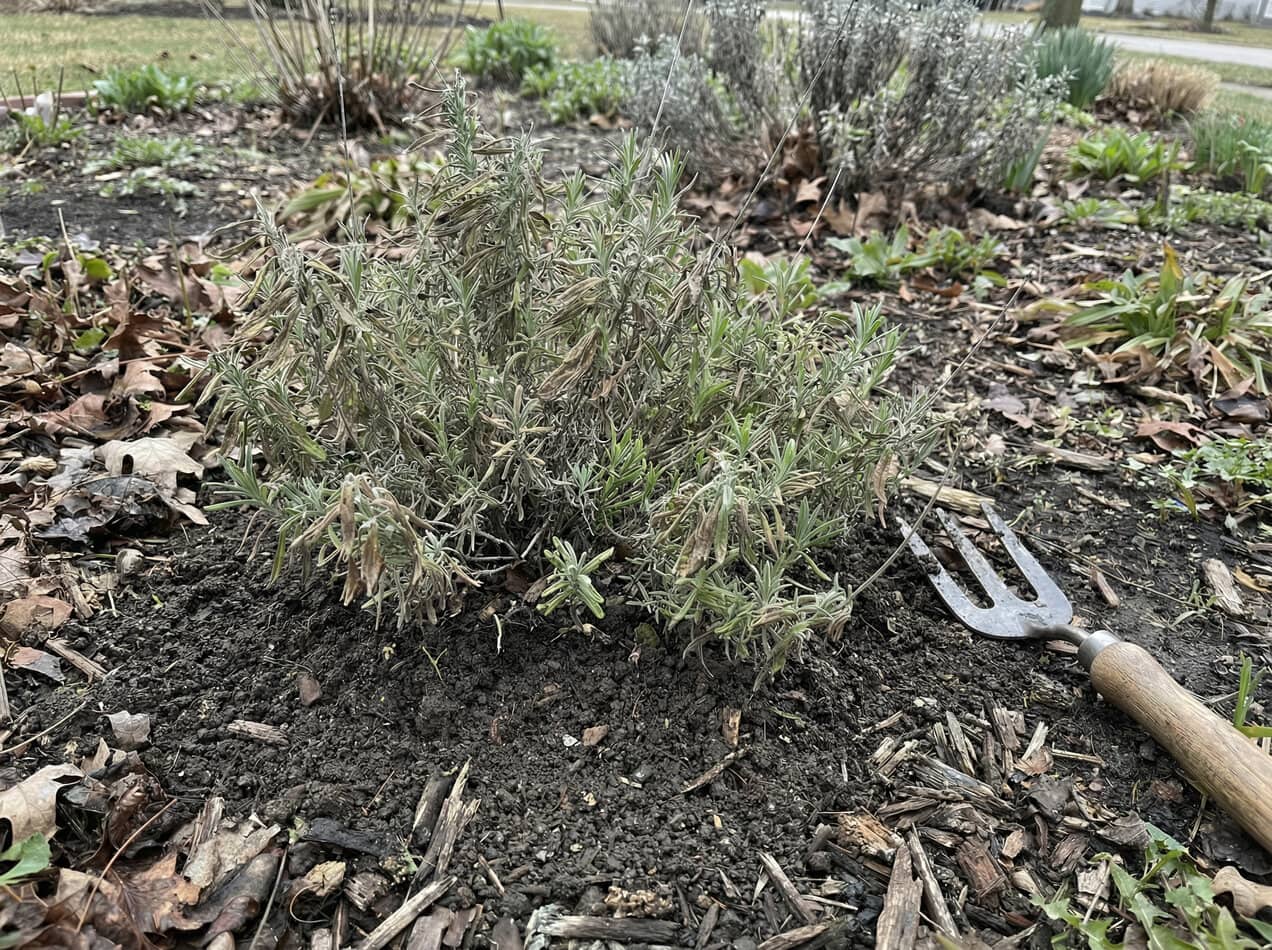
Everybody in my 9b neighborhood has a few lavender mounds, which doesn’t surprise me much.
Lavender wants to live in a well-draining pile of almost nothing, and there’s plenty of gritty, unimpressive soil around here. It’s also well adjusted to dry and sunny (read: scorching) summers we use to attract tourists.
Does your lavender have yellowing leaves, especially near the bottom? It means the plant is drowning. Drop the watering can! Instead, scratch a few handfuls of small washed gravel or horticultural grit into the top few inches of soil to help the surface dry faster.
But if the whole bed stays soggy after rain, grit on top won’t save it! Lift the plant into a raised mound, gravelly bed, or container where spring rain can blast right past the roots instead of sitting around them.
And if the container route sounds more realistic than rebuilding a whole bed, we have a guide on growing lavender in pots without turning it into a soggy little corpse.
5. Outshine the Neighbors
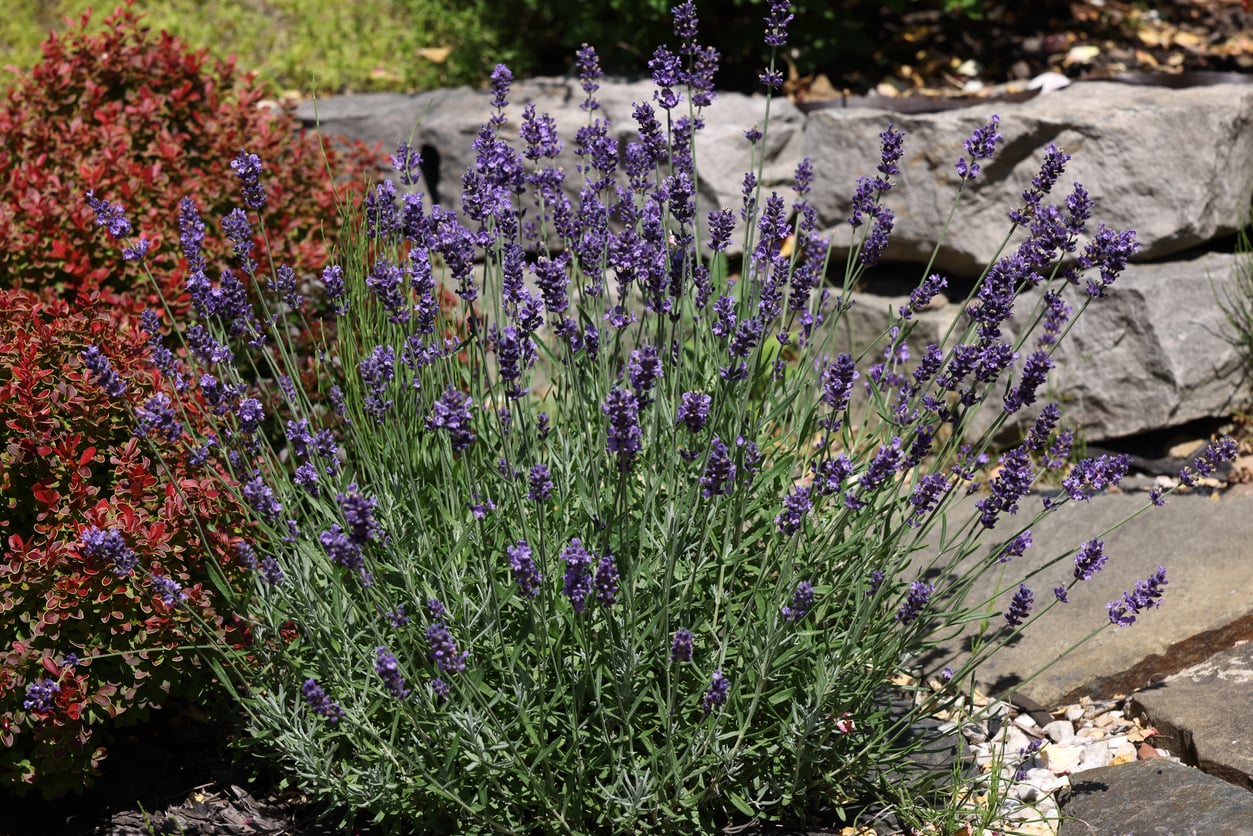
One of my seniors was being bullied by a nearby perennial that took off during the particularly wet spring last year.
Lavender needs six to eight hours of good, direct sunlight if you want it to stay compact, bloom well, and smell like lavender. So, I took the loppers to the neighboring shrub.
If your lavender is also being overshadowed, prune its neighbor back hard enough to let the light through. It needs prime suntime or it will stretch, sulk, and give you fewer of those fragrant purple spikes.
6. Ban the Junk Food
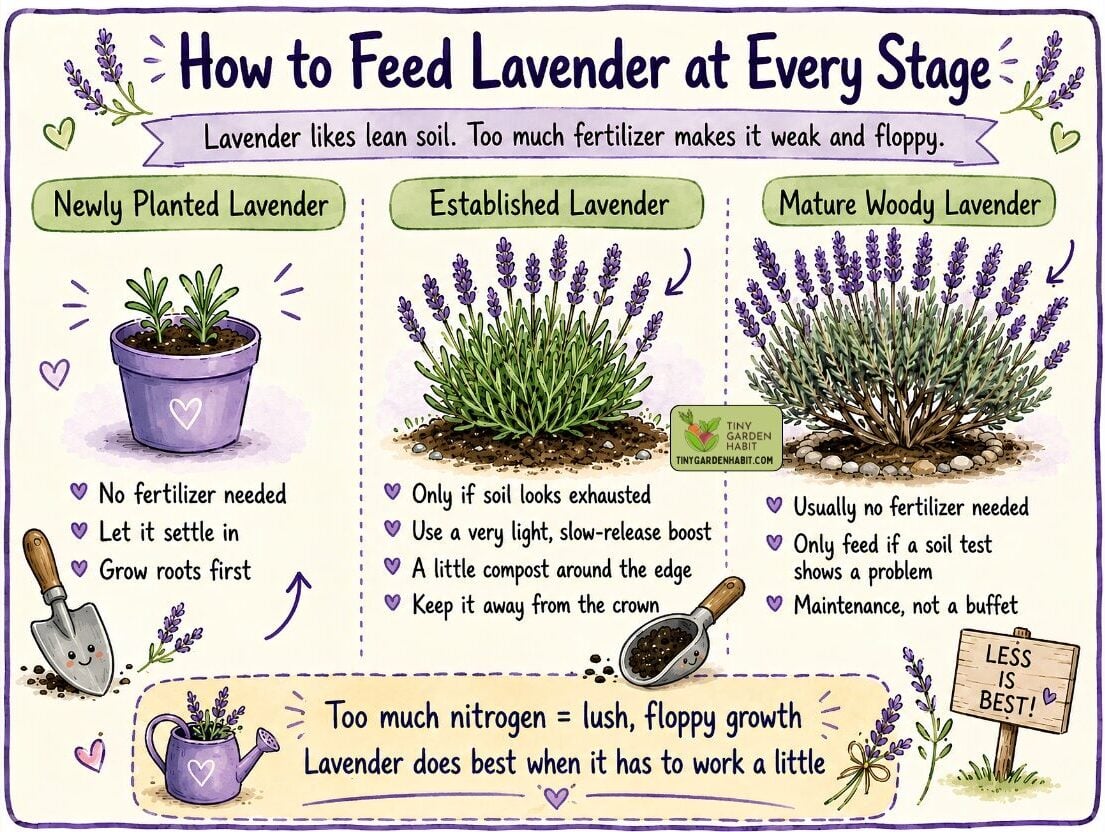
It is so easy to kill lavender with kindness, especially with rich, high-nitrogen fertilizer. Too much nitrogen gives you lush, floppy growth. best when it has to work a little.
- That new baby I brought home is already high on nursery-grade speed. It doesn’t need a single drop of fertilizer. Its job now is to settle in, stretch its roots, and learn where the snacks are.
- My two-year-old plants are hitting their peak growth phase, but I still don’t feed them like tomatoes. If the soil looks truly exhausted, I’ll add a very light, slow-release boost or a bit of compost around the edge (away from the crown).
- The ten-year-olds don’t need a growth spurt, just maintenance. Unless a soil test tells me they’re missing something, I mostly leave them alone. Old lavender does not need a buffet.
They’ve been sitting in the same tired patch of dirt for years, and their best days may be behind them. A few more years, I’ll thank them for their service and start over with a fresh baby.
If feeding lavender still makes you second-guess yourself, we explain when to fertilize lavender for fragrant blooms without accidentally spoiling it rotten.
7. Guard the Ground Floor

Weeds love well-drained soil just as much as lavender does, and they seem grow three times faster in May. They compete for space and water, but the bigger problem is how they crowd the base and trap moisture against the lavender’s lower foliage.
I spent part of the morning hand-weeding around the drip line of my bushes. You don’t need nothing fancy, just a trowel, a bucket and a commitment to keeping the root zone clear.
8. Stone the Root Zone
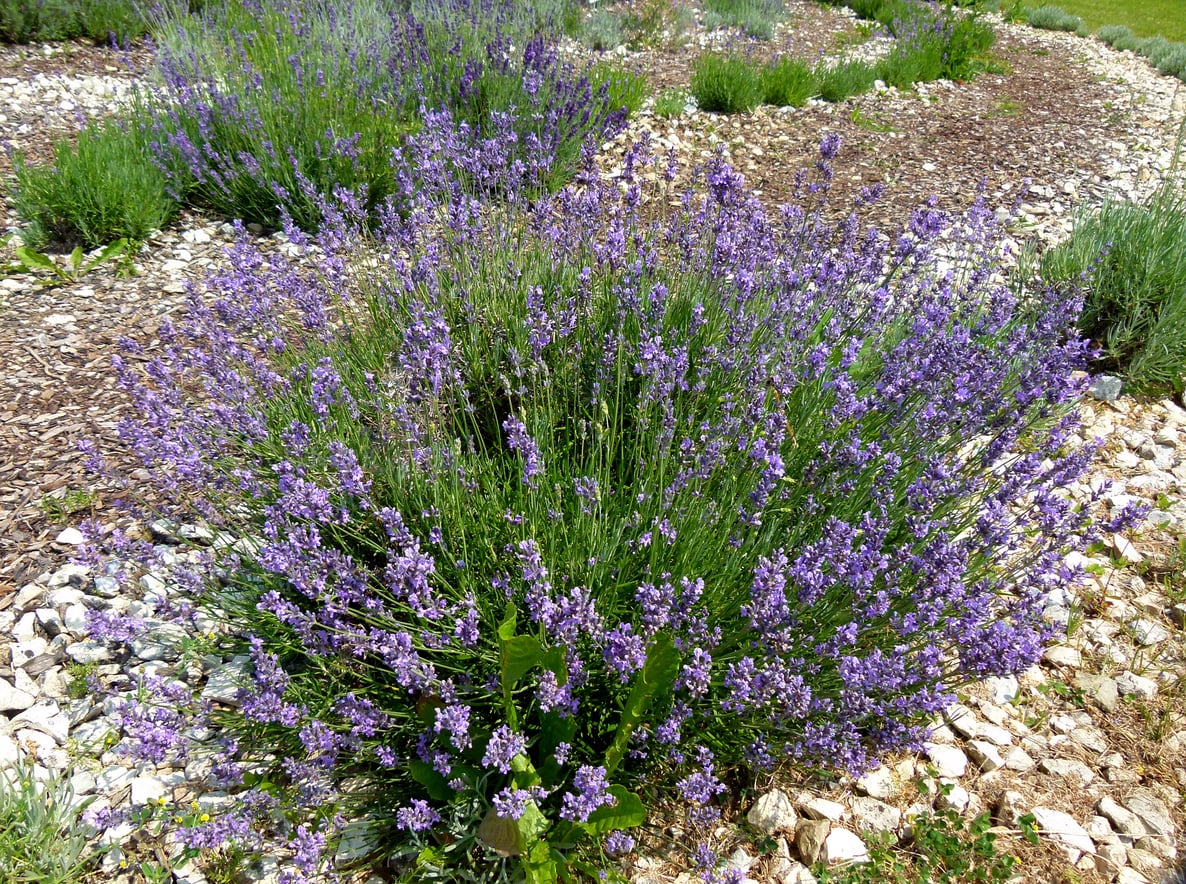
If you pile wood mulch around lavender, you’re basically tucking the crown into a damp little blanket. But lavender wants dry air around its base, not a mulch sauna!
But leaving the soil completely bare in my scorching summer isn’t much better either. The surface crusts over, mud splashes up when it rains, and the lower stems end up sitting too close to the soil.
I lay down a layer of white stone around my senior and teen plants but keep it pulled back from the crown! The stones help keep the foliage off the soil. Plus, they cut down on the mud splash that can spread soil-borne trouble onto the lower leaves.
Scent with Love
It seems like a lot of work for a bit of purple, but once that scent hits the air… One whiff and you’ll forget the backache. Two whiffs and you’ll start looking for more dirt.
And if one healthy lavender turns into “maybe I need six more,” we wrote a step-by-step guide on propagating lavender from cuttings so you can make new babies without another nursery trip.




Loved this article. Helpful and fun to read. Thanks for the tips.
Awesome to hear, Wanda! Glad the tips worked out, and you got a few chuckles along the way. I’m already harvesting the flowers off my senior plants to cram into wardrobe sachets.
I planted my lavender in a tall pot on my patio in 2019. 2021 was the “big freeze” and again in 2022 and 2025. I fully expected my lavender to die, but it’s still thriving!
Hi Marlene 🙂 That’s amazing, lavender can be tougher than people think when the drainage is right. A tall patio pot probably helped a lot because the roots weren’t sitting in cold, soggy soil during those freezes. Sounds like you found a setup it really likes.