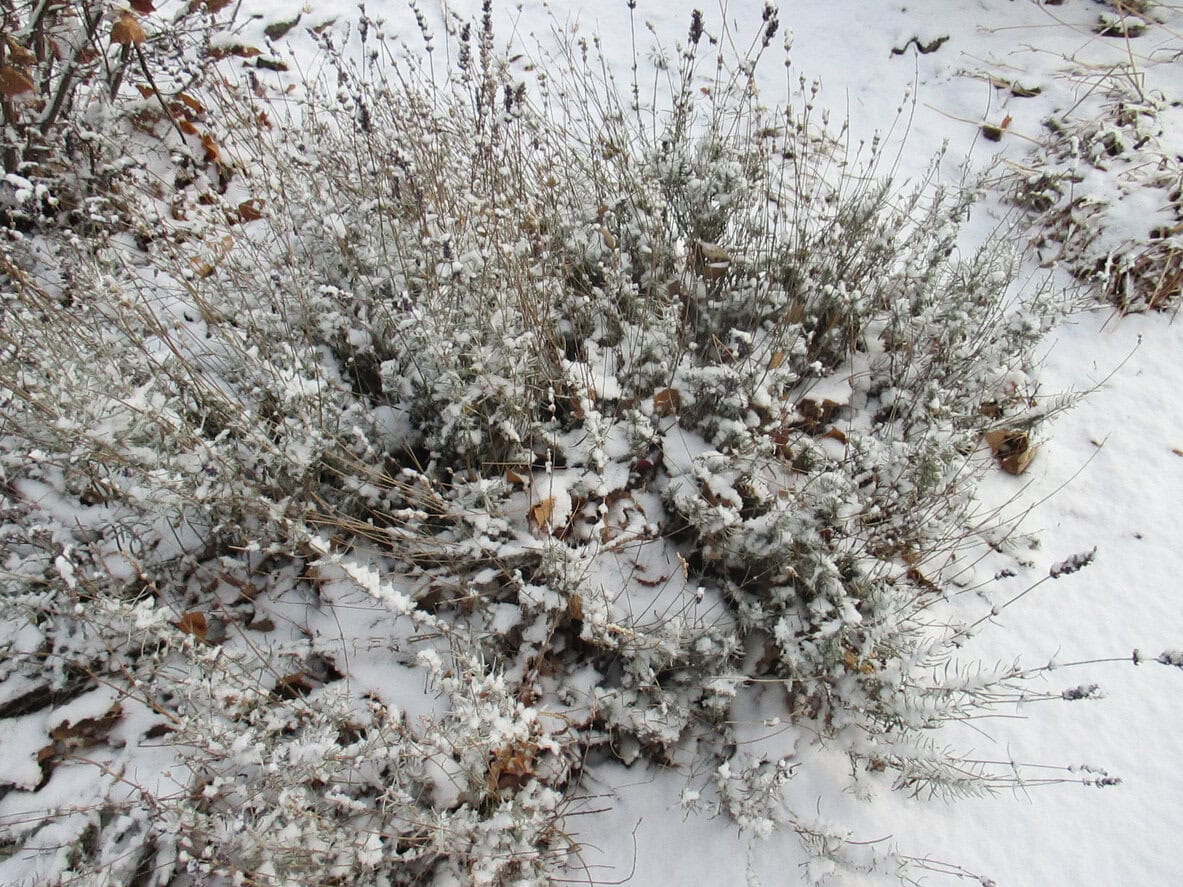
Warning: your lavender did not come with a winter-proof warranty! It is cold, it is wet, and it is certainly not happy about the current humidity levels.
Winter presents the ultimate trial by ice for your aromatic shrubs. As you cannot hit the undo on root rot once it starts, playing defense becomes your only hope for a fragrant summer.
7 Essential Lavender Tasks to Do in January
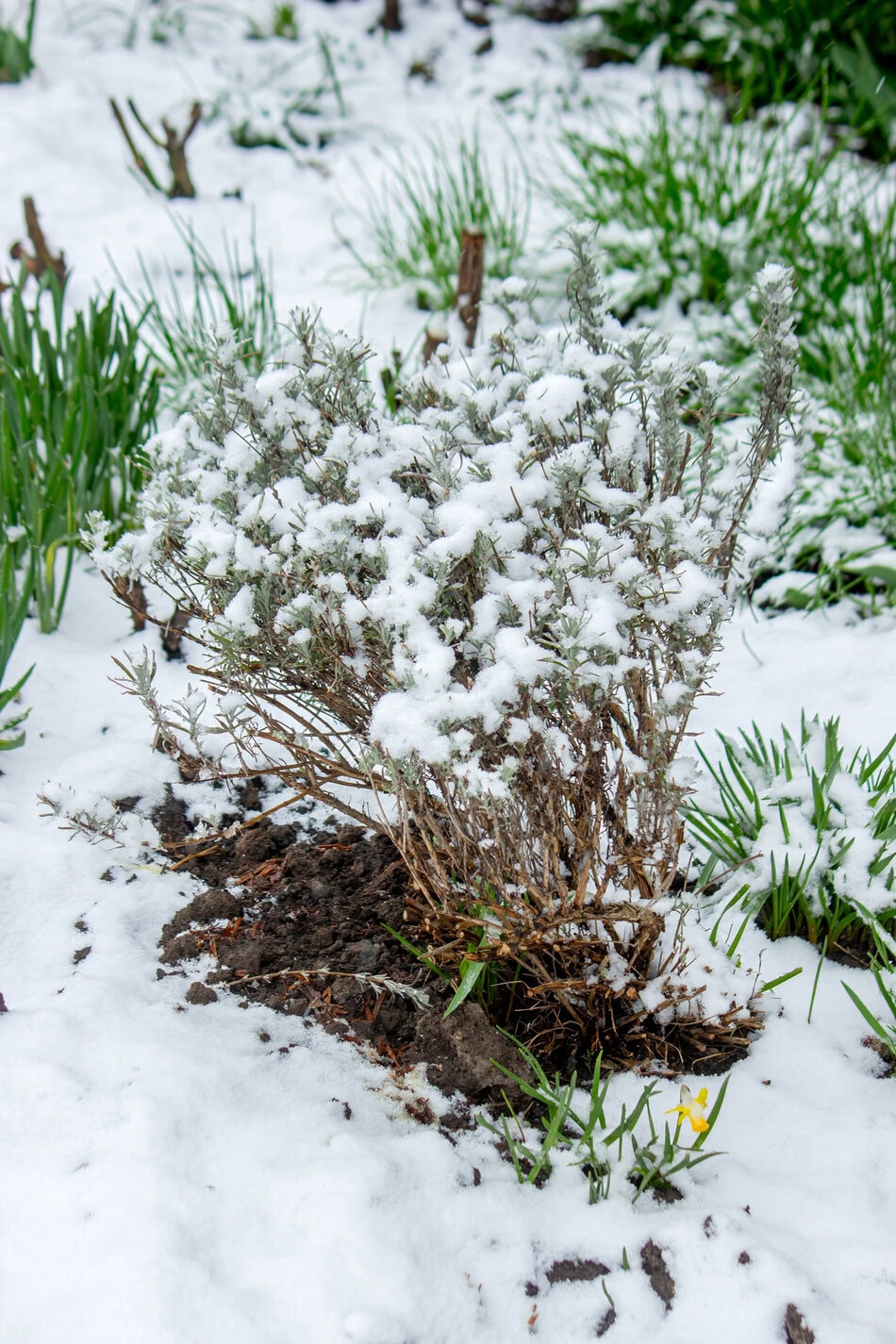
Now I’m going to walk you through the exact winter routine that’s kept my lavender alive and blooming year after year.
1: Leaf Your Worries Behind
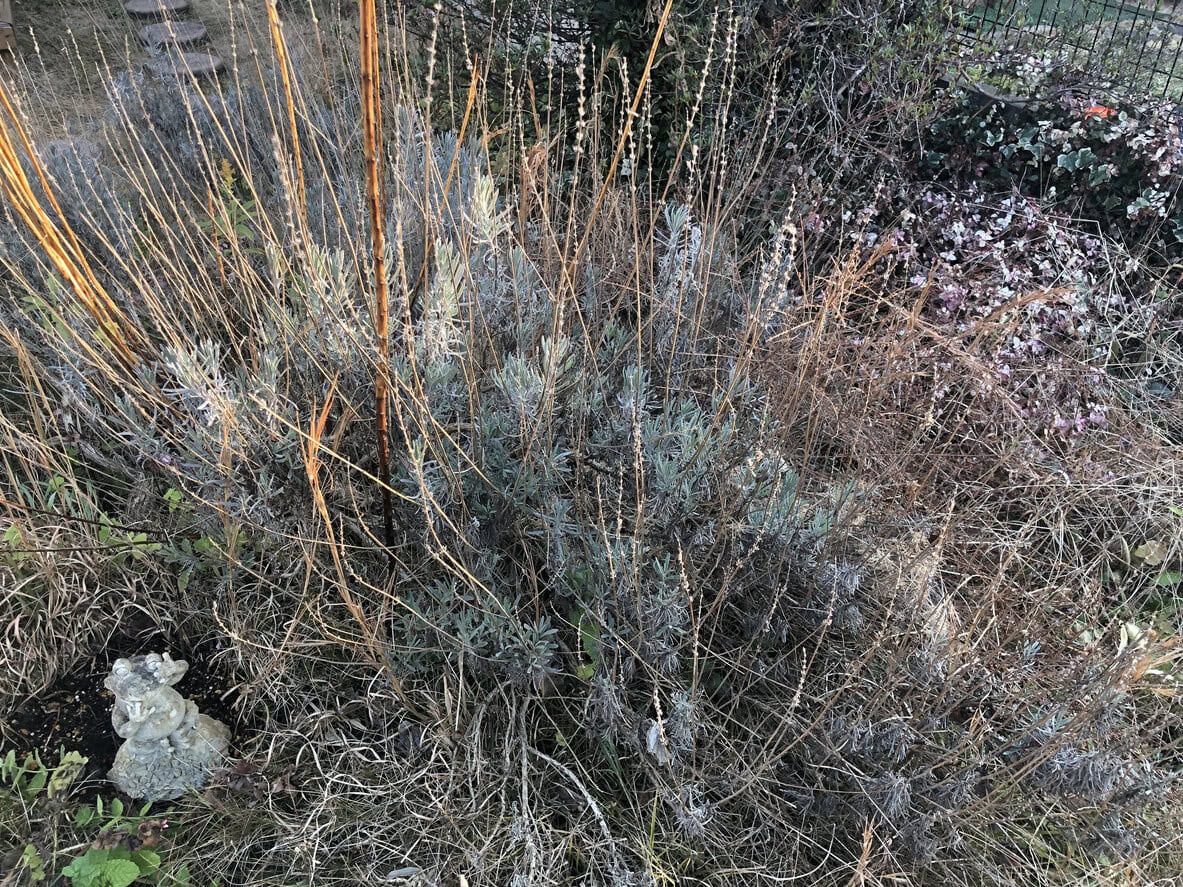
Winter winds love to shove dead leaves and neighborhood trash right into the heart of your lavender. These damp piles create a permanent wet patch against the woody base.
Since your plant relies on airflow around those lower stems to stay dry, a soggy blanket here spells immediate disaster. Pull on some gloves and clear out that slimy debris by hand until you see bare soil.
Keeping the neck of the plant dry remains your only mission. Or, leave the damp carpet in place and watch the bark soften. Crown rot loves a free meal at your expense.
Quick reminder: I used to ignore the leaves piled at the base because it looked harmless, but every year I did, my lavender rotted from the crown up!
2: Exit Strategy for Puddles
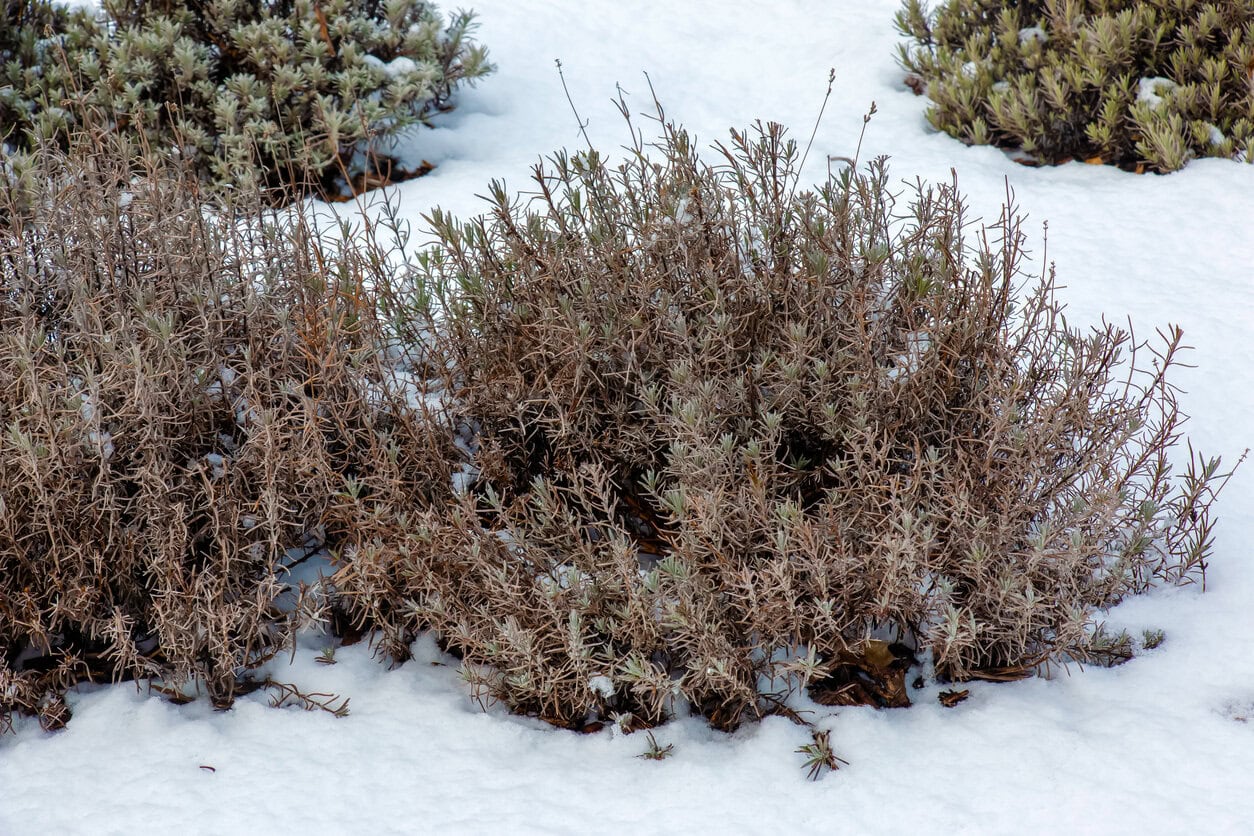
Lavender possesses a legendary hatred for soggy socks and stagnant pools. Go outside after a heavy rain and look for any standing water huddling around your plant.
If your shrub currently scuba dives in a mini pond, I’ve signed you up for an immediate drainage mission. Wrestle a shovel and carve out a tiny escape route to channel that water elsewhere.
Otherwise, stir some coarse grit into the top layer of soil around the bush. Gravity usually handles all the work, but a little help can’t hurt.
3: Snow-Way Out
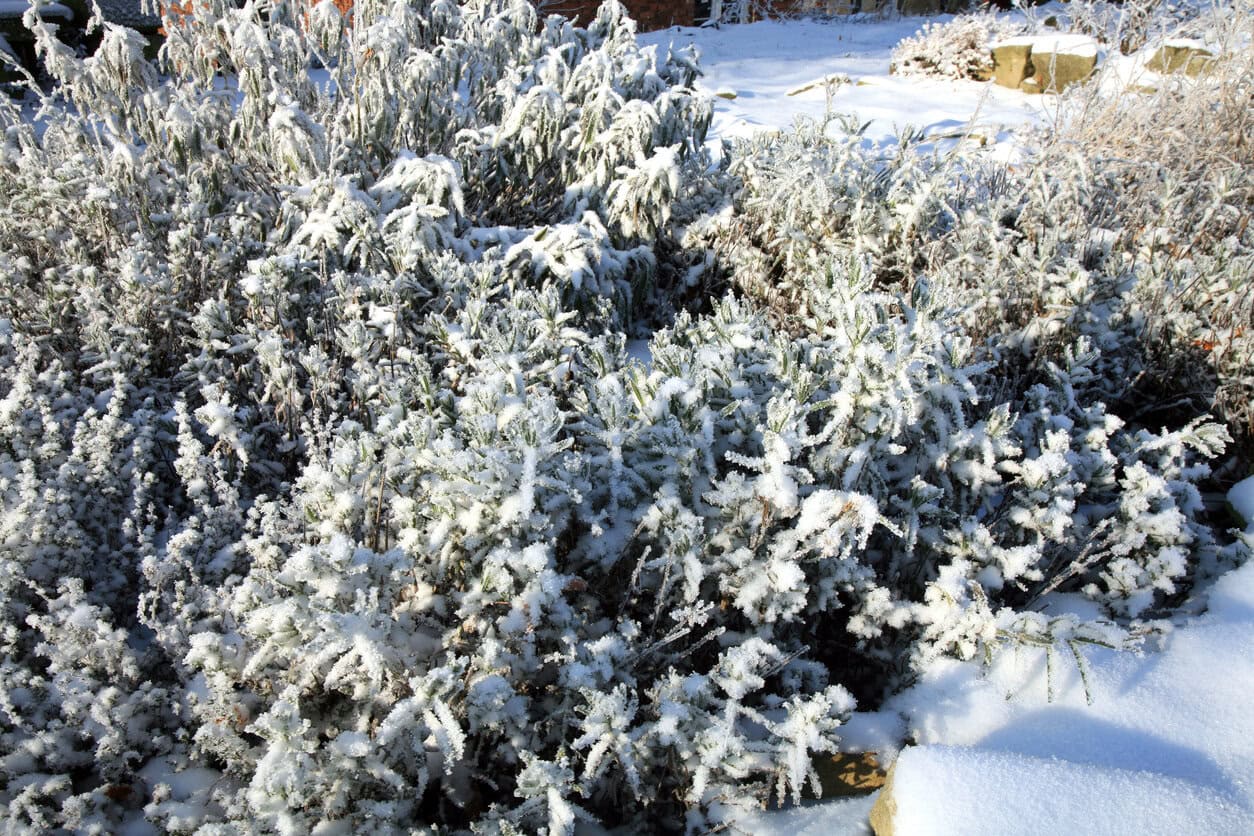
Heavy snow is a gravity-powered wrecking ball for brittle stems. While a light dusting provides insulation, a massive drift threatens to snap your plant like a dry twig.
Sweep the powder away with a broom or gloved hands before that weight squashes your lavender into a tortilla.
And resist any urge to kick or shake the plant unless the sound of splintering wood brings you joy. The idea is to keep the pressure off so your plant stays upright throughout winter.
4: Snip Happens (But Keep it Minimal)

Every fresh cut leaves a wound open for frost to invade and kill the branch. Snipping also wakes the plant up, forcing out tender growth that will just shrivel when the next freeze hits.
Limit your blade work to emergency surgery. Snipping off a snapped branch or a mushy stem stops rot in its tracks. Just leave every other branch to enjoy its peace in January.
Taking out the dead weight helps, but leave the healthy wood alone until the warmer days of spring. Those ugly, dead-looking flower stalks serve as a sacrificial shield against the wind.
If you’re unsure when proper pruning should happen, we also have an article about whether lavender should be pruned in spring or fall.
5: Mulch Ado About Nothing

Piling thick wood chips around your lavender feels like a kind gesture, but the reality is mulch darker. Organic materials hold onto moisture, which is the last thing your plant needs during a slushy January.
Your lavender prefers a dry (and naked) base. So scrape away any heavy mulch and swap it for a layer of pea gravel or sand. These materials improve drainage and let the stems breathe.
Choosing a grit-based floor keeps the humidity low and the root system happy. Stick with the soggy wood only if you want a mushy and dead plant by April.
6: Shield the Rookies
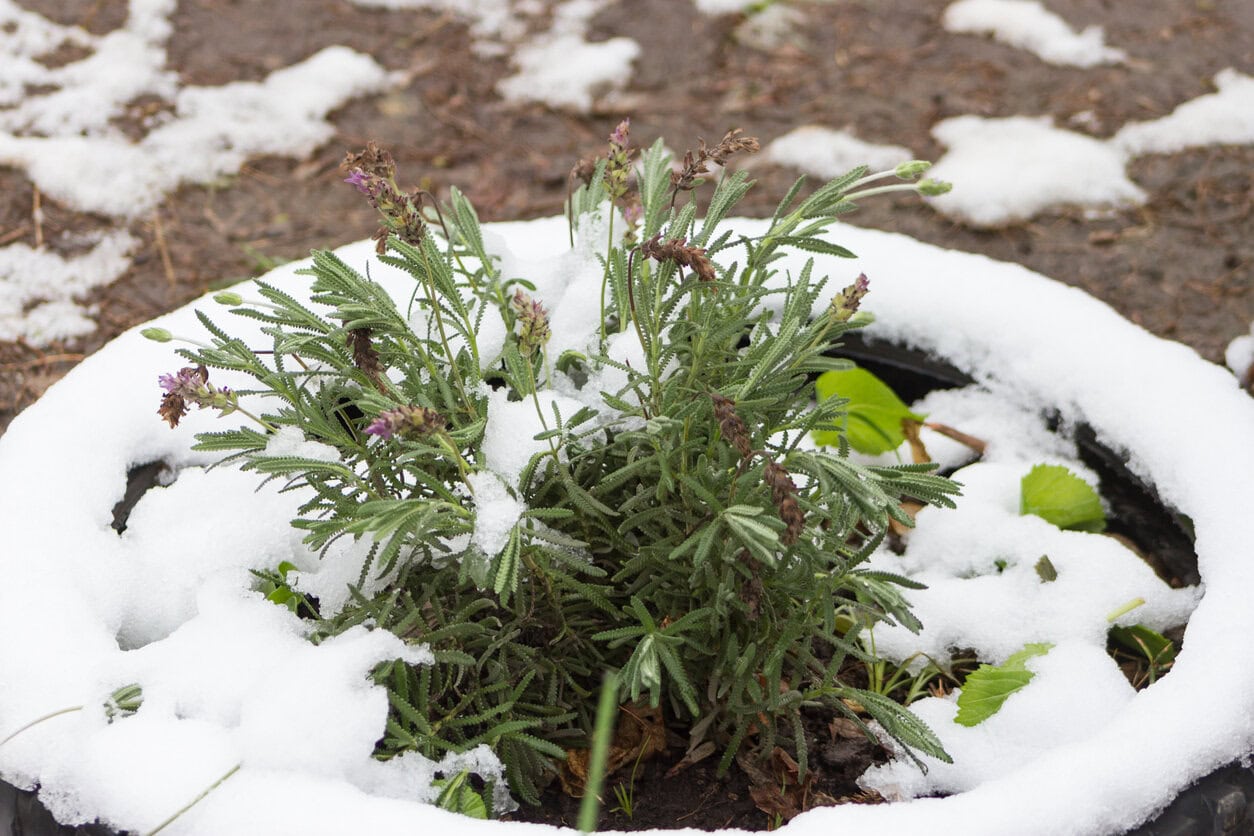
Baby lavender plants lack the thick, strong, woody armor of their elders. A fresh transplant faces the winter with zero street cred and even less resilience.
If you put young shrubs in the ground this past autumn, they need a temporary bodyguard to survive a deep freeze. Its name is plant cover (also known as a frost blanket or frost cloth). A porous fabric like burlap is tight enough to break the wind’s force but loose enough to let oxygen circulate.
Quick reminder: Keep the plastic wrap in the kitchen! Using it on your lavender creates a mini greenhouse that turns your plant into a steamed veggie the moment the sun peeks out.
7: Pot-ential Disasters Avoided

Lavender roots trapped in a ceramic or clay container face a much colder fate than any plant in the ground. Grab the edge of your containers and peek underneath every week. Verify that ice hasn’t choked the drainage holes.
Drag the whole crew toward a south-facing wall the moment the forecast turns grim. They rely on it for a bit of borrowed warmth and to shatter the wind’s power.
Quick tip: You can also use bricks or “pot feet” to lift the containers off the cold ground. Instead of pooling at the base, water can actually escape.
If you grow lavender in containers, Rita has also shared an article about growing lavender in pots with practical tips that help prevent winter losses.
The Scent-sational Finish
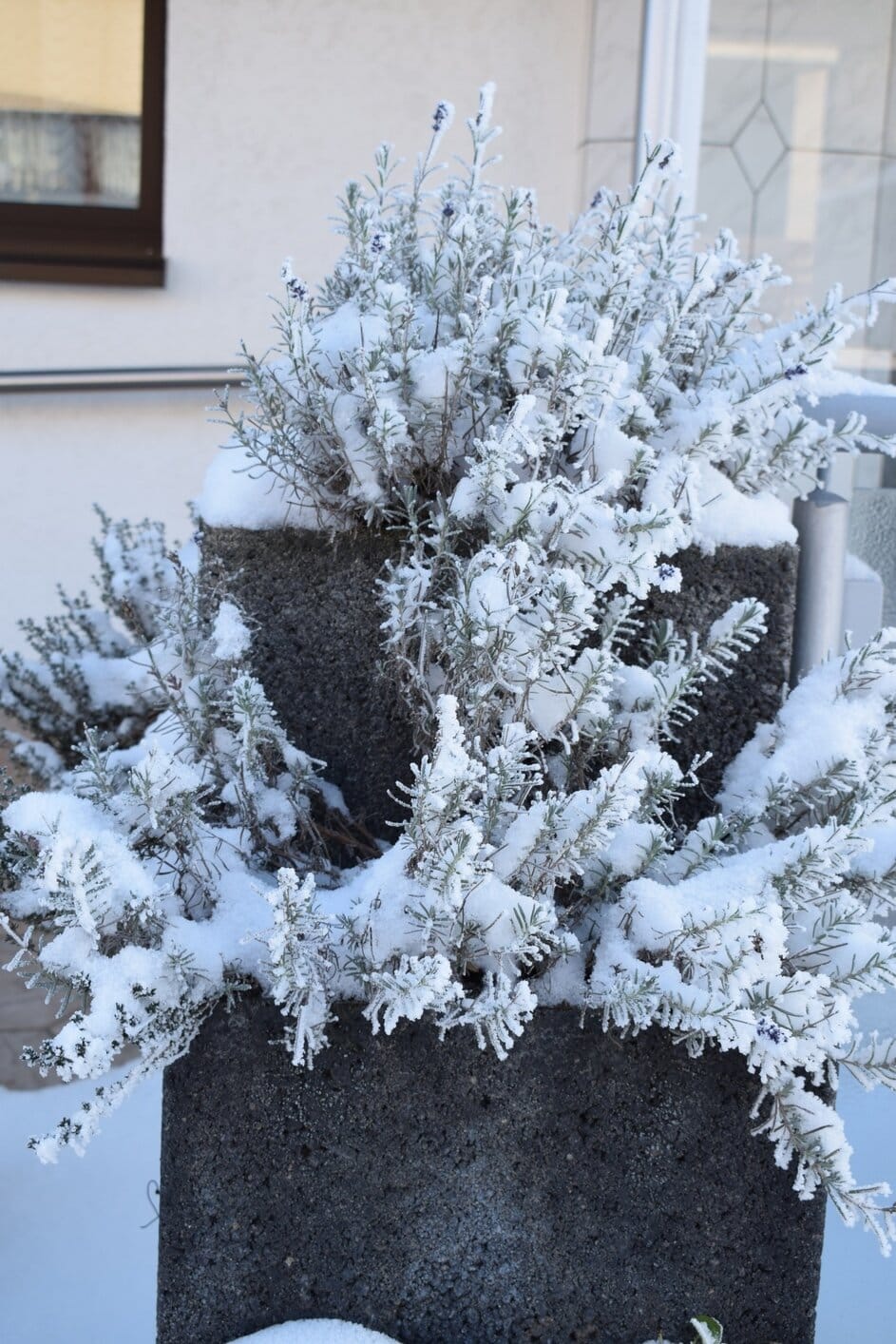
Lavender is a Mediterranean soul trapped in a winter nightmare. Yet, it doesn’t need a hug. It needs a dry floor and a windbreak.
If you play your cards right, its silver leaves will bounce back and show you its purple Proven(an)ce in July. Until then, let the plant stay ugly, so it stays alive.
Once winter is over, feeding timing matters! One of our writers put together an article about when to fertilize lavender for the most fragrant blooms.