In the pre-internet era, Victorians sometimes used flowers to send messages they didn’t want to put into words. According to some Victorian flower dictionaries, handing someone an azalea meant “Take care of yourself for me.” Turns out, old-timey suitors had the right idea.
Azaleas demand that exact same protective energy right now. And in August, a few simple jobs can make a big difference in how well they bloom next spring.
1. August Shears, April Tears
Azaleas set their flower buds during the summer. By August, many of those buds are already in place, which is why it matters more than ever that you protect them. From nature, and yourself, I might add.
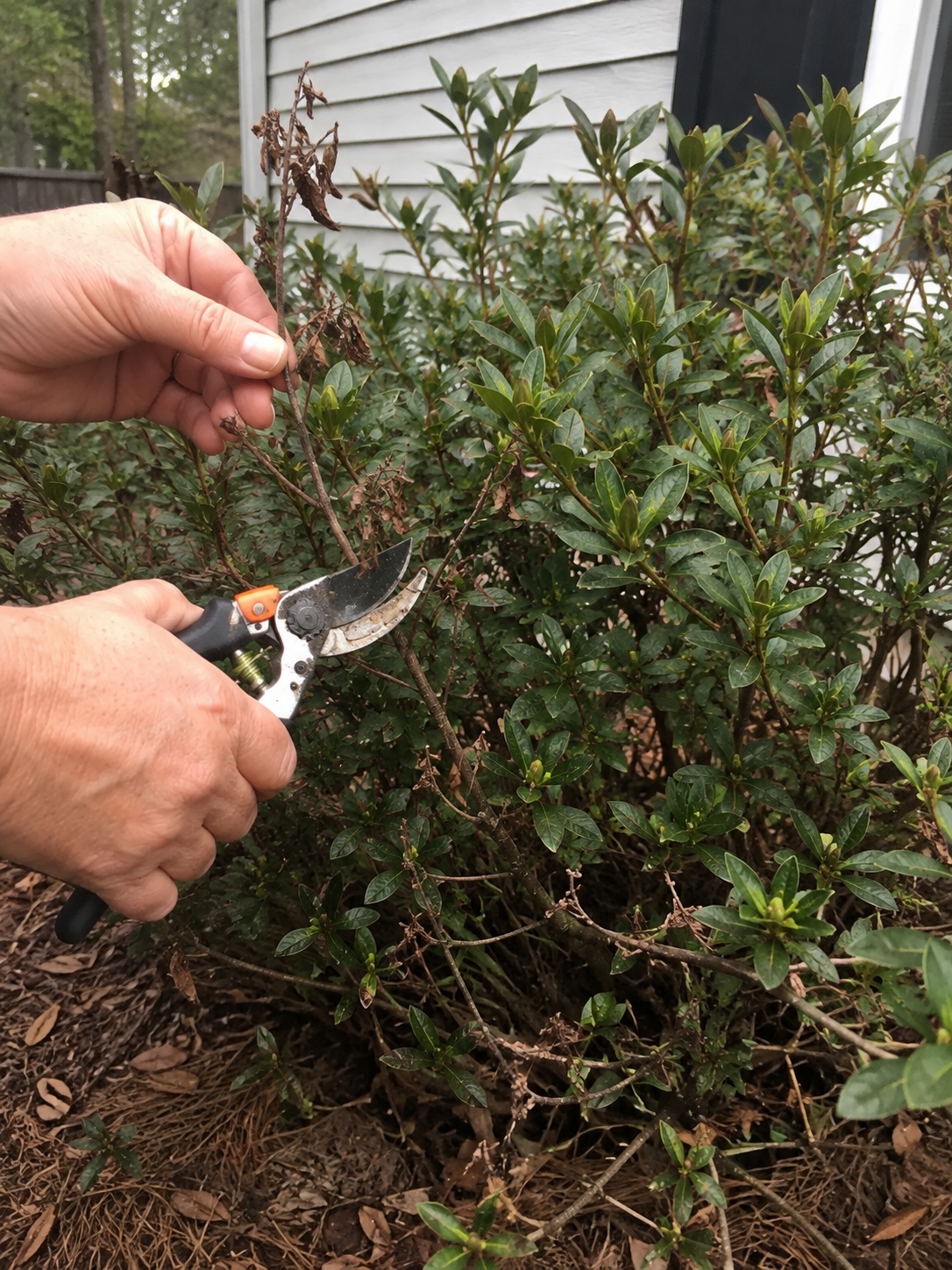
If you shear the outer edges today, you can cut away a big chunk of next spring’s bloom. If you were considering pruning the bush to make it look neat, keep in mind you’re trading potential spring flowers for twigs.
That’s because many healthy stem tips are already carrying next spring’s flower buds. So live and let live every healthy green branch until next spring’s flowers fade.
Quick note: One legitimate reason to touch that plant with clippers in August is to cut out dead, damaged, or diseased wood.
Once those flowers do fade, we wrote a guide on 9 spring azalea care tips that explains what to do next, from pruning and feeding to mulching and pest checks.
2. August Showers, Moldy Flowers
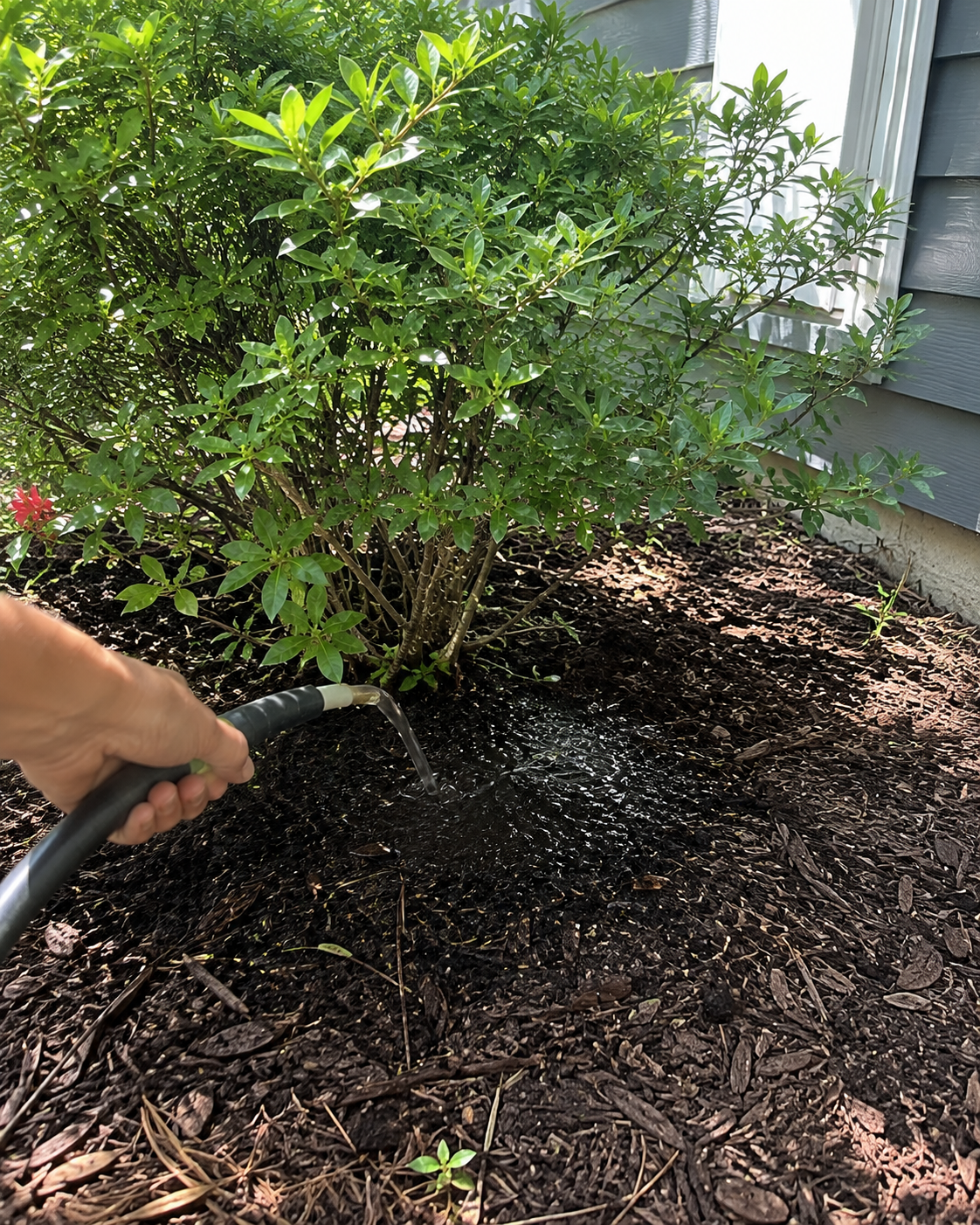
You’ve surely noticed that baked summer soil can shrug off a quick surface spray like a rain jacket. And your azaleas pack their shallow feeder roots close to the soil surface.
A thirty-second splash darkens the surface and tricks you into thinking the job’s done while the root zone underneath can still be bone dry.
I drop the hose nozzle to the base and run a low trickle directly onto the soil for the duration of an episode of Modern Family (which, based on my soil, gives it enough time to soak several inches deep instead of racing off across the surface).
Avoid wetting the leaves, because repeatedly wet foliage can encourage some leaf diseases.
How to be sure the soil absorbed it? Dig a finger about three inches deep into the root zone, and if it still feels dry down there, the plant is still thirsty.
3. August Feeding, Winter Bleeding
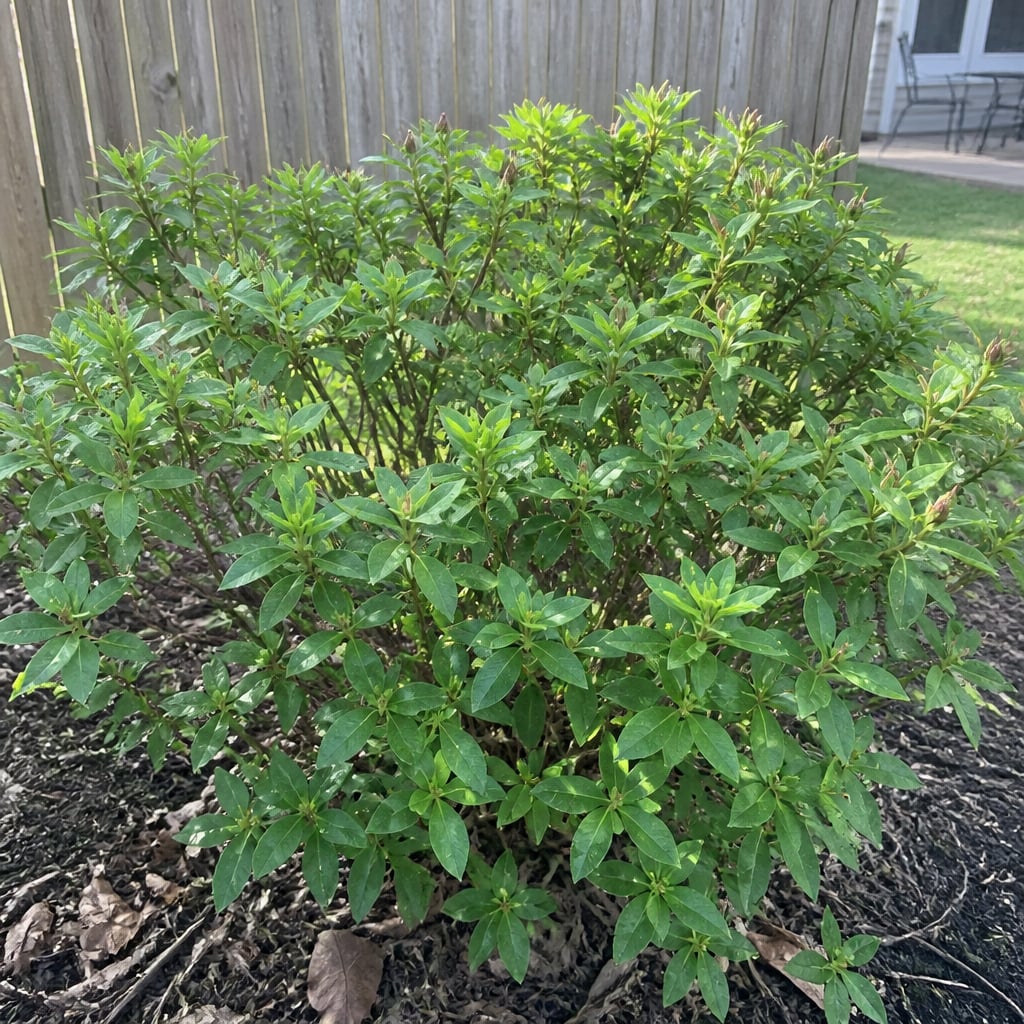
The plant won’t thank you for nitrogen food right now. It’s attempting to lock down, turn woody, and set the bloom buds it needs for spring, and you’re teasing out tender new shoots.
When the first freeze comes, that soft growth is much more vulnerable because it probably won’t have had enough time to harden off properly. So instead of heading into winter tough and woody, those tender shoots can suffer cold damage and die back.
So, no food until spring, for your azalea and my aunt. If you just can’t resist the desire to mess with the soil, throw down a couple of inches of pine bark mulch.
If winter damage is a recurring problem where you garden, we also wrote a guide on 9 shrubs that may need wrapping or extra winter protection, including azaleas.
4. August Drain Saves the Pain
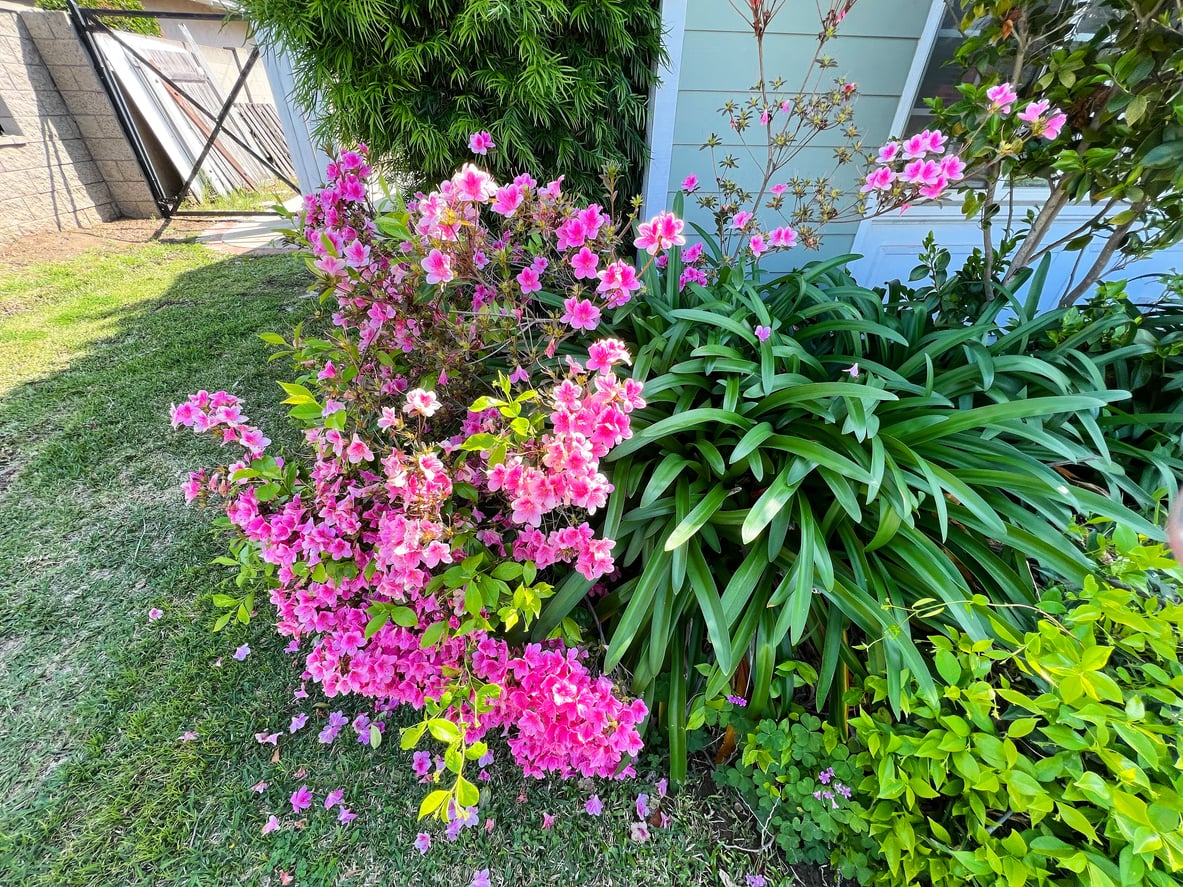
When an azalea’s leaves droop in August heat, your instinct says blast it with more water.
But what your instinct misses is that poor drainage can damage those delicate feeder roots and encourage root rot, leaving them struggling to pull up moisture properly. Pure paradox. The foliage can wilt from thirst even while the roots are sitting in soggy soil.
I check the soil around the base before reaching for the hose again. Heavy and soggy a couple of inches down, especially long after watering or rain? Waterlogging may be the real problem.
Trapped water needs a way out, but WAIT, don’t go slicing trenches through an azalea’s shallow root zone! First, I pull excess mulch or debris away from the base and make sure irrigation, downspouts, or runoff aren’t dumping water into the bed.
If the spot stays soggy, redirecting that water or improving the drainage around the planting area is the better long-term fix. Wish my guests were that easy to redirect…
5. August Heap, Rot Runs Deep
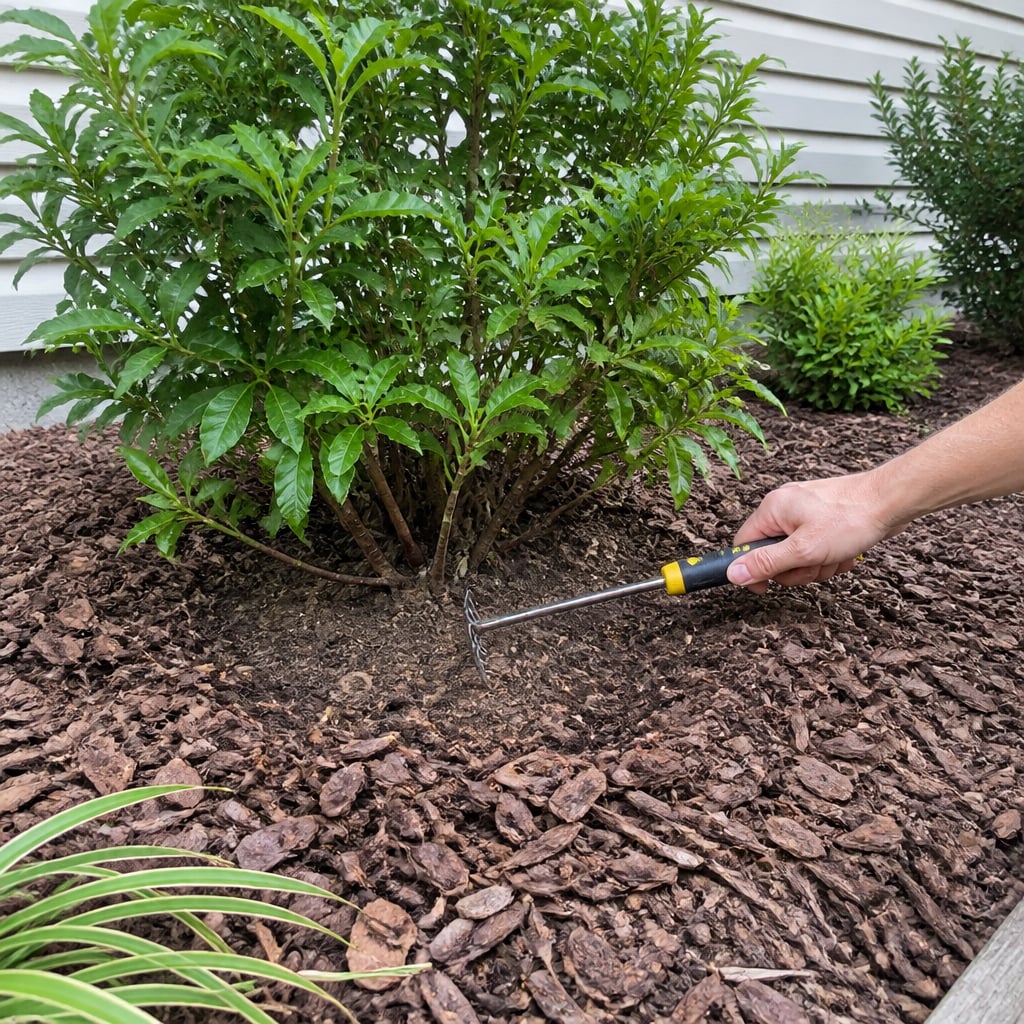
Piling mulch around an azalea trunk like a volcanic is a very toxic kind of love. Or should I say smothering.
Mounding wood chips straight against the main stems traps moisture right against the bark. That constantly damp pocket can encourage decay and other stem problems while you stand there feeling proud of your insta-landscaping.
Mulching is good, no doubt about it. However, I rake it back a couple of inches from the main stems so the bark can stay dry.
Quick tip: Scatter a light two-inch layer outward to the dripline to shelter the azalea’s shallow feeder roots. As much as my uncle despises his bald ring, even he can’t argue that in this instance, it’s a lifesaver.
If you’re already thinking ahead to colder weather, we also wrote a guide on 12 plants that benefit from winter mulch, including azaleas and rhododendrons.
6. August Weeding, Roots Receding
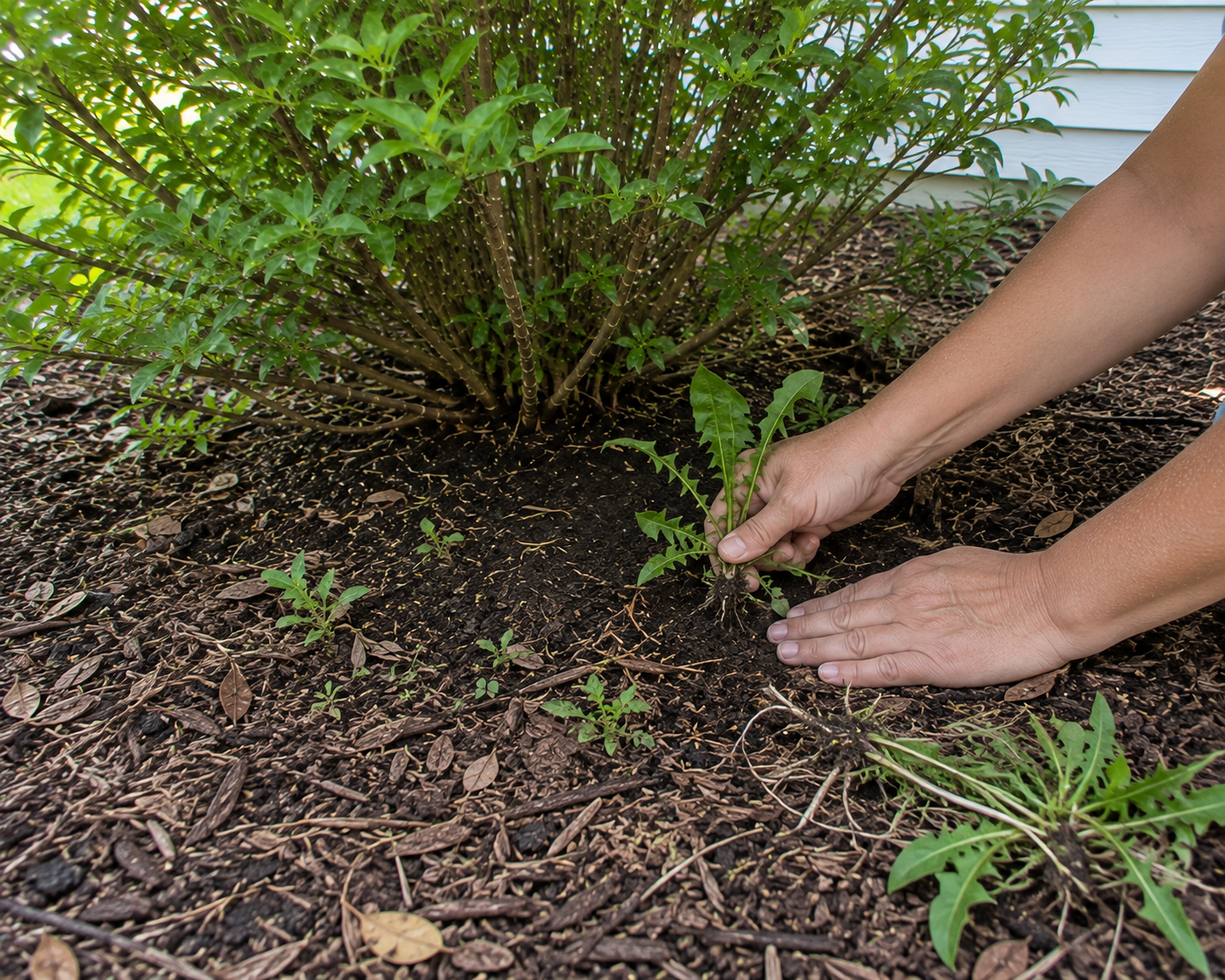
Aggressive hoeing around an azalea base is one of the quickest ways to slice up its life support system.
Hacker-style weeding with a sharp trowel or draw hoe can strip away that vital surface network, leaving the plant with fewer working roots just when the August heat peaks. The weeds die, but the azalea may pay for it too.
As I get near the crown, I get down on my knees and pull dandelions out by hand, pinning the surrounding soil with my other palm so I disturb as few azalea roots as possible.
Hand-pulling takes five extra minutes, which is five minutes less doomscrolling topped up with a grateful azalea. Win-win.
7. August Mites Drain Spring Delights
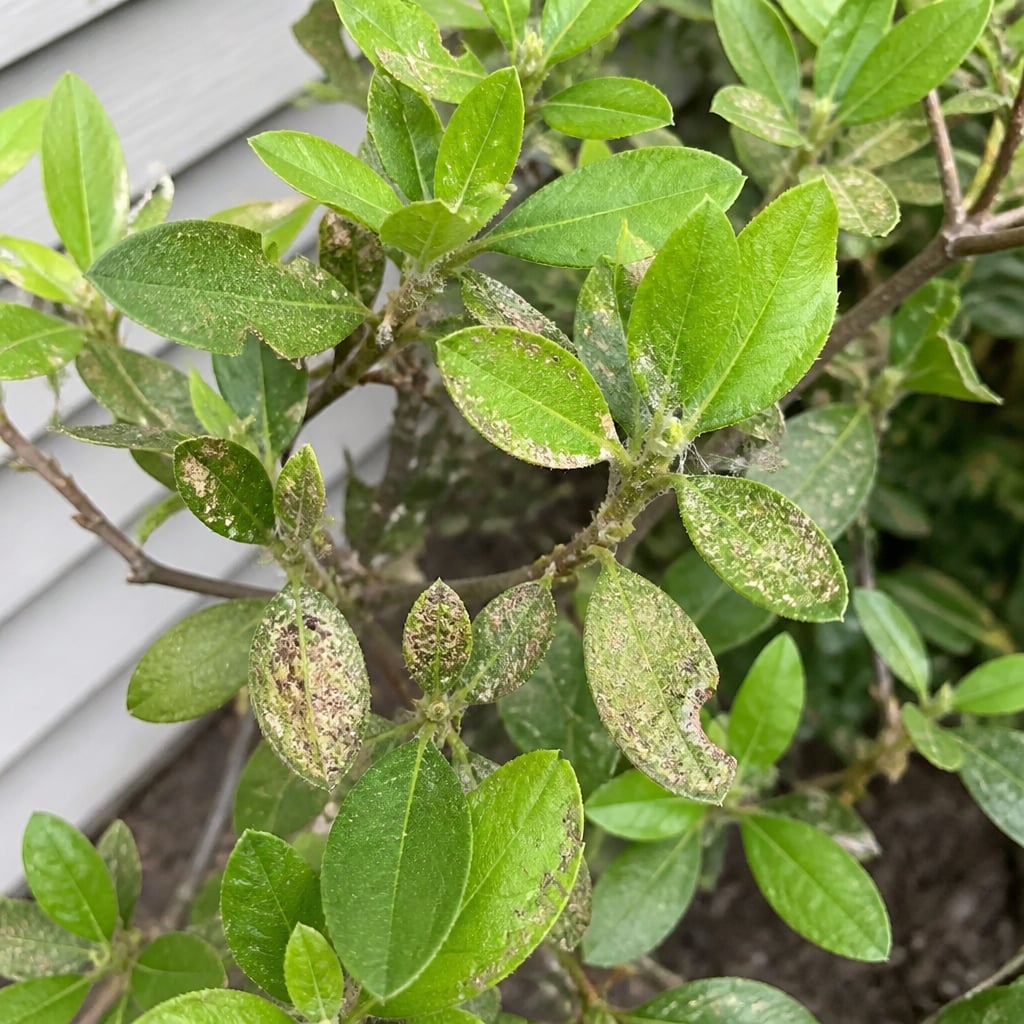
Flip a couple of leaf undersides while you’re out there. Lace bugs can keep feeding through the summer, and hot, dry August weather can also favor spider mites.
Do you see tiny yellow or white speckles on the leaves, or black tar-like spots underneath? Those are classic signs of lace bug or spider mite feeding, with the black spots especially pointing to lace bugs.
If the pests are actually there, I spray them directly with insecticidal soap, making sure to hit the leaf undersides where they like to hide. The soap only works when it contacts them, so coverage matters.
Quick tip: Follow the label directions, and you can help keep that foliage healthy instead of letting freeloaders drain the plant. Might try it on my guests, too.