
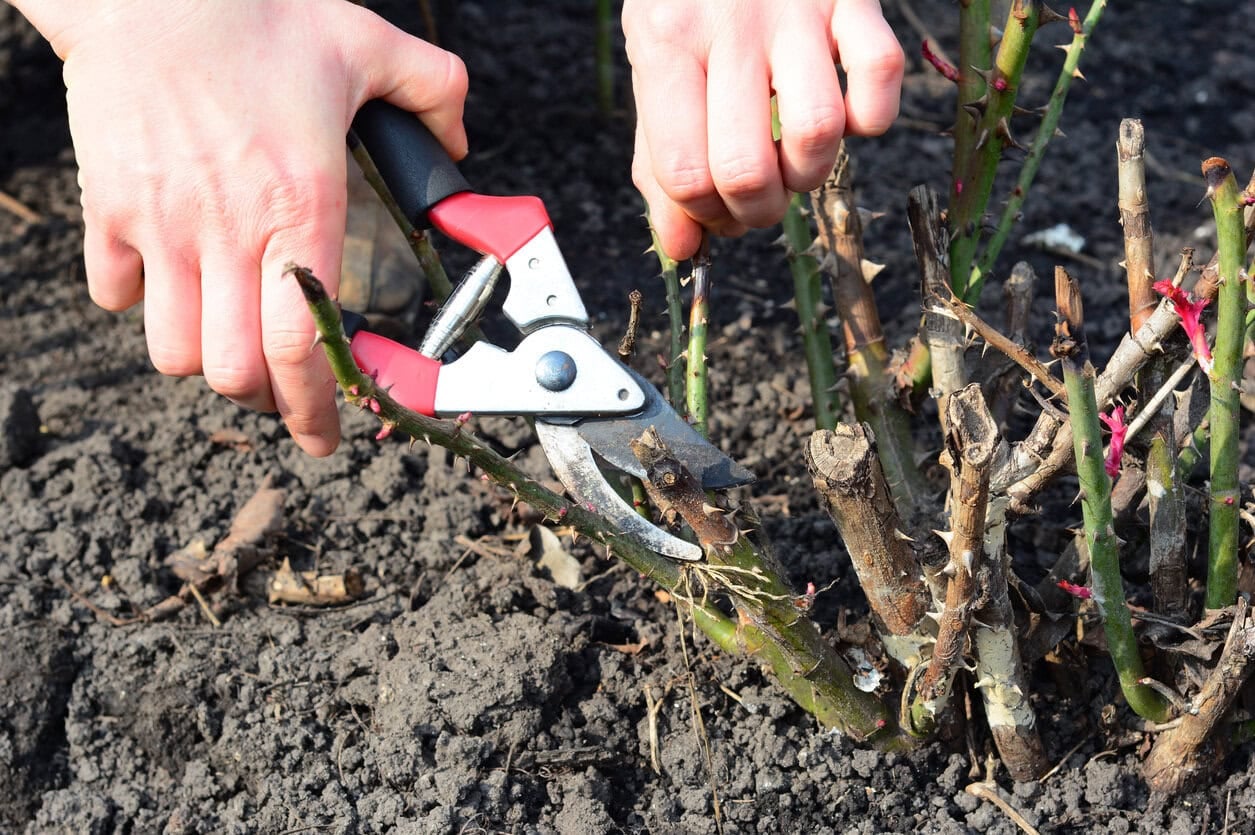
The weather is miserable, but you’re still determined to get the roses sorted. I also know you’d rather tackle a thorny bush than endure another minute of small talk. We can work with that.
February gives you a tiny window to knock out these seven tasks. A double win where the roses get healthy, and you get a valid reason to ignore the doorbell.
Pruners at the Ready
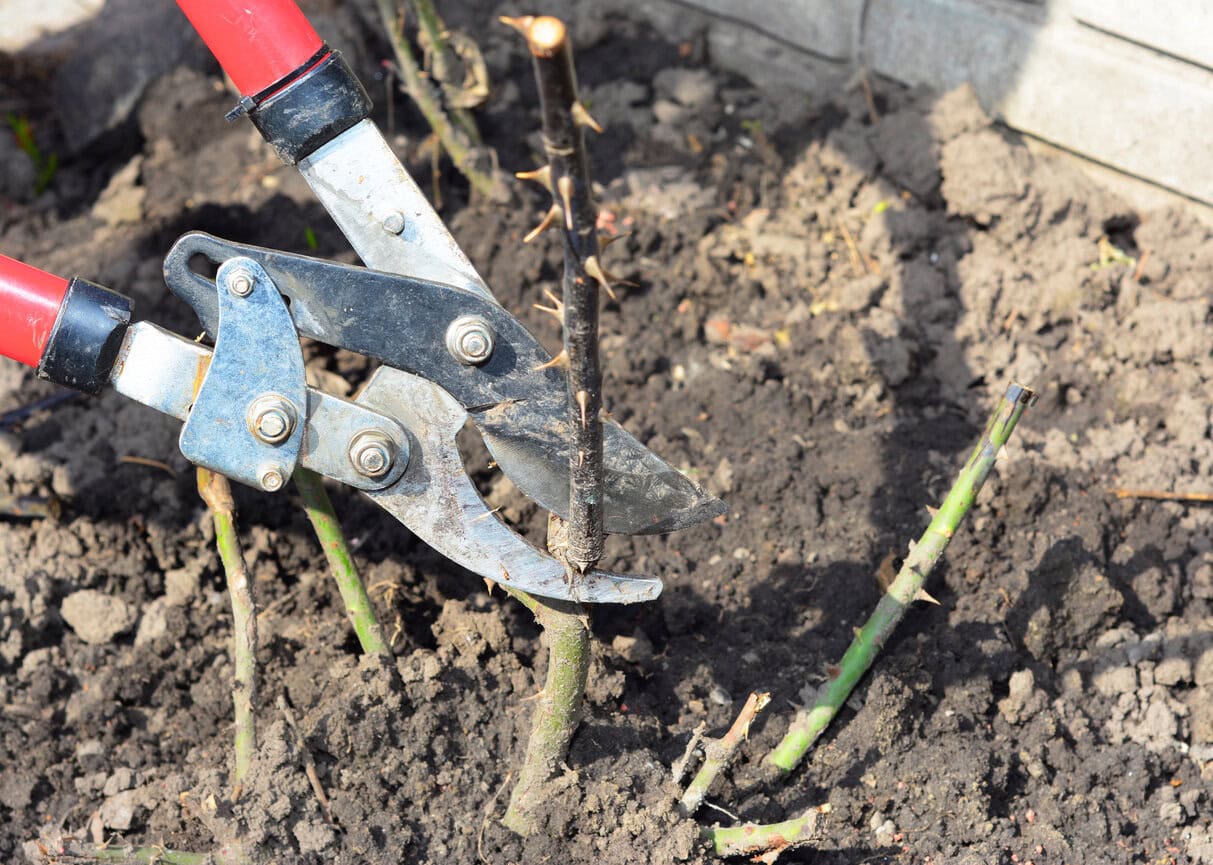
Before you storm the garden like a (tiny) Viking in Wessex, make sure your gear actually works. Dull shears crush stems. Dirty blades spread disease faster than a trend on TikTok. It only means you need a clean AND sharp pair of bypass pruners and a sturdy set of loppers for the heavy lifting.
Wipe your equipment with rubbing alcohol between every plant, especially if you’re cutting anything diseased. And once your tools are sharp and sterile, you possess the power to reshape your garden’s destiny. Or at least its spring flower count.
Quick reminder: If you’re gardening in a colder climate and winter is still in full force, don’t panic! These tasks apply once your roses are dormant and before new growth starts, even if that window slides into late February or early March for you.
If you’re coming at this from a wider winter-care angle, we’ve also put together a full guide on how to mulch, prune, and protect roses through winter.
Seven Steps to Handle Your Rose’s Baggage
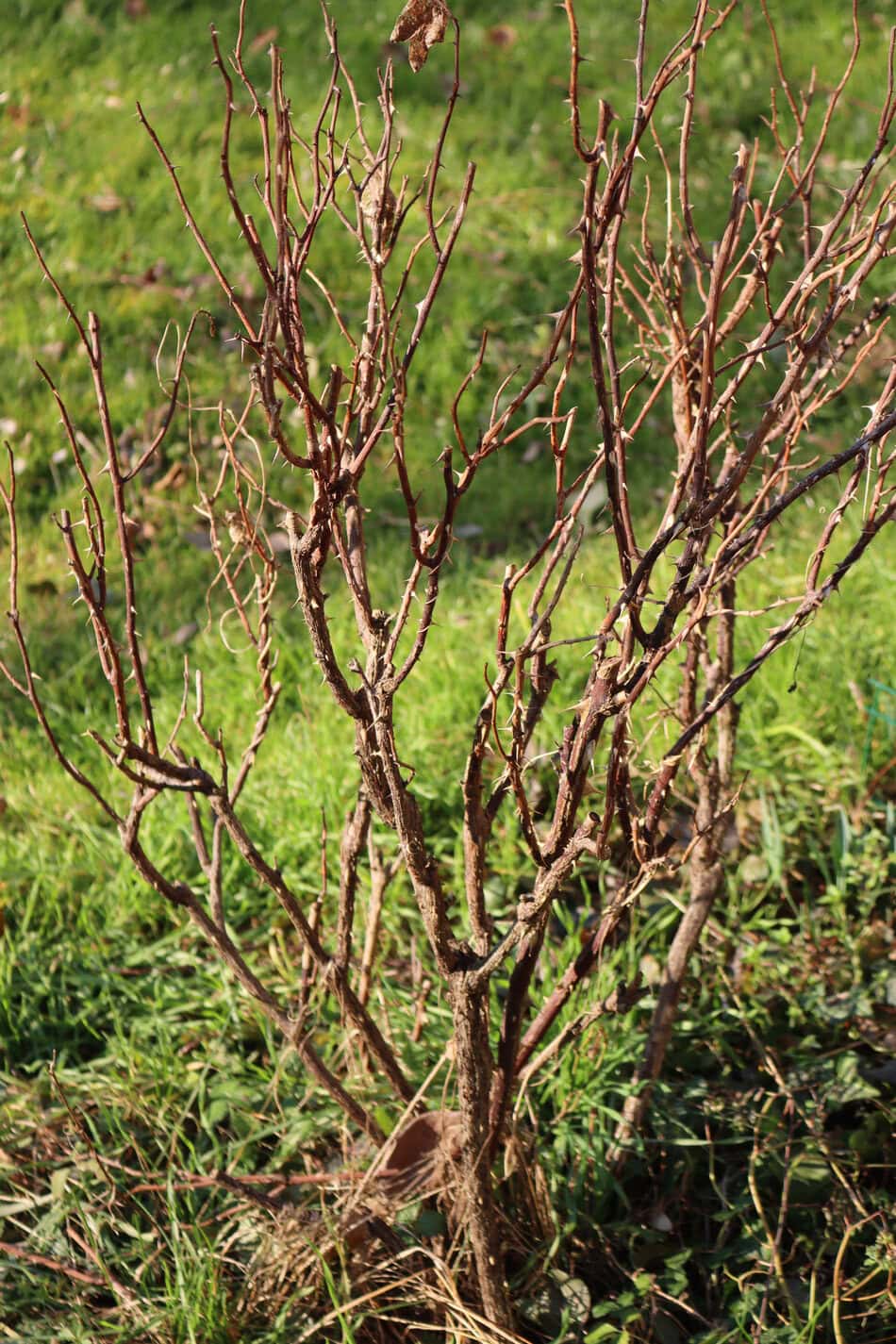
Nothing says “I’m avoiding the neighbors” quite like a solo mission to sanitize a thorny rose bed in February.
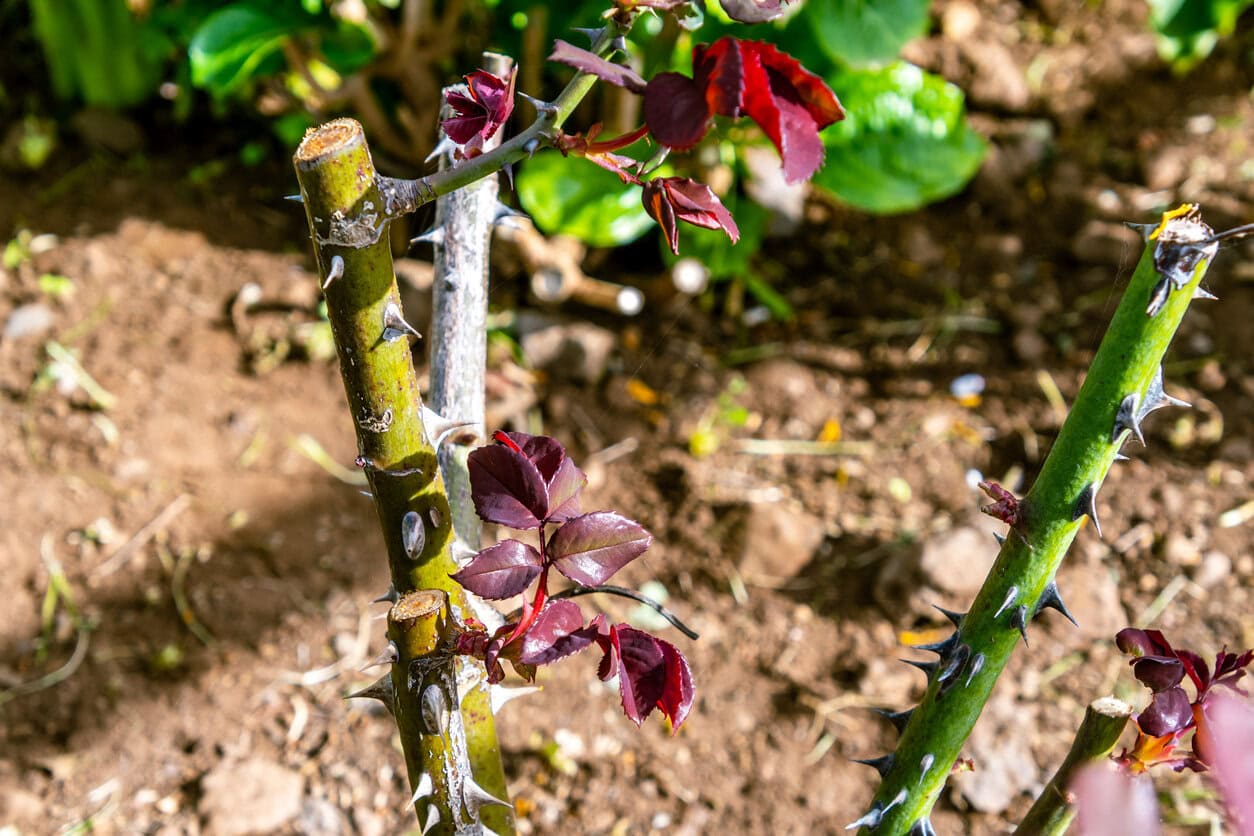
1: Prune the Dead Weight
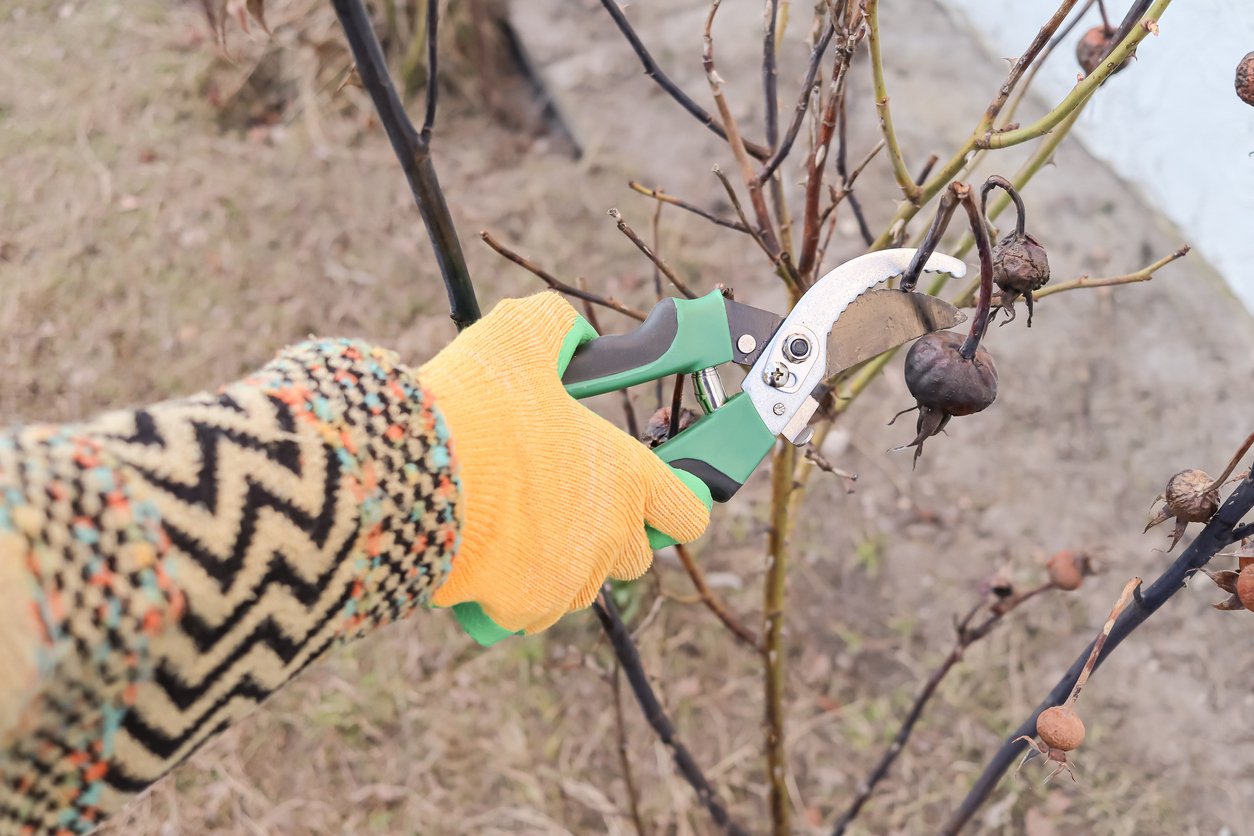
Before the leaves return to hide a multitude of sins, you need to play detective. February is when the rose reveals its true twisted nature, showing you exactly where it’s planning to sabotage itself.
Look for “blind wood” or stunted little twigs that aren’t likely to produce flowers. Next, snip them out to ensure the plant’s energy goes toward a headline performance rather than supporting a bunch of lazy extras.
Quick tip: I used to leave a lot of this thin, unproductive growth “just in case”. Every time I removed it instead, the plant put on stronger, cleaner growth in spring.
If you want a full walkthrough of angles, cut placement, and how hard to prune different rose types, we explain everything step by step in this rose pruning guide.
2: Sharpen Your Ambition

You wouldn’t carve a turkey with a credit card, yet here you are with rusty shears. If your pruners make a crunch instead of a snip, you’re just swinging the doors open for infection. Give your pruners a deep clean and a properly sharpened edge.
A clean cut heals like a minor scratch, while a jagged one is a VIP lounge for pathogens. It’s weapon maintenance for the upcoming war against the weeds.
And once bloom season arrives, pruning decisions change. We also covered exactly what to cut back and what to leave alone after roses finish flowering.
3: Fix the Identity Crisis

Did you plant a Peace rose or a Knockout? By now, the plastic tags have likely faded into oblivion. So, spend this quiet window replacing mystery markers with something that won’t bail at the first sign of rain or frost.
There’s nothing more embarrassing than bragging about your rare heirloom only to have it bloom as a common supermarket variety. Knowing who’s who prevents an identity crisis once the buds actually pop.
If you’ve ever wondered why pruning timing matters so much, we break it down clearly in this guide on which roses should be pruned in fall and which cuts can seriously damage the plant.
4: Check the Waistline
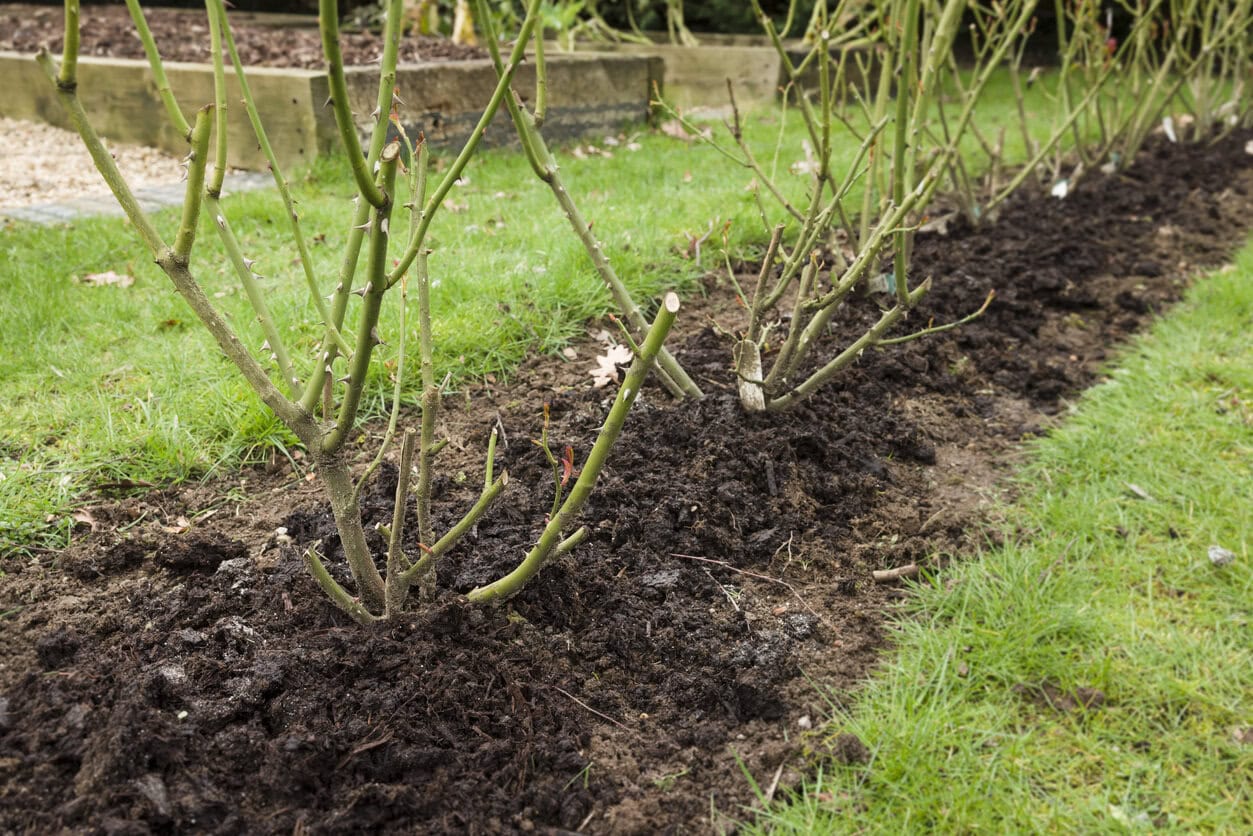
While you’re out there avoiding the doorbell, take a long look at that knobby bit where the rose meets the roots. If it’s buried under six inches of mud, you may be trapping moisture around the graft and inviting crown rot.
And if it’s sitting high and dry in a cold snap, the frost will split the wood before March. Adjust the soil levels now to find that sweet spot of protection without smothering the graft. You decide if this rose becomes a centerpiece or just a trip wire for the mailman.
Quick tip: I stop adjusting the soil when the graft feels protected but still easy to spot. If I have to dig to find it, I’ve gone too far.
5: Serve a Pre-Game Snack
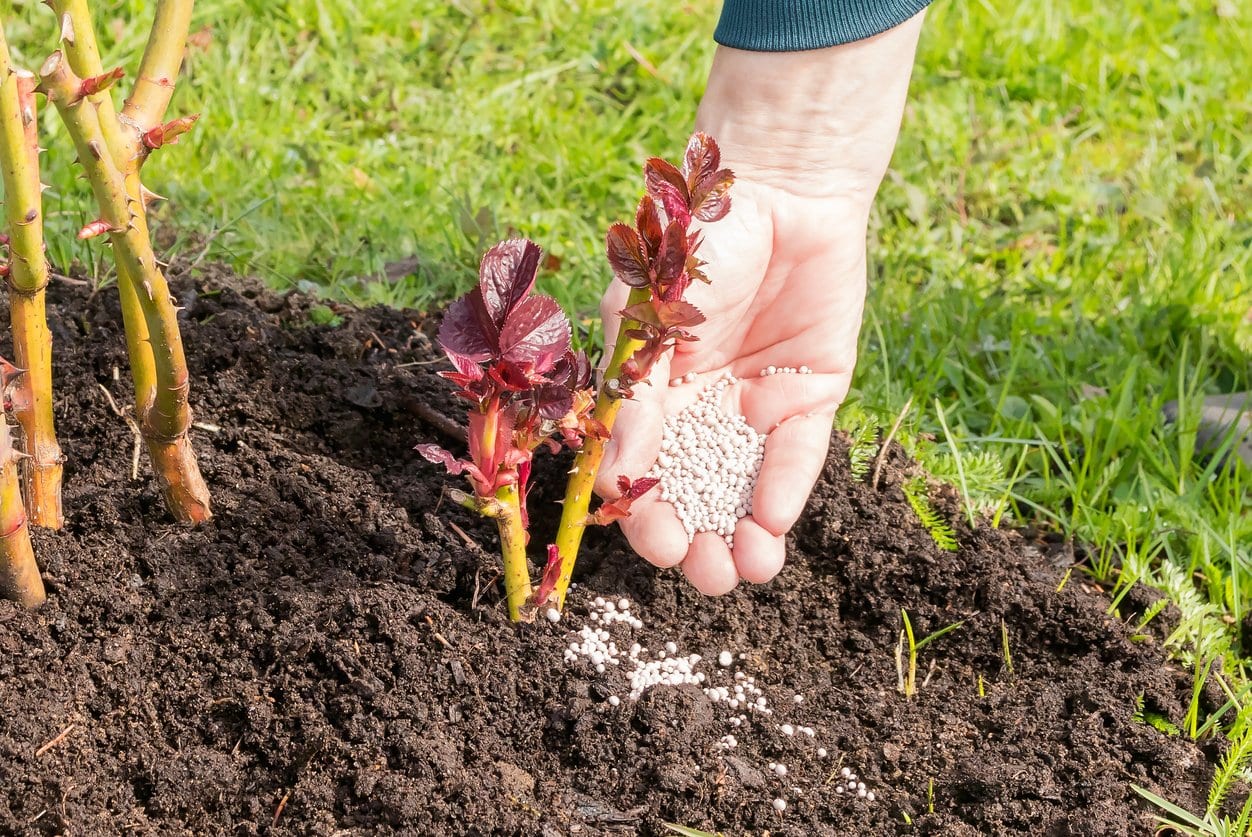
In February, the party needs to happen underground. While the air is cold, the roots are still working. Ditch the nitrogen, which only fuels leafy growth you just spent an hour pruning. Instead, focus on compost or a balanced, slow-release feed that supports root health without forcing early growth.
It’s the boring prep work that reduces die-back and ensures you actually have something to show off once you finally emerge from your cave.
February is about restraint, not feeding, but once growth kicks in, timing matters. We break down exactly when to fertilize roses for the best results in this guide.
Also, coffee grounds are often suggested as a rose fertilizer, but they don’t always work the way people expect! We tested the idea and explain how coffee grounds actually benefits roses and how to use them in this guide.
6: Sweep the Spore Store
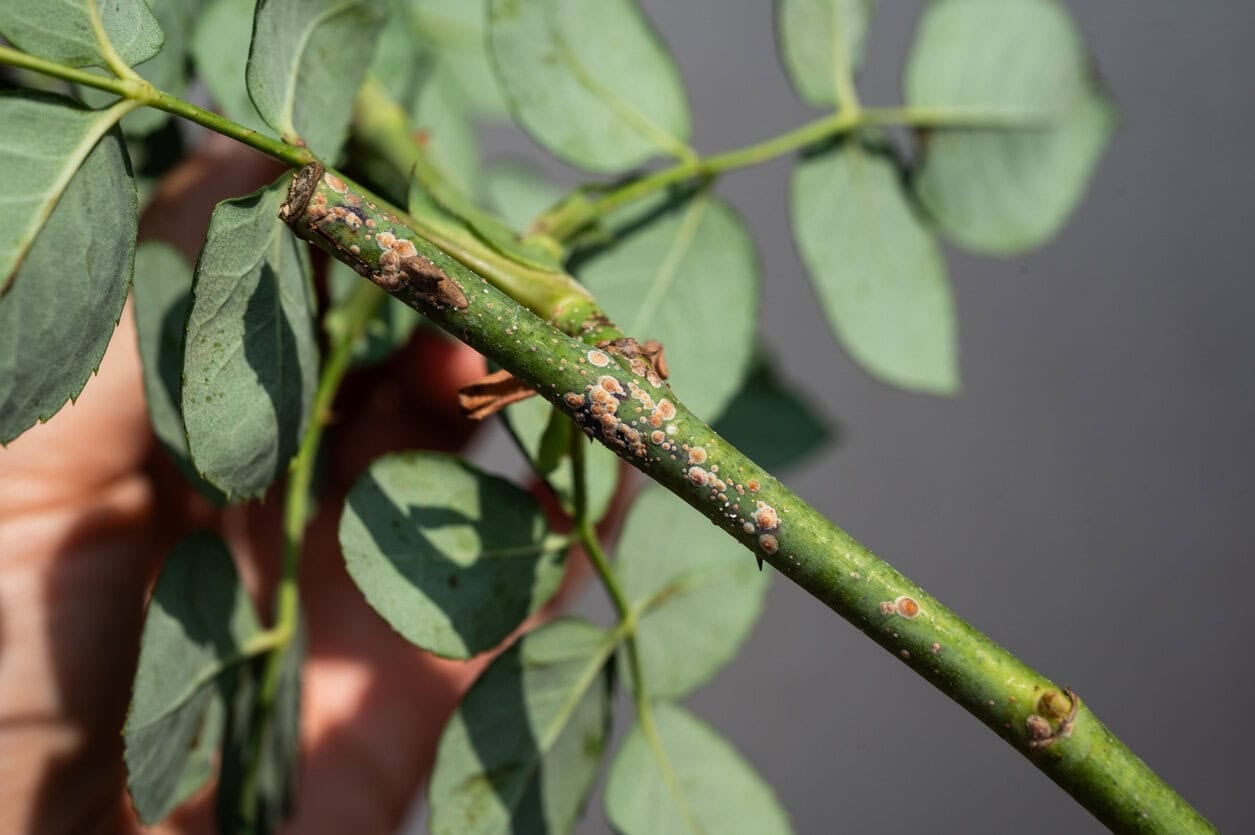
Your roses aren’t trying to be topiary, so don’t let moss and algae treat them like a trellis. They might give off English cottage chic, but they’re just moisture traps. The green sludge can lead to bark sloughing, where the protective outer layer literally peels off in rot.
Gently scrub it away with a soft brush to ensure total air circulation around the crown. It’s a five-minute task that can help reduce a season-long battle with stem canker and scale insects.
Moisture problems often show up later as yellowing leaves, if that’s something you’ve battled before, we explain the most common causes and fixes here.
7: Judge the (Pot) Bottoms
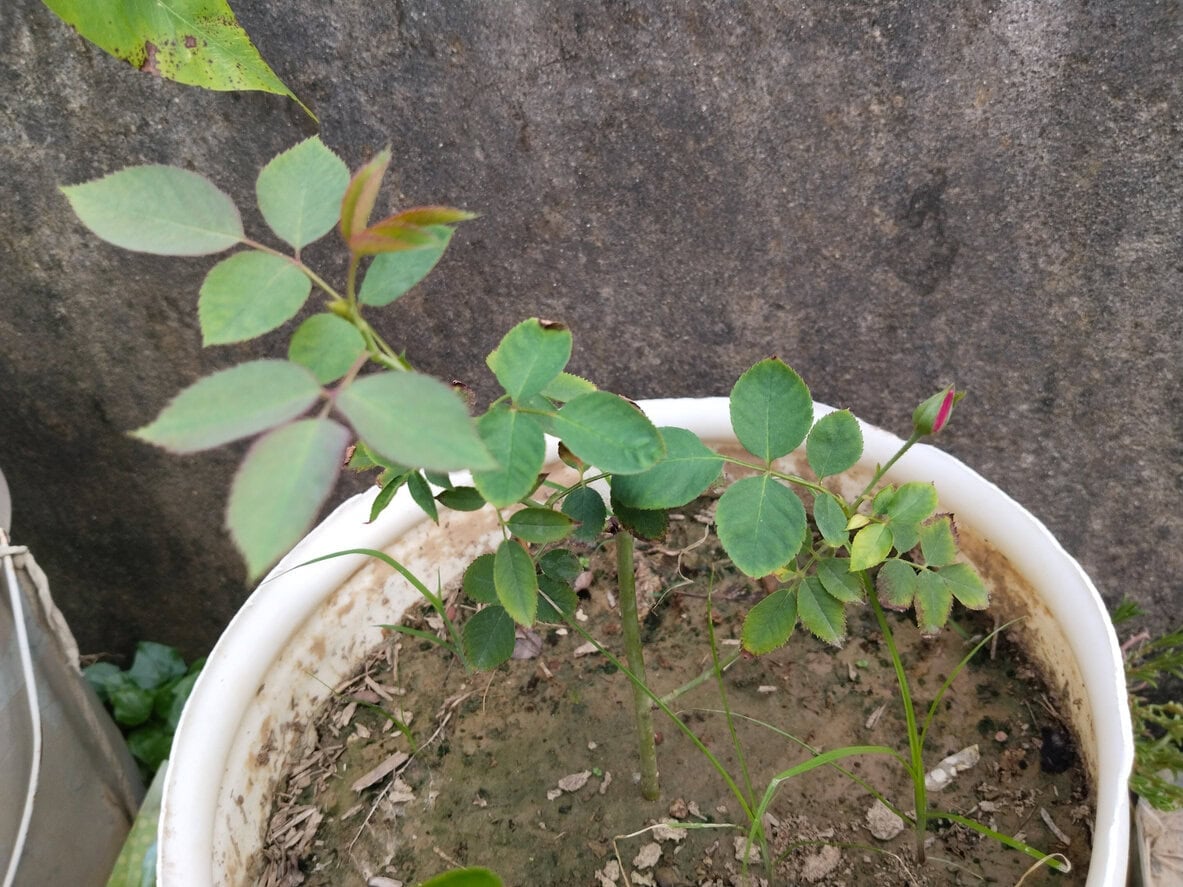
If your roses are currently living in containers, they’re likely feeling the tiny apartment blues. February is the time to check if they’ve become a solid block of roots. If the pot feels like a brick, it’s time to think about an upgrade.
Don’t fight the whole pot, just renovate the top. Swap out the upper two inches of spent soil for some nutrient-dense compost. It’s the cheapest way to buy their loyalty for another season without a full-scale repotting.
Quick tip: I don’t rush to repot in winter. Most years, refreshing the top layer is enough to keep container roses happy until spring.
The Sweet Scent of Solitude
By the time you’ve scrubbed the algae and ousted the lazy twigs, you’ll likely be cold, slightly scratched, and blissfully out of the loop of any local neighborhood drama. That’s the real beauty of a February rose checklist.
If you’ve done it right (and I believe in you), your roses are now prepped for a sensational spring comeback, and your social battery is still at 100%.
All of this quiet February work sets the foundation for summer flowering and in this article, we break down the specific habits that lead to bigger, healthier rose blooms later in the season.




I have knock-out Rose bushes and I want them to look there best.Thank you
The secret to making Knock Outs look spectacular is not letting them realize they outnumber you. Glad you found the tips useful, Brenda!
P.S. Those bushes can take a beating, so let the shears fly.
I got some roses when they bloom the pods turn brown and die, what do I need to do?
Hi Edith 🙂 If you mean the spent blooms or rose hips turning brown after flowering, that’s normal. You can deadhead them by cutting back to a healthy leaf set, unless you want the plant to form hips for fall color or wildlife.
Good advice, thanks.
You have loads of good advice.
Good to know the advice survived the internet gauntlet. Appreciate the feedback, Duke.