Woody sticks in your backyard look like Keith Richards after a world tour. They appear dry, crusty, and entirely finished with this mortal coil. Give them a moment. Beneath that rough exterior, there’s still a leafy pulse waiting to kick in.
Not everything wakes up at the same time. Some plants jump into spring early, while others take their sweet time. We break that down in a guide on which perennials wake up first in spring.
Digging for Signs of Life
These nine garden teens ignore every early alarm until well into June, then suddenly demand a trophy just for showing up.
1: Japanese Maple

Thin twigs on certain varieties can look shriveled and dark after a harsh cold snap. You might notice the tips breaking off like dry crackers under your fingers. This tree specifically often suffers from minor dieback that looks far more serious than it is.
It takes its time to push out those delicate leaves. So keep your itchy pruning shears in your pocket until the branches finally show to leaf out.
Quick tip: The main trunk and larger branches are usually still healthy underneath. Try scratching a tiny spot of bark. You’ll often find a bright green layer hiding below.
2: Rose of Sharon
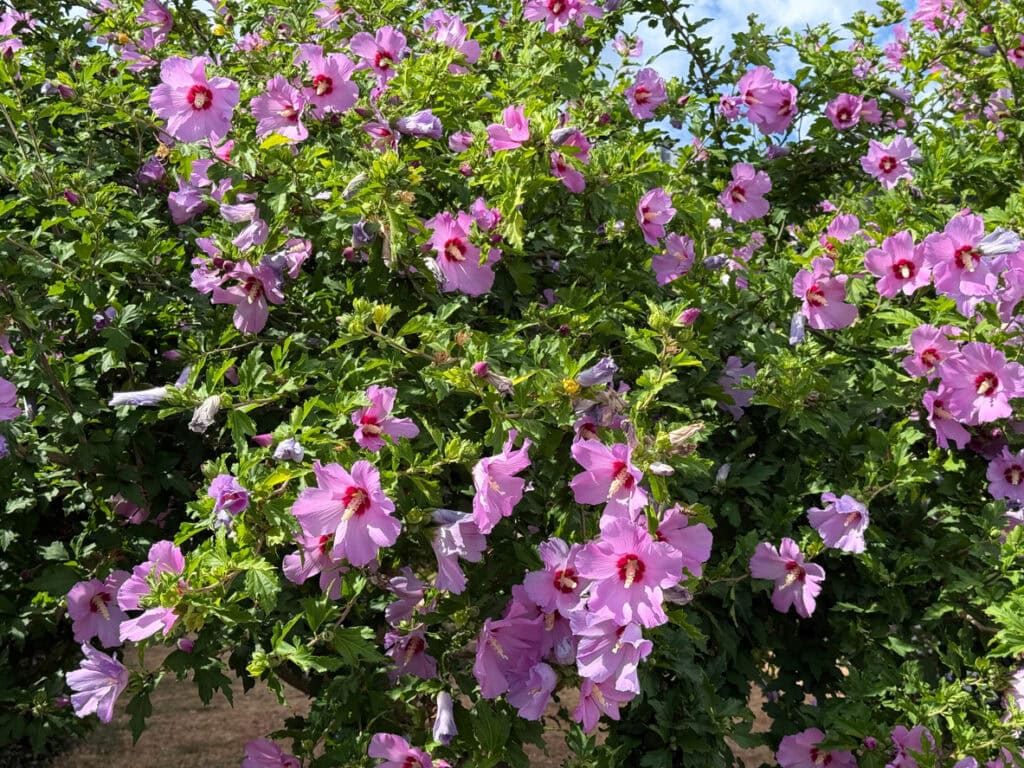
This shrub wins the award for the longest winter nap in history. You might stare at those ashen twigs in April and assume the worst.
It takes a lot of heat to wake up. So it’s no surprise that many gardeners reach for the shovel too early. Yet, patience pays off. Once the soil warms consistently, buds finally pop out. It’s a late bloomer by design, not by disaster. Give it until June before you consider a replacement.
Quick tip: Don’t give up on it until at least late May or June, it’s one of the last shrubs to leaf out.
If you’re ever unsure what you can safely cut back early in the season, we put together a guide on shrubs you can prune before spring growth starts.
3: Butterfly Bush

Dead wood often dominates the silhouette in early spring. New life usually emerges from the very base of the plant rather than the old tips.
This creates a confusing visual where the top looks toasted while the bottom hides a secret. Pruning these stalks back to a few inches clears the path for fresh stems.
Quick tip: I cut mine back hard every spring (to about 6-12 inches), and it always comes back fuller.
4: Bigleaf Hydrangeas

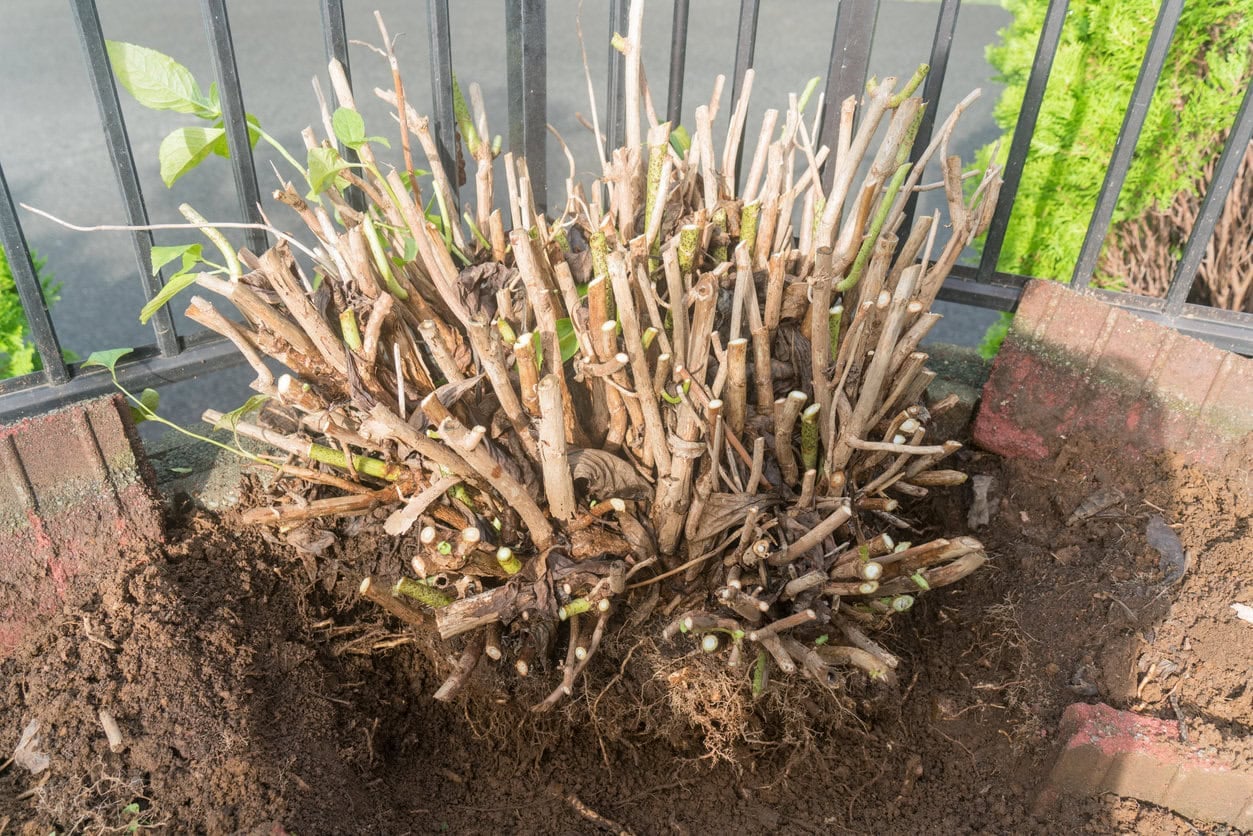
If you have bigleaf hydrangeas, you’re likely used to peeling bark and snapped twigs in the spring. It looks like a candidate for the compost heap. It lacks the fleshy stems of other summer favorites, giving it a bit of a goth appearance instead.
Its woody branches are tougher than they look, protecting dormant buds from late frosts. You might see zero activity while your tulips are already fading. And although the wait feels eternal, those bare sticks eventually push out fresh leaves and blooms.
Quick tip: Many of these hydrangeas bloom on old wood, so resist the urge to cut everything back too soon. Trust the bark; it’s doing more than it lets on.
We explain exactly when and how to prune hydrangeas (and which ones you should leave alone) in a full guide if you want to avoid losing blooms.
5: Hardy Hibiscus

Here’s a plant that disappears completely, leaving only a few hollow straws behind. This perennial dies back to the ground every single winter.
It looks entirely erased from the map, canceled, the ultimate garden ghost, showing no signs of existence… until the end of May. So, don’t accidentally plant something else right on top of its crown.
Once the heat kicks in, thick shoots spear through the mulch with incredible speed. It grows several feet in a matter of weeks once it finally starts. It’s not dead, it’s just a very heavy sleeper.
If you want to keep it thriving once it finally shows up, we also wrote a guide on how to keep hibiscus blooming all season long.
6: Russian Sage

Silver stems and dusty textures give this plant a permanently dehydrated look. It resembles a fossilized remnant of a Mediterranean shrub during the spring thaw. The airy structure does provide winter interest, but it looks bleak once the snow melts.
Its dusty appearance is just a clever disguise anyway. What else would you expect from a rugged survivor that thrives in the hottest, driest corners of your yard?
Quick tip: If you look closely at the very bottom of those pale stalks, you’ll see teeny tiny, green nubs. Cut the old growth back so the plant can focus its energy on them.
Some perennials really don’t like being cut back too early, and we cover those in a guide on plants you should never prune in early spring.
7: Vitex
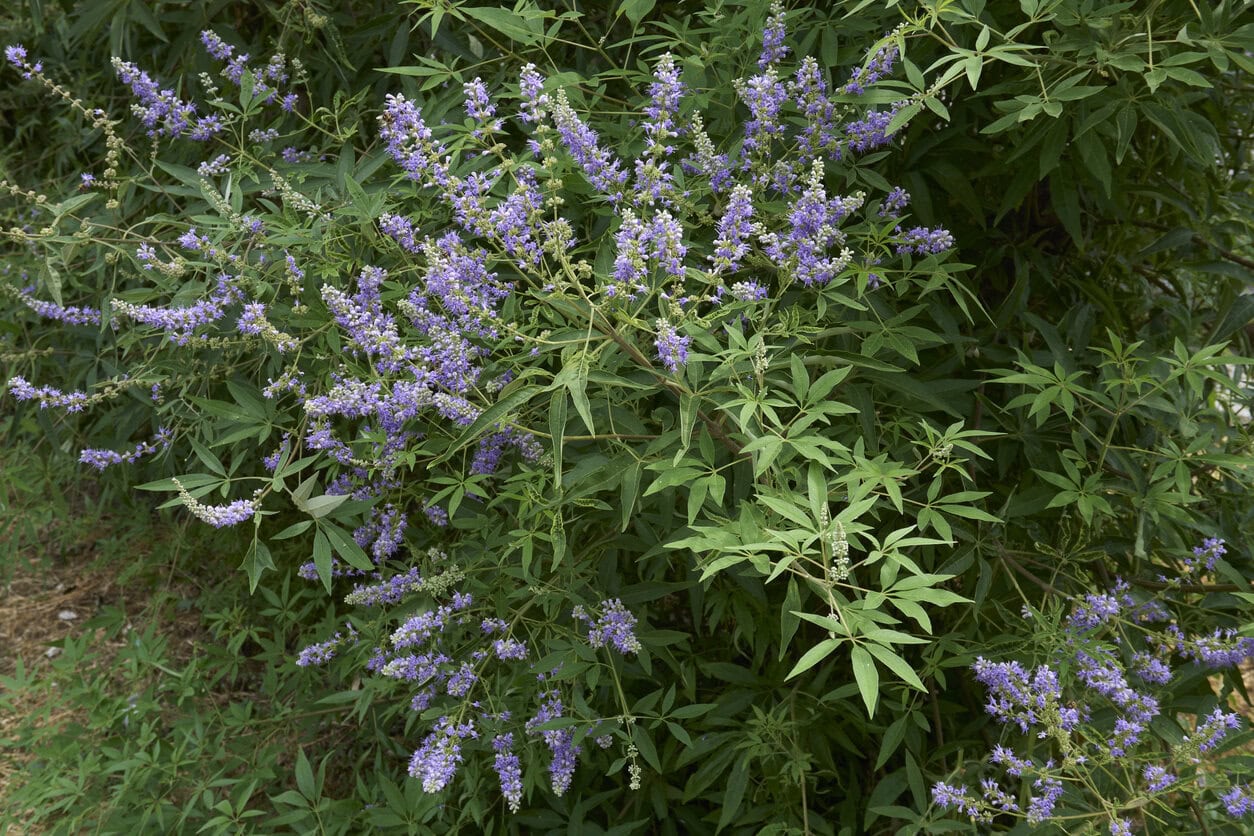
Stiff and gray in spring, Vitex, also called Chaste Tree, looks worthy of the Addams Family garden. It’s easy to mistake its slow start for a total failure of the root system.
And yet, it just craves consistent heat and full sun to wake up. Once it does, it produces stunning purple spikes that bees can’t resist. Morticia would be mortified by its summer comeback.
8: Joe Pye Weed

Towering stalks from the previous autumn stand like brown monuments to a forgotten season. This native giant leaves a very obvious, very dead-looking footprint in the back of the border.
Because it grows so tall, its absence in early spring feels particularly noticeable. The ground stays flat and empty while everything else is sprouting. It waits for the soil to warm up before sending out its purple-tinged shoots.
By late summer, it will tower over your head once again. This plant teaches us all that a slow start leads to a big finish. Wink, wink, Joe Pye.
9: Crape Myrtle

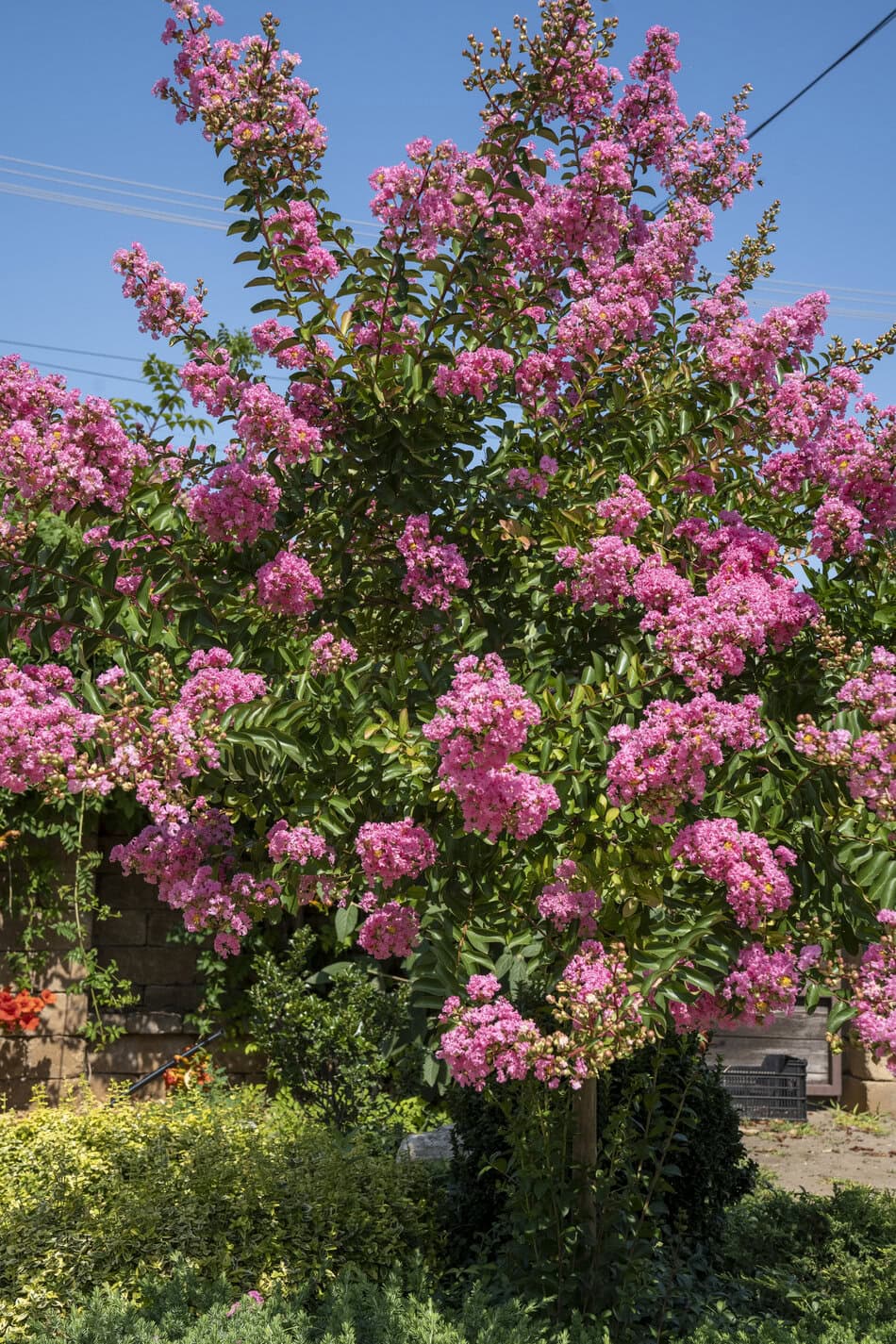
This tree loves a dramatic pause. As spring rolls in and everything else is leafing out, crape myrtle just stands there like a bundle of smooth, gray sticks. No buds. No clues. Nothing to calm your nerves.
It waits for real heat before doing anything at all. Then, almost overnight, it wakes up and starts pushing fresh growth like it was never a problem.
How to Tell If a Plant Is Actually Dead (Before You Panic)
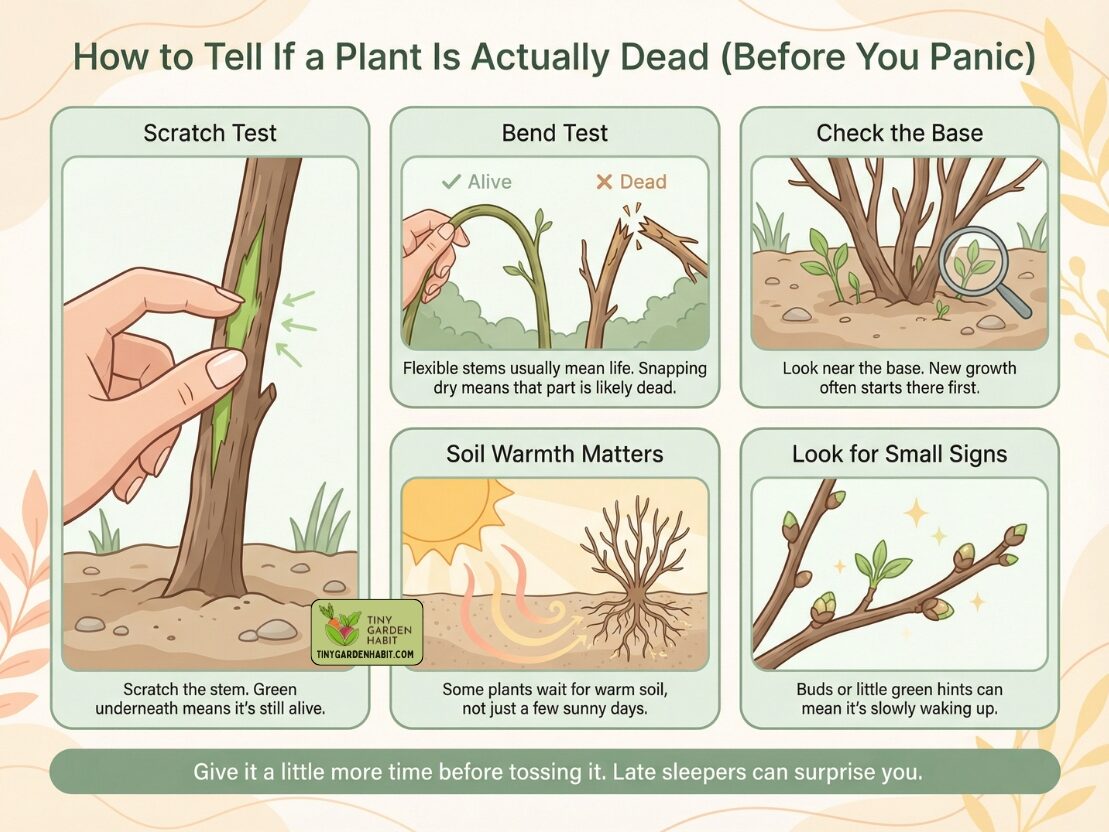
Some plants just enjoy the drama. Before you grab the shovel and declare a funeral, there are a few quick ways to check if there’s still life hiding under the surface.
Before you toss it, give it a little more time. You might be pulling out something that was just about to prove you wrong.
The Ultimate False Alarm
Just imagine spending three months playing dead, only to watch a gardener panic with a shovel. Perhaps Mother Nature made the ultimate April Fool’s joke, but you’ll get the last laugh.