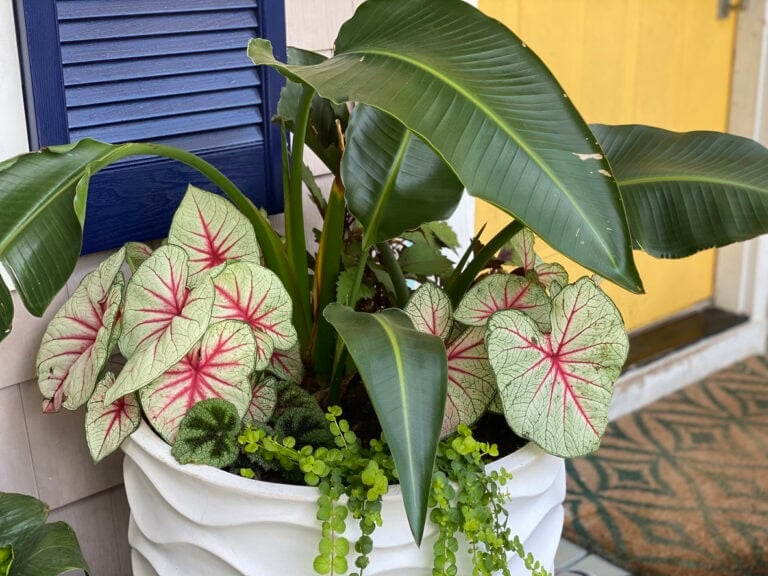
Is your garden looking a bit… chunky? Nature called, and it wants a makeover. You’ve got perennials? Ground covers? Shrubs? Sorry, you can’t escape your April destiny.
Multiplication by Division
Be the hero your plants need. They’re currently fighting for legroom like passengers in a budget airline cabin.
Quick note: This list is mainly for gardeners in USDA Zones 5-8, where April is prime dividing time. If you live in a colder zone, wait until your soil is workable and new growth has just started. In warmer zones, you may need to divide earlier, before the heat kicks in.
1. Hostas (Divide every 3-5 years)
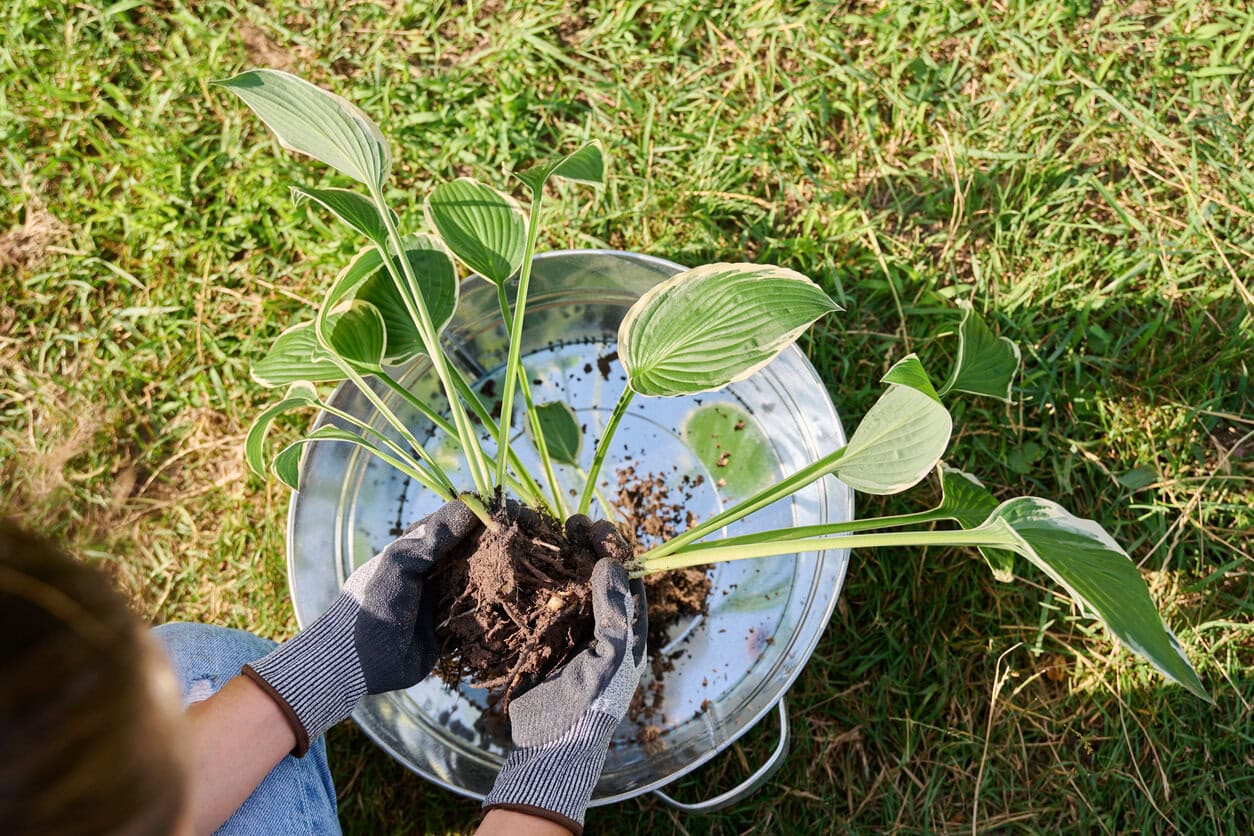
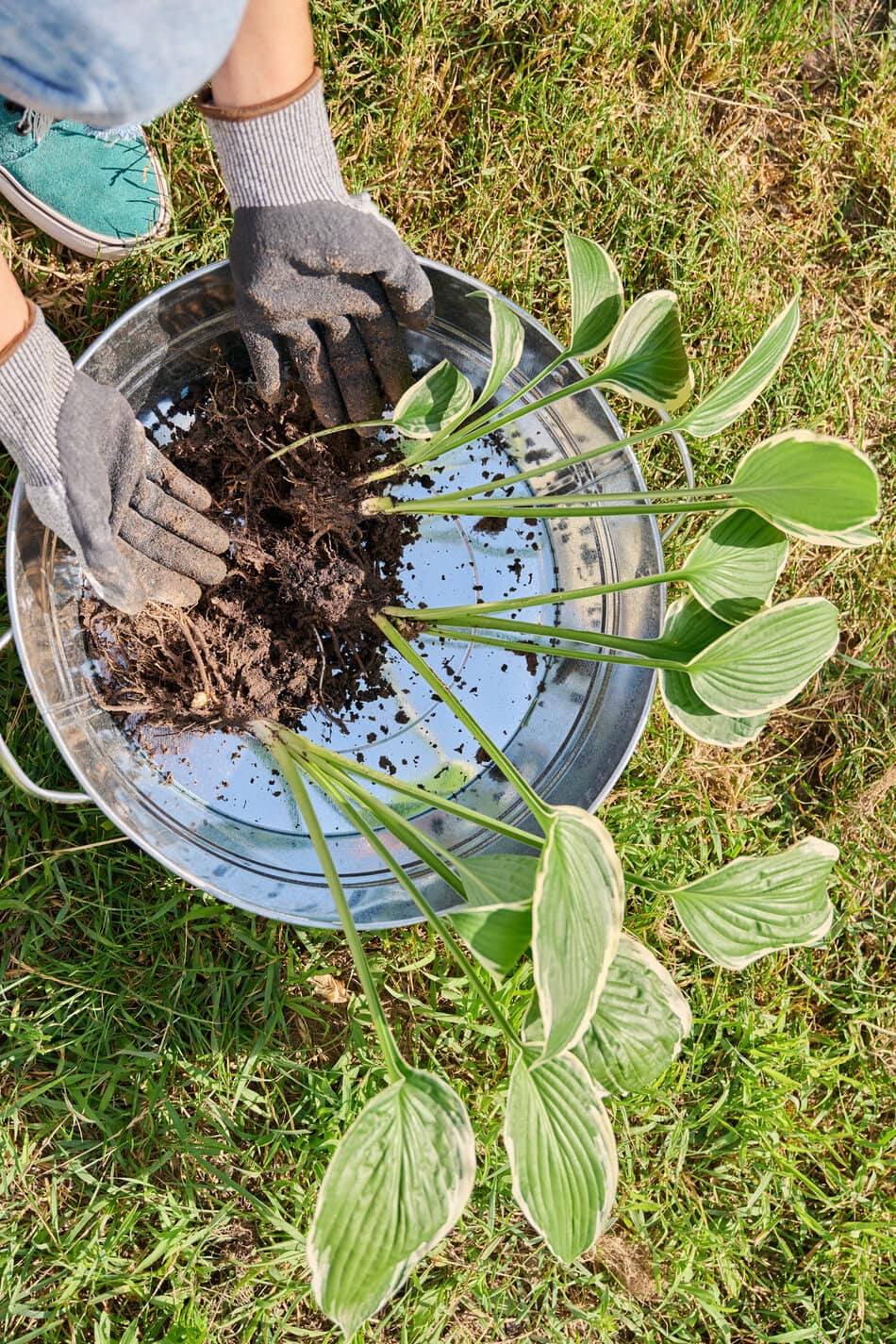
April offers a tactical advantage because the emerging “eyes” are a roadmap for your blade. You can clearly see where the crown is strongest before the leaves hide the everything below.
Don’t be gentle. Lift the entire root ball out. Grab a sharp spade (or a serrated Hori Hori knife) and slice straight through that rubbery center.
Every chunk needs two or three healthy eyes and a decent tangle of roots to stand a chance.
Quick tip: Replant them at the exact same depth they were growing before. Burying the crown too deep leads to rot. Leaving it too high will dry out the roots before the first June heatwave.
If you’re not sure which plants you can safely split right now, I put together another guide on perennials you can divide in early spring (and which ones to leave alone).
2. Ornamental Grasses (Divide every 3-4 years, or when the center dies out)
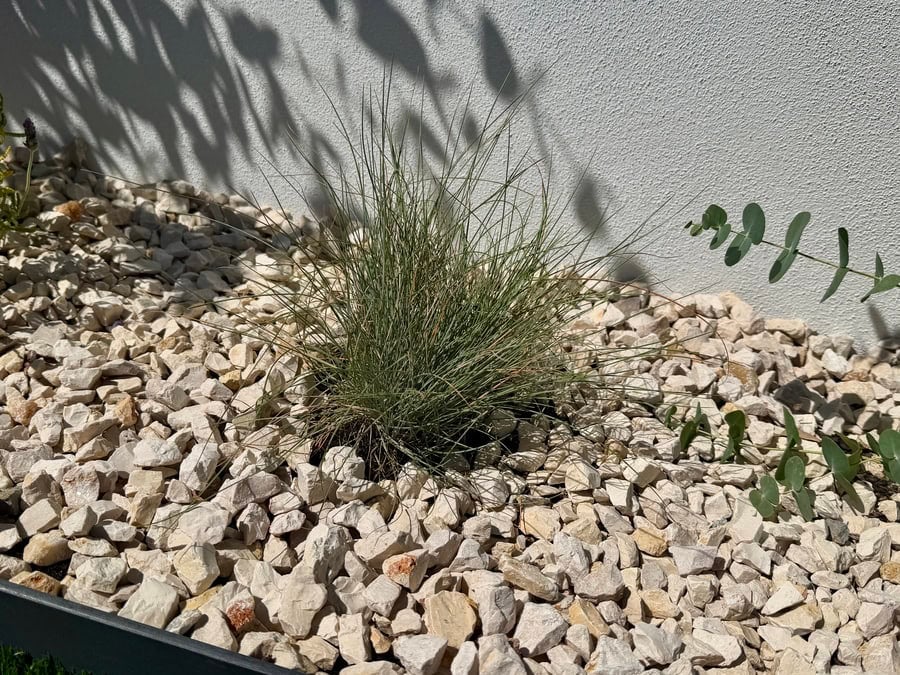
Many ornamental grasses eventually develop a dead center where the plant has choked itself out. Skip dividing, and you’ll end up with a weird green donut.
This works best for cool-season grasses like feather reed grass or fescue. If your grass hasn’t started growing yet, wait a few weeks before dividing.
Dig up the entire clump, then drive your spade straight down through it to split it into sections. Once it’s in pieces, you can easily spot and remove the dead, woody middle.
Toss that dead center into the compost, and replant only the vigorous outer sections.
Quick tip: Sharpen your shovel. You’ll need the leverage because the center of an old grass clump is basically concrete-level hard.
While you’re at it, I also cover what to cut back in April so your garden doesn’t get out of control.
3. Daylilies (Divide every 3-5 years, or when flowering declines)

Stick to clumping hybrids like Stella de Oro. Force two forks into the middle and pull in opposite directions. It takes some muscle, but those tangled tubers will eventually split.
You’re looking for fans (the individual leaf clusters). As long as a chunk has one fan and and a healthy set fleshy root, it’s a viable plant.
Quick note: If you have ditch lilies with orange, trumpet-shaped flowers, be careful. They spread aggressively via aggressive underground rhizomes, and dividing them just helps them take over faster. Only divide if you actually want more, or consider removing them if they’re getting out of control.
And if you want more blooms later on, we explain how to encourage repeat blooming in daylilies in another guide.
4. Coral Bells (Divide every 2-3 years, or when stems get woody)

Heuchera’s colorful mounds look great until they start heaving out of the dirt. That exposed woody stem leaves the plant vulnerable to heat and drying out in summer.
Break off the small green shoots at the base of that leggy stem. Some may already have tiny roots while others won’t have a single root yet, but they’re tougher than they look.
Discard the old plant. It’s exhausted and prone to rot. Replant your new offsets in its place and bury them deep enough in damp soil so the crown sits just at soil level.
This is part of a bigger pattern, and I talk more about which perennials you should thin in early spring for stronger growth here.
5. Bee Balm (Divide every 2-3 years)
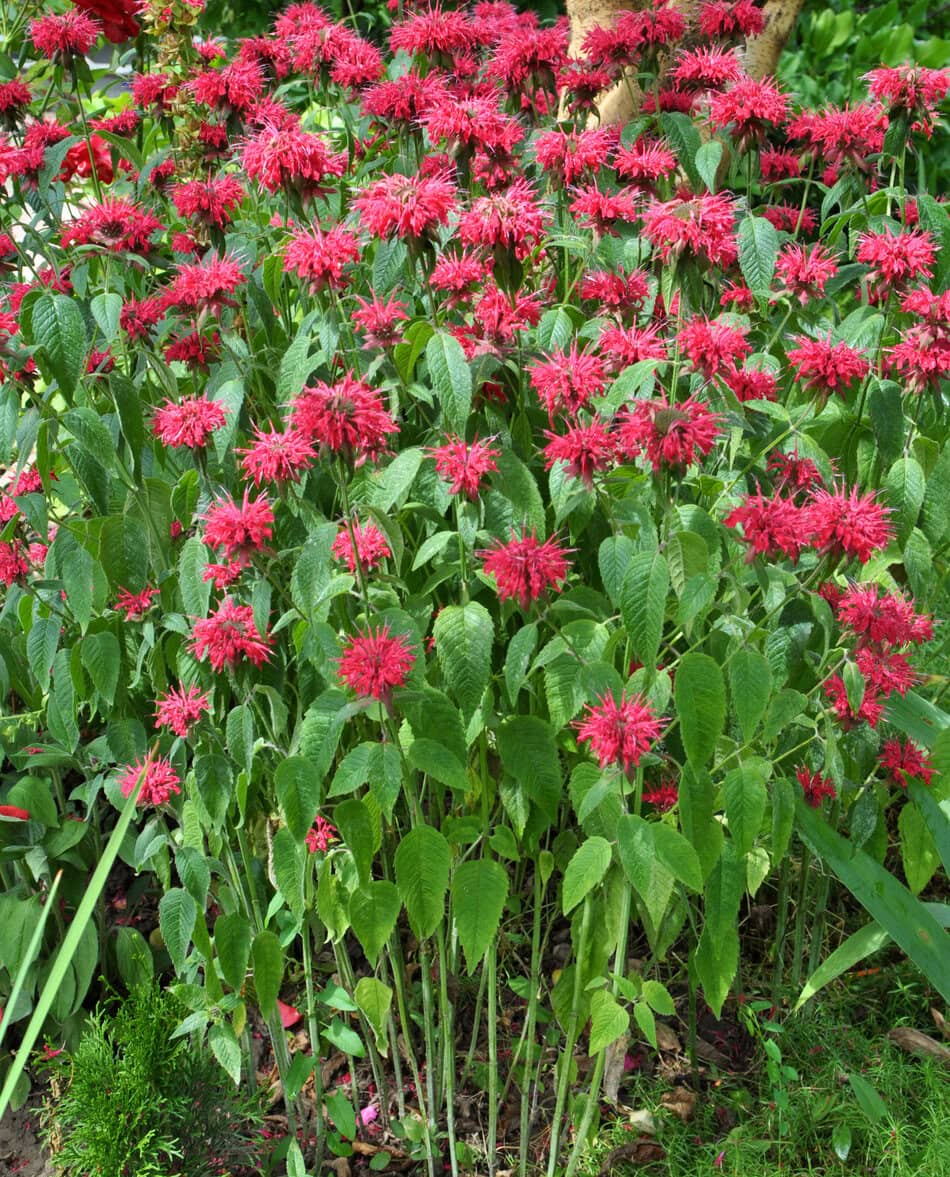
With Monarda, stop looking at the leaves and start looking at the roots. It spreads via shallow spaghetti-like runners.
In April, dig up the whole plant and select the strongest-looking white runners that have at least one green bud showing. Discard any weak, woody, or overcrowded sections.
Tuck baby Bee Balms into a fresh spot with plenty of sun, at least 18 inches apart.
Quick tip: Don’t make the mistake of replanting them in the old hole without adding compost. They’ll just inherit the same problems the mother clump had.
6. Sedge (Divide every 3-4 years, or when the center starts thinning out)

Even adaptable, low-maintenance, grass-like sedges can get overcrowded over time. Once their root mass gets too tight, the center starts browning out and the whole fountain look collapses.
Since sedge roots are shallow and fibrous, you don’t need a backhoe or a power saw. Just lift the clump of your Carex plant with a trowel and pull it apart with your hands like you’re breaking up a loaf of sourdough.
Every piece needs a bit of the crown, where the thin blades meet the roots.
Quick tip: Space these mini-divisions about eight inches apart. They’ll gradually knit together into a dense, weed-suppressing carpet.
7. Stonecrop (Divide every 3-4 years, or when clumps flop open)

Tall, beefy varieties like ‘Autumn Joy’ are drought-tolerant water balloons on sticks, built to ignore neglect. That is, until an undivided clump gets top-heavy and flops open.
This April, dig up the entire mound and slice straight through the root mass with a sharp knife. No need to be surgical. Sedum is remarkably hard to kill. You can even shove a broken stem into the dirt and it’ll root as long as it has a node.
Replant them in the sunniest, driest spot in your yard and walk away.
8. Lamb’s Ear (Divide every 2-3 years, or when the center becomes woody or sparse)

Dividing your Stachys byzantina in April isn’t just about freebies, though they’re a nice bonus. It’s about giving the plants breathing room so they don’t rot in July.
Since it’s a shallow spreader, you can usually just peel the outer sections away from the main mat with your bare hands. Space the new divisions about 12 inches apart.
Quick tip: You don’t need the woody center of the original clump anymore. It’s prone to rot and won’t give you that lush carpet look.
April Division Survival Guide
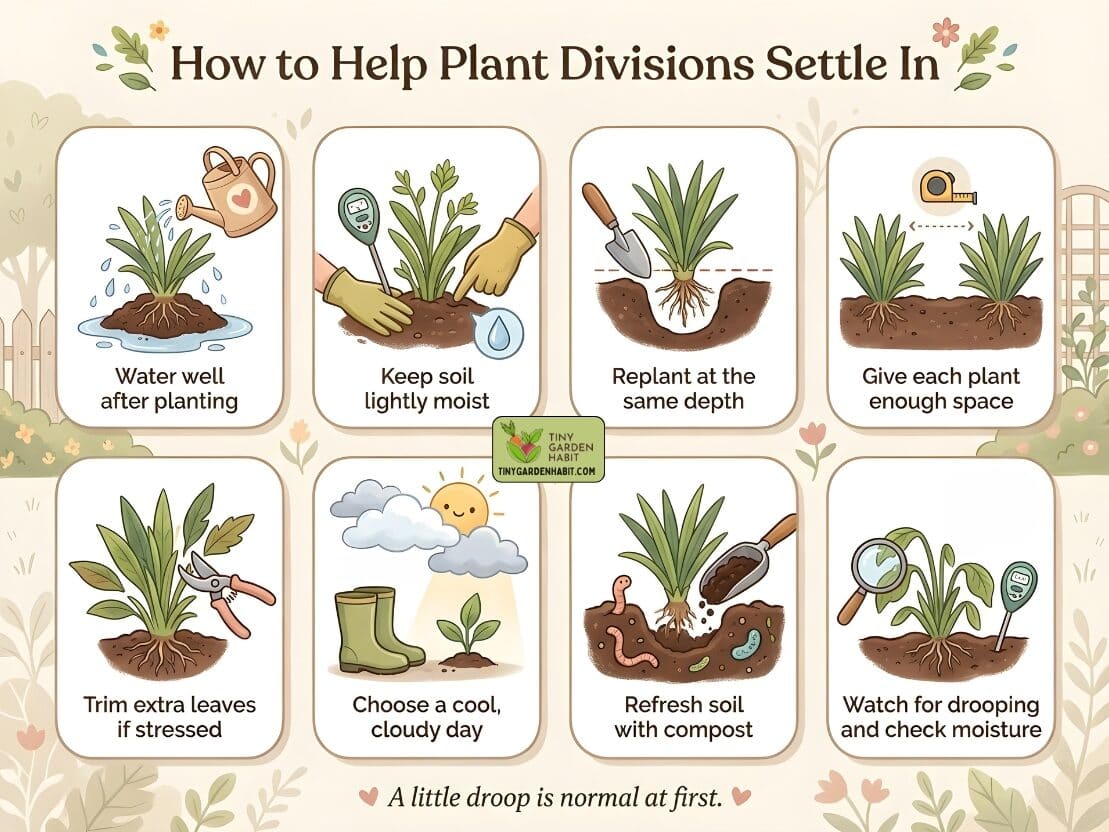
You just sliced your plants in half. Now don’t abandon them like nothing happened.
Treat them right for a couple of weeks, and they’ll bounce back like nothing ever happened; just smaller, stronger, and ready to take over their new space.
If you’re filling in new space too, I also put together a guide on what flowers to plant in April by zone.
Thrill of the Till
Plants are terrible roommates. They don’t share space. They fight for it until someone ends up covered in mold and someone is crying into muddy gloves. Tear those clumps apart now. Your plants get a fresh start, and you get free greenery. Everyone wins, except the weeds.