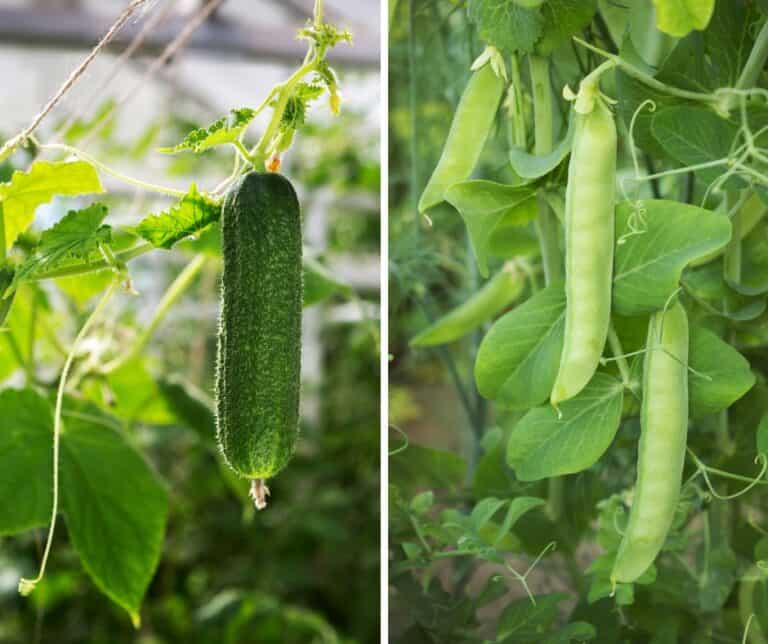
Indoor peppers exist for two types of people: those living in the Northern US, and those with a Slavic grandma who considers an unstuffed vegetable a personal affront.
So let me help you grow a crunchy harvest that satisfies even the sternest matriarch and her legendary stuffing recipes.
If you’re experimenting with indoor gardening, we also put together a guide on vegetables that grow well in pots and containers, which includes several crops that thrive indoors just like peppers.
Starting Your Em-Pepp-ire

Growing bell peppers indoors is for gardeners who demand Vitamin C by the bucket and follow some bell-ievable advice:
Now, p(r)epper to play God for the sake of salsa.
If you like making your own mixes, we also wrote a guide on homemade seed starting soil for a stronger start, which works great for peppers and other vegetables grown indoors.
Glowth Requirements

A south-facing window can provide some of the light bell peppers need, but indoor plants often become leggy without stronger lighting.
If you live further north (or have modern window coatings), that glass becomes more of a bottleneck than a gateway for sunlight. In that case, you’ll need a full-spectrum LED grow light about 6-12 inches above the canopy.
Quick tip: I suggest you keep the lights on a timer for 12-14 hours a day because artificial light is weaker than direct sun. Your electricity bill might jump, but a store-bought pepper costs a fortune anyway.
If you’re growing peppers in pots, we also put together an article about simple tricks that help peppers grow bigger in containers, many of which work just as well indoors.
Heat Waves Vs. Cold Shoulders
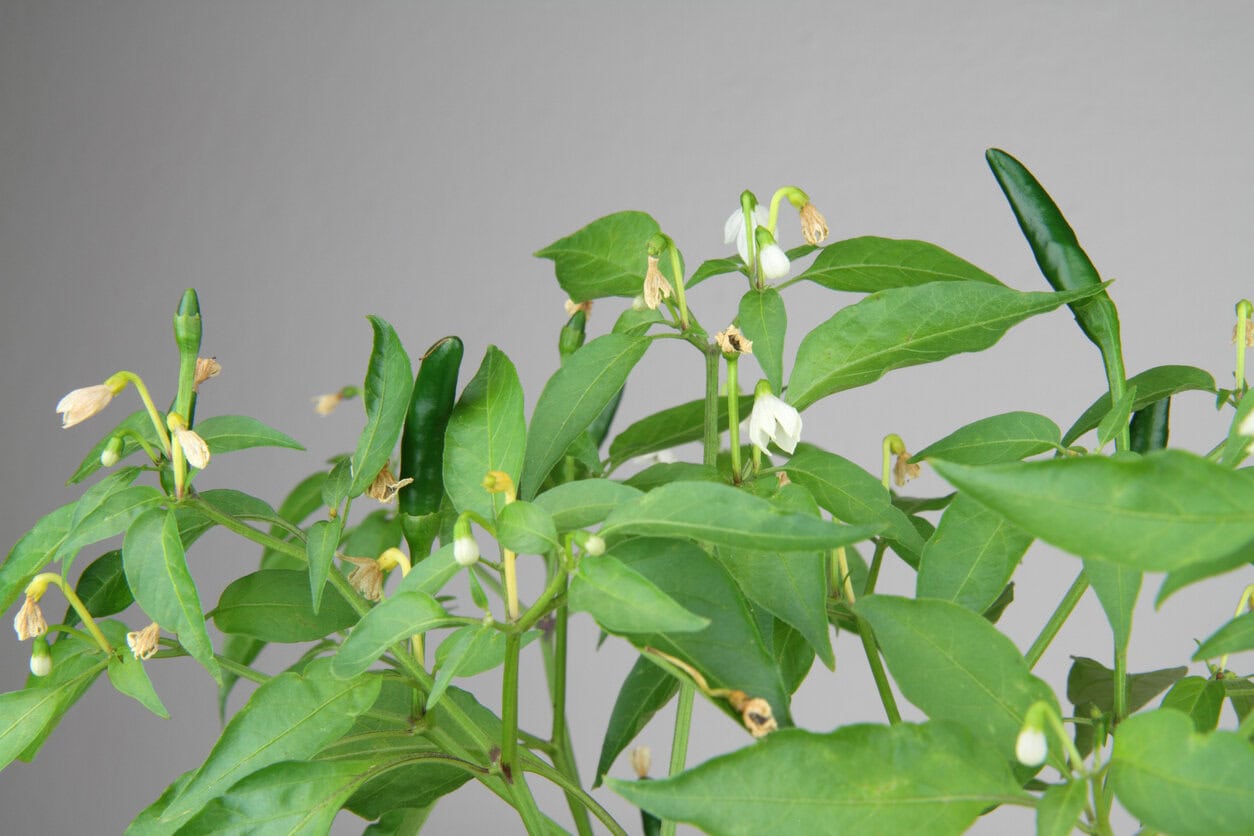
Peppers need that 70°F to 80°F warmth while the sun is up. But at night? Try not to let the room drop below 60-65°F. If the air gets colder, your bell pepper panics, goes into energy-saving mode, and straight-up yeets its flowers onto the soil.
Drafty windows are silent killers that chill the soil and stall nutrient uptake. I suggest using a heat mat under the pot if your floor is cold.
Watch the humidity levels, too. It influences whether your plant actually sets fruit, because parched air shrivels the pollen while a swampy room makes it clump together.
Quick tip: Place a humidifier nearby and dial it between 50 and 60 percent.
Shear Brilliance

When your plant hits about 6-8 inches tall, pinch off the growing tip. This may feel wrong, but it encourages thicker stems and branching instead of the plant shooting straight toward the ceiling.
Once peppers start forming, the branches can get heavy fast, so a small stake or tomato cage helps keep everything upright.
Snipping away yellowing leaves isn’t just for looks, either. It improves airflow, discouraging fungi, and lets light actually reach the center of the plant.
Quick tip: I also like to pluck early flower buds that show up before the plant’s frame is sturdy. A tiny plant wasting energy on a premature pepper often ends up smaller overall.
If you want to go deeper into pruning, we also wrote a full guide on the easiest way to prune pepper plants for higher yields.
Water You Waiting For?
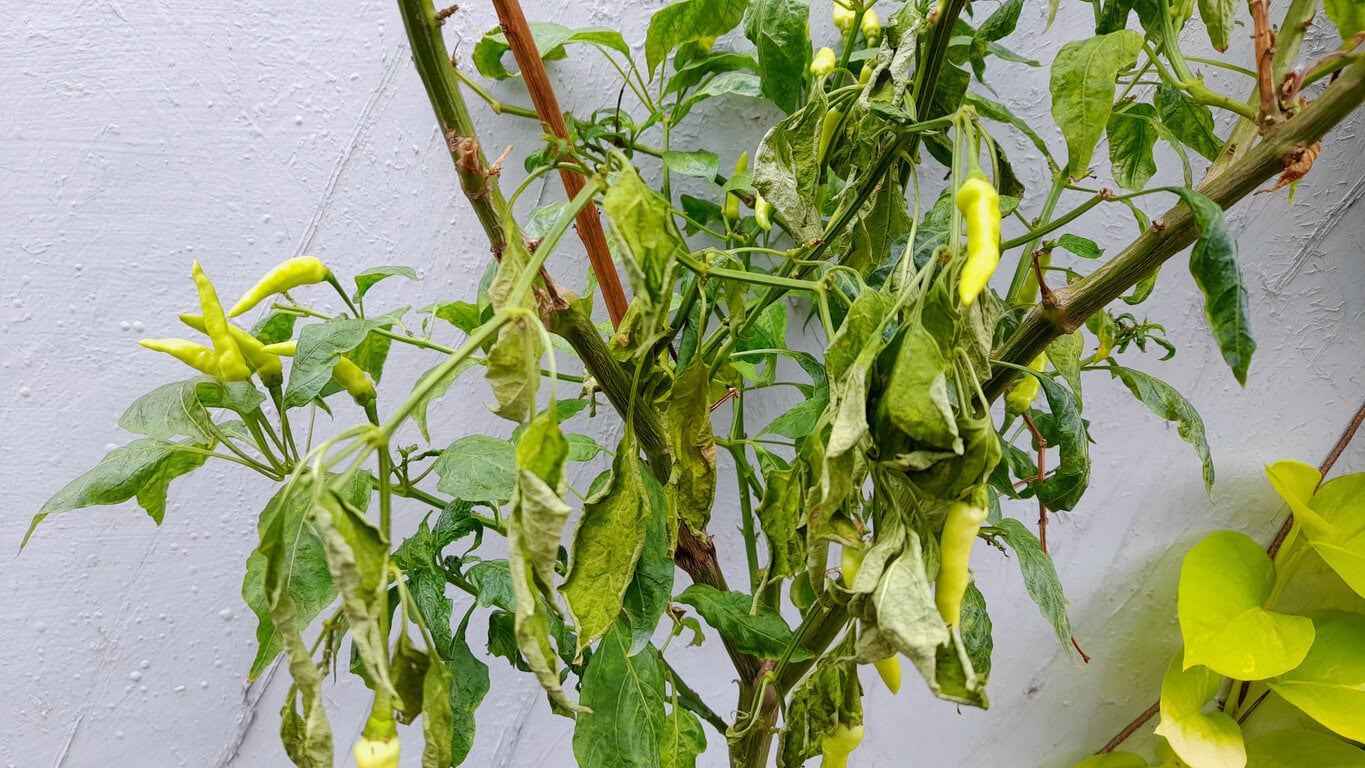
Ever seen a bell pepper with stretch marks? That cracked skin is a sign of a thirsty plant getting a sudden deluge. The insides expand before the skin can keep up. Keep the soil moisture consistent to prevent the implosion.
Test the soil two inches down. If it feels dry, pour water slowly until it escapes the drainage holes. You want to ensure the roots at the bottom aren’t left out. Empty the tray right away. Sitting in a puddle rots the roots and turns leaves a sickly yellow.
Quick tip: Stick to room-temperature water, since very cold tap water can briefly slow root activity.
If watering schedules are confusing, we also explain how to properly water indoor seedlings and how often they actually need it in another guide.
Feeding Schedule
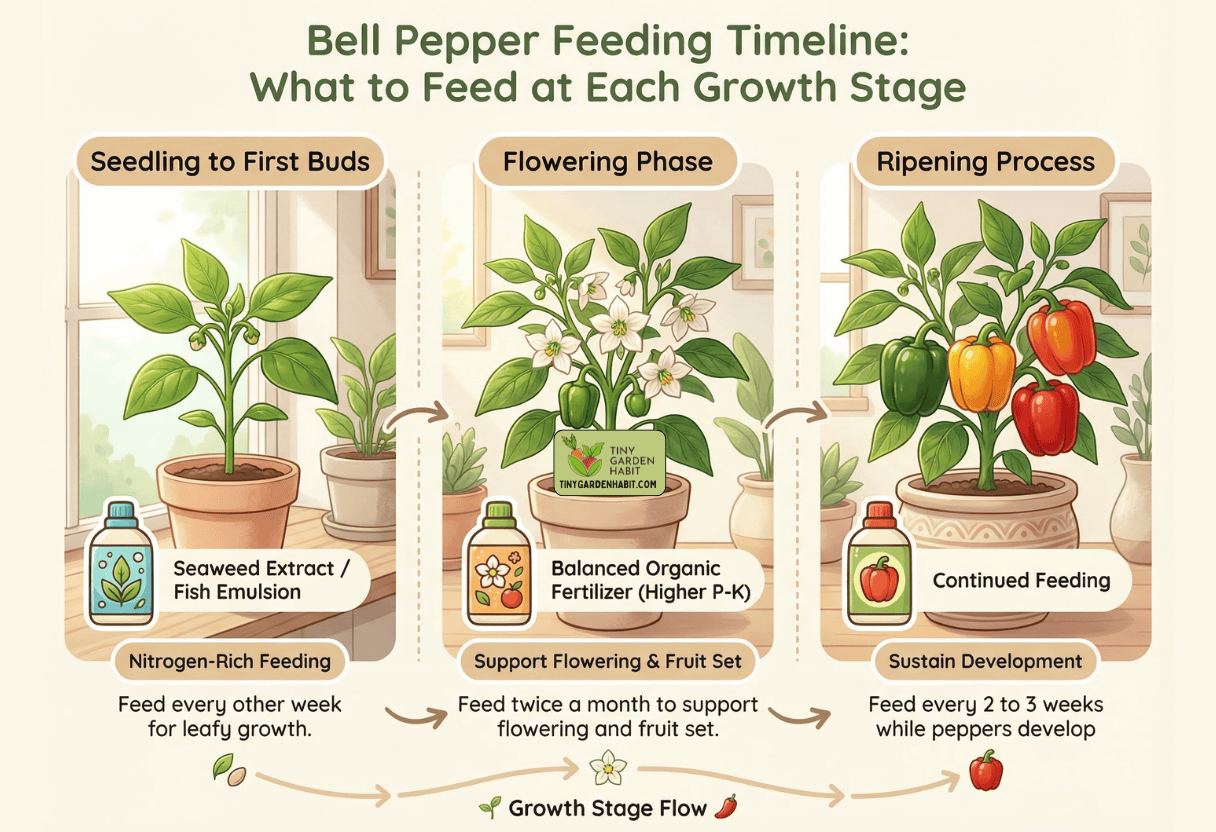
Feeding your bell pepper is a game of phases:
Feed it well and your pepper plant will return the favor with a harvest worth bragging about.
The Pest Patrol

Expect company. Aphids and gnats treat indoor peppers like a private deli because no ladybugs exist in your house to crash the party.
Hit those bugs with neem oil or castile soap as soon as you see sticky leaves. Put yellow sticky traps in the soil to keep gnats from spreading to your other plants.
If your pepper plant starts showing other strange symptoms, we also wrote a guide covering the most common pepper problems and how to fix them quickly.
The Pep(per) Talk
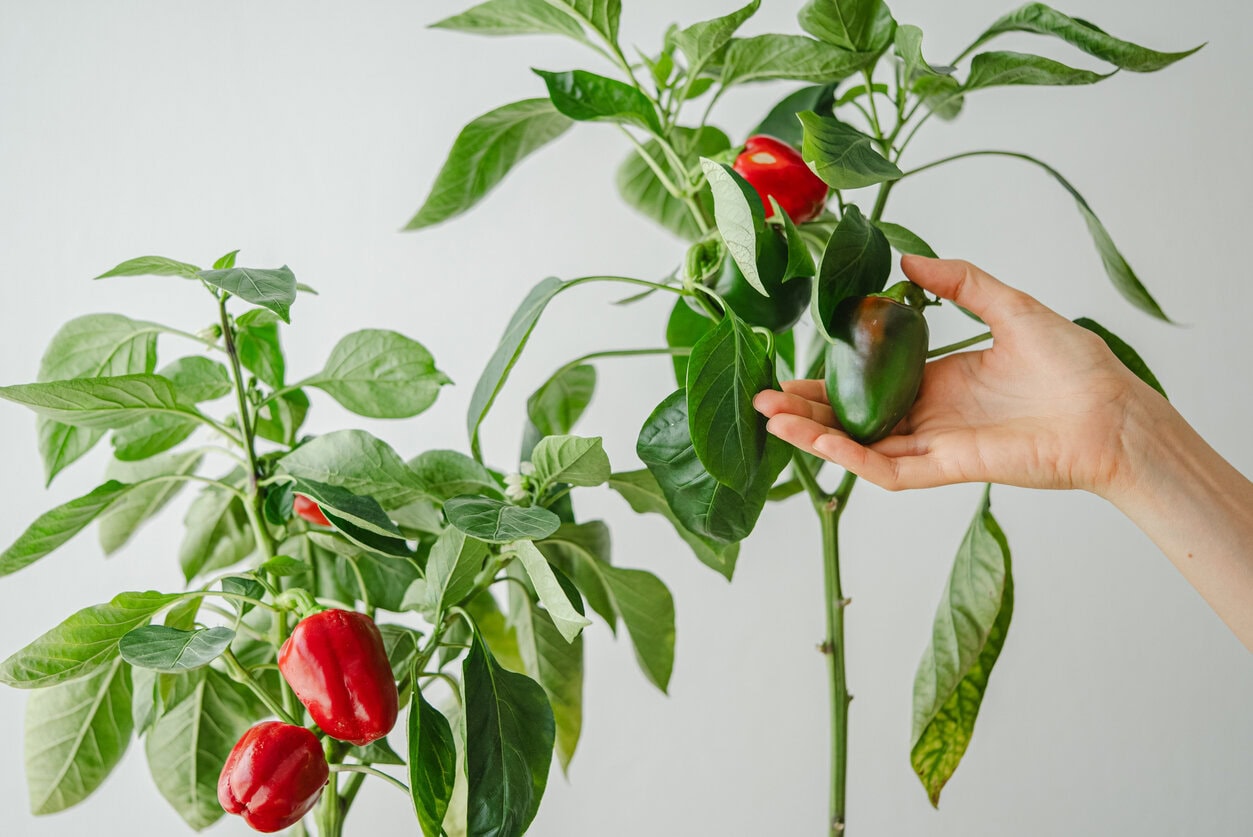
The prep is over, and you’re ready! Your peppers and I are counting on you. And don’t let your grandma down. She’ll only find another way to weaponize vitamin C.