Nurseries just love it when you let overgrown clumps die out over winter. Be smarter. Split your perennials now while the soil still holds some remaining fall warmth.
Give them a couple of hours of your time and roughly four to six weeks to ancho before the ground freezes, or give your local nursery cash for replacements next spring.
9 Perennials You Can Still Divide In October
The USDA zones listed are our practical October guide. Other zones may still work if you have at least four to six weeks before the ground freezes.
1: Hostas (USDA Zones 6-9)
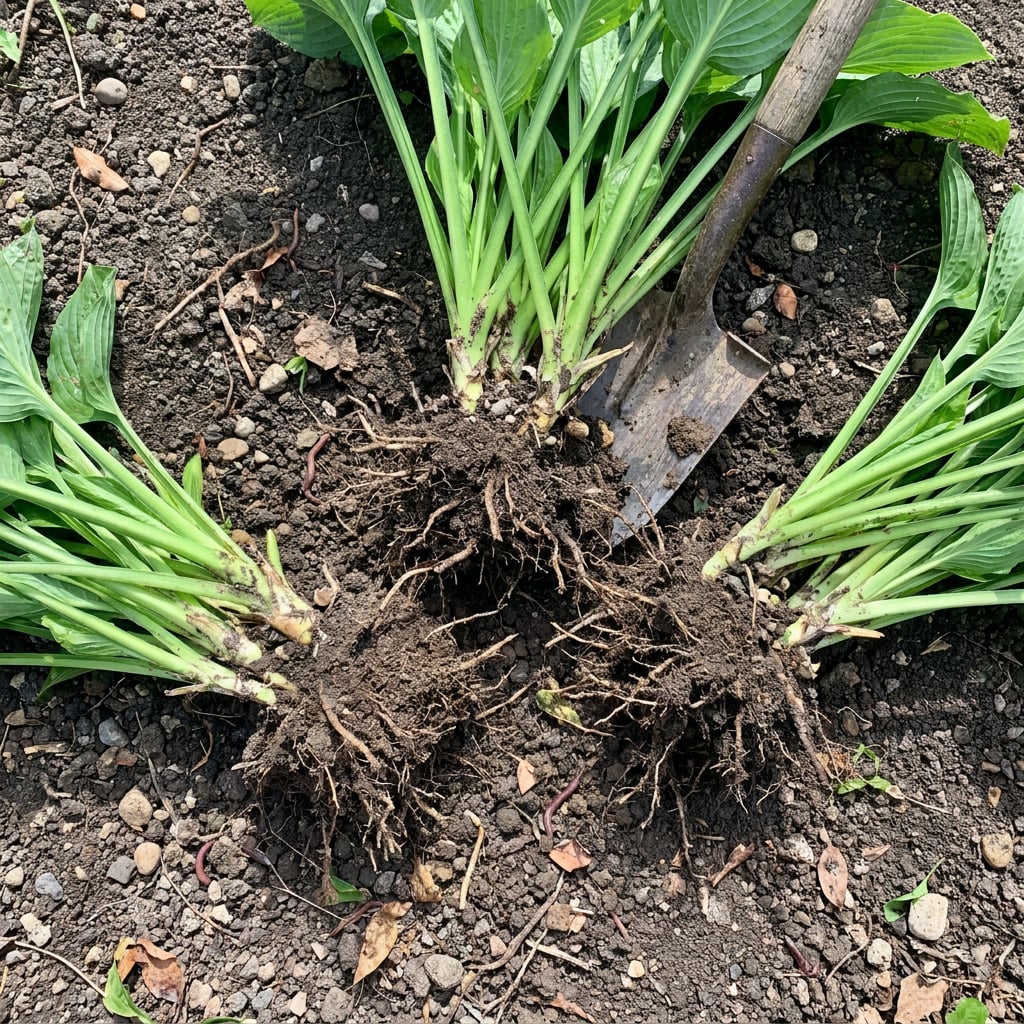
Slugging a shovel through massive hosta crowns requires brute strength, not delicate hand pruners. Hack those massive root balls into thick chunks, making sure every slice keeps a cluster of sturdy buds and heavy roots.
Skip any tiny, weak scraps because small pieces have a harder time establishing when hard freezes threaten.
Quick tip: Water the divisions thoroughly after planting, then add winter mulch once the soil begins to freeze to protect those freshly disturbed crowns from repeated freezing and thawing.
If you’re dealing with a seriously overgrown clump, we also wrote a full guide on how to divide hostas in fall for bigger, healthier plants next year.
2: Peonies (USDA Zones 5-8)
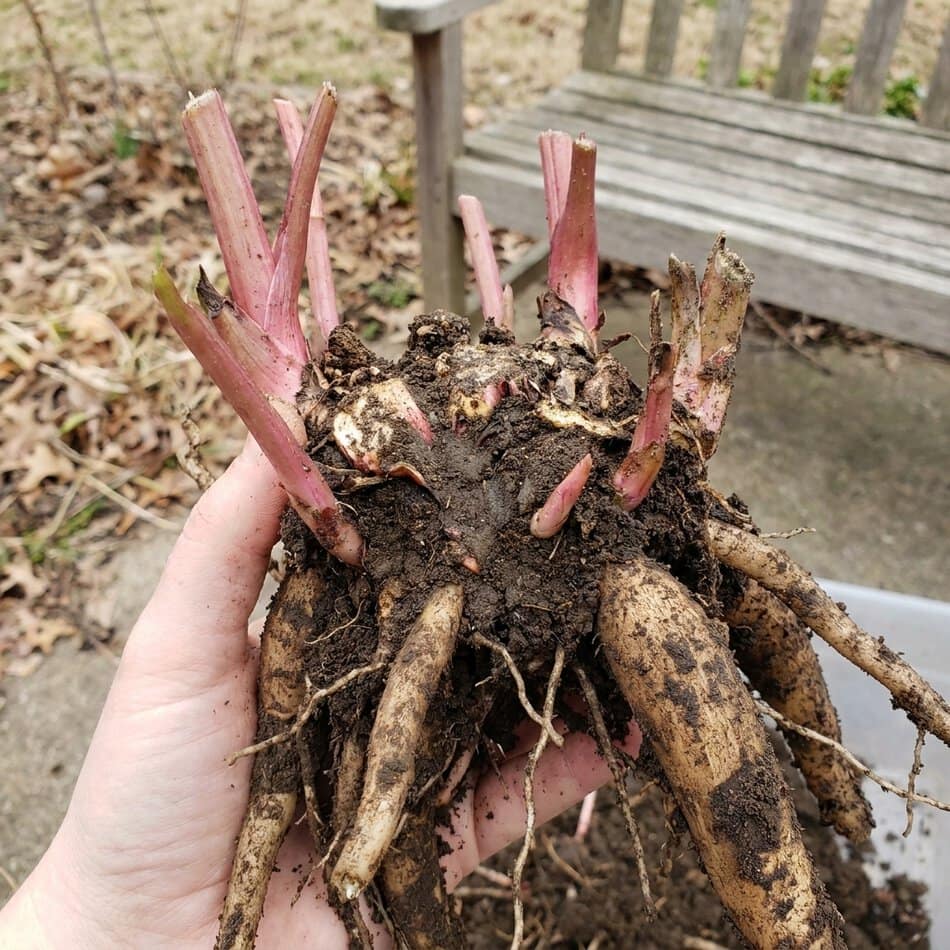
Massive peony crowns hide thick, fleshy roots that snap surprisingly easily once you start digging. Cut yellowing or frost-damaged stems close to the ground, then work a shovel well outside the crown and lift the whole root mass instead of chopping blindly through the center.
Shake or rinse away enough soil to expose the reddish buds, or “eyes,” along the crown. Slice the clump apart with a sharp knife and keep three to five healthy eyes and a solid chunk of root on every division.
Quick tip: Replant immediately with those eyes just 1 to 2 inches below the soil surface. Plant them much deeper and you’ll get a leafy overachiever that forgets to bloom.
We also put together a guide on the October peony tasks that can help set up bigger blooms next spring.
3: Brunnera (USDA Zones 6-8)

Digging up Brunnera macrophylla means treating its fibrous root system with reasonable caution. Water the surrounding soil first if it’s dry so the clump lifts without tearing away too many roots.
Work the crown apart using your fingers where it separates naturally instead of hacking straight through it, using a clean, sharp knife only on stubborn sections. Then press sturdy pieces into shaded ground with healthy roots attached and crowns sitting at the same level they were growing before.
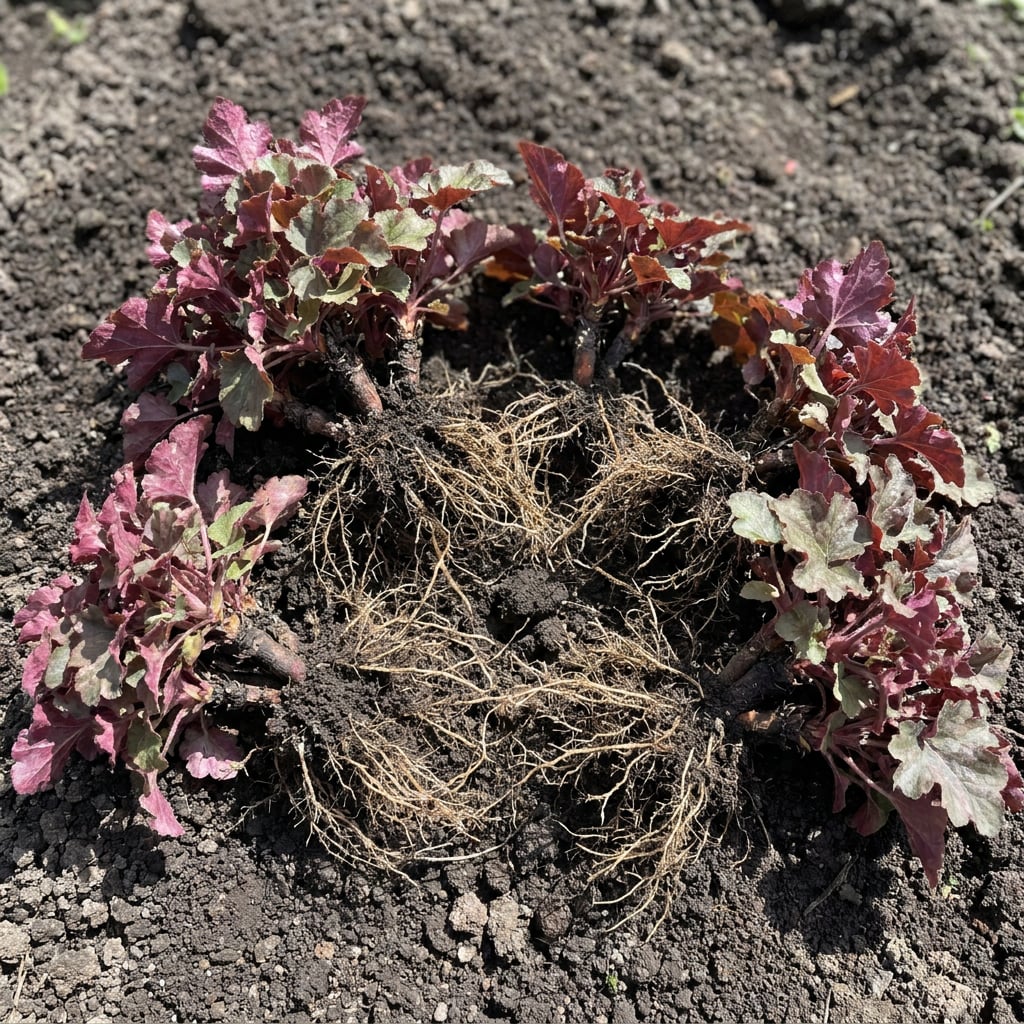
4: Coral Bells (USDA Zones 6-9)

Old Heuchera plants eventually rise out of the soil, exposing ugly, woody stalks. Sever the healthy, vigorous young outer shoots from the main mass and throw away any gnarled, declining sections in the center.
Tuck those fresh outer divisions back in with the crown at soil level and the bottom leaves sitting directly above the surface.
Quick tip: Strip off any tattered or damaged lower leaves before watering them in thoroughly.
5: Perennial Rudbeckia (USDA Zones 7-9)
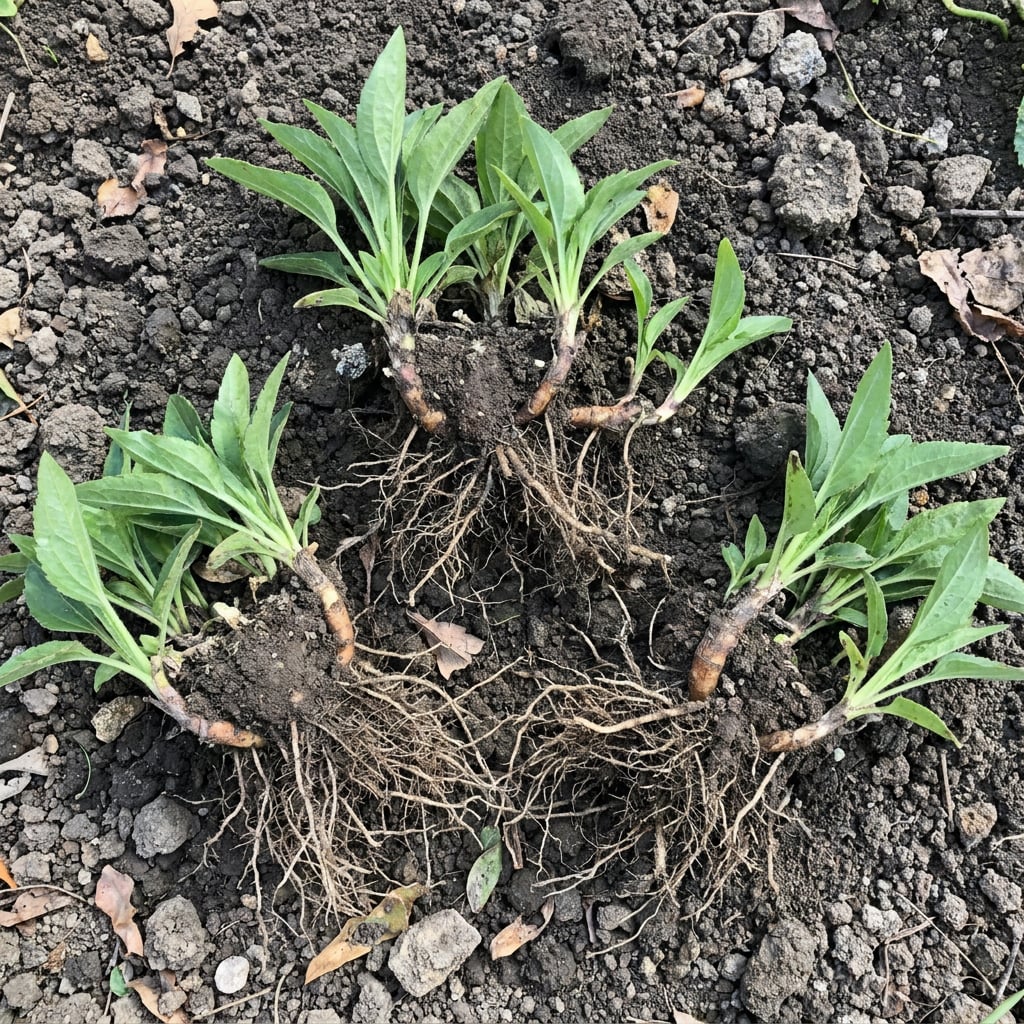
Ignore the short-lived black-eyed Susan types and focus purely on spreading clumps of Rudbeckia fulgida.
Pull apart or slice through healthy outer rhizomes, discarding any dead foliage or tired center growth, then press the divisions firmly back into well-drained soil. Stagger new placements about 12 to 18 inches apart (depending on the cultivar) to leave room for fresh spring spread.
Quick tip: Still flowering? Wait! There’s no need to chop down a perfectly good show. If winter is too close by the time it finishes, leave the dividing until spring.
If you’re unsure what else should keep flowering, we also explain which flowers to deadhead in October and which ones may still rebloom.
6: Lungwort (USDA Zones 6-9)
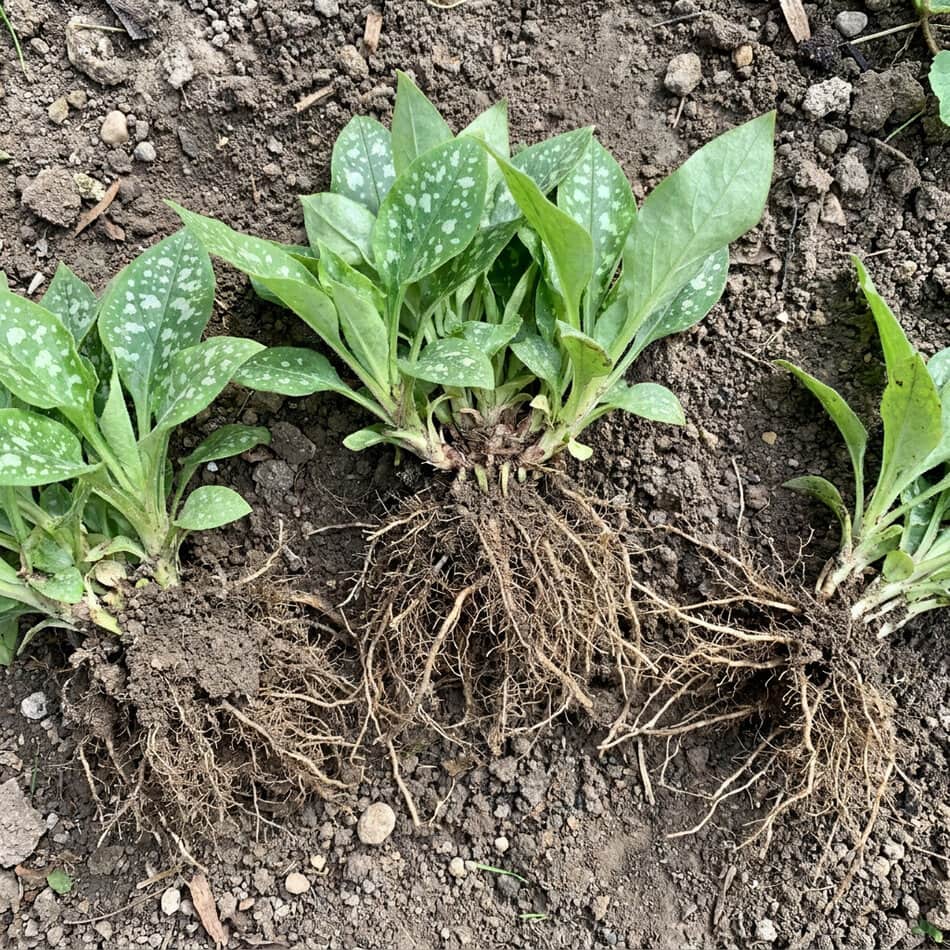
Lift the whole Pulmonaria clump carefully, then slice it apart with a sharp knife, keeping several healthy leaves and a solid portion of roots on every piece.
Replant the divisions ASAP at the same depth in moist, well-drained soil in shade, trim away any old or ragged leaves, then water thoroughly to settle the soil around the roots.
Quick tip: Never leave bare lungwort roots sitting in dry fall air. Keep lifted divisions shaded and damp while you work, and get them back into the ground quickly.
If you’re moving plants rather than splitting them, we also wrote a guide on 10 perennials you can safely transplant in October.
7: Foamflower (USDA Zones 6-9)
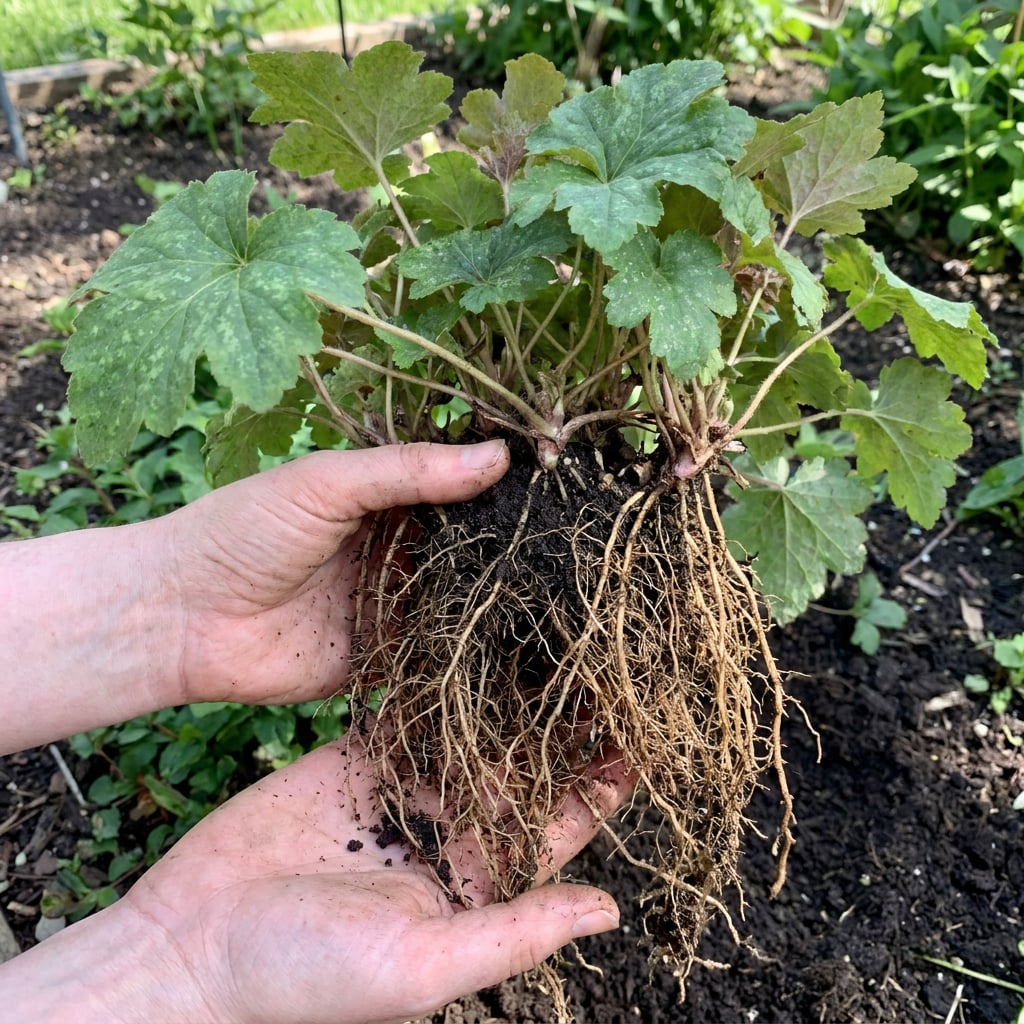
Tossing loose leaf clusters into fresh holes won’t get you far; Tiarella needs legitimate root mass to anchor. Target sturdy, rooted runners around the edges, or split off sections of an older clump that already carry healthy roots.
Settle those firmly rooted pieces into moist, humus-rich, well-drained soil in shade, keeping them at the same depth they were growing before. Press the soil gently around the roots and water them in thoroughly.
Quick tip: Got a long stolon with no roots yet? Don’t cut it loose. Leave it attached to the mother plant and pin it against the soil until it roots, then you’ve got another plant ready to move.
8: Daylilies (USDA Zones 6-9)
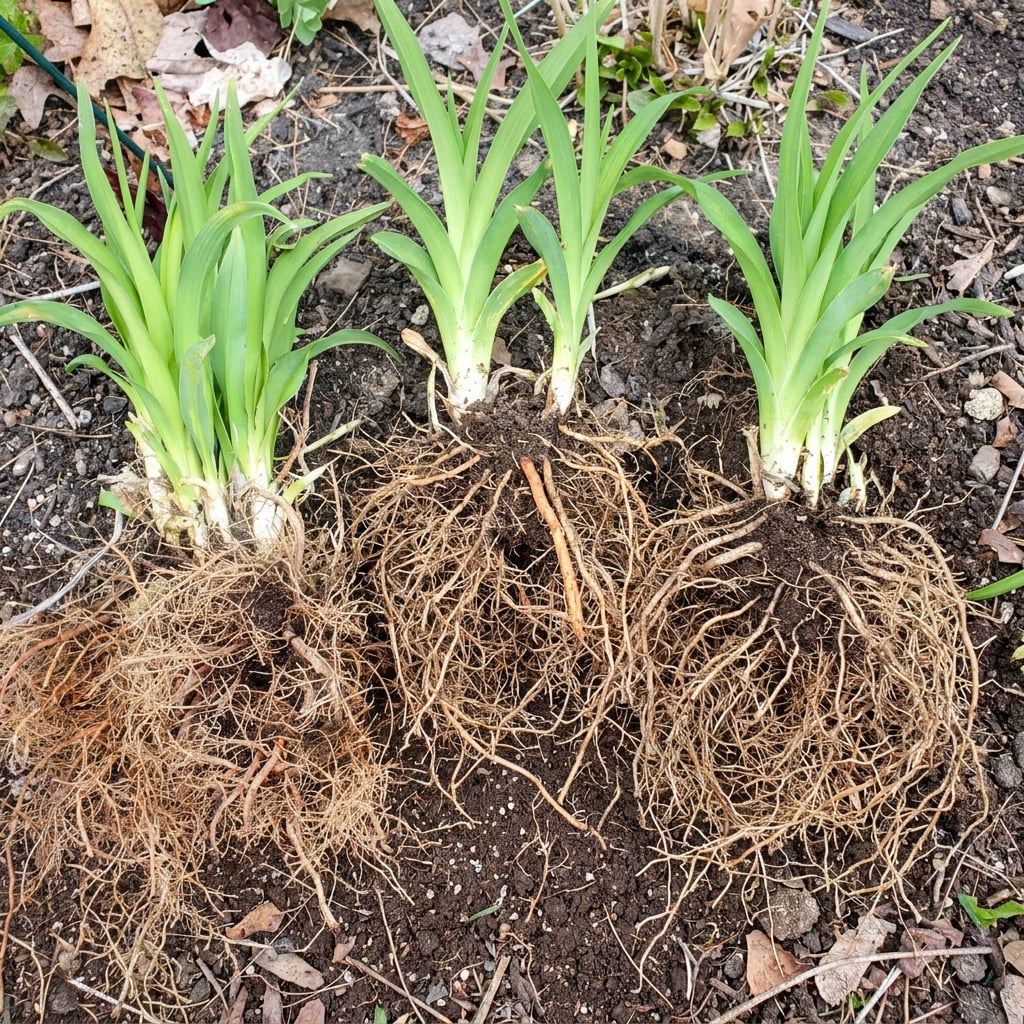
Wrestle the entire daylily clump out of the ground, then shake or rinse away enough soil to expose where those thick fans actually join. Pull loose sections apart by hand, using a sharp knife only when stubborn crowns refuse to separate.
Keep two or three sturdy fans backed by a heavy bundle of fleshy roots on every division. Chop the floppy foliage back to about 6 to 8 inches, then press each chunk back into the soil with the crown sitting roughly an inch below the surface.
Quick tip: Don’t make tiny divisions just to squeeze out more plants. Bigger chunks settle in faster and usually look like proper daylilies much sooner.
9: Epimedium (USDA Zones 6-8)
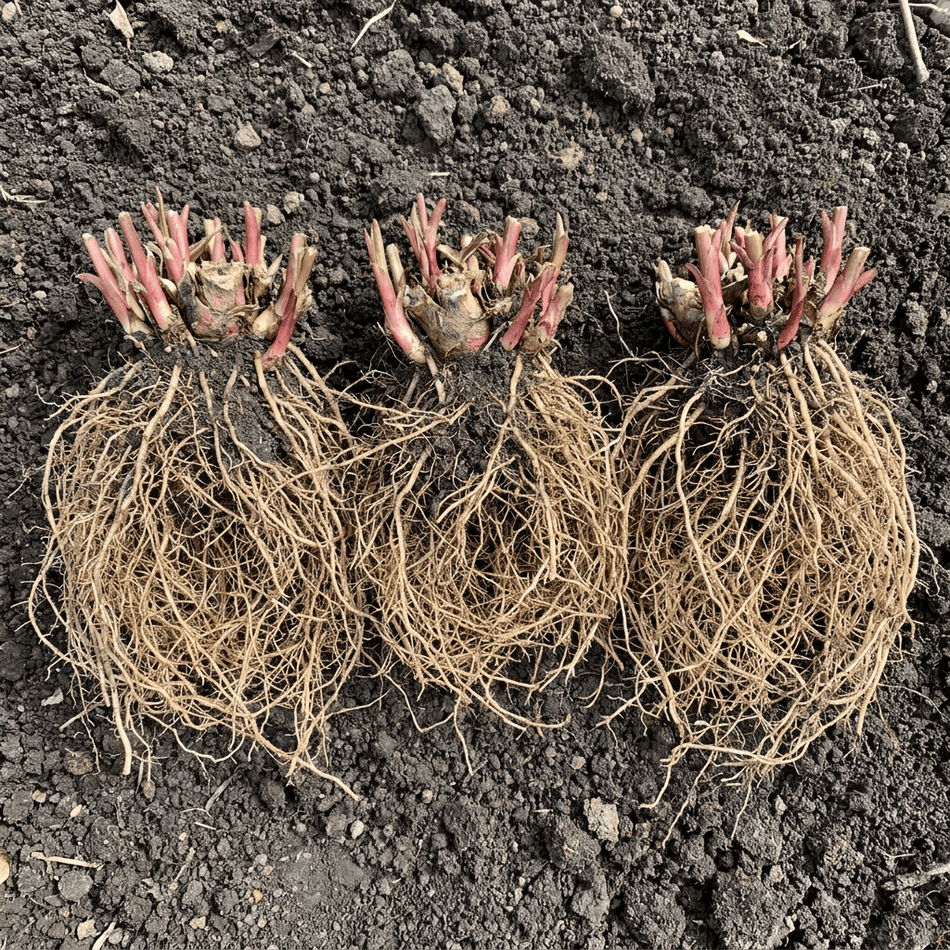
Don’t touch established barrenwort unless you’re expanding coverage or fixing congested borders. Tough rhizomes resist easy division, so drive a sharp spade cleanly through the thick mass only when necessary.
Replant sturdy rhizome sections into rich, well-drained soil in shade, keeping them at roughly the same depth they were growing before. Water deeply to settle the disturbed roots, and trim away only dead or damaged stems near the base.
Slice, Dice, and Settle In

Clear away fallen debris, sharpen your spade, and get moving while the upper soil layer remains workable:
Bury most crowns too deeply and you invite rot or weak growth; leave roots exposed and repeated freezing and thawing can heave them right back out of the ground.
Matching the original planting depth is usually the sweet spot, with exceptions like peonies where those eyes need to sit just 1 to 2 inches below the surface.
And if you’re already cleaning up the beds, we also wrote a guide on 11 perennials you can prune in October for a stronger spring garden.
Dirt Cheap Gardens FTW
Give those well-watered divisions roughly four to six weeks to anchor before the ground turns rock hard. Slicing roots and watering them in isn’t glamorous, but you’ll sleep easy knowing you outsmarted the nursery industry for once.