It’s that simple: before your coneflowers go totally dormant, take ten minutes to walk the bed. What you catch and fix now can make a big difference in how well your plants come back next spring.
Task 1: Inspect Before Foliage Disappears
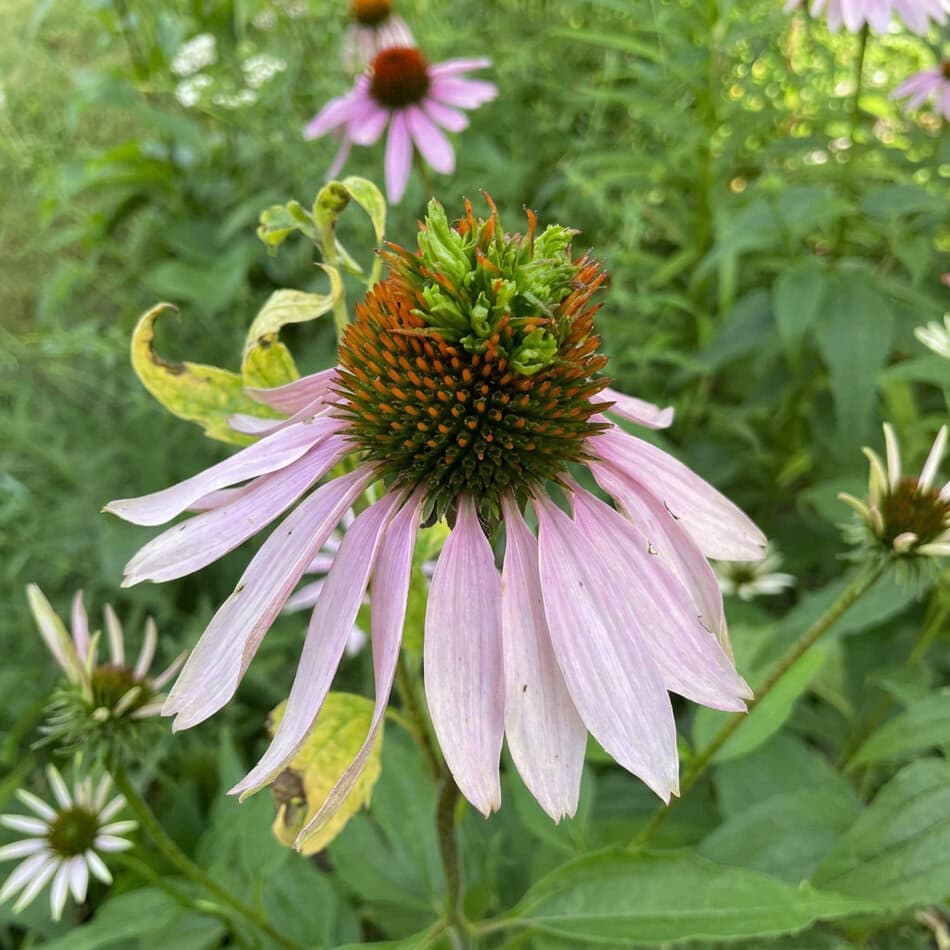
You need to read the leaves while they’re still giving you clues. Once frost turns everything brown, a dead plant and a sick plant look identical.
Quick tip: Mark any questionable plants with bright tape today so you can check them again before frost hits. Don’t remove a plant unless you’re confident about the diagnosis.
Task 2: Remove Confirmed Aster Yellows Plants
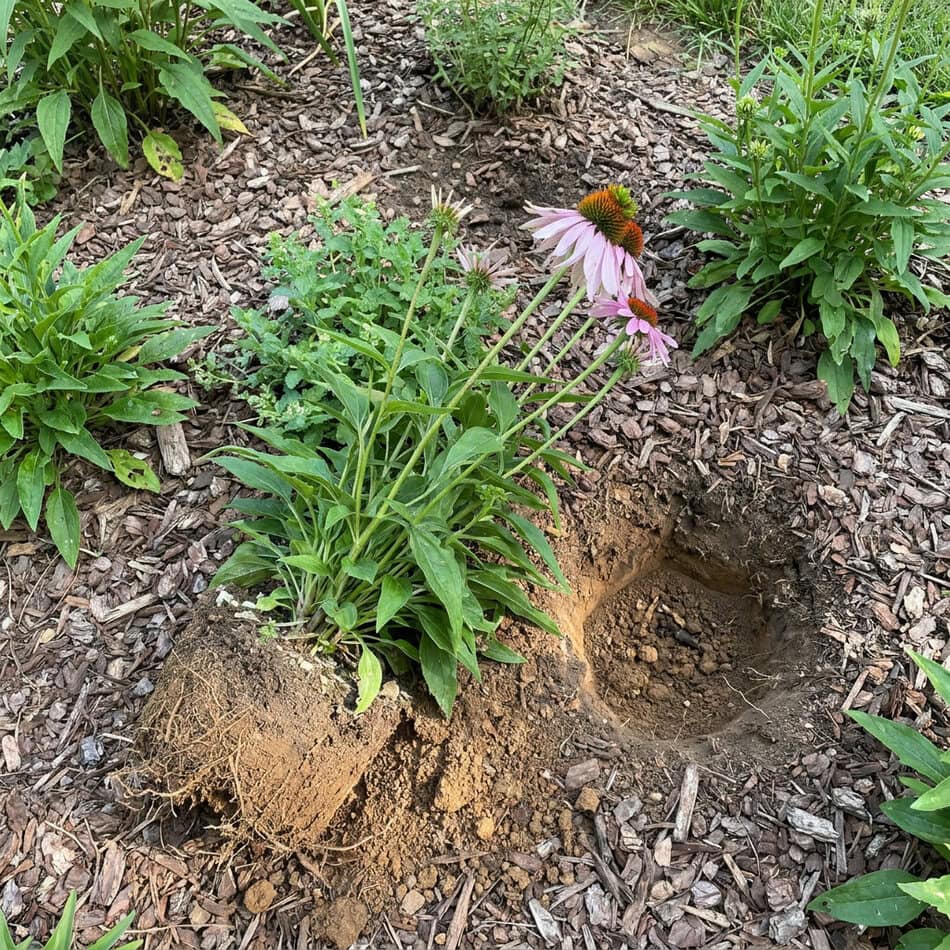
Pruning won’t save a coneflower with aster yellows. The disease spreads through the plant’s tissues, so cutting off funky blooms does nothing; you have to pitch the whole plant.
Shovel out the entire infected plant, making sure to remove the crown and as much of the root system as possible. Any living infected tissue left behind can still harbor the pathogen. Bag the plant and toss it in the trash so leafhoppers can’t keep feeding on infected tissue.
Quick tip: Don’t try dividing a sick clump to rescue the healthy-looking parts. Aster yellows spreads through the entire plant, so you’ll only end up with more infected coneflowers instead of saving the original.
And if fall cleanup has you itching to cut something back, at least focus on the right plants, we have a guide on 11 perennials to prune in October for a stronger spring garden.
Task 3: Manage Nearby Problem Weeds
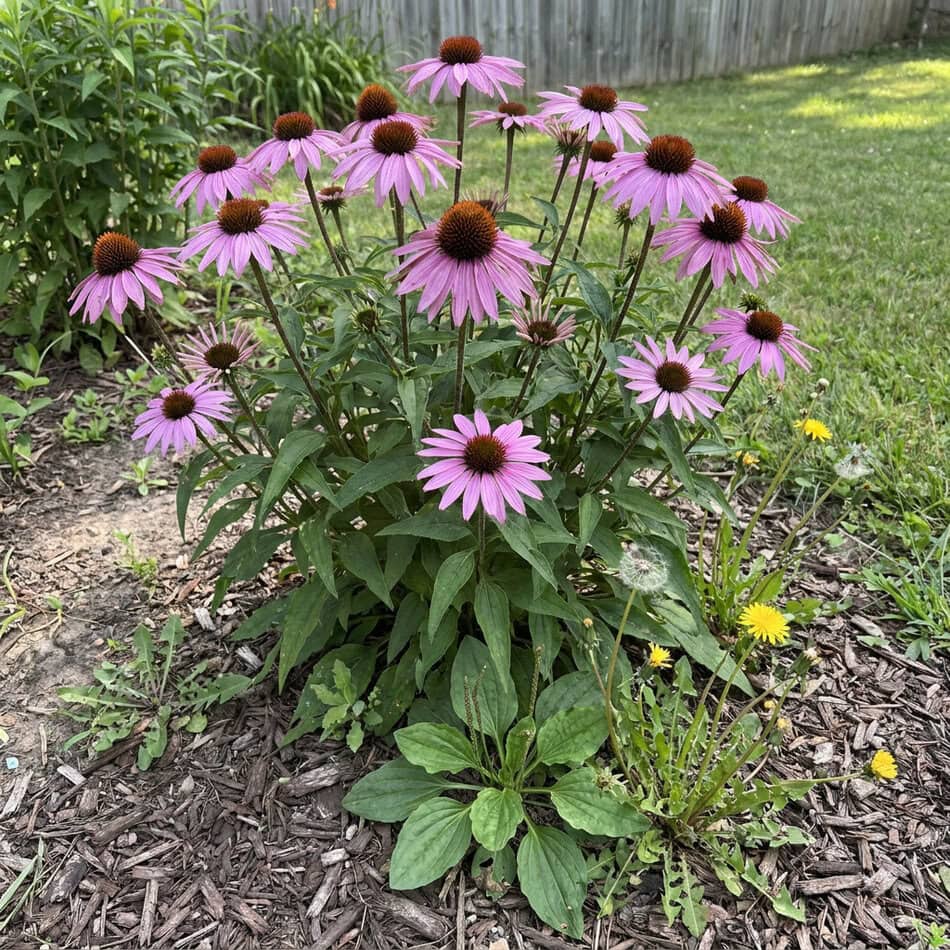
Fall weeding is all about selective removal. Certain common weeds can harbor aster yellows, giving leafhoppers a place to pick up the disease before moving into your garden beds. Your third October task is to tackle these troublemakers:
Don’t go clearing every inch of soil, though. You’ll only leave bare ground for winter weeds to take over. Focus on pulling problem weeds in and around your coneflower patch, preferably when the soil is damp. You won’t stop every wandering leafhopper, but you’ll remove some potential sources of infection.
Task 4: Leave Healthy Seed Heads
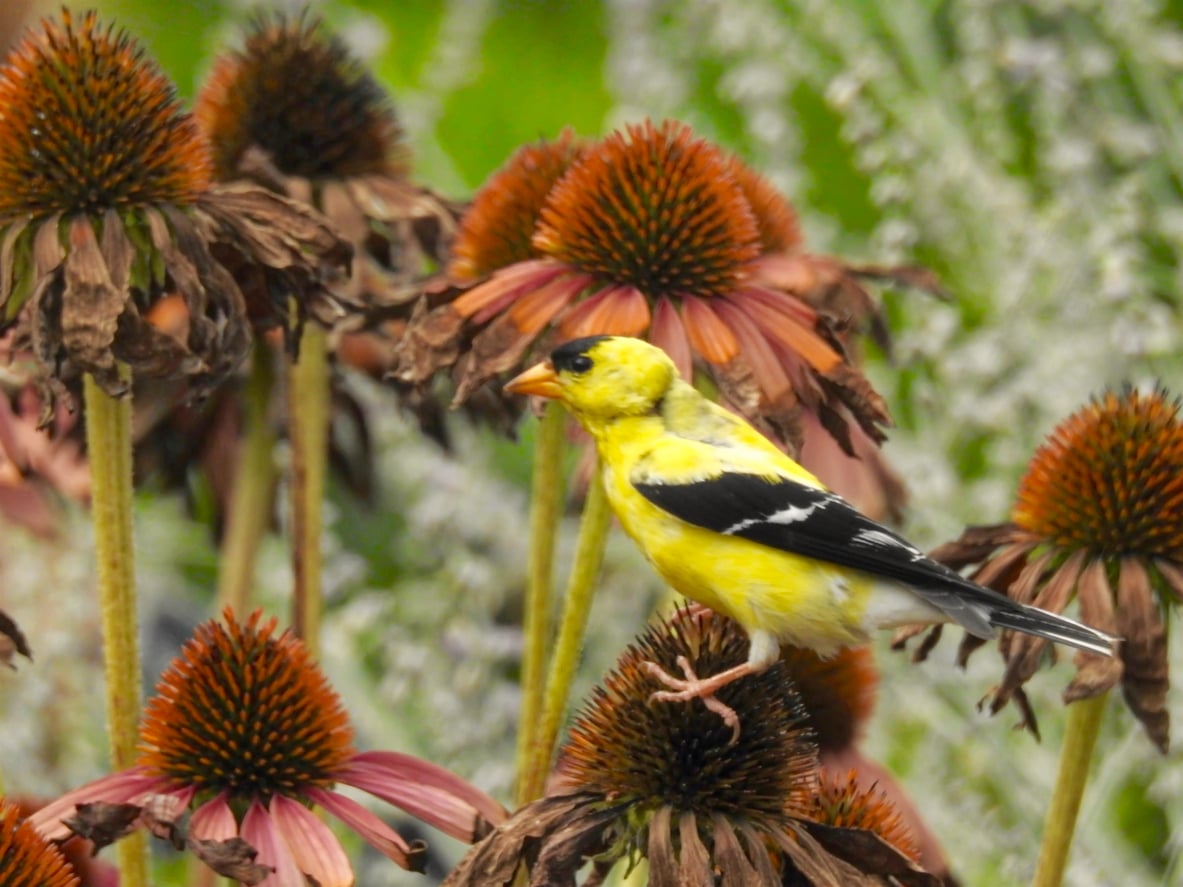
Just leave the pruners in the bucket for once. Unless the stems are diseased, let those stiff seed heads stay put. Goldfinches will happily dangle and pick them clean, which is hilarious to watch.
Those tall dead stems also catch drifting snow and fallen leaves, adding a natural layer of insulation around the crown during those ridiculous winter temperature swings.
Quick tip: The bed might look messy to your neighbors, but who cares. Cut the dead stuff back in spring once fresh green shoots start showing up.
If you’re unsure what to snip and what to leave standing, we wrote a coneflower deadheading guide that explains exactly what to cut during the growing season and what to save for the birds.
Task 5: Check Recent Plantings for Dryness
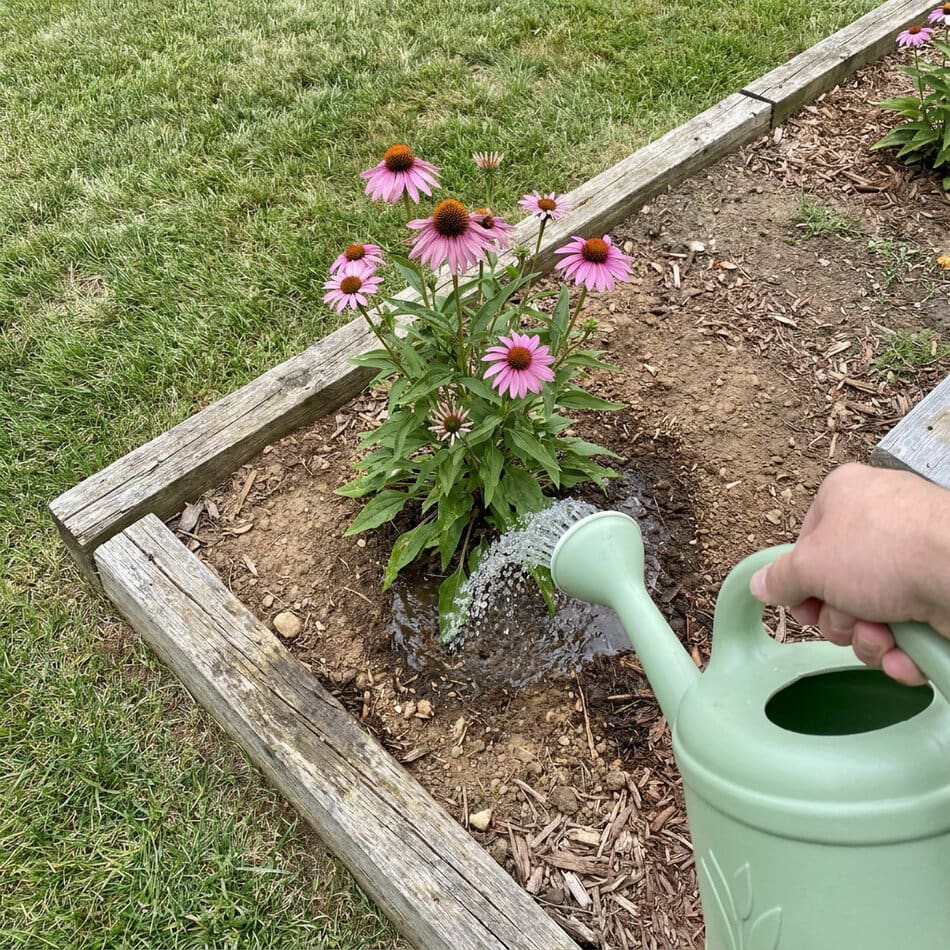
Older coneflowers are practically unkillable once established. Yet, anything you stuck in the soil two months ago is a different story. First, October winds dry out the topsoil, while cool temperatures trick you into thinking the soil is fine.
Go stick a finger two inches deep right next to the plant. If it feels like dry dust, drag the hose over and give the roots a slow, thorough soak. Check weekly until the ground freezes, but only water when the soil actually needs it.
Quick tip: Young roots need some moisture heading into winter, but soggy soil is just as bad. Don’t let them dry out completely, or you might end up with an empty hole come May.
If you’re still figuring out what these plants need, we also put together a guide with 12 essential tips for growing and caring for coneflowers, from watering to soil and sunlight.
Task 6: Check Drainage
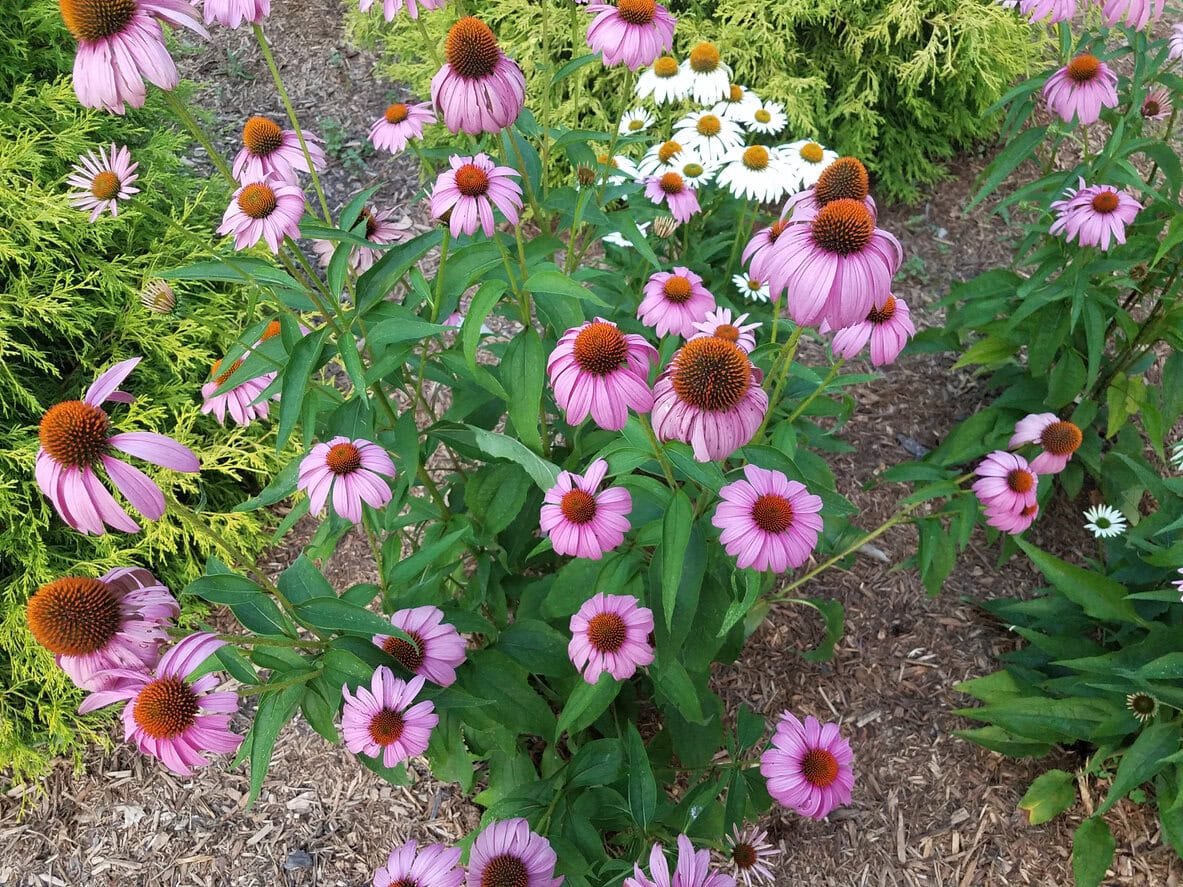
Coneflowers can handle different soil types, but soggy roots are another story. If they sit in a freezing mud puddle all November, crown rot could become a real problem by Christmas.
Walk out after the next big rainstorm to see where water is collecting. If you notice a thick layer of slimy oak leaves smothering the plant’s crown, gently pull them aside. If water keeps pooling around the roots, you’ll need to improve the drainage.
For potted plants, remove the saucer and raise the pot on a couple of bricks. Otherwise, rainwater can collect underneath, freeze into a block of ice, and crack the pot.
And coneflowers aren’t the only plants better left alone in fall! We also wrote an article about perennials you should never cut back in October if you want a healthier spring garden.
Mission Ac-cone-plished
Coneflower gardening in fall comes down to two simple things: knowing what to remove and what to leave alone.
Be ruthless with problem weeds and leave healthy seed heads for the birds. Also, don’t assume fall rain is doing your watering job for you. The end result? Your garden looks like a mess, the birds think you’re a genius, and the roots think you’re a saint.
And if you want to give the birds a few more winter snacks, we also wrote a guide on 9 plants you should leave standing in fall for the birds.