Your pepper patch worked hard all summer, and by August, I shift from simply keeping plants growing to helping them finish the season strong.
Now it’s time for supervision, revision, and provision! The common thread through all these August pepper care tasks? Having a vision. (Also a guide, but it doesn’t rhyme.)
Do-It-Right-Now Damage Control
This is my hawk-eyed damage control phase, when I step into the garden, spot the immediate disasters waiting to happen, and fix them before they destroy the crop.
Task 1: Support Heavy Branches
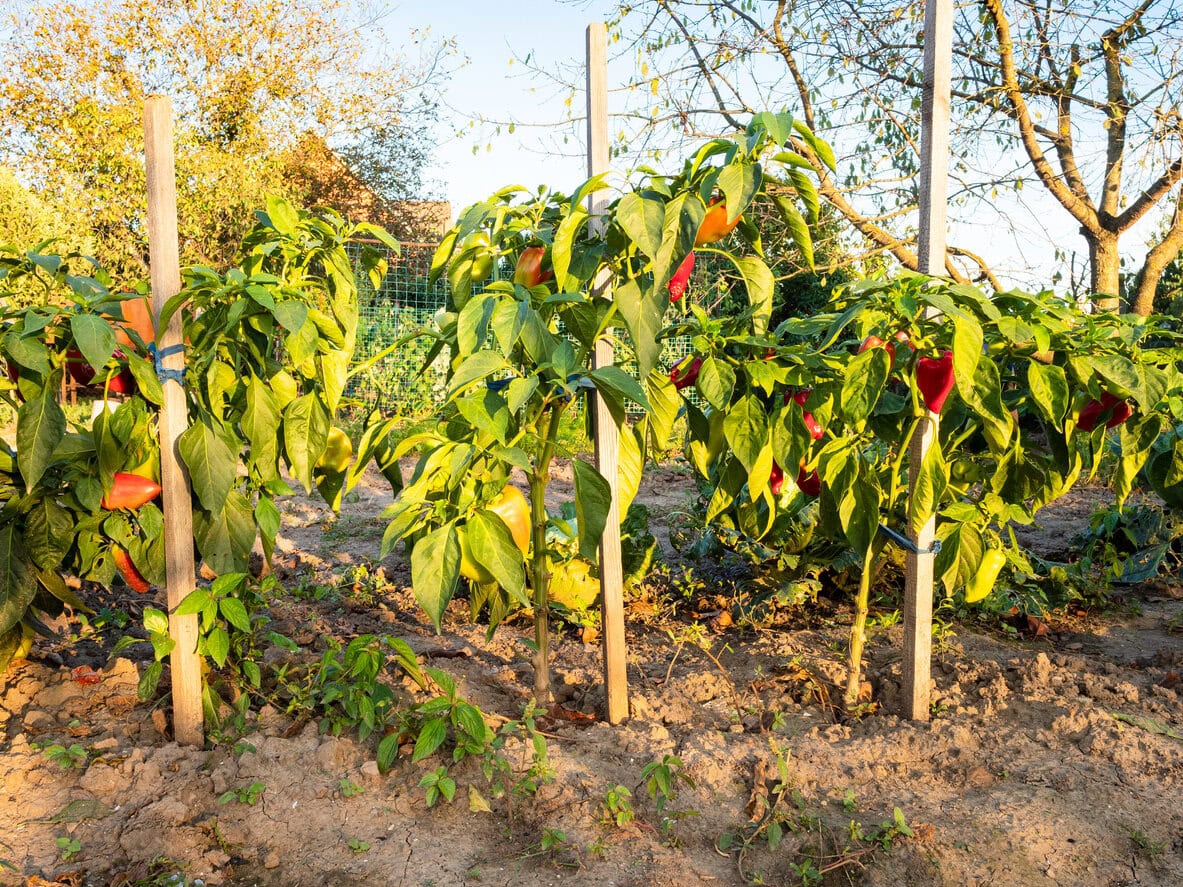
Tomatoes bend under weight; peppers snap like dry kindling. A pepper plant can hold an absurd load of fruit right up until a brief August gust catches the canopy and splits an overloaded branch or main fork.
If I see a plant sagging under the weight, I add a sturdy stake beside it, taking care not to drive it through the main root zone.
Then I wrap soft garden twine around drooping side limbs using a loose figure-eight loop, pulling some of the weight back toward the stake to save those brittle V-crotches before a storm ruins four months of growth.
Task 2: Protect the Canopy
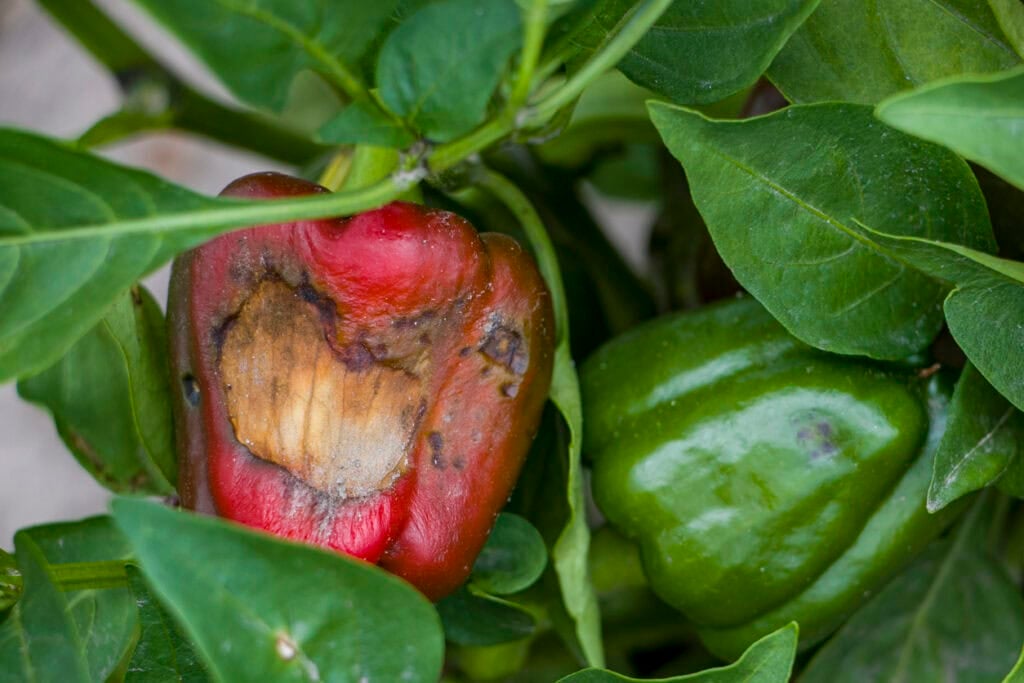
No use hacking off healthy foliage with peppers. While tomatoes are often pruned for better airflow, peppers benefit from keeping good leaf cover.
Stripping healthy leaves can expose developing pods to scorching sun. Once fruit loses that leaf cover and sits in intense direct sun, the exposed tissue can develop pale, papery patches of sunscald.
Think of those leaves as built-in sunbrellas. Good leaf cover is one of the main ways pepper fruit stays protected from sunscald. So, leave healthy foliage alone and keep the canopy intact so developing peppers stay shaded and protected.
Task 3: Stabilize Moisture and Mulch
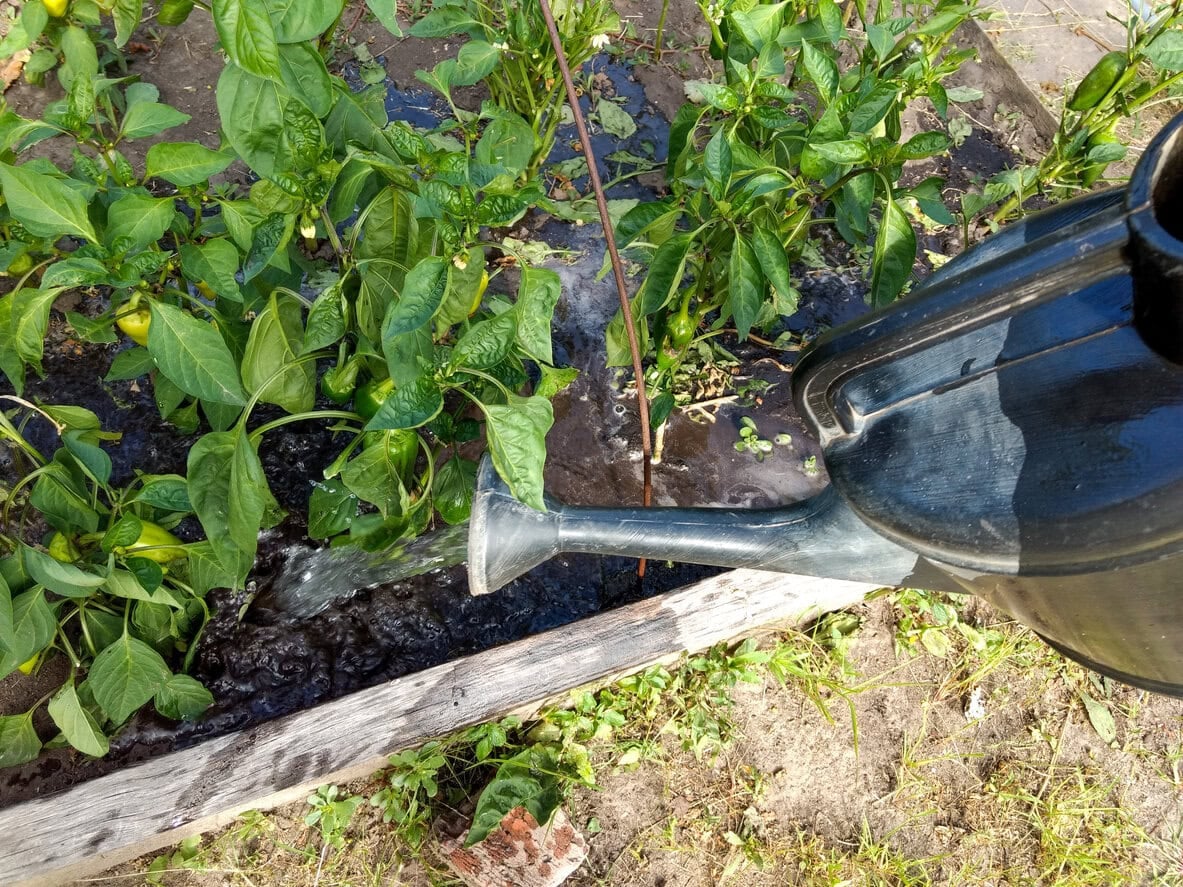
Squash leaves flop at noon to warn you the soil is dry, but peppers? Pure “No, no, don’t worry about watering me. I’ll just sit here in the 95°F sun and rot my own tissue. It’s fine.” energy.
It’s not fine. Erratic watering can interfere with calcium reaching developing fruit, triggering blossom-end rot and contributing to fruit cracking.
No more useless daily surface spritzes. Water deeply when the top 1 to 2 inches of soil feel dry, then keep 2 to 3 inches of straw or other organic mulch over the root zone to hold that moisture steady.
If you’re not sure what to put down, we wrote a guide on the best mulches for pepper plants and what each one does.
Mid-August Production Maintenance
This is where you stop reacting and start managing the factory floor. By mid-August forces a complete mid-season routine revision instead of treating my peppers like it’s still June. What worked early in the season isn’t always what they need now.
Task 4: Harvest Green to Keep Production Moving
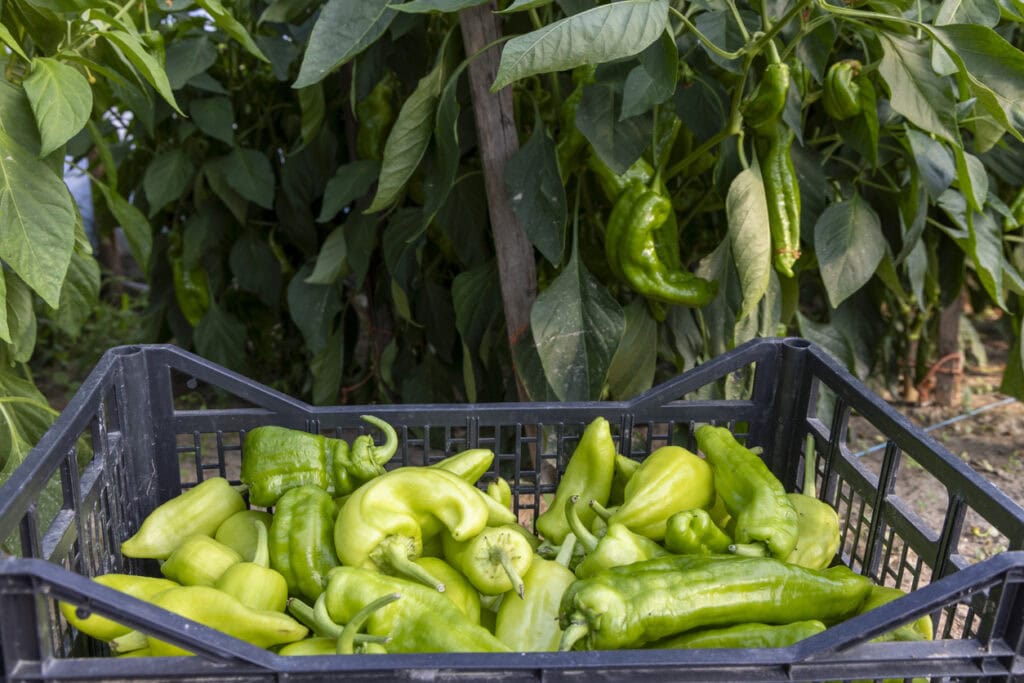
Hoarding every pepper until it blushes keeps the plant carrying a heavy fruit load.
By mid-August, I stop waiting for every full-size pod to turn red and start picking some once they reach the mature-green stage. So strip those mature green peppers off as you need them.
Quick tip: Regular harvesting keeps the plant producing flowers and setting more fruit, while the peppers you leave behind can keep maturing and coloring on the plant.
Task 5: Stop Forcing Growth During a Heat Spike
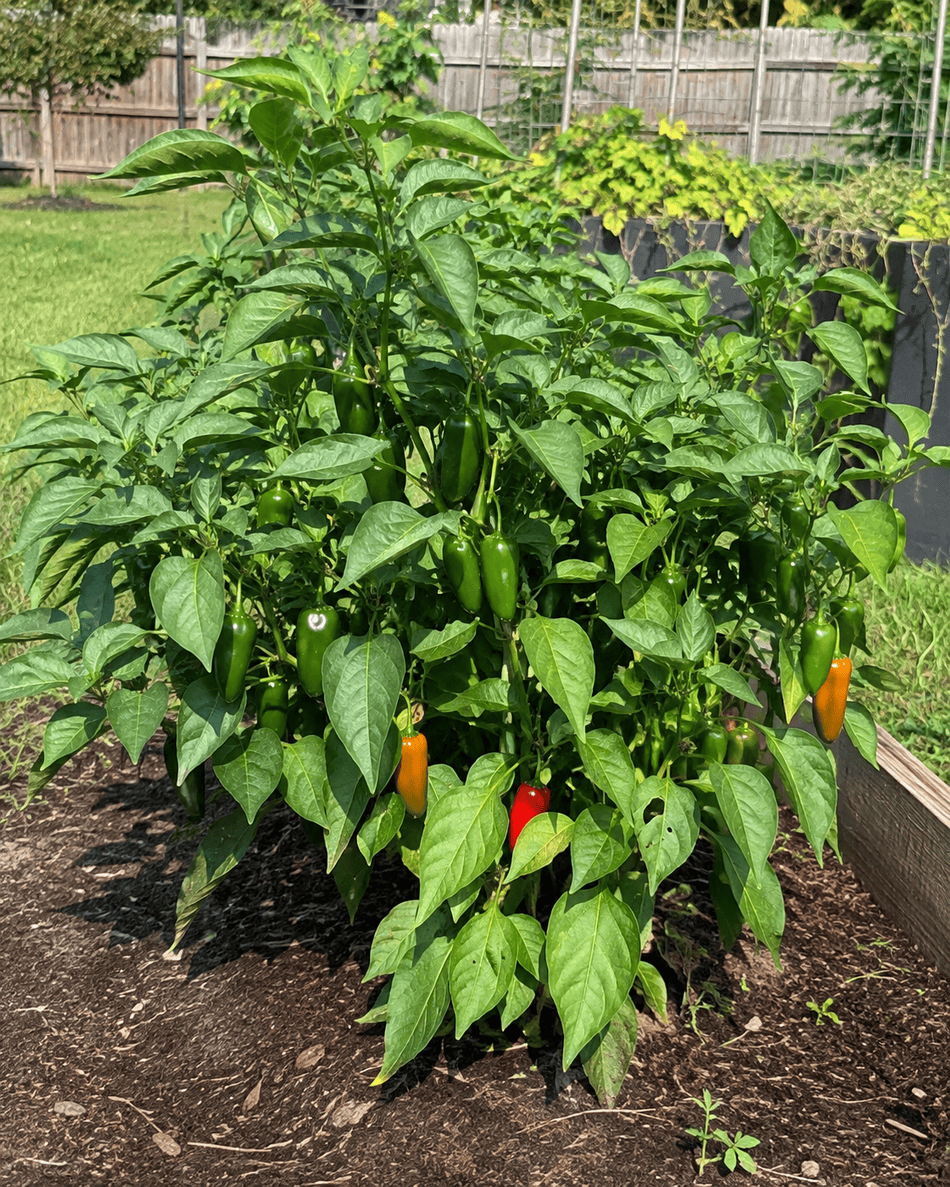
When daytime heat pushes into the 90s, pepper pollination and fruit set can suffer, and flowers may drop straight to the soil.
Panic-dumping nitrogen fertilizer to “fix” it won’t help either. Too much nitrogen can push leafy growth at the expense of flowers and fruit.
Stop forcing growth during a heat spike. Keep the soil evenly moist, keep high-nitrogen bags in the shed, and let the plant ride out those peak August scorchers.
Task 6: Scout Pests and Purge Damaged Pods
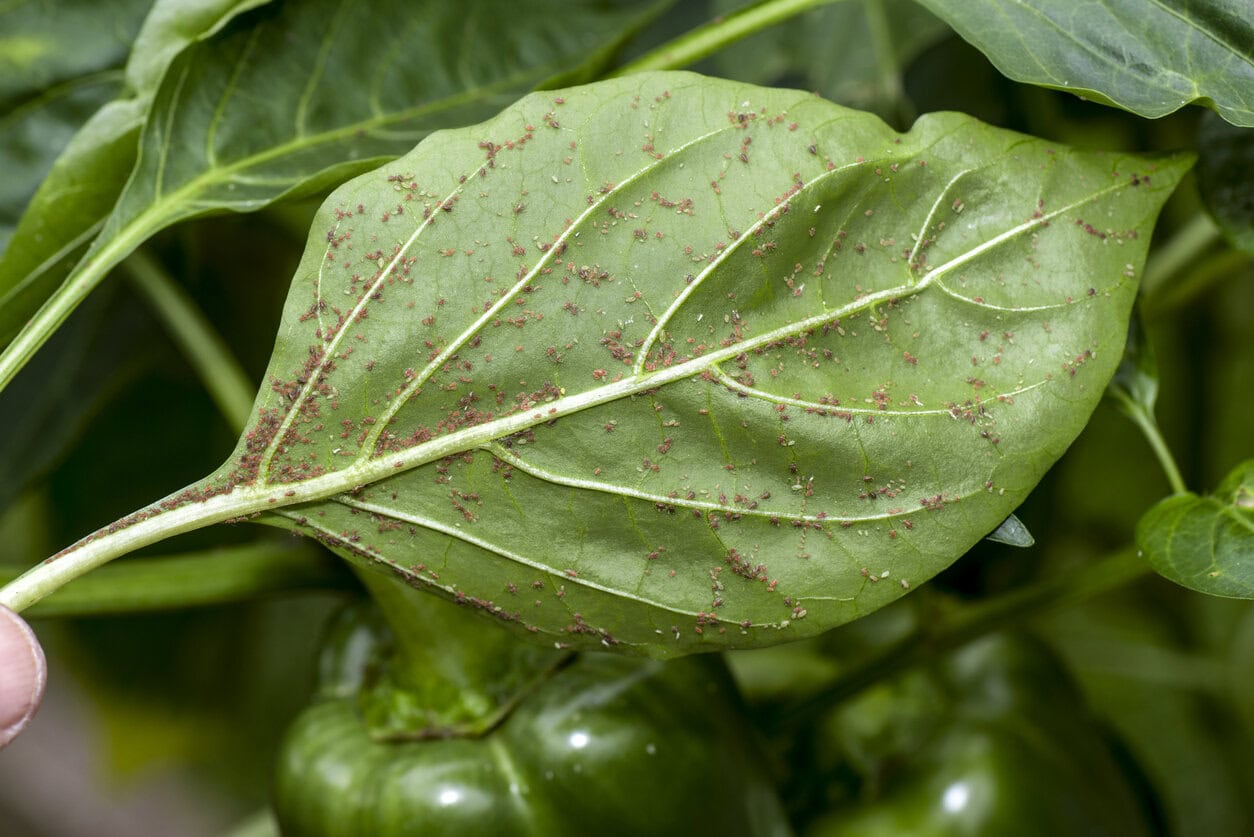
Late summer brings hornworms, dense aphid clusters on soft growing tips, and bacterial spot
during warm, wet stretches.
I check leaf undersides twice a week. Hand-pick caterpillars, blast aphids off with a strong stream of water, and remove badly damaged or rotting pods, unless you prefer feeding pests over your esteemed self…
Your ultimate goal? Keep the healthy fruit protected and stop carrying along anything that’s already unsalvageable.
Quick tip: If bacterial spot shows up, avoid working with the plants while they’re wet since that can help spread it.
If your plants are showing symptoms you can’t quite identify, we also wrote a guide to 10 common pepper problems and how to fix them.
The Pre-Frost Ramp-Up
As your average first frost gets closer, the focus shifts from keeping plants alive to securing your actual provision. It’s an aggressive sprint against the fall calendar, getting every last pod already on the stem as close to the finish line as possible.
Task 7: Stop Late-Season Blooming
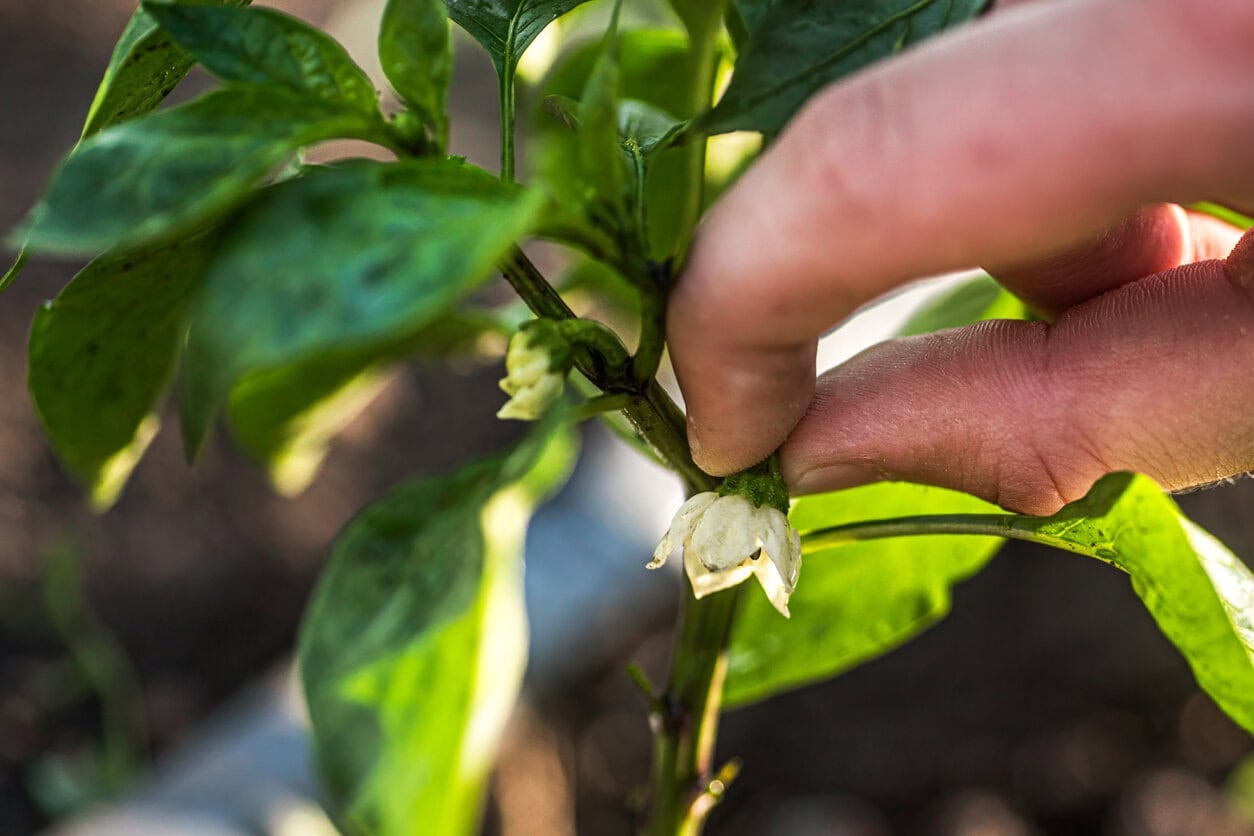
Peppers love throwing out optimistic tiny yellow flowers right when frost starts creeping closer. Kill their unwarranted optimism. Once there’s no longer enough warm weather left for new fruit to mature, those fresh blossoms aren’t likely to make it across the finish line.
That’s when I pinch off new flowers and the tiniest newly forming peppers.
The goal is to stop the plant investing in fruit that has little chance of maturing and keep its resources focused on sizing up the pods already hanging.
Task 8: Pick Peppers Before Cold Nights
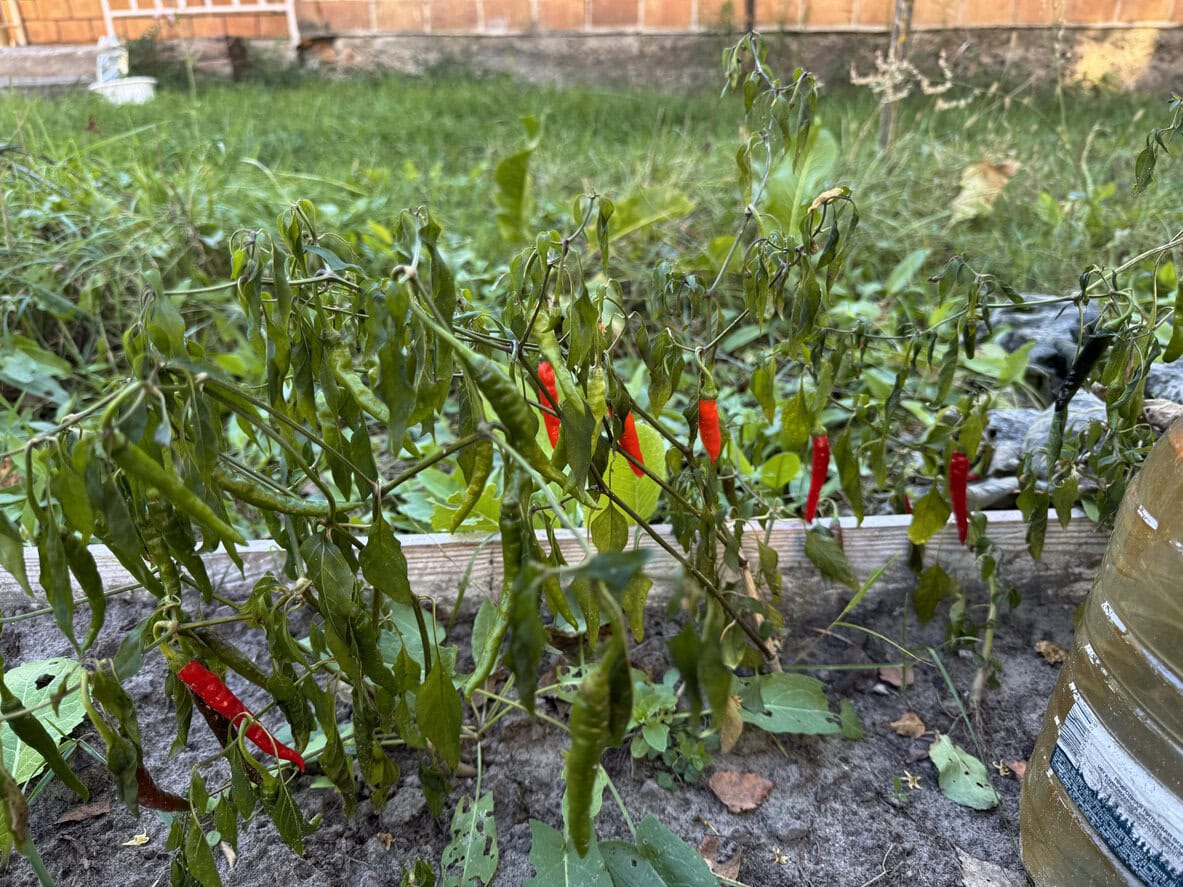
As frost gets closer, I start watching the forecast. Peppers hate cold, and a light frost can damage fruit fast.
If temperatures are heading toward the upper 30s or frost is in the forecast, harvest any full-size peppers you don’t want to risk losing. Green peppers can still be used as-is, and peppers that have already started coloring may continue to ripen after picking.
Task 9: Strip Lower Leaves
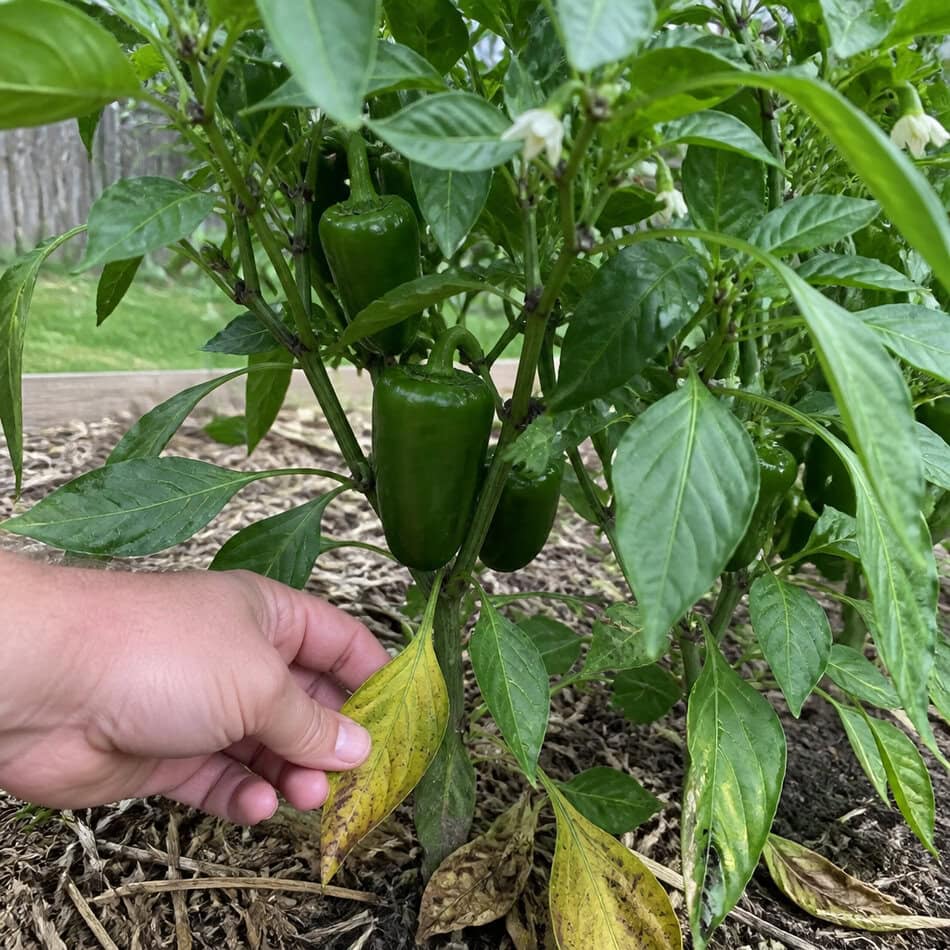
Once frost starts looming, I give the bottom of my pepper plants one last inspection. Yellowing, spotted, damaged, or soil-touching leaves can turn into dead weight, especially when they keep the base damp and crowded.
Snip off that tired lower growth. The goal is to clean up the base, improve airflow, and keep the plant healthy while those final peppers finish the job.
Quick tip: Leave healthy leaves alone, they’re still doing useful work, and good leaf cover helps protect developing peppers from sunscald.
If you’re not sure where to stop, we wrote a guide on how to prune pepper plants properly without going overboard.
Ready for a Pod-blessed Harvest
August pepper care boils down to breaking your plants’ habit of making wild promises they can’t keep before September. June was for coddling; August is for enforcing quotas before frost liquidates the whole operation.
If you want the full-season version, we also wrote a guide with 15 tips for growing peppers outdoors from planting through harvest.