Your peonies are ready to pollen love and settle down. The only challenge right now is picking a partner that shares a thirst for life and a love of well-drained spots.
Hint: Why choose? Plant the entire fellowship. Honestly, the more the merrier.
Nothing Puny About Peony
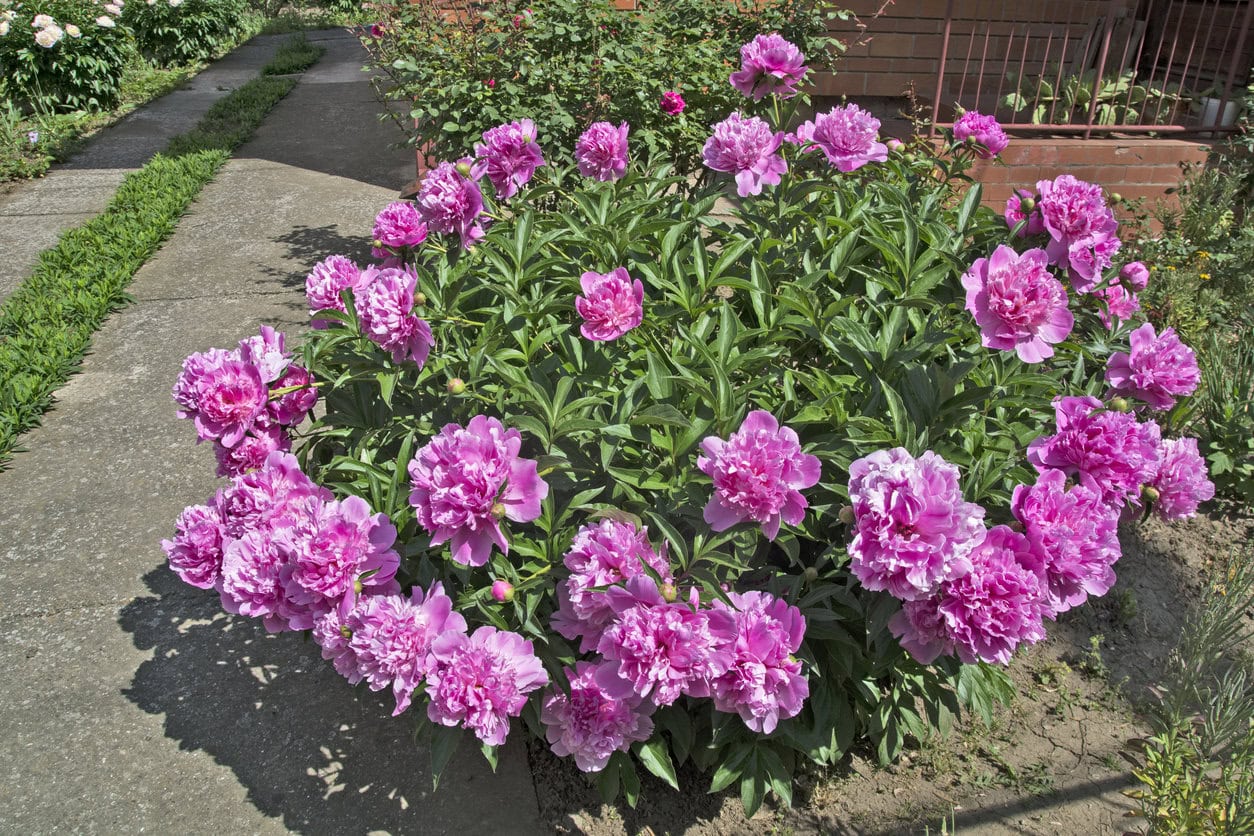
A thriving garden bed is one where all the plants live the same lifestyle like your peonies. It means they follow their plenty of sun, good drainage, and room to breathe rules.
If you’re still figuring out the best location for peonies in your yard, we wrote a full guide on where to plant peonies for the healthiest blooms.
Buds for Life
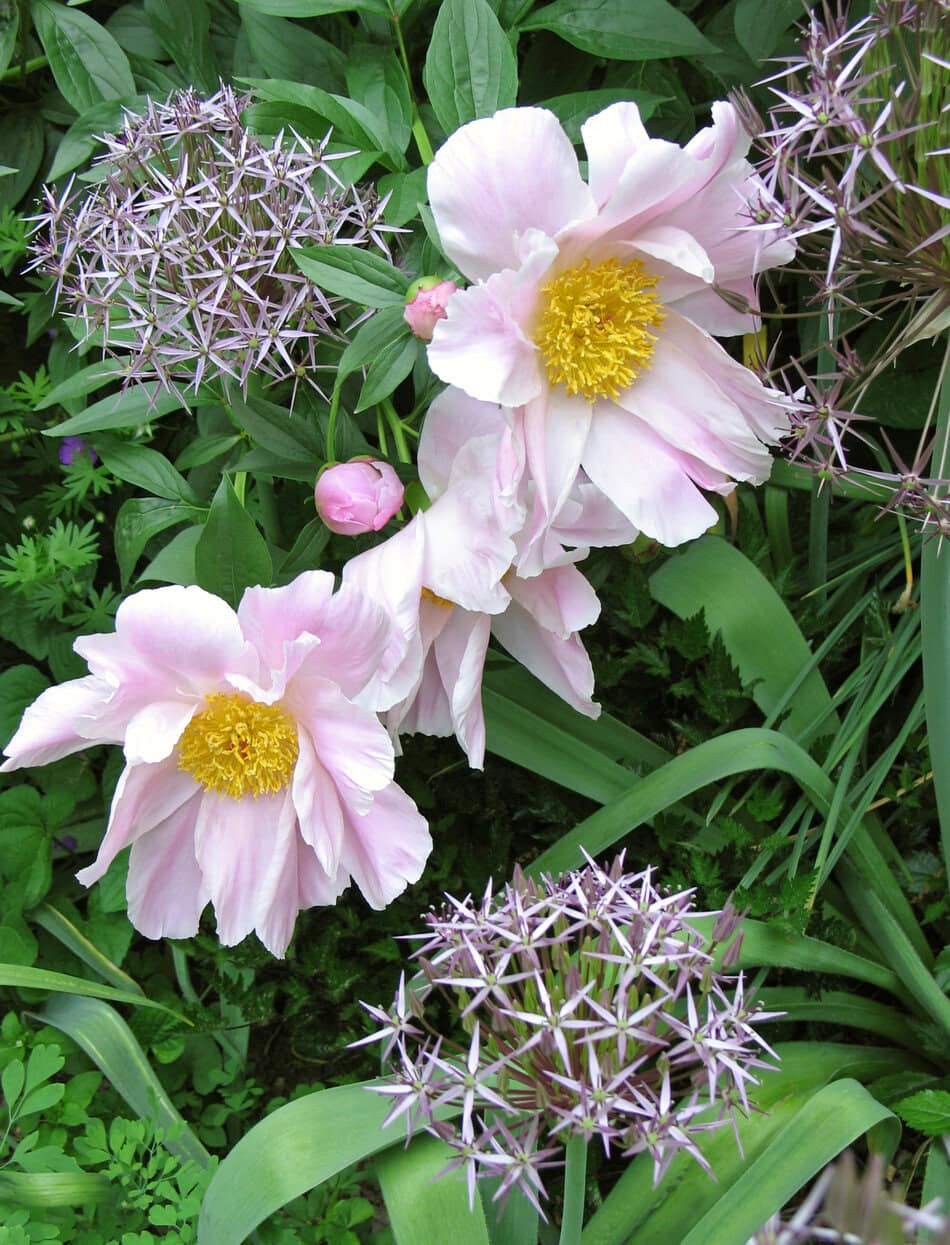
A spectacular show is nothing without a supportive cast. Even in a garden. Especially in a garden. Now, let’s get to the best companions to pair with them!
1: Alliums (USDA Zones 4-8)
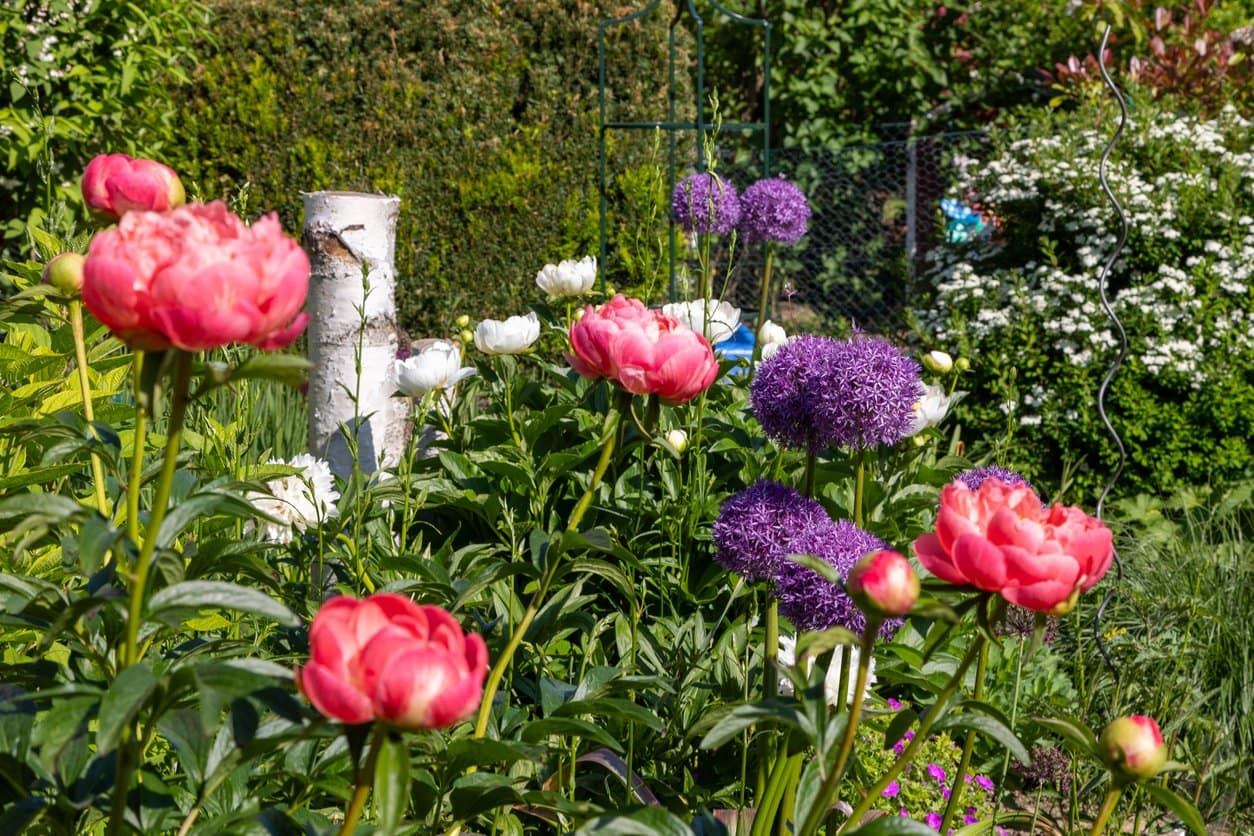
How can the most delicate peonies stay so pristine without a single nibble from the local pests? That’s because someone’s obviously emitting a subtle onion-like scent that makes the area less inviting to aphids and rabbits.
Timing-wise, they’re a dream team! Many ornamental alliums bloom exactly when your peonies hit their peak, creating a stunning visual layer of floating purple or white spheres above the romantic ruffles below.
Quick tip: I like to tuck the bulbs into the soil in fall, a little away from the peony crown so I’m not disturbing those roots.
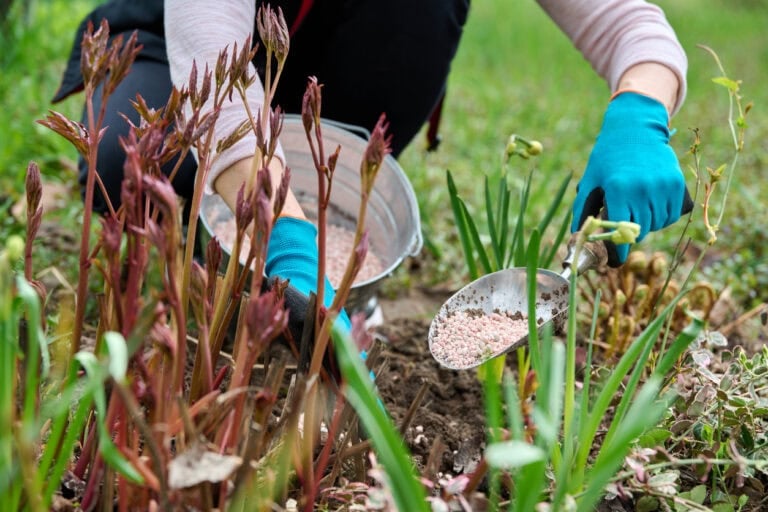
And if you want your peonies to really put on a show, we explain how to fertilize peonies properly for bigger, longer-lasting blooms.
2: Catmint (USDA Zones 3-8)
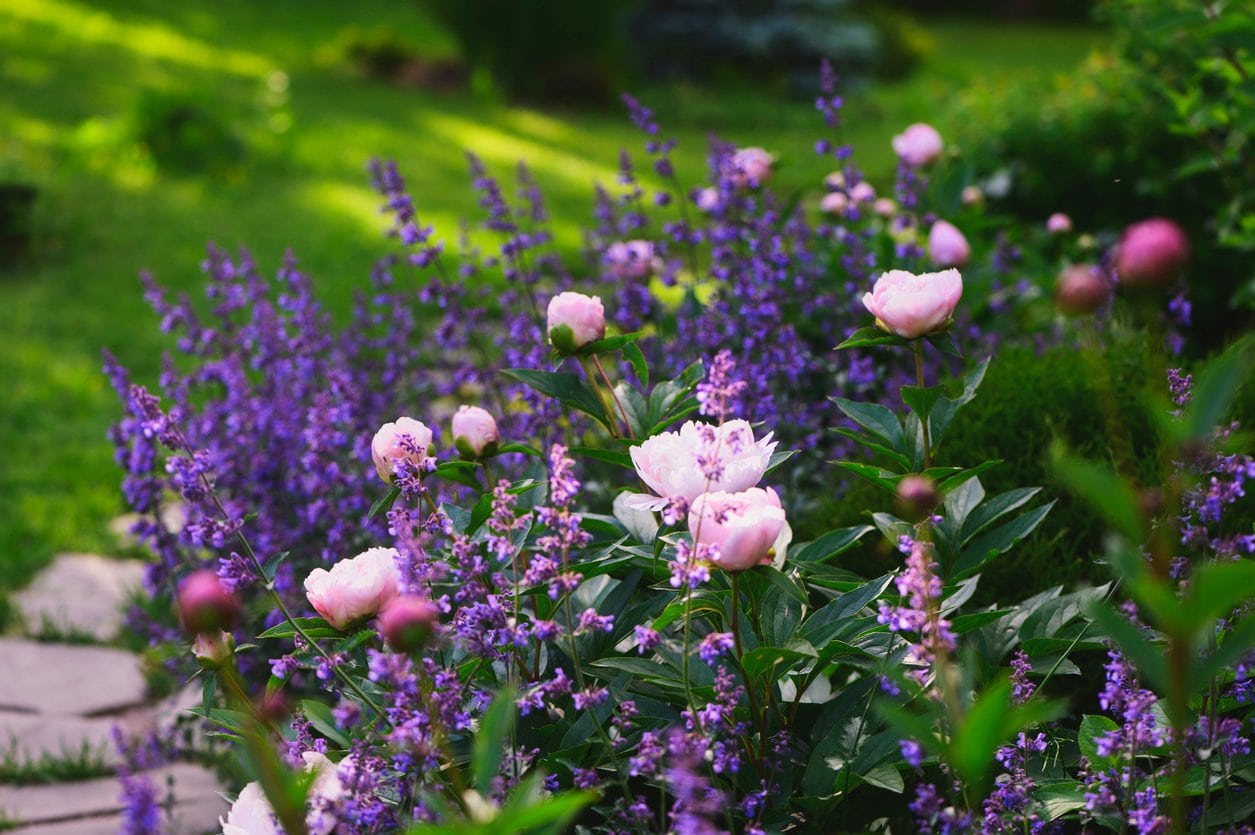
Peonies often look a bit naked at the bottom as they age. I’ve found that catmint perfectly billows out and hides the scruffy bits of those woody stems. Instead of just filling a gap, this low-growing partner acts as living mulch, shading the soil and also chokes out any opportunistic weeds.
This pairing works brilliantly. Catmint’s sharp fragrance can also make the area less appealing to your local deers, giving your peonies a little more peace to bloom and feed a massive crowd of pollinators.
Quick tip: I like to plant catmint in front of peonies, about 12 to 18 inches away from the crown, so it can spill outward and hide the bare stems without crowding the roots.
3: Siberian Iris (USDA Zones 3-9)
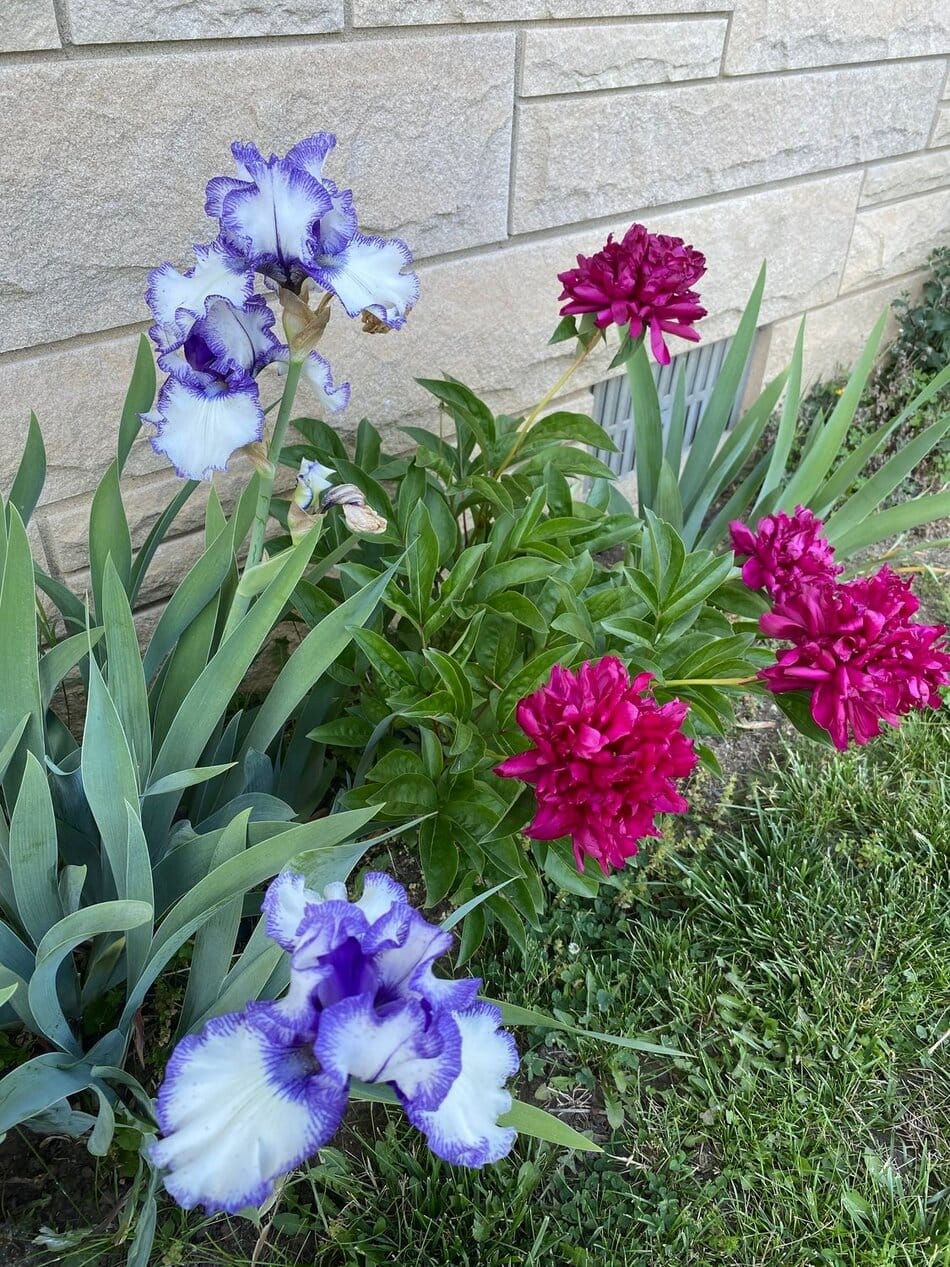
If everything in your bed is a soft mound, the whole design tends to bleed together into a green blur. I use these irises to pin the corners of the composition. That vertical energy is a visual anchor that holds the space and adds a little structure.
That aside, a summer storm can flatten heavy blooms in about five minutes. With the upright iris stalks nearby, you get a taller, sturdier backdrop that helps break up wind and keeps the whole bed feeling balanced, even when peonies start to flop.
Quick tip: I like to plant Siberian irises about 18 to 24 inches away from peonies, so both plants have room to spread without competing at the crown.
4: Foxgloves (USDA Zones 4-9)

Having a garden that peaks at knee height is a bit underwhelming, even for introverts. I like to tuck in foxgloves with their tall spikes to drag the eye upward and break that flat peony horizon.
Foxgloves grow more upright than sprawling, so they don’t usually crowd a peony’s crown when given proper spacing. This vertical contrast turns a simple flower bed into a multi-story masterpiece where every plant finds its own level.
Quick tip: Plant foxgloves about 18 inches away from peonies and toward the back of the bed, so you don’t start a root war. And if you have pets or small kids, remember that foxgloves are toxic if ingested.
5: Lavender (USDA Zones 5-9)
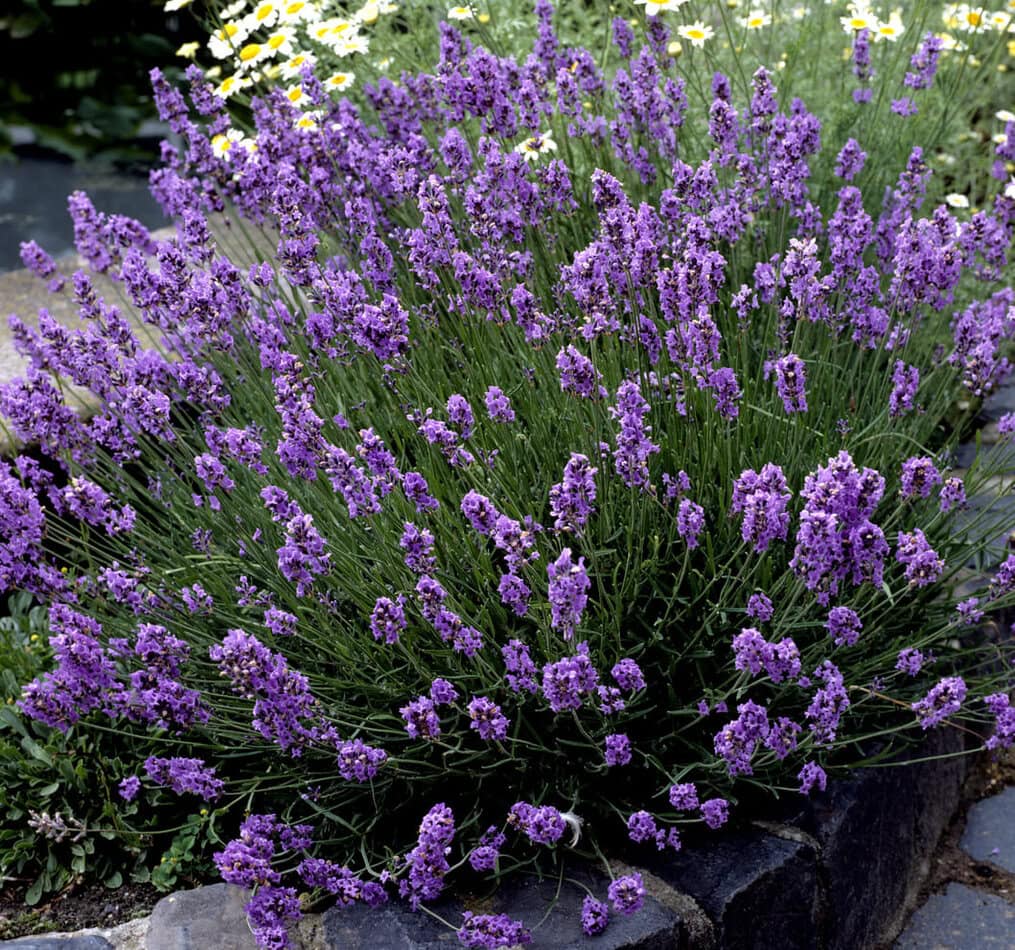
Peonies hate swampy ground, and lavender is the perfect reminder to keep things well-drained. While peonies prefer richer soil than lavender does, they both share a love for sunshine, airflow, and soil that doesn’t stay soggy after a rain.
The silver foliage also provides a cool visual break from all that heavy green, and the intense lavender’s perfume makes the area less appealing to browsing deer.
Quick tip: Plant lavender about 18 to 24 inches away from peonies in the sunniest, driest part of the bed. If your soil is heavy clay, consider amending it well or planting lavender slightly higher than the surrounding soil for better drainage.
6: Geraniums (USDA Zones 4-8)

Summer heat can be brutal the soil around peonies, especially during long stretches of afternoon sun. Yet a dense patch of hardy geraniums helps shade the ground, keeping the temperature consistent even in the hottest part of the day.
Bare soil is just an open invitation for trouble, so I let geraniums seal the gaps. Unlike aggressive groundcovers, they stay low and humble, choking out weeds while helping the soil hold steady moisture.
Quick tip: Plant hardy geraniums about 12 to 18 inches away from the peony crown and let them spread outward. They’ll fill in beautifully without smothering the base.
If you want more low, well-behaved plants like this, we also put together a guide to fast-growing groundcovers that keep weeds in check.
7: Roses (USDA Zones 4-9)
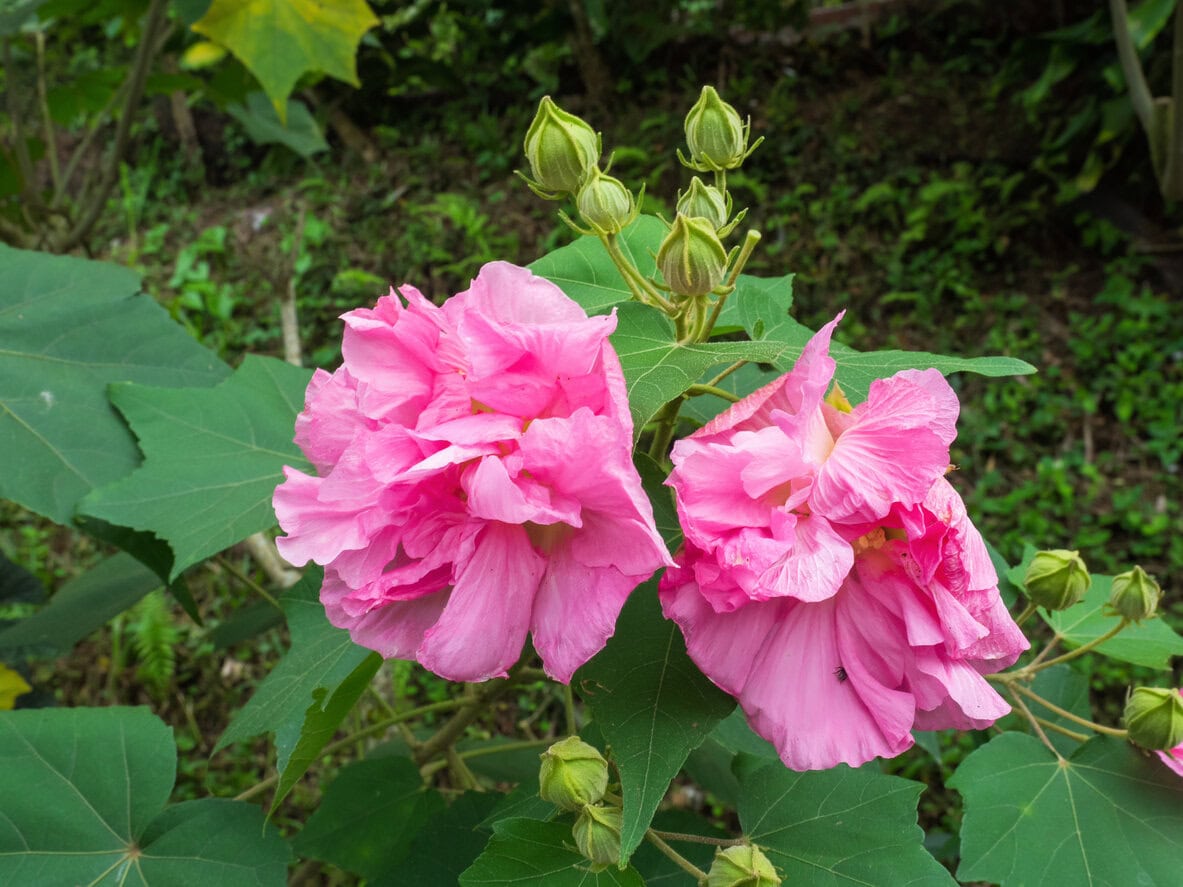
Some say you shouldn’t pair stars together, but these two are the exception to the rule. They share a high-maintenance demand for full sun and fertile, well-drained soil, so you can care for the entire bed with one routine.
Peonies provide that early summer explosion of blooms, and just as they fade, roses take over the shift and carry the color well into fall. The transition feels seamless instead of strictly seasonal!
Quick tip: Give each plant space, at least 2 to 3 feet apart (depending on the rose variety) so air can circulate and roots aren’t competing too heavily.
And once peonies finish their big moment, we explain exactly what to do with them after flowering so the plant stays strong for next year.
8: Lupines (USDA Zones 4-8)
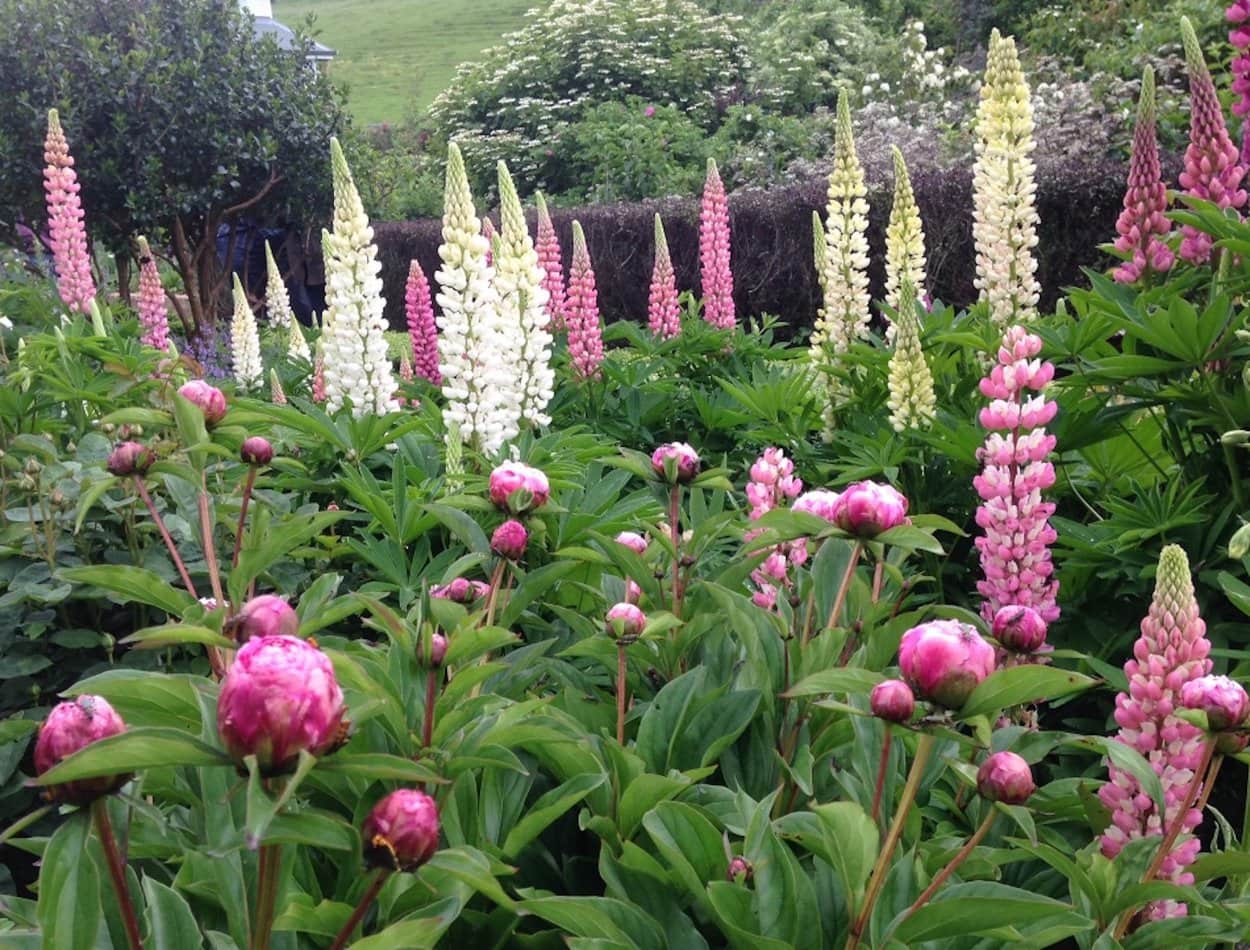
If you know your soil is a bit tired, lupines are a great plant to work into the mix. They belong to a rare group of plants known as nitrogen-fixers, helping improve soil health over time as their roots and foliage break down and return nutrients to the bed.
Their palmate leaves look like tiny umbrellas and provide quite a funky architectural contrast to the standard green shrubbery. Even better, many lupines bloom in late spring to early summer, making them a lively warm-up act right before peonies steal the show.
Quick tip: Plant lupines about 18 to 24 inches away from peonies, and give them a sunny spot with good drainage. They dislike soggy roots just as much as peonies do.
If you love that early-season buildup, we also rounded up perennials that wake up first in spring and get the garden going fast.
9: Salvia (USDA Zones 4-10, depending on type)
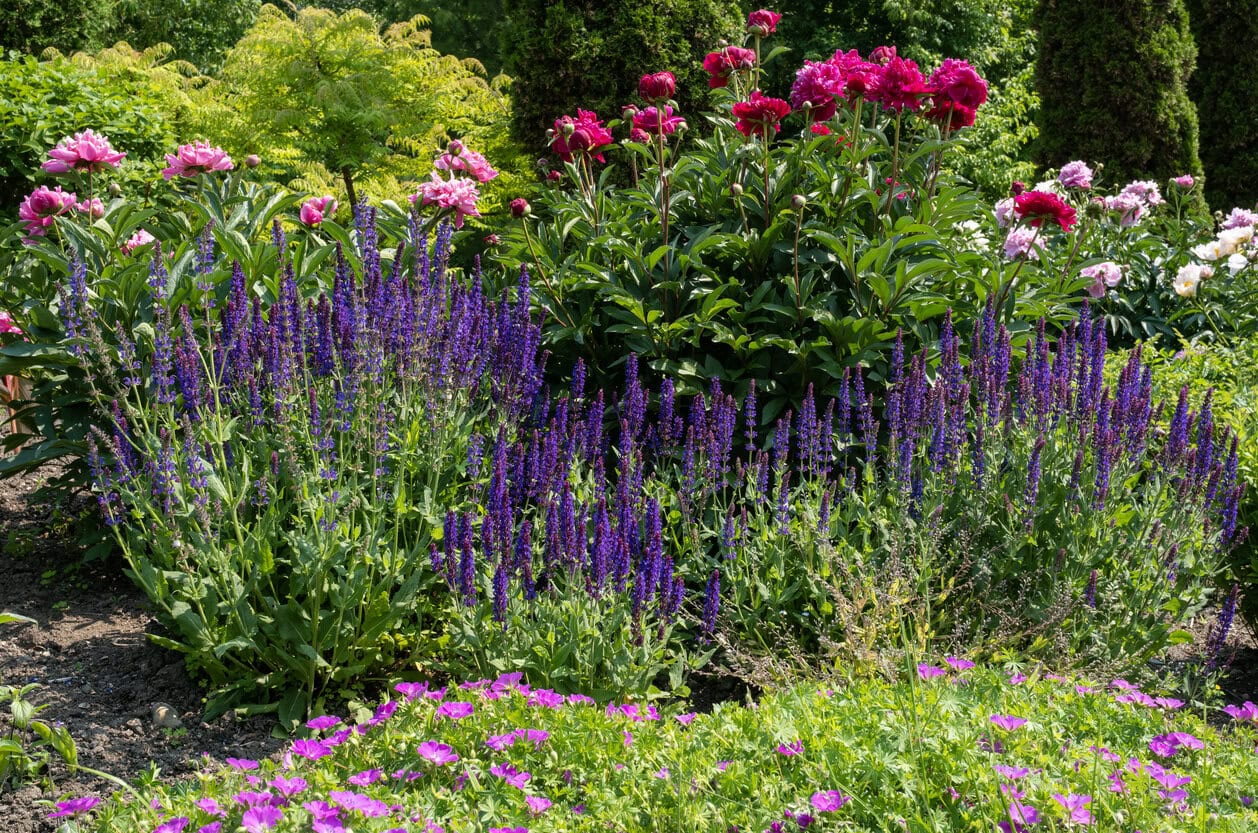
Salvia stays tough as nails, thriving in those breezy, well-drained corners where my peonies feel most at home. I rely on that deep indigo punch to make a pale pink bloom look practically neon.
Beyond the visual drama, salvia’s strong scent can make the area a little less appealing to rabbits, while the local bees still find their way to the nectar. If you plant in clusters, it also helps shade the soil, reducing moisture loss. A real salvior.
Quick tip: Plant salvia about 12 to 18 inches away from peonies in full sun. Avoid overwatering, both plants prefer soil that drains well between deep soakings.
The Guest List From Hell

Some plants are simply terrible roommates for peonies, either because they spread too aggressively, drink too much water, or steal the spotlight.
The Peony-cle of Success
One reason you avoid wearing white to a wedding is to let the bride shine without a fight. Peonies demand the same level of respect. These specific companions are invited because they get along well, smell good, and fill the gaps without trying to steal the hors d’oeuvres.
And when the season wraps up, we also break down whether you should cut peonies back in fall or leave them standing through winter.