If I had a dollar for every time a well-meaning neighbor drowned a perfectly good hydrangea in bloom booster chemicals, I’d have a much bigger greenhouse.
Let’s set the fertilizer bag down for a second and talk about how to feed these plants before you stress the roots or end up with more leaves than flowers.
My Go-To Fertilizer Advice for Healthy Hydrangeas
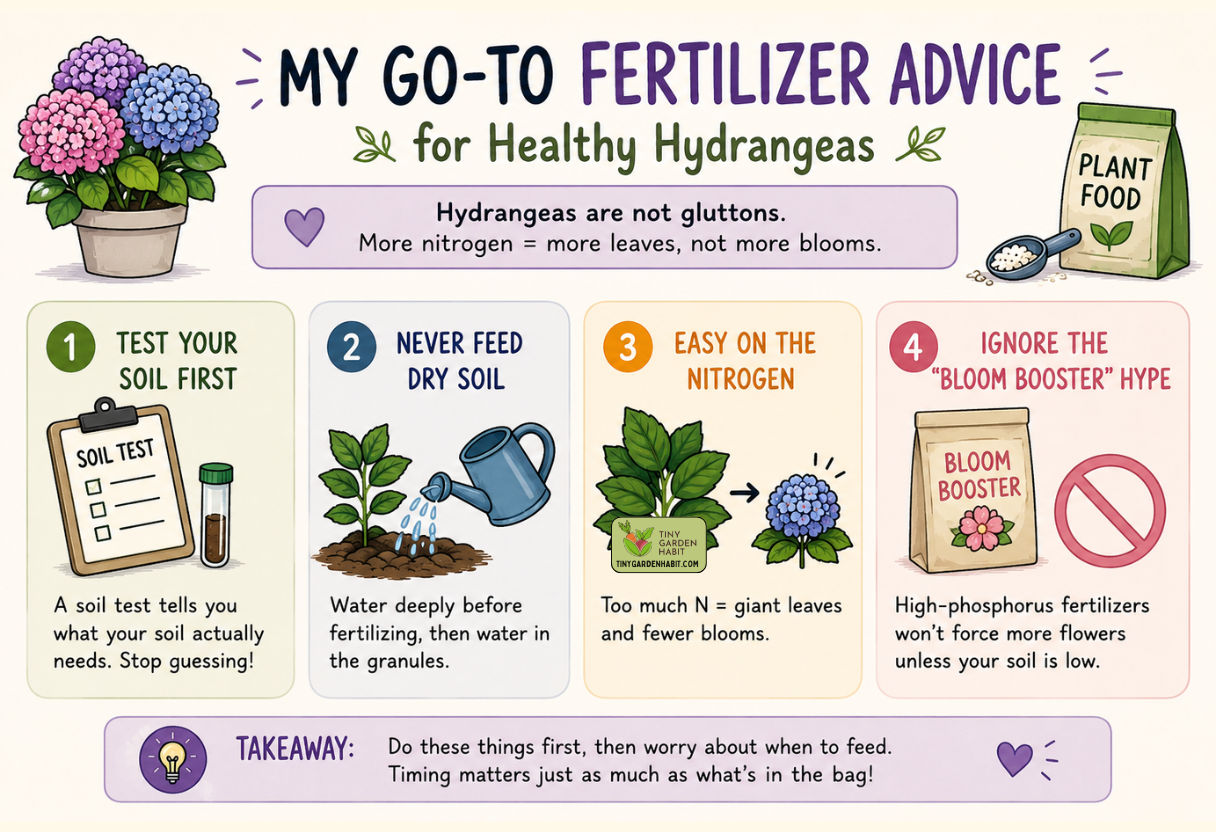
The first thing you need to learn about hydrangeas: they are not gluttons like me. If you treat them with nitrogen like I treat myself to gelato, you’ll end up with giant green floppiness and fewer blooms.
Before you buy anything, though, know these hydrangea table manners:
Now that you know what not to do, let’s get into when hydrangeas actually need feeding, because timing matters just as much as what’s in the bag.
Your Month-by-Month Feeding Game Plan
When a gardener in Georgia is already sweating in the dirt, someone in Maine is still shoveling snow. So, use this calendar as a guide, but time your feeding to when your hydrangea actually wakes up and starts producing new growth.
January and February: Hands Off

Your hydrangeas are sleeping. While they’re dormant, they aren’t actively using much in the way of nutrients. So don’t worry about feeding them yet because that would be complete waste of your money.
Leave them alone until you see green growth returning to the branches.
No fertilizer does not mean no garden work, we wrote a guide to the essential hydrangea care tasks to tackle in February while your shrub is still dormant.
March and April: The Main Event
This is usually the main feeding window but the exact month depends largely on where you live.
When the buds are swelling, fresh leaves are unfolding, and the soil is no longer frozen or waterlogged, your hydrangea is ready for its main feeding.
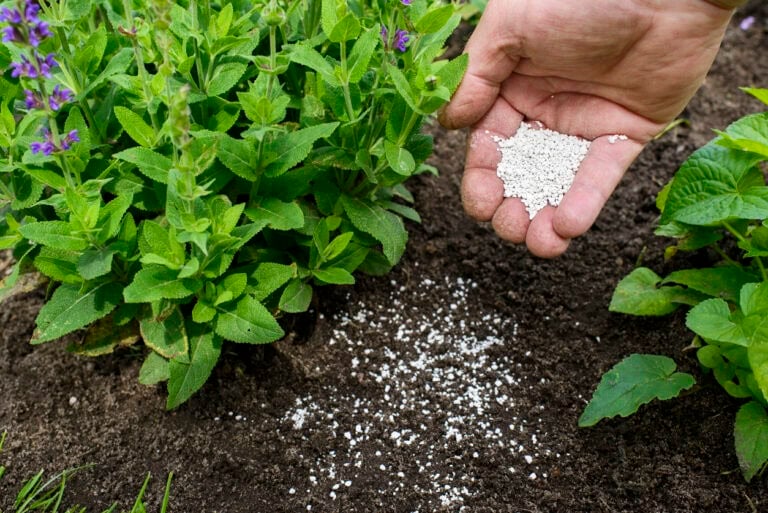
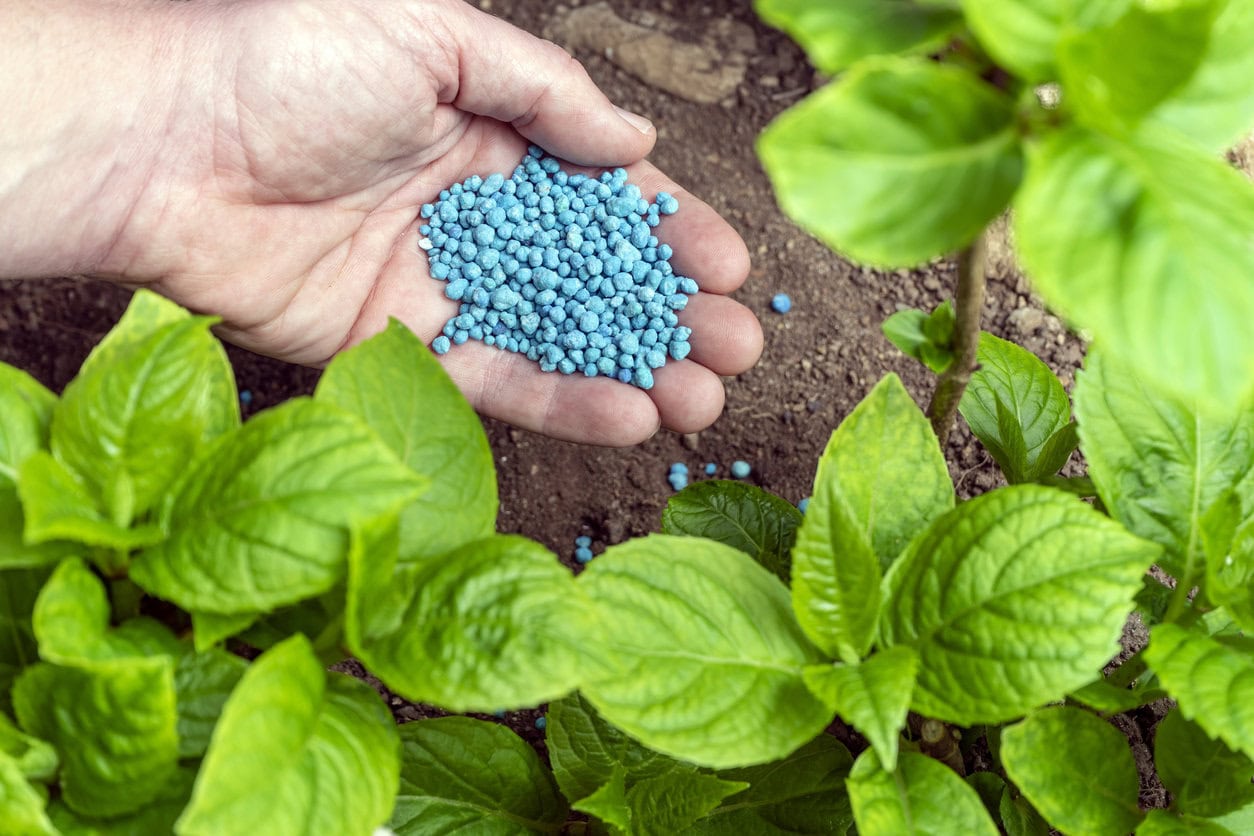
Once growth is underway, apply a balanced slow-release fertilizer, such as 10-10-10, or a gentle organic option around the drip line at the label rate. One well-timed meal is usually enough to support strong stems and healthy leaves.
May and June: An Optional Snack
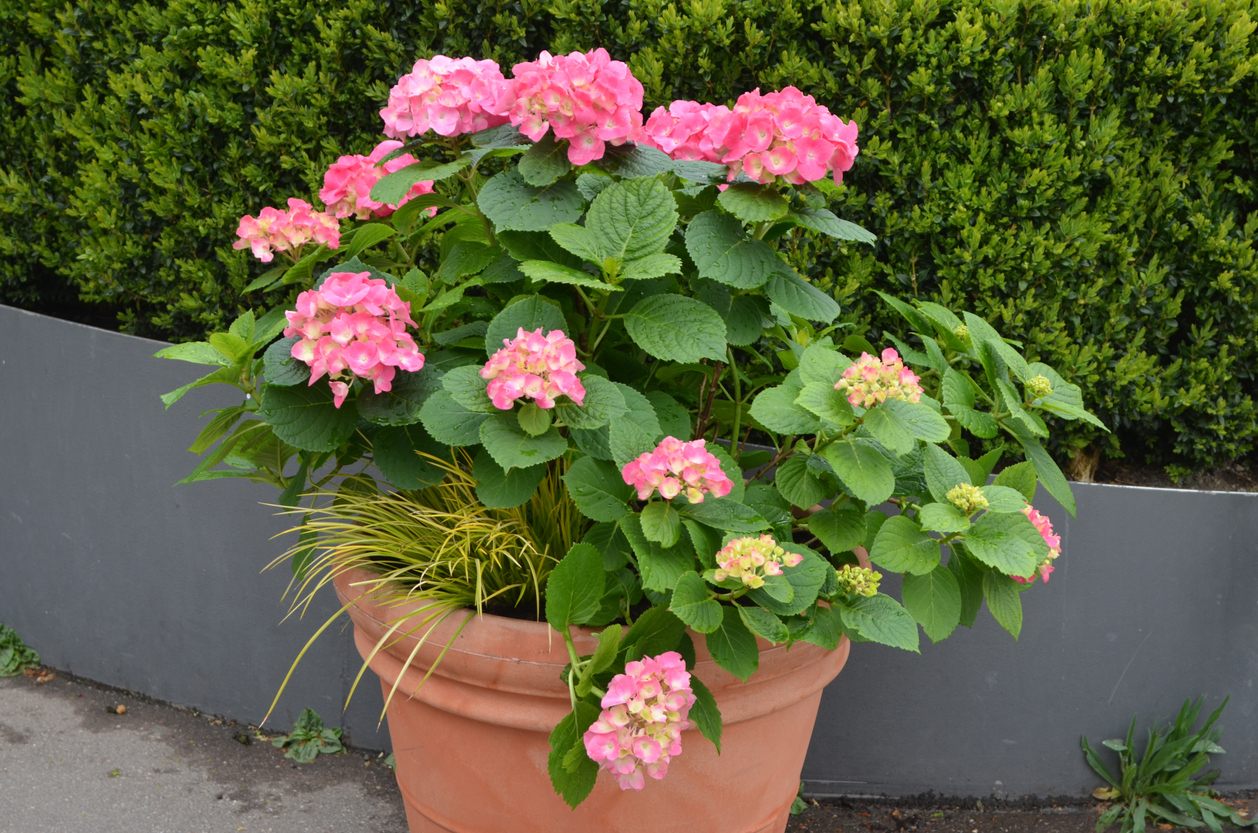
Healthy, in-ground hydrangeas rarely need a second course. If your hydrangea is growing in a container or its growth is clearly weak, consider a light feeding (but only if your soil test or fertilizer label calls for it!)
If a second feeding is warranted, keep it light. Overfeeding a happy shrub now only buys you soft, leafy growth and invites hungry pests to dinner.
Feeding is only one job on the list, so we also wrote a guide to the essential hydrangea care tasks to tackle in May if you want to get the rest of your spring routine sorted.
July: The Last Call

Gardeners in warmer climates, especially USDA Zones 8 and 9, may still consider a light touch-up now if the plant is healthy and the fertilizer label or local guidance calls for it. Everyone else is usually done for the season.
If your shrub starts wilting, scorching, or generally acting offended by July, we wrote a complete guide to what hydrangeas need during hot summer weather.
August Through December: Shut It Down

For most gardeners, especially in cold-winter climates, late summer is the time to close the fertilizer bag.
Feeding now pushes tender new growth just as the plant needs to slow down and harden off for winter, which means you’re basically serving those soft stems to the first freeze.
That new growth is easy prey for a hard freeze, which can blacken it overnight. Let the shrub wind down naturally.
And if you want to do more than close the fertilizer bag, we wrote a guide to the fall hydrangea jobs that prepare your shrub for winter.
How the Routine Changes by USDA Zone
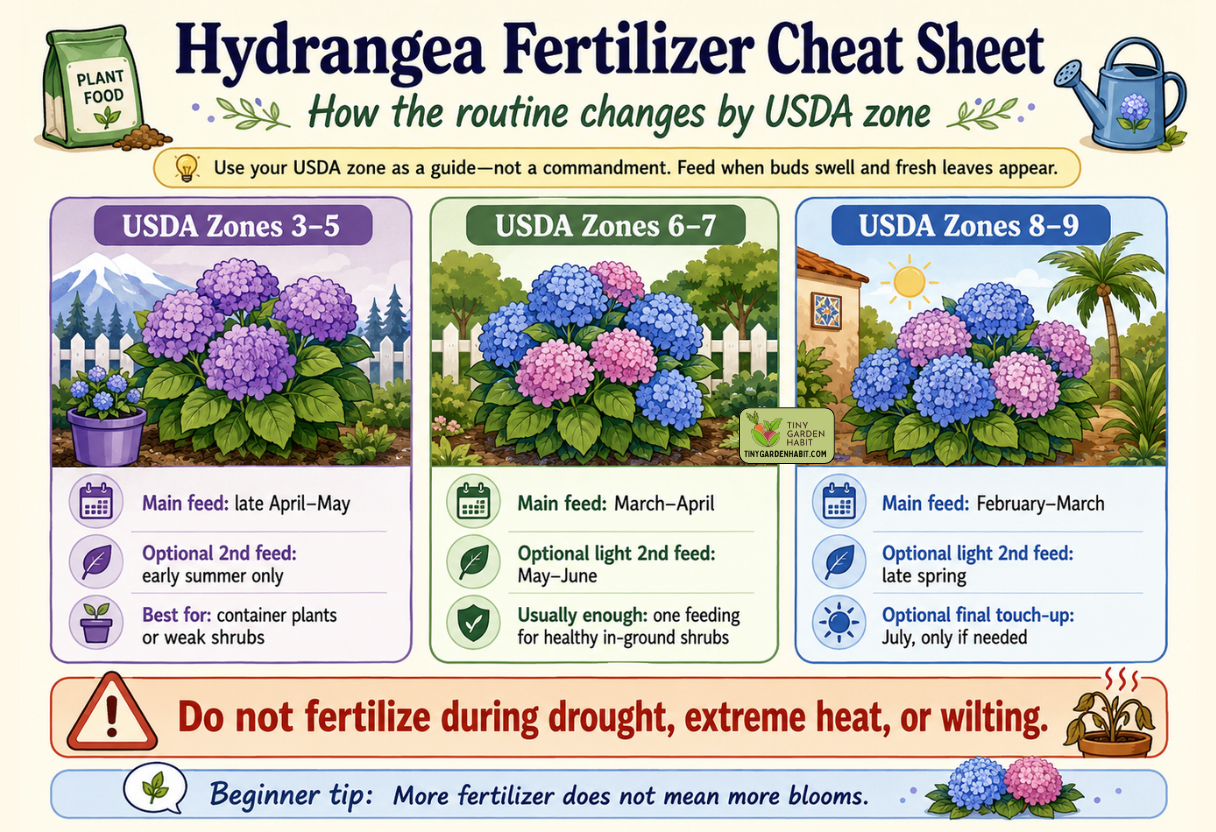
Hydrangeas can’t read maps, calendars, or check weather forecasts, so treat your USDA zone as a starting point (not a commandment!). Watch for swelling buds and fresh leaves, then adjust the timing to what your plant is actually doing.
Why Fertilizer May Not Produce More Flowers

Lush foliage paired with no blooms can point to too much nitrogen. Dumping more fertilizer into the soil will not squeeze out flowers. A barren season is often caused by bad timing instead of bad soil.
And none of those problems will be fixed by dumping more nitrogen around the roots.
So, give it the right light, keep the roots evenly moist, protect vulnerable buds from late freezes, and stop expecting a bag of powder to fix bad timing. Accept the green salad you grew this year and promise to do better next time.
Not sure when yours can safely meet the shears? We explain the best time to prune hydrangeas in each USDA growing zone without accidentally sacrificing next season’s flowers.