As the last colorful petals drop, your chrysanthemums begin their slow descent into plant purgatory. Most people would see this as a sign to say goodbye, but not you.
Instead of tossing them on the compost heap with the rest of this year’s bad decisions, what if you could give them a second life? Now put back on your gardening gloves, you’re going to have to do a little work.
Pruning Mums After Blooming
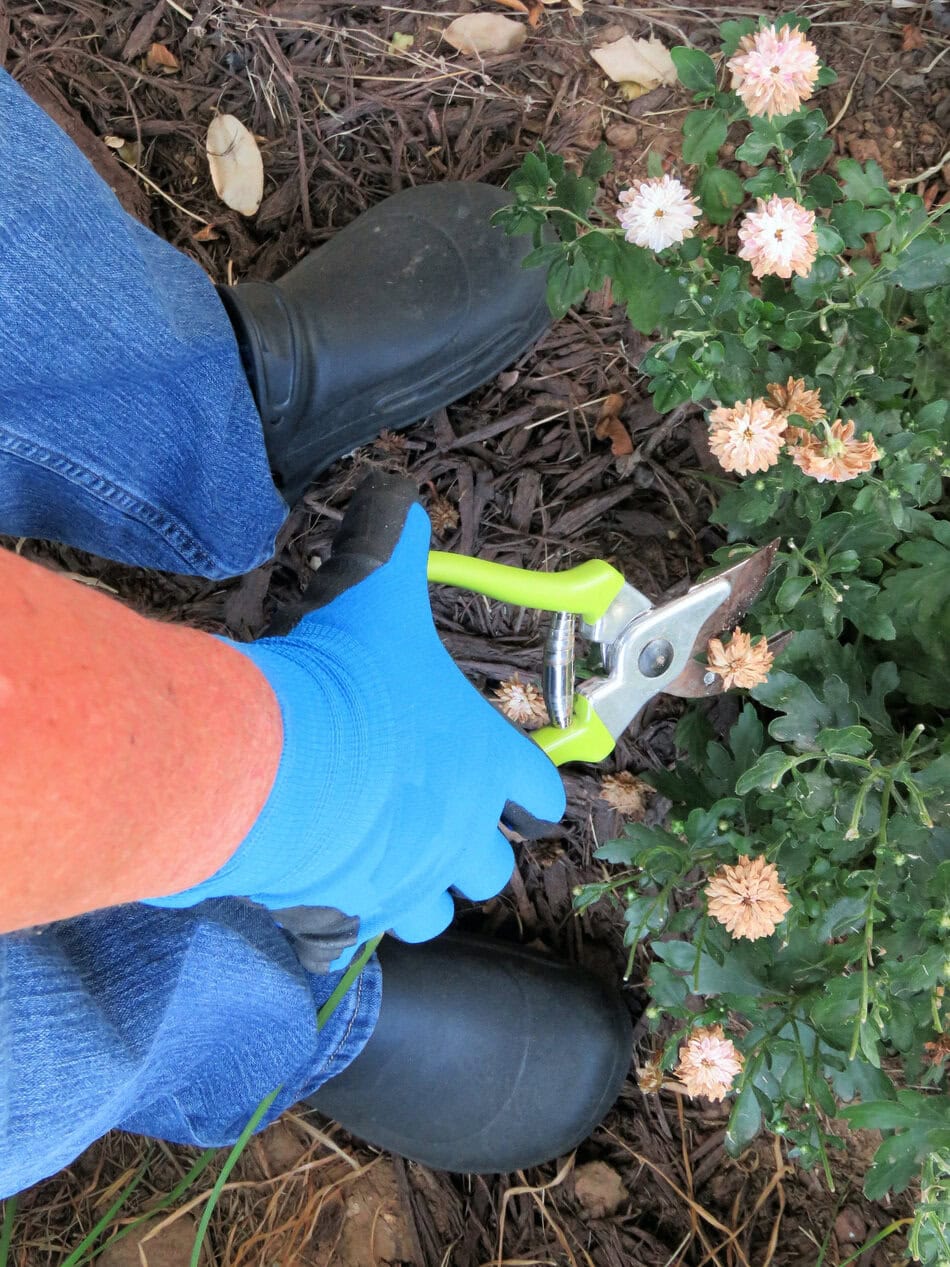
Mums’ job is done, yours just begins. Your task now is to keep them from becoming a permanent resident of the great beyond.
1: The Right Moment
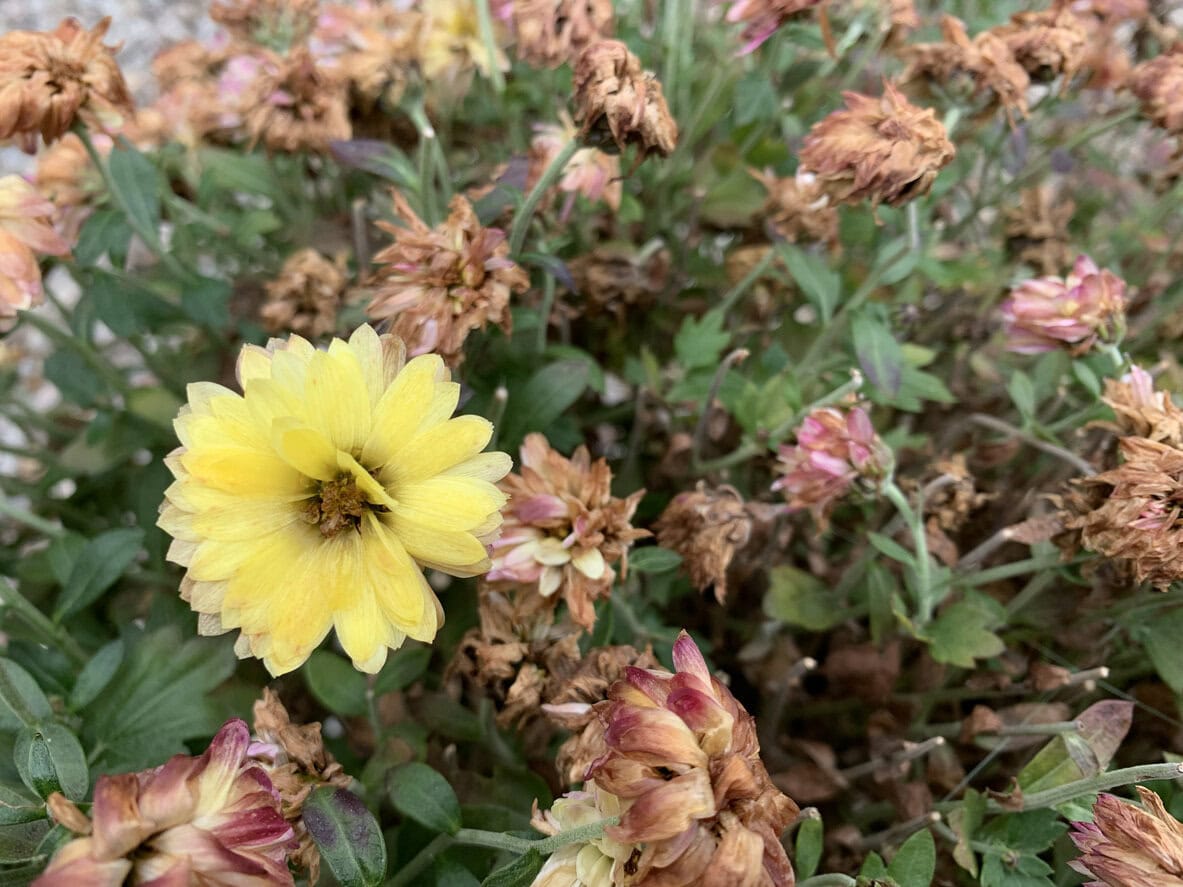
First, a word on timing. Do not get impatient and start hacking away at the first hint of brown. Hold off on the haircut until all the flowers have completely died back and the foliage has browned.
This usually happens in late fall after a few hard frosts have swept through. It’s important to let the plant’s energy return from the leaves and stems to the roots for storage before you cut. The plant isn’t in a rush, so neither should you be.
Quick tip: Some mums will hang onto a little green even after frost, but don’t let them fool you, once the blooms fade, they’re ready for their winter haircut!
2: Gearing Up for Surgery
Hold up. Before you make a single snip, grab your pruning shears and give them a good once-over. This is all about not spreading germs. You have to make sure your blades are clean and sharp.
A dirty blade is a fast track for spreading diseases, and a dull one will only tear up the plant’s stems. That’s the kind of drama your plant definitely doesn’t need. A clean cut lets your plant get right to the business of healing quickly and decisively.
3: The Great Snip
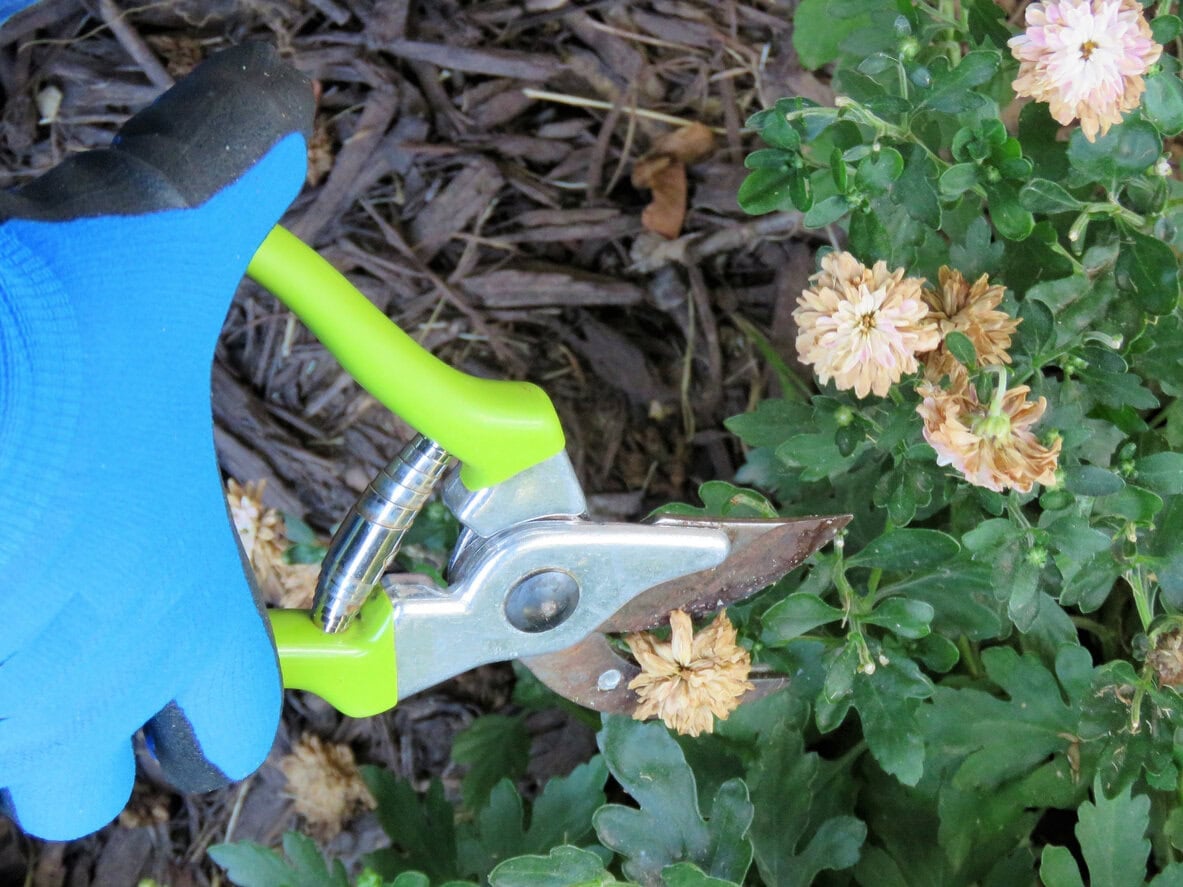
You have two simple options for cutting back the stems, so choose your fighter: partial pruning or full pruning.
For the first option, you can go with the more conservative approach and trim the stems down to about 4 to 6 inches (10 to 15 future units) above the ground. Just picture leaving a little stubble to mark the spot. It will help you find your plant in the spring and give the roots a bit of extra insulation.
The second option is to go for the full crew cut by chopping the stems all the way down to the ground. This move is generally reserved for well-established plants that can handle a little botanical shock therapy.
4: Winter Housekeeping
One last chore. Don’t leave a mess around your plant. All those fallen leaves and dead stems are basically a ready-made Airbnb for fungal spores and insect eggs that would love to set up shop for the winter.
You don’t want to send out an invitation to pests and diseases. Instead, make sure the area is clean and ready for the cold season ahead. So, if you’ve ever had slugs take over your mums in spring, now you know why! Winter debris makes the perfect little hideout for them.
And if you’re on a pruning roll, here’s a guide to which perennials should get a fall haircut, and which ones prefer to stand tall until spring.
What a Mum’s Life is Really Like After Fall
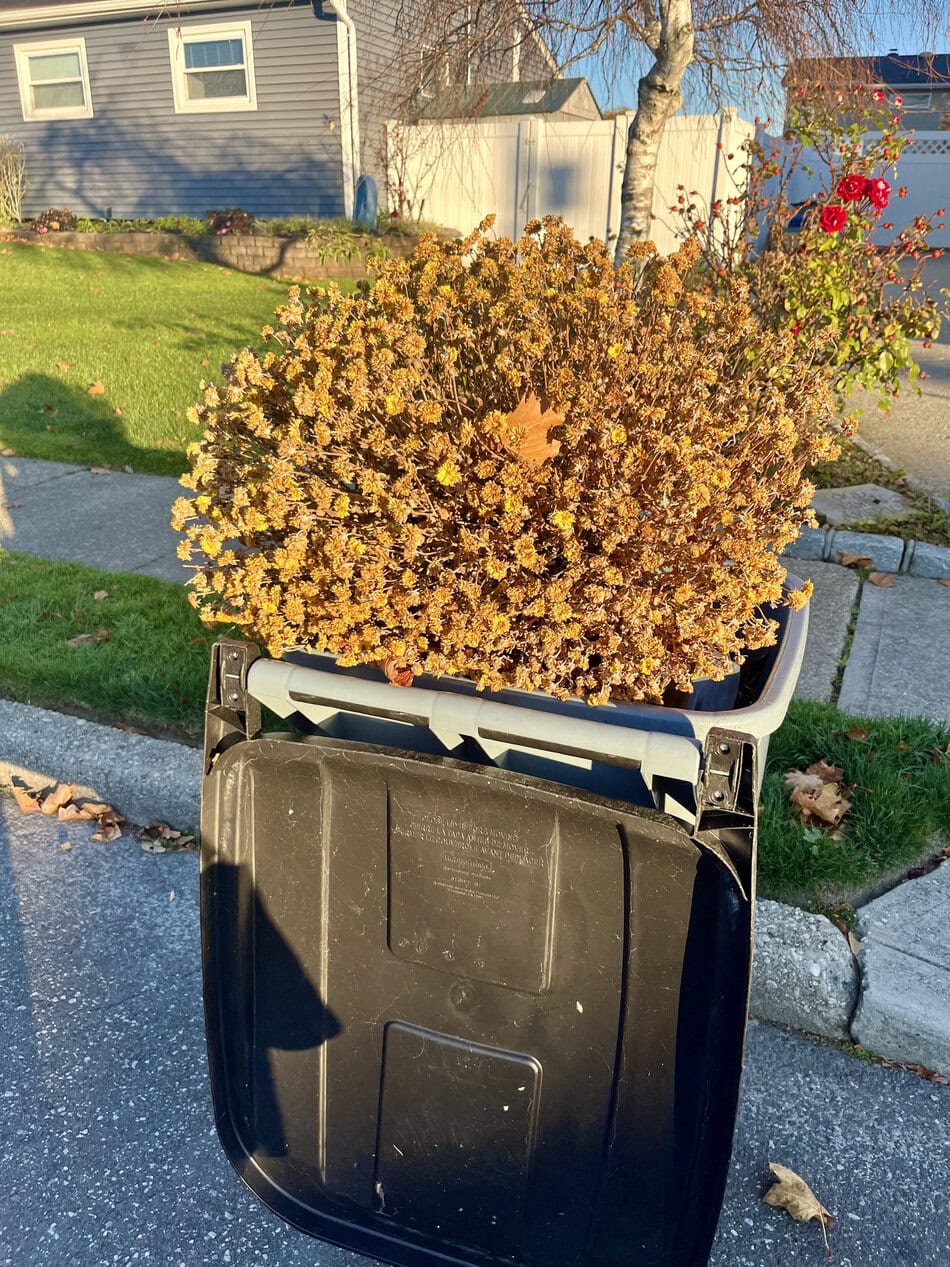
So yes, this is what a mum’s life is really like after fall… wink wink. Just kidding! You’re not tossing yours out. Your mums are about to enter their quiet season, so it’s time to find out why mum’s the word on their winter preparation.
The Great Mulch-A-Thon

First, go heavy on the mulch. We’re talking a thick layer, which acts like a plant’s personal puffer coat. A proper blanket of mulch is essential because it keeps the ground temperature stable, protecting the roots from the kind of temperature swings that would stress out anyone.
Quick tip: Just don’t mulch too early, you want the soil cool first so you’re locking in cold, not heat!
You can use good materials like straw, shredded leaves, or wood chips. They’re perfect because they protect without compacting the soil too much. They’re like a lovely breathable duvet for your plant’s roots, not a heavy-duty lead blanket.
Time to build a nice little fortress for the winter. Pile on a cozy layer of mulch to a depth of about 3 to 4 inches, which is roughly 7.5 to 10 elsewhere units. While you’re at it, make sure it covers the base of your plant and extends a little bit past the drip line. Once the roots are fully covered, they are ready for a deep sleep.
And if you’re mulching other parts of your garden too, here’s a quick cheat sheet on which plants appreciate a cozy winter blanket, and which ones absolutely don’t.
One Last Drink

As for watering, your plant should not be overwatered in the fall. Pour it one final but deep drink before the ground turns into a solid brick of ice. Just keep the roots from completely drying out, not soggy. After all, nobody likes to sleep with wet feet.
Just a quick heads-up from experience: hardy garden mums bounce back beautifully with good mulch, but florist mums from grocery stores are hit-or-miss even with perfect care.
Chrysanthemum’s Overwintering Options

Your mum has a choice to make, depending on its living situation.
If you’re in Zones 5-9:
If you live in a climate where the ground doesn’t freeze into a solid brick, your plant can tough it out. A plant’s a lot hardier than you think, but don’t get too confident! Even with a good mulch and a proper prune, extreme temperature swings are always a risk.
If you’re in Zones 1-4 (or in a pot):
Well, it’s time for a winter getaway. And just to be clear, it’s the plant that gets the winter vacation, not you! Either gently dig up the plant and put it in a pot, or just move its container inside.
Now, go on and chop back the stems like we talked about. Find a cool and dark place, like an unheated basement, a politician’s soul, a garage, or a corporate meeting. Get it to hang out somewhere around 35 to 45°F, which is 2º to 7º across-the-pond degrees. Your plant will be dormant, so water it sparingly.
If you’re not sure which of your other plants should also be rescued before frost, I’ve got a whole list of the ones that absolutely need to come inside, it saves a lot of heartbreak in winter.
A Final Prayer to the Gardening Gods

You’ve babied it through the fall and gave it a royal tuck-in for winter. The rest is entirely up to your plant and the whims of nature. Now all that’s left is to wait for the thaw and hope your mum is not a morning person when spring rolls around.
While you’re in winter-prep mode, some shrubs actually need coats of their own, I put together a list of which ones deserve a little extra wrapping before the deep freeze hits.