
If you’re anything like me, the last thing you want to do is spend a chilly afternoon cleaning up your garden.
And yet, what you must, you must, because the alternative is a garden that looks like a fraternity house after a party; half-dead, a little smelly, and full of questionable messes.
Or perhaps, there is a better way. A secret that ensures your garden wakes up next spring ready to party.
The “Tough Love” School or Which Perennials to Cut Back in the Fall

These plants are the party poopers who can’t handle a little cold weather. They’ll just wilt into a pathetic eyesore, so trust me, you do not want them hanging around.
For these plants, the rule is simple: if it looks like death, it probably is.
A little prep now makes spring so much easier. Here are a few pre-fall garden jobs I always try to check off before winter settles in!
Peonies:

Once their leaves shrivel into a brown mess, it’s time to send them to bed. A swift act of self-preservation, cutting the stems all the way to the ground defends against botrytis blight. It’s a fungal disease that gives them the look of a moldy wool sweater worn for a week.
Not sure how far to cut? Here’s a little more detail on whether to cut back peonies in fall or leave them until winter.
Daylilies:

They may have been a summer highlight, but their spent foliage is a haven for rust and other garden miscreants. Give them a buzz cut. A clean slate now means a pest-free start in the spring, so you won’t have to deal with a crime scene later.
Some gardeners leave the foliage as a natural mulch, but trimming now keeps disease at bay.
Hostas:

After a hard frost, hosta leaves turn into a slimy puddle of green. Cut them back to ground level. You’re not being cruel at all. You’re evicting the slug and snail population before they can set up a winter lair!
But If you don’t mind the look, you can leave the mush until spring.
If your hostas are getting crowded, fall is also a great time to divide them, here’s a good walkthrough on how to divide hostas in fall so they stay healthy and happier!
Garden Phlox & Bee Balm (Monarda):

These two are no-no-notorious for attracting powdery mildew, which makes them look like they’ve been flour-bombed by a toddler. Trim their stems down to a few inches so the spores don’t survive for a winter hibernation.
Grab your sharpest shears and get to it!
Quick reminder: Whatever you do, do not compost the trimmings. A plant high on fungus is on a bad trip. Treat it like biohazardous waste that it is. You do not want that stuff party-crashing your compost pile.
Some perennials even push out new blooms if you cut them back mid-fall, here’s a list of flowers that bloom again after a fall cutback.
The “Live and Let Die” School or Which Perennials to Leave Standing

Not all plants are a lost cause. A garden’s winter aesthetic is defined by plants built to stay fab even when the temperature drops. Frankly, they’re better off without you. For them, the only real work is putting your pruners away.
Echinacea (Coneflower) & Rudbeckia (Black-eyed Susan):
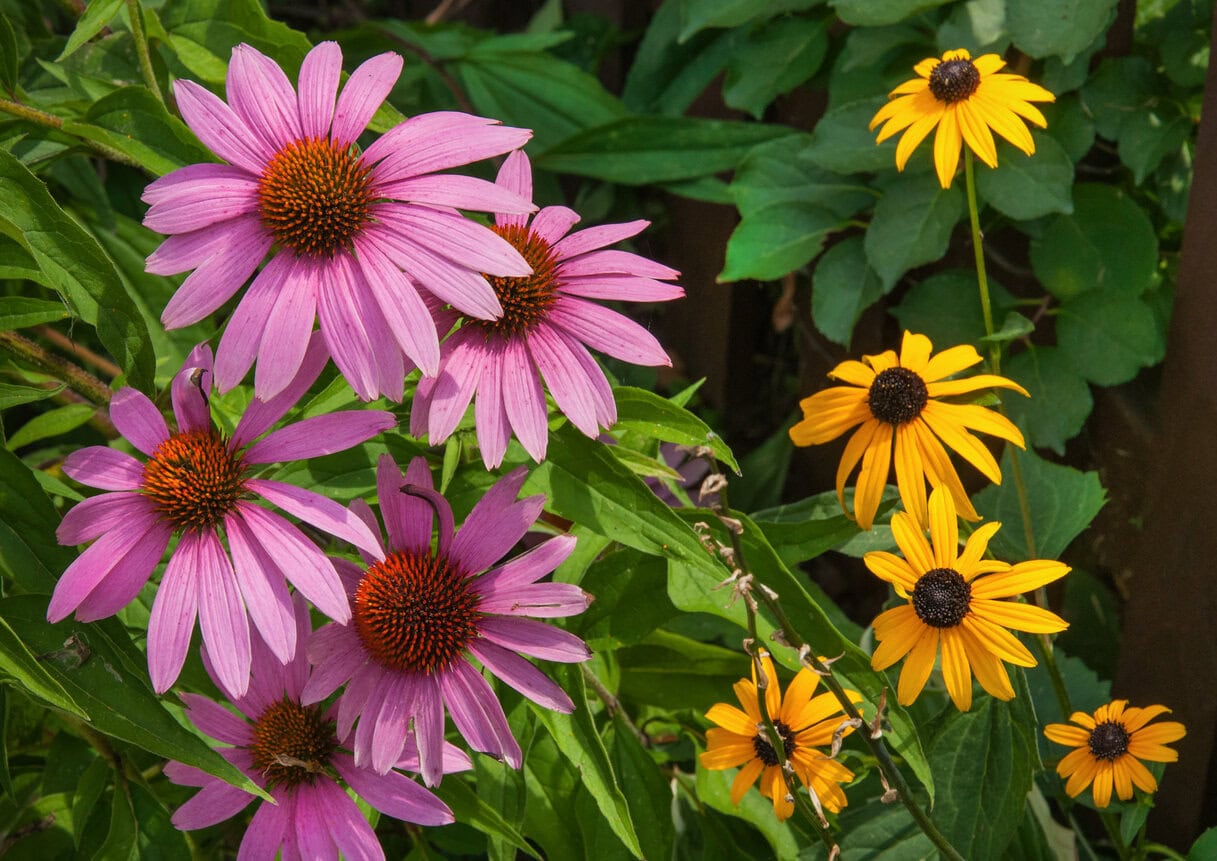
You could chop them down, but then you’d be robbing the local bird population of a delicious snack. Their seed heads are a winter pantry, and besides, the spiky silhouettes look fantastic against the snow. Consider it botanical bribery for wildlife.
Leaving seed heads standing is also one of the best ways to feed birds through winter, more ideas here: plants you shouldn’t cut back if you want to help wildlife.
Sedum ‘Autumn Joy’:

While others are rotting into a sad pile of mush, these guys are the garden’s permanent stoics. They can teach a masterclass in architectural elegance, and their dried heads look even better covered in a fresh coat of frost.
Ornamental Grasses:

You wouldn’t walk a shaved dog in a blizzard, so avoid cutting back your ornamental grasses. Their plumes and stalks provide essential insulation for their roots. Leave them until spring for the best protection and winter structure, then cut them back before new growth starts.
And to be honest, they’re one of the only things that can make a winter garden look intentional.
Heuchera (Coral Bells):

Most varieties of these are the garden’s most reliable friends. They hold onto their colorful foliage all winter long. Don’t touch them at all. They’re just chilling.
Just don’t think you’re off the hook forever!
Quick reminder: These perennials are the last guests at the party, and you’ll have to deal with them in the spring. Wait until the last hard frost, then snip the old stalks to make way for a fresh new start.
Few Final Tips for the Task Ahead

Now that you’ve got the know-how, let’s get into the how-to, with a few final tips that are a cut above the rest.
All’s Wealthy That Ends Healthy

The best gardeners are often the laziest. – Anonymous.
Regardless of the truth, your garden’s future is now in your hands. A few precise cuts and a moment of disciplined inaction now will guarantee your spring self will thank your fall self for your strategic genius.
If you’d like a bigger picture of what to prune now versus in spring, this spring pruning guide breaks it down nicely




Learning
Hi Ernest! 😊 So glad you found it helpful!