Some people ponder the meaning of life. Others lose sleep over whether they’ve watered the basil enough. And then there are us, the truly dedicated, who stare at a fading black-eyed Susan and wonder if a simple trim is a sign of betrayal.
To be perfectly honest, it’s not exactly a life-or-death situation, but that doesn’t mean it’s not a matter of style.
Black-eyed Susan ID Card
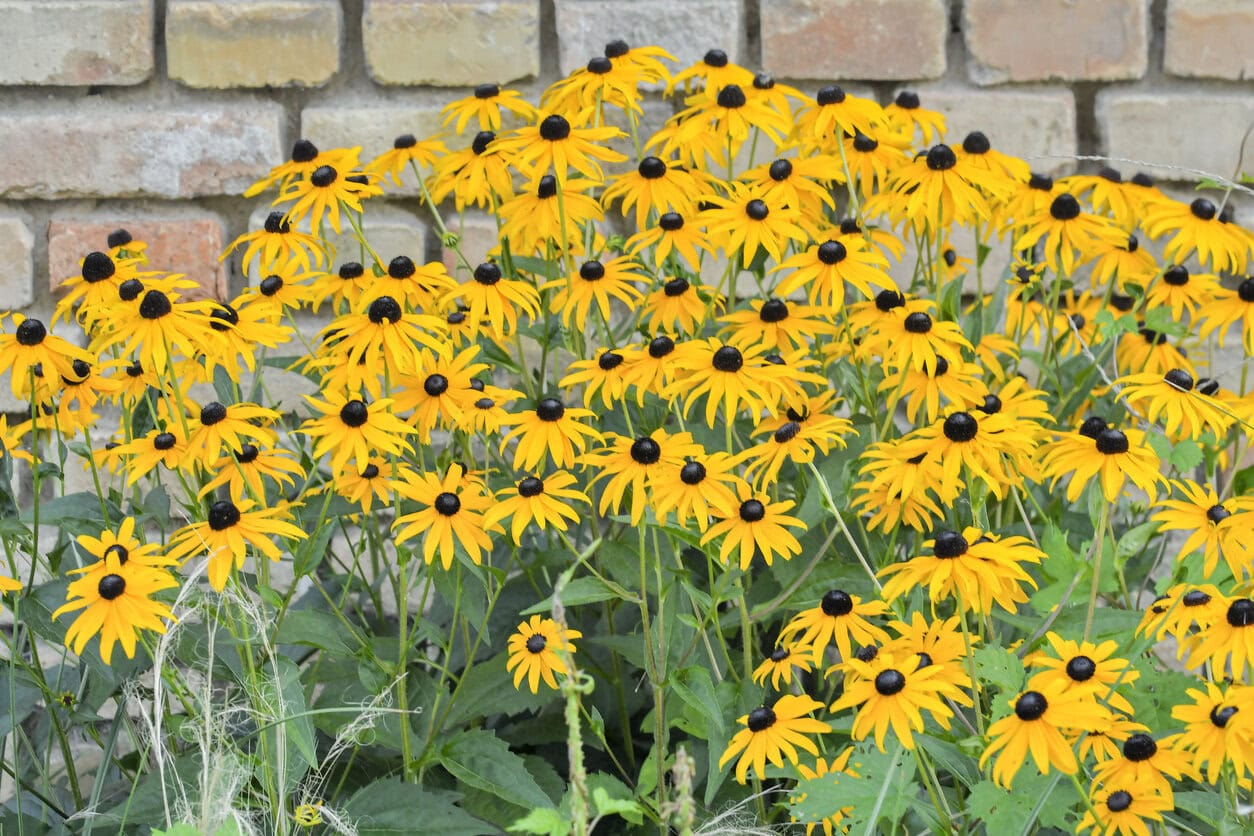
Before you start snipping, get to know your subject. According to its birth certificate, its name is Rudbeckia. You might know it as the Gloriosa Daisy, Brown-Eyed Susan, or even a Coneflower (although not correct, so don’t call it that in front of the Echinacea, the real coneflower!).
As a native of North America and a member of the huge Asteraceae family (which includes sunflowers and daisies), it’s a pretty tough cookie.
In the height department, they’re usually one to three feet tall, which is about 30 to 90 cm. Though some will definitely surprise you by shooting up a bit higher, like R. hirta that can reach 4 ft.
And let’s not forget their social life. Black-eyed Susans are a buzzing hub for the local pollinator community.
If you want to get specific, some of the most popular party-goers you’ll find are the classic Rudbeckia hirta (short-lived perennials often grown as annuals) and the fabulous Rudbeckia fulgida ‘Goldsturm’ (a hardy perennial that return reliably each year).
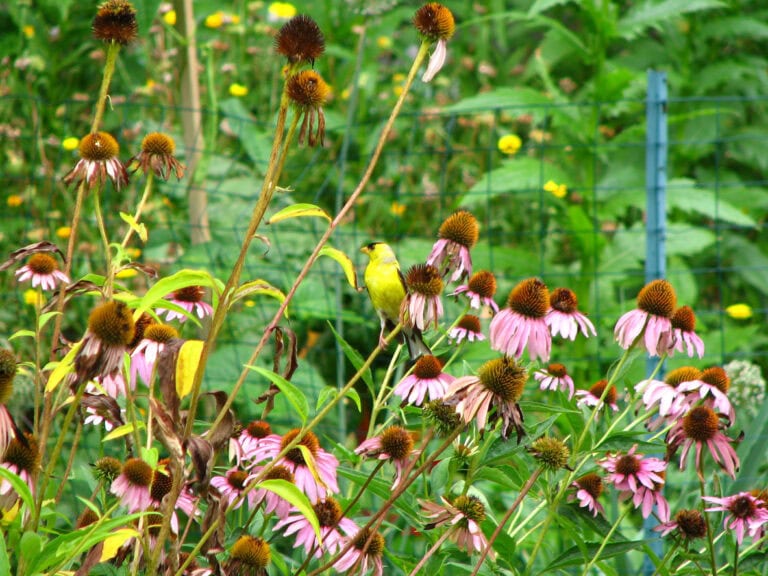
Since, coneflowers often get mixed up with Rudbeckia, here’s how to deadhead coneflowers the right way.
The Cutting-Edge Guide to Pruning Lingo
In the world of black-eyed Susans, not all haircuts are created equal.
Pruning is the general term for any deliberate cut you make for your plant’s health or shape. On the lighter side of that is trimming, a quick tidy-up to remove a few unruly stems.
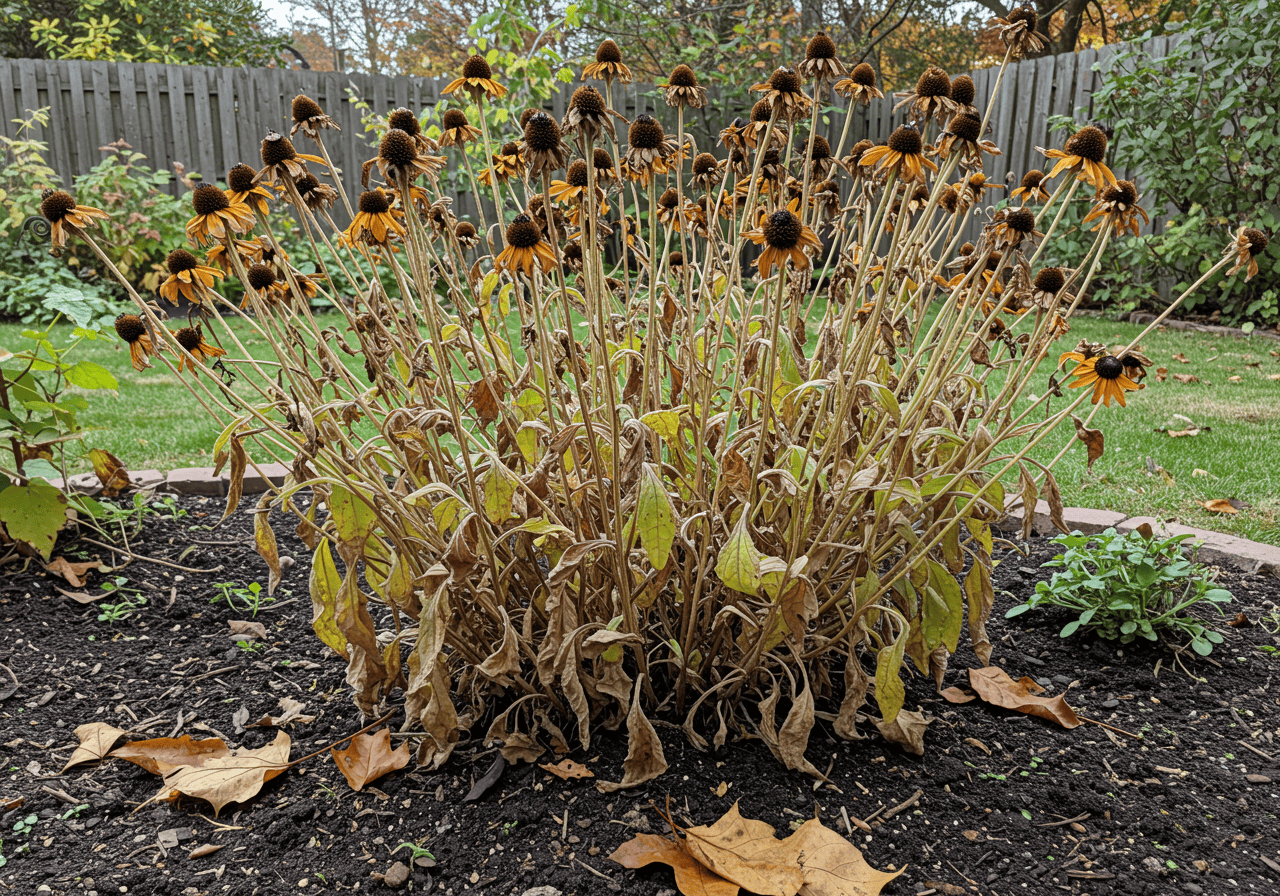
The most dramatic cut (the one we dedicate to here) is cutting back, which is an aggressive prune where you are taking off a significant portion of the plant’s height, not just a stray leaf or two.
If snapdragons are in your garden too, here’s how to deadhead them in summer so they keep blooming strong.
What Are the Shear Delights of Pruning Black-Eyed Susans?
As a proud plant parent, I’ve had many intense moments in the garden. I’ve yelled at squirrels, given pep talks to said basil, and even stood over Rudbeckias with shears in hand, overthinking like a gamer before a boss fight. So you don’t have to.
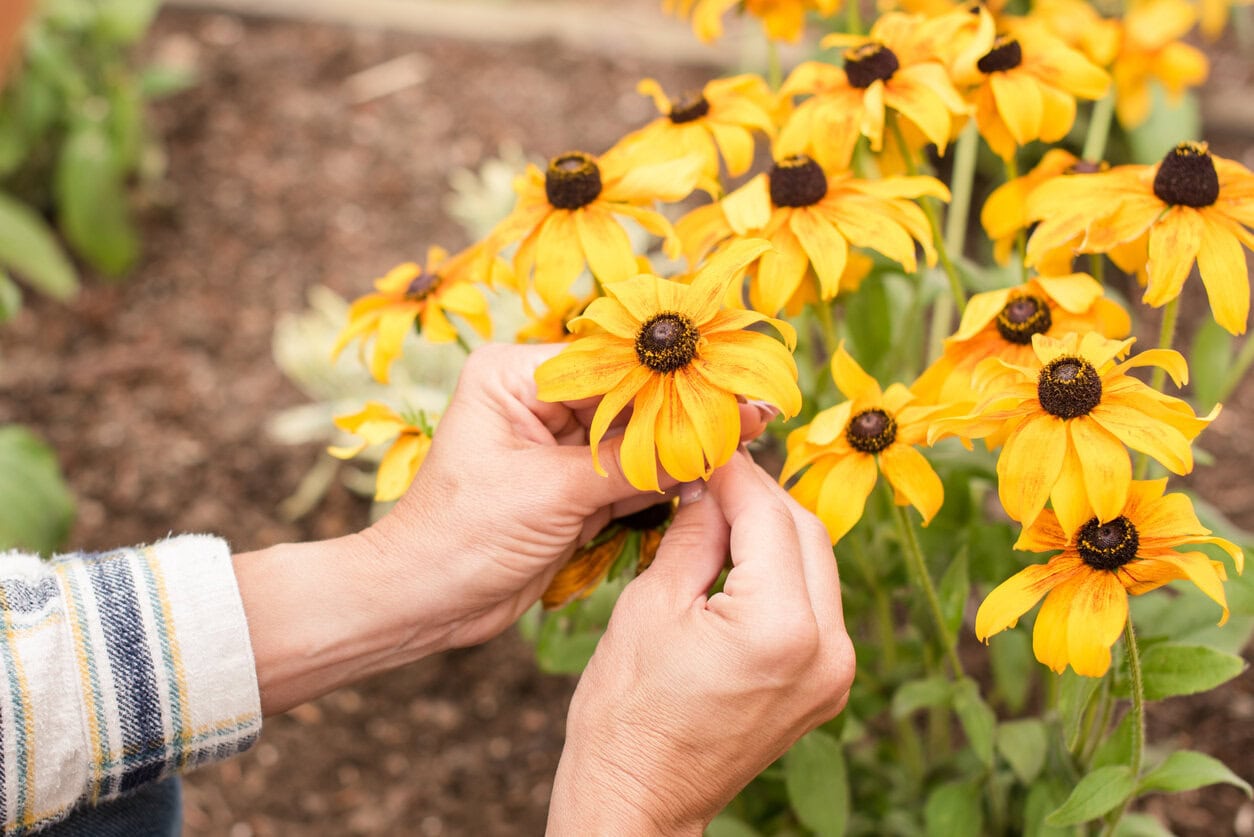
Here’s why you should cut back black-eyed Susans after their first bloom:
Convinced yet?
Quick reminder: If you enjoy wildlife in the garden, consider leaving some seed heads in place toward the end of the season, finches and other birds love them through fall and winter!
Zinnias also thrive with a little attention, here’s how to keep them flowering with regular deadheading.
Your Black-Eyed Susan Pruning Guide
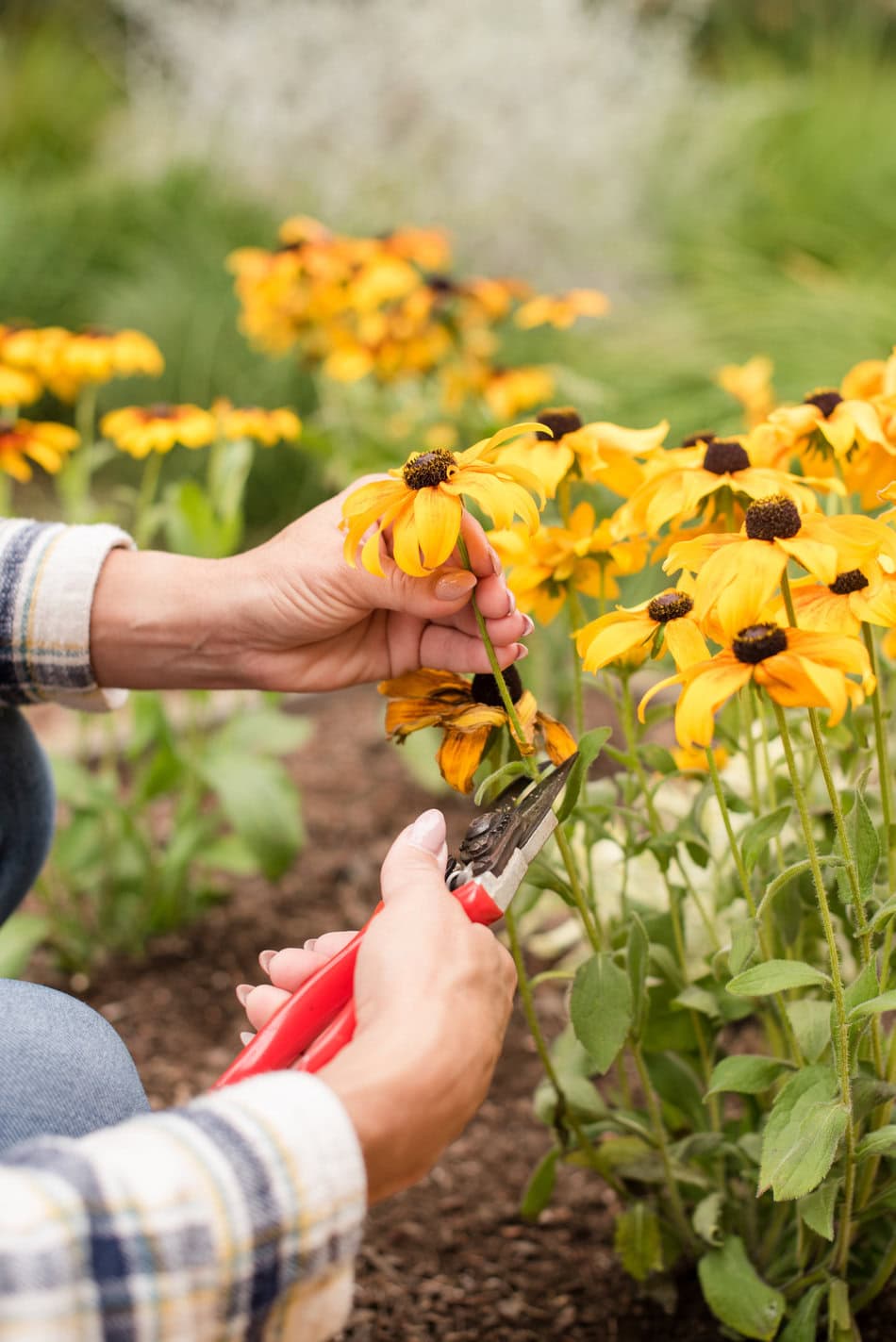
No need to beat around the rudbeckia bush. The answer to our question is a definitive yes. Let’s not leaf you in suspense. Here’s how to get the job done right and maximize all the positive effects.
When to Make the Cut

The best time for a significant chop is in mid-to-late summer. You will know it is time when the flower petals look droopy and faded. Or when the entire plant starts to look leggy and messy.
Want a more precise guide? You can get one with a hardiness zone map. The number on the map tells you the average coldest temperature your area gets in winter. A higher number implies a warmer climate. As you’ll notice, a Zone 9 is much cozier than a chilly Zone 3.
Want to know your garden’s zone? The easiest way is to look for your country’s hardiness zone map provided by a local agricultural department.
A gardener in a warmer zone might be ready to cut back in July. Someone in a cooler zone might wait until September. But regardless of your zone, always trust your plant over the calendar.
Peonies are another plant people wonder about, here’s what to do with peonies after flowering.
How and Where to Make the Cut
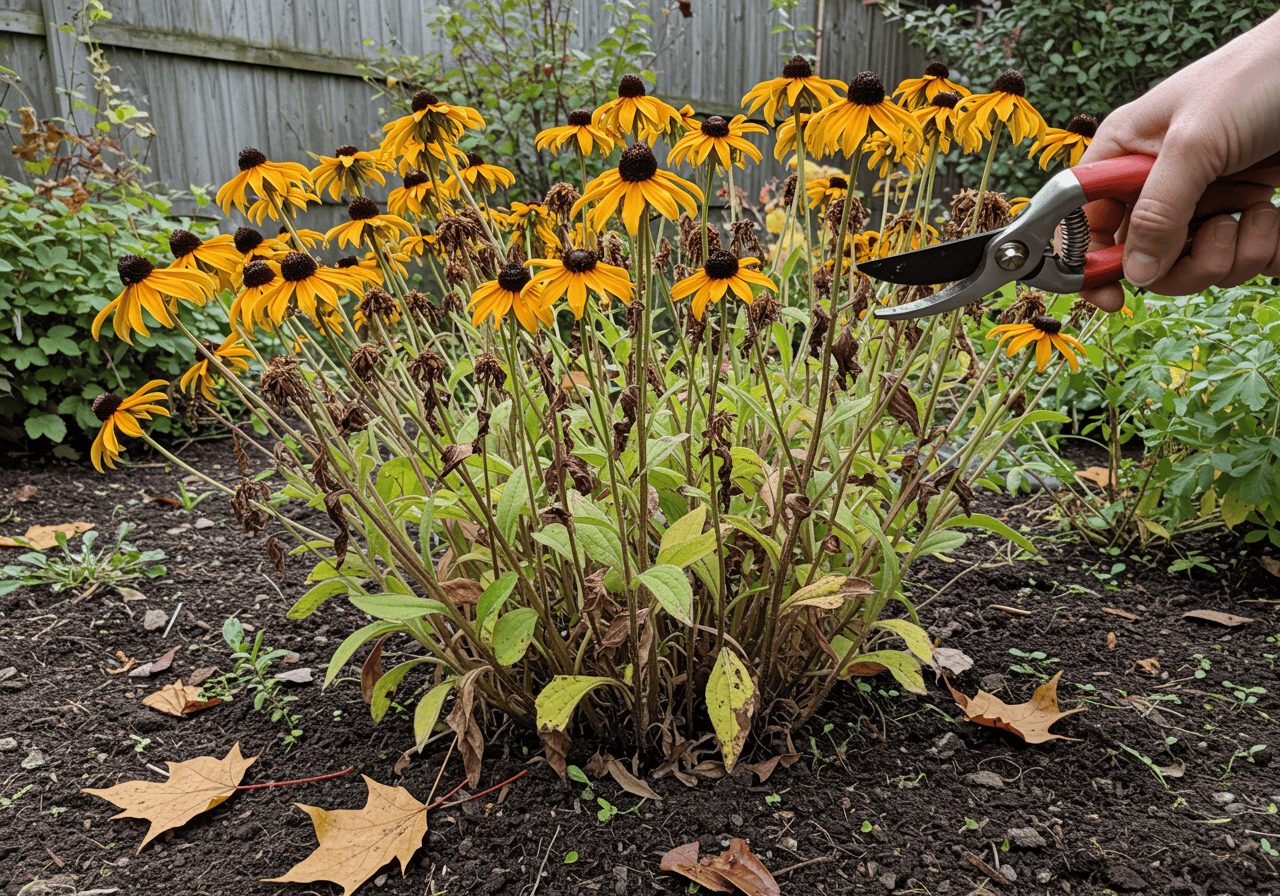
Ready for the main event? Go grab a pair of sharp and clean pruning scissors.
You’ll need to remove about one-third to one-half of the entire plant’s height. And don’t be timid. A confident cut is always better than a hesitant snip.
Make your cut on the stem just above a leaf or a new bud you can see emerging at a slight slant of about 45 degrees. That little slant is a pro-move. It helps water run right off the cut surface, so you won’t have to worry about any nasty rot.
And hey, while you are at it, give the plant a little spa day. Trim off any yellowing or diseased foliage you spot to keep the plant happy and looking its absolute best.
Roses follow a different rhythm altogether, here’s how to decide what to cut back and what to leave after they finish blooming.
Make Your Black-Eyed Susans Look Trim-endous
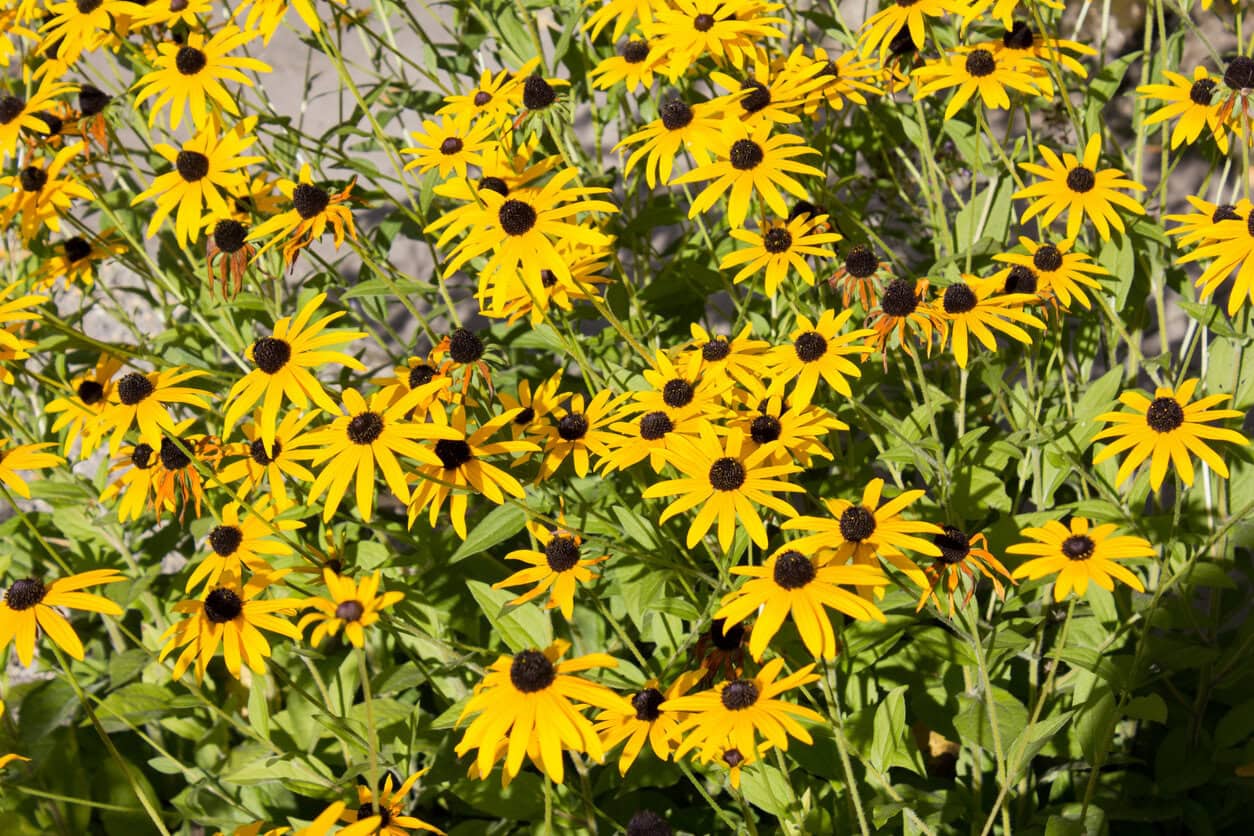
And so, the verdict is in. A few snips here, a confident cut there, and you have summoned a new army of Rudbeckia petals. With your newfound power, you are not just an overthinking gardener. You are the final boss of gardening.
Hydrangeas can be confusing too, so here’s how to handle them after blooming in fall!