If you think fall is just for raking, you are about to have your mind blown. Although your garden gave it a good go this year and now looks somewhat tired, don’t worry, the show isn’t over yet.
With a well-timed snip, you can convince some of your favorite perennials to perform again. So unlike Elvis. Mid-fall cutback is not for those who like being left wanting more, but for those who want it all and want it now.
The Science of the Second Bloom

A mid-fall cutback is a clever trick for a tired plant. It prompts it to divert energy into new growth and blooms instead of storing it (all) for winter. In essence, it hits a reset button on their internal calendar.
You are not chopping them down to the ground, though, just removing old and tired growth. Simply, you are giving your perennial a fresh start …before the end.
A second bloom is the most obvious benefit, but you also get some great perks. The cutback will encourage healthier growth, prevent disease from overwintering, and give your garden a tidy appearance before the first snowflake.
Keep in mind that timing depends on your hardiness zone! Gardeners in Zones 6 to 9 usually get a good second flush, while those in colder Zones 3 to 5 may only enjoy a lighter encore before frost shuts things down
And if you’re curious about what else you can plant right now, take a look at these flowers to sow in fall for spring blooms by zone.
A Who’s Who of Rebloomers

A simple blade can turn the tide of fall, and draw from tired roots a last, final call. Do not let the coming cold leave your garden bare, for these perennials have more beauty to share.
Of course, timing is everything, a few pre-fall garden jobs can set you up for spring before you even pick up the pruners
1. Black-Eyed Susan (Zones 5-7)

You should wield your shears when the first flowers start to fade. Just be sure to resist the urge to chop everything down like a rockstar in a hotel room. Leave a few of the spent heads standing tall for the hungry birds, and enjoy Susan’s pretty great silhouette against the snow.
A fall trim is also your best defense against prolific self-seeders such as Rudbeckia. Your garden won’t be overrun like The Walking Dead hamlet, and you’ll still get that second bloom.
And if you’d like to leave more for the wildlife, here’s a guide to plants you shouldn’t cut back in fall if you love birds.
2. Coreopsis (Zones 5-9)

You may remember Coreopsis, also known as Tickseed, from films such as “A Plant That Won’t Quit” or “As Long as You Keep Me Tidy, I Will Keep Blooming Right Up Until the First Freeze.”
Which is why whenever the flowers start to look tired, you should get in there and give the whole plant a good trim. Shear the plant by about a third, and the reward is a fresh display of sunny flowers. It ticks all the boxes for a great perennial!
Leave a few seed heads standing and you’ll likely see goldfinches stopping by for a snack
3. Salvia (Zones 5-8)

You see the first flowers fade, you snip the spent spikes all the way down to a set of new leaves. That’s all. Salvia is a pro and will try to bloom for you all season.
Do not cut into the woody base, though, as a final trim is only meant for the green stems. A precise cut in mid-fall will coax a final round of blooms before a more aggressive spring cut.
4. Yarrow (Zones 5-9)

Here we go again. You probably already guessed what to do. The difference is that this plant needs a little tough love, so a simple snip will not do.
You must cut the old flower stalks all the way down to the base of the plant. A more aggressive approach is needed to get it to send up a new but smaller flush of blooms. If yarr not already a fan of this tough plant, you will be.
If you don’t cut everything back, small birds like sparrows will pick at the seeds well into winter.
Or, if dividing sounds like a better use of your time, check out these perennials you can safely divide in early fall.
5. Helenium (Sneezeweed) (Zones 5-8)
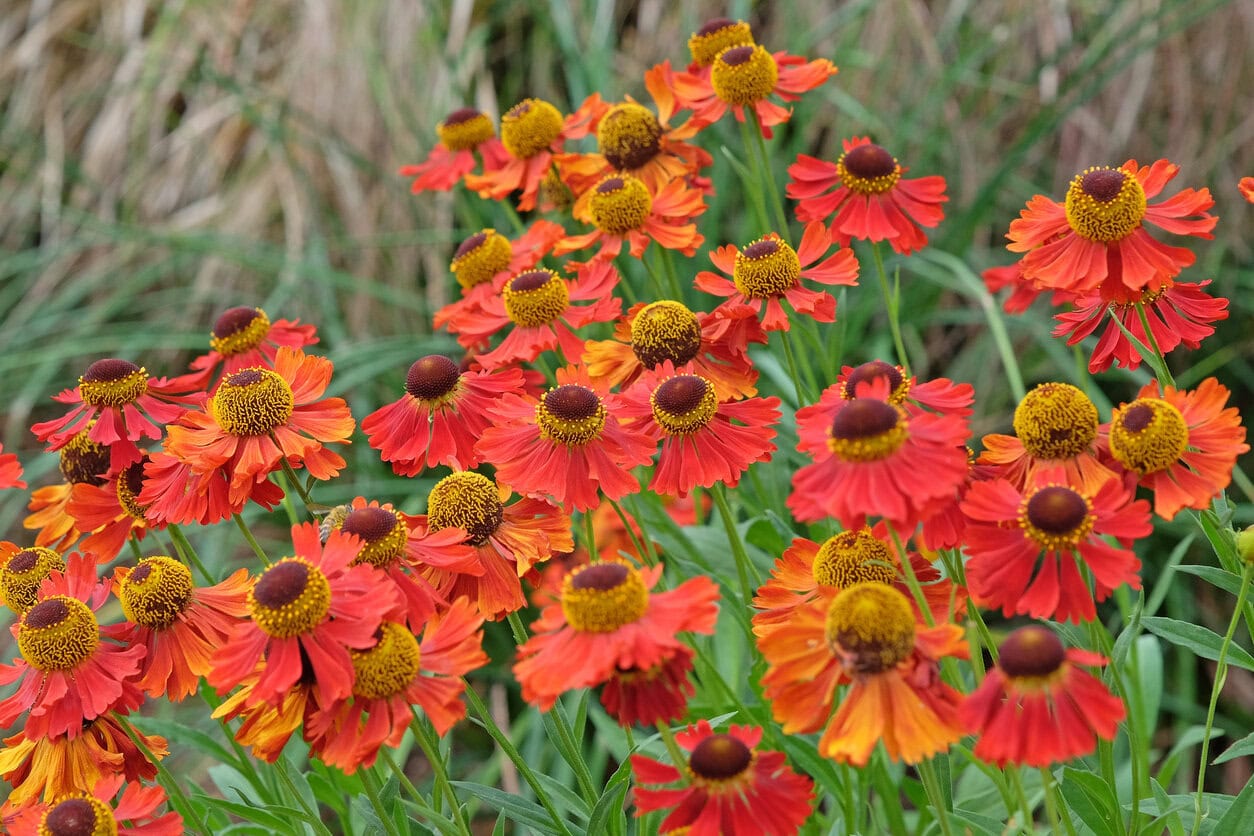
Do not let its name(s) fool you. Sneezeweed has no interest in making you sneeze, and Helenium doesn’t hail from Greece unless Troy is in the Americas.
A full cutback will not get you a second bloom, though, but deadheading the spent blooms will. Helenium is a fantastic late-season bloomer, holding on right up until the hard frost bites. All I can say to that is, bless you.
6. Catmint (Zones 5-8)
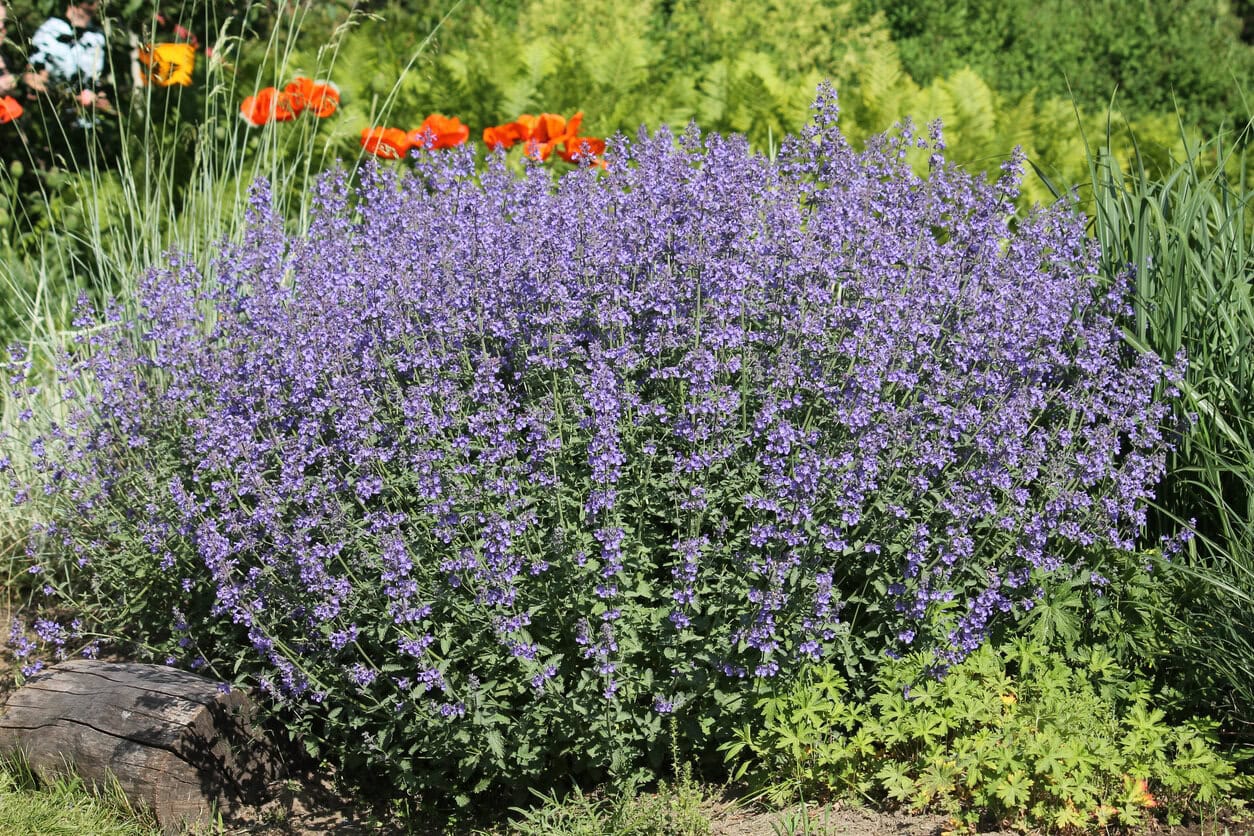
Catmint has a great purr-sonality. When flowers fade, a hard chop is the purr-fect solution. Cut the entire plant back by about a third to inspire new flowers. Also, a mid-season snip keeps mounding plants compact and sturdy by preventing their heavy outer stems from splaying open.
By the way, the fragrant leaves are paws-itively irresistible to your local felines. I’m not kitten you, they will love it!
7. Daylily (Zones 5-9)

To keep it blooming, you’ll need a precise and tidy snip. You do not cut the entire flower stalk, however. Instead, you snap or cut off the spent flower heads individually at their base.
The task is a bit tedious, but a good perfectionist deserves nothing less than a dai(li)ly display of fresh blooms. Daylilies may be a one-day wonder, but the plant still puts on a show all season long.
Quick note: Not all daylilies will rebloom, only certain cultivars bred for repeat flowering, such as ‘Stella de Oro’ or ‘Happy Returns,’ will reward you with extra blooms after deadheading
Go ahead. Make my Daylily!

Get outside. Put on your gloves. Get them dirty. The best end-of-season gardens do not happen by accident unless someone buries a corpse-opsis in your backyard. You can’t just hope for salvia-tion unless you put in a little strategic effort.
And if you’re still deciding what to keep outdoors, here are some fall-blooming flowers that can handle frost.