
You spent all of July and August strutting around the yard showing off your fiery tropicals like you personally invented photosynthesis. But bragging season is officially winding down.
By September is where real gardeners prove their worth, and to save the rhizomes for next year, you need to step between them and the first frost.
Task 1: Continue Removing Faded Flowers
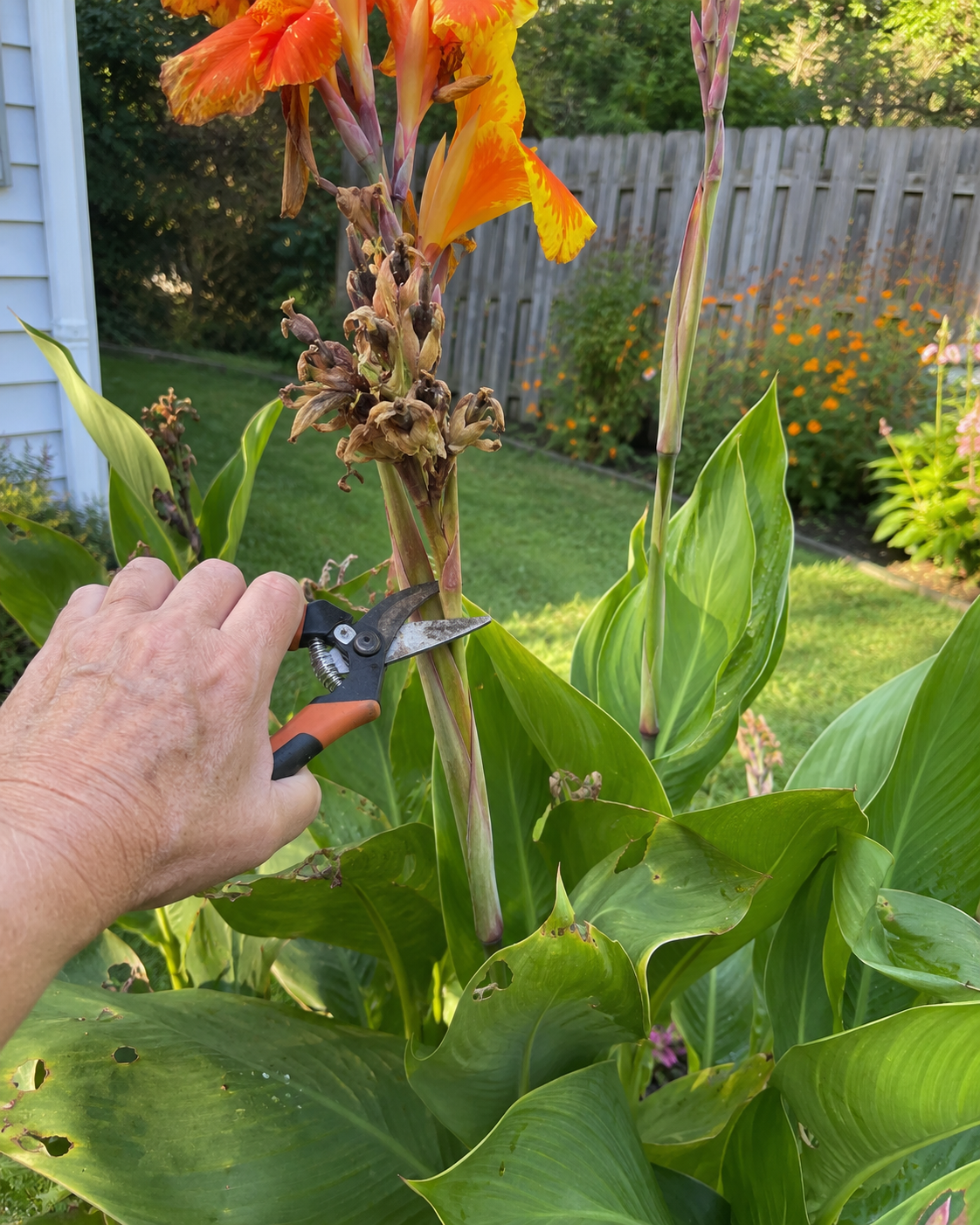
Look closely at those top stalks. Seed pods drain the vital essence right out of your plant like vampires in a B-movie.
Allowing faded blooms to sit around setting seed makes the plant spend energy on seed production instead of finishing the season strong.
I snip off spent blooms and developing seed pods, and once an entire flower stalk is finished, I cut it back to the nearest healthy side shoot or leaf. Do not mince around.
Quick note: Every seed pod you remove now is one less thing the plant has to spend energy on. Your goal isn’t pretty aesthetic balance anymore but strategic hoarding.
If you’re getting the rest of the garden ready for cold weather too, we wrote a guide on which bulbs to cover before a freeze and which ones don’t need the extra protection.
Task 2: Leave Healthy Foliage in Place
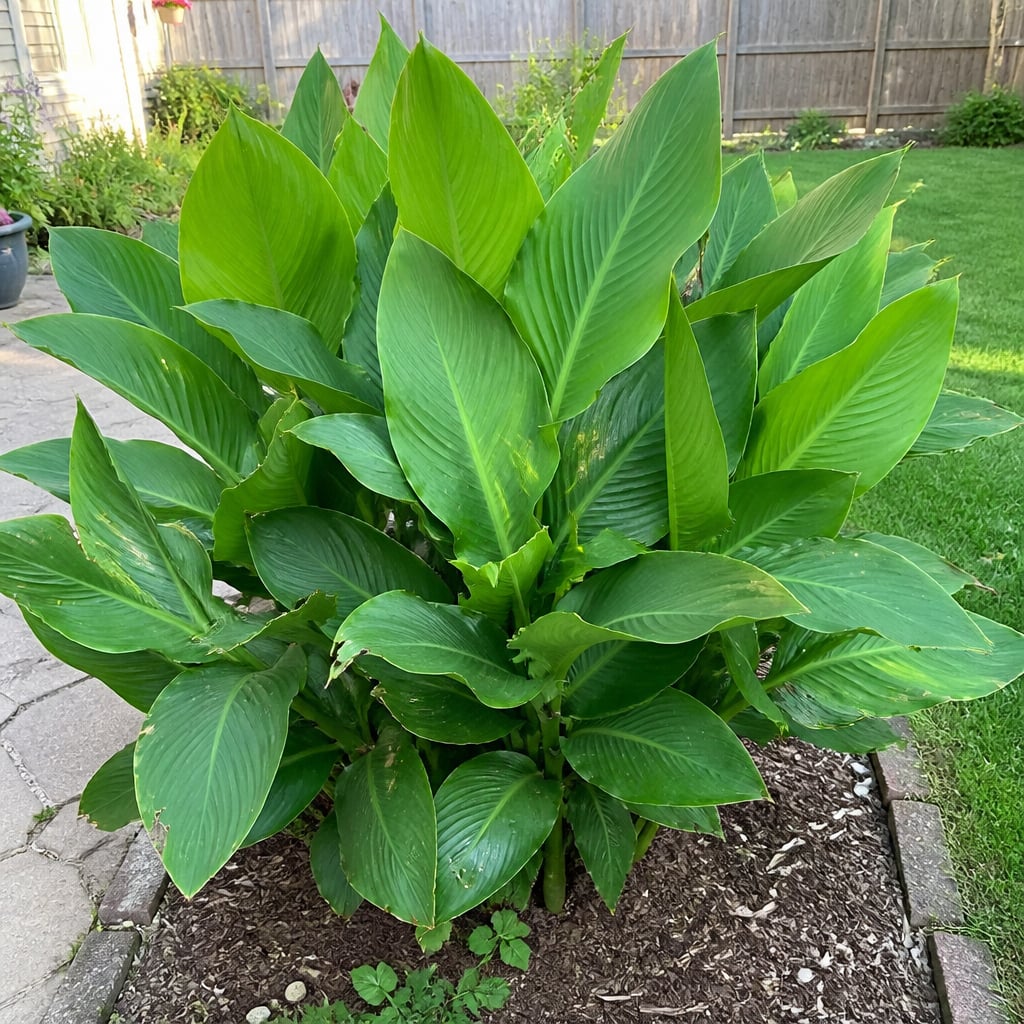
Sunlight is cash, and green foliage is the bank. Every square inch of healthy leaf keeps photosynthesizing and sending energy down into the rhizomes for storage.
I ignore the ugly, wind-battered, bug-nibbled appearance of those huge leaves (unless I see signs of disease). And resist the temptation of an early clean trim just because the borders look ragged.
Leave healthy green foliage in place until frost takes it down. Stripping green leaves off in early fall cuts short the plant’s chance to keep building up energy in the rhizomes for next year.
Task 3: Water During Dry Early-Fall Weather
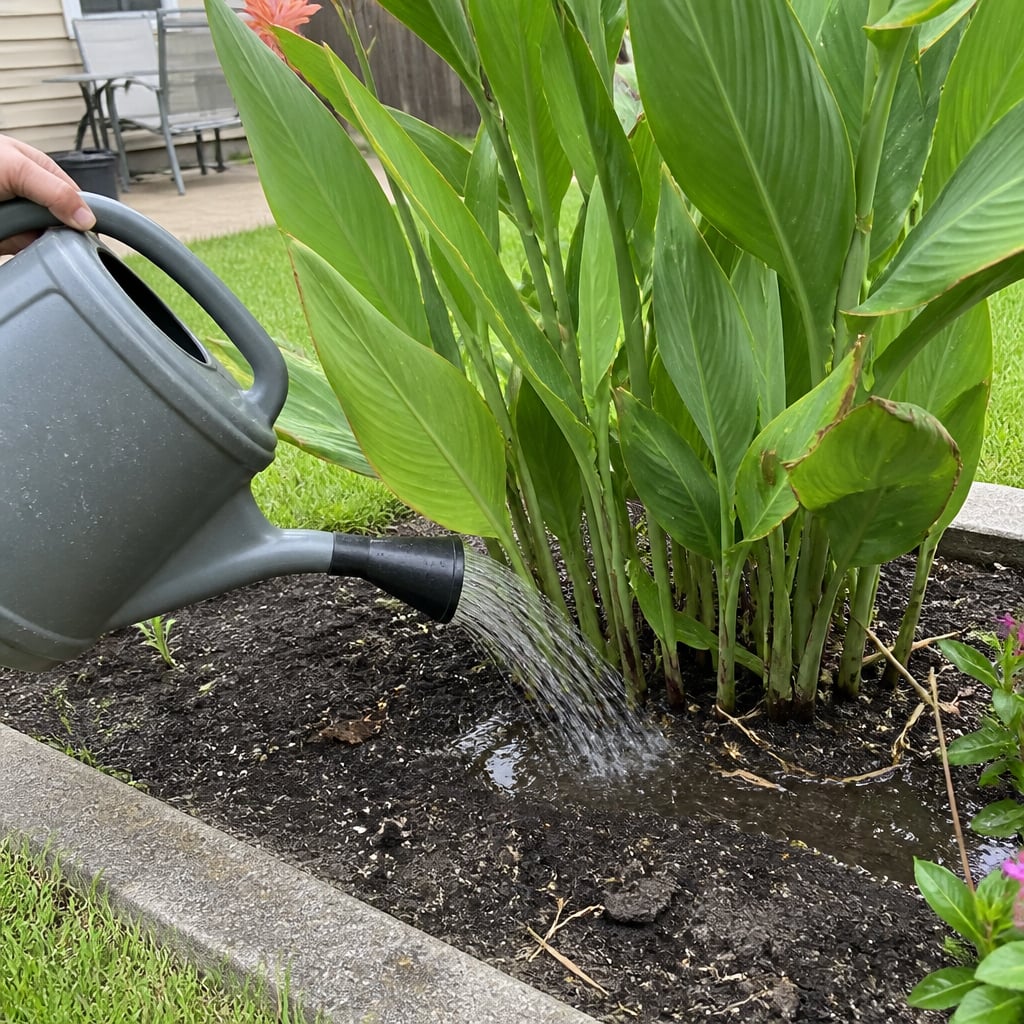
Forget your fall routine for a second and touch the soil. If the soil is drying out hard and crusty, your cannas are thirsty.
Unplugging the hose too early can stress plants that are still actively growing. I give them a deep drink at the base during dry spells, let the water soak in, and keep an eye on those sneaky early-fall heat spikes that can undo months of good growth.
Quick tip: Once nights are consistently in the low to mid-40s°F and growth slows, ease back on watering. Keep the soil lightly moist, not soggy, unless you want those plump (may I also add, expensive) rhizomes turning into compost.
Task 4: Stop Late-Season Fertilizing
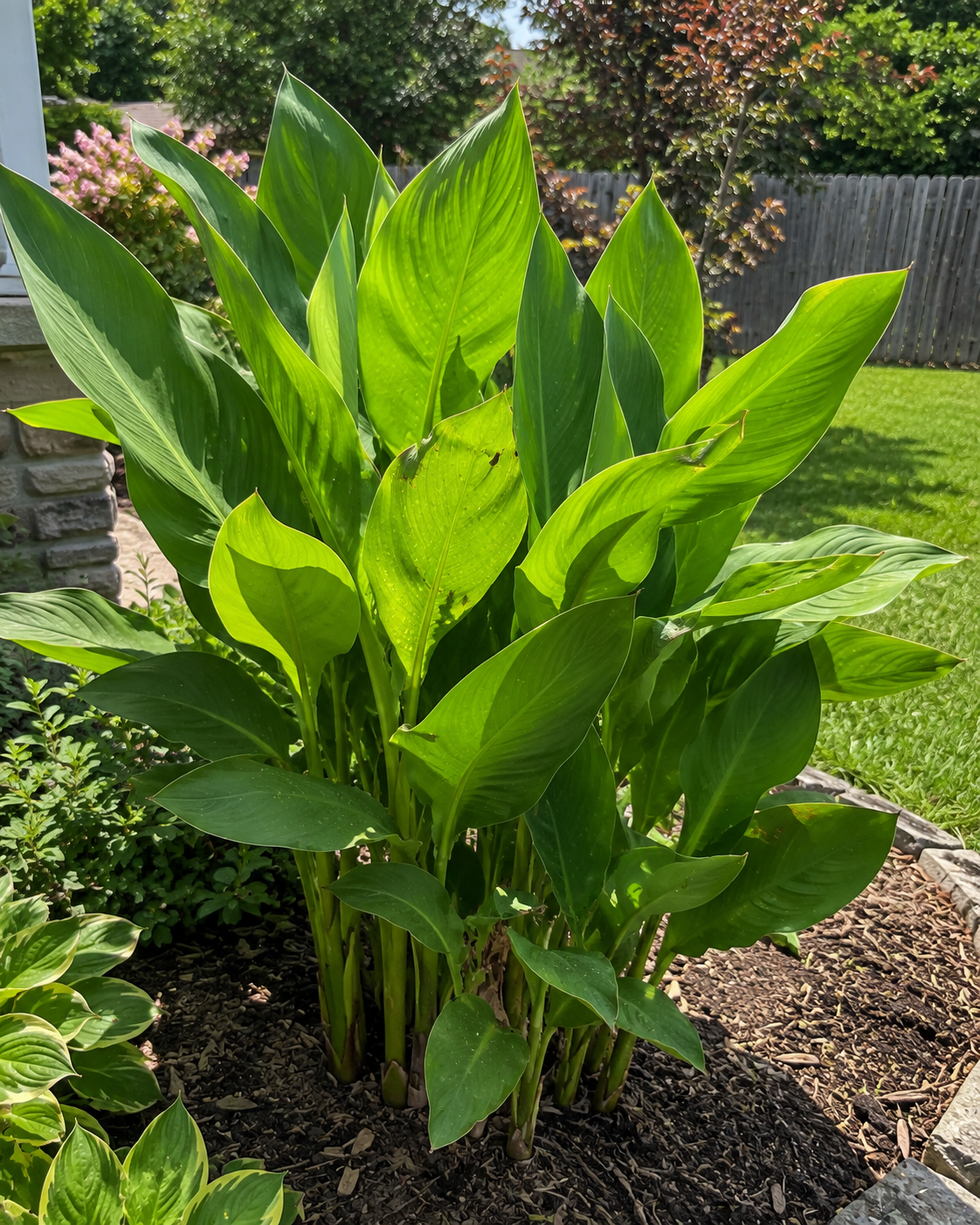
Feeding a canna in September is like drinking double espresso at midnight; you’re begging for chaos right before bedtime.
Pumping nitrogen into your soil right now baits tender green growth right into the trap of first frost. Save your cash, banish the plant food.
You want plump, dormant rhizomes ready to endure months of dark basement storage. Let hibernation mode take over (wish someone could enforce that rule on me).
Task 5: Label Varieties Before Foliage Disappears
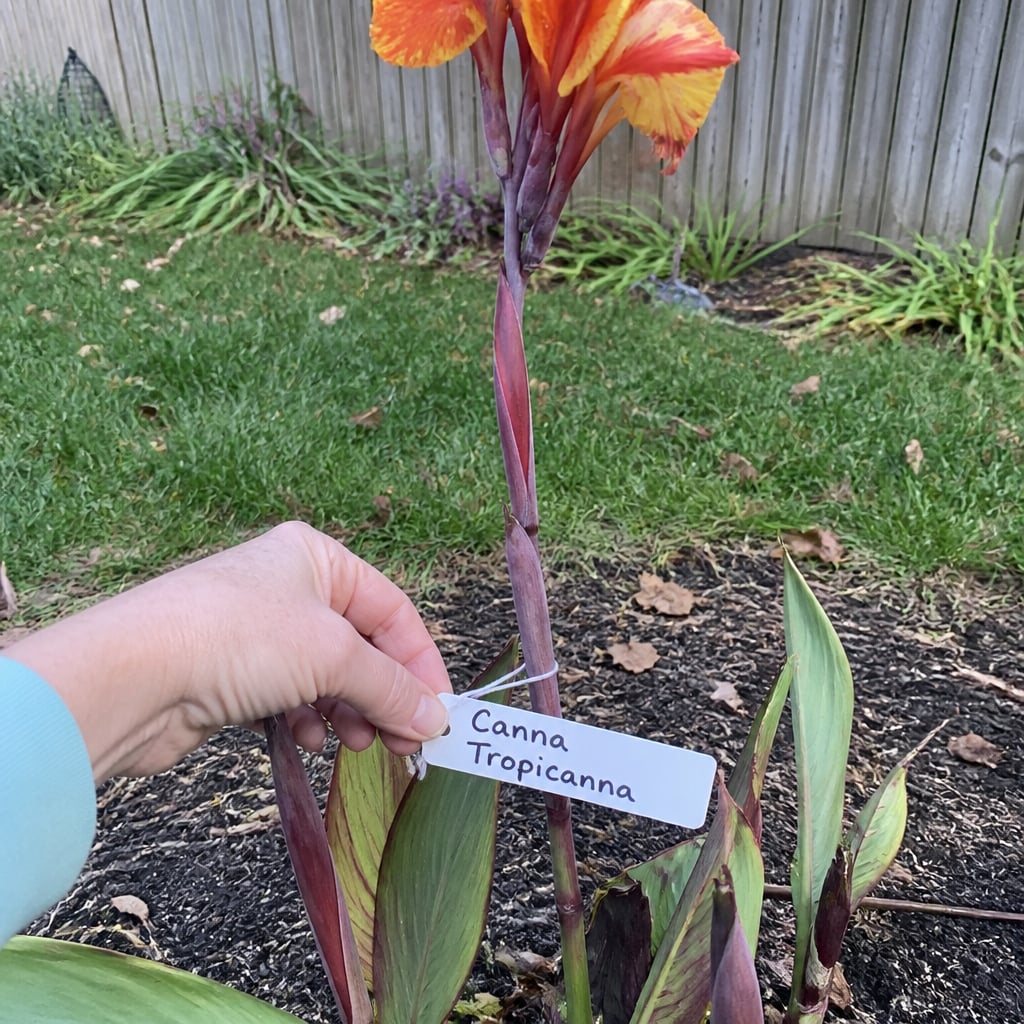
You convince yourself every September that you’ll easily remember which brown blob produced the fiery red stripes and which one grew the basic yellow blooms.
You won’t. I won’t. Not even my aunt will, and she remembers everything. Once cold weather melts the foliage beyond recognition, every single rhizome looks like an oversized potato.
Wrap permanent waterproof labels around the lower stem bases right now while the flowers can still prove their ID. Use heavy plastic tags or a Sharpie on sturdy duct tape. Future-you will thank past-you when spring arrives and you aren’t playing guessing games with blank brown rhizomes.
Task 6: Wait for Frost Before Cutting the Stems
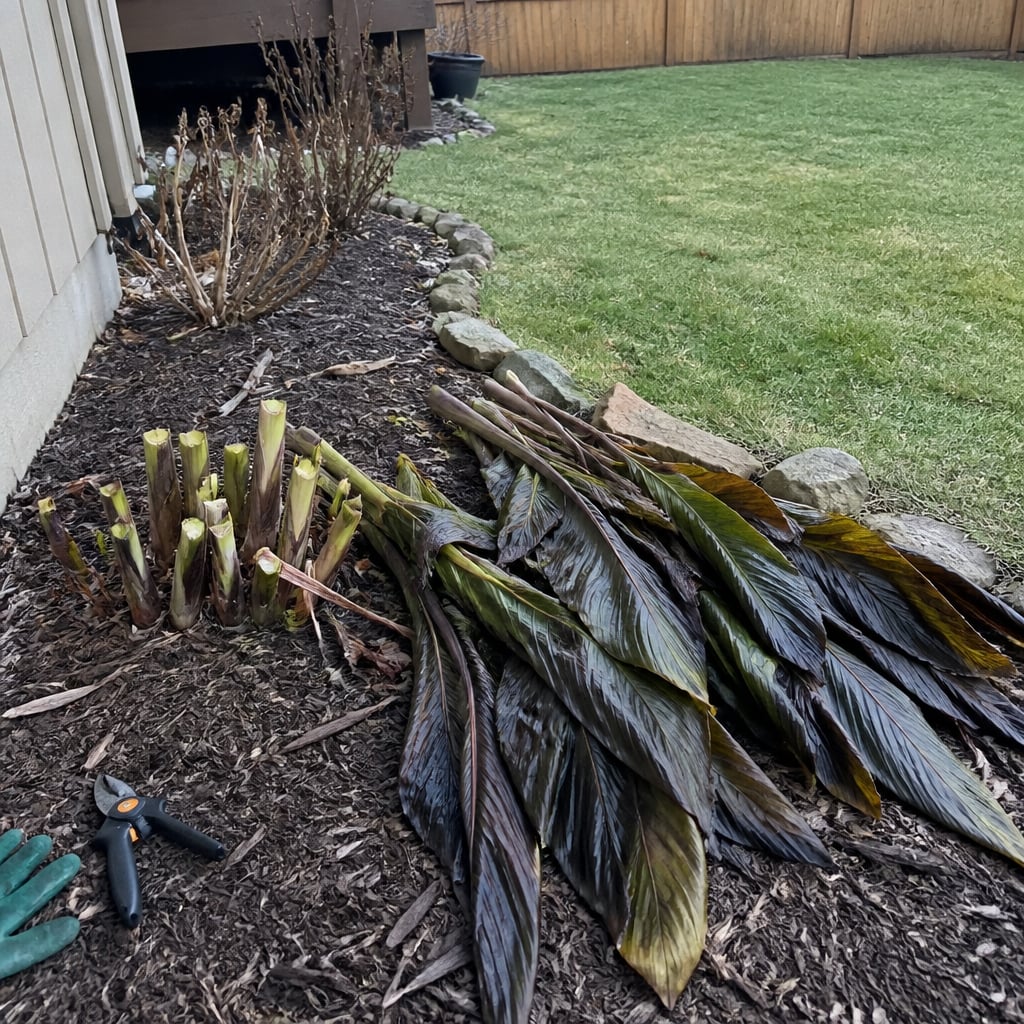
That doesn’t mean you need to tidy up now just because the forecast mentions a chilly evening.
A killing frost blackens the leaves, but until then, that green foliage is still photosynthesizing and sending energy down into the rhizomes. So wait for that blackening signal!
Once the frost strikes, the foliage will crumple into dark ribbons. Slice the stems down to a firm four-inch stump above the soil line.
Quick tip: I leave those short stalks in place because they make the clumps easier to spot and handle when I dig them up later.
Cannas aren’t the only plants that make fall cleanup confusing, so we also wrote a guide on what to cut back and what to leave standing as the garden heads into winter.
Task 7: Dig and Store Rhizomes in Colder Zones
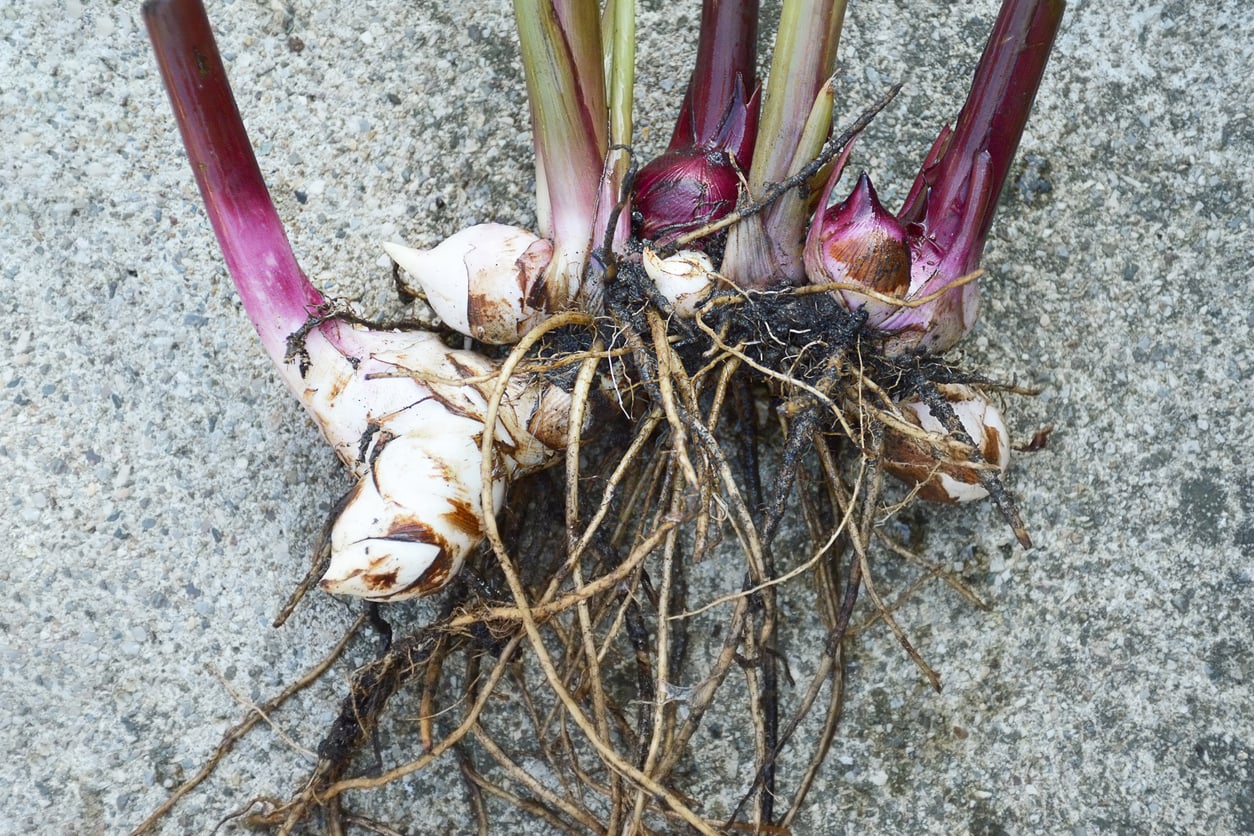
This is where people get lazy and pretend their zone 5 yard has a magical microclimate. It doesn’t so don’t gamble on it. Your tropicals won’t survive a frozen winter in the ground.
Pry up the rhizome clump with a garden fork like you’re digging buried treasure because you are.
You’ll nick a rhizome eventually (everyone does). A small clean wound isn’t the end of the world, but toss anything badly damaged, soft, or showing signs of rot because it’s a bad influence.
Pack the healthy survivors loosely in crates of dry wood shavings or peat moss. At last, stash them in that creepy, cool, frost-free corner of your basement, that stays ideally around 40-50°F.
Quick tip: Give them a quick check about once a month and remove anything that starts going soft or rotten. If one goes bad, get it out of there before it takes the rest of the crate down with it.
If you’re wondering what else needs to come out of the ground, we wrote a guide on which bulbs to dig up before winter and which ones are better left where they are.
Yes You Canna!
If anyone walks into your basement right now, they’ll see a shady pile of crates labeled Yellow King Humbert or Richard Wallace, full of mysterious brown lumps and dry packing material. Let them wonder. Your job’s done for now. You canna rest on your laurels.



Where do you store them if you don’t have a basement or a garage?
Hi Linda 🙂 If you don’t have a basement or garage, look for another cool, dark, frost-free place around 40-50°F, such as a crawl space or root cellar. A spare refrigerator can work too if you have the room.
we are zone 6. No need to dig them up each year. If you can cut them back and then stack one foot of mulch on top they will survive just fine. Once you see the tips popping up in spring, remove the mulch. I watched the experts at the university do this each year and it works!!
Hi 🙂 Cannas can sometimes overwinter in Zone 6 with heavy mulch, especially in a protected, well-drained spot. I just wouldn’t count on it everywhere in Zone 6 since winter severity and microclimates vary quite a bit, so digging them is still the safer option.
Thank you for the info! I’m in zone 6 as well
Thank you, I needed this information on Canna’s.
How do I save this info for future.
Hi Peggy 🙂 You’re very welcome! The easiest way is to bookmark this page in your browser or add it to your reading list so you can come back to it when you need it.
This seems straight forward, thank you for your post and photos!
Hi Tonia 🙂 You’re very welcome! I’m glad the photos made everything easy to follow, and I hope your cannas come back even bigger and better next year.
Hello, Thanks for this info…. I am a first timer, first year with cannas. But I do need help please!!! I live in zone 9 so should or shouldn’t I dig them up???? Thanks again so helpful!!!!!
Hi Christy 🙂 In Zone 9, you generally do not need to dig your cannas up for winter. You can leave the rhizomes in the ground, let the foliage stay until frost or it naturally dies back, then cut it down and add a layer of mulch. Just make sure the soil drains well, since winter wet can cause the rhizomes to rot.
First time with Canna , I just grew them in a large pot. Next year plan on planting in ground, my question is can I keep them in the pot over the winter, plan on storing them in my garage.
Hi Joan 🙂 Yes, you can leave them right in the large pot for winter. After frost takes down the foliage, cut the stems back and move the pot into your garage. As long as it stays frost-free, let the cannas go dormant and keep the soil mostly dry until spring. Then you can plant the rhizomes in the ground once the soil warms up.
Can I place the canna inside the tumble drier( no longer used) in the garage?
Hi Lourdes 🙂 If that old dryer is completely disconnected, I still wouldn’t store the cannas inside it. I’d use a cardboard box or crate with dry wood shavings or peat moss instead and keep it in the garage, as long as the garage stays frost-free and ideally around 40-50°F.
Can I leave them in a pot in the basement which is similar to 40-50 degree weather?
Hi 🙂 Yes, absolutely. A basement staying around 40-50°F is actually a great place to overwinter cannas! You can leave them dormant in the pot, keep the soil mostly dry through winter, and bring them back into growth in spring.
Do I dig them up for zone 7?
Hi Dawna 🙂 In Zone 7, I’d dig them after frost if you want the safest option. Cannas can sometimes survive outdoors there with heavy mulch and excellent drainage, especially in a protected spot, but a colder winter can still take them out. I’d rather store the rhizomes somewhere cool and frost-free than gamble with them.
Thank you for the information.
Hi 🙂 You’re very welcome! I’m glad the information helped.
What about zone 7b sw Oklahoma. I’ve never dug them up. But I do have to divide and transplant some I will get as a gift in October.
What do I do for the gifts for the Winter
Hi Claudia 🙂 Since your established cannas have already been overwintering successfully in Zone 7b, I’d leave those alone. I’d be a little more careful with the divisions you receive in October because they won’t have much time to establish. If you get them early enough to have several weeks before a hard freeze, plant them and mulch well after frost. If they arrive late or cold weather is already close, I’d store the rhizomes somewhere cool, dry, and frost-free around 40–50°F and plant them in spring.
My uncle gave me these and he’s never dug his up. He says he can’t kill them. They just keep multiplying.
I live in zone 8B
do I need to dig mine up?
Hi Tiffany 🙂 In Zone 8b, you generally do not need to dig your cannas up for winter. Your uncle’s experience makes sense! I’d leave the rhizomes in the ground, let the foliage stay until frost or it naturally dies back, then cut it down and add a layer of mulch. The main thing is good drainage, because soggy winter soil is more likely to cause trouble than the cold in your zone.