
Although fertilization comes easily to most passionate gardeners, there are certain plants that can be much trickier to fertilize than others. Unfortunately, the beloved snake plant is one of them.
In this article, I’m going to provide you with a easy guide on fertilizing snake plants without causing unwanted stress or damage to the roots. Let’s dive right into it, shall we?
Do You Really Need To Fertilize Your Snake Plant?

Well, like I always say, nothing is truly “essential” in the garden, maybe except soil and water. But, fertilization can definitely give your snake plant a helpful boost. So, I highly recommend it if you want steady, healthy growth!
While they’re pretty tough and tolerant on their own, a little feeding now and then supports stronger foliage, deeper color and quicker recovery after stress. It won’t make them explode with growth overnight (they’re naturally slow growers) but it does make a noticeable difference.
And, it can even support flowering! Even though snake plant blooms are rare, they’re totally possible when the plant is happy and thriving. If you’re curious about those rare snake plant flowers, I have a full guide on how to encourage blooming.
First Of All… How Often Should You Fertilize?

Typically, the best time to fertilize a snake plant is during active growth, which runs from spring to early fall.
Fertilizing in the wintertime isn’t as beneficial since most snake plants go semi-dormant during the cold months.
In terms of application frequency, once every 4-6 weeks is best, as it minimizes any chances of overfertilization. In case you just repotted your snake plant, wait at least 4-5 weeks before you apply any sort of fertilizer.
Now, The Fertilizers I Recommend To You
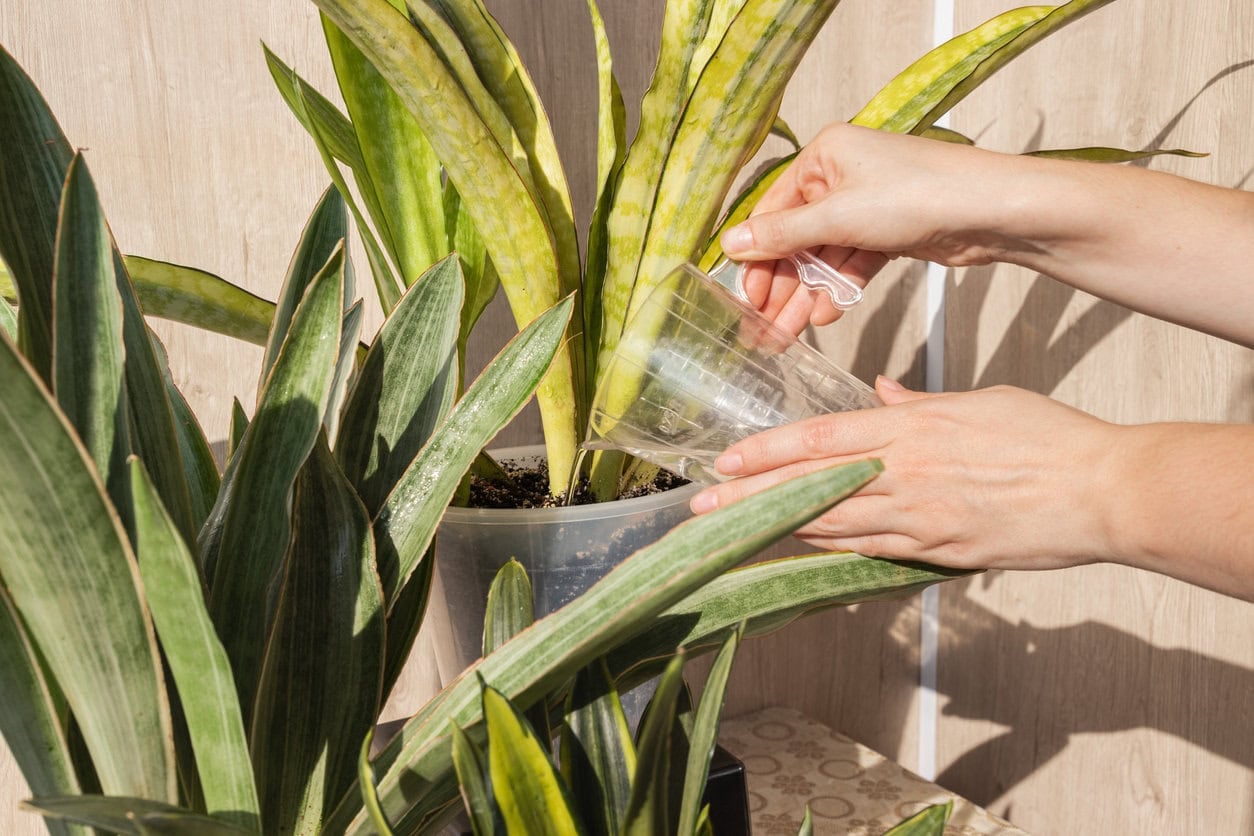
When it comes to feeding snake plants, I like to keep things simple. These are the fertilizers that have consistently worked well for me without stressing the roots or overwhelming the soil.
Don’t pour these homemade mixes onto the plant at once! I just use a little bit at a time. Snake plants don’t like heavy, soaking feedings, so a light application is always safer.
Both of these mixtures stay good for about 24 hours, so I usually use the rest on my other houseplants (like pothos, ZZ plants, peace lilies…) and make a fresh batch when I need more.
If you’re focusing on healthy growth, this guide on encouraging your snake plant to produce pups might help too.
How To Apply Fertilizer Without Damaging The Roots? This Is Important!

So, now comes the most important part: applying fertilizer without damaging the roots of your snake plant. Trust me, it’s easier said than done.
To avoid stressing the roots, I always make sure the soil isn’t completely dry before I fertilize. I’ve made that mistake before, and the leaf tips browned almost overnight. Ever since then, I lightly moisten the soil first, it makes a huge difference!
I also usually stick to half-strength (sometimes even quarter-strength) fertilizer because snake plants really don’t need much!
Quick tip: And if I ever feel like I’ve added a bit too much, I pour out the excess right away. Letting fertilizer sit in the pot or saucer has burned roots on me in the past, so I never take that risk anymore.
If your snake plant has been struggling already, especially with curling leaves, here’s my guide that helps you straighten them out the right way.
Should You Fertilize Snake Plants In Water?

When it comes to fertilizing snake plants in water, whether you’re propagating a cutting or keeping a plant growing in water long-term, I don’t recommend adding fertilizer at all.
Young cuttings are extremely sensitive, and any fertilizer in the water can slow rooting, cause rot, or encourage bacterial growth. Even fully water-grown snake plants don’t handle fertilizer well; the salts build up quickly and the roots burn much faster than they would in soil.
In my experience, clean, oxygenated water does a far better job than any kind of feed in both situations. I only start fertilizing once the plant is growing in soil and has a strong root system.
If you’re in a propagation phase, here’s my snake plant propagation guide that walks you through all the methods that actually work!
Let’s Conclude

Because I was super passionate about gardening from a young age, fertilization is something I learned a long time ago (from my mom). Like it just came naturally to me, but I know that it’s not a universal truth, and people learn at their own pace.
You can also take a look at my practical guide on choosing the right natural fertilizers for different plants, it pairs nicely with everything we covered here.
I’ve found snake plants to be a little more sensitive to fertilizer than people expect. While they’re hardy and resilient on the exterior, their roots are quite sensitive and can easily fall victim to bad fertilizer application. To get this aspect of snake plant growth right, patience and intention are absolutely crucial!




Can snake plants be given used coffee granules..
Hi Wendy 😊 For snake plants, I’d go super light with used coffee grounds. They don’t need much, and grounds can stay wet and invite fungus gnats. If you want to use them, mix a small amount into compost first, then top dress very lightly, not straight from the pod 🙂