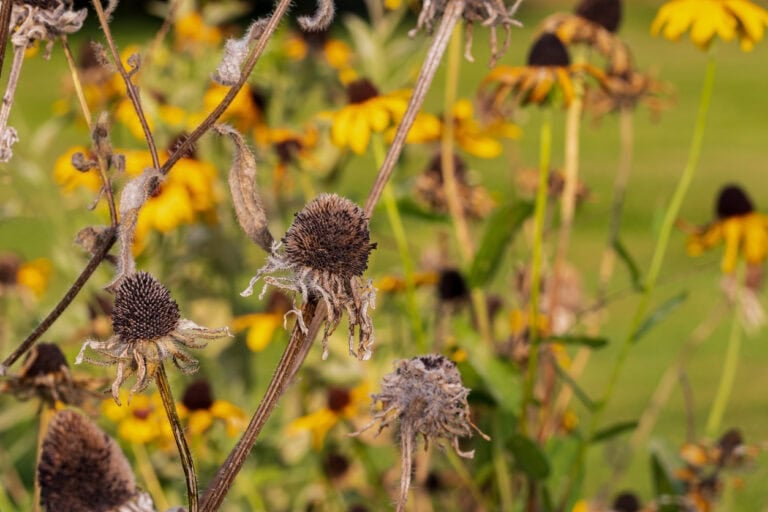
For many gardeners, especially newbies, November can be a slightly tricky month to navigate. In many regions, it’s a transitional phase going from mild warmth to emerging cold, whereas in other places, it can mean peak wintertime.
In today’s article, I’ll be taking you through all that you should cut back and leave alone in a November garden. Beginners stick around till the end because I’ll be dropping some major tips and tricks for you guys.
Let’s get into it!
Should You Cut Everything Down Before Winter?

While this is common advice thrown around in the gardening community, it’s not really true or beneficial to anybody.
In my opinion, it’s much better to be selective with what you cut and only mess around with plants that are visibly weak, diseased, or infested by pests.
Plants with seedheads, ornamental grasses, and strong, hardy perennials can be left alone since they’ll probably make it through the emerging winter without causing problems. Seedheads can be left behind for birds to feed on.
If you’d like a more detailed breakdown of what to tackle this month, here’s a full guide on which perennials to prune in November for a healthier spring garden.
What To Cut Back In November
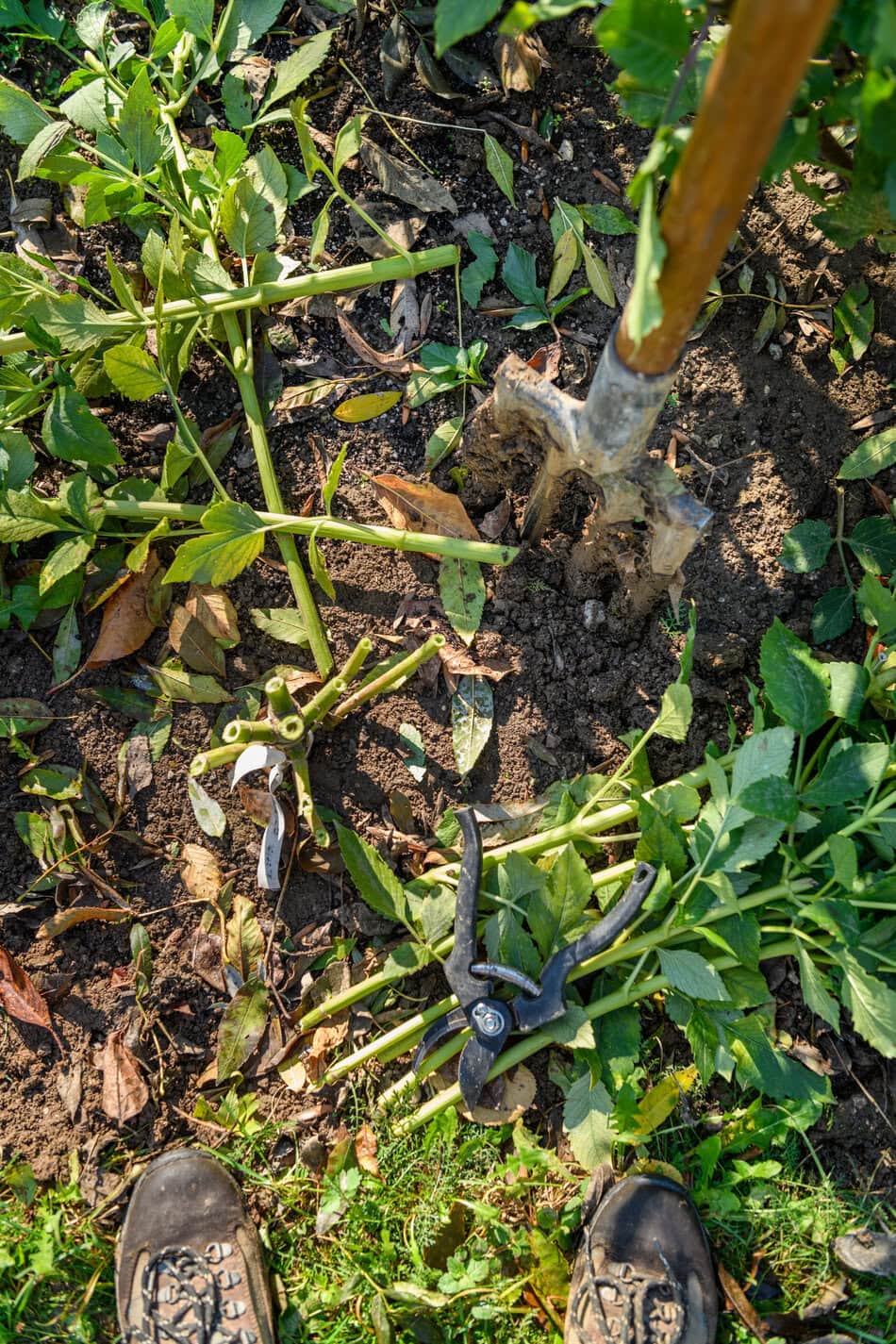
Diseased Or Pest-Infested Plants:

Some very popular plants like iris, phlox, peonies, and daylilies can be affected by common fungal problems like powdery mildew or black spot as temperatures cool. It may be a good idea to cut these plants back to contain the spread of the infection and bring the situation under control.
If peonies are on your list, here’s how to handle them in fall and decide whether to cut them back or leave them standing through winter.
Spent Annuals And Vegetables:

Pulling out spent annuals and already harvested vegetable plants from the ground is a good idea since these plants probably won’t survive frost anyway. You don’t have to throw everything in the bin! Healthy plant material can go straight to the compost pile.
If you’re growing annuals, you might also want to check which ones should be cut back this fall and how to do it properly.
Tender Bulbs & Frost-Sensitive Plants:

Most popular tender bulbs like dahlias, cannas, and elephant ears usually begin to lose foliage by November. This is when you want to lift them out of the ground and store them indoors. All this should ideally be done immediately after the first hard frost.
If you’re lifting your dahlias or cannas soon, here’s a helpful post on how to dig them up, store them, and replant next spring.
What To Leave Standing Through Winter
Ornamental Grasses And Sedums:

Avoid cutting back ornamental grasses in November, they add structure, catch snow, and protect the crown from deep freezes. While you should be cutting them back, the ideal time to do that would be late in winter.
Seedheads For Birds:

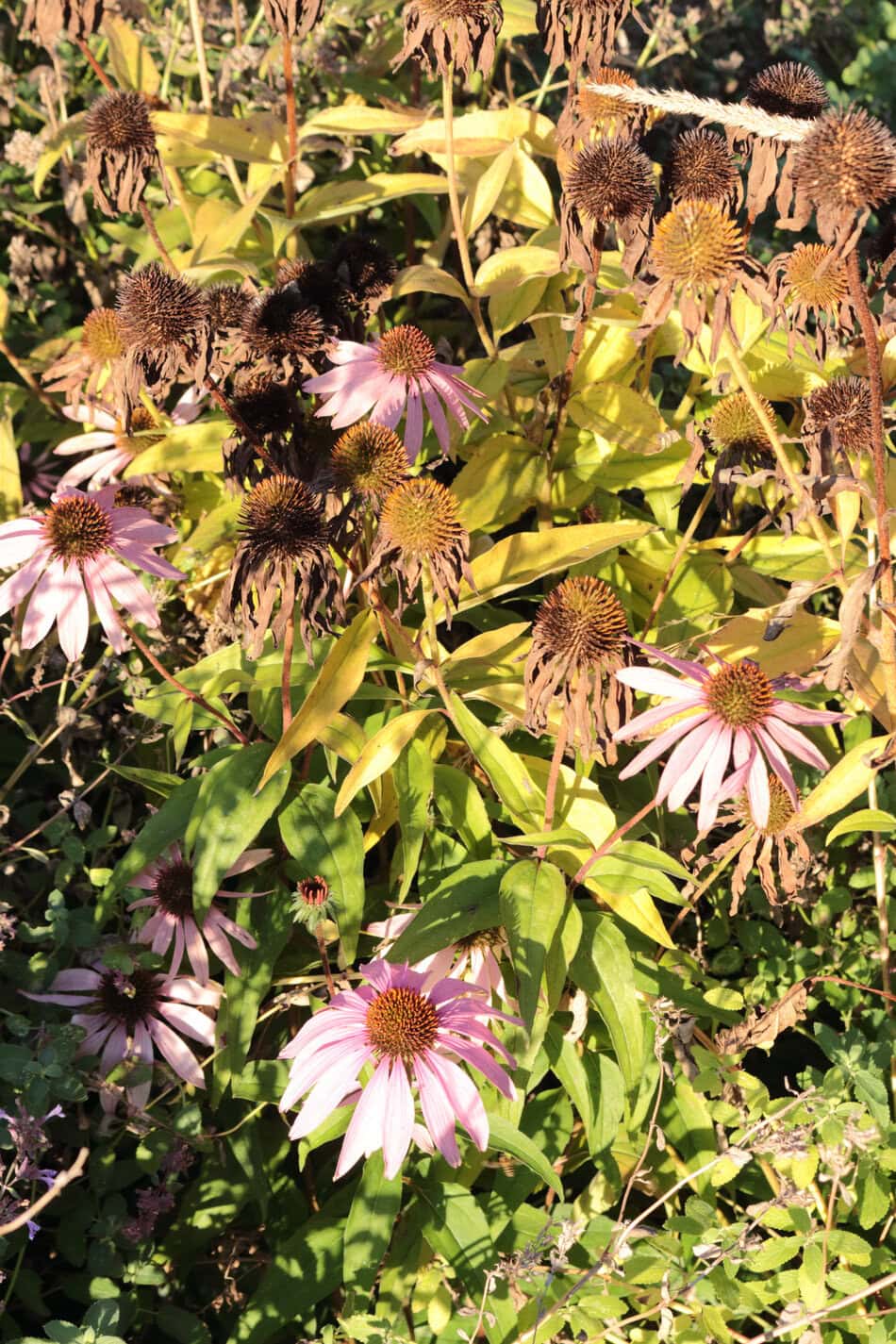
Classic seedhead flowers like black-eyed Susans, Joe-Pye weed, and asters provide natural food for finches and sparrows all winter long. If you’re a wildlife lover, this is a good way to support it!
If you love attracting wildlife, take a look at these plants you shouldn’t cut in fall because birds rely on them for winter food.
Evergreen Or Semi-Evergreen Perennials:

Perennials like coral bells, creeping thyme, and hellebores should not be pruned in November their foliage acts as insulation for the crown, helping them survive winter cold.
Native Perennials/Pollinator Plants:
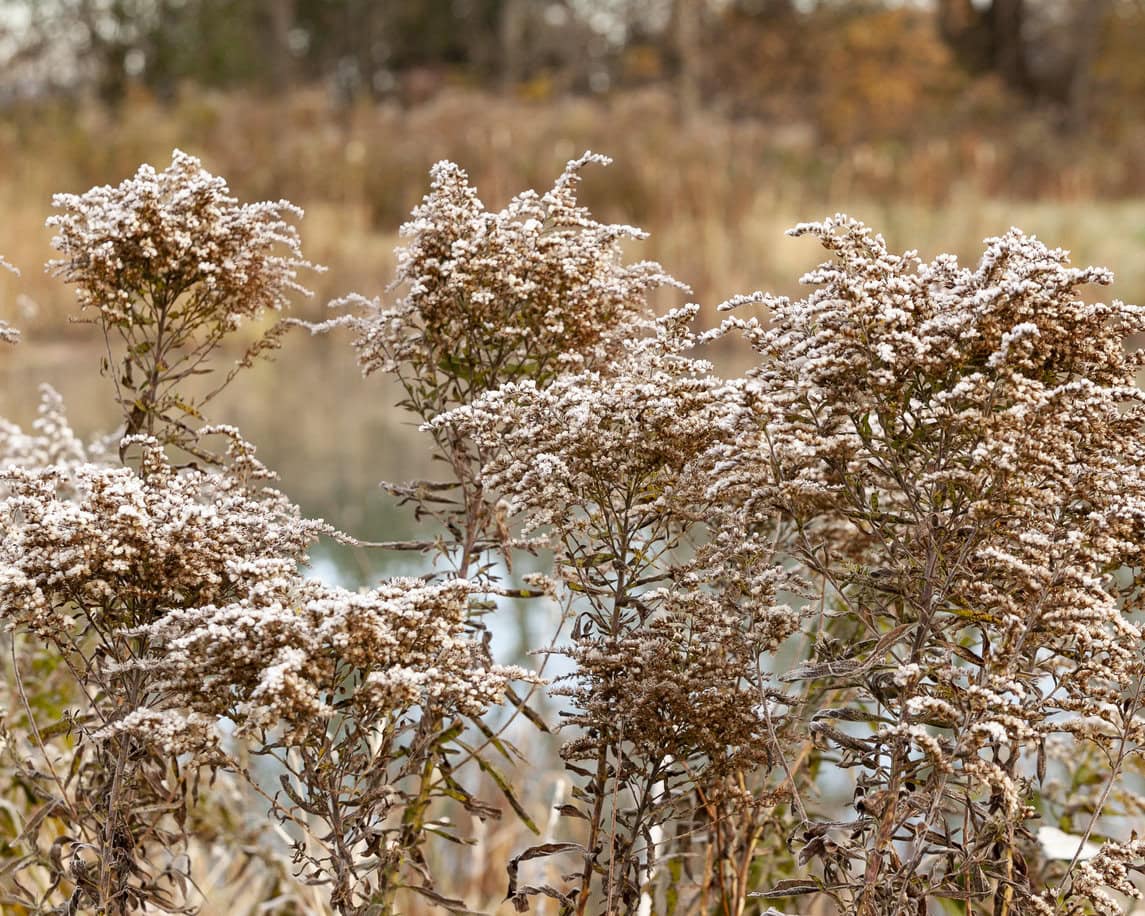
Native perennials and pollinator plants often have hollow stems that can serve as a nesting spot for solitary bees until spring arrives. Think coneflowers, black-eyed Susans, goldenrods, asters, or bee balms, all worth keeping standing through winter. It’s best not to cut these plants and ruin their temporary homes.
When Is The Best Time To Start Cutting Plants Back?

Generally speaking, it’s best to wait at least until the first hard frost to cut your plants back.
Although timing varies among plants, the first hard frost signals dormancy, making cutting and cleanup much easier.
What Perennials Should You Definitely Cut Back In Fall?

Peonies, bearded iris varieties, phlox, hostas, and daylilies are some perennials you should definitely consider cutting back in fall.
Bulbous perennials can be cut once their foliage starts fading and yellowing, since old leaves can attract pests and fungal diseases.
If you’re unsure which perennials should be cut back and which are better left standing for winter interest and wildlife, this guide to fall perennials explains it clearly.
Should You Mulch After Cutting Things Back?

Yes, you should, especially after frost kicks in hard and the ground begins to freeze. Apply a 2-3 inch layer of mulch around the base of your most sensitive plants to protect them from temperature swings, but keep it away from the crowns to prevent rot.
Just make sure not to pile up mulch directly on the crowns since it will most likely suffocate them and hinder growth.
Let’s Conclude
Since November is right around the corner I thought, why not remind my fellow gardeners of their November duties and guide newcomers on how to navigate around this challenging month?
While I personally love garden work and experimenting by constantly breaking norms and trying new things, I’m aware that there are people who just want to know what they should and shouldn’t do to achieve satisfactory results; this article is for them.