The strip of soil trapped between the sidewalk and the street is a plant torture chamber if I’ve ever seen one. Reflected asphalt heat fries everything. Soil compaction convinces the ground it’s concrete. Salt trucks dump winter slush directly onto whatever is trying to live there. Pedestrians trample it. Dogs… baptize it.
Why waste cash throwing standard nursery stock at this wasteland? You need survivors who are as self-sufficient as they are pretty.
Before You Plant: What Works Best in a Sidewalk Strip
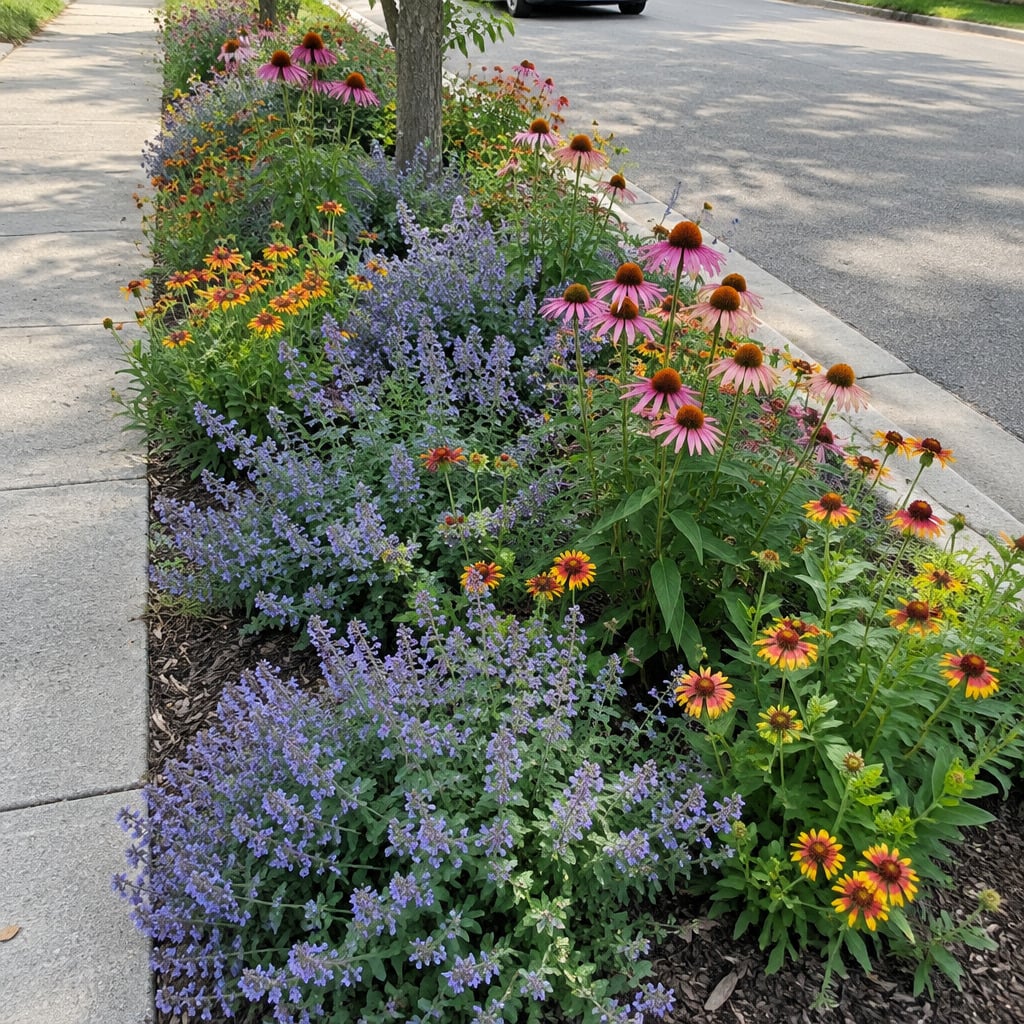
Before you drop a single root into this sacrifice zone, check your municipal and HOA rules. Keep taller plants away from driveways, intersections, fire hydrants, and utility access so they don’t block visibility or get in the way.
That settled, it’s time for prep work. You need a team that will:
Should you ever feel unsure, just follow the adage: If you can’t beat the hellstrip, find something that’ll thrive in it.
Before you start digging: contact 811 to have underground utilities marked. A skinny strip of soil can still have gas, electric, water, or communication lines running underneath it.
15 Best Plants for the Strip Between the Sidewalk and Street
1: Yarrow (USDA Zones 3-9)
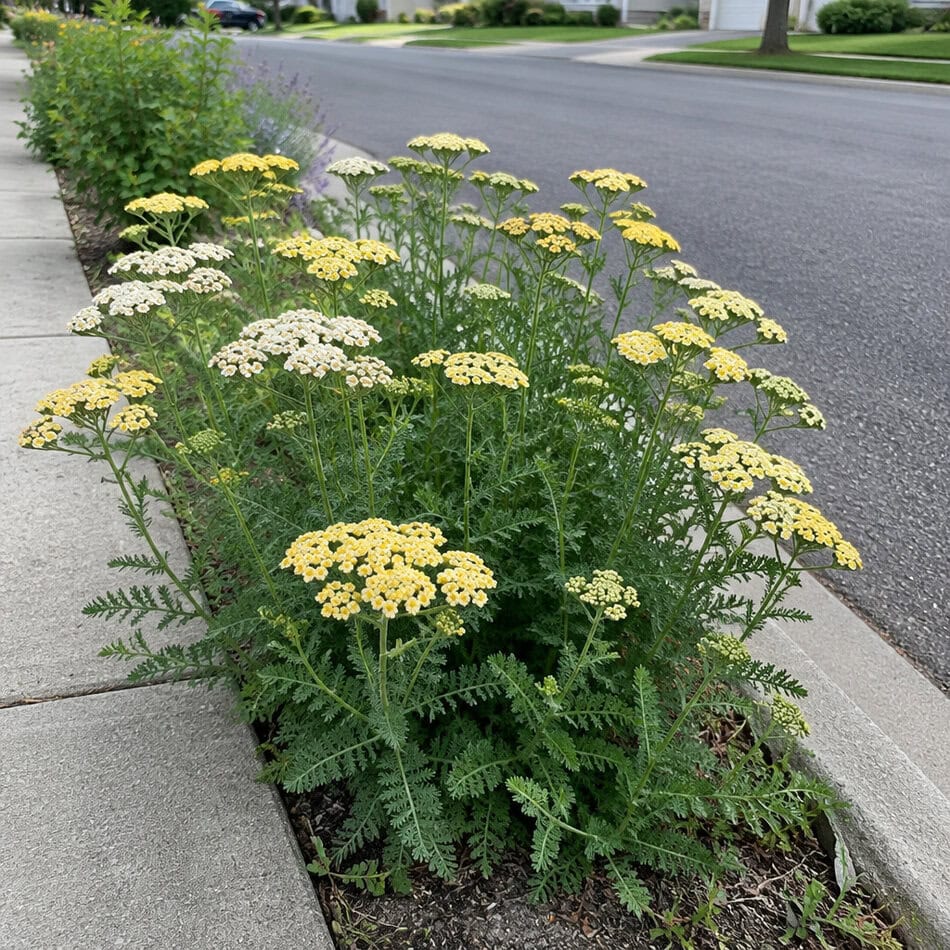
Lacking any delicate sensibilities, Achillea millefolium survives apocalyptic sidewalk strips without a sprinkler system or rich soil.
Its long-standing blooms pull in pollinators, but wild types spread like a pyramid scheme through rhizomes and seed. Choose a compact, less aggressive cultivar unless you want to pull pull volunteers from sidewalk cracks every weekend.
Quick tip: Snip off spent flower heads before they set seed if you want to keep volunteers under control.
2: Blanket Flower (USDA Zones 3-8)
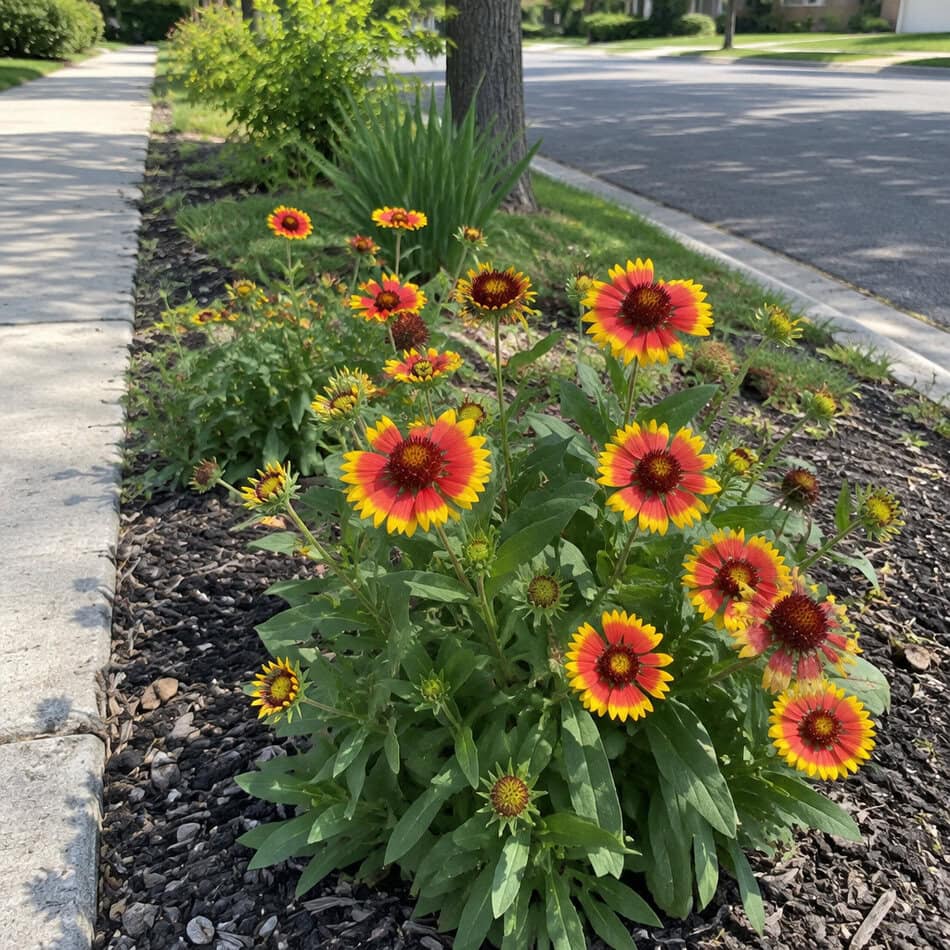
Gaillardia aristata handles full sun and brutal soil better than most, tossing out red-and-gold blooms through summer. Don’t ghost your baby plants, though.
Water them regularly while the roots establish, letting the soil dry somewhat between drinks. Once settled in, blanket flowers handle dry spells remarkably well.
Quick tip: Soggy soil in winter will rot them before you blink. Plant only if your pavement strip doesn’t stay wet for long.
3: Threadleaf Coreopsis (USDA Zones 3-9)
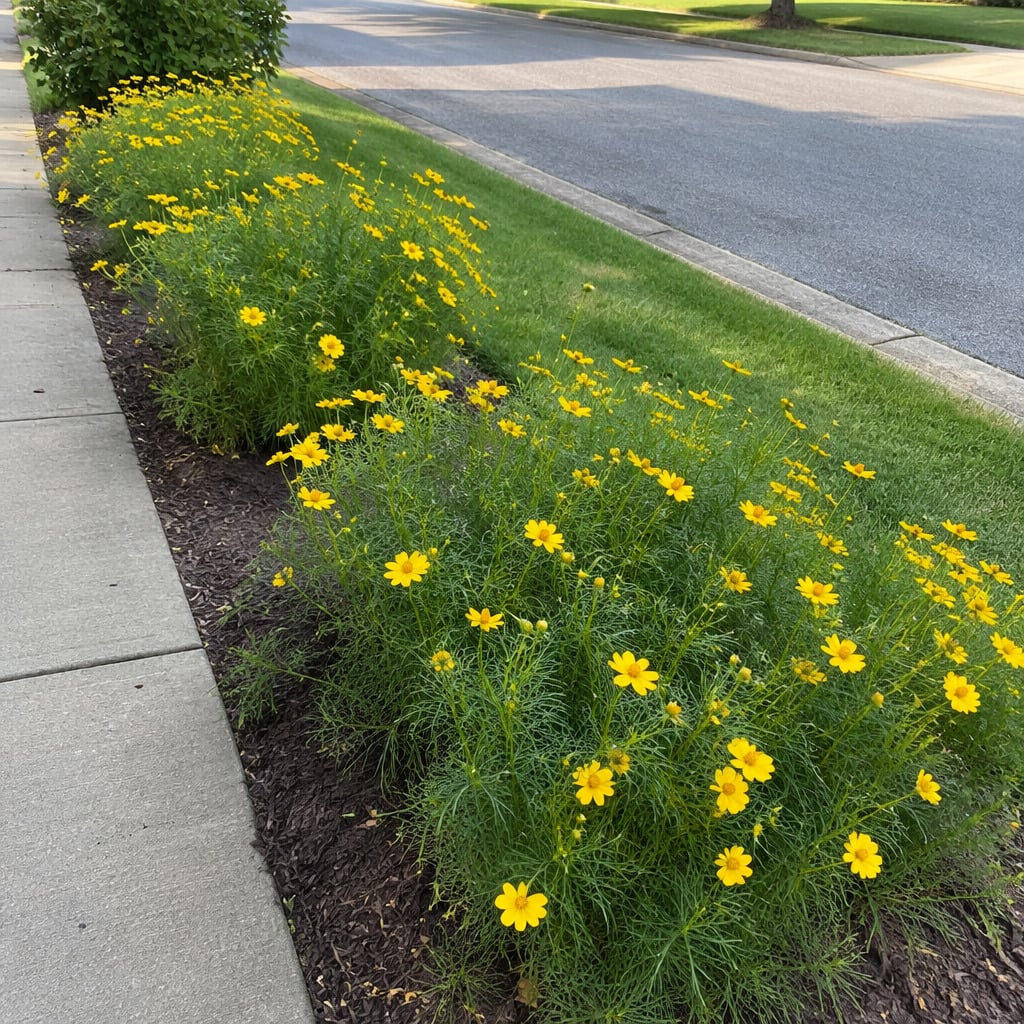
Need clouds of yellow without a bulky bush? Coreopsis verticillata doesn’t mind garbage soil and, unlike myself, happily bakes in the sun all afternoon.
Its fine, airy foliage softens harsh pavement, while yellow flowers can keep coming for much of summer. Give new plants regular water while the roots establish, then let their natural drought tolerance do more of the work.
Quick tip: If the first flush starts looking tired, shear the plant back lightly. It often responds with fresh growth and another round of flowers.
If your strip gets blasted with sun all day, we also wrote a guide to full-sun border plants that stay pretty when summer gets brutal.
4: Butterfly Weed (USDA Zones 3-9)
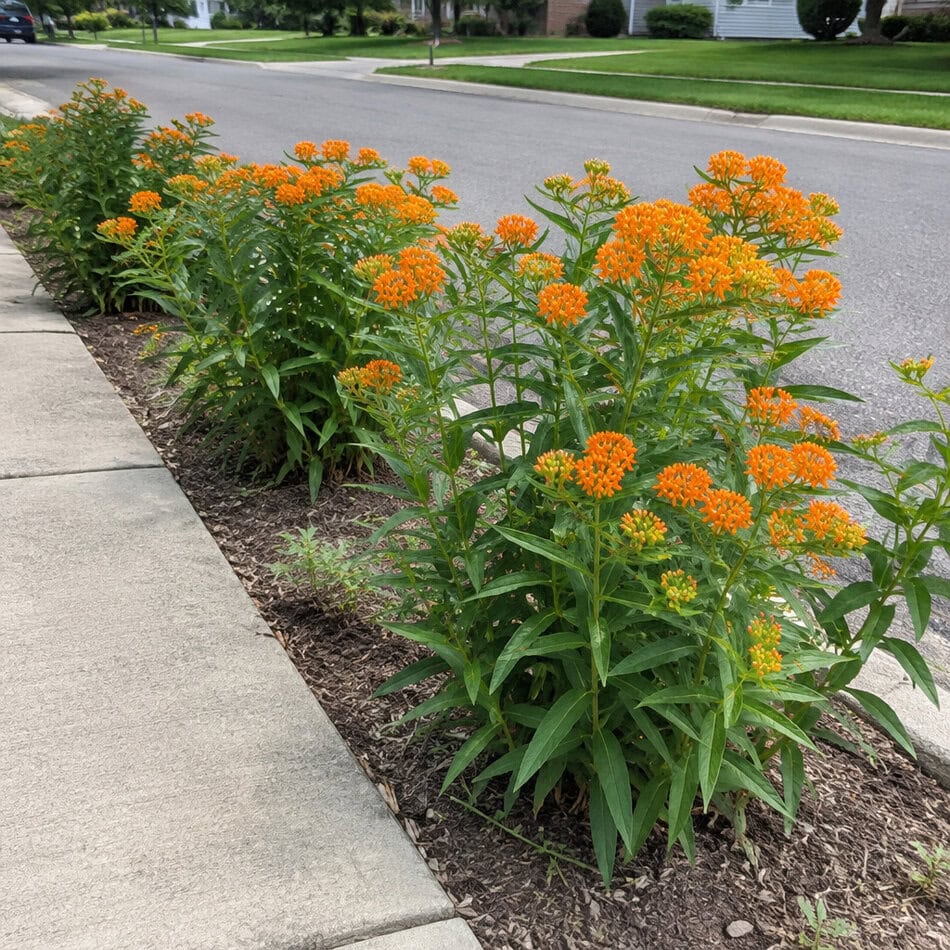
Dry sidewalk strips are as good a home as any for butterfly weed. Put it in lean soil and watch those bright orange flowers pull in every monarch in the neighborhood. Just don’t expect it to act like a normal perennial.
Asclepias tuberosa sends a deep taproot straight down, hunting water in the Underworld. Make sure water drains away quickly, because cold, soggy soil can rot the crown.
Quick tip: Pick its spot carefully because established plants really don’t appreciate having their roots disturbed.
5: Purple Coneflower (USDA Zones 3-8)
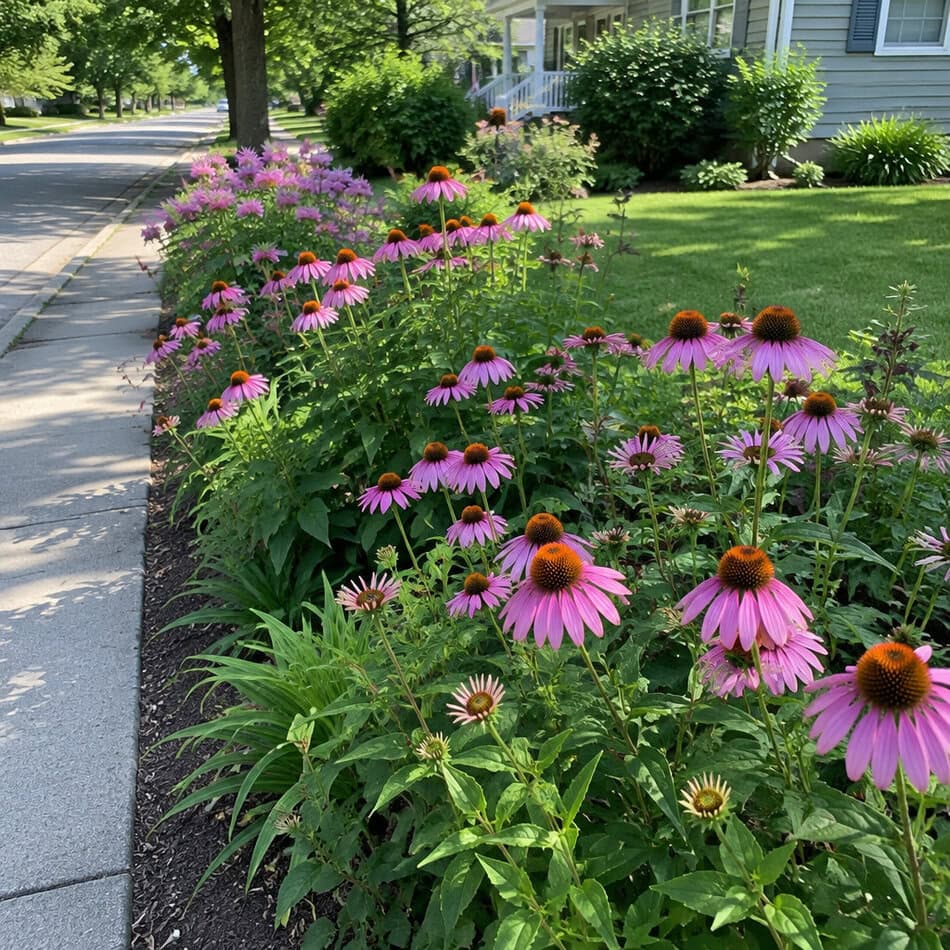
Bees will work those raggedy pink flowers through summer, and goldfinches move in for the seedheads later. When you plant Echinacea purpurea in exposed sun, don’t assume it runs on autopilot right out of the pot.
Young transplants need regular water while they build a root system. Once established, purple coneflowers can handle dry spells, but they’re not entirely invincible against prolonged baking.
Quick tip: Keep taller clumps back from the asphalt edge so they don’t interfere with driver sightlines, and expect some self-seeding if you leave the seedheads standing. For better or worse.
6: Black-Eyed Susan (USDA Zones 3-8)
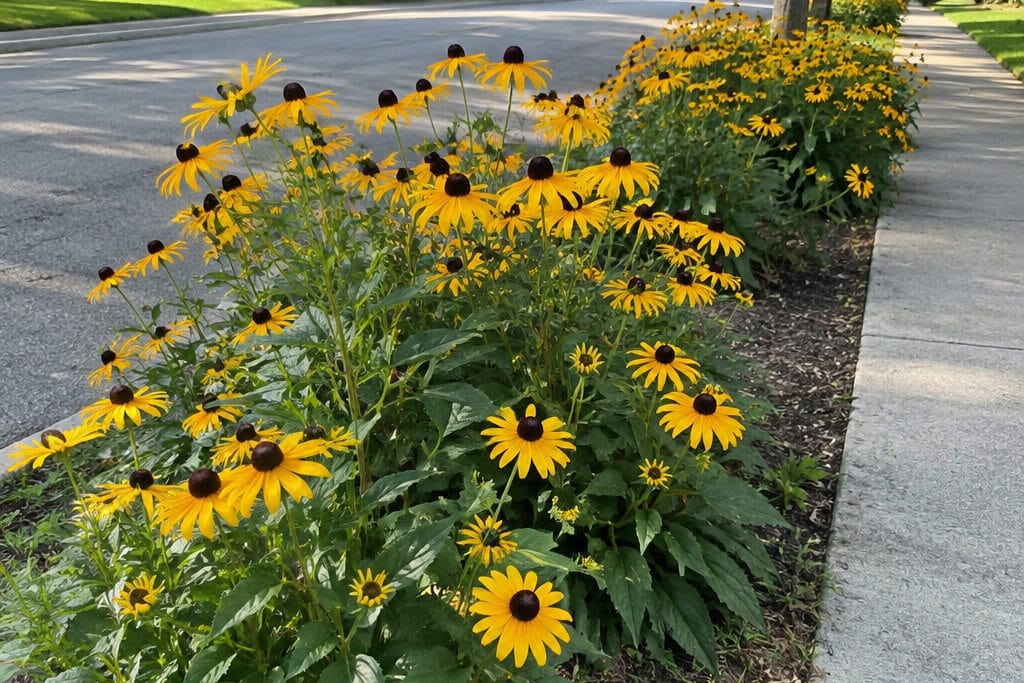
Only thing brighter than the July sun on a sidewalk strip is Rudbeckia hirta. Too bad you can’t always expect a ten-year commitment. This black-eyed Susan is often a biennial or short-lived perennial, but it makes up for that by self-seeding like crazy!
Whip it into a prairie-style roadside patch and give new plants regular water while they establish. Once settled in, they handle heat and dry spells surprisingly well.
Quick tip: Keep taller stems away from corners and driveways so drivers turning corners don’t squash the local dog-walkers.
7: Catmint (USDA Zones 5-9)
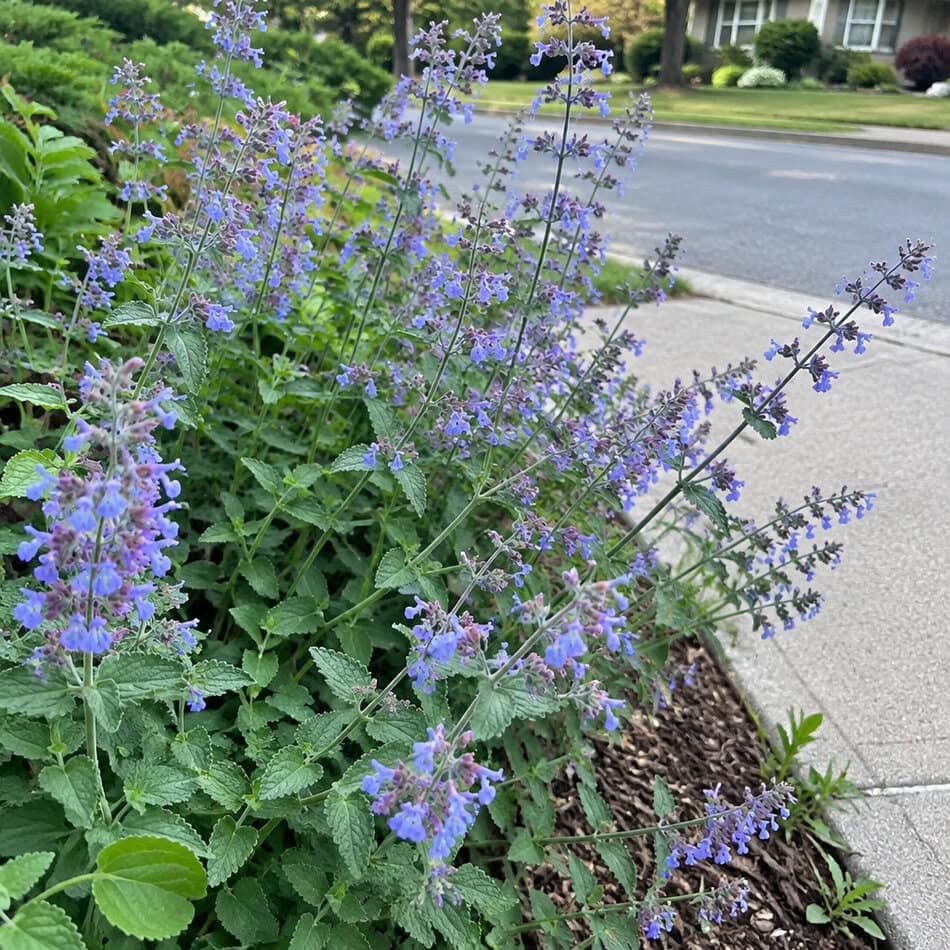
Catmint handles reflected pavement heat well once established. Water new plants regularly at first, then let the soil dry between drinks.
Don’t ignore catmint after its first big summer flush or the mound can start looking floppy and tired by midsummer. Cut it back by about half after peak flowering is over. Fresh gray-green foliage and another round of purple blooms usually follow.
Quick tip: Many Nepeta × faassenii cultivars are sterile, so they’re less likely to seed themselves all over the strip.
8: Creeping Thyme (USDA Zones 4-9)
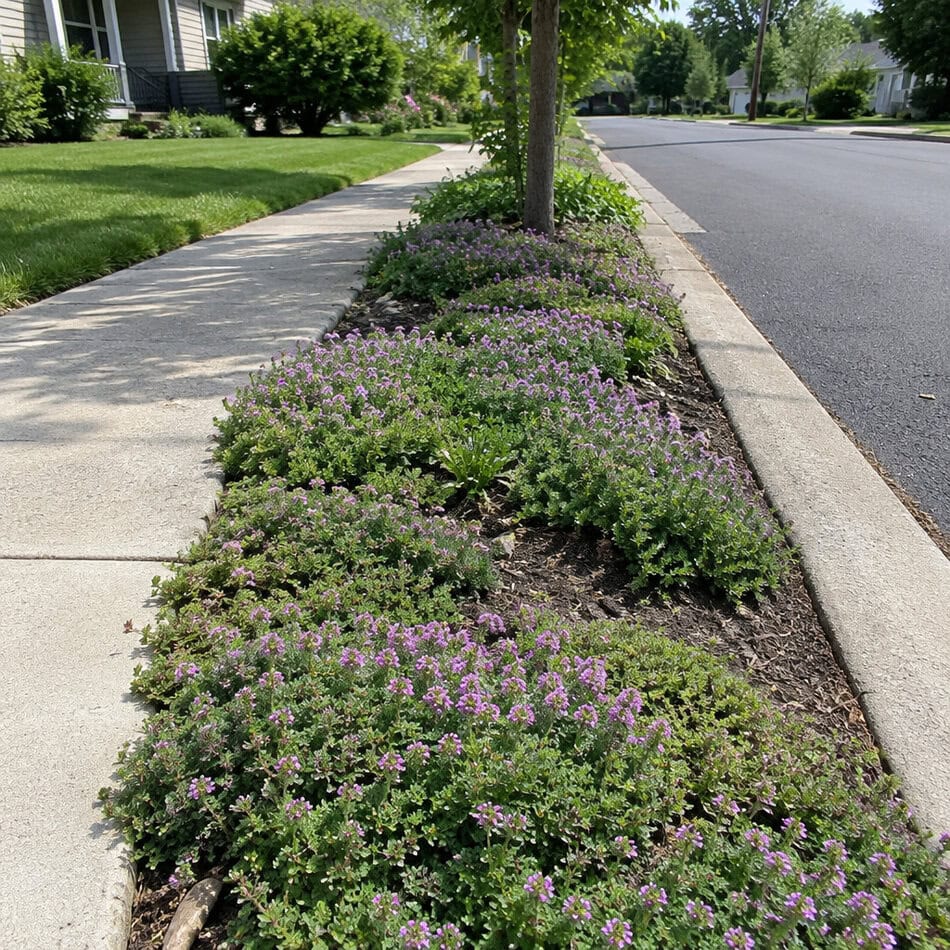
Got a cramped roadside strip barely a foot wide? Thymus serpyllum is a low-growing ground hugger that won’t balk at blistering sun and lean soil.
Just don’t put it where water regularly puddles. It wants the kind of spot that dries out quickly after rain. It tolerates occasional foot traffic and releases a mouthwatering scent every time a boot brushes across it. The ultimate survival instinct right there.
Quick tip: Give it a light trim after flowering if the mat starts getting scraggly. It helps keep the growth dense and compact.
And if your creeping thyme only flowers for a few weeks, we explain how to encourage more of those pink blooms in this guide.
9: Sea Thrift (USDA Zones 4-8)
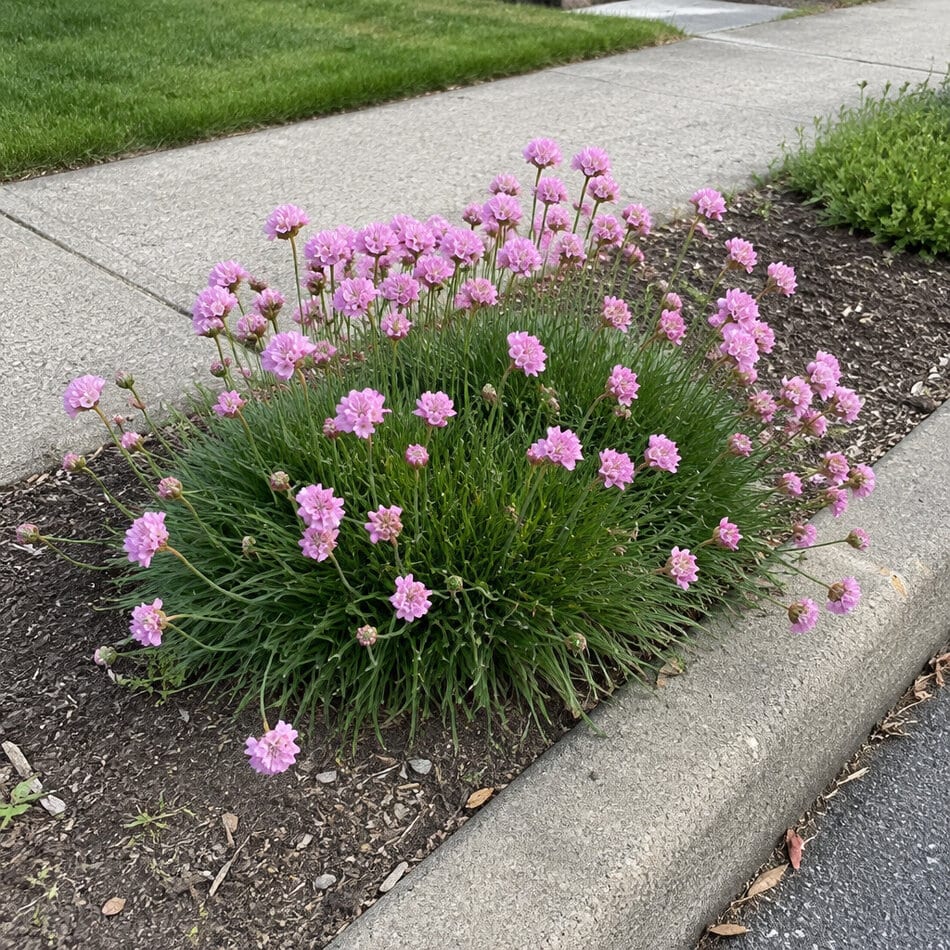
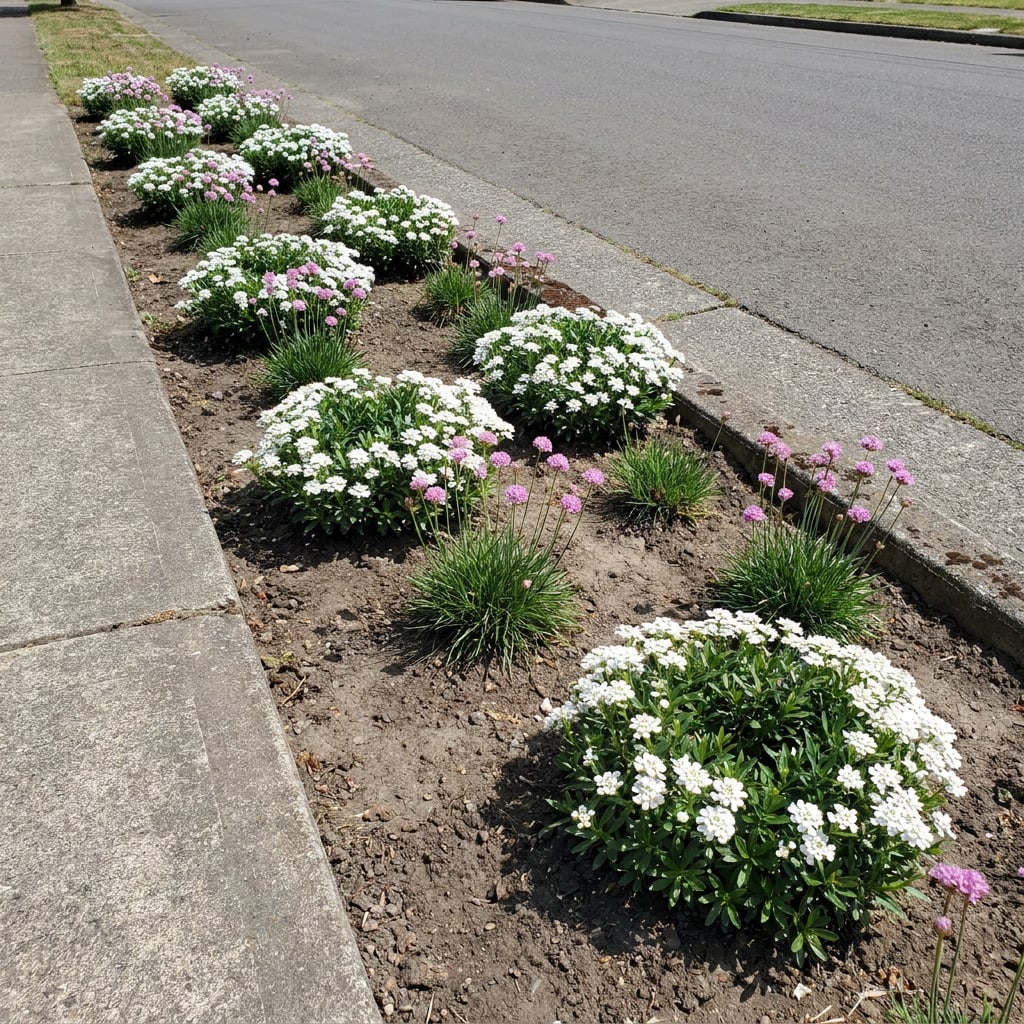
Coastal cliffs and salt-sprayed dunes taught this tough little tuft how to handle municipal abuse. Armeria maritima tolerates some road-salt exposure and fits beautifully into sunny, lean sidewalk strips.
Its grass-like leaves form little green tufts topped with tight lollipops of pink flowers that bob in the exhaust breeze. It wants full sun and soil that dries out faster than you can say “drowned in its own puddle.”
Quick tip: Snip off faded flower stems and it can reward you with another lighter flush of blooms.
10: Candytuft (USDA Zones 3-8)
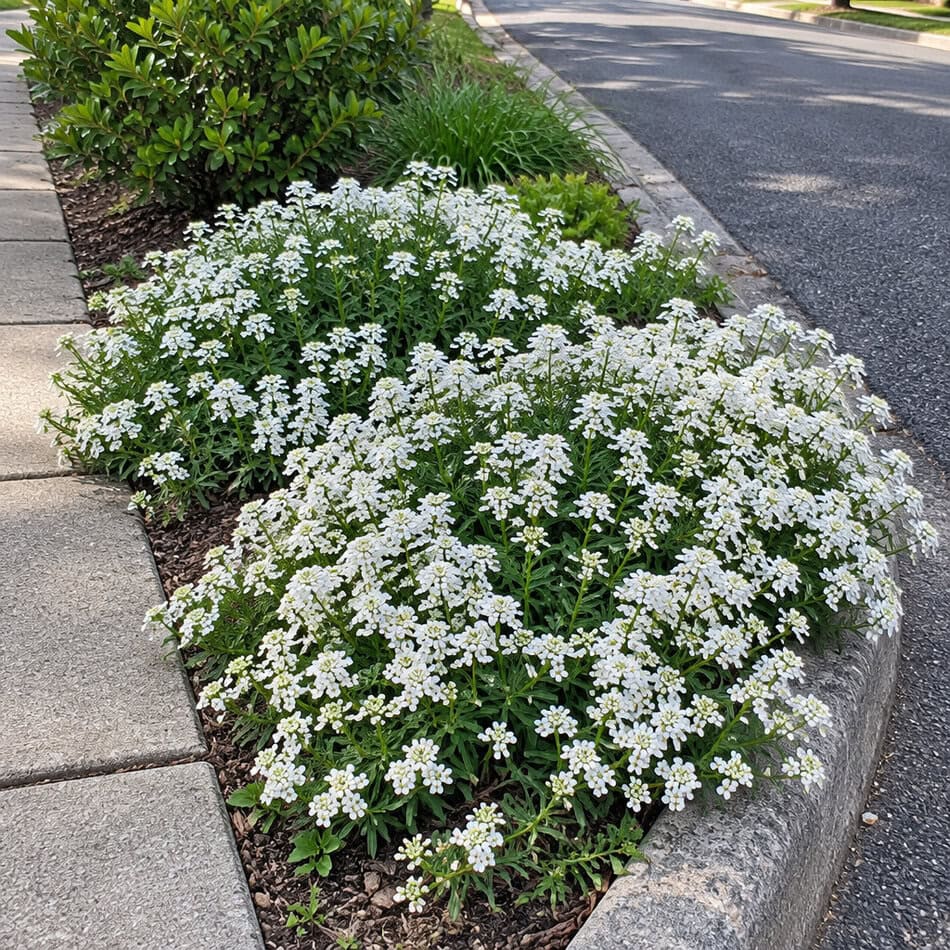
Need a low evergreen cushion that anchors a roadside edge without blocking a driver’s line of sight? Candytuft stays tight to the ground and throws blindingly white flower clusters across the concrete every spring.
Keep Iberis sempervirens happy in lean, sunny soil and it’ll hold its shape beautifully. In colder climates, the foliage may look a little rough after winter rather than staying perfectly evergreen!
If keeping the curbside bed tidy is a priority, we also wrote an article about low-mess flowers that keep garden borders looking neat.
11: Little Bluestem (USDA Zones 3-9)
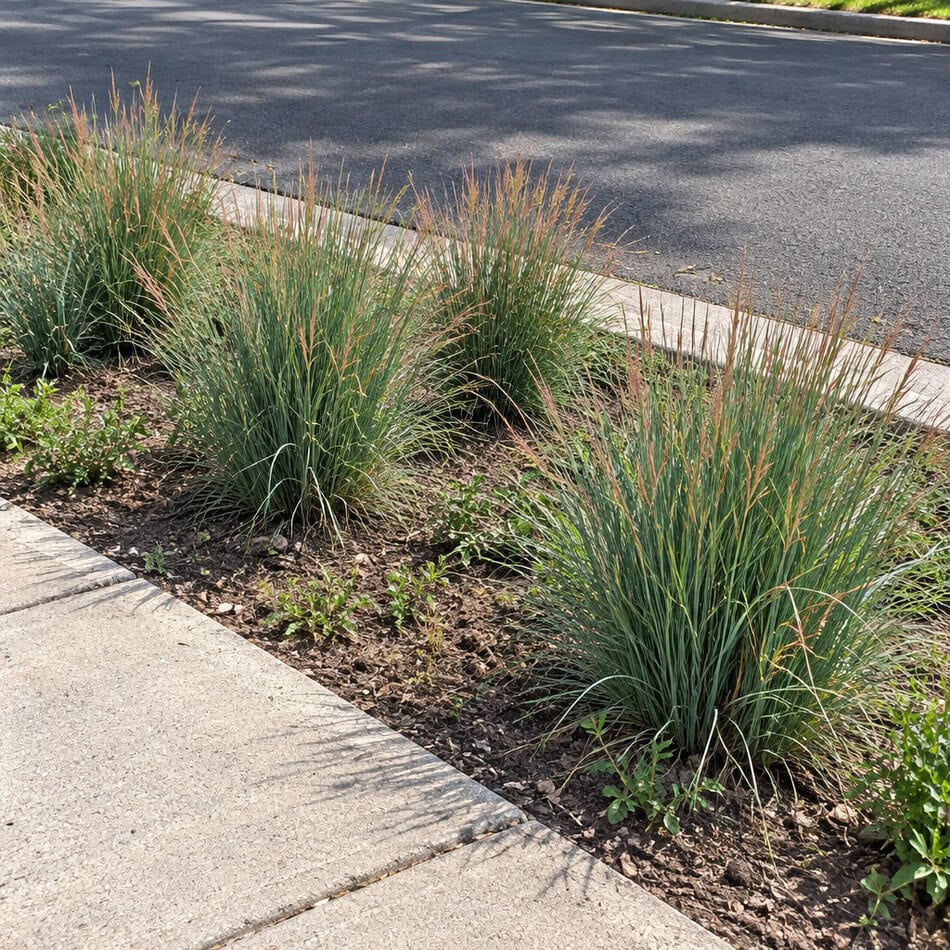
Schizachyrium scoparium, anybody? Don’t let its name fool you, there’s nothing little about little bluestem! This North American native brings up to four feet of attitude to a sunny roadside strip. So don’t plant it near a blind intersection.
Give it a spot in lean soil and let it do its thing. It kicks off the season with blue-green blades before shifting into blazing copper-orange by fall.
Quick tip: Leave the stems standing through winter. They add color and movement long after the flowers are gone.
If four feet is too much for your strip, we also wrote a guide to low-growing ornamental grasses that work well along garden borders.
12: Daylily (USDA Zones 3-9)
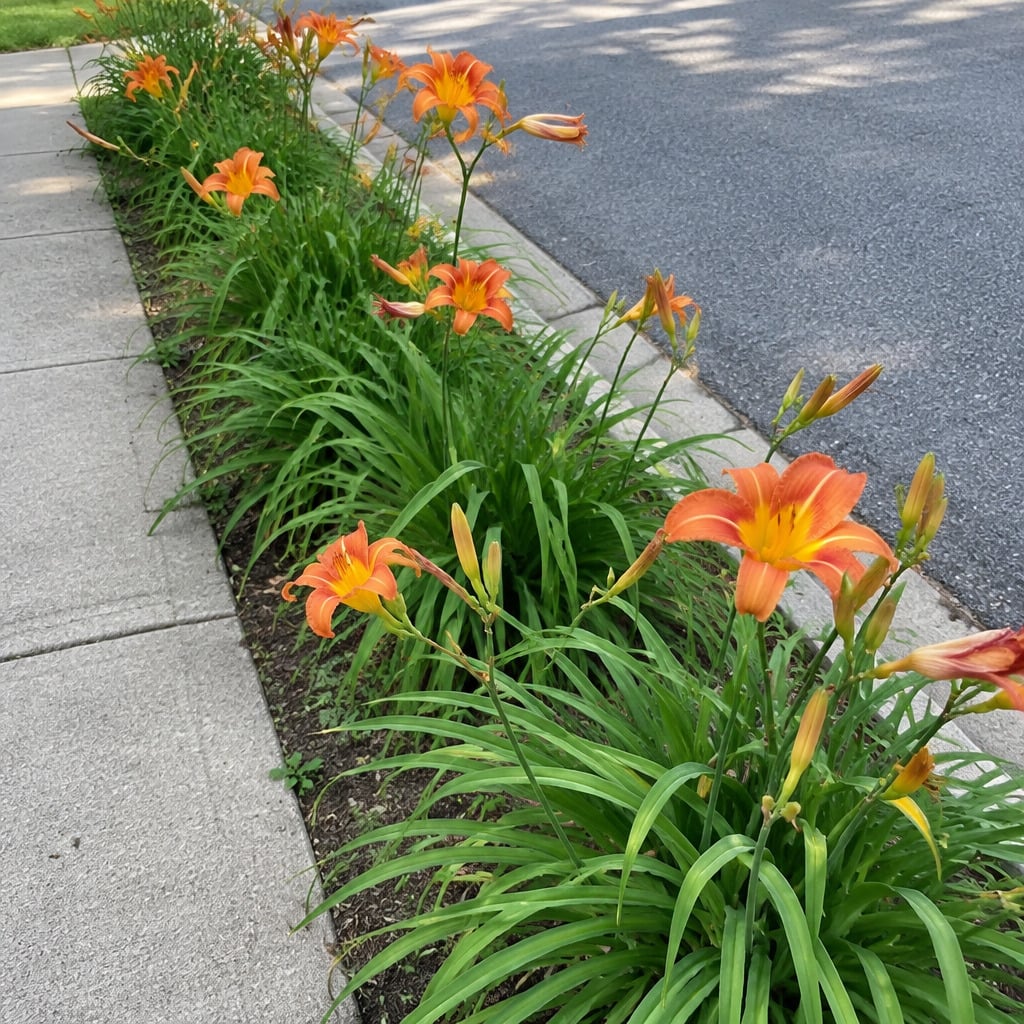
City soil usually treats plants like garbage, but modern daylilies shrug off heat and dry spells once established while still putting on a strong summer show.
Just don’t plant the feral ditch lily (Hemerocallis fulva). It spreads aggressively by rhizomes and can wage a true turf war with a fine post-apocalyptic vibe. Stick to well-behaved clumping hybrids instead.
Quick tip: Choose reblooming cultivars, or mix early-, mid-, and late-season bloomers if you want color to last longer through summer.
13: Creeping Sedum (USDA Zones 3-9)
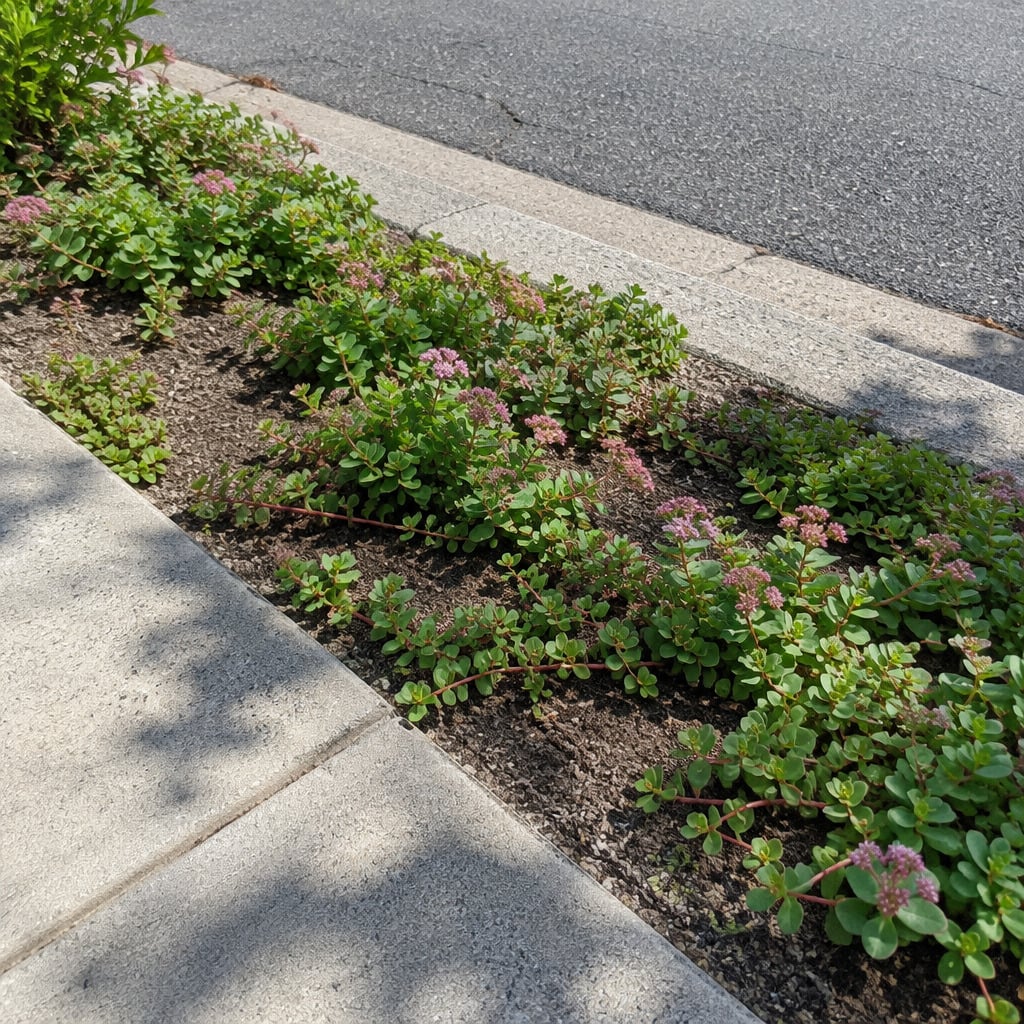
Fleshy leaves store moisture internally, so once established, you can forget about it for weeks and it’ll still spread across shallow, sorry soil. There’s Maximus Decimus Meridius, and then there’s Phedimus spurius.
Constant sogginess will murder it way faster than a dry spell. It rarely needs much extra water once established, but even stonecrop has its limits during prolonged drought.
Quick tip: If it creeps somewhere you don’t want it, lift the shallow-rooted stems and replant them in bare gaps elsewhere.
Want more plants that spread into those empty patches? We put together a guide to fast-growing groundcovers that can help keep weeds in check.
14: Hens and Chicks (USDA Zones 3-8)
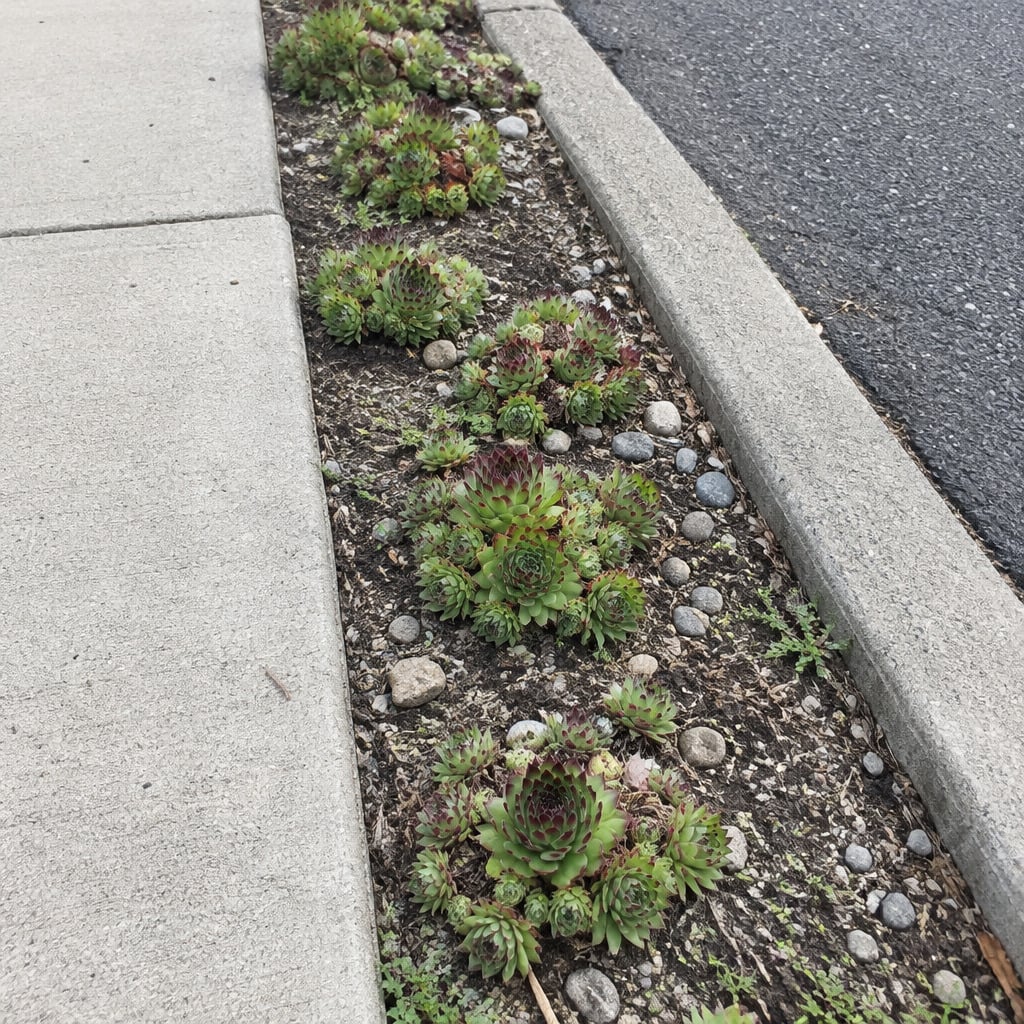
Hens and Chicks tuck tight against scorching walkways, spreading through poor, stony soil without asking for much.
Sempervivum tectorum is incredibly drought tolerant once established, but prolonged dry spells can still call for a drink. Constant wet soil is the bigger danger and can turn the whole colony to mush.
Quick tip: Don’t panic when an older rosette flowers and dies. That’s normal! The surrounding “chicks” keep the colony going.
15: Hardy Ice Plant (USDA Zones 6-10)
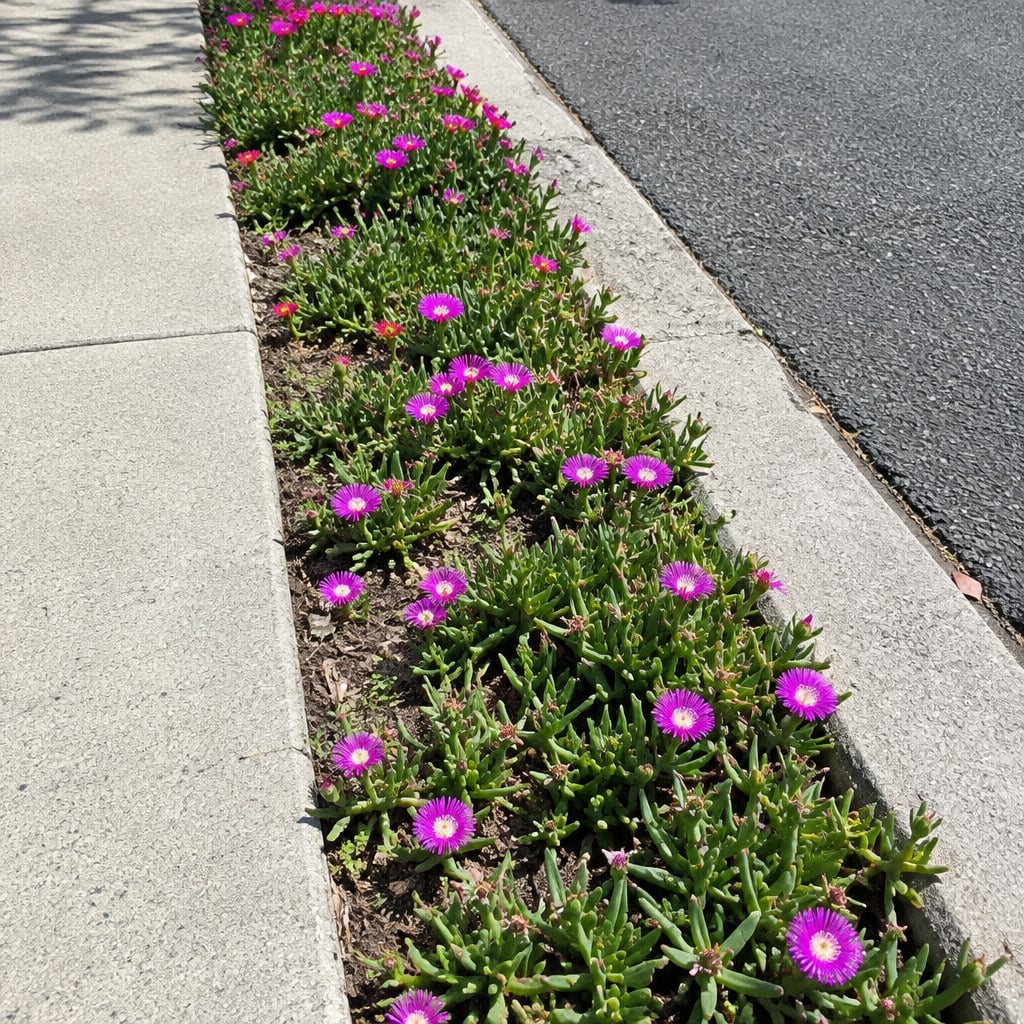
Blinding neon-magenta flowers erupt across sun-baked asphalt strips, turning the front edge into a tight ground cover. Low-slung stems weave into a dense mat without blocking visibility near intersections.
Delosperma cooperi survives blazing summer heat without blinking. Yet, heavy winter muck can rot it out unless the soil drains like cocktails at happy hour.
How to Design the Hell Strip with Intent
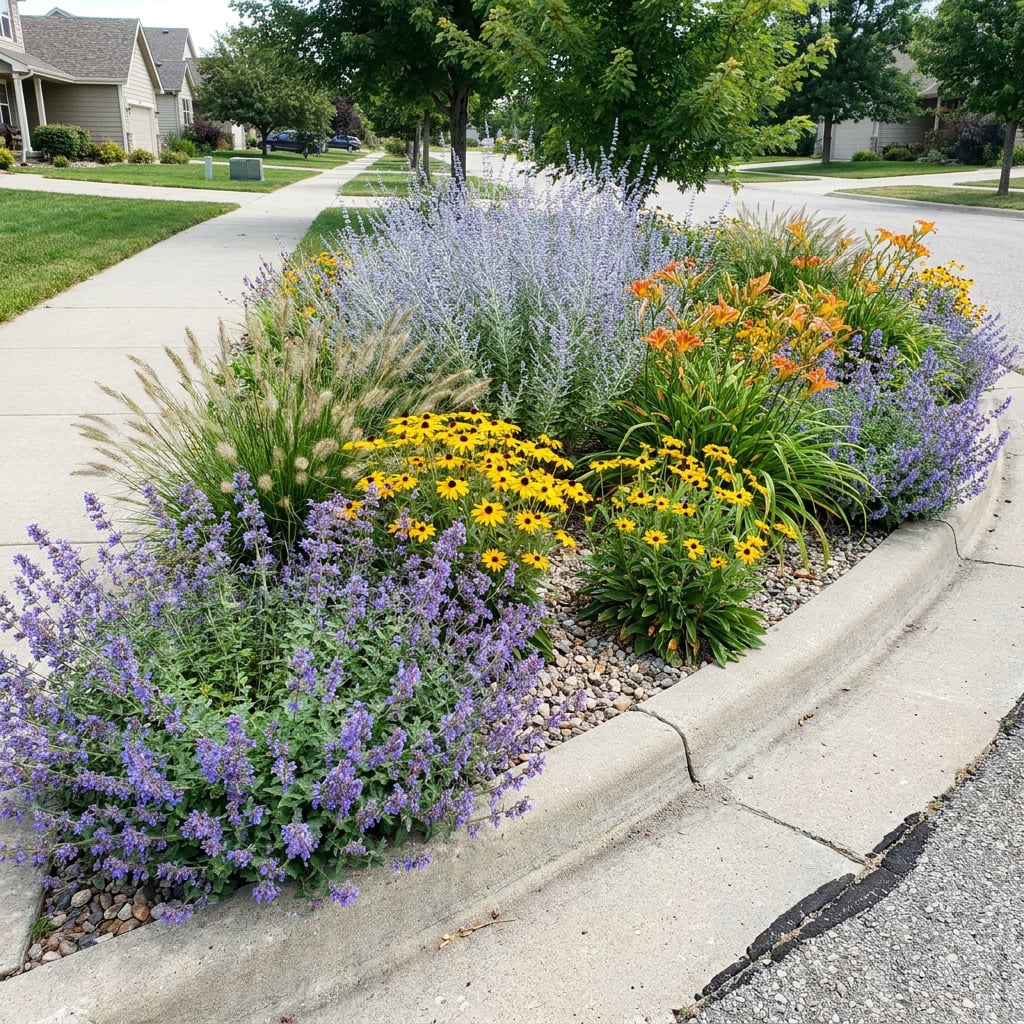
Rather than sticking one of every species into the strip like it’s Noah’s Ark, group plants in repeating drifts of three to five and leave enough room for their mature spread.
Layer the heights and stagger bloom times with these layout formulas:
If you’re working with a wider strip, we also put together a guide to tall flowers that work beautifully toward the back of a border.
Give New Plants Some Help the First Year
No plant is drought-tolerant right out of the pot. You treat it as such and you can lose it. Keep new plants watered while their roots establish, especially through hot, dry weather.
Jamming plants into packed dirt won’t do either. Loosen badly compacted soil where you’re planting and fix obvious drainage problems first.
Lay down mulch where it makes sense, but keep it away from plant crowns. You won’t need heavy fertilizer either. Most of these plants perform perfectly well in lean soil without being constantly fed.
Once that first-year babysitting is over, we also wrote a guide to easy-care border plants that thrive on neglect.
A Dead Zone No More
Drop the turf wars with that dusty patch of earth between the street and sidewalk. You know your pavement strip best. Match tough species to the heat, soil, and space you actually have, then give them a proper establishment period. Design it right, and your hellstrip won’t look like a code violation.