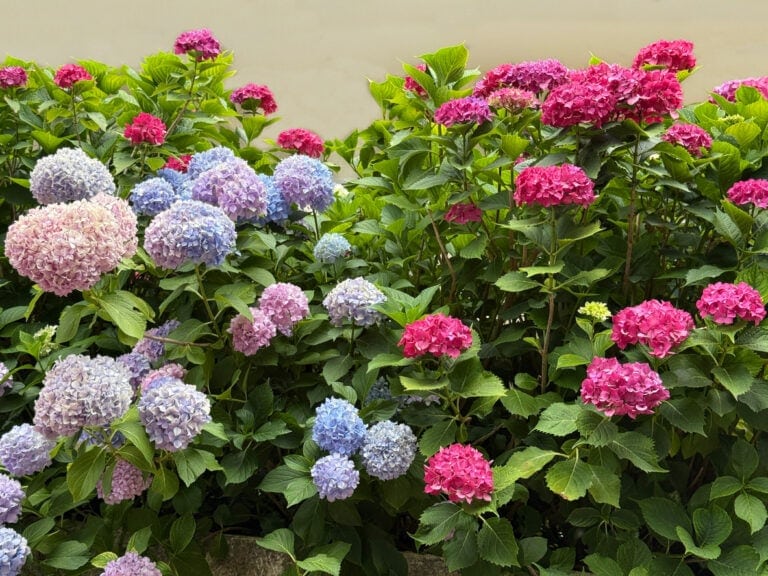
You’re not you when you’re hungry, and neither is your shade garden. Impatiens grow fast and burn out just as quickly. Most people forget that speed requires fuel. Don’t be like most people! Grab a spoon.
If you’re still filling out a shady spot, we also have a guide on flowers that grow better in shade than full sun.
The Method (How to Cram Nutrients In)
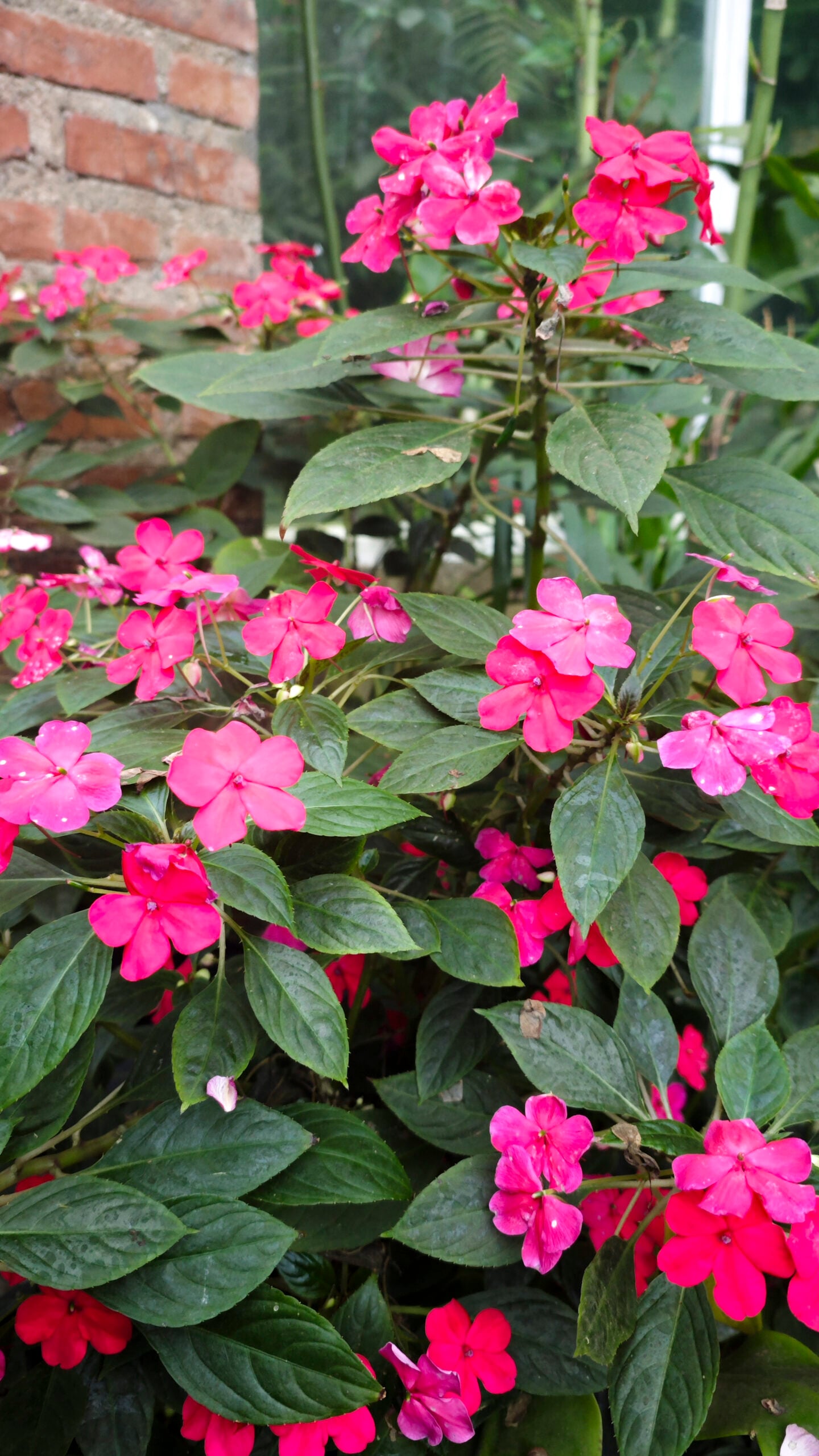
Beds and pots require completely different tactics. Soil in the ground has larger ecosystem that can hold nutrients longer. Potting mix in a container is more limited, and every watering washes some of that food right out the drainage holes.
Step 1: Fix the Fertilizer Ratio
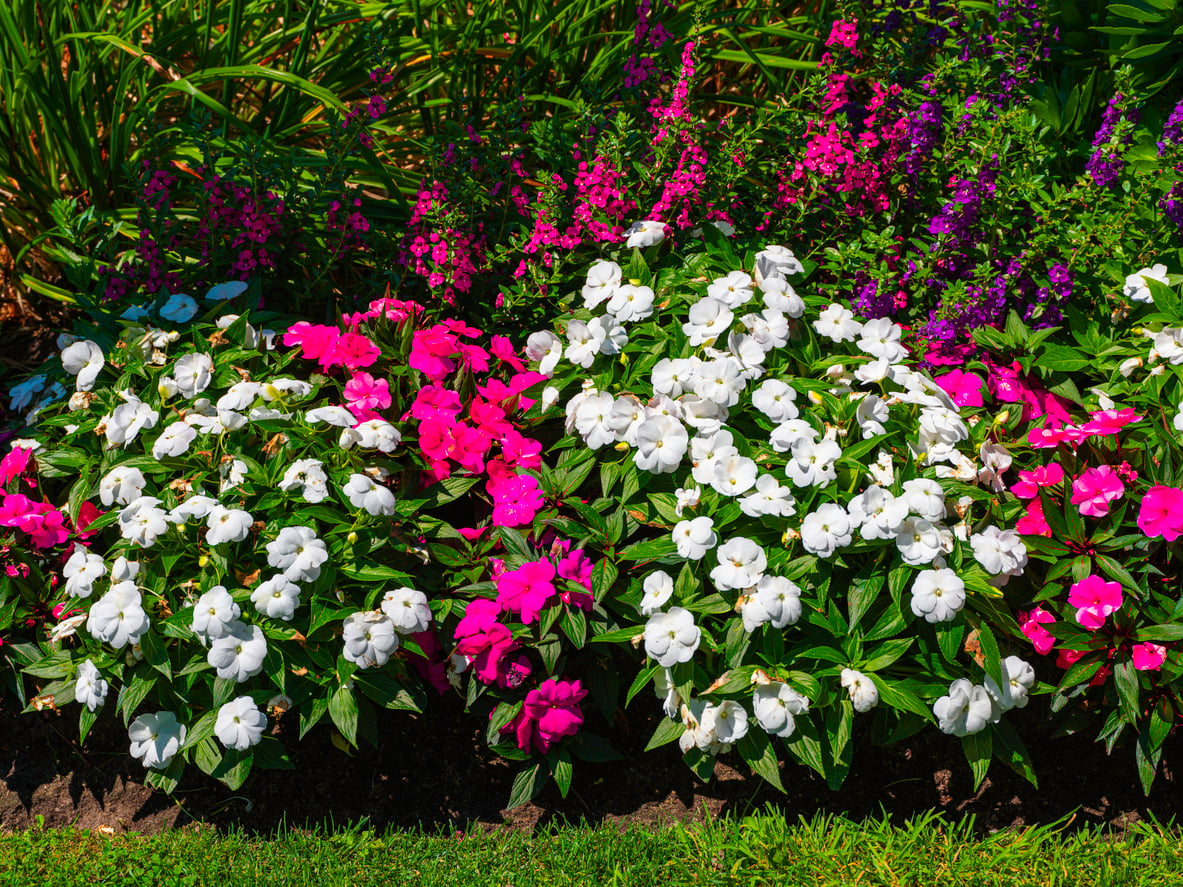
Don’t reach for whatever generic box is on sale. For example, if you use a high-nitrogen blend on impatiens, you get a massive green bush with only a few flowers. Here’s the simple breakdown:
If you want steady color, choose a flower fertilizer with phosphorus equal to or slightly higher than nitrogen, such as a balanced 5-5-5 or a bloom-supporting 5-10-5. Avoid formulas that are heavily weighted toward nitrogen!
Step 2: Prep the Ground Floor
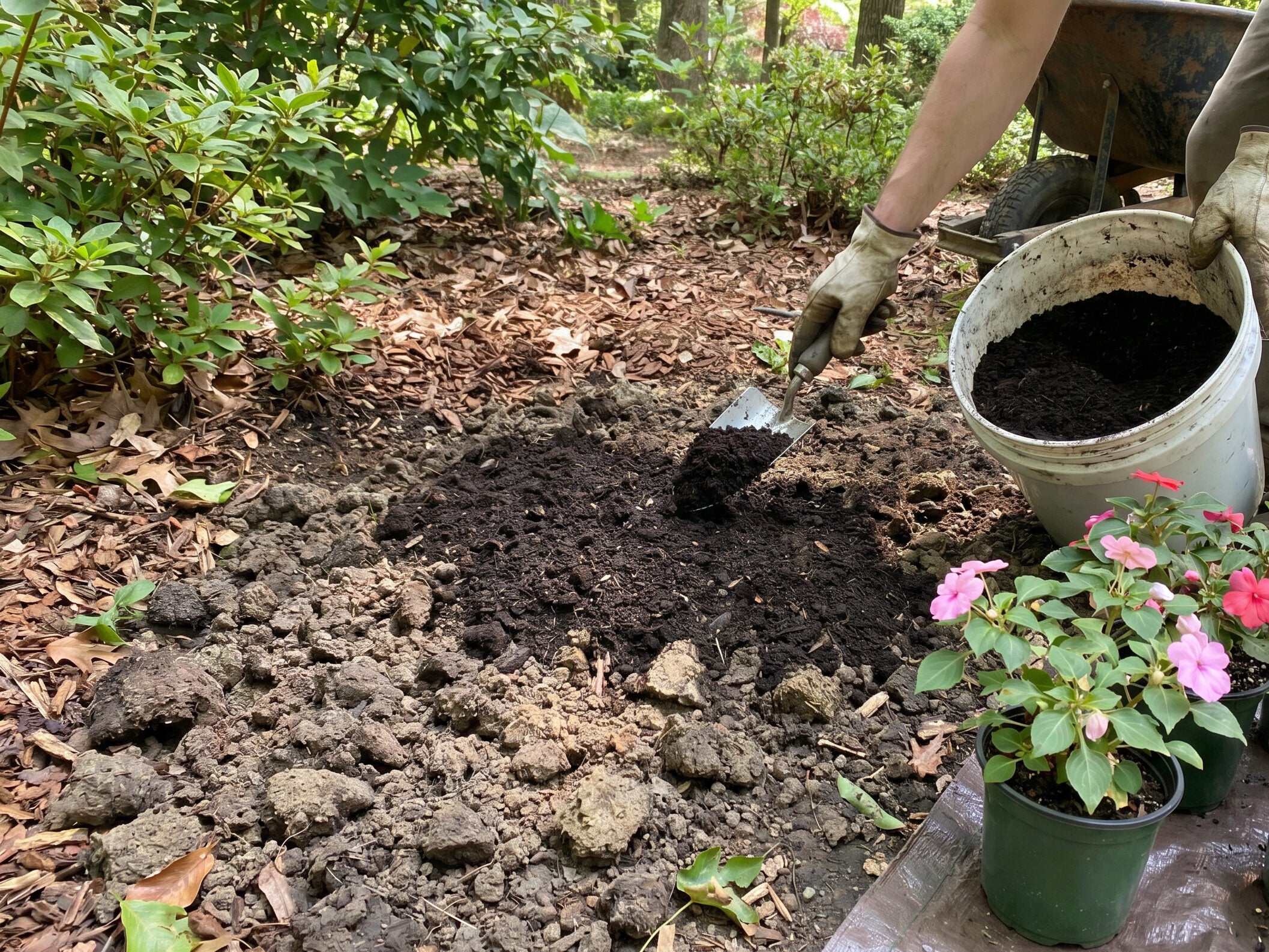
Garden beds behave differently because soil in the ground can hold nutrients longer than potting mix. So don’t dump strong liquid fertilizer onto a flower bed every week, because it leaves behind salts that eventually stress or burn the roots.
Soil needs a steady base. Before planting, spread a 1- to 2-inch layer of compost over the bed and work it into the top six inches of soil. After that, scratch a slow-release flower fertilizer into the top couple inches of soil (following the package rate for your bed size).
Quick tip: If your soil is very poor, you can use closer to two inches to help improve texture and moisture retention.
Step 3: Handle the Pot Leaching
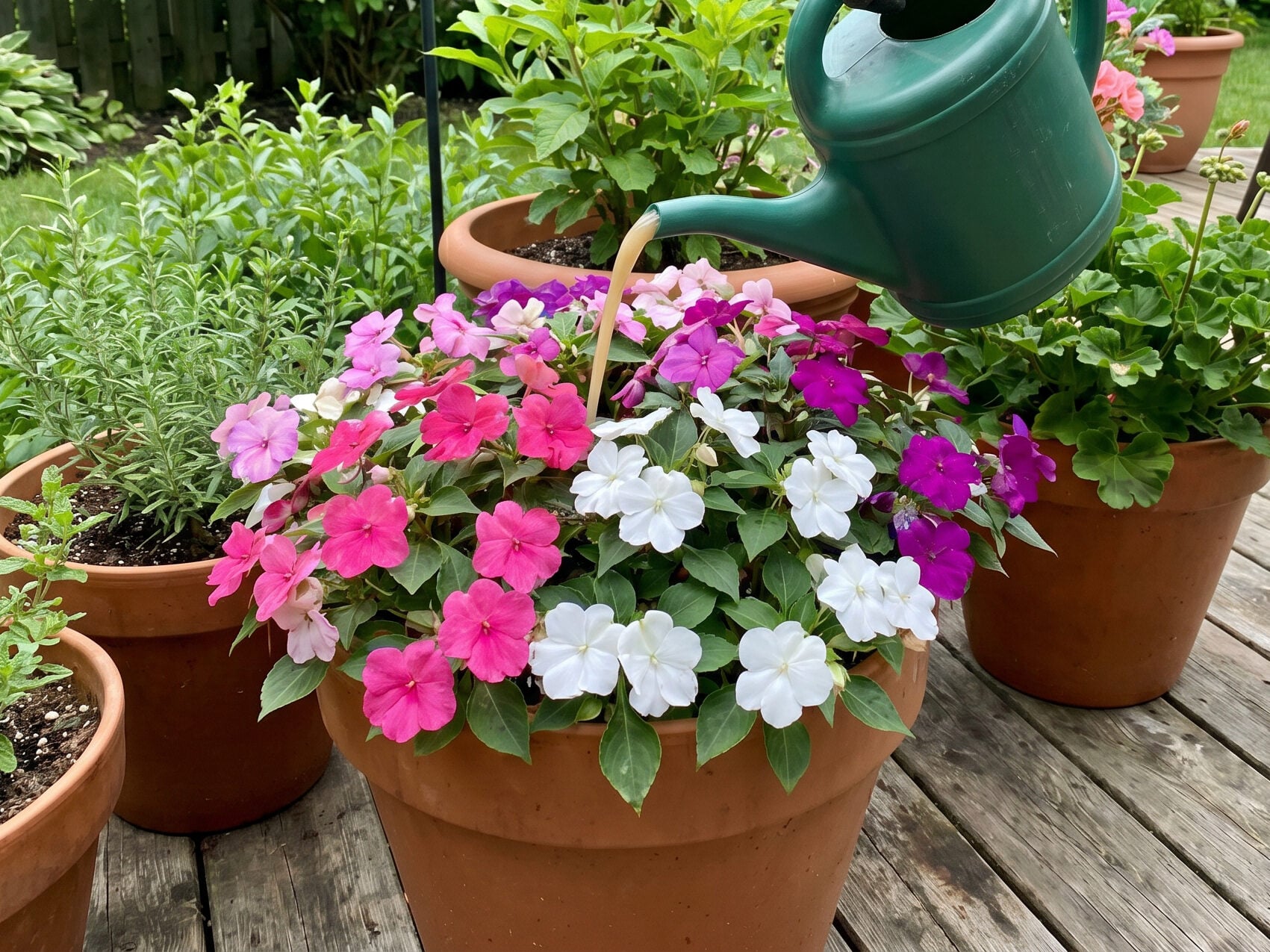
Every time you water a pot, you’re quite literally washing your money down the deck cracks. Because of this constant leaching, container-grown impatiens need more frequent feeding and slow-release granules alone cannot keep up.
For my 10- to 12-inch pots, I like to keep it simple:
If feeding weekly, use a weaker half-strength mix (unless your product label says otherwise). The goal is steady feeding, not a heavy blast all at once.
If you like the organic route, we also wrote a guide on organic fertilizers you can make from kitchen scraps, but I’d still use gentle, diluted doses for potted impatiens.
Step 4: Activate the Potting Soil Life
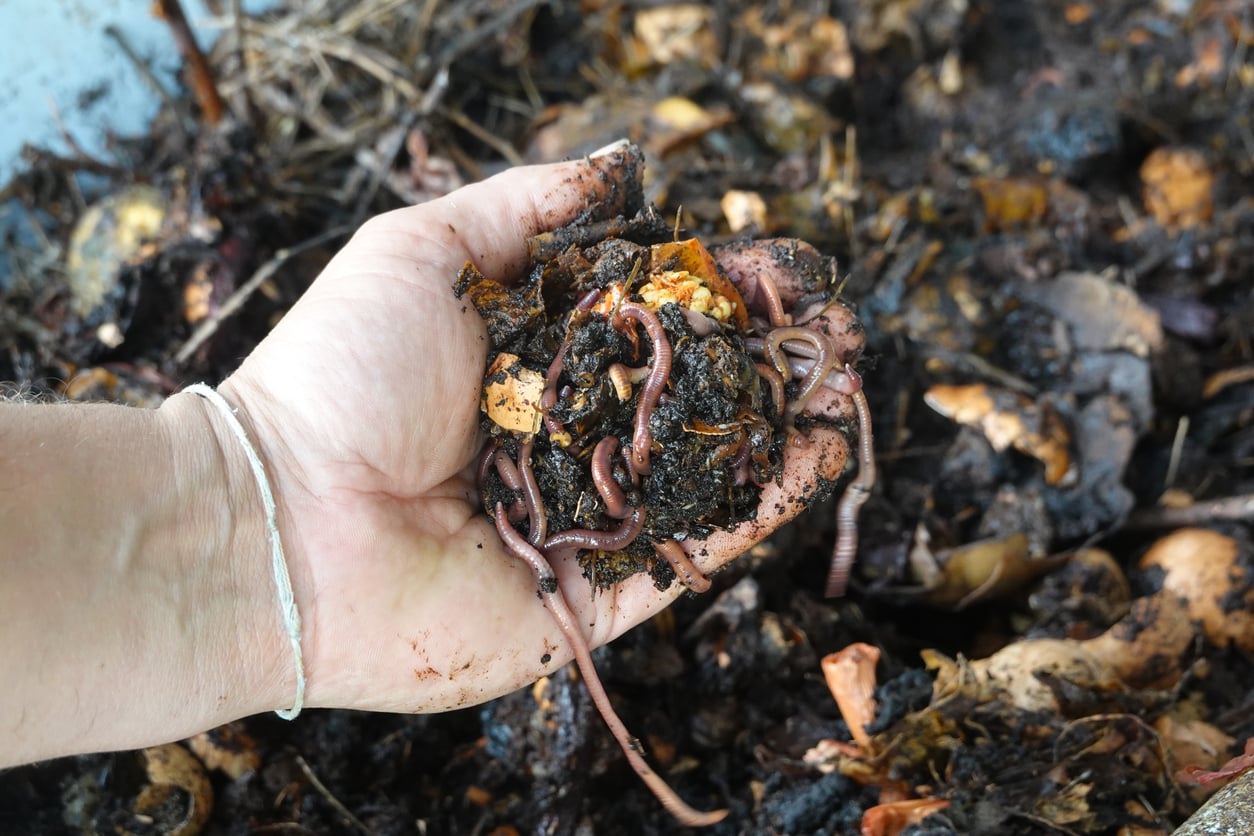
Bagged potting mix is not the same as garden soil. Some mixes have compost in them, but many are mostly lightweight ingredients that drain well and lose nutrients faster.
If I’m using organic fertilizer in pots, I like to mix a small handful of worm castings or finished compost into the potting mix before planting.
Don’t overdo it, though. Too much compost can make a pot heavy and soggy.
The Timing (When to Fuel the Engine)
Don’t feed by the calendar alone. “Spring” and “summer” are helpful starting points, but impatiens need feeding based on how fast they’re growing, blooming, and using up nutrients.
Step 1: Fuel the Launch on Day One
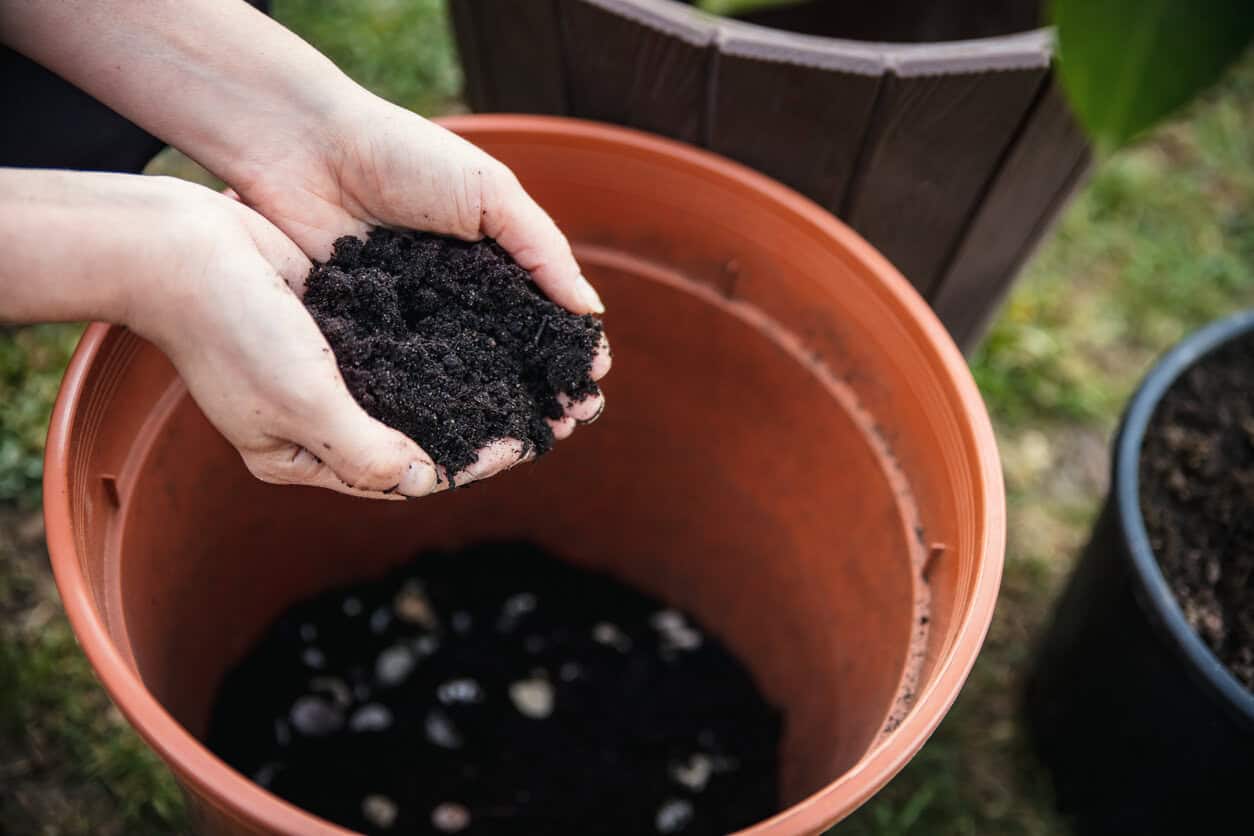
Don’t wait until the plants look hungry to think about food. Give impatiens a steady base from the start so they can settle in and keep blooming.
Impatiens may look delicate, but once they settle in, they grow fast. A little food waiting in the soil helps them keep up.
If you’re planning the rest of your flower beds too, we wrote a guide on flowers to fertilize in spring for a better blooming season.
Step 2: Watch for Mid-Summer Stagnation
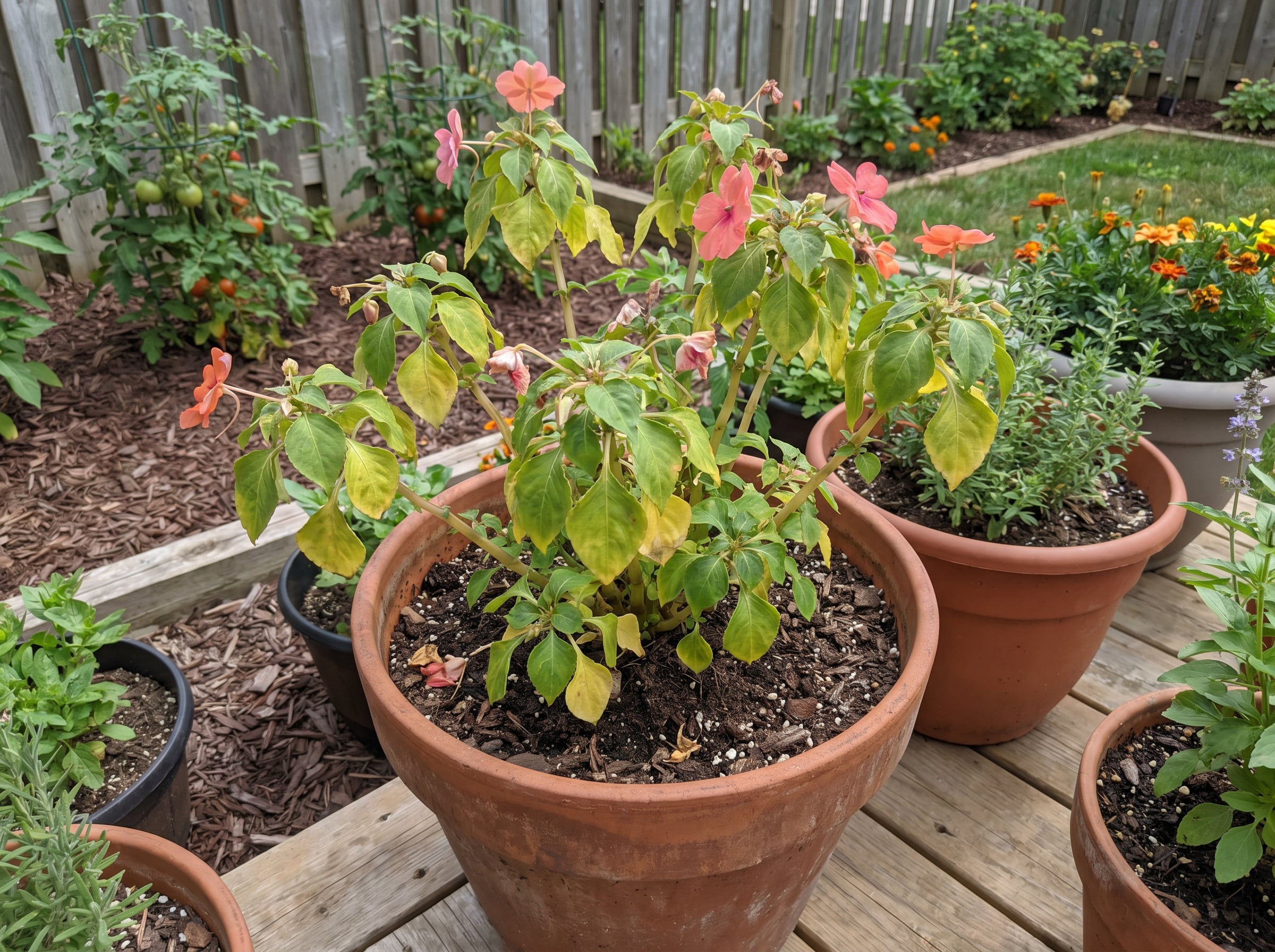
Midsummer is often when the wheels start to fall off. By then, the first dose of fertilizer may be fading, especially in pots that get watered constantly.
If your impatiens were blooming well but now have fewer buds, paler lower leaves, and slower growth even though watering and light are steady, the first dose of fertilizer may be fading.
Just check the basics first: stretched stems can also come from too much shade, crowding, heat, or inconsistent watering, so don’t blame fertilizer until watering and light look right.
Step 3: Deploy the Targeted Rescue
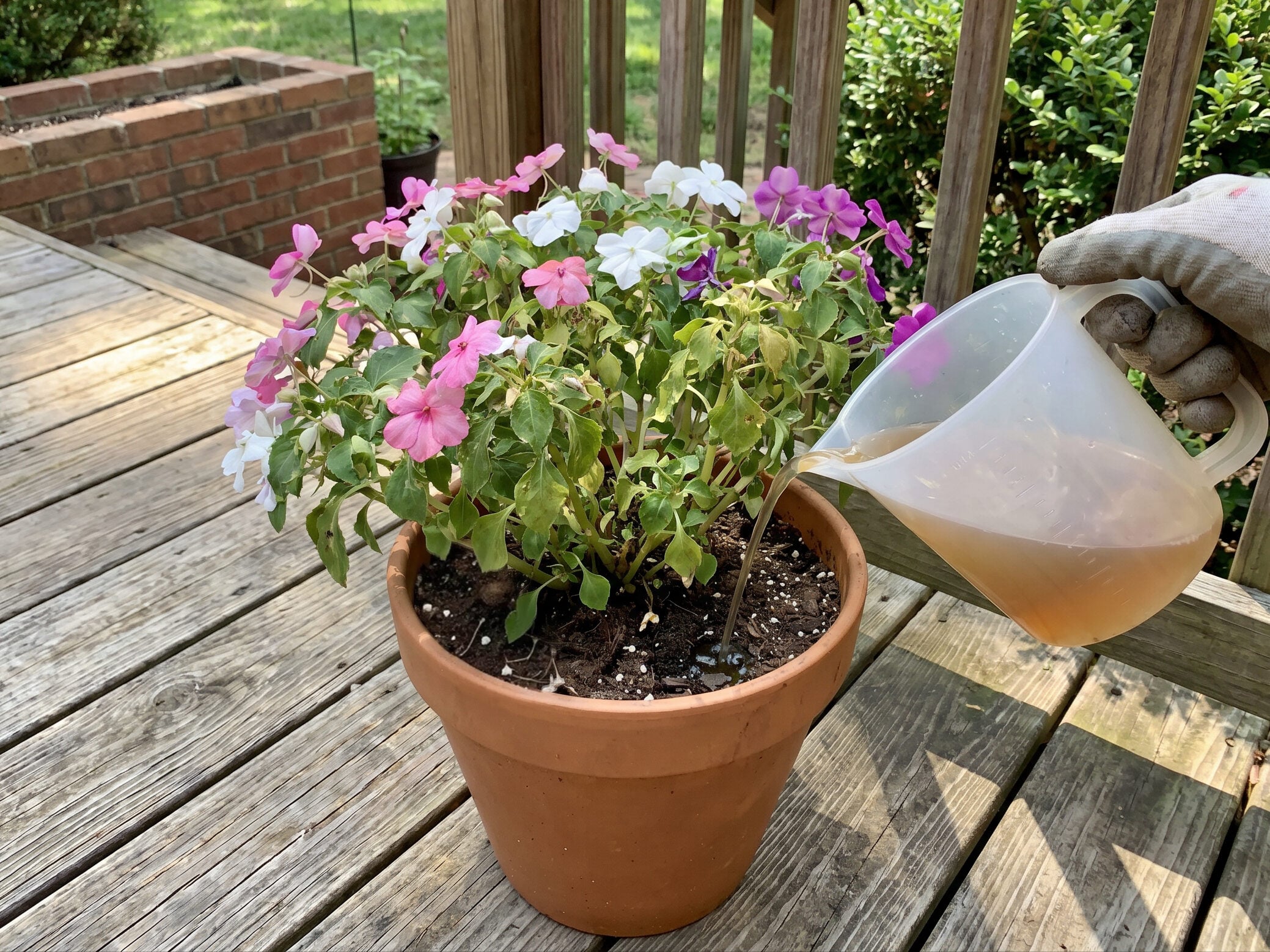
Once you’ve ruled out watering, heat, and light problems, adjust the feeding based on where the impatiens are growing:
You cannot treat a hungry container and an overfed flower bed the exact same way.
Step 5: Trigger the Fall Freeze Shutdown
Stop feeding about two or three weeks before your first expected frost, or once nights are regularly dipping into the 40s.
Late fertilizer can push soft new growth that won’t handle cold well. At that point, let the plant close shop on its own instead of forcing one last flush.
Know Your N-P-Ks
Impatiens live up to their name by giving you zero warning before they slow down or drop buds. Continuous blooming isn’t about luck but staying one step ahead of a hungry annual.