
In our last guide, 12 Fast-Growing Groundcovers That Keep Weeds In Check, everyone fell in love with the dream of a lux pink carpet.
But your comments proved reality set in fast: the blooms faded after only a few weeks, bees took over the pool deck, and winter left behind a huge, dull, albeit still aromatic, doormat. We hear you. Here is how to handle the bloom cycle like a pro.
1. Choose a More Flower-Heavy Variety
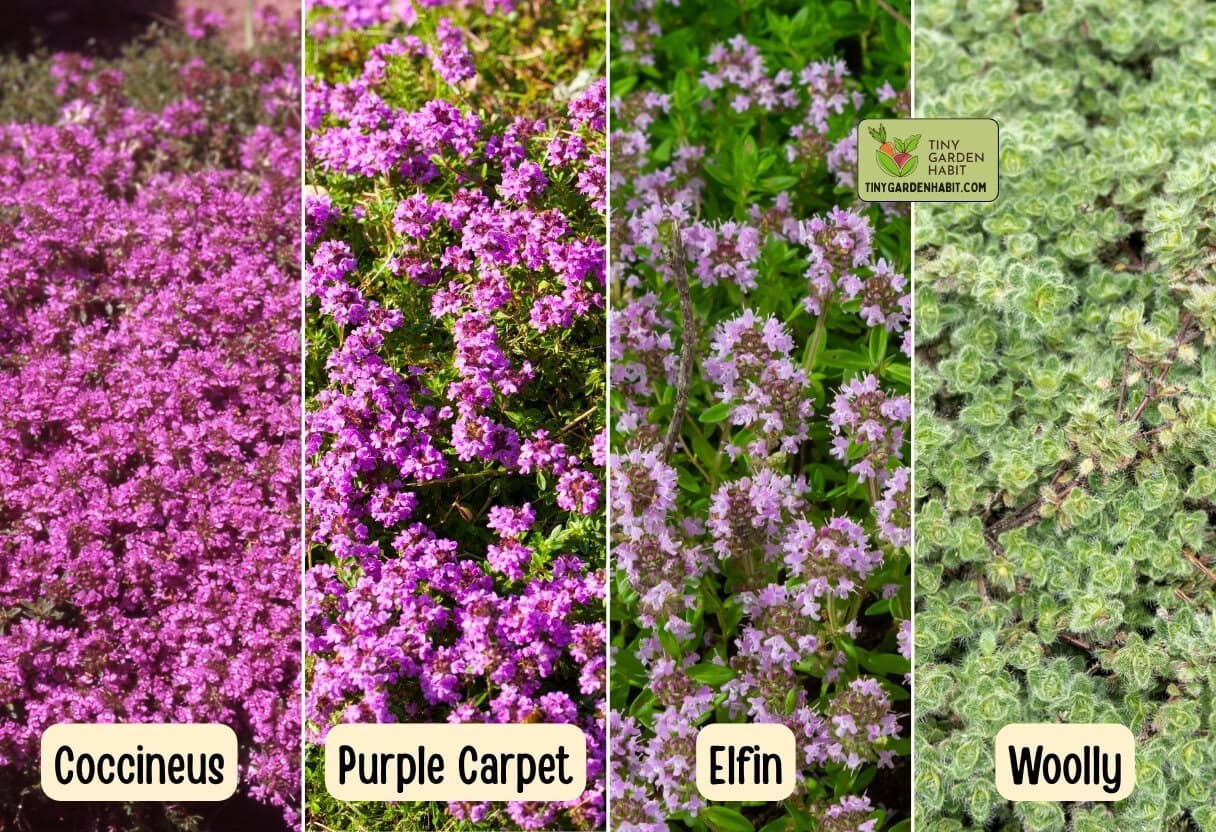
Most disappointment comes down to a plant-tag trap at the garden center. Thyme and thyme again, we grab whatever fuzzy green pot looks healthy, plant it, and expect a magazine cover. But genetics do matter here, and not every cultivar is built for a show.
Have you planted Woolly Thyme, often sold as Thymus pseudolanuginosus? You were rigged from the start. It’s fantastic for soft, silvery texture, but its flowers tend to be sparse and muted. This one is mainly a foliage plant.
To get that dense, eye-searing color, hunt down varieties known for a heavier flower display:
In case the plant tag just says “creeping thyme” without naming the cultivar, pass on it and don’t assume it will produce the thick pink carpet you saw online.
If creeping thyme’s short flower show is starting to sound like a deal-breaker, we also wrote a guide to colorful lawn alternatives that replace grass beautifully.
2. Give It More Direct Sun
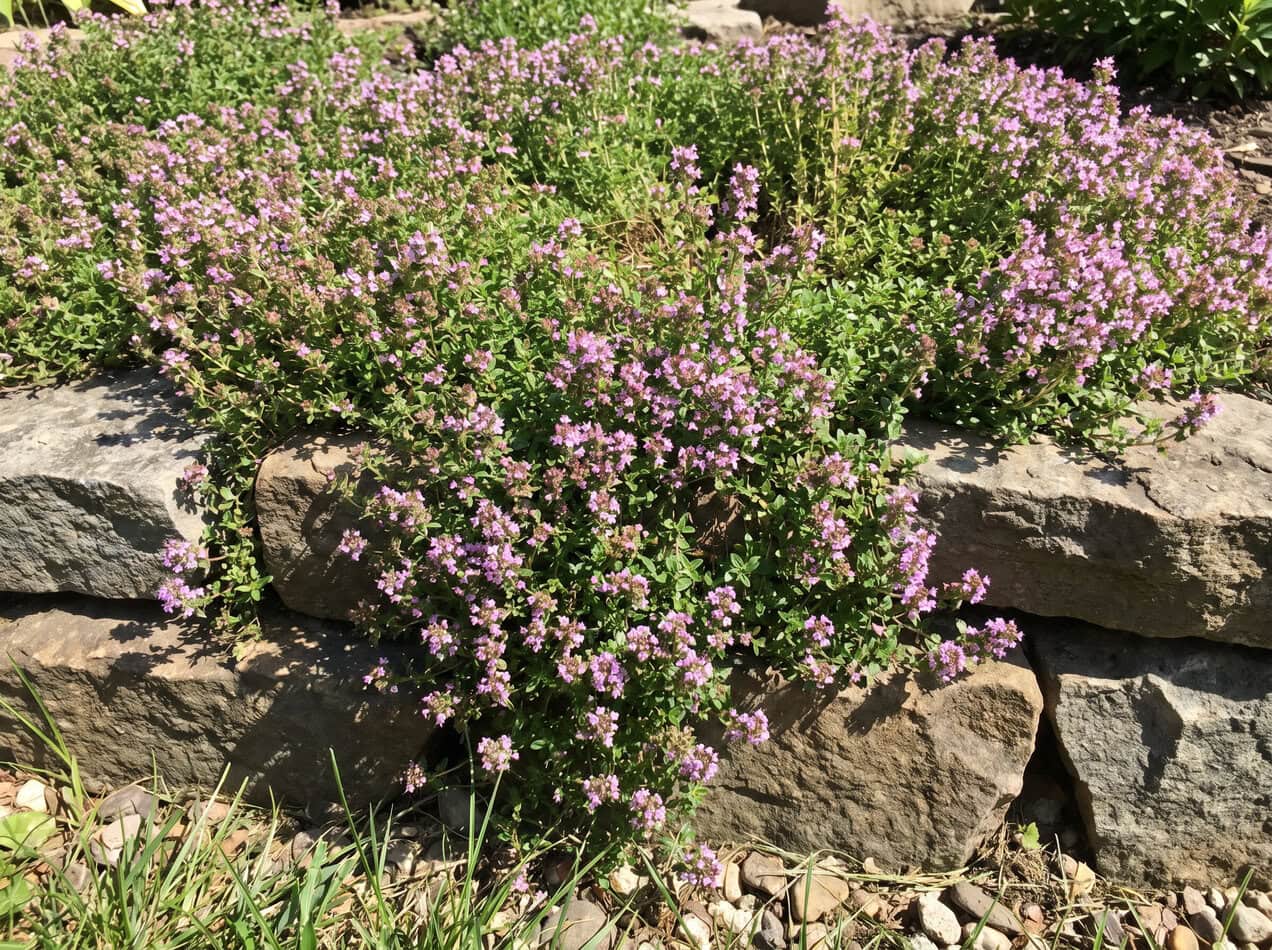
Thyme doesn’t want filtered or dappled shade. Instead of spending energy making pretty pink buds, the plant wastes every bit of fuel trying to escape the shadow of your hydrangeas or fence. You end up with a thinner, looser cover and fewer blooms.
Pretty please, give it at least six hours of direct sun, ideally closer to eight. Full sun encourages denser growth and heavier flowering, and established creeping thyme handles hot, exposed spots surprisingly well (as long as the soil drains quickly).
Quick tip: Does a spot in your yard make you sweat just standing in it for five minutes? That’s precisely where creeping thyme wants to live and bloom.
3. Avoid Rich Fertilizer

Our knee-jerk reaction as caring plant parents is to give everything a big dose of food the second we want more flowers. Big mistake.
Pouring high-nitrogen fertilizer on creeping thyme is like feeding a kid pure sugar and then wondering why it turns massive and floppy. You may get plenty of soft green growth, but not the tight, flower-heavy carpet you wanted.
Thyme comes from rocky slopes with lean soil, where it has adapted to grow without much help. It handles poor soil surprisingly well and usually doesn’t need routine feeding once established.
So curb your inner mother hen, skip the fertilizer and rich compost, and let lean soil stay lean. You want a lush carpet, you stop feeding it like an heirloom tomato.
4. Fix Your Drainage

You nailed it in the comments: when a plant tag claims something’s drought-tolerant, it’s really a polite way of saying soggy soil’s a no-go. Heavy clay or puddles will turn the center of your dense mat slimy and cause the roots and crown to rot.
Even worse, should you persist in keeping the soil damp, the thick green cover that is your thyme creates a humid underground sanctuary for every slug and snail in the cul-de-sac.
You know your dirt better than anyone. If it holds water, thyme will suffer. Instead, plant it on a raised mound, dry slope, or rock garden filled with loose, gritty, fast-draining soil. Your creeping thyme would much rather cling to a dry, rocky bed than sit with wet feet.
Quick tip: Don’t try to fix heavy clay by mixing in a little sand or gravel, as that can leave you with even denser soil.
5. Trim It After the Main Flower Flush
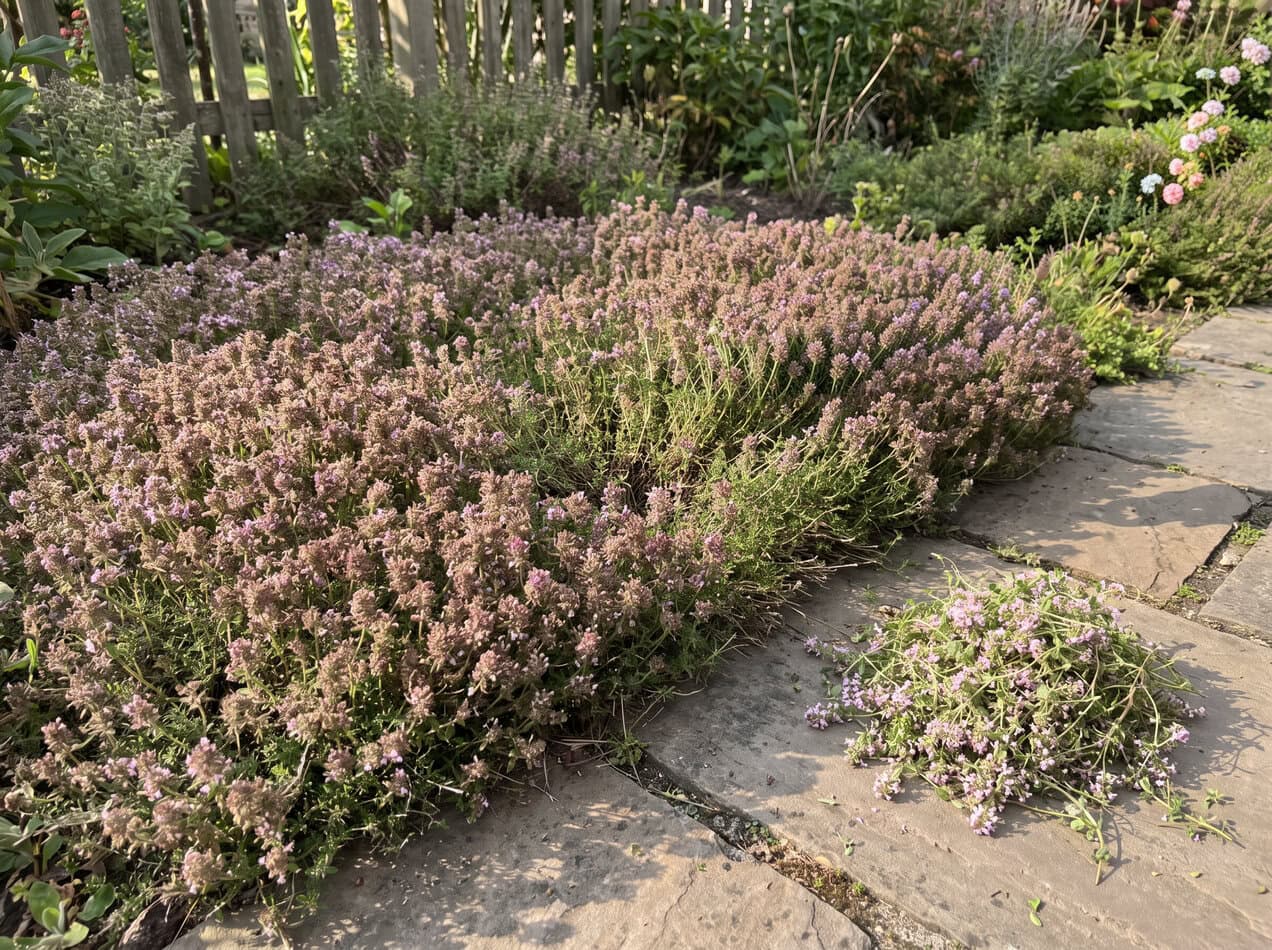
Once that three-week pink party wraps up, your thyme is going to look a little hungover. This is where most people give up, assuming the show’s over for the year. It mostly is (you won’t get a second mega carpet. More like a micro carpet, but still).
Even the Royal Horticultural Society recommends giving thyme a light trim soon after flowering. The Brits are the ultimate authority on groundcovers, and the RHS knows a thing or two about not ruining plants, so I say we listen.
As a bonus, the fresh flush of green growth may push out a few late-summer flowers. They will be scattered, mind you, so think of it more as a clean reset for the foliage than a guaranteed second show.
Quick tip: Use clean hedge shears to skim off the faded flower heads and the top half-inch or so of green growth. You’re giving it a haircut, not scalping it.
6. Don’t Cut Into Bare Woody Stems
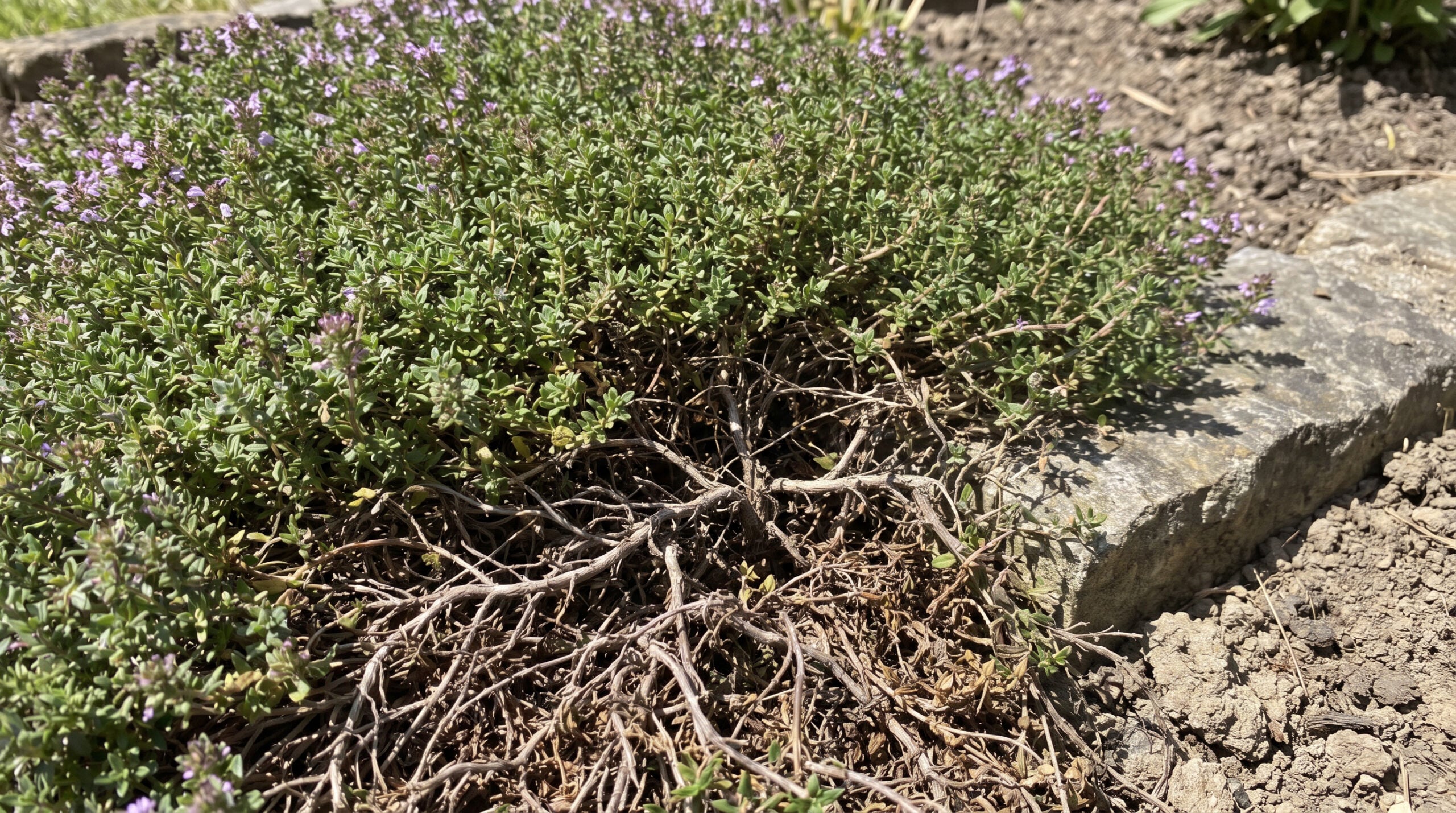
When you start trimming after that main bloom, you’ll be tempted to chop deep to clean up the mat. Resist.
Creeping thyme grows like a tiny tree network. The top layer has fresh green leaves and stems, but underneath sits a web of old, gray, woody growth.
If you slice past the green and cut straight into that bare wood, those stems may not reshoot. You’ll be left with ugly, stubborn brown patches that look as if a lawn mower took a bite out of your garden bed.
Keep your shears (yes, shears, NOT A MOWER) strictly in the top green layer. If a stem has no visible green leaves, leave it alone.
And if you love the idea of replacing grass without bringing the mower back into the picture, we also wrote a guide to 10 stunning no-mow lawn ideas using groundcovers.
7. Watering During Prolonged Heatwaves
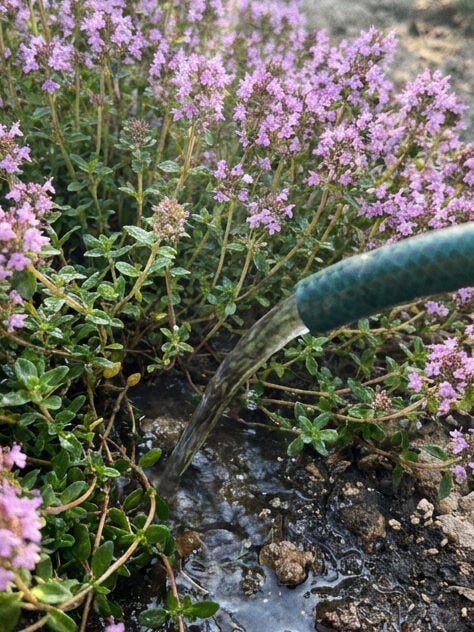
We take drought-tolerant way too far and think thyme is made of Kevlar. While established thyme can survive being ghosted for a surprisingly long time, an extended stretch of extreme heat with no rain can still leave it stressed and crispy.
Once the leaves start dropping, any chance of late-season blooms dries up with them. The plant goes into emergency survival mode. Even sun-loving thyme has limits.
You don’t need a sprinkler schedule, but when the heat gets ridiculous, push your fingers through the mat and check the soil underneath. If it feels dry a couple of inches down, give the whole patch a slow, thorough soaking, then leave it alone until the soil dries again.
That’s just enough of a drink to keep the foliage alive without creating that slug-infested mud bath we talked about earlier.
Quick tip: Newly planted creeping thyme is a different story. Water it regularly during its first growing season while the roots establish, but never leave the soil constantly wet.
And if creeping thyme still sounds like the wrong match for your yard, we also wrote a guide to 11 native groundcovers that beat common invasive spreaders, with options for different light and soil conditions.
Can Creeping Thyme Bloom All Summer?

Let’s kill this myth once and for all: nope, creeping thyme won’t stay covered in flowers nonstop all summer.
Its main bloom fest usually lasts about three to four weeks, although the exact timing depends on the cultivar, weather, and growing conditions. After that, the plant goes back to being what it spent most of its evolution trying to be: a low-growing groundcover.
Let’s say you want to stretch the performance as long as possible (or coax out a few scattered, bonus blossoms late in the season). You have three real levers to pull:
So manage your expectations, and enjoy its lovely show while it lasts.


