Hosta care in November is mostly a bunch of don’ts. Don’t rake too much, don’t rush the winter mulch, and don’t rush to chop your plants down. So, don’t just ask yourself what you can do for your hostas, but what you can stop doing to them.
Task 1: Don’t Rake Every Inch of Soil
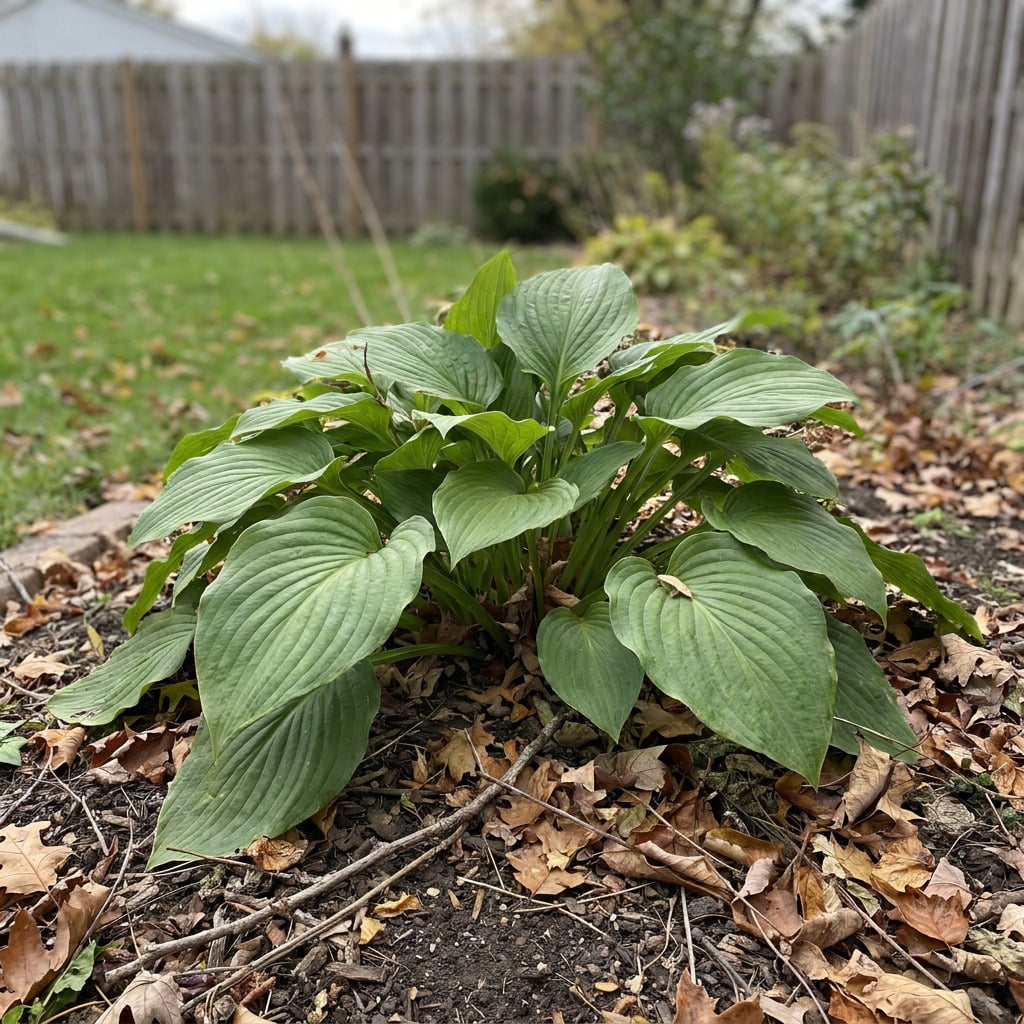
Every fall, nature hands you free mulch and slow-release fertilizer. Let those fallen leaves rot right where they drop to feed the soil microbes.
You only need to target heavy, soggy mats of tree leaves that pack down directly over the center of your hostas. Pull them away from the crowns, but leave loose, scattered leaves lying around the base and between plants to protect the soil.
Quick tip: Bagging up every single leaf exposes bare soil to winter temperature swings and erosion that can stress your hostas’ roots.
We also wrote a guide on 8 perennials that benefit from fallen leaves around them, if you want to put those leaves to good use elsewhere in your garden.
Task 2: Tidy Frost-Collapsed Leaves
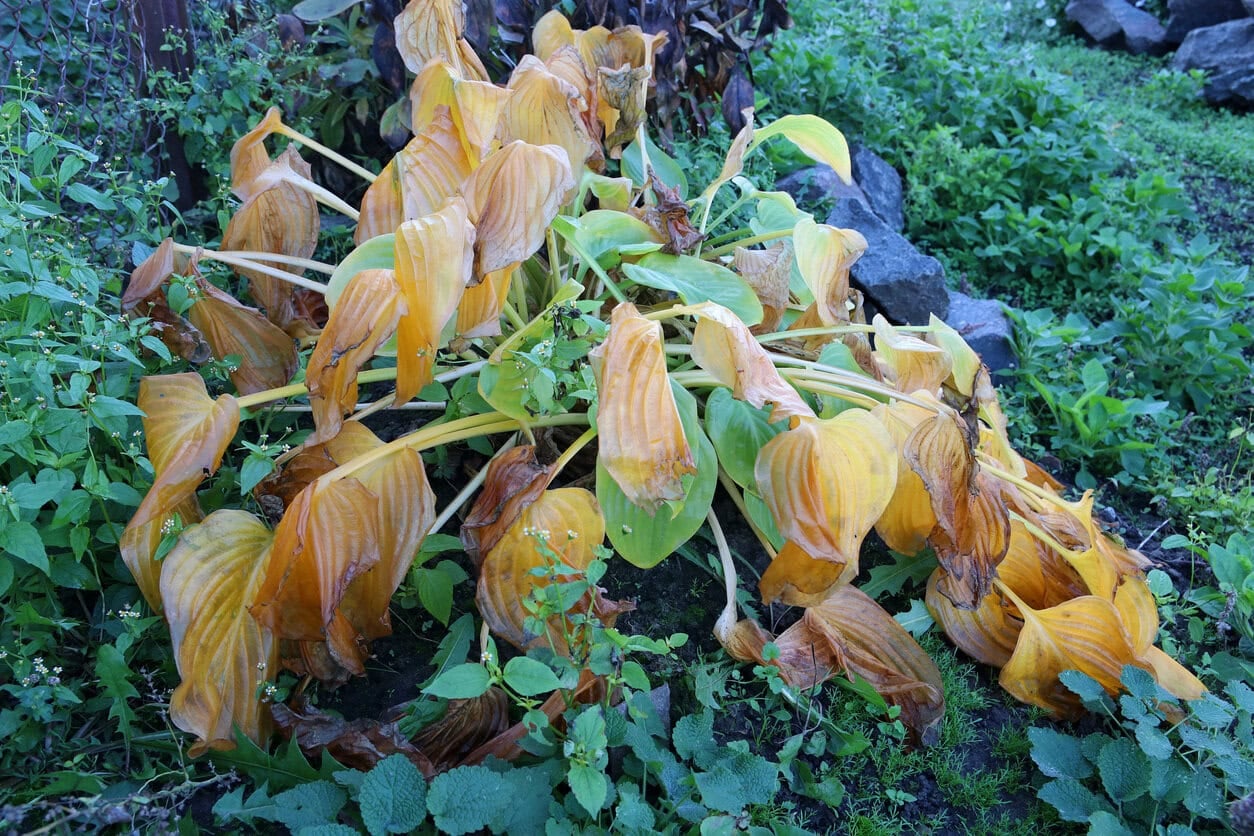
There’s no love lost between a hard freeze and hosta foliage. When the first arrives, the second loses its structure, turns yellow or black, and drops flat on the ground.
Once the foliage has fully yellowed or collapsed after frost, cut it back near the base and clear away the mushy debris. Cutting green leaves too early robs your hosta of energy it needs come spring.
You wait for the leaves to die back naturally for a reason. As fall temperatures drop, your hosta moves nutrients into its crown and roots for winter storage.
Quick tip: If your hostas suffered from fungal leaf spots or foliar nematodes, bag and trash the diseased foliage. Confirmed cases of Hosta Virus X or petiole rot require removing the entire infected plant, not just the foliage.
If you’re dealing with yellowing leaves before the first frost, we also wrote a guide on when and how to trim yellowing hosta leaves without harming the plant.
Task 3: Mulch Newly Planted Hostas After Freeze-Up
It’s easy to look at a hosta in late November (or October if you are up in Zone 3) and wonder why you should bother mulching something that already looks dead.
The enemy here isn’t just the cold. It’s frost heaving. When wet ground freezes and thaws repeatedly, it can push newly planted hostas out of the soil, exposing their roots.
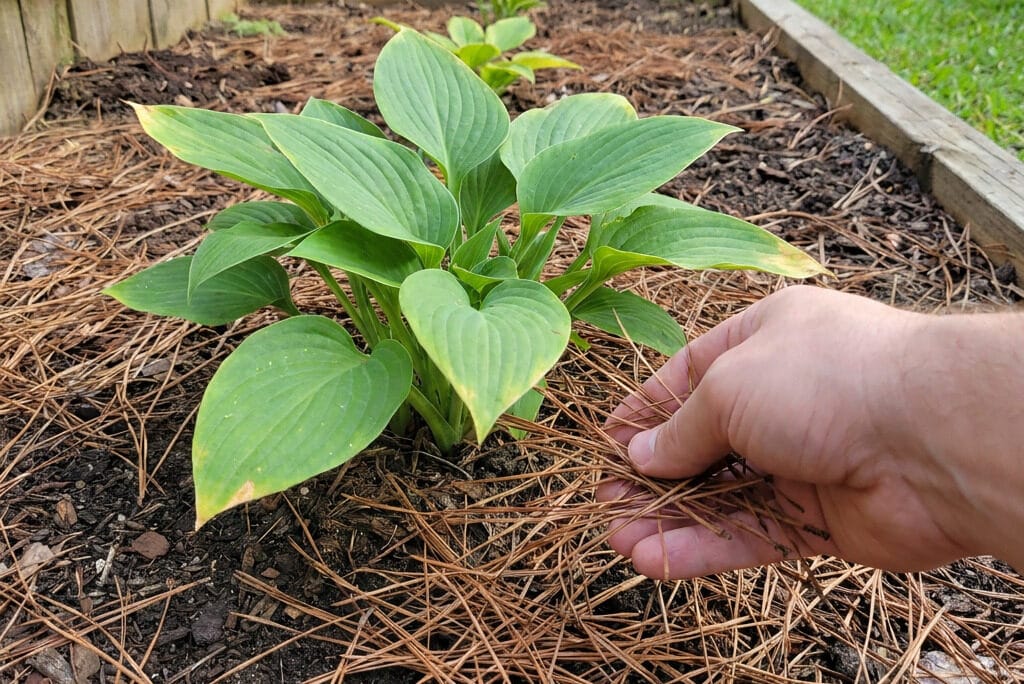
Once the ground starts to freeze, spread a two- to three-inch layer of loose pine needles or clean straw over the root zone. This helps stabilize soil temperatures and reduces frost heaving. And once spring arrives, pull that extra mulch away from the crown.
What about established hostas? Their developed roots make them less vulnerable, so they rarely need extra winter protection. And if your ground hardly ever freezes, you can skip this task altogether.
Task 4: Check for Vole Habitat
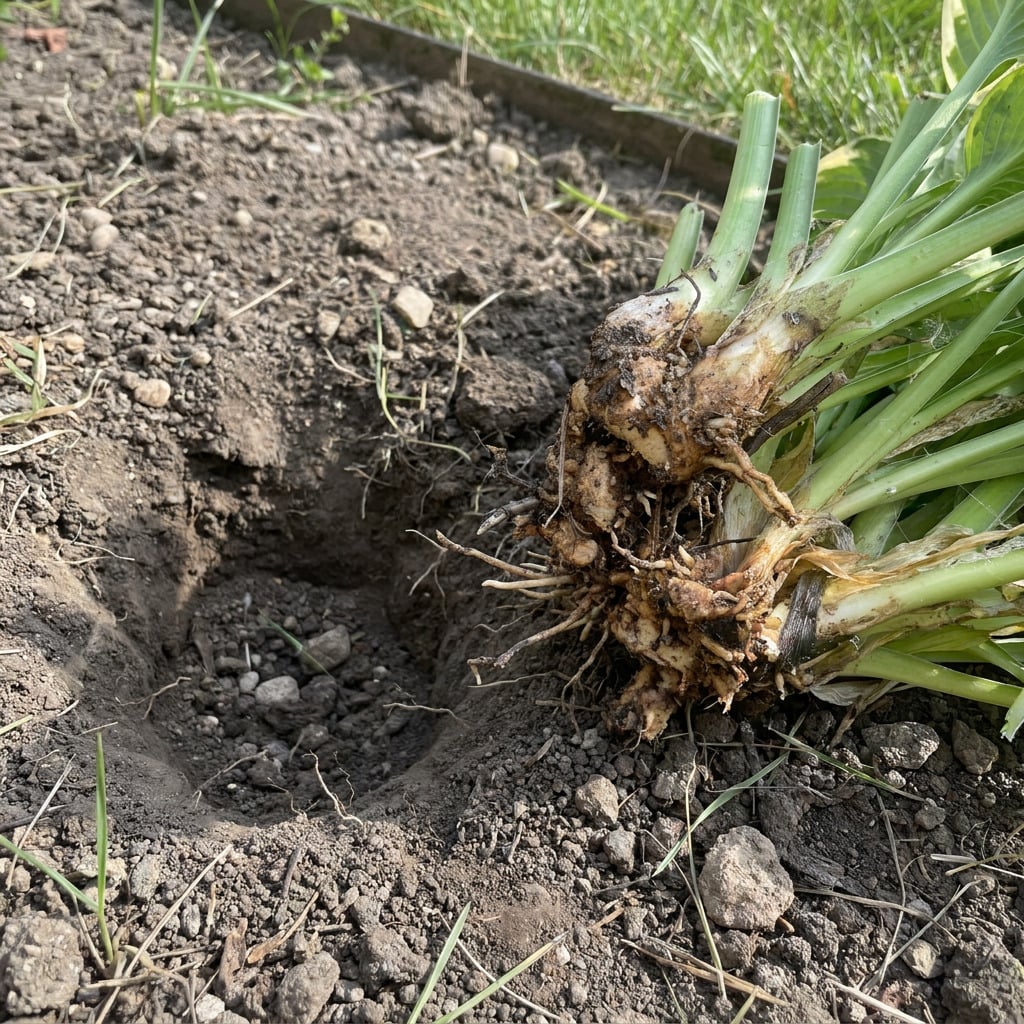
Ask any hosta gardener what they fear most. It isn’t frost or slug damage. It’s voles.
They create small, open surface runways through grass or soil, often snaking right up to the base of the plant. You see small burrow holes nearby? They could be voles, especially if you spot those winding runways.
Clear a six-inch “no-vole’s-land” around the hosta crown by removing thick leaves and tall grass. Clear ground leaves voles more exposed to owls and hawks, so they’re less likely to hang around.
November is a good time to disrupt their winter paradise. Don’t wait for the snow! That heavy snow blanket gives voles sheltered runways where they can feed, largely hidden from predators, like a zero-cost mess hall.
Task 5: Protect Potted Hostas Before Winter
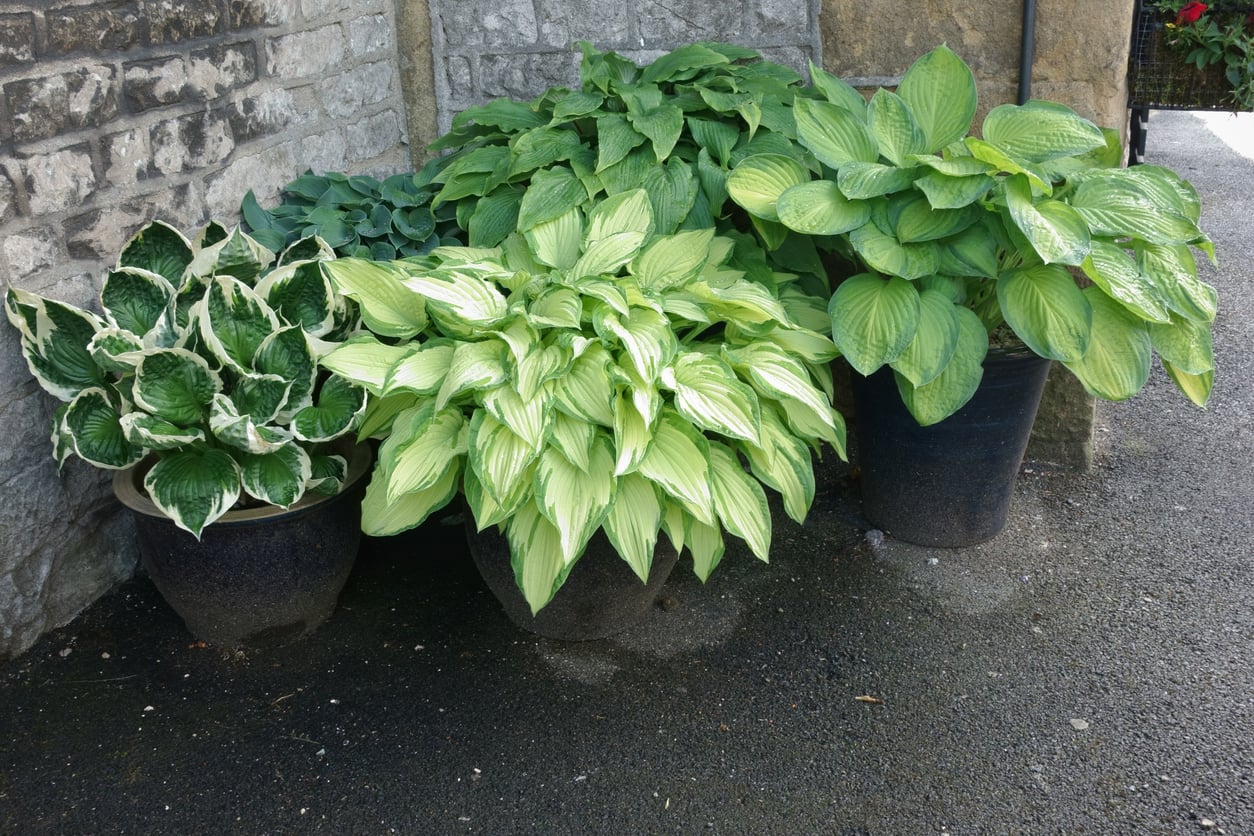
Hostas in the ground can handle some pretty harsh winters. Hostas in pots? That’s another story. Their roots don’t have all that surrounding soil to protect them from freezing temperatures.
Once the foliage dies back, move your pots into an unheated garage, as long as temperatures stay between 20°F and 45°F. No garage? Bury the pots in your garden soil before the ground freezes to give those roots some insulation.
Check the soil every few weeks and water lightly if it’s getting dry. And don’t bring your hostas into a heated living room. They need their winter nap.
If you live somewhere with mild winters and little to no freezing, I’m actually jealous and you can usually leave your pots outside.
And when winter starts winding down, we also wrote a guide on 6 essential hosta tasks to do in February to help your plants get a better start in spring.
Be a Good Host to Your Hostas
At the end of the day, hostas didn’t survive centuries of harsh winters by needing a helicopter gardener. They are tough, resilient perennials. Every single one of these winter prep jobs comes down to trusting the plant’s natural hardiness while keeping an eye out for the typical threats that can take them down.