Admit it. You perfectly fit the unique role of the adrenaline gardener. While others were out enjoying autumn weather, you were wisely saving your bulb-planting energy for a last-gasp sprint.
We, the glorious procrastinators, prefer a thrilling challenge. You are not late, fellow deadline dodger. You’re a time optimist with a unique planting schedule. If only you could identify the resilient bulbs that will forgive your magnificent delay.
Is Your Dirt Frozen Concrete or Just Grumpy?

A true last-minute operation requires a cold dose of reality.
The single, most important rule for this deep-winter planting is simple: you must still be able to get a trowel in the ground without needing a new and capable shoulder afterward.
If the dirt is solidly frozen (a situation no true optimist ever plans for), you must switch to the panic-button strategy (containers, which we will discuss later).
Bulbs are patient, but they are not magicians. They need a few weeks of consistent cold (around 35-45°F / 1-7°C)to initiate the rooting process, but they unquestionably must do that rooting work before the ground turns into a permanent ice cube.
Your biggest danger is not the cold but the brutal, soil-heaving freeze-thaw cycle. It rudely pushes bulbs right out of the ground where winter winds can deliver the final blow. The fact that you are still digging proves you’re ready to move on to the actual list of tough champions built to handle this hurried situation.
If this whole last-minute adventure has you vowing to be more organized next year, here’s a quick guide on when to plant bulbs for the best results, it’ll save you from future panic planting.
Bulbs That Don’t Care About Deadlines

Not all bulbs are created equal like industrial cookies. To guess which are delicate and which sturdy, ask for bulbs that need a short chilling period, or those with a thick, protective tunic (coat):
Once you’ve mastered these tough late-season picks, you might like this list of spring bulbs that keep blooming for weeks. They’re the overachievers of the flower world.
1: Tulips (Zones 3-7)

Tulips are the most forgiving option as they demand the shortest cold period. However, they need the deepest planting hole you can muster. Extra depth provides vital insulation against the hard ground freeze.
Quick tip: I always plant tulips deeper than the bag says (about 8 inches down) and cover the bed with a thick mulch layer. It keeps them insulated and stops curious squirrels from digging them up.
2: Daffodils (Zones 3-8)

Daffodils(narcissus) are tough, hungry vole repellers, which is a helpful bonus when you are already under pressure. Marginally less flexible than the Tulips, they must receive a deep soak right after planting.
Quick tip: I like to water daffodils right after planting, then leave them alone. They hate sitting in soggy soil, but that one deep soak helps them settle before the freeze.
3: Hyacinths (Zones 4-8)

Hyacinths are compact, and many garden centers hold their stock quite late. They need a consistent cold rest, which the late season normally provides. Even if their flower spike is short, expect a strong and pleasant scent. Size means little to an expert planter.
Quick tip: I tuck hyacinths near a sunny wall where snow melts first, they always bloom a week earlier there and fill the garden with scent when everything else still looks asleep.
4: Grape Hyacinths (Zones 4-9)

Grape Hyacinths are small yet reliable, and often sell in huge quantities. Due to their size, Muscari can settle in and root quite fast, sneaking easily into small spaces.
Quick tip: I scatter grape hyacinths like confetti between other bulbs, they fill in every little gap and surprise me each spring with blue patches I’d forgotten I planted.
That said, do not bother with bulbs like Alliums, Fritillaria, and most early Crocus varieties from garden centers. They’re typically finished with sales and are often too delicate to withstand a hasty November/December drop anyway.
Focus on the four flexible options above, which reward your daredevil approach to gardening.
Emergency Planting Protocols

You have the team. Now you need the action plan. Your goals are straightforward: bury the bulbs deeper than usual and protect them from the freeze-thaw cycle. The following three steps are your absolute, mandatory, inviolable insurance policy.
1: Dig Deep, Buttercup
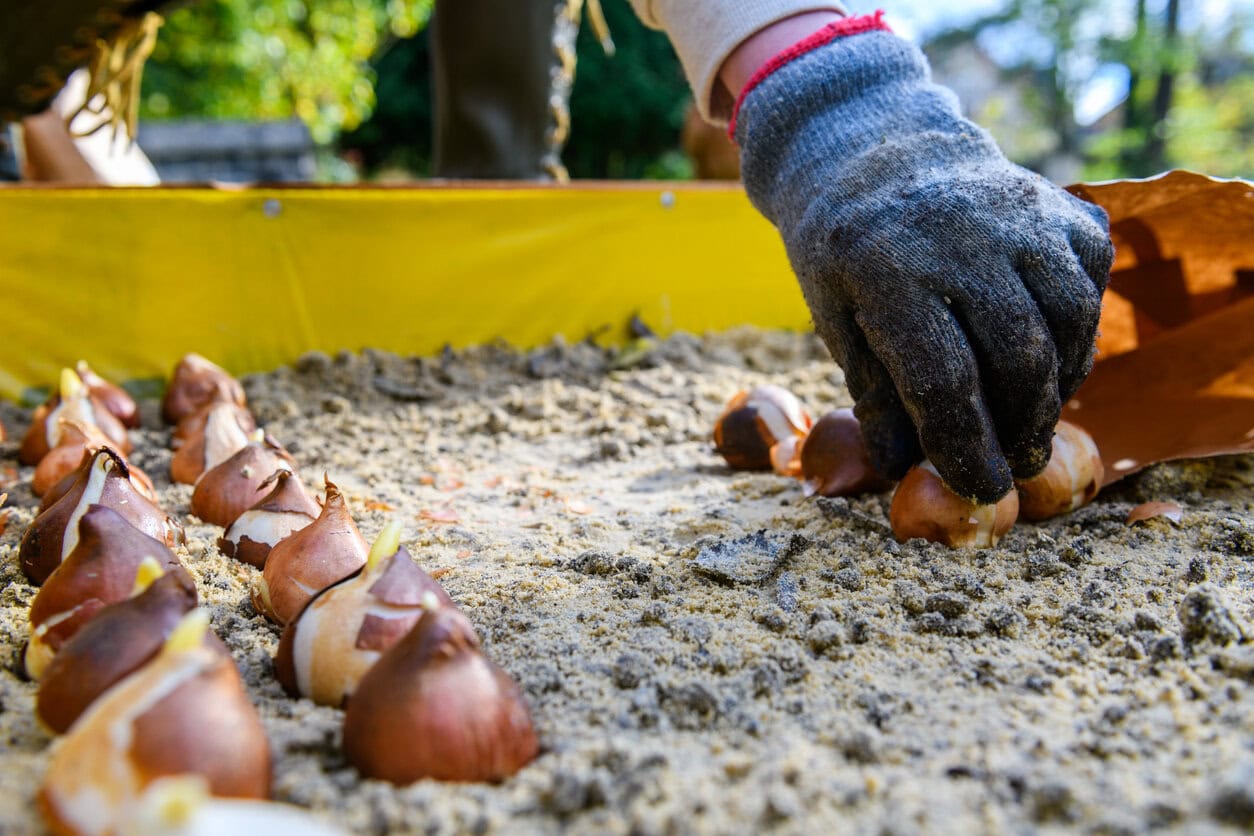
Ignore the suggested planting depth on the bag. Instead, plunge the bulb an additional two inches into the soil. The extra soil guarantees better insulation against the shallow frost.
The deeper soil maintains a more consistent temperature, which in turn pretty much nullifies the chance of the soil heaving the bulb out during a thaw.
Tiny bulbs like Muscari don’t need that much depth, no more than 4-5 inches or they’ll sulk all winter!
2: The Mulch Muffler
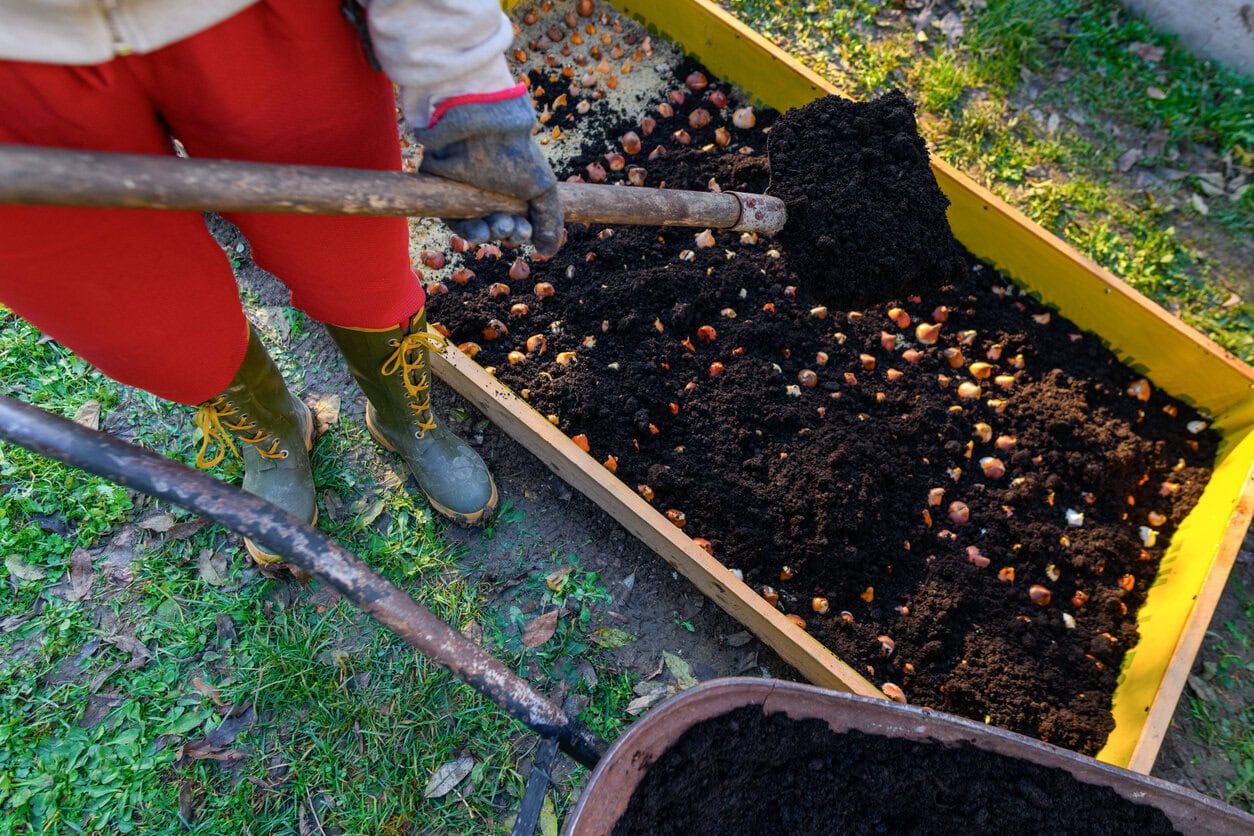
Pile on a six-inch cushion of material, like wood chips, shredded leaves, or some straw, covering the whole area right after you plant. Leave the mulch in place until spring, then pull it back gently when you see green tips poking through.
Perhaps 6 inches (15 cm) sounds like too much (it’s not) ‘cause even a thick layer of mulch doesn’t add warmth. On the contrary, it stops the ground from warming up too quickly on a sunny December day. It keeps the ground consistently cold, which the bulb needs to set proper roots before the hard freeze.
If you’re not sure which other plants deserve a cozy blanket, check out which ones actually benefit from winter mulching. Some will thank you, others won’t.
3: The One-Time Soaking
Water the newly planted bulbs once, thoroughly. Deep watering settles the soil and signals that its long rest has officially begun.
You are not feeding the bulb this way. You are simply removing air pockets that could create an icy crypt. Do not water the bulbs again. Excess moisture during the winter is a fast lane to rot.
The Container Panic Button

Even when the ground says “No”, you still have a final option: containers.
Unveil your pots to the public only when the weather warms in spring. And, if anybody asks, you didn’t fail to plant on time; it was simply a clever strategy shift.
And if your garden still looks like a half-finished project, don’t panic, this November checklist of garden tasks will help you catch up before winter truly settles in.
When Bulbs in Fall Land Safely
Last-minute gardening demands hope, often achieved through sheer willpower and a quick seasonal panic. Yet, you have successfully executed it without killing anything.
Operation last-minute bulb planting: Completed. Now, step away from the trowel!
If you’ve still got the gardening itch, you might enjoy reading about shrubs worth wrapping before winter or wildflowers to sow in fall for an early burst of color. Both are easy wins while you wait for those bulbs to wake up.