The fate of your orchid depends entirely on its specific lineage. Most grocery orchids in the U.S. belong to the Phalaenopsis family, which offers more options than a streaming service. The rest, however, are more of a one-hit wonders when it comes to that flower spike.
Moth Orchids

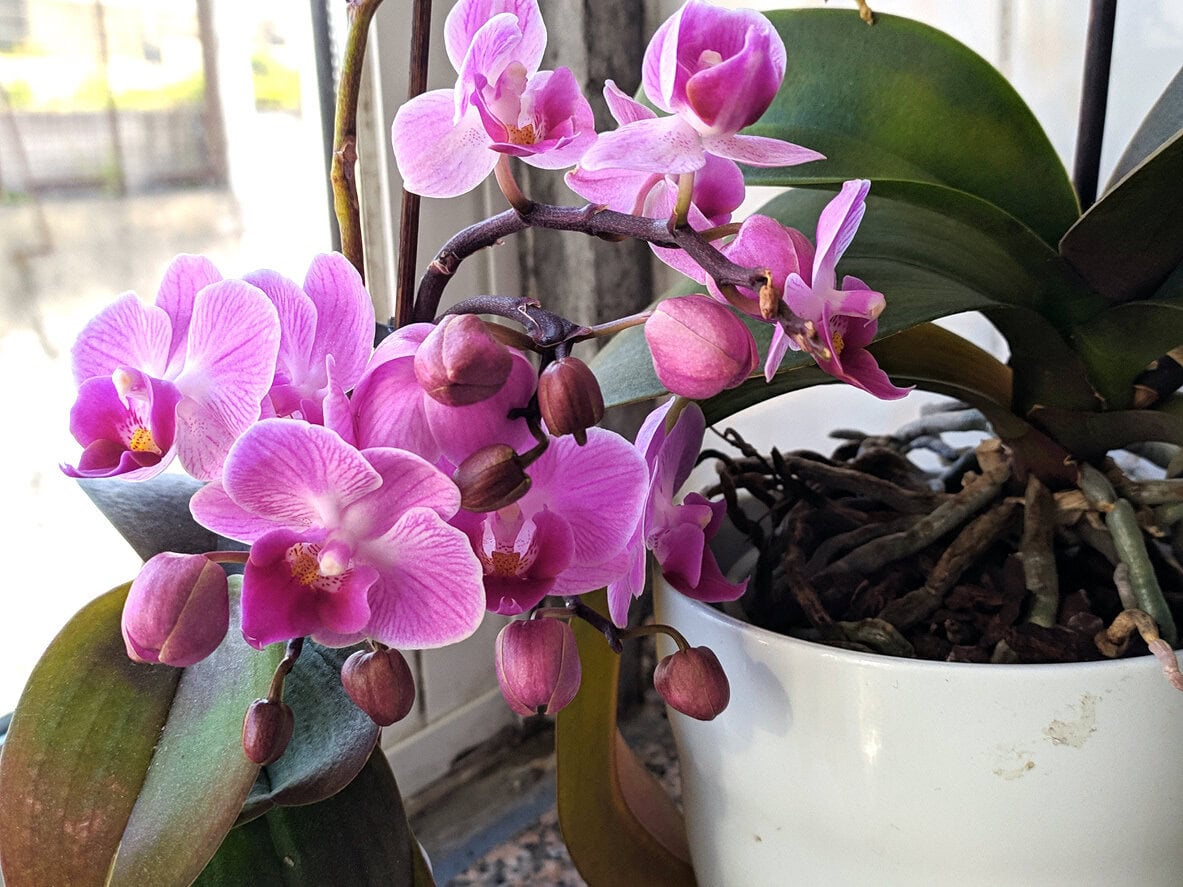
If you have a Phalaenopsis (moth orchid), you’re in luck. You own the only orchid variety that performs a true encore on a single stem! You just need to decide whether you want immediate gratification or a long-term investment in your Phalaenopsis’s health.
If you’re wondering how often you can realistically expect flowers, we explain everything in our guide on how often orchids bloom and what affects their timing.
The Reheat

I look for a node below the lowest spent flower and cut about ½ to 1 inch above it. On a healthy, green spike, it usually triggers a secondary branch that’s provide a quick color burst.
You are essentially recycling the existing spike to squeeze out a few more weeks of beauty. The resulting flowers might be slightly smaller, but they bridge the gap between major seasons. Only attempt this if the original stem is thick and vivid green.
Quick reminder: Only try this if the spike is firm and bright green. If it’s thin, weak, or starting to yellow, I skip this step and let the plant rest instead.
If you’d like a visual walkthrough, we put together a full guide on the best way to prune your orchid for more blooms.
The Fresh Start
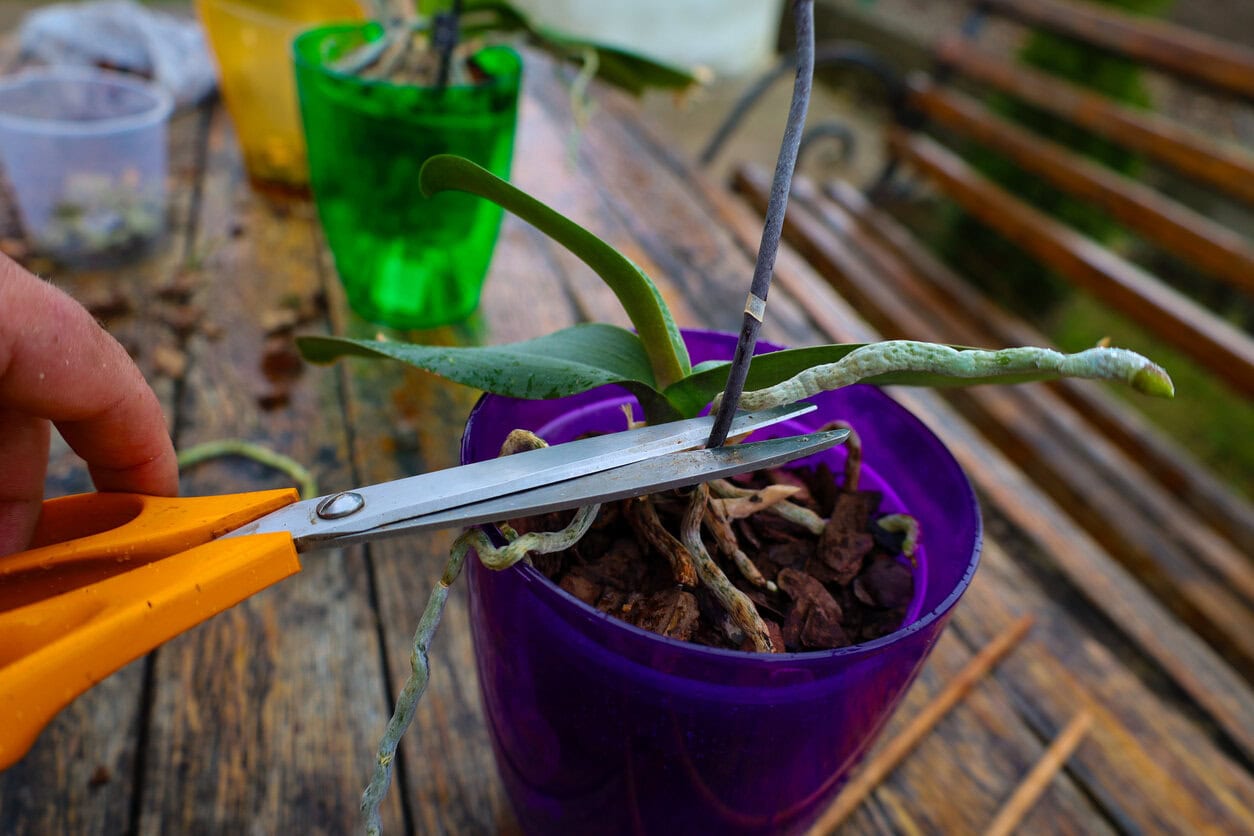
If I want to give my orchid a real reset, I cut the green stalk all the way down at the base. That redirects the plant’s energy away from maintaining that old flower spike and back into leaves and roots.
You’ll wait longer for the next bloom, but the resulting display usually surpasses the original show in both size and strength.
This approach is especially helpful if the orchid looks a little tired or has smaller leaves than it should. I’ve noticed that when I let the plant focus on vegetative growth for a while, it creates a much more resilient specimen. It’s also the best path if you’re looking to keep your orchid for a decade rather than a season.
And if you’re focusing on root health, we also break down exactly how to repot orchids without damaging them in our step-by-step repotting guide.
The Brown Out

Remove the spike immediately if it turns yellow, brown, or brittle. At that point, it’s finished and won’t rebloom. This wood is toast and can spread rot to the heart of the plant.
Snip it off close to the base and let the plant focus on healthy new growth. Never leave a shriveled stick attached and hope for a miracle. It won’t come.
If you’re seeing yellowing elsewhere on the plant and aren’t sure what’s normal, we explain the difference in our guide on orchid leaves turning yellow.
Other Popular Varieties
I’ve realized that Dendrobiums and Oncidiums play by an entirely different set of rules. You orchiding yourself if you expect a Phalaenopsis-style encore from this crowd.
Dendrobium
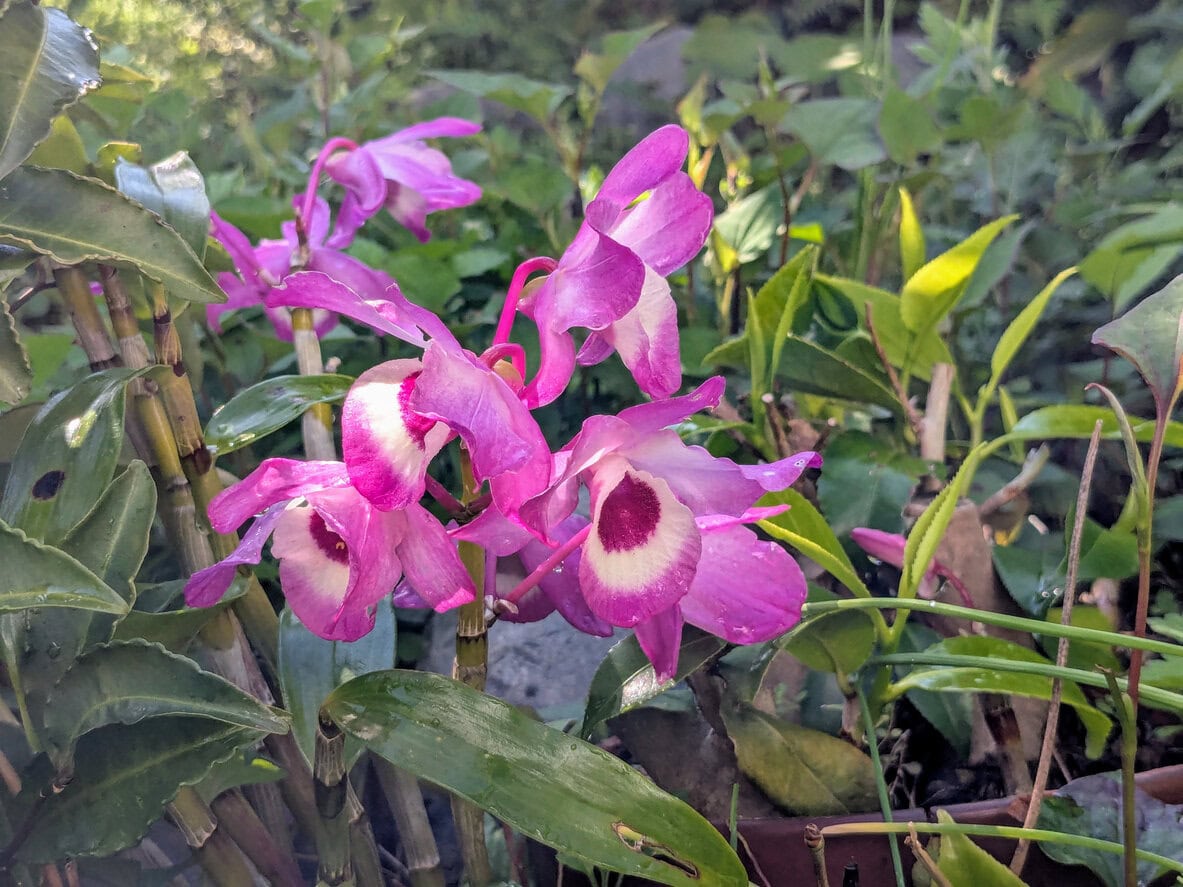
I usually grab my shears for the flower stem once the petals fall, but I don’t touch the canes.
You might think they look a bit crowded, but those structures are actually holding all the snacks and water the plant needs to survive its dormancy.
I prefer to let the old canes support the new shoots that emerge from the base. I only remove canes once they’re completely brown, shriveled, and dry. Until then, think of them as a built-in pantry for when times get lean.
Cattleya
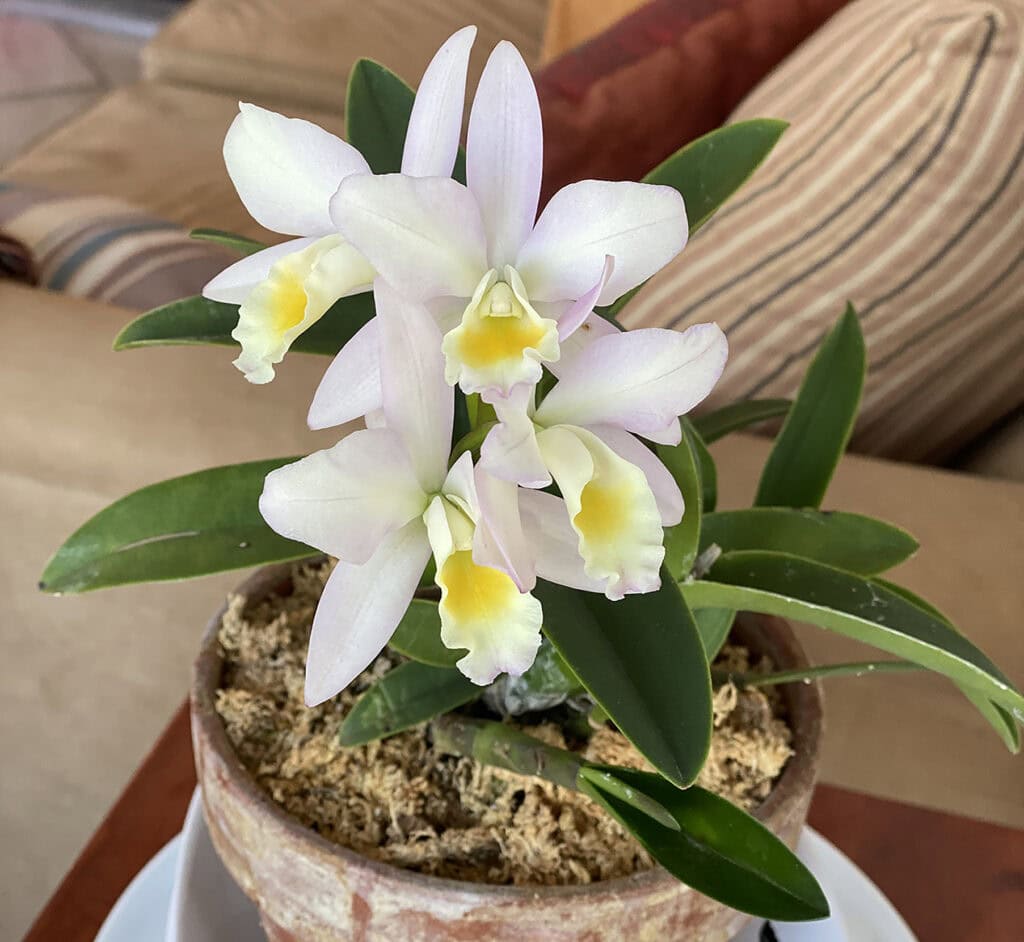
For Cattleyas, I remove the flower stalk once it’s dry, since they only bloom on fresh growth along the rhizome anyway.
You’d waste your time looking for nodes on an old Cattleya stem because they simply don’t exist. Once it’s finished, it’s finished.
By the time the next growing season arrives, the plant is already working on a brand-new lead. Your intervention simply keeps the plant tidy while it prepares to show off.
Paphiopedilum
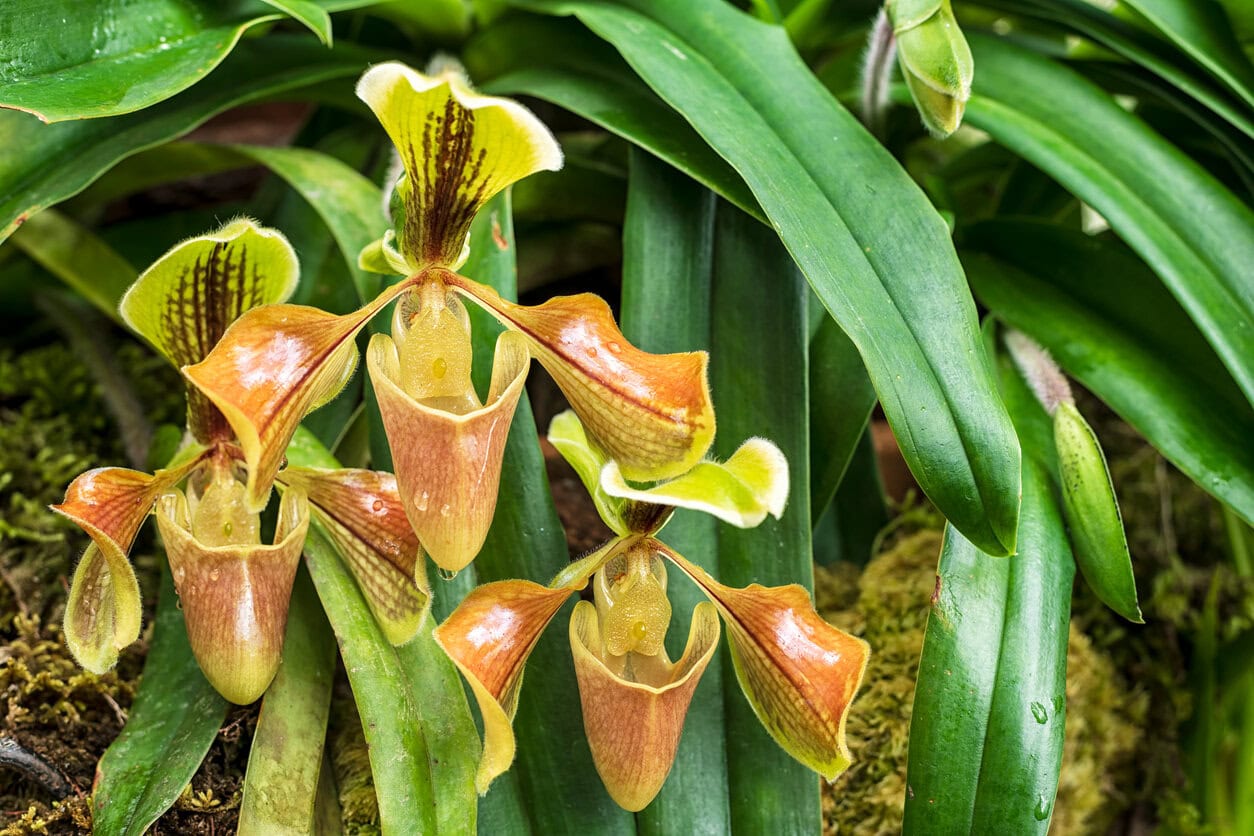
With Paphiopedilums (Venus slippers), I snip the flower stem all the way down at the very base of the crown once it’s finished.
This variety is a strictly one-and-done kind of artist. Once your Venus slipper fades, that specific fan of leaves never flowers again. You’ll need to wait for a completely new fan to mature to see another bud.
Leaving the dry stems can cause fungal issues in the tight leafy crevices. Removing it cleanly allows your plant to focus all its strength on the next vegetative fan.
Kitchen Medicine
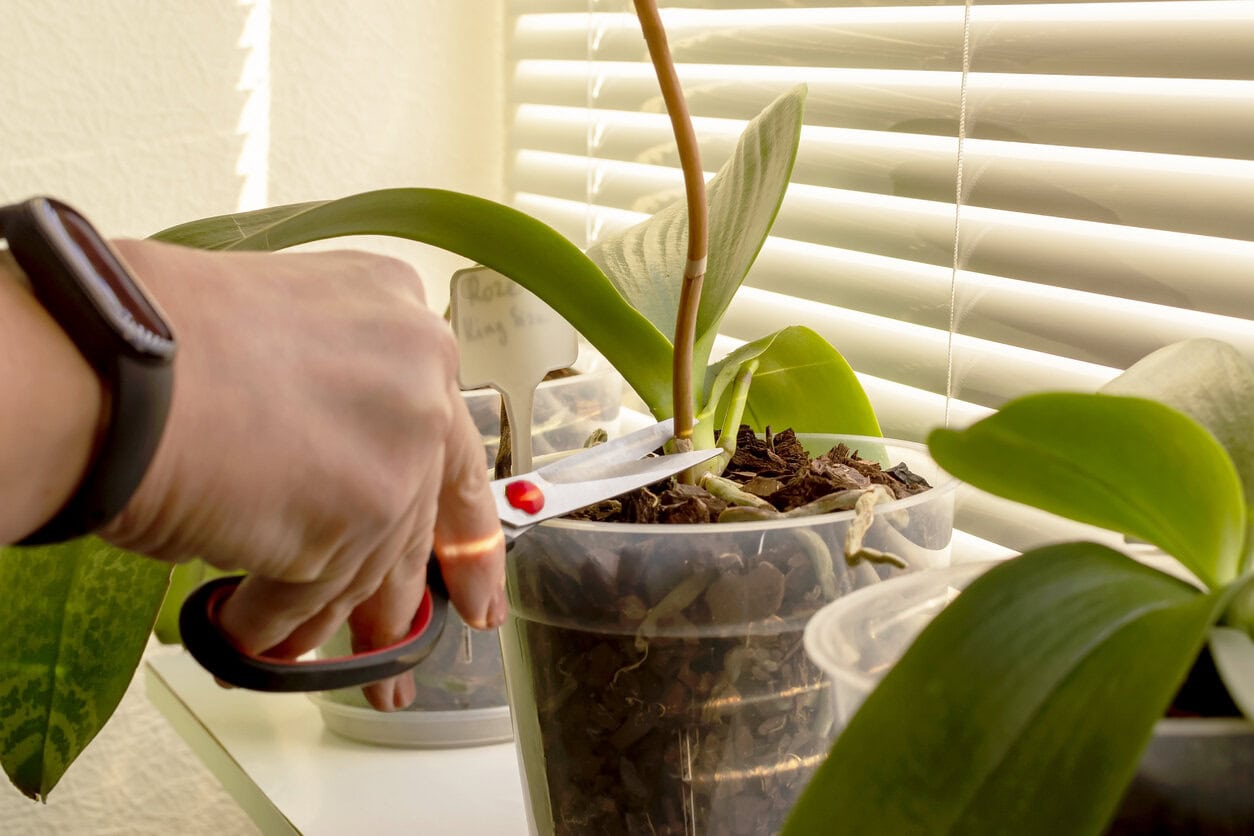
Slapping filthy kitchen shears onto a sensitive orchid is a big no-no!
Never touch a plant without dousing your blades in rubbing alcohol first. Whether you cut with a clean and sharp tool or not determines if the plant bounces back or ends up in a trash bag.
I follow every cut with a dab of cinnamon from my pantry. It’s not a miracle cure but it creates a caustic shield that blocks moisture and offers mild antifungal properties.
You’ll get the last laugh when you realize you saved fifty bucks on fancy fungicides, while your house smells like a fresh batch of snickerdoodles.
The Post-Bloom Reality Check

Pruning triggers a quiet vegetative phase, when your orchid is prioritizing leaves and roots over petals.
I move my plants to bright, indirect light and, if possible, let them experience a natural 8-10°F drop at night. That temperature difference can help trigger future spikes in Phalaenopsis, but it’s not magic.
Since it no longer supports thirsty blooms, I dial back the water, too. Instead of measuring out a fixed amount, I water thoroughly and then let the bark dry slightly before watering again.
I also feed with a balanced orchid fertilizer diluted to about 25% of the recommended dose once a month. Between feedings, I flush the pot thoroughly with plain water. Otherwise, mineral salts can build up in the bark and stress the roots.
If you want a simple feeding schedule you can follow year-round, we walk through my exact orchid fertilizing routine for better blooms in a separate guide.
Orchid You Not
Pruning is the bridge between a grocery store impulse buy and a decade-long companion. Since different varieties demand different cuts, you only need to identify your plant’s family tree before you start hacking away blindly. Just trust the process, keep cinnamon close, and carry on.