One does not simply walk into a successful brassica harvest. Brussels sprouts face an army of aphids, caterpillars, and every leaf-chewing pest in the neighborhood. The good news? You don’t need complicated sprays or constant monitoring!
With the support of the right companion plants, sprouts grow stronger, pests show up less often, and the whole bed becomes easier to manage. These are the companions I actually plant around my Brussels sprouts, and why they work.
The Repellers
Building an odor-based defense is the ultimate strategy for reducing pest pressure around Brussels sprouts. Strong-scented plants make it harder for insects to locate their target. Just ask anyone who’s ever ridden a crowded bus knows how effective scent can be.
1: Onions and Garlic (USDA Zones 3-9)

Sulfur-rich Alliums build a pungent scent wall that helps to mask your brassicas. Odors from the onion family clog the air, attract fewer cabbage moths, which means fewer eggs and far less leaf damage later on.
I like to plant garlic close to the base of each sprout or run onions along the edge of the bed. Skip these stinky borders and you’re inviting tiny green larvae to chew jagged holes through every leaf.
Quick tip: Plant garlic cloves 3 to 4 inches away from the sprout stem, not right against it, so both plants have room to grow without competing for nutrients.
2: Marigolds (USDA Zones 2-11)
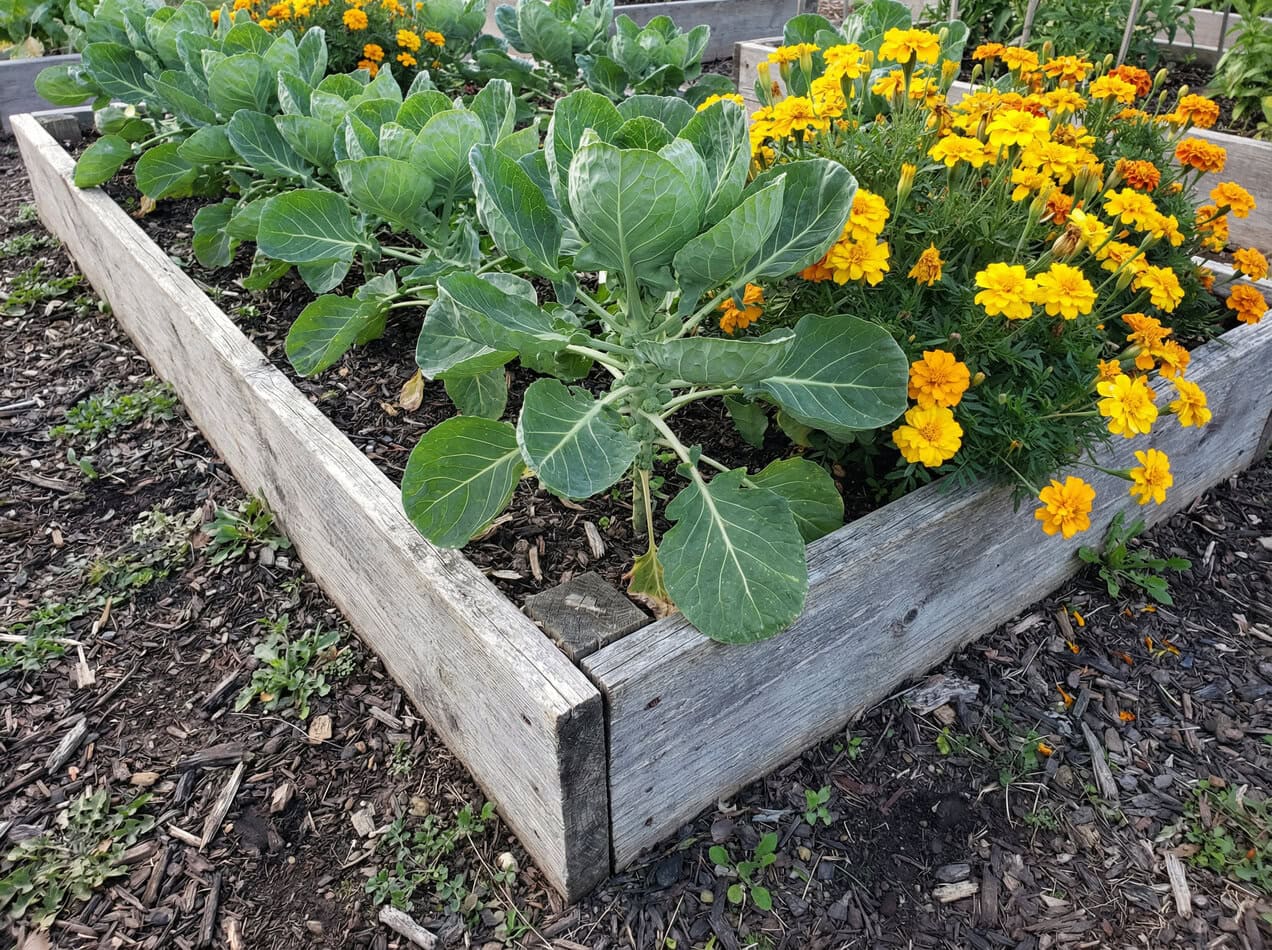
Secretly, certain marigold roots leak a chemical that help reduce populations of root-knot nematodes in the soil. Otherwise, you’ll notice how sprouts often look yellowed and stunted despite consistent watering.
As a bonus, their bright petals and scent also discourage a range of common garden insects. Plant marigolds early in the season and space them throughout the bed instead of clustering them in one spot.
Quick tip: Stick with French marigolds (Tagetes patula), as they are known to be more effective at suppressing soil pests, and being easier to tuck between vegetables without taking over rather than the larger African types.
If you’re not sure where to place them, we wrote a full guide on where and how to plant marigolds in the vegetable garden so they actually benefit your crops instead of just taking up space.
3: Sage (USDA Zones 4-10)

Strongly scented perennials like sage can disrupt the flight patterns of Flea Beetles and other flying pests that rely on smell to find brassicas. If pests go unchecked, they leave “shothole” damage (dozens of tiny circular pits) that can wither young seedlings.
Sage doesn’t need to be planted right next to your sprouts. I prefer placing it along the sunny, well-drained spots of the bed. During peak moth season, harvest a few sprigs and hang them directly on the sprout stalks to amplify the protective scent.
Quick tip: Keep sage slightly separated from Brussels sprouts, especially in wetter soils. Good airflow helps both plants stay healthier.
4: Thyme (USDA Zones 4-9)
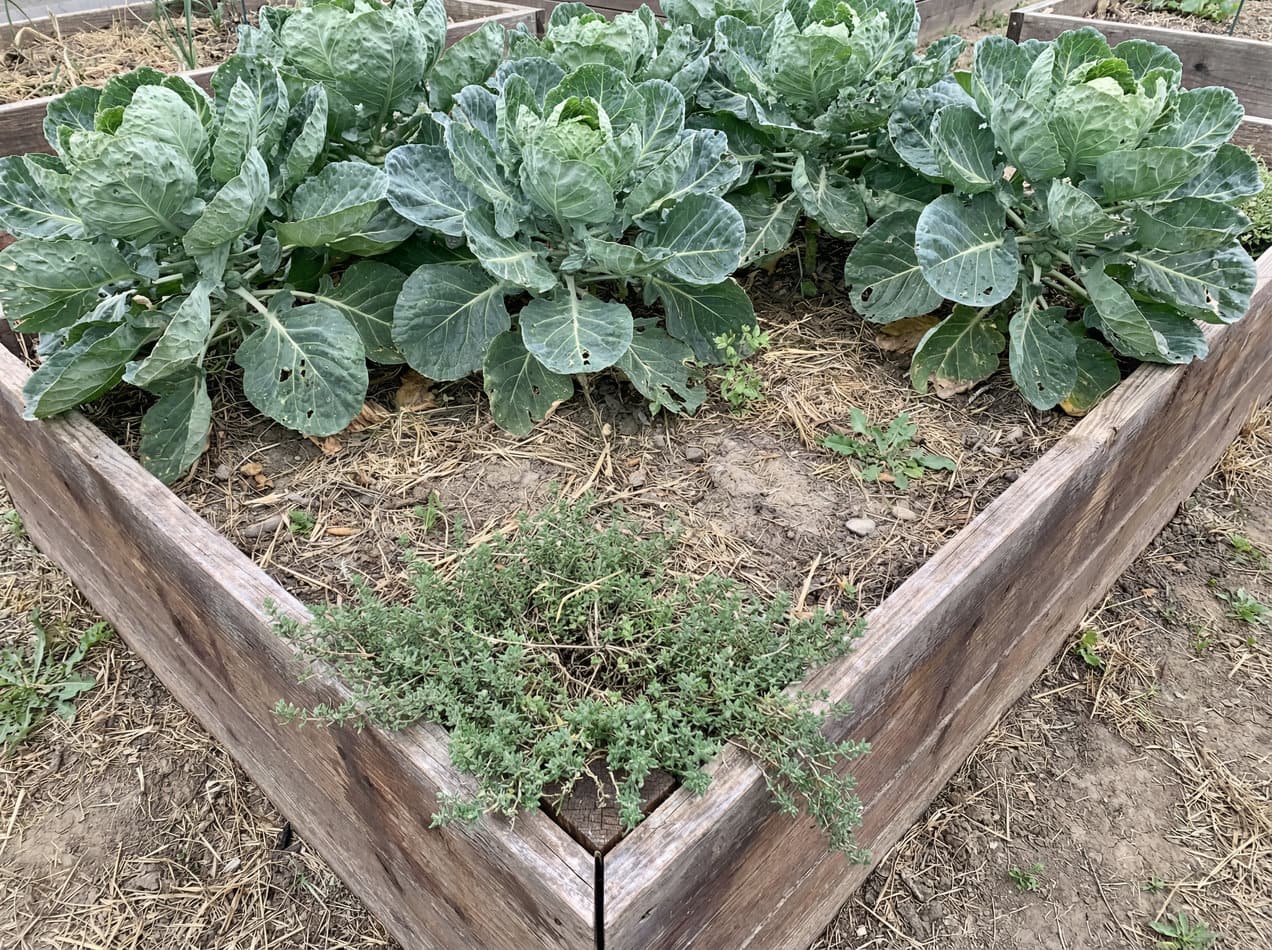
Low-growing herbs like thyme function as living armor. Ground cover helps protect the soil making it harder for Cabbage Loopers to easily find the right place to lay eggs.
When this layer is missing, I usually start seeing large, irregular chunks disappearing from the developing sprouts. Let the thyme bloom. Its tiny blossoms attract beneficial insects, including parasitic wasps that help eliminate cabbage worms.
I’ve noticed that beds with thyme stay calmer overall, with fewer caterpillars showing up later in the season.
Quick tip: Plant thyme a few inches away from sprout stems so it spreads without smothering young plants.
If you like using scent and plant choice to manage pests, we also wrote an article about bug-repelling plants for the garden that work well alongside vegetables.
The Attractors

Roll out the red (also white, yellow, and orange floral) carpet to welcome beneficial bugs, because a lonely sprout is just “waiting for a friend” to come and eat its enemies.
1: Dill (USDA Zones 2-11)
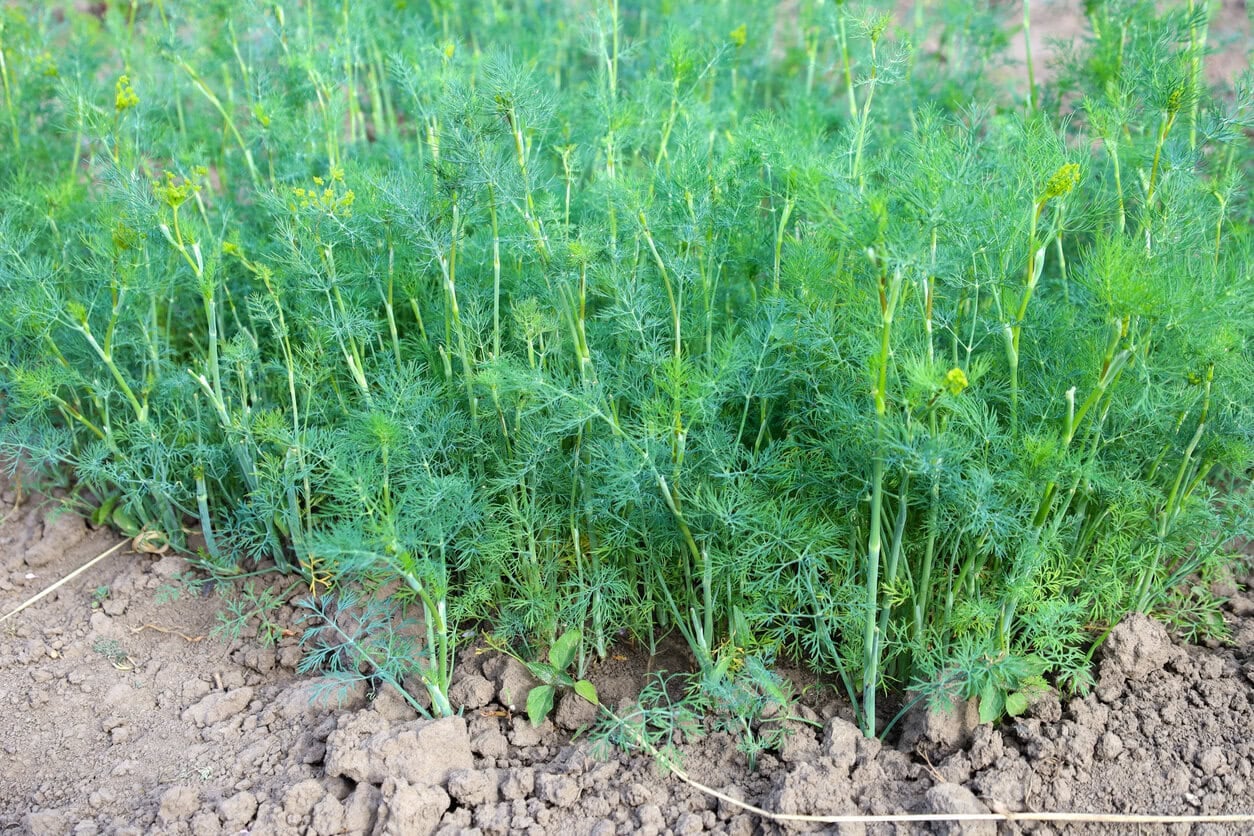
Lacy Dill stems provide a perfect platforms for hoverflies and parasitic wasps to land and survey the garden. Once these beneficial insects show up, aphids and small larvae rarely get out of hand.
Unlike many herbs, dill is actually most useful when it’s allowed to flower. Those yellow umbels are a major food source for beneficial insects, encouraging them to stay close and keep patrolling the bed instead of moving on.
Quick tip: Let at least one dill plant fully flower near your sprouts, but remove extra seedlings if it starts self-seeding too aggressively.
Dill isn’t the only plant that brings hoverflies into the garden. We put together a full guide on flowers that attract hoverflies if you want to build even more natural pest control into your beds.
2: Nasturtiums (USDA Zones 2-11)
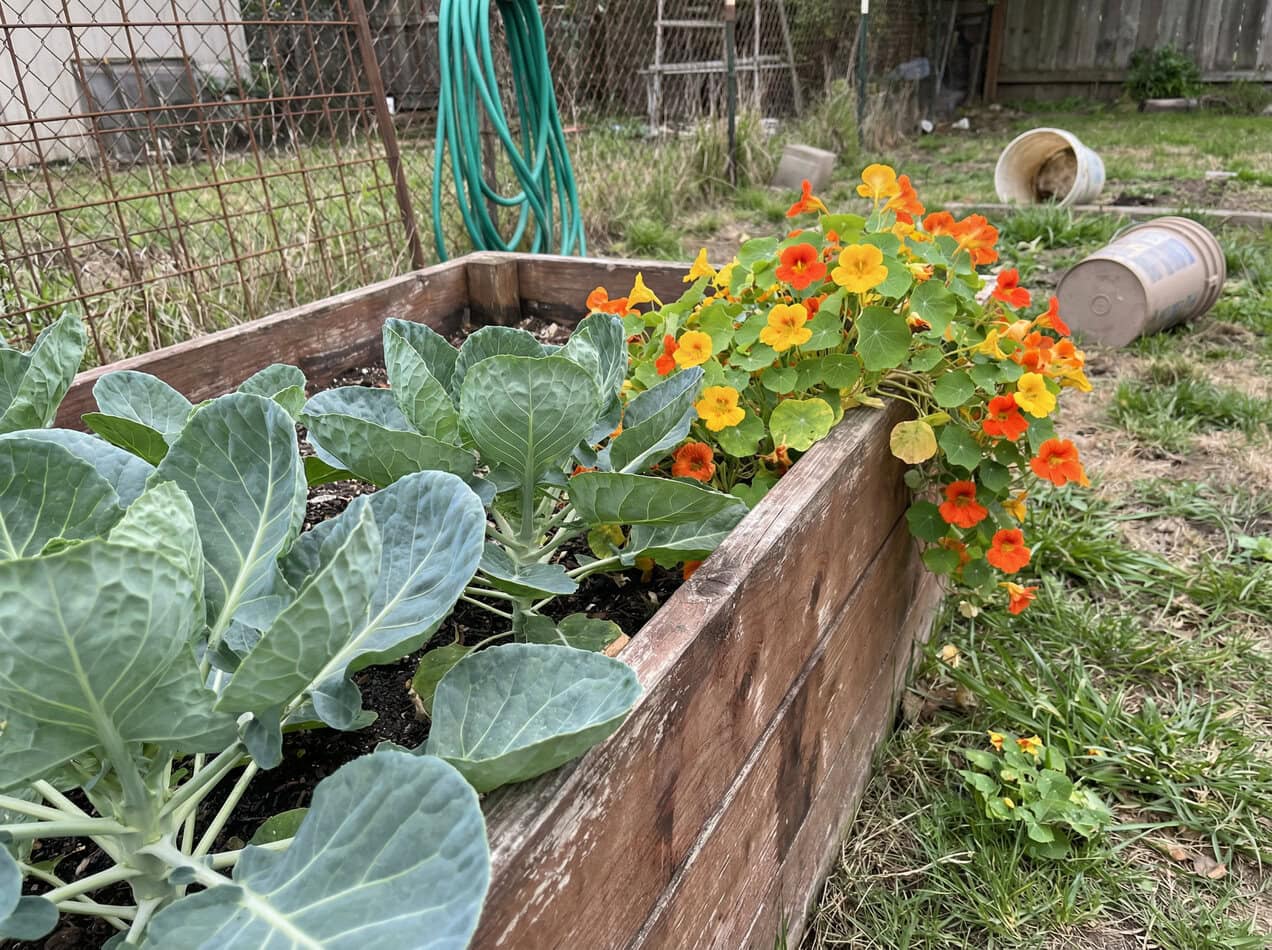
Aphids are lazy. They’ll take the easiest meal available, and in my garden, that’s usually the bright, soft nasturtium petals rather than the tough sprout leaves.
When I skip planting them, aphids are much more likely to settle into the cracks of the sprouts, ready to eat and get served. Want an aphid-tizer? I didn’t think so.
I like to place plant nasturtiums on the sunniest edge of the bed, a little distance away from the sprouts. It’s a simple trade: give the pests a flowery sacrifice so your harvest stays safe.
Quick tip: Check nasturtiums regularly and remove heavily infested stems so aphids don’t migrate back onto your sprouts.
If you want a deeper look at how nasturtiums work as trap crops, we explain everything in this article about whether nasturtiums are good companion plants and how to use them properly.
3: Chamomile (USDA Zones 3-9)
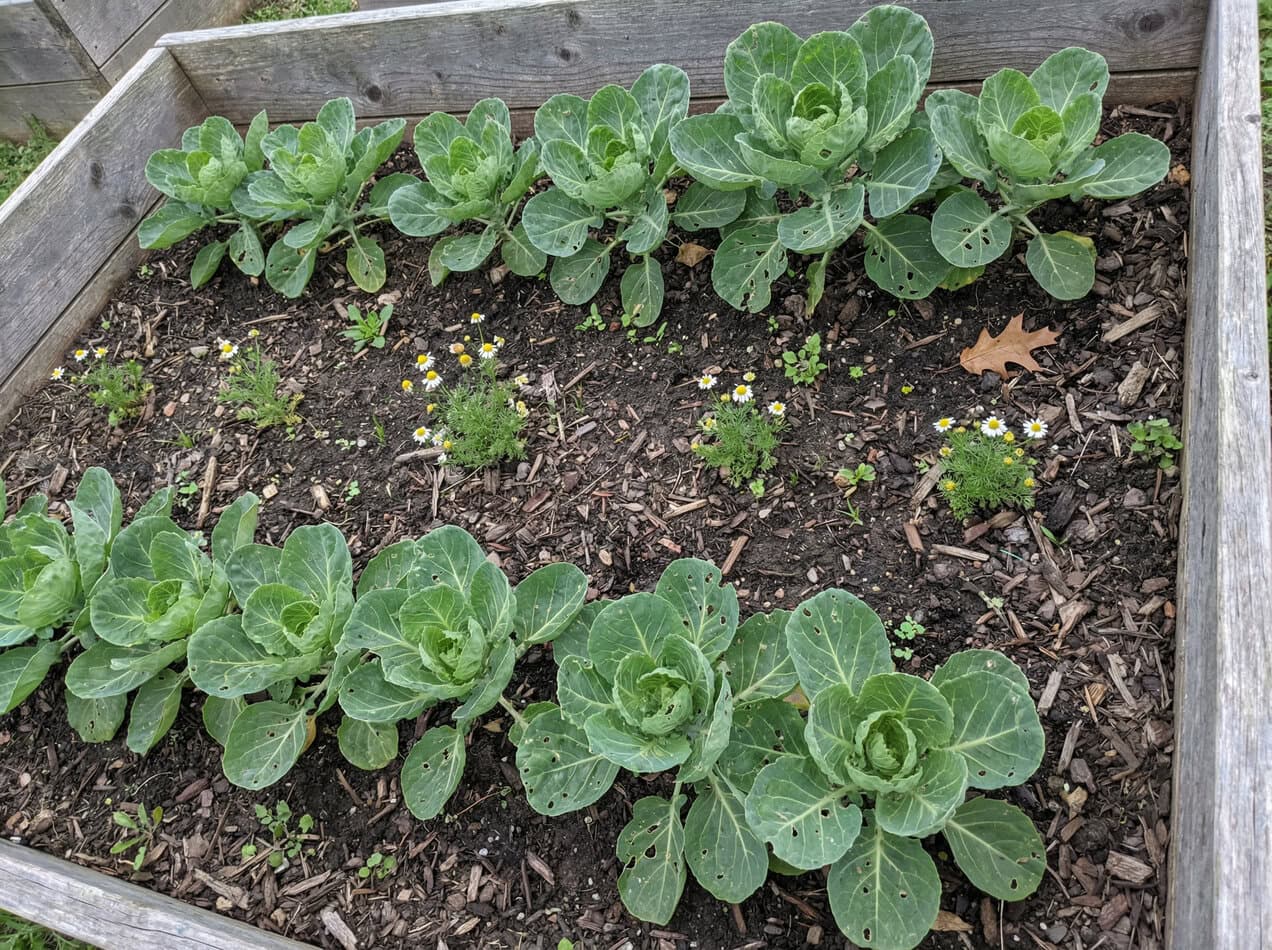
Fragrant groundcover builds a thick scent screen to hide your crop from searching pests. Chamomile adds a gentle, apple-like scent to the garden that helps soften the strong smell of brassicas, effectively making the bed feel less “obvious” to wandering pests.
Beyond the perfume, chamomile helps support a healthier garden environment. Its flowers attract beneficial insects, and the plant fits nicely into beds that tend to stay evenly moist.
Quick tip: Plant chamomile near the edges of the bed or between rows, and thin it early so air can move freely around your sprouts.
If you enjoy mixing flowers into your vegetable beds, we also wrote an article on flowers you should always plant near vegetables and why they make such a difference.
The Strategists
Every garden needs a few residents who understand the ground rules and know how to share the floor.
1: Beets (USDA Zones 2-10)

These root crops take the basement while your sprouts claim the penthouse. Leaving the soil around sprouts bare usually leads to heavy compaction, but a beet’s growth keeps the soil structure loose and breathable.
To make the most of this duo, I’ll occasionally snip off the outer beet greens throughout the summer. This improves airflow around the base of the Brussels sprout stalks, and keeps the bed from staying damp for too long, which can invite problems later.
Quick tip: Don’t remove more than a third of the beet greens at once. Light, regular trimming keeps airflow up without slowing beet growth.
Beets are surprisingly easy to pair with other crops, and we wrote a full guide on beet companion plants that don’t compete for space if you want more ideas for this kind of planting.
2: Radishes (USDA Zones 2-10)
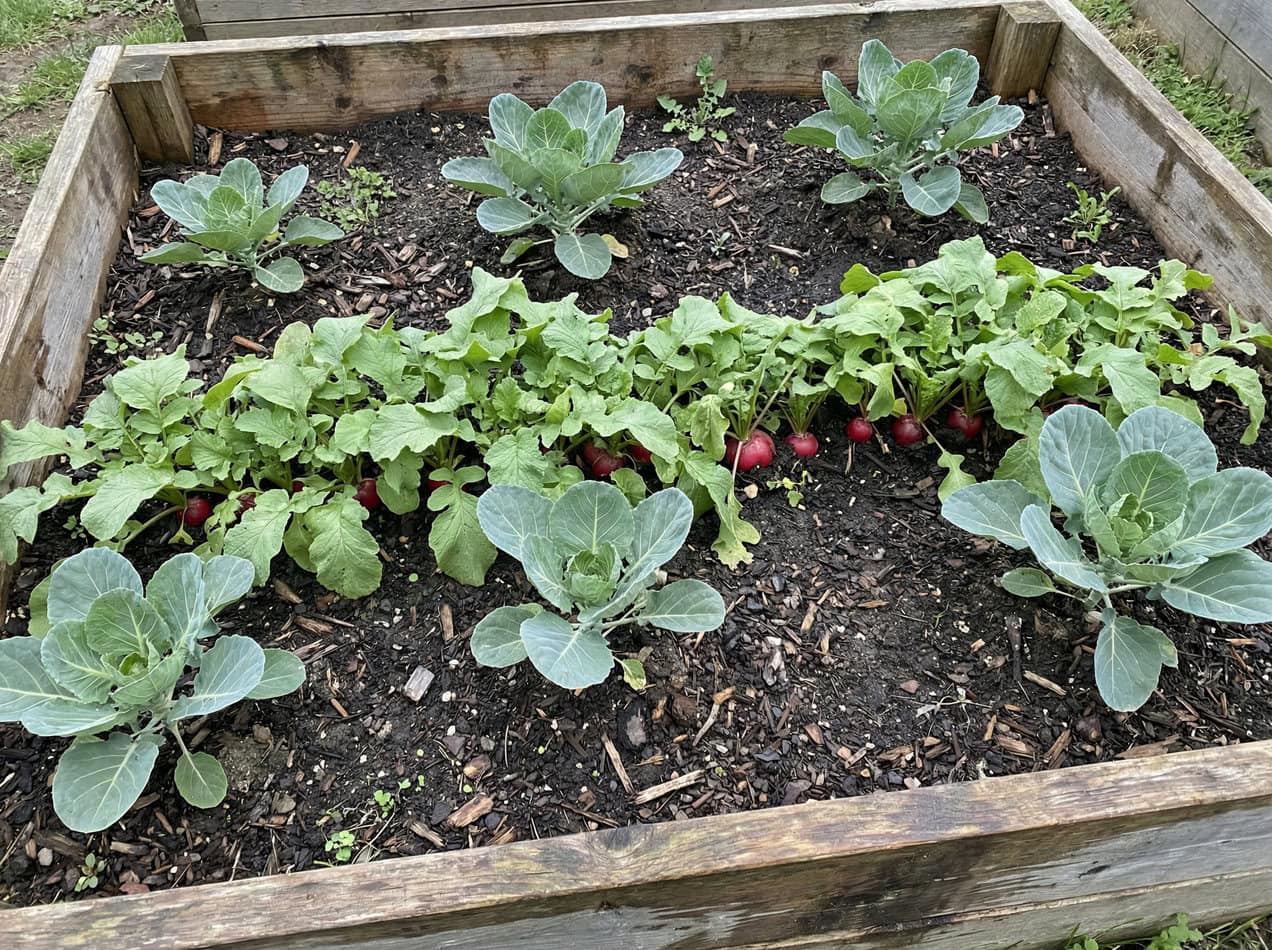
Radishes grow fast and do a surprisingly good job of loosening the soil around slower crops. I like using them between Brussels sprouts because their roots break through heavier soil, making it easier for the sprout’s root system to expand during its slow growth cycle.
Plus, why waste understory space that could have yielded a secondary harvest?
I often sow radish seeds along my rows as natural markers. By the time the Brussels sprouts really start to size up, the radishes are ready to pull. Those small gaps left behind will help water soak deeper straight to the Brussles sprout’s deep roots.
Quick tip: Harvest radishes promptly once they’re ready. Leaving them too long can lead to woody roots and unnecessary crowding around young Brussels sprouts.
The Fellowship of the Spring

Every sprout needs a fellowship to survive the long march toward harvest day. You have your heroes now. All you have to decide is what to do with the time that is given to you, and spending it on a pungent scent wall is the wisest move.