As an avid cosmos grower, I never thought I’d need to plant anything with my cosmos and just let them grow on their own. Then, one day, my mom suggested that I plant marigolds with them, and when I did, they complemented each other so well…like a match made in heaven!
Ever since then, I’ve played around and experimented with multiple companion plants, some of which have turned out to be extraordinary companions, while others, not so much.
In today’s article, I’ll take you through my curated list of great cosmos companions and guide you on what exactly it is that makes them special. Let’s jump straight into it!
Why You Should Use Cosmos In Companion Planting

Cosmos do more than just fill your garden with color, they quietly help everything around them thrive. From drawing in pollinators to keeping pests distracted, they’re the kind of flowers that make the whole garden feel alive.
In short, cosmos are the friendly neighbors every plant wishes for, easygoing, hardworking, and beautiful to have around.
For more ideas on keeping bugs at bay the natural way, take a look at these companion plants that naturally repel garden pests
9 Great Companion Plants To Grow With Cosmos

1: Zinnias (Zones 2-11)

Both zinnias and cosmos produce stunning blooms throughout summer, creating a vibrant, pollinator-friendly garden environment. Together, these annuals provide nectar all season long for butterflies and bees.
2: Marigolds (Zones 2-11)
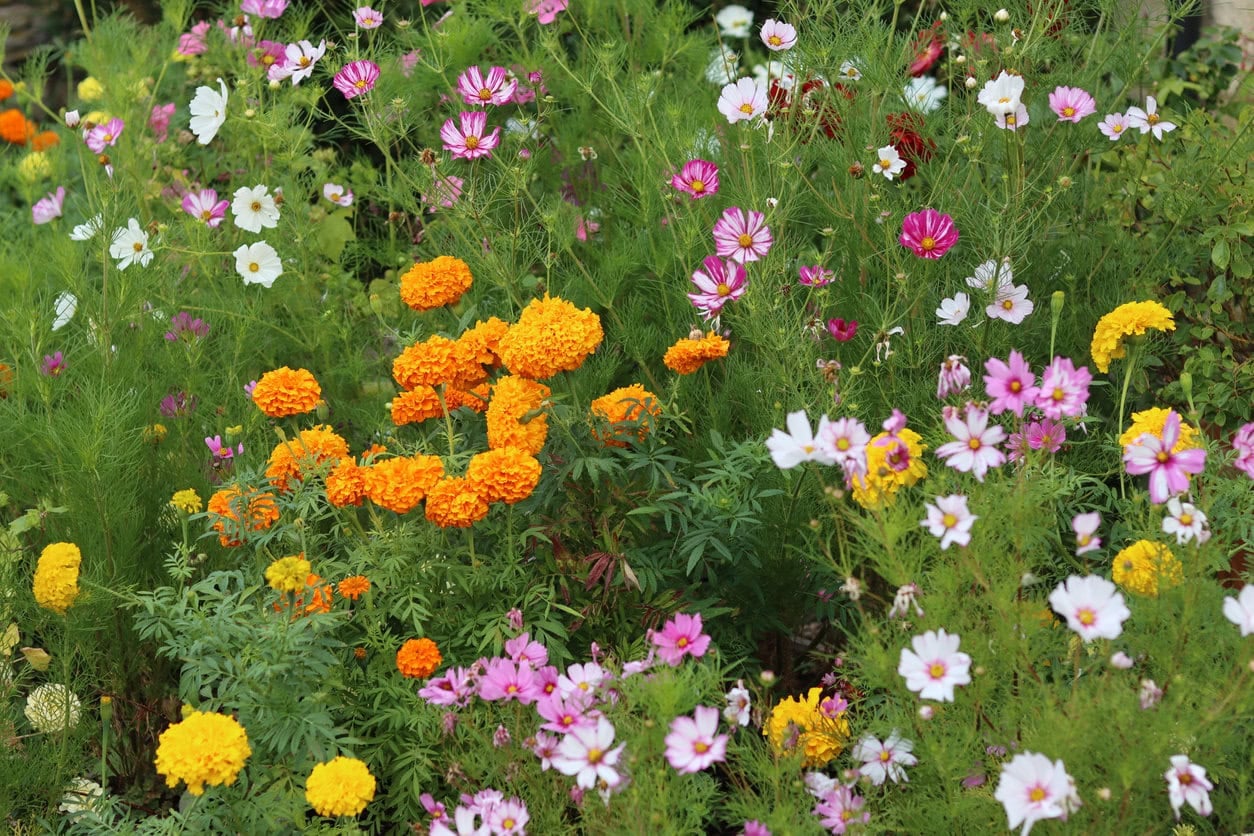
Marigolds release certain compounds that repel harmful pests and insects quite effectively. Plant them near cosmos to add beauty to the garden during the blooming season while attracting pollinators that aid the ecosystem at the same time.
If you enjoy experimenting with bright, pollinator-friendly flowers, you’ll love learning about why calendula is the companion plant your garden needs.
3: Sunflowers (Zones 4-9)

Because of their tall, dense growth, sunflowers pair beautifully with cosmos, creating structure around the garden borders and drawing in pollinators from far away. These two annuals planted together can give a grand, meadow-like feel to any simple garden landscape.
Quick tip: Just make sure taller sunflowers don’t cast too much shade on your cosmos!
4: Nasturtiums (Zones 9-11, grown as annuals elsewhere)

Nasturtiums typically act as a trap crop for aphids, helping to protect cosmos plants and nearby vegetables from pests like aphids and whiteflies. Their trailing growth can also cover a lot of ground space and make tall cosmos stems look a lot fuller.
Curious how nasturtiums fit into other planting combos? Here’s a closer look at why nasturtiums make such good companion plants.
5: Basil (Zones 10-11, grown as annuals elsewhere)

Cosmos can attract pollinators that facilitate basil flowering and seeding, while basil’s strong scent helps deter mosquitoes and flies. You’ll have a harmonious pairing that’s also resilient in the long run.
If you love growing basil, you’ll want to pair it with plants that help it thrive, here’s a helpful guide on companion plants that help basil (and what to avoid).
6: Tomatoes (Zones 5-9)

As strange as this combo might sound, tomatoes and cosmos can do extremely well together. Cosmos draw beneficial insects like hoverflies that prey on aphids and whiteflies, common tomato pests.
For a deeper dive into pairing tomatoes with the right companions, check out this detailed list of best companion plants for tomatoes.
7: Lavender (Zones 5-9)

Both lavender and cosmos love being planted in sunny spots with well-drained soil to get rid of excess water. Together, they’re powerful pollinator attractors that bring not only visual beauty but also a memorable fragrance to the garden.
Quick tip: Just ensure proper spacing when planting, because lavender prefers drier conditions than cosmos
8: Dill (Zones 2-11)

Dill attracts beneficial insects like lacewings and parasitic wasps that keep aphid populations under control. Planting this strong herb near cosmos ensures harmonious growth while keeping pests and insects at bay.
9: Cucumbers (Zones 4-12)

If you don’t already know, cucumbers heavily depend on pollinators for fruit sets, and cosmos can help attract those pollinators that aid in the whole process. Pairing the two guarantees bigger yields, while adding some color to the garden beds at the same time.
Want to take your cucumber patch even further? These companion plants can boost cucumber growth and keep pests away.
Some Plants To Avoid With Cosmos

Unfortunately, not every plant out there is a good match for your precious cosmos. Some plants just do not mix well together, and trying to force a collaboration can often do more harm than good.
While there are many factors that determine a good pair, some general rules for cosmos include:
And if you’re just starting with companion planting, make sure to avoid these common companion planting mistakesthat can hold your garden back.
Let’s Conclude

Now that you’re aware of the best and the worst cosmos companions, it’s time you ask yourself about your favorites.
Don’t choose companions just because they’re ‘optimal’, choose the ones you love growing. Of course, factors like similarity in qualities and appearance do matter, but not as much as passion.
Pick companion plants you truly like and feel passionately about because that’s how you elevate your garden while giving it some personality at the same time. Good luck!