
August isn’t for forcing buds. It’s the high-stakes maintenance window to keep the plant healthy and let its summer growth mature before fall bud-setting begins.
If you’re staring at a pot of limp green stems wondering, “What the cactus am I doing wrong?” take a breath. Here are the seven August tasks I focus on before the fall bloom cycle begins.
Quick note: these same August tasks also apply to Thanksgiving cactus. And if you want to see what comes before and after August, we wrote a full Christmas cactus care calendar
1. Not All Cacti Like to Fry
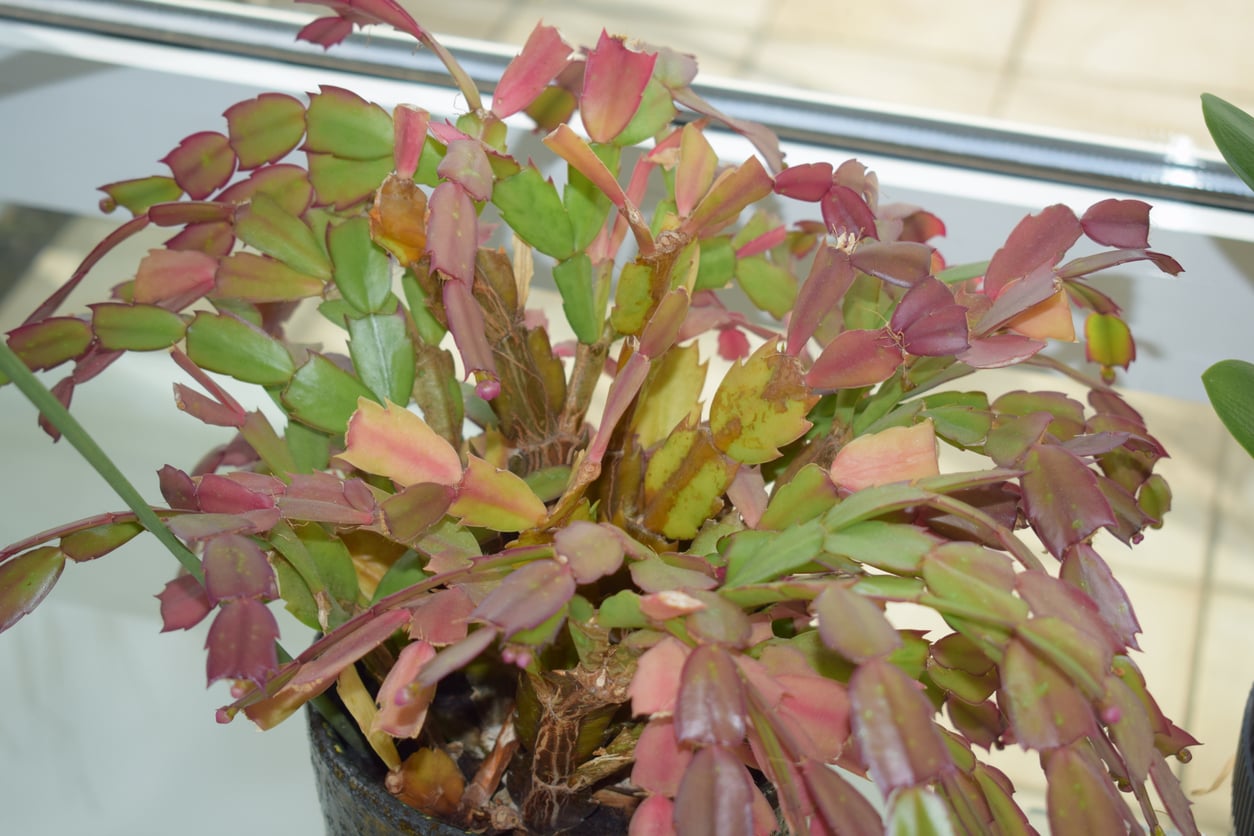
Schlumbergera’s ancestors lived at Tropical Canopy Plaza 1 before moving to your home. In Brazilian forests, they were shaded by leaves and surrounded by warm, humid air.
They’re not desert succulents you might see sitting on a dune in Arizona.
Move outdoor pots straight under a covered porch or leafy tree. If the plant lives inside, pull it back from harsh afternoon sun coming through a west- or south-facing window.
Sun-stressed stems are not what you want heading into fall bud-setting. If you’re still playing musical chairs with the pot, we wrote a guide on where to put a Christmas cactus for maximum blooms.
2. Limp Does NOT Always Mean Thirsty

In August heat, floppy stems can mean thirst, but they can also mean the roots are sitting in soil that’s too wet. Before you grab the watering can, check the soil.
Stick the finger of your choice about an inch into the soil:
Let’s say the soil is swampy and you’re about to panic, buy a huge new pot, and re-home it. Hold off. Let the mix dry some first. If it stays soggy or you find brown, mushy roots, then repot into fresh, well-draining mix.
If the whole wet-enough-but-not-too-wet thing still feels like guesswork, we wrote a guide on how to properly water a Christmas cactus and avoid root rot.
3. We Need to Talk About (Stopping) Fertilization
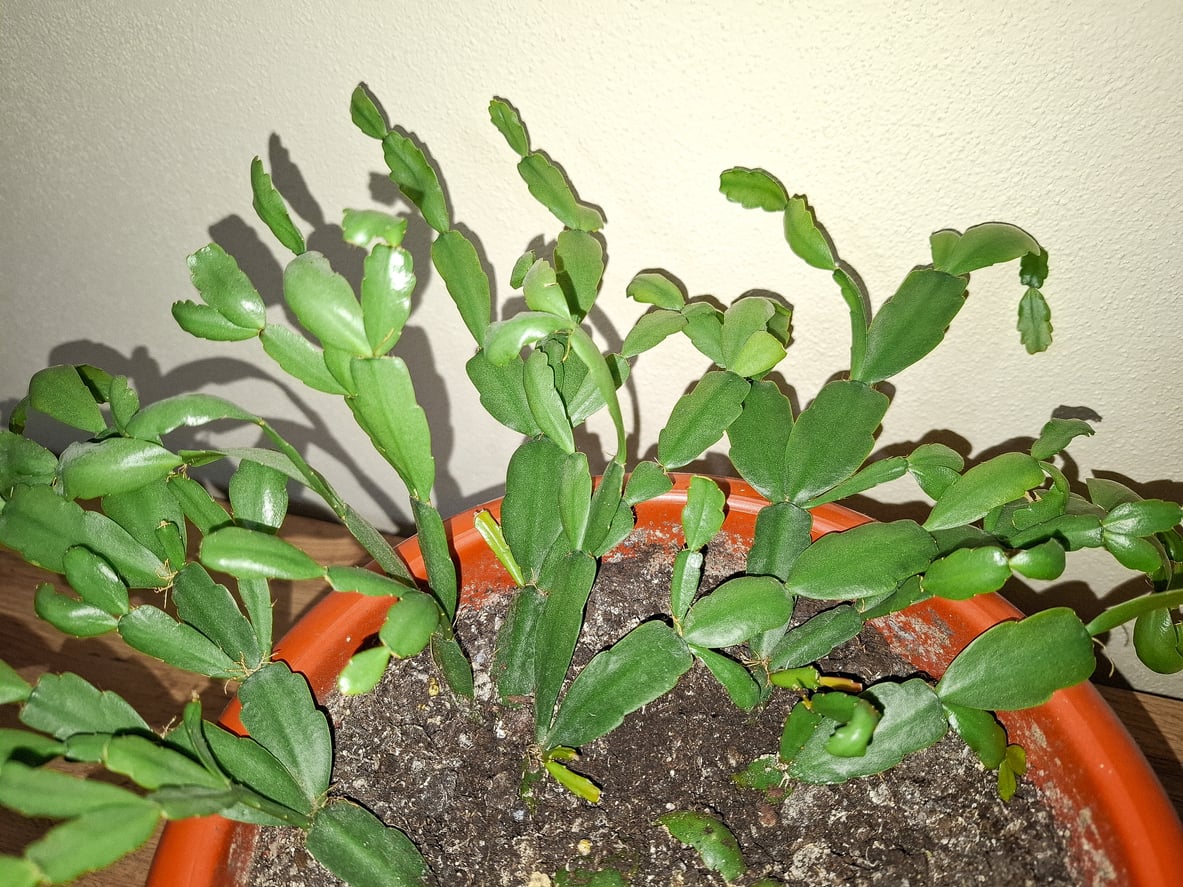
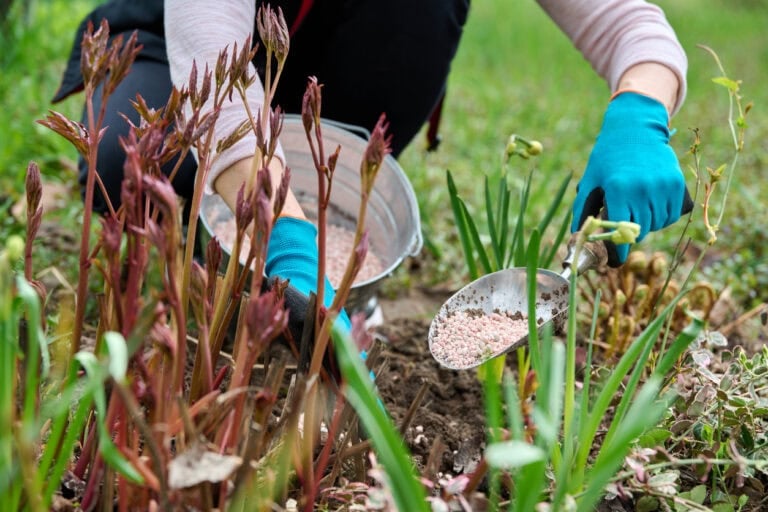
If you feed heavy nitrogen right now, you force the plant into making lots of fresh, tender stem segments. Those cute little baby segments look like progress, but they can work against you:
By mid-to-late August, I stop fertilizing altogether. You want the summer growth to mature before bud setting begins. That’s the goal now. If you’re wondering when to start feeding again, we wrote a month-by-month guide to our Christmas cactus fertilizer routine.
4. Longer Stems Do NOT Automatically Mean More Blooms
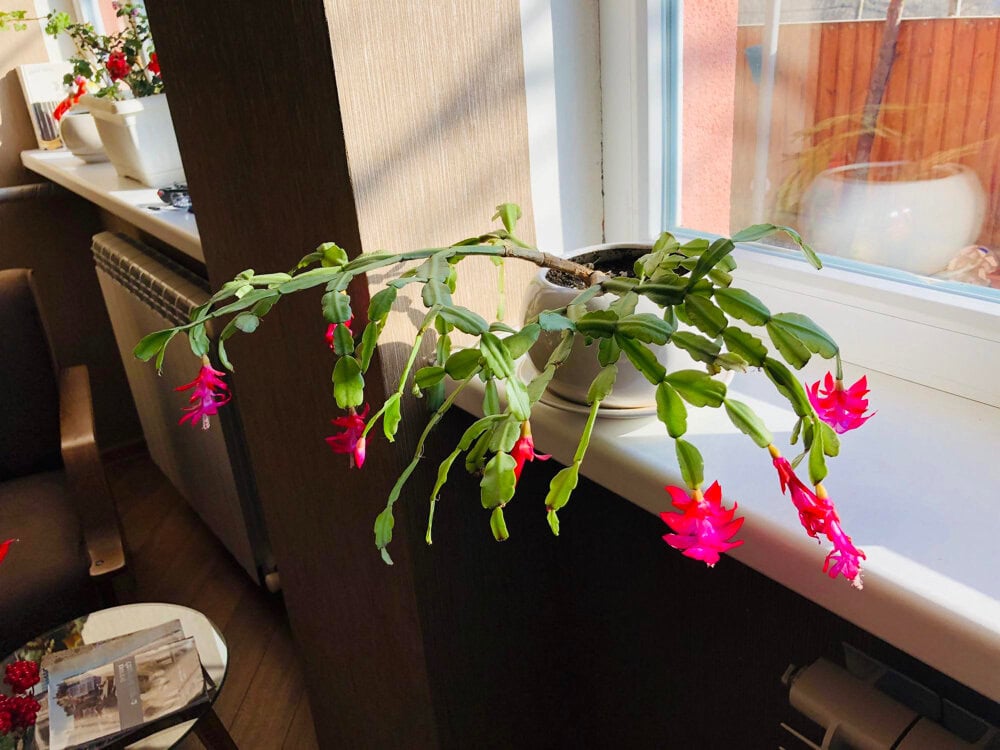
Contrary to popular belief, a longer vine doesn’t automatically bring you more flowers. The point is in healthy, mature growing tips.
So don’t start hoarding length for the sake of length, but don’t go twisting off healthy outer segments either. Those terminal segments are exactly where the flowers form.
Be selective: damaged, broken, or unhealthy segments can go. But I save the real haircut for after flowering or early summer, when pinching encourages branching and gives me more terminal tips for future blooms.
We wrote a guide on the signs it’s actually time to prune a Christmas cactus if you’re not sure yours needs the scissors yet.
Bonus? When pruning time does come, don’t throw those healthy segments away. We explain how to propagate a Christmas cactus from cuttings step by step, which means free plants for people you tolerate.
5. Frost-Free Misery Builds Character… And Flowers

Schlumbergera triggers flower buds when cooler nights and longer darkness tell it that fall is coming. Depending on your pot’s coordinates, your August reality looks very different:
And as long as nights stay above about 50°F, let the plant feel the shift. Bring it inside before colder nights or frost arrive.
6. No Free Rides for Spider Mites

Spider mites, scale, and fungus gnats spend August throwing ragers in your garden. Bring the pot inside without checking it, and your warm, dry house can turn that little party into an afterparty.
Before I haul mine over the threshold, I give it a proper once-over:
Scrub the crust and debris off the pot rim, leave the plant outside in bright shade to dry, then haul it over the threshold. If you find something suspicious crawling around, we wrote a full Christmas cactus pest guide on what attacks these plants and how to treat it.
7. Don’t Go Full Bat Cave Yet
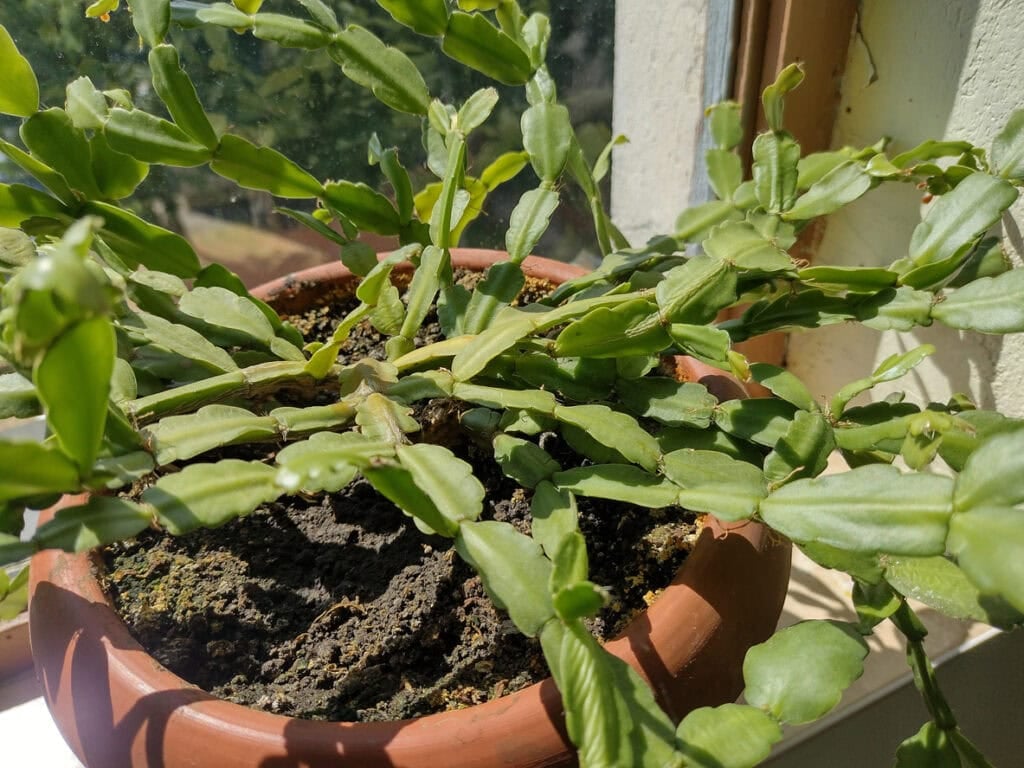
August light fuels the plant for the bloom cycle ahead. Depriving stems of late-summer light too early won’t help buds form and can leave you with weaker growth.
Save the strict dark routine for mid-to-late September. That’s when cooler nights and 12-14 hours of uninterrupted darkness start doing the real bud-setting work. Natural daylight shortening can do the job for you, as long as porch lights and indoor lamps aren’t interrupting the darkness.
Take this time until mid-to-late September to purge your closet and keep your cactus in its normal bright, indirect light. That plant may be moving to 404 Coat Hanger Lane soon enough.
August Is the Warm-Up, Not the Main Event
Your Christmas cactus doesn’t need panic, fertilizer heroics, or an early sentence to the coat closet. August is about keeping it healthy, letting summer growth mature, watching the water, and making sure no tiny freeloaders hitch a ride indoors.
Do those boring little jobs now, and when cooler nights and longer darkness arrive, the plant can get down to the business you actually care about: covering itself in ridiculous holiday blooms.
And if the holidays arrive and yours is still stubbornly green, we wrote an article about 7 reasons a Christmas cactus won’t bloom and how to fix them.
So give it bright light, decent drainage, and a little patience. 404 Coat Hanger Lane can wait until fall.



What is coat hanger lane please?
Hi Linda 🙂 “Coat Hanger Lane” is just my joking way of saying the coat closet. It isn’t a real place. In fall, the cactus needs long, uninterrupted nights to help set buds, and a closet is simply one way to provide that darkness.