
If I had a dollar for every person who’s messaged me saying their hydrangeas are all leaves and no blooms (sometimes for years) I’d be a trillionaire by now.
Then there are those lucky bastards who swear they “do nothing,” yet their hydrangeas are absolutely covered in flowers. So what gives? The truth is, their “nothing” usually means the plant is already in the right spot, nobody pruned off the flower buds, winter didn’t wreck them, and the deer stayed away.
If yours isn’t so lucky, don’t worry. Let’s figure out exactly what’s stopping those blooms.
Why Is My Hydrangea Growing Leaves But No Flowers?
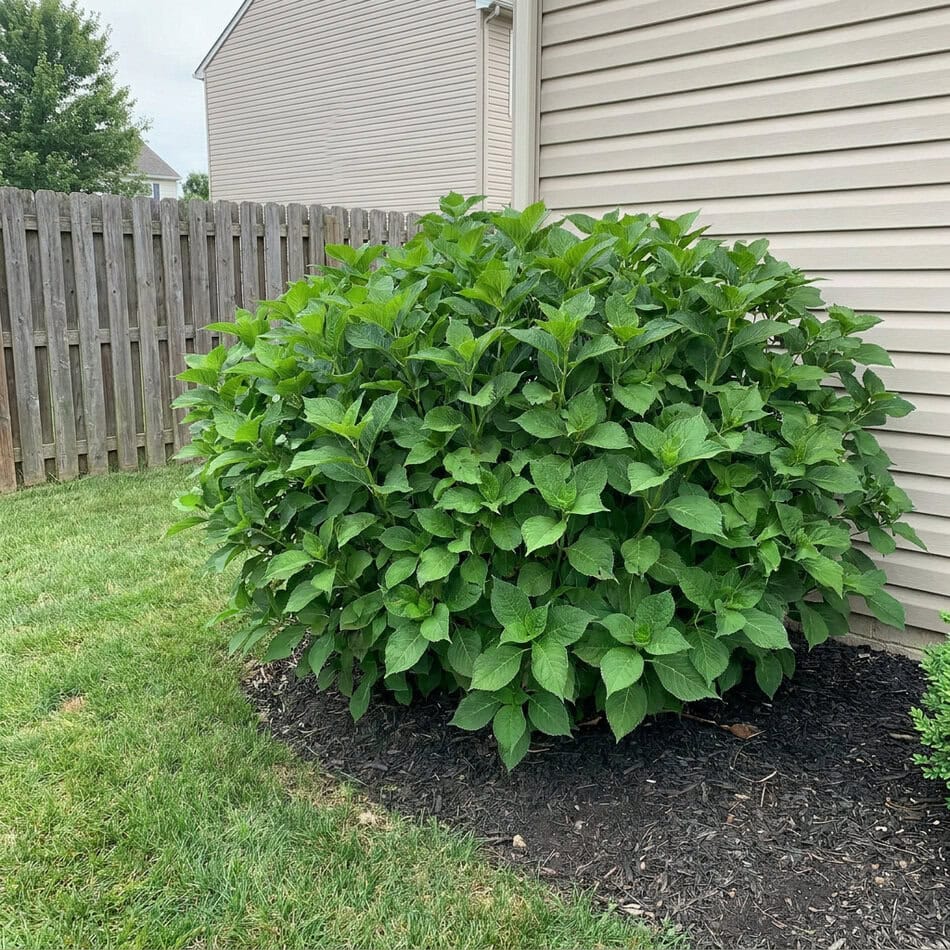
A hydrangea covered in healthy green leaves can be surprisingly misleading.
Here’s the frustrating part: a hydrangea can grow loads of healthy leaves even after something has already damaged or removed the buds that were supposed to become flowers.
I had one hydrangea that looked better and better every week. Huge leaves, strong stems, plenty of new growth… I was convinced the flowers were coming next. Well, they never did!
When that happens, most people I talk to want to reach for the fertilizer right away, but that usually isn’t what the plant is asking for. More often, all those leaves and no flowers are a clue that something interrupted blooming somewhere along the way.
7 Reasons Your Hydrangea Isn’t Blooming
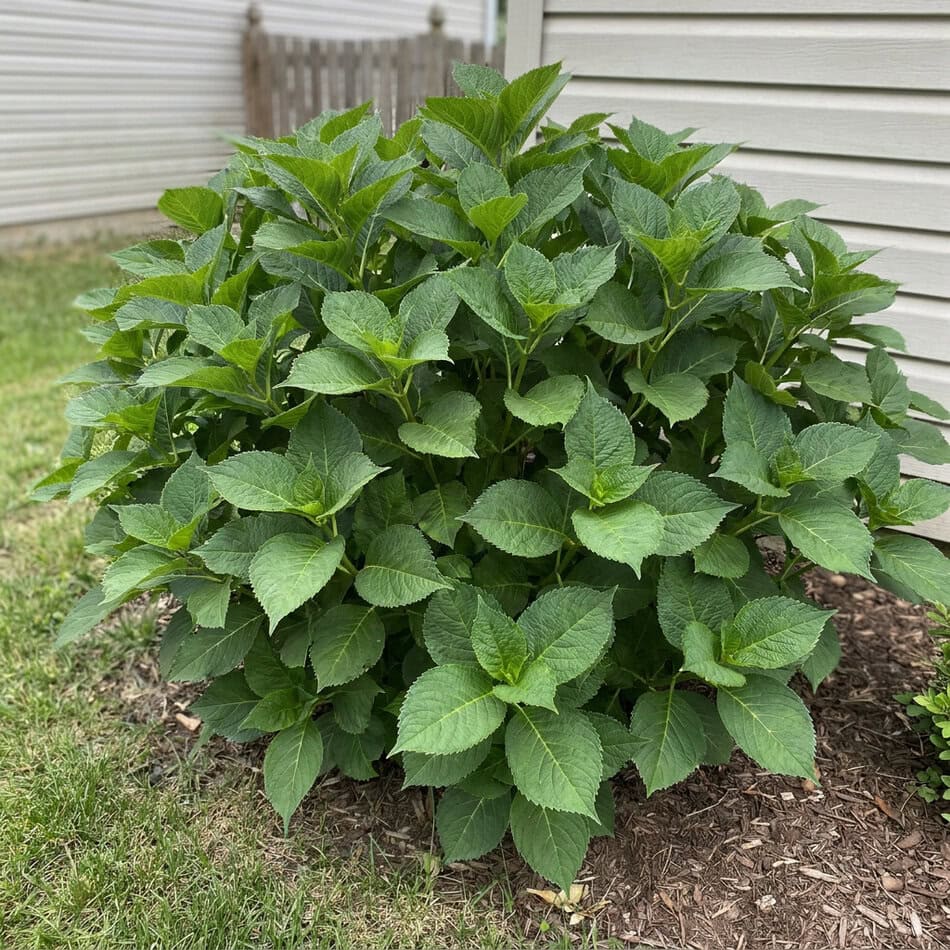
The annoying thing about hydrangeas is that the same symptom can have several completely different causes. And no, your hydrangea doesn’t hold a personal vendetta against you, even though it may feel like it sometimes.
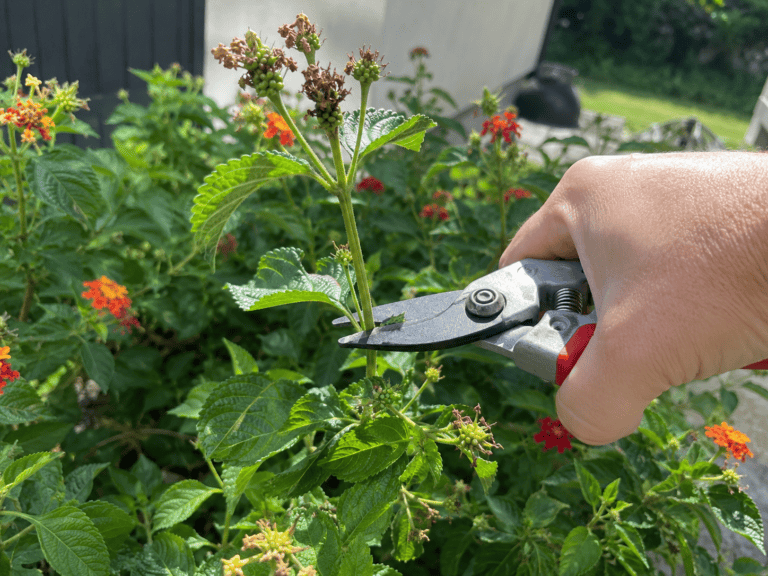
Reason 1: Your Pruners Got There Before the Flowers Did
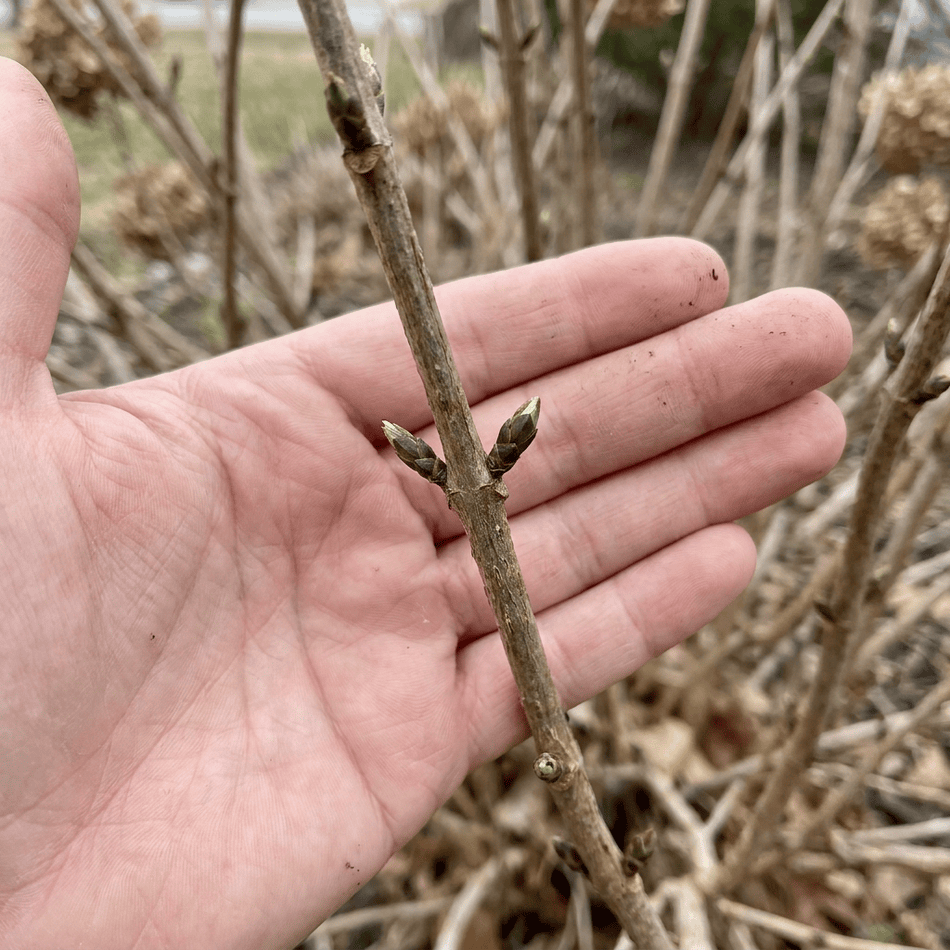
From what I’ve noticed, a lot of gardeners wait until spring, once the frost and snow are gone, to tidy up their hydrangeas. That sounds sensible, but for some types, spring pruning can mean accidentally cutting off the very buds you’ve been waiting all winter to see.
The important difference is where each hydrangea makes its flowers:
Still confused? That’s okay, maybe your hydrangea is too. Just kidding. Take a few clear pictures and email them to us. A photo from when it was blooming is perfect, but if you don’t have one, send the leaves, stems, and whole plant and we’ll do our best to help identify it.
And before you make any cuts, check our guide to when and how to prune hydrangeas. We added photos of the different types and explain the old-wood vs. new-wood mess in much more detail.
Reason 2: Jack Frost Stole Your Flowers

This one is sneaky because the hydrangea itself can survive winter just fine while the flower buds don’t. I’ve seen plants come back looking perfectly healthy in spring, only to produce loads of leaves and barely a bloom.
It’s especially common with bigleaf and mountain hydrangeas. As we just covered, many of them carry next year’s flower buds on old stems through winter, so a hard freeze, repeated temperature swings, or a very exposed location can damage those buds before spring even arrives.
What to do: Unfortunately, you can’t restore buds once winter has killed them. Next winter, protect vulnerable stems and buds with burlap or frost cloth, mulch the root zone, and don’t rush to cut stems back in early spring.
If winter is where things tend to go wrong in your garden, we also wrote a guide on the key winter hydrangea jobs that can help protect the plant and next season’s blooms.
Reason 3: Just When You Thought Frost Season Was Over…
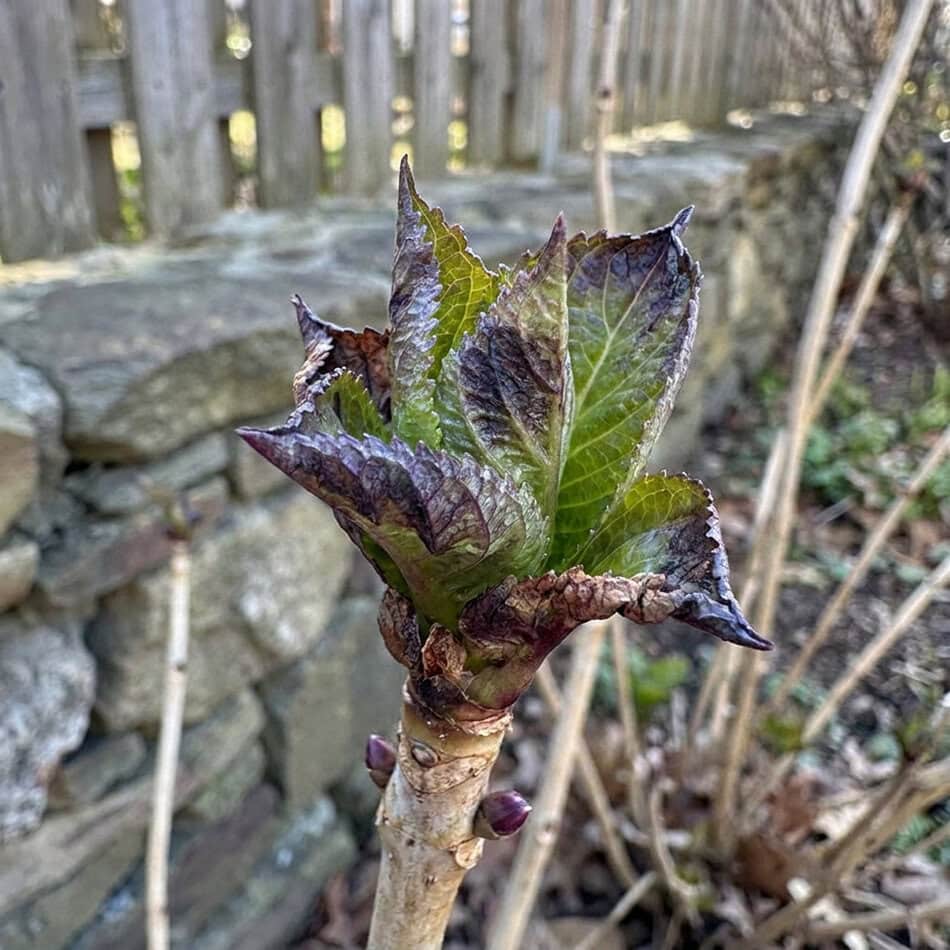
Sometimes the buds make it through winter perfectly well, only for one badly timed spring frost to finish the job. The weather has been all over the place these past few years, and I’ve had this happen just when I thought we were finally safe from the cold. Of course.
If the tips looked blackened, brown, or wilted after a cold night, late frost may be your culprit. Once hydrangeas start waking up, those tender new buds are much more vulnerable.
A sudden freeze can damage the flower buds while the plant itself recovers and keeps growing leaves, leaving you wondering where the flowers went.
What to do: You can’t undo frost damage, but if another cold night is forecast, cover the plant with frost cloth overnight and remove it the next morning.
Reason 4: It Likes Shade, Just Not THAT Much Shade
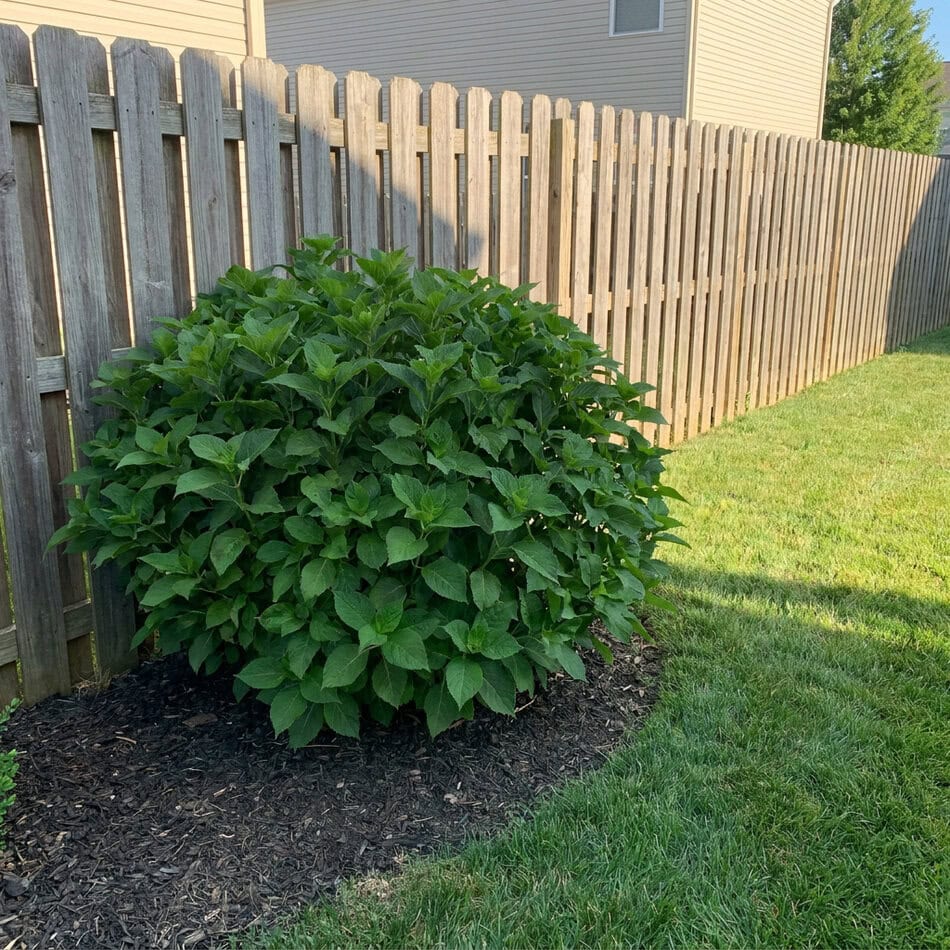
Hydrangeas love a bit of shade, but too much of it can leave you with a gorgeous leafy shrub and very few flowers. Most hydrangeas bloom best with several hours of sun each day (about 4 to 6 hours), especially morning sun, with some afternoon protection in hotter climates.
What you need to do next depends on where your hydrangea is growing:
Reason 5: You Loved It With Fertilizer a Little Too Much
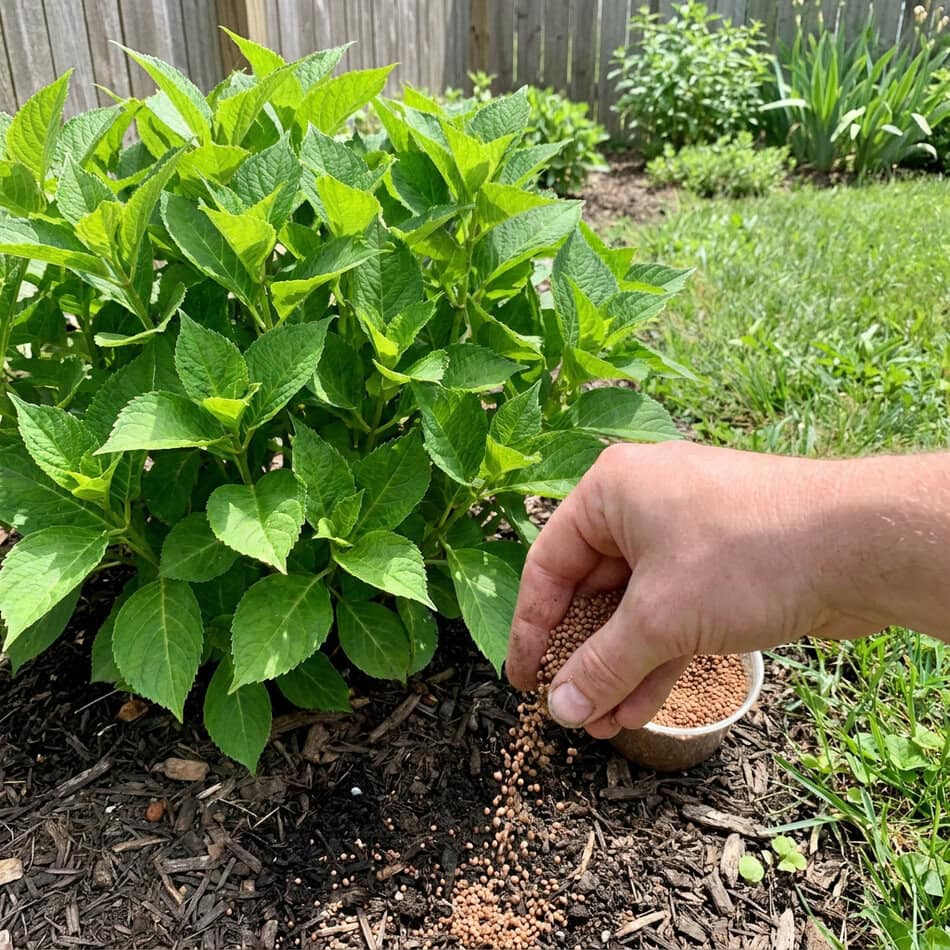
If you’re not pruning at all, you don’t live somewhere brutally cold, your hydrangea gets plenty of light, and your heart skipped a beat when I said it usually doesn’t need much fertilizer… we may have found the problem.
Too much nitrogen can give you exactly what you don’t want: a huge, gorgeous, ridiculously green hydrangea with barely any flowers. I’ve seen this with plants that were being fed too often, and even ones getting extra fertilizer from a nearby lawn.
What to do: Stop fertilizing for now, especially with anything high in nitrogen, and let the plant use what’s already in the soil. More food definitely isn’t the answer here.
If you’re not sure what your hydrangea actually needs, we wrote a guide on homemade fertilizers for hydrangeas, including when they’re worth using and when it’s better to leave the plant alone.
Reason 6: Your Flower Buds Became a Midnight Snack
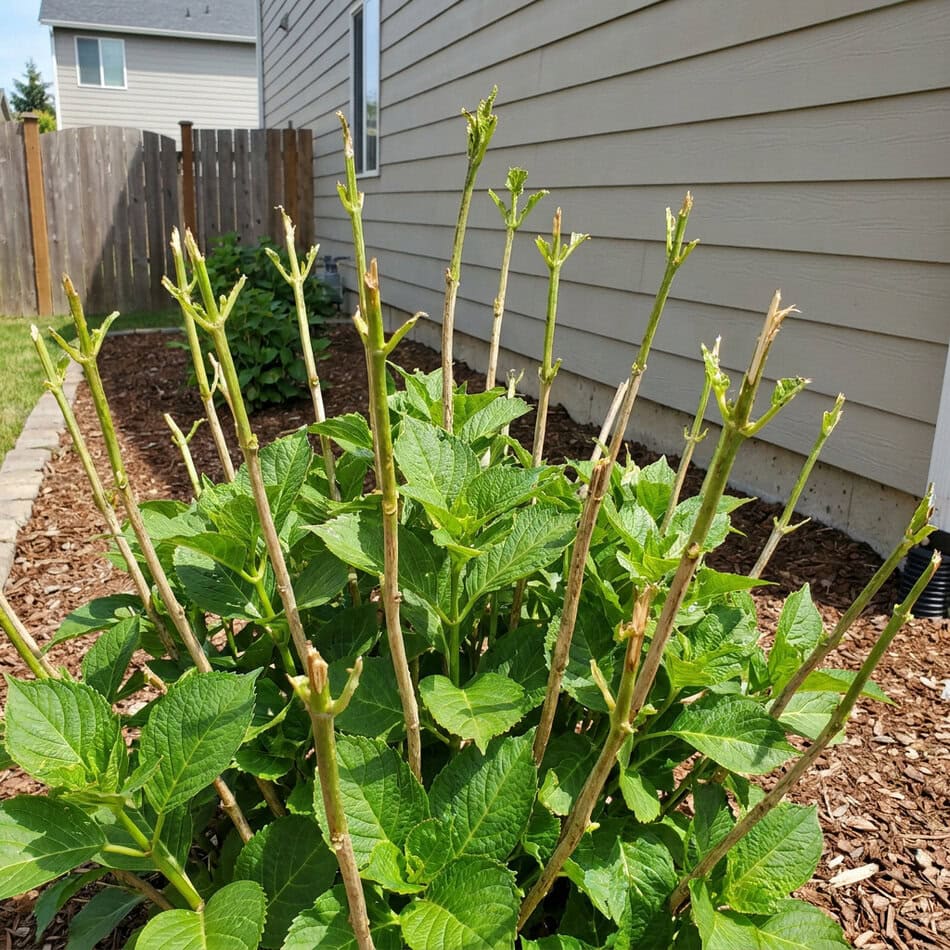
If you live in an area with deer… I’m sorry. Sometimes your hydrangea did everything right. It made the buds, survived winter, got enough sun and then… somebody showed up for a midnight snack.
Deer can browse off tender stem tips and flower buds, and the plant may simply grow more leaves afterward, making it look like it never planned to bloom in the first place.
Let’s not get too mad at those cute furry babies, or they’ll snitch to their cousins and we don’t want to end up on Santa’s naughty list… After all, they’re just out there living their lives.
What to do: We need to protect those tender buds instead. Use deer fencing or a repellent while the buds are forming… and, let’s be honest, hope for the best.
Reason 7: Your Hydrangea Just Needs a Minute
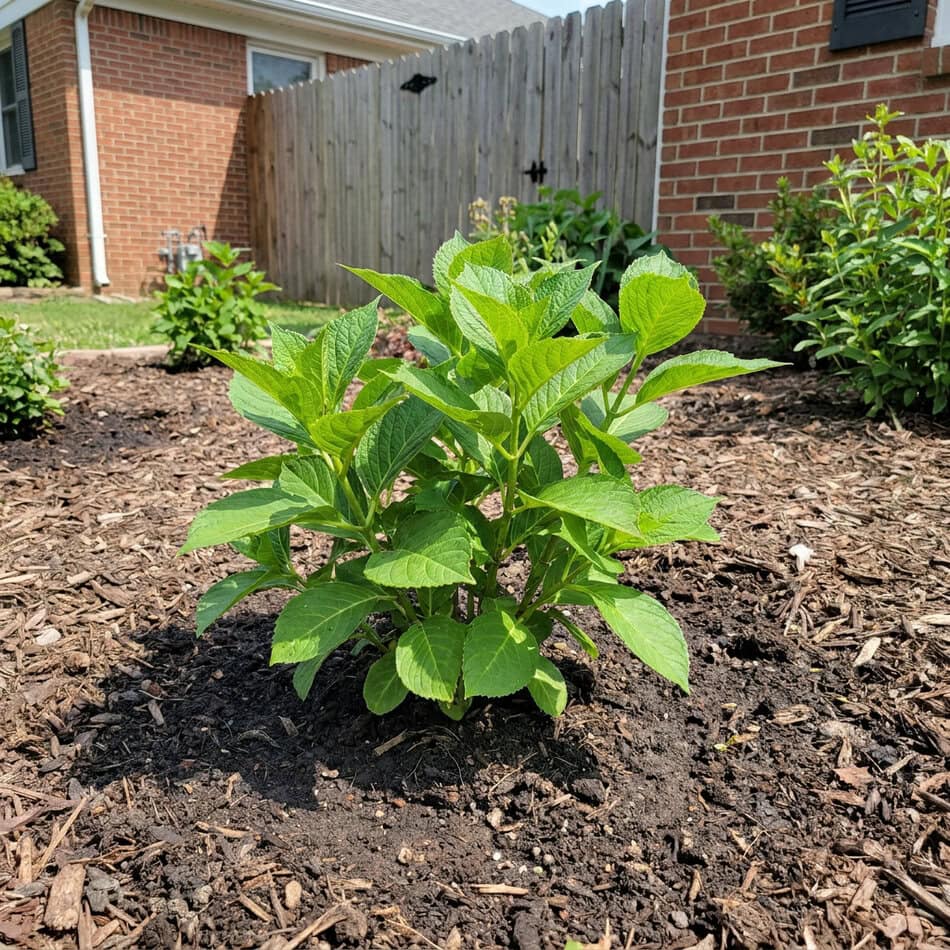
Sometimes nothing dramatic went wrong, your hydrangea is just busy settling in. Newly planted or recently moved hydrangeas may put more energy into establishing roots than making flowers, especially if they’re also dealing with heat or inconsistent watering.
What to do: Keep the soil consistently moist but not soggy, add a layer of mulch, and give it time. If it’s otherwise healthy, resist the urge to keep feeding or moving it around trying to “fix” it.
And if summer heat is adding to the stress, we put together a guide on what hydrangeas need during hot summer weather to help get them through those brutal hot spells.
What Your Hydrangea’s Growth Can Tell You
Sometimes the plant gives you a few clues if you know what to look for. Before blaming yourself, your soil, the weather, or that suspicious-looking deer next door, take a closer look at how your hydrangea is actually growing.
Lots of Healthy Green Leaves but No Flowers

This is the classic one. If your hydrangea is lush, green, and growing like crazy but barely flowering, think back to pruning, how much sun it gets, and how much fertilizer you’ve been giving it.
I’ve seen hydrangeas look almost too healthy after getting too much nitrogen. Lots of leaves are great, but sadly, we’re not growing hydrangeas for the foliage alone.
New Growth Is Coming From the Base Only
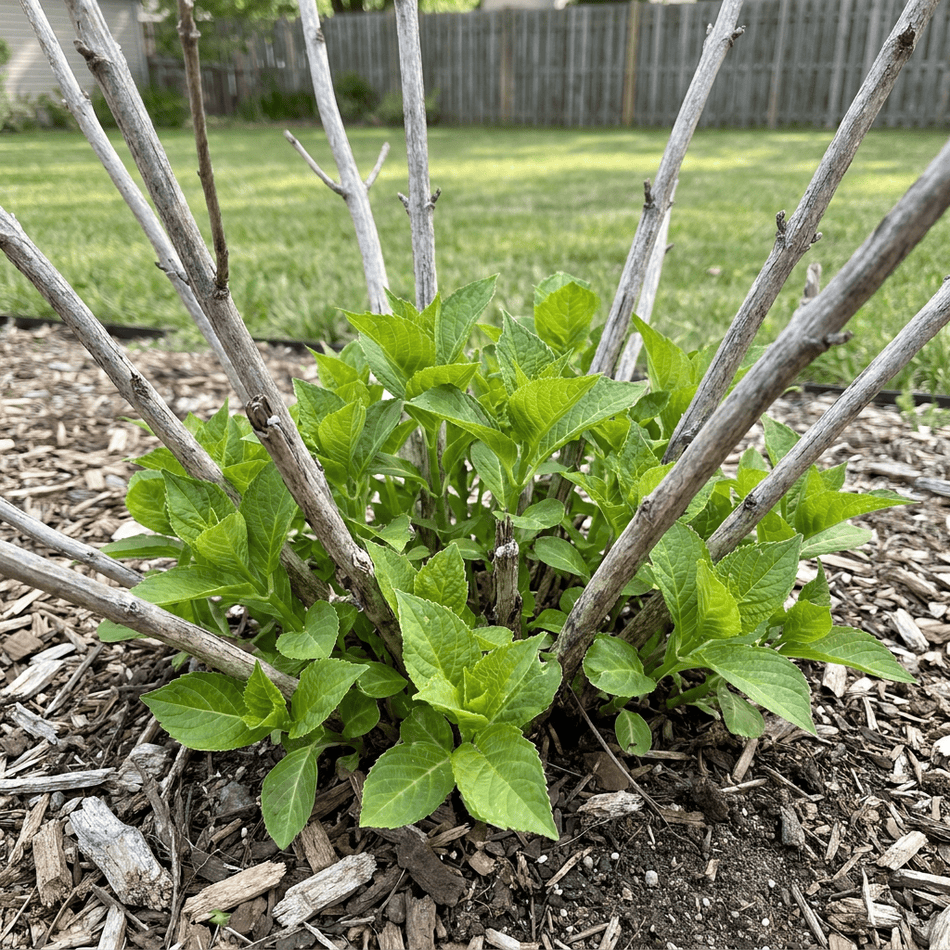
If most of the old stems look dead but fresh shoots are pushing up strongly from the base, winter damage may be the reason you’re missing flowers.
This is especially telling with hydrangeas that bloom on old wood. The roots survived, but the stems carrying those flower buds may not have.
Flower Buds Formed but Never Opened
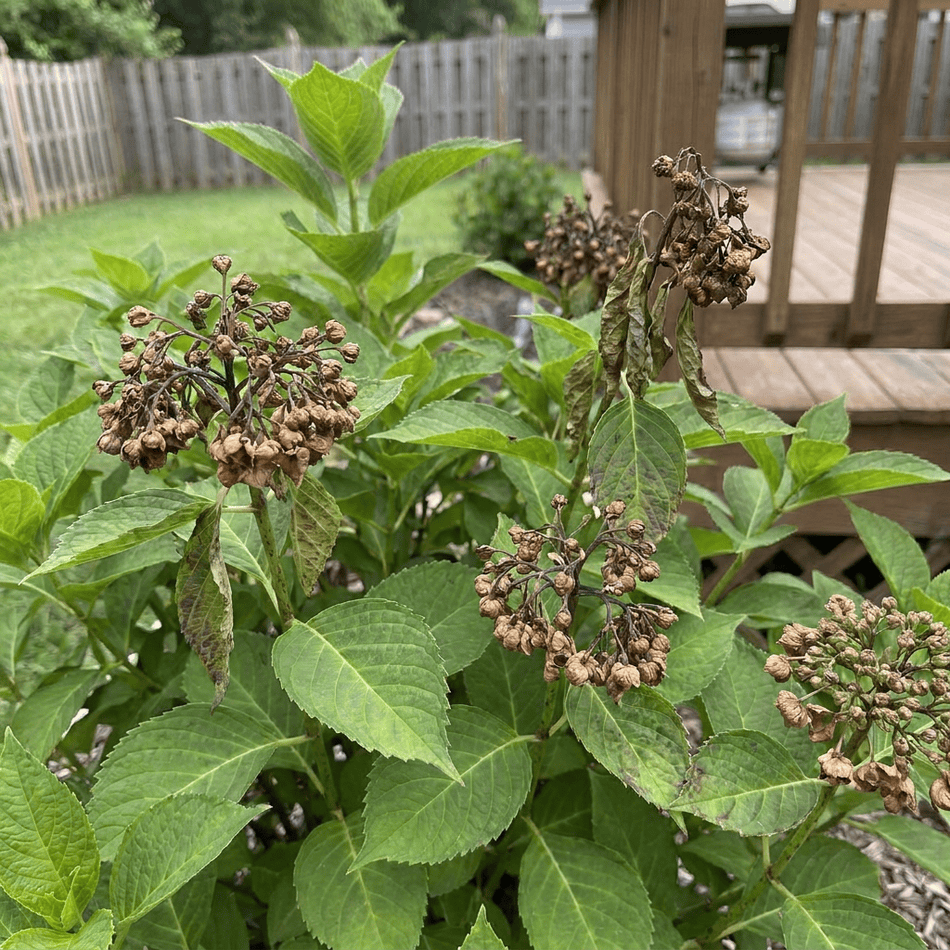
This one hurts because you got so close. If you actually saw buds forming and then they turned brown, wilted, or stopped developing, look at what the weather was doing around that time.
A late freeze, sudden heat, or severe water stress can interfere with developing buds. If they looked fine until one awful night or weather swing, that’s a pretty big clue.
Stem Tips or Buds Have Disappeared
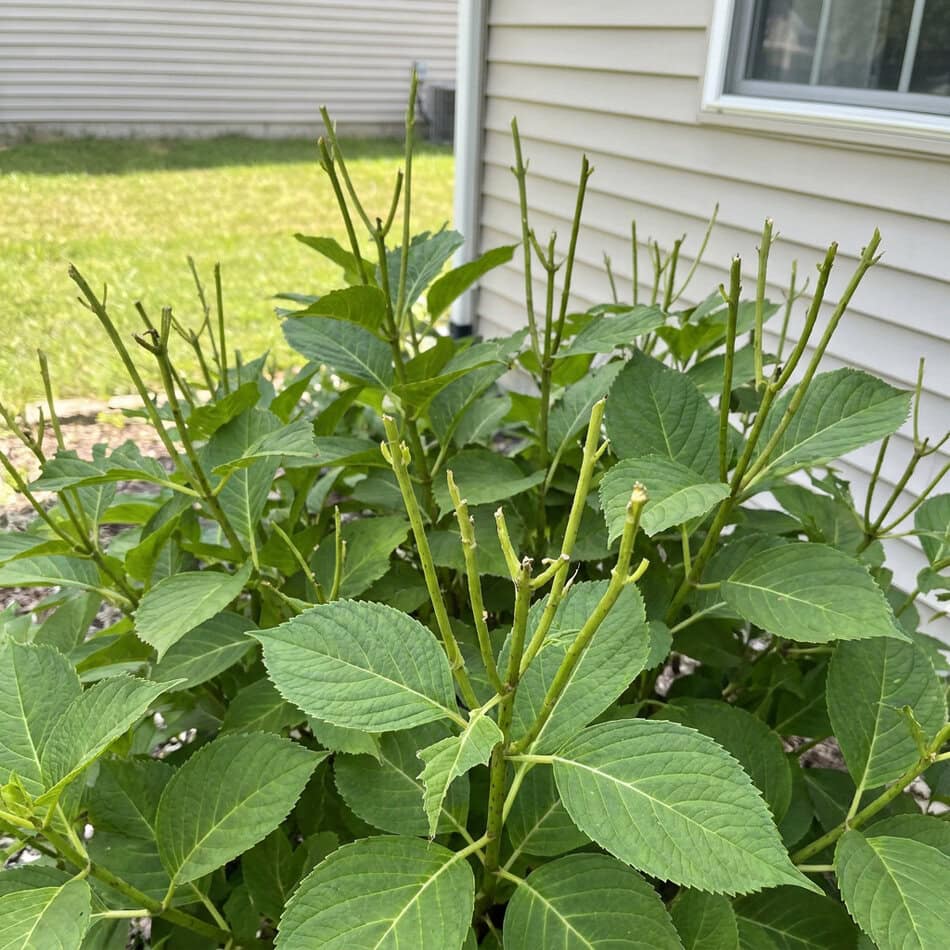
If the buds were there one day and mysteriously gone the next, your hydrangea probably didn’t change its mind about blooming.
Look closely at the stem tips for signs of browsing or chewing. Deer are often the obvious suspects, but rabbits and other hungry visitors can also remove tender growth before the flowers ever get a chance to open.
Your Hydrangea Isn’t Broken, It’s Just Being Dramatic
Hydrangeas are masters at making us panic. One year they’re covered in flowers, the next they’re all leaves, no blooms, and suddenly we’re questioning every gardening decision we’ve ever made.
The good news is that there’s usually a reason, and once you know what to look for, the mystery gets a lot easier to solve.
Give it the conditions it needs, a little patience, and hopefully next season it’ll stop being so dramatic and get back to doing what we all actually want: making ridiculously big flowers.



When and how to prune mopheads
Hi Kathy!
Mophead hydrangeas bloom on old wood, so prune them right after flowering, usually in late summer or early fall. Just remove dead flowers and any weak or damaged stems. Avoid heavy pruning in spring or winter, or you might cut off next season’s blooms! 😊🌿
Hi Rita: Should I skip pruning if my plant did not bloom at all?
Hi Judy 🙂 If it didn’t bloom at all and you’re not completely sure which type you have, I’d skip any major pruning for now. Just remove dead or damaged wood. If it blooms on old wood, pruning at the wrong time could remove the buds for next year too.
I have the old fashioned hydrangea that blooms blue or pink for two years now no blooms and it’s huge probably 5’ around what am I doing wrong
I also have a limelight hydrangea when and how do you prune it
Hi Sheryl 🙂 Your old-fashioned blue or pink hydrangea sounds like a bigleaf hydrangea, which usually blooms on old wood. I wouldn’t cut it back now because next year’s buds may already be there. Two years without flowers can happen from winter damage, pruning at the wrong time, too much shade, or too much nitrogen.
Limelight is different because it blooms on new wood, so I prune those in late winter or early spring before new growth starts, usually reducing the stems by about a third.
I have no idea what kind f Hydrangea I have. How do I tell. This plant has gone wild. It’s huge. No blooms in years. Right now it has to be trimmed. It’s in the corner of the garden and hanging into the driveway. How should I trim it?
Hi Kathy 🙂 Since you don’t know which hydrangea it is, I wouldn’t hard prune the whole plant. If it’s hanging into the driveway and has to be trimmed, cut back only the stems causing the problem, ideally back to a branch junction. That will control it without risking as many potential flower buds.
I have several hydrangeas and now they’re all getting little brown spots on the leaves. What is causing this?
Hi Betsy 🙂 Little brown spots appearing on several hydrangeas are often a fungal leaf spot such as Cercospora, especially later in summer when foliage stays damp. Remove and discard fallen affected leaves, water at the base instead of over the foliage, and give the plants as much airflow as possible. It usually looks worse than it actually harms the plant.
When do I start with the coffee grounds, epson salt, etc?
I have two hydrangeas and one flowers and the other one doesn’t! They are both planted in the same bed with full sun and very little watering. I’m planning to move them to a new bed on the west side of my house. I live in Michigan and I have never wrapped in burlap but plan to this year. We will see.
Hi Christine 🙂 Since they’re getting very little water, I’d definitely start there. Hydrangeas do best with consistent moisture, especially in full sun. Also, two hydrangeas in the same bed can behave differently if they’re different varieties, and in Michigan an old-wood type can lose its flower buds to winter cold while the plant itself survives just fine. If you’re moving them, I’d wait until they’re dormant after the leaves drop or move them in early spring. The burlap protection may really help if winter damage is the culprit.
I have a hydrangea in a pot that gets morning sun. It was planted in the pot in March of 2026. It was given to me as a gift and it had beautiful pink blossoms. It has beautiful healthy leaves now but the blossoms died off. Can I plant it in the ground now?
Hi Darlynn 🙂 Yes, you can plant it in the ground now if it’s a garden-hardy hydrangea for your zone. Early fall is actually a good time to move a container-grown shrub into the garden. Give it morning sun, keep it well watered while the roots establish, and add some mulch before winter. Since yours was a gift plant, I’d just check the tag or variety first, because some florist hydrangeas aren’t reliably winter-hardy outdoors.