
Order in the garden! We’re putting a beloved garden star, the peony, on trial. Its crime? Overstaying its welcome with an unsightly appearance.
The question before the court: Should we sentence it to a clean cut, or grant it a reprieve through winter? The verdict is in your hands.
The Case for Cutting Back Peonies in Fall
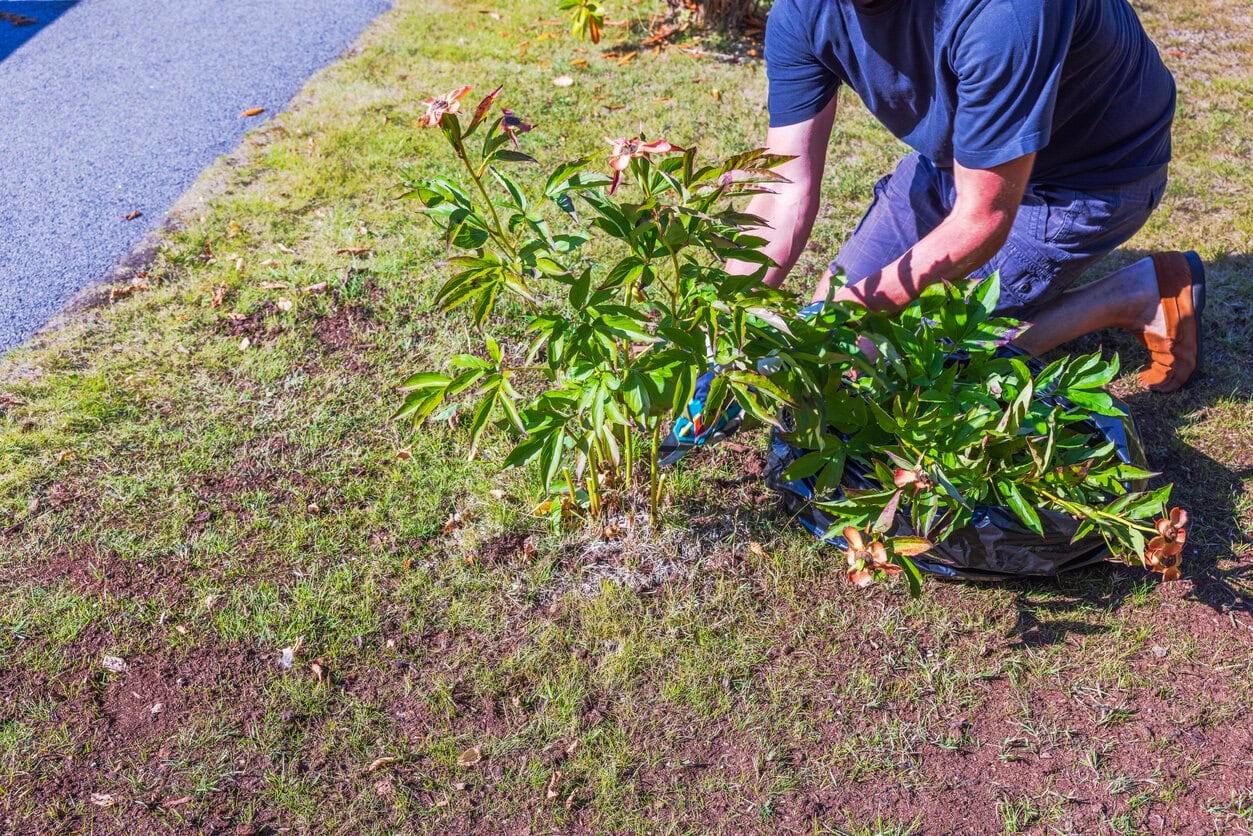
The moment the leaves turn, your peony becomes a suspect in a fungal crime. Its foliage is a known hideout for botrytis blight, a common garden criminal that turns healthy buds to mush. Its preferred turf? Humid, cool, and wet climates.
It’s particularly problematic in areas with persistent cool, wet, and humid conditions. Its spores don’t just disappear but spend the winter hiding on old leaves and stems, ready to attack fresh new growth come springtime.
On top of the health concerns, there’s the aesthetic argument. While beauty is in the eye of the beholder, few would argue that brown and floppy peony foliage is a garden highlight. After a hard frost, these plants can look particularly unattractive. A clean, tidy bed looks better and makes spring cleanup a breeze.
The Case for Leaving Peonies Standing Through Winter
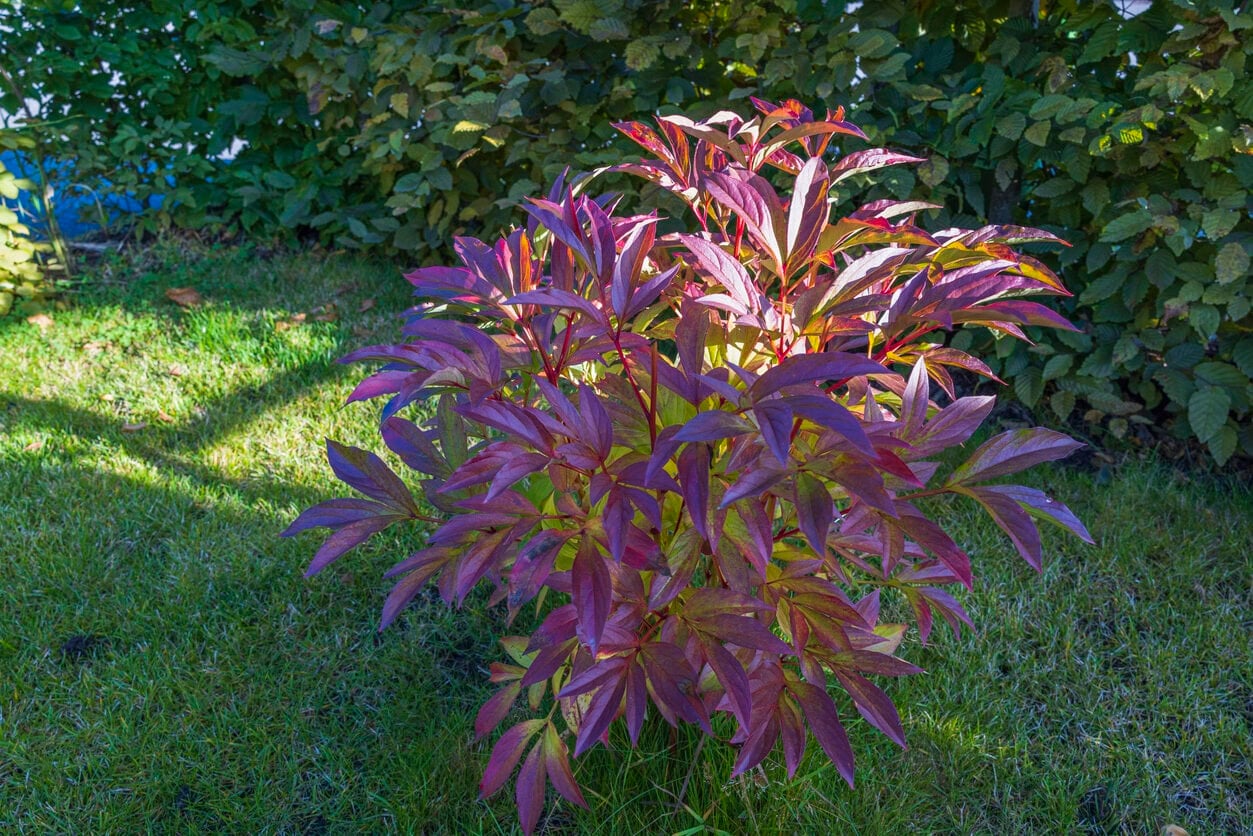
The prosecution has made its case, but a defense is also in order. While many gardeners opt for a clean cut, a growing number of us are making a compelling argument for a more hands-off approach. This side of the case rests on a couple of key points.
Habitat for Wildlife
The defense’s argument is simple. Every peony left standing is a huge win for local wildlife. Think about solitary bees insects that may want to take shelter there. A lot of them are looking for somewhere to spend the coldest months, and so those old peony stems are a perfect spot.
Leaving the foliage standing is just a simple way to make sure they survive the cold so they can get back to work for your garden in the spring.
If you’re unsure about summer care, here’s a full guide on whether to cut back or leave peonies after flowering.
Minimalist Gardening Approach
Moreover, some gardeners simply prefer a minimalist approach. The philosophy of “leaving it all standing” is less labor-intensive and respects the natural life cycle of the plant.
For them (read: me), a perfectly manicured bed isn’t the priority. They (me) are not concerned with a few minor aesthetic flaws or the small risk of a disease, preferring instead to let nature take its course.
Debunking a Common Myth
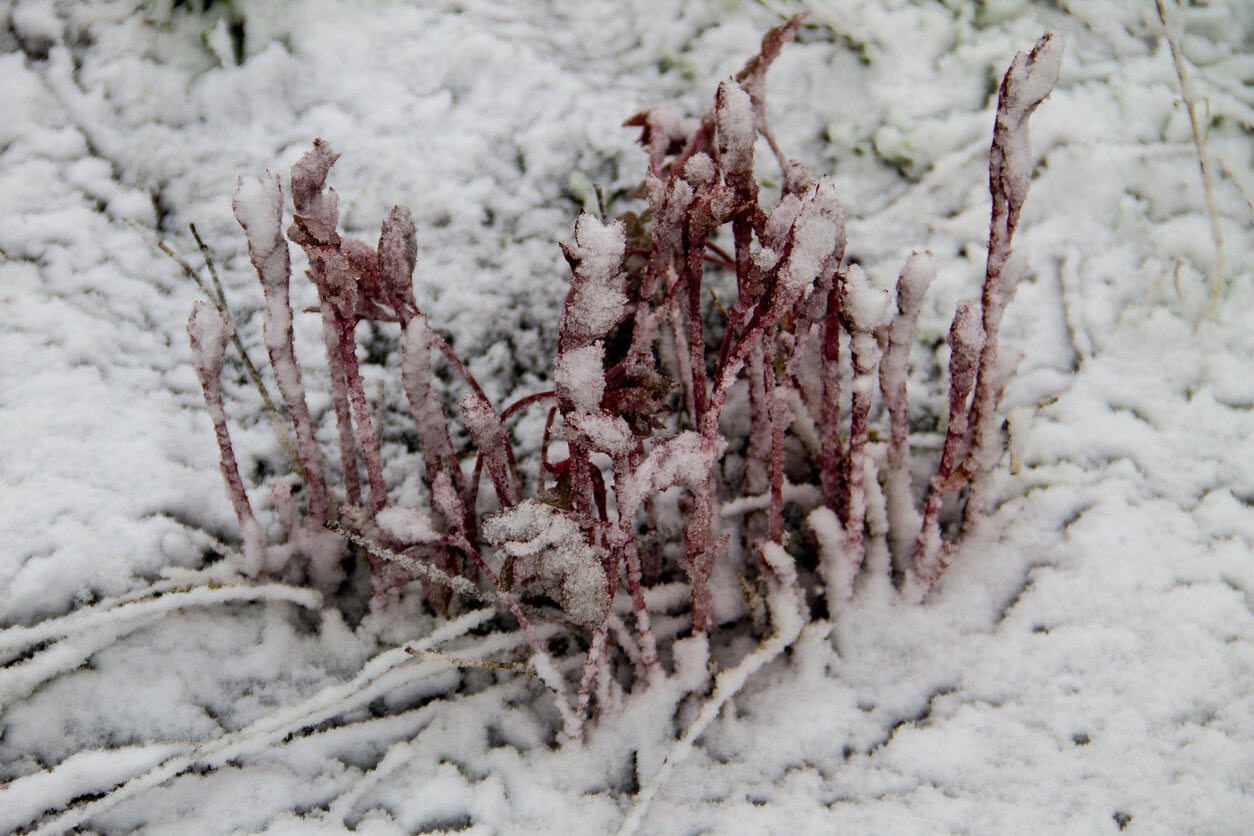
Finally, we must address a common misconception that often comes up in this debate: the idea that old peony stems offer vital protection from the cold. This is simply not true.
Peonies are incredibly cold-hardy and their roots are perfectly capable of withstanding winter on their own. The old foliage offers no meaningful insulation from frost or winter damage. The only thing it’s protecting is a potential disease cycle.
If anything offers real insulation, it’s a good layer of snow, not last season’s stems.
You’ll find more details in our guide on which perennials to trim in September for healthier growth next spring.
The Verdict, the Exception, and the Sentence

The defense made a compelling case for leaving things as they are, but the prosecution’s argument for plant health and disease control is often the winning one.
For most gardeners, especially those in humid climates or who have dealt with fungal diseases like botrytis blight, cutting back the foliage is the most sensible course of action.
With that said, there’s a key exception to this. Leaving the stems is really only advisable in a very dry climate with no history of disease, like high desert gardens or areas in USDA Zones 7 to 9 with arid conditions.
If you’re tackling a fall cleanup, it’s also the perfect time to divide your perennials in September for bigger, stronger plants next year!
It can also be a good choice if your primary goal is to provide a habitat for helpful insects. Just be clear about the trade-off. In those situations, the risk of disease might be outweighed by the huge benefit to local pollinators and other tiny garden allies.
One more thing: these rules are pretty much just for herbaceous peonies. They’re the kind you see most often, the ones whose stems die all the way back to the ground each year.
Tree peonies, though? They’re a whole other situation. Don’t cut them back because their woody stems stay put through the winter and are a permanent part of the plant.
The “How-To” of Cutting Back Peonies
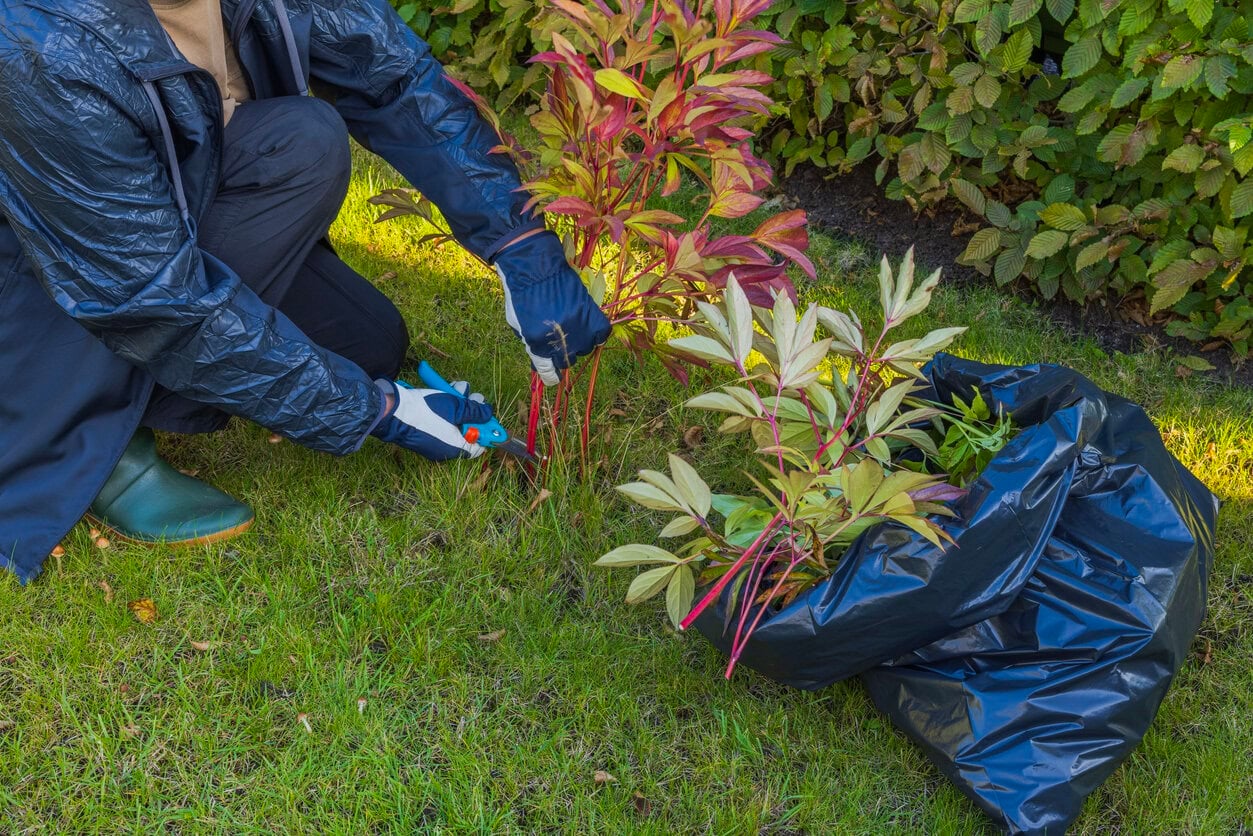
It’s time to get to work with your sharp and thoroughly sanitized shears in hand. The process is straightforward.
Once a hard frost hits and the leaves have gone all yellow and brown, you know it’s time for the final cut. Take the stems down to about two to three inches (or five to eight centimeters) above the soil line.
Think of the first hard frost as the judge’s gavel coming down, usually late October or November in most gardens. That’s your signal to clear the stand.
Lastly, do not compost the cut foliage. That’s right, cut leaves and stems are evidence of a crime scene. Bag them up and dispose of them with your yard waste to prevent spreading any lingering diseases.
For comparison, see what to do with hydrangeas after they bloom in fall, the logic is very similar.
Putting the Case to Bed

After a compelling trial, the verdict is in. Peonies stand accused of harboring disease and creating a mess. The final ruling: a full cutback.
Arm yourself with a sharp pair of clippers and a no-nonsense attitude and protect your garden’s health. The case of the spent peony is officially closed! It has been found guilty, and the sentence is swift removal!
Roses face a similar debate, here’s how to decide whether to cut back or leave roses after blooming.




Lupins when to cut back?
Hi Jay! 😊 You can cut back lupins once their flowering has finished and the seed pods start to form (or as soon as blooms fade). In my garden, I usually trim them down by about one-third, removing the spent flower stalks and some foliage. That helps redirect energy into the roots for next year.
How do you know what zone you live in?
Hi Brenda! 😊 The easiest way is to check the USDA Plant Hardiness Zone Map online, just search for your zip code and it’ll tell you exactly what zone you’re in. Super helpful for knowing what plants will thrive in your area!