
Calling someone a pansy makes zero sense. These flowers are tougher than their name suggests, but they still have opinions. I’ve seen them shrug off cold nights that would flatten a tender geranium, then stall out fast when seed pods, heat, or soggy leaves get ignored.
So yes, pansies are cool-season garden titans, but if you want spring and fall blooms instead of sad little green clumps, they need the right kind of fussing.
Spring Pansy Care
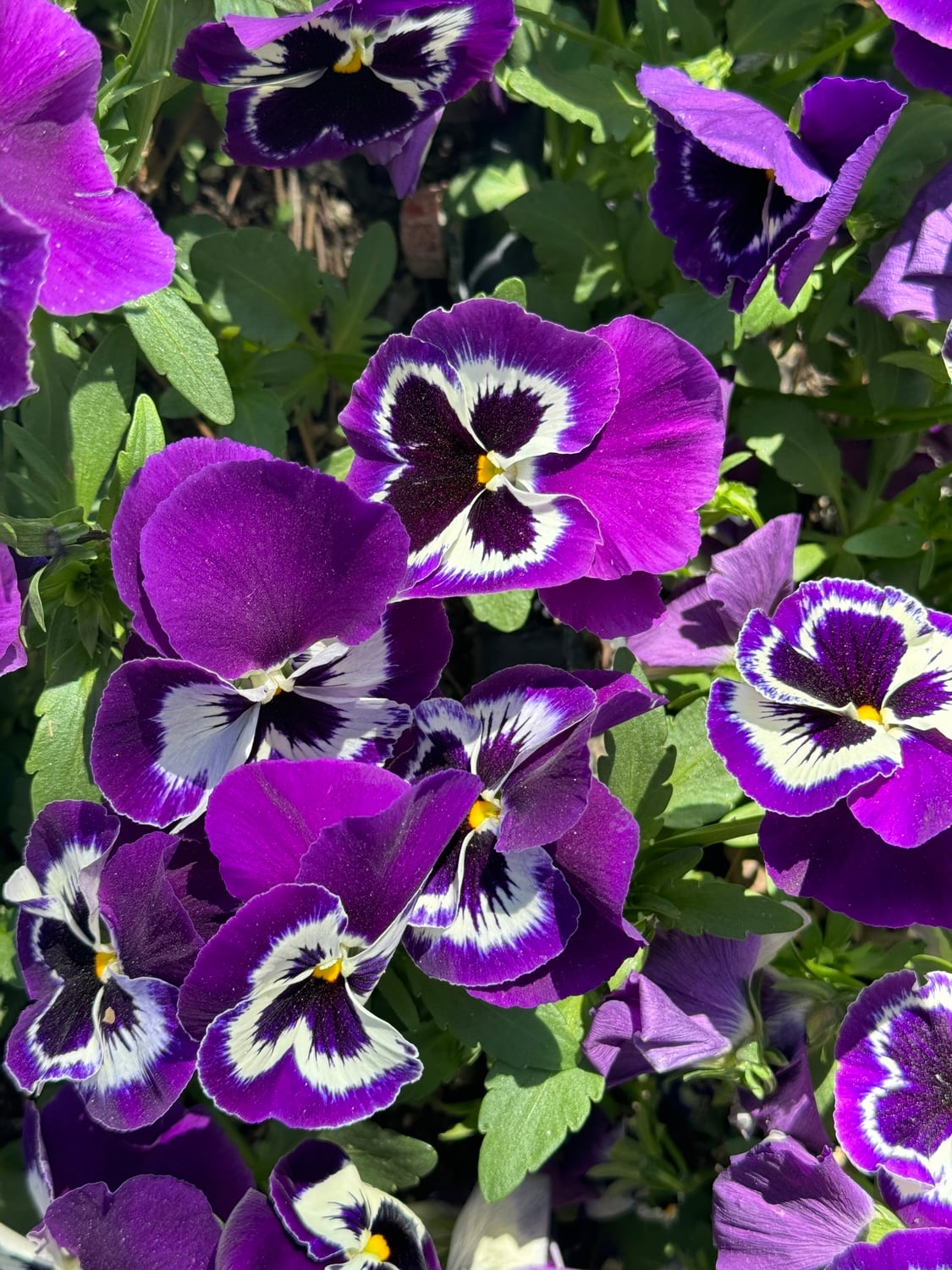
Pansies put on their best spring show when the weather stays cool and soil temperatures sit around 45°F to 65°F.
These eight steps help stretch the bloom window across USDA Zones 4 through 8, but watch your local weather. Zone 8 can heat up fast, while Zone 4 may still be waiting on thawed soil.
Tip 1: Aggressive Deadheading
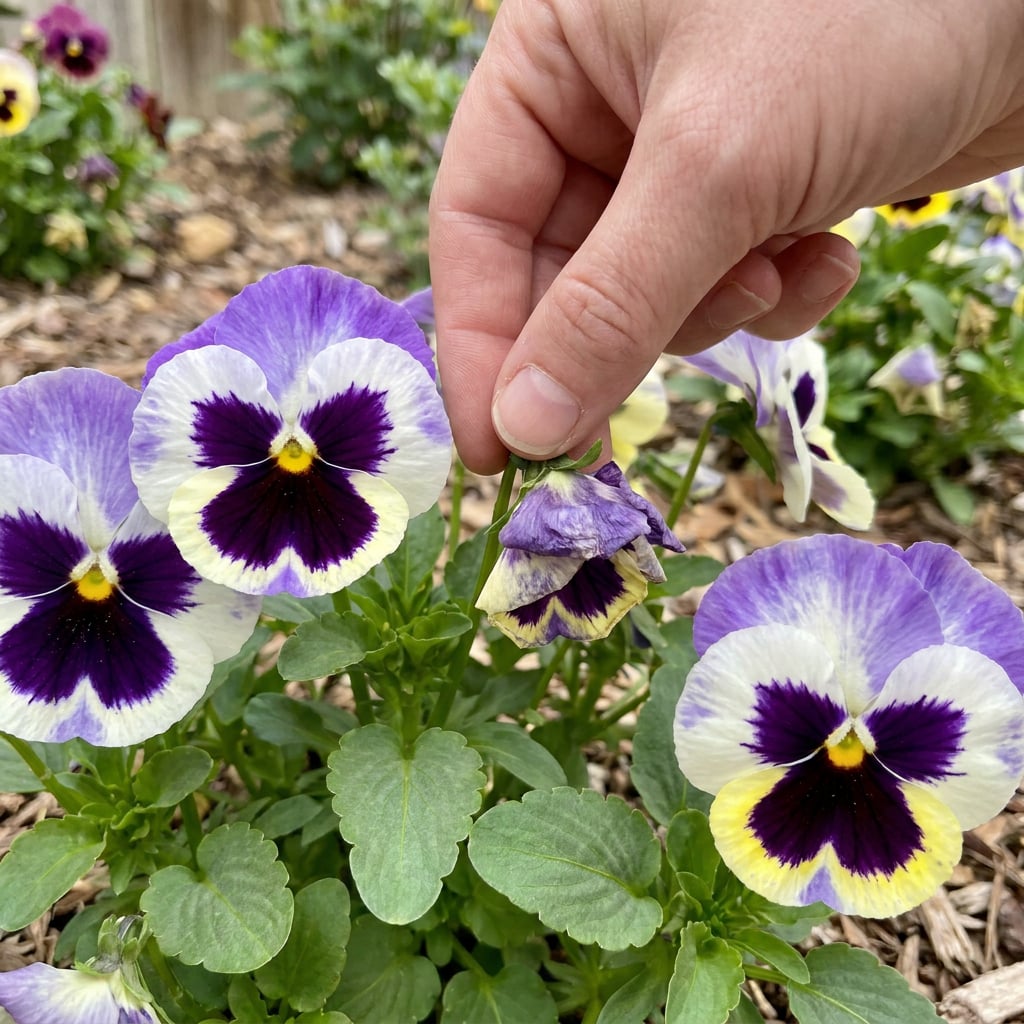
Pinching off just the faded petals won’t do much. Once that little green seed pod forms, the plant starts putting energy into seeds instead of fresh buds.
Trace the spent flower stem back toward the base and pinch or snip it off cleanly, without tearing into the crown. Keep the old stems off, and pansies usually keep blooming much longer.
Zone 7 and 8 growers must hunt these down by early spring; while Zone 4 may be waiting until the ground thaws. No stems left behind means continuous blooms.
If you’re filling more than one pot this spring, we also wrote a guide on spring container flowers that can handle cool nights without throwing a fit.
Tip 2: Smart Feeding
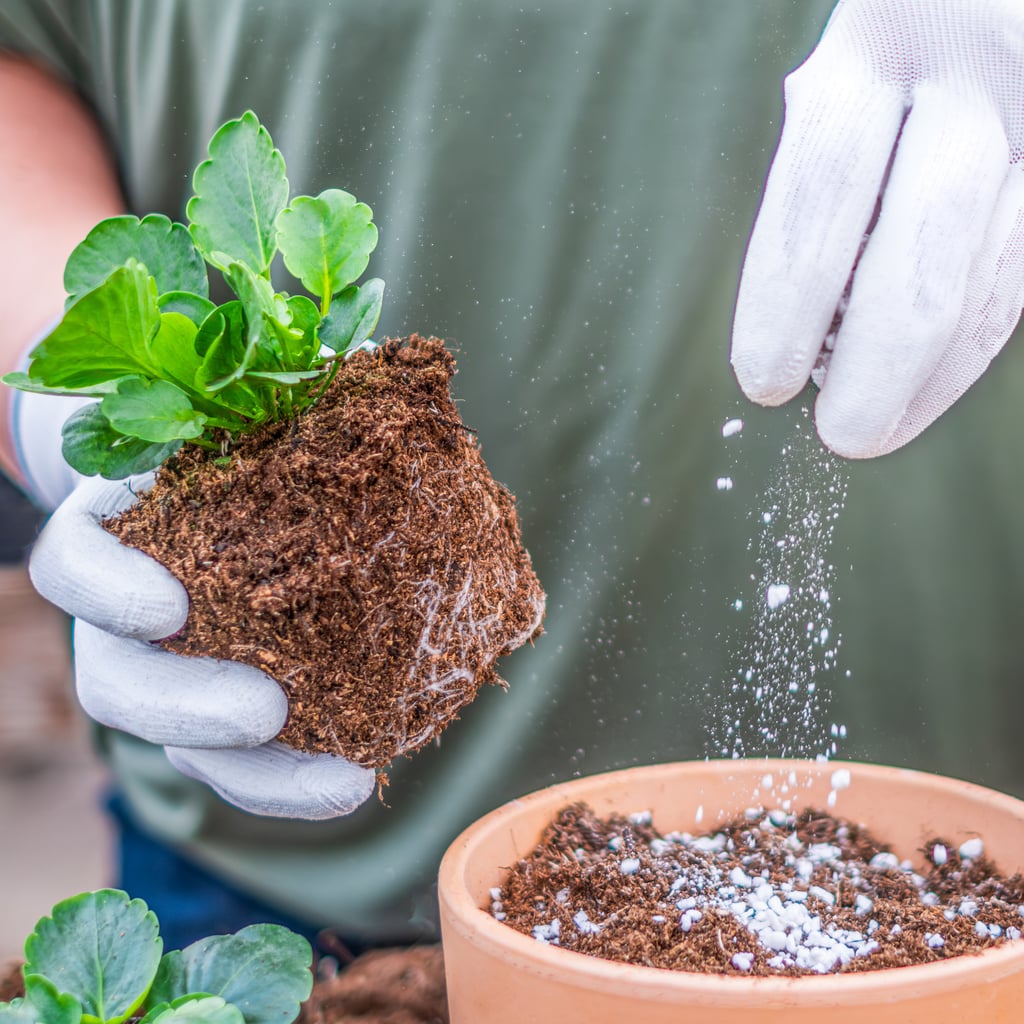
High nitrogen can push floppy green leaves instead of flowers. I like mixing a light fertilizer for flowering annuals into the potting soil at planting, then feeding lightly later if the plants need a boost. Follow the label instead of trying to bully them into blooming!
Hit them early, but let the soil lead. Zone 8 may start this in late winter, while northern growers should wait until the ground is workable and soil temperatures are around 45°F
Tip 3: Root-Zone Watering
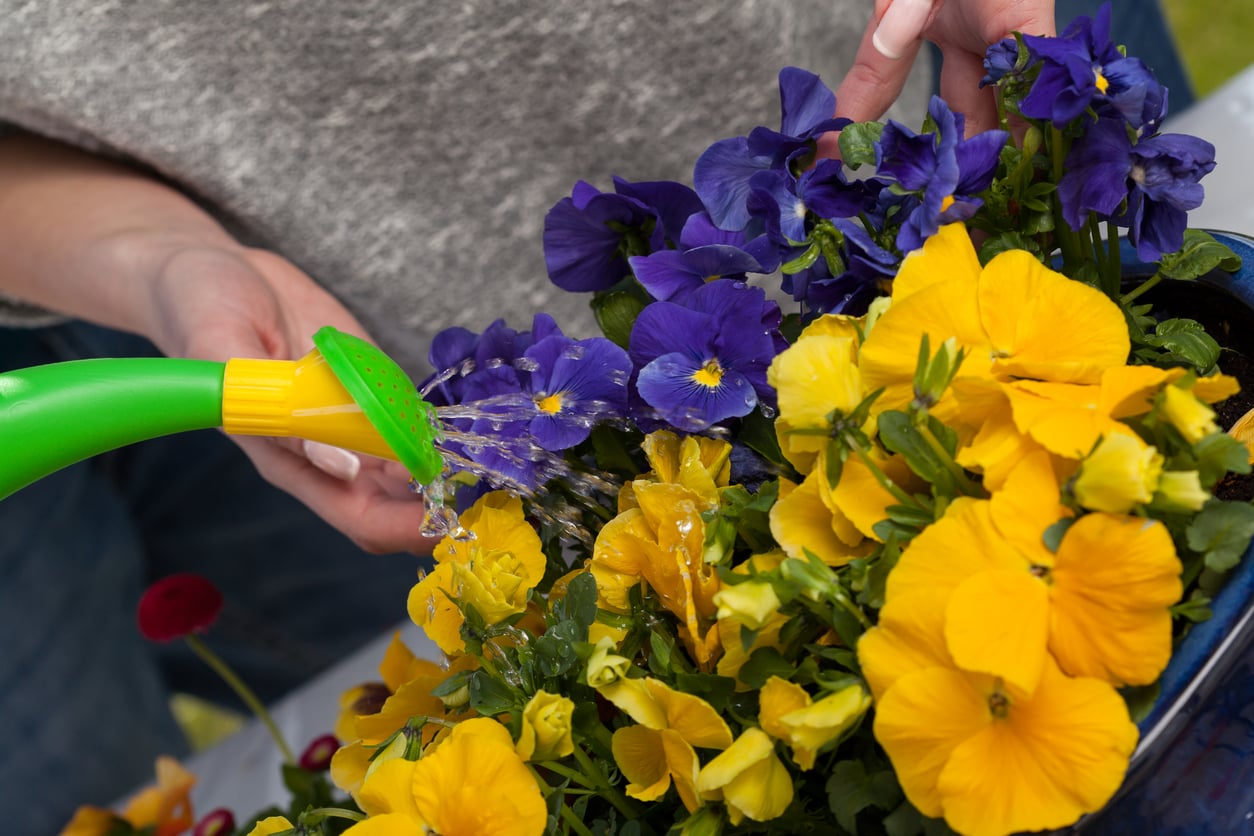
Rain comes and goes, but daily leaf-spraying turns pansies into a damp little disease factory. Wet foliage, crowded stems, and cool nights are exactly how mildew and leaf spots get invited in.
I usually just soak the soil near the roots in the morning, not the leaves, so any stray splashes have time to dry before night.
In humid Southern springs, overhead watering is basically asking for trouble. Drier northern gardens may get away with more, but I still wouldn’t risk it.
Tip 4: Shadow Shifting
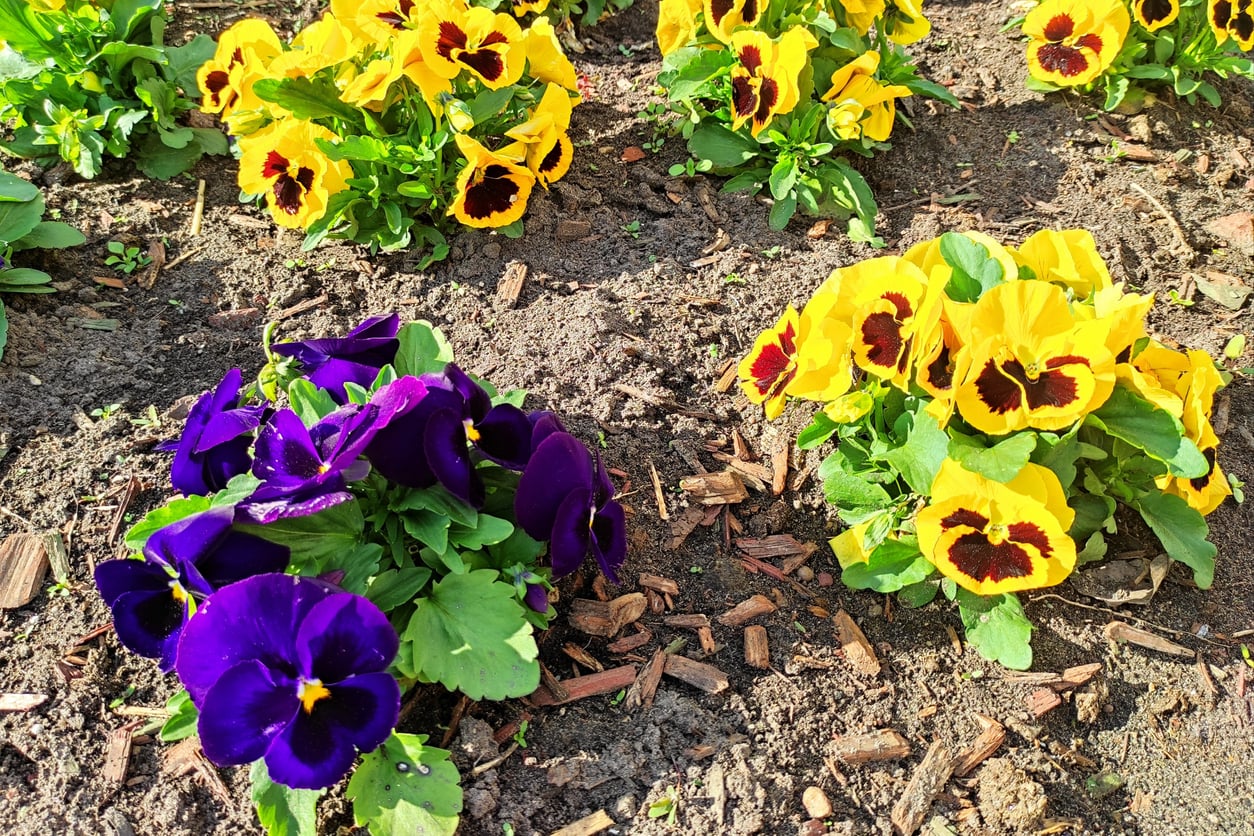
Pansies start getting dramatic once warm afternoons hit 75°F. If you leave pots baking in the afternoon sun by late spring, the roots heat up fast and the plant starts stretching, sulking, and dropping blooms.
Moving containers to morning sun and afternoon shade keeps them producing weeks longer!
Zone 7 and 8 gardeners usually hit that heat wall early, while northern gardeners may get decent blooms into June.
Tip 5: Soil Mulching
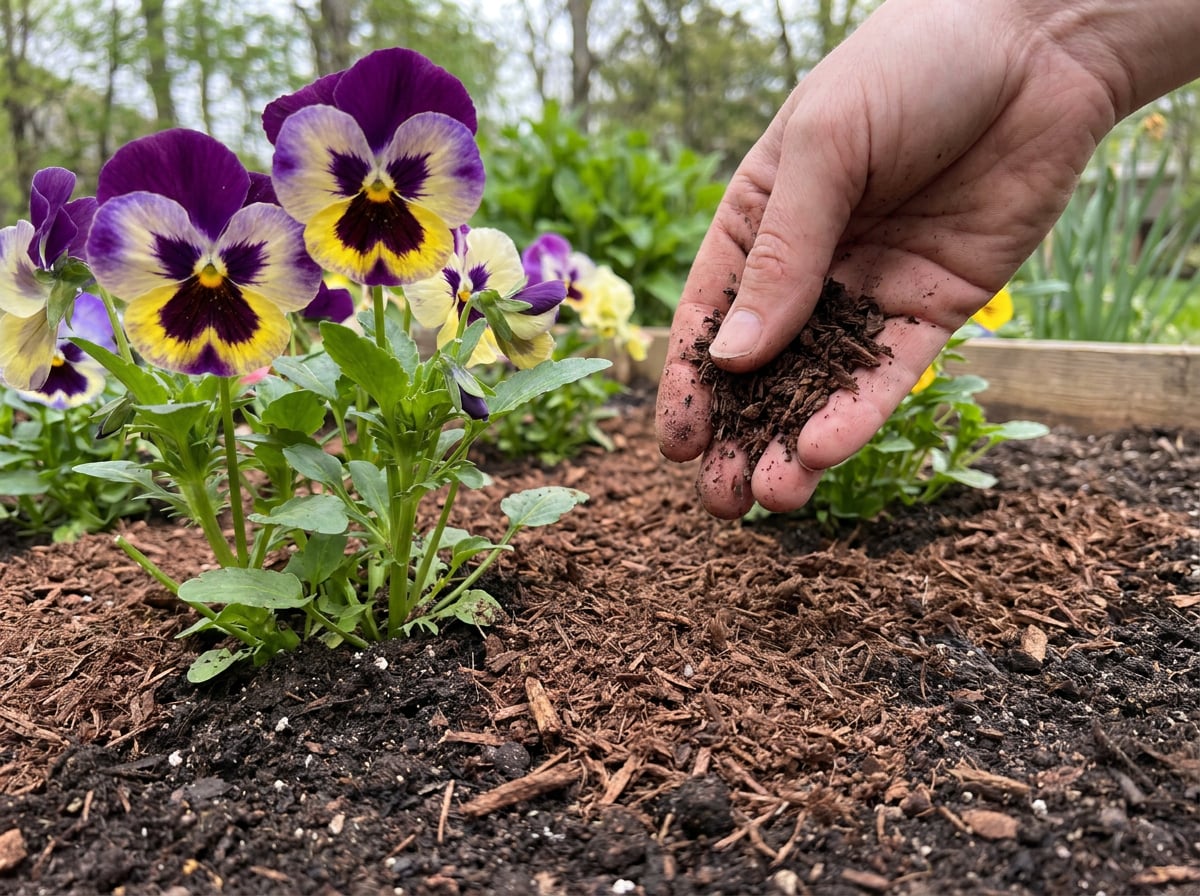
Pansy roots sit shallow, and afternoon heat can cook them faster than instant noodles. I add a thin 1-inch layer of fine bark mulch or pine straw around the plants to shade the root zone and help the soil hold moisture.
Just don’t pile mulch against the crown! Leave a little breathing room around the base, or you trade heat stress for rot problems.
Tip 6: Removing Yellow Leaves
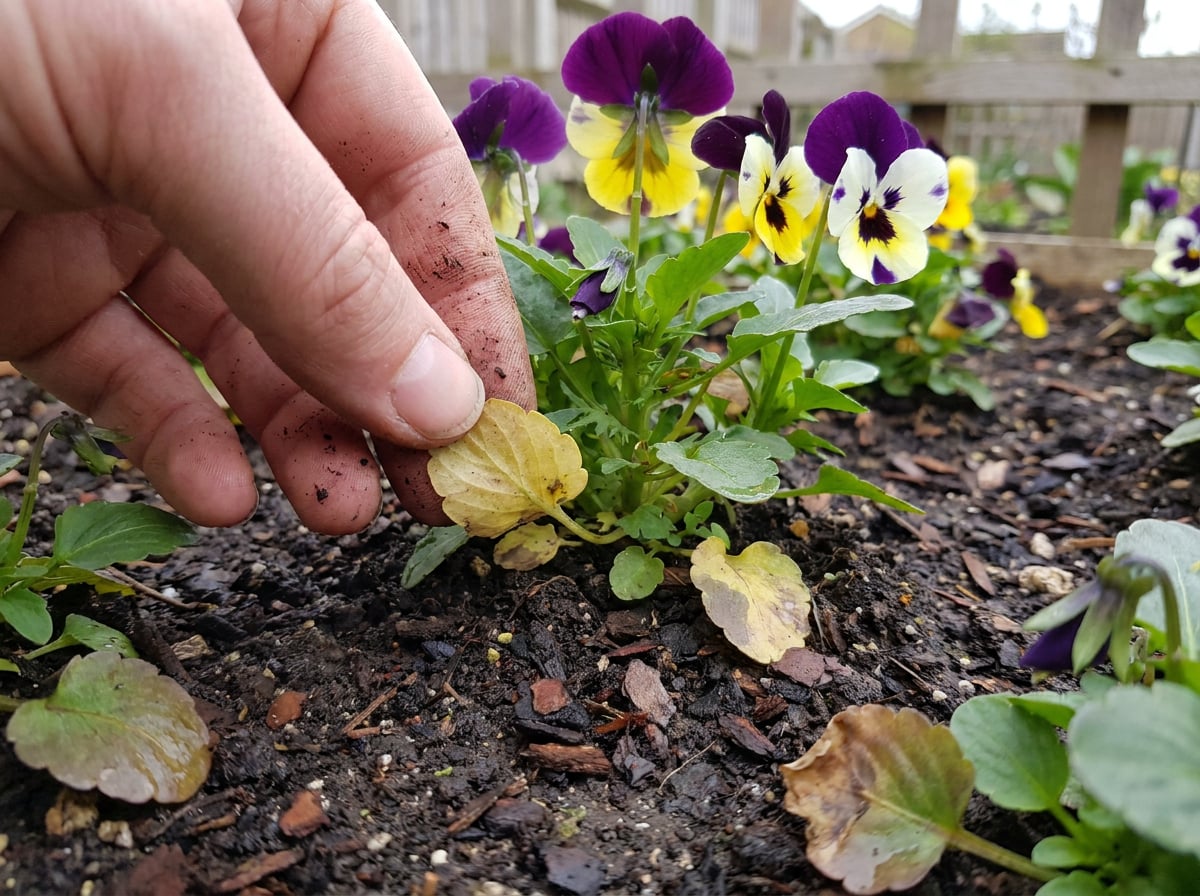
Check the soil line. Yellowing bottom leaves are usually the first to get soggy, mushy, or spotted, especially after rain or heavy watering. Once they sit against damp soil, they turn into a welcome mat for rot and fungal trouble near the crown.
I pinch them off as soon as they start looking yellow. Clearing that heavy, stagnant space gets fresh air moving around the stem, making it harder for mildew and rot to settle in.
Tip 7: Leggy Rejuvenation
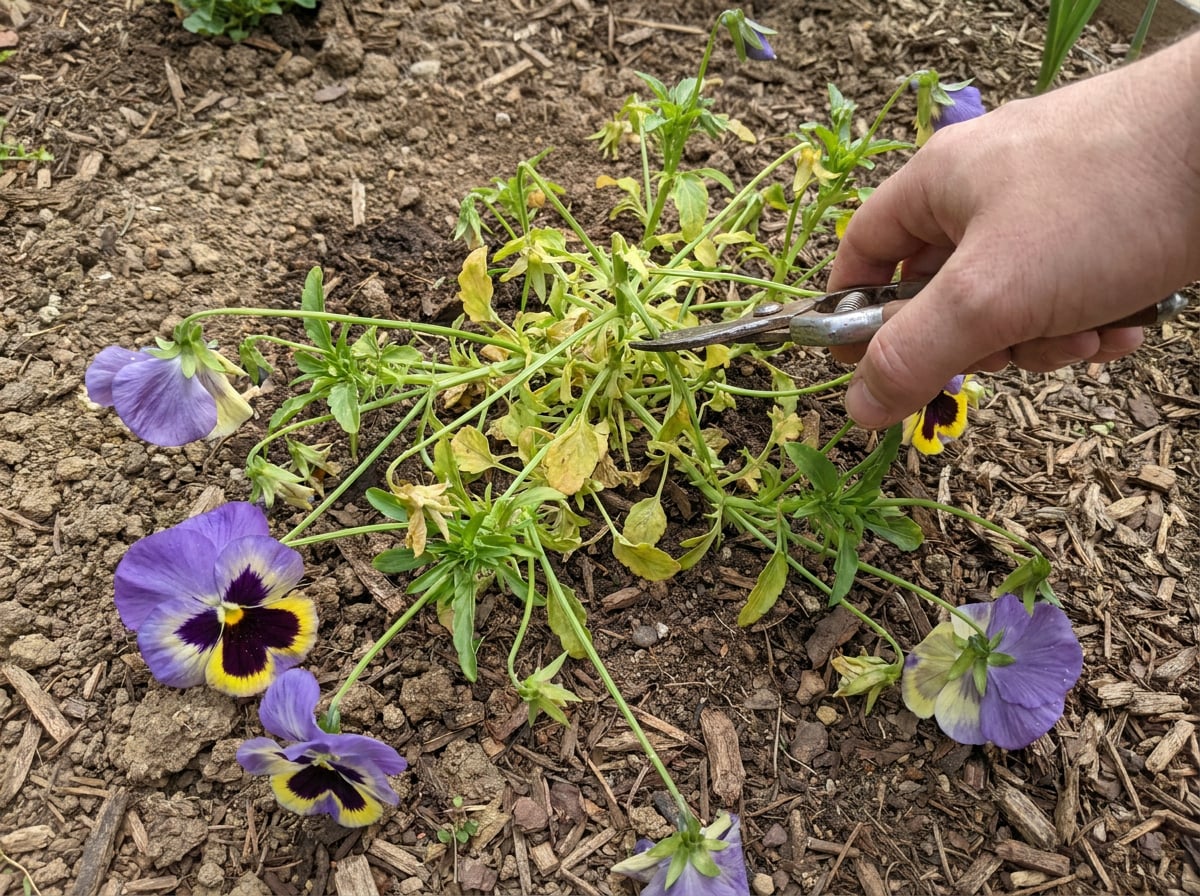
Legginess belongs at Milan Fashion Week, not in a terracotta pot. By late spring, pansies stretch into overgrown weeds because they blew their entire energy budget on long, weak stems.
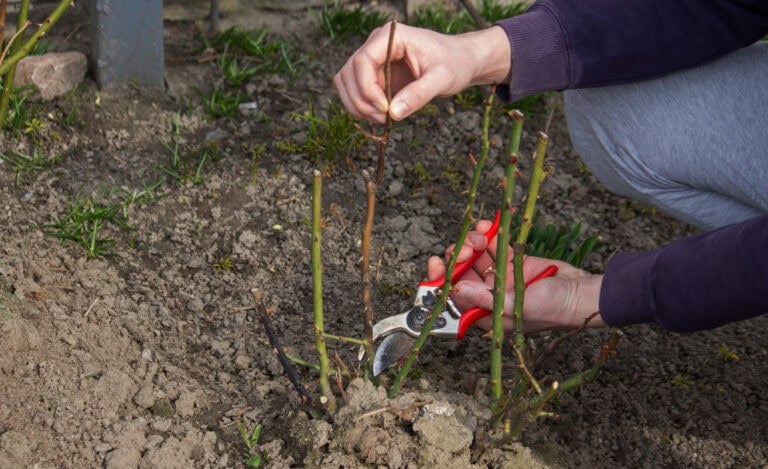
I grab clean shears and cut the plant back by about one-third, aiming just above a set of healthy leaves. If the weather stays cool enough, that trim usually wakes up fresh, bushier growth and gives the plant a shot at another round of blooms.
Tip 8: Summer Evac or Compost Pile?
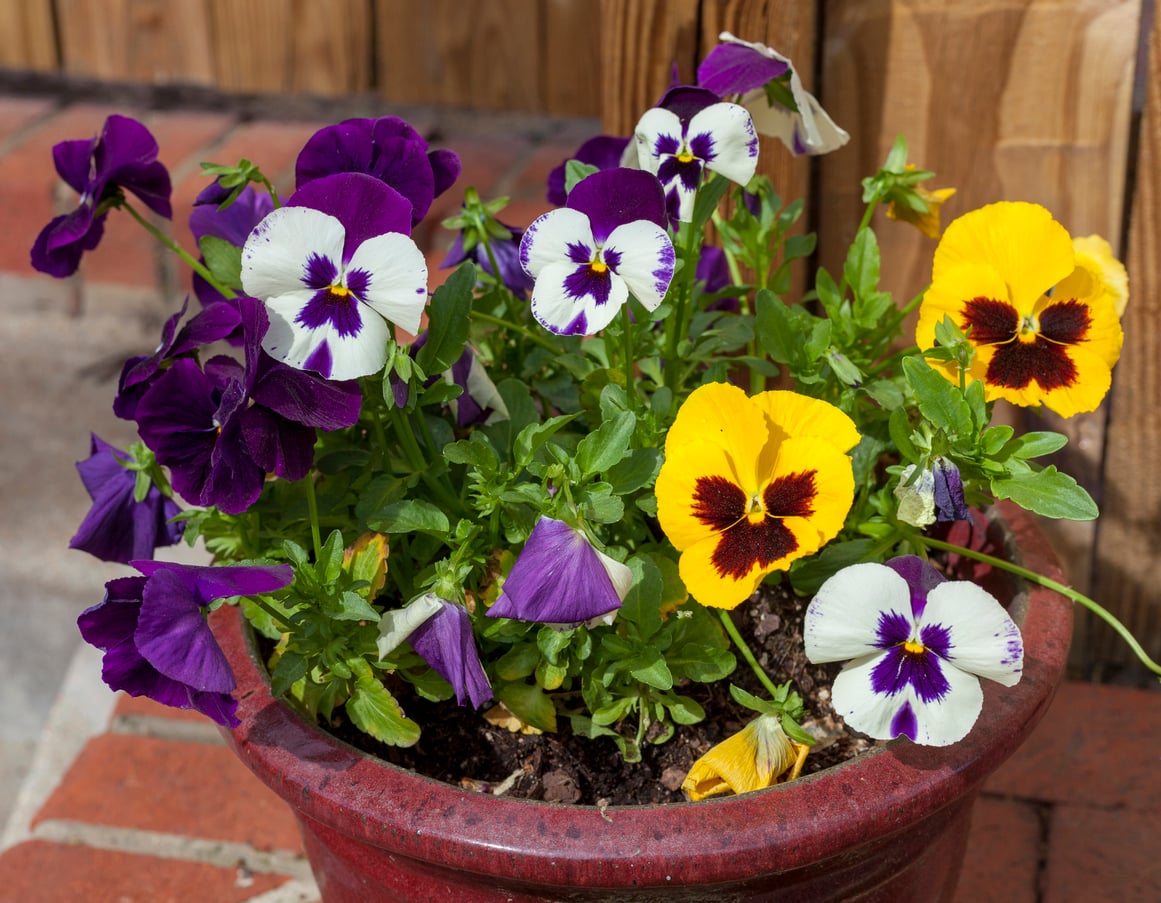
By mid-June, the clock the clock starts running out. Once July heat settles in, Southern pansies usually belong in the compost pile, not on life support.
In cooler northern gardens, potted pansies can survive in bright shade. They won’t bloom much, but keep them lightly moist and they may perk back up when September cools down.
In-ground pansies are harder to rescue, but not always dead meat. If they survive, trim them lightly for fresh fall growth.
Fall Pansy Care and Overwintering
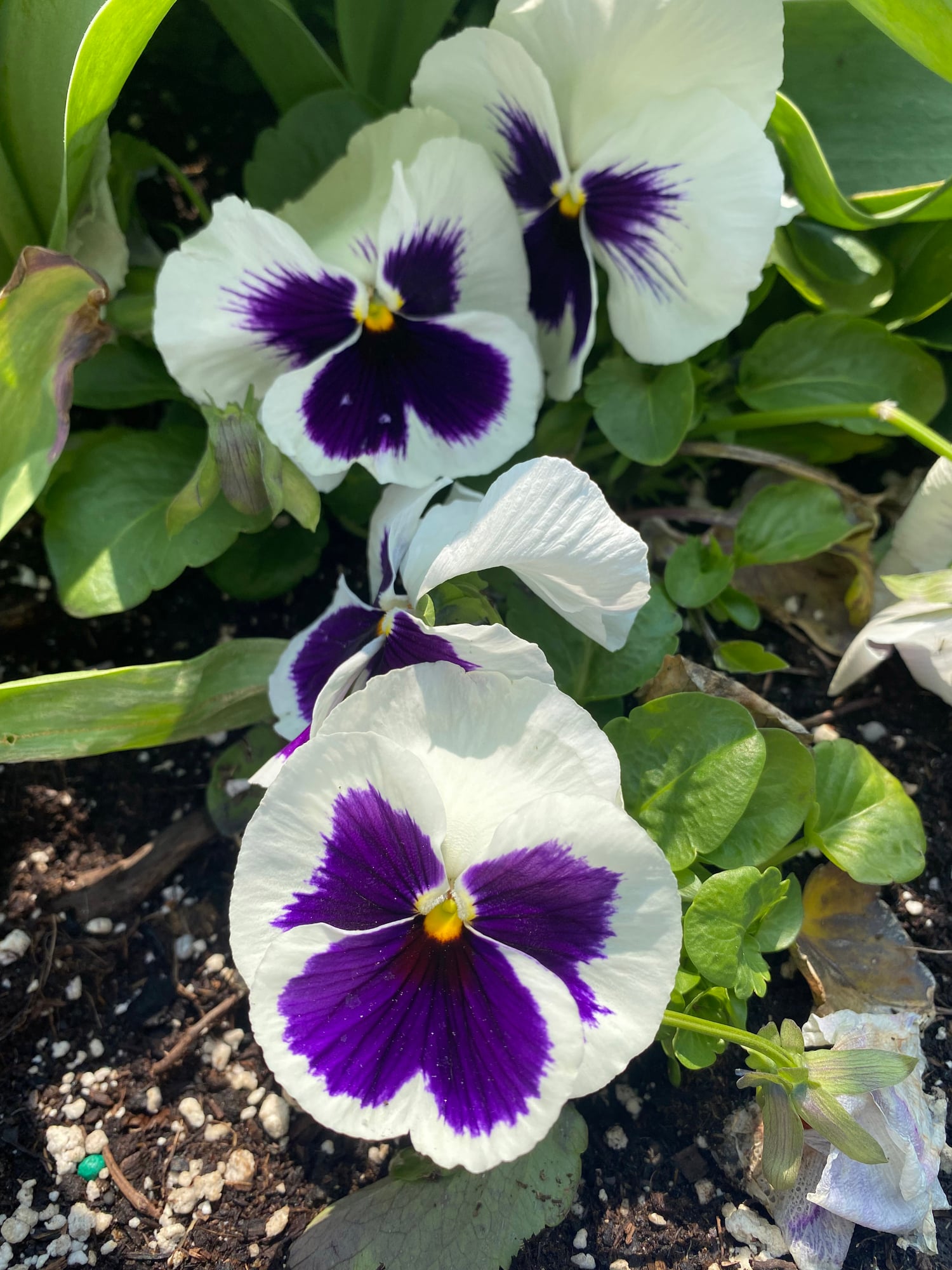
Once summer heat backs off, pansies finally get their second wind. For a strong fall bloom show and a better shot at winter survival, these last three moves matter.
If you’re refreshing porch pots for the cooler season, we also wrote a guide on fall flowers that love containers and cool weather.
Tip 9: Don’t Trust Crisp Fall Air

September mornings lie to you. Sure, the air feels crispbut the soil can still be holding summer heat, and pansies hate being planted into hot ground. Before I plant, I check the bed and water it well if it’s dry or warm.
After planting, keep the soil evenly moist for the next couple of weeks while the roots settle in. Not soaked, not swampy, just consistently damp enough that new pansies can anchor before the next warm spell.
Tip 10: Planting Against Frost Heave
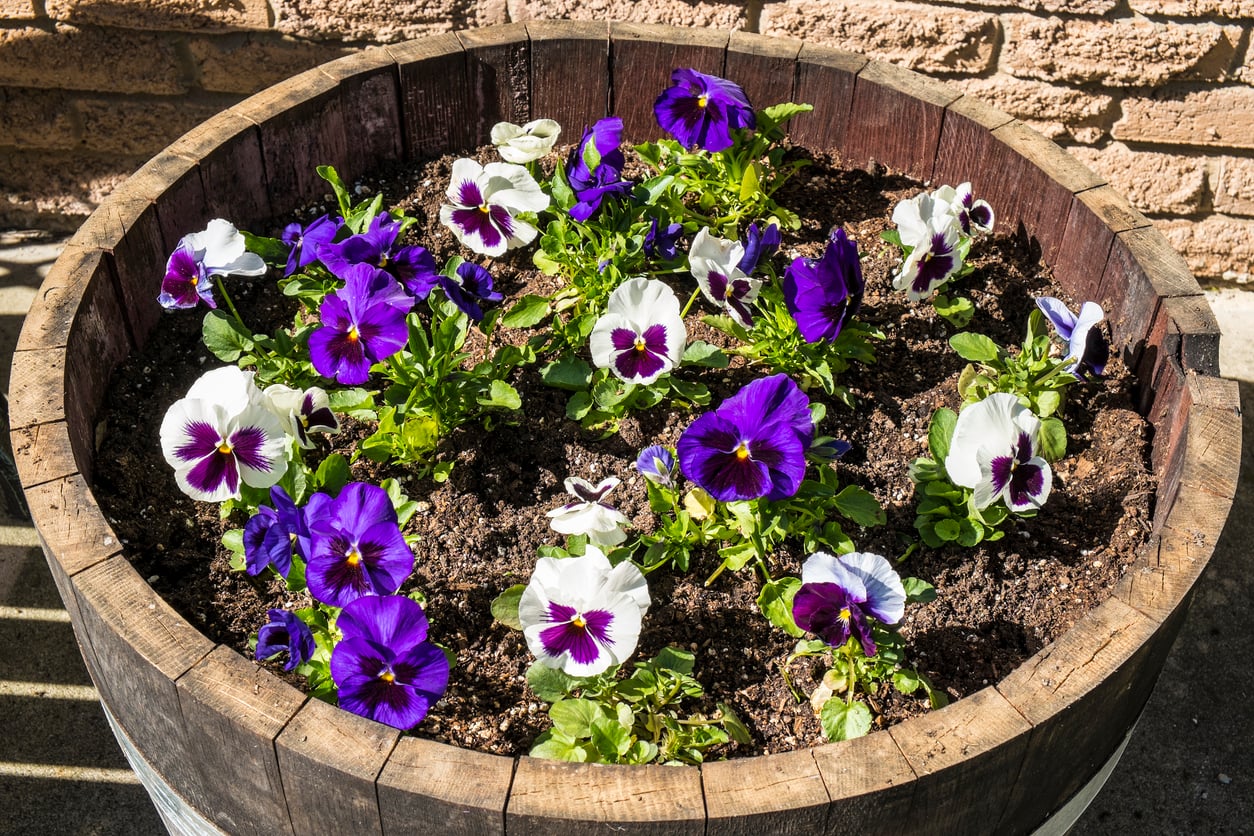
Forget the “just shove it in and go” approach. Fall pansies need firm planting but not a buried crown.
I set them at the same depth they were growing in the nursery pot, then press the soil snugly around the root ball so there aren’t loose air pockets.
That firm contact helps the roots anchor before cold weather and lowers the chance of frost heaving, where freezing and thawing slowly pops the plant out of the ground.
Tip 11: The Winter Blanket
Cold doesn’t bother pansies, but freezing wind can turn them to kindling. Once the ground starts freezing, I cover them with 2 to 4 inches of pine straw or loose straw, tucking it over the plants without packing it down.
This isn’t about keeping them warm. The blanket helps block icy winds from sucking every drop of moisture while the roots are locked frozen. Pull it back during mild spells if the plants are smothered, then remove it for good once spring growth starts.
If you’re winter-prepping the rest of the garden too, we explain which plants should be mulched before winter and which ones really shouldn’t be buried under a soggy blanket.
Growing Pain-sies Are Worth It
There is nothing like looking out at a bleak, freezing sleet storm and seeing bright pansy petals holding their ground. They won’t grow through a blizzard, but the existing blooms basically freeze-dry on the stem. That sight alone makes the muddy fall prep worth every second and broken nail.




How did o you feed mini orchids?
Hi Charlotte 🙂 For mini orchids, I’d feed very lightly with a diluted orchid fertilizer, usually about 1/4 strength, and only when the plant is actively growing. I’d skip feeding when it’s stressed, newly repotted, or sitting too wet, because the roots are more sensitive on smaller orchids.