Healthy winter growth? It translates to “surviving until spring finally deigns to show up.” Snake plants have a reputation for being nearly impossible to kill, but winter has a way of testing that theory.
And surprisingly, it’s often our well-meaning care that gets them into trouble. A few small adjustments in November can save you a lot of grief come spring.
Task 1: Water Only When Necessary
From November through February, life gets miserable for those of us in the Northern Hemisphere. Daylight vanishes early, and your trusty heater turns your home into an arid cave.
But don’t let that dry air fool you. Your snake plant uses less water as growth slows, and its soil can stay damp for weeks.
Watering by the calendar is a fine way to leave roots sitting in soggy, airless soil. Before reaching for the watering can, get a bit physical…
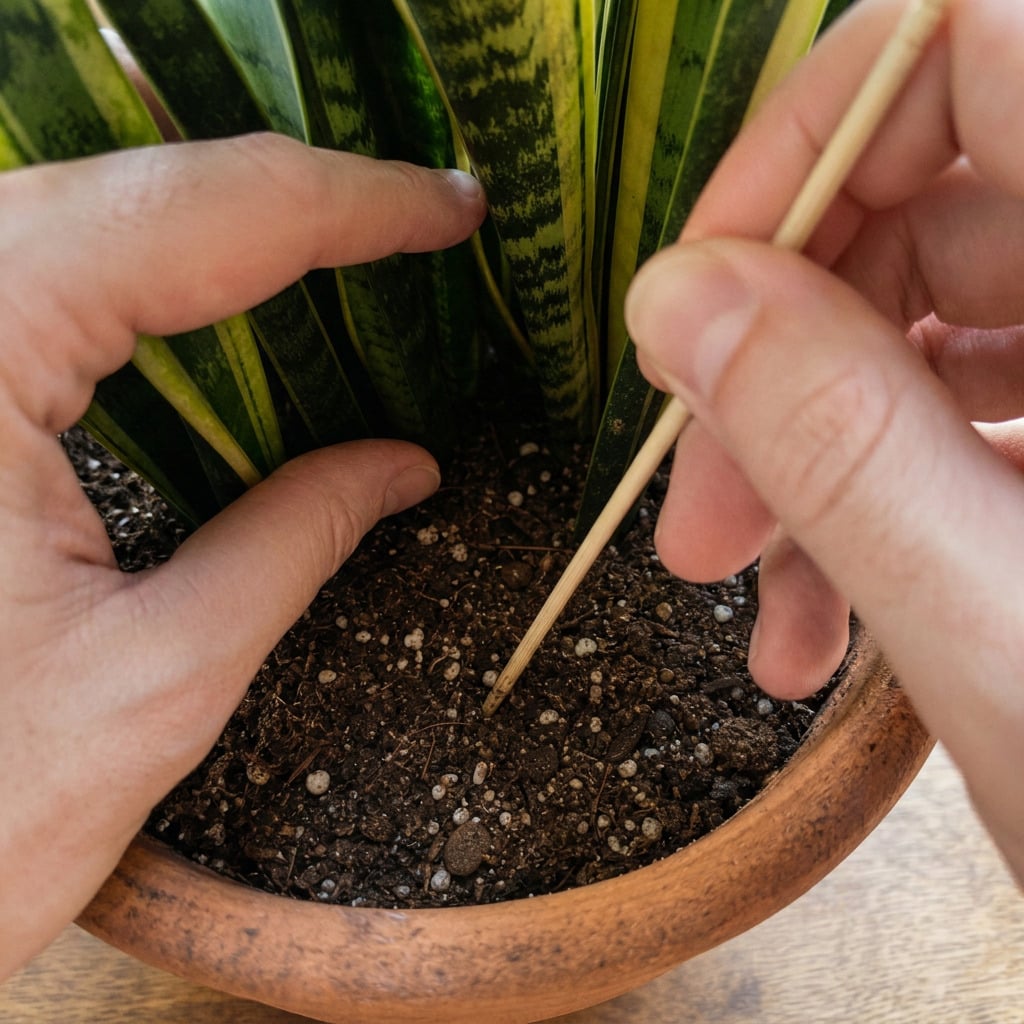
What to do instead: If sticking your finger three inches into the soil offends your sensibilities, try a wooden chopstick. Push it toward the bottom, wait a few seconds, and pull it out. Damp soil clinging to the wood? No drinks allowed until the mix dries completely!
Task 2: Move Away From Freezing Drafts

Windowsills in November have their own microclimate. Your thermostat might read a cozy 70°F, but a snake plant pressed against cold glass strongly disagrees.
These tropical plants aren’t built for chilly drafts. Temperatures below about 50°F can damage their fleshy leaves, leaving soft, water-soaked patches that eventually turn dark and mushy. Hot air blasting from heating vents can stress them, too.
What to do instead: Location, location. Pull the container back from cold glass and high-traffic entryways, making sure the leaves don’t touch the window. Find a bright spot where temperatures stay fairly steady, ideally around 65-80°F. Your snake plant wants daylight, not a temperature roller coaster.
If your snake plant’s leaves have started curling instead, we also wrote a guide on what causes snake plant leaves to curl and how to fix the problem.
Task 3: Reassess Light Levels
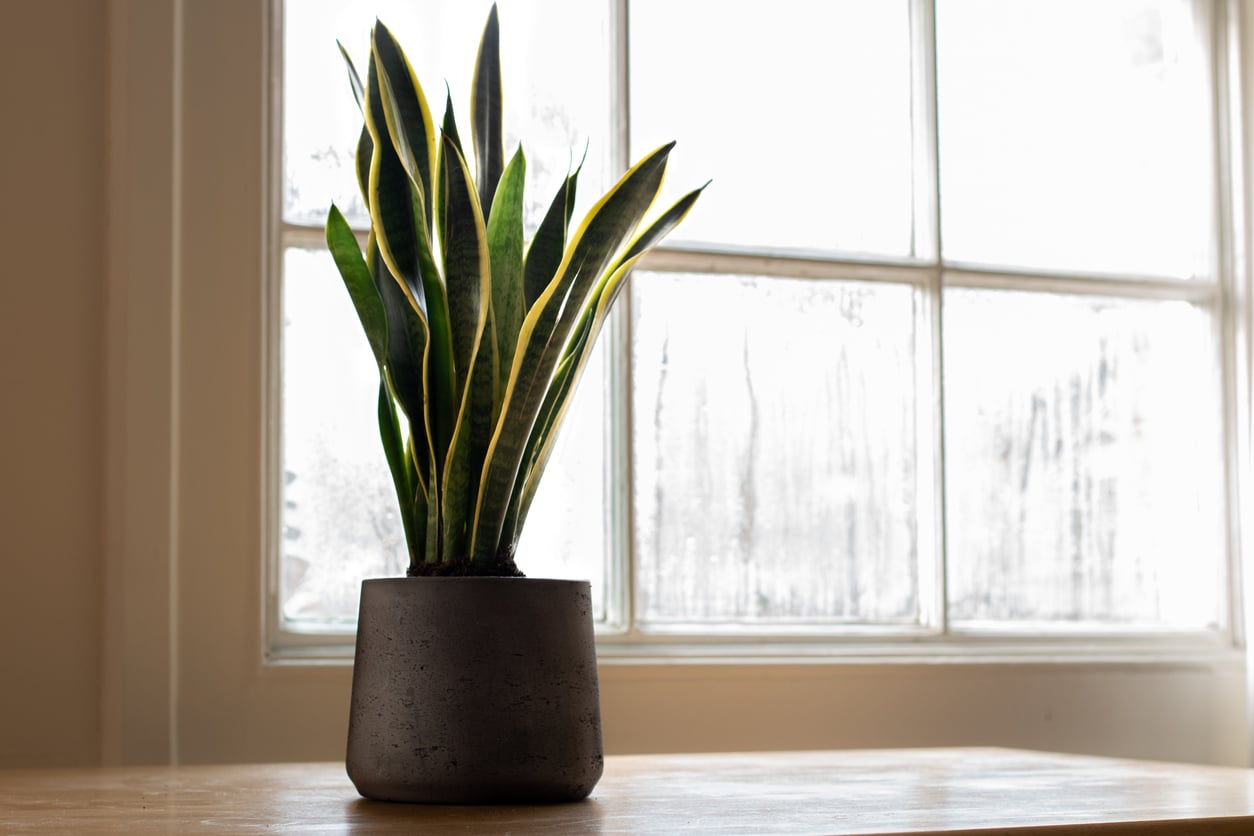
What counts as bright indirect sunlight in July becomes twilight by late fall. Snake plants will tolerate it, but don’t mistake tolerance for growth.
Plant metabolism naturally slows with fewer daylight hours. Growth may not stop completely, but your snake plant has considerably less light to work with until spring.
Dusty leaves don’t help either. Grime blocks some of that precious light, so give the leaves a quick wipe with a soft, slightly damp cloth.
What to do instead: Relocate your pot closer to south- or west-facing windows that catch the best daylight. You could clean the window glass, too, just saying…
Task 4: Pause Routine Fertilizer
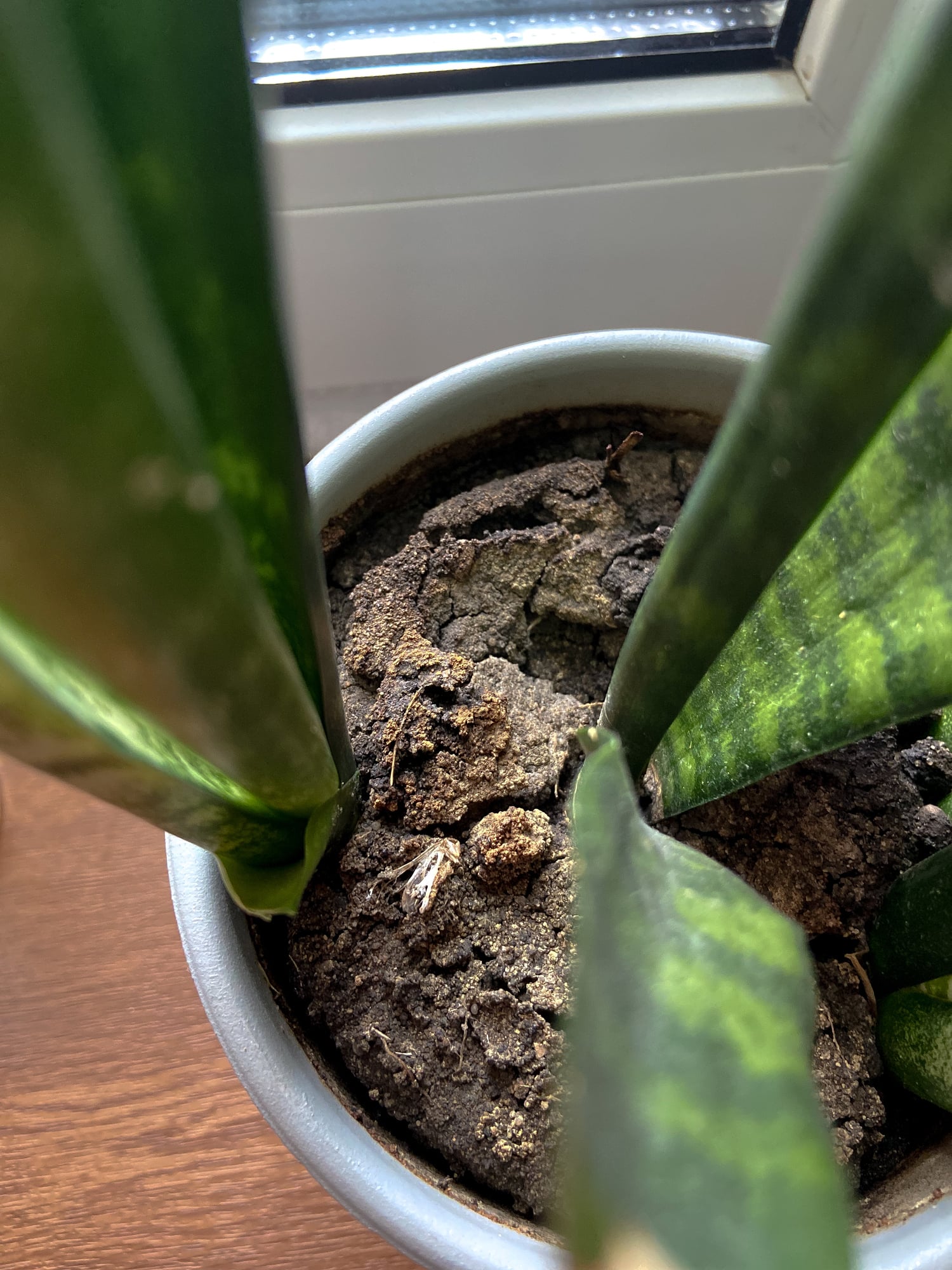
Fertilizer supplies nutrients that support healthy growth. And we just established that November’s weaker light slows your snake plant’s appetite considerably.
Keep pouring liquid fertilizer into soil when the plant barely needs it, and unused mineral salts can build up over time. In excessive concentrations, those salts can damage roots and leave your snake plant with scorched leaf tips.
What to do instead: The best thing you can do for your Dracaena trifasciata? Put the plant food away until active growth returns in spring. Neither you nor your snake plant needs an extra helping just to sit in a room and wait out the winter.
And when spring finally rolls around, we have a complete guide on how to fertilize snake plants without stressing their roots.
Task 5: Check Drainage and Trapped Water
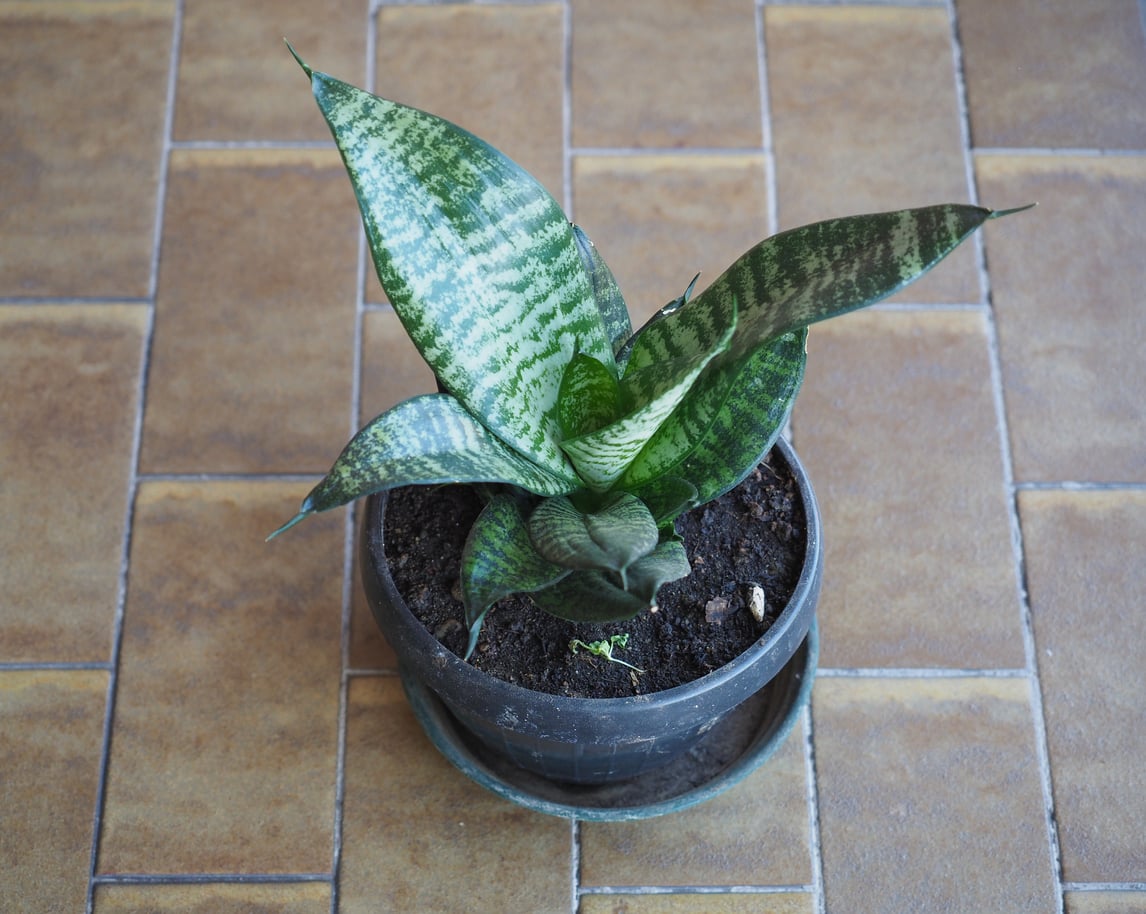
Snake plants don’t appreciate wet feet, especially in November, when they use less water and damp soil takes longer to dry. Water left in the saucer can soak right back into the pot, keeping roots wetter than they should be.
Sometimes, the water can’t escape properly in the first place. If it pools on the soil’s surface or drains unusually slowly, sneak a peek underneath. Compacted potting mix or roots may be blocking the drainage holes.
What to do instead: Wait about ten minutes after watering, then empty any water in the saucer. If drainage seems blocked, gently clear loose debris from the holes with a wooden chopstick, without damaging the roots.
If water still struggles to drain, the potting mix may need replacing. And if the pot sits flush against its saucer, elevate it using small pot feet or rubber bumpers. That gives excess water somewhere to escape. Make both your biology and physics teachers proud.
Unforgivable Snake Plant Mistakes in November

Even if you nail the basics, winter indoors brings out creative ways to kill a snake plant.
Keeping your snake plant healthy through winter is all about endurance. It isn’t asking to be completely ignored until April, just spared the unnecessary fuss. Check on it occasionally, leave it alone otherwise, and it’ll repay you by staying alive.
And if you’re hoping for new growth once spring arrives, we also wrote a guide on how to encourage your snake plant to produce more pups.