
If you’re staring at your hydrangeas wondering what on earth belongs next to them, the answer starts with where they’re growing!
As a famous gardener, William Shakespeare once said: Alas, poor Hydrangea, I knew it before the cruel mildew made a spectacle of its leaves. To plant or not to plant companions nearby, that is only part of the question.
But the real question is whether you’ll frame those big, glorious blooms with some actual intent, or just cram random greenery around them and hope the yard sorts itself out.
Hydrangeas by the House
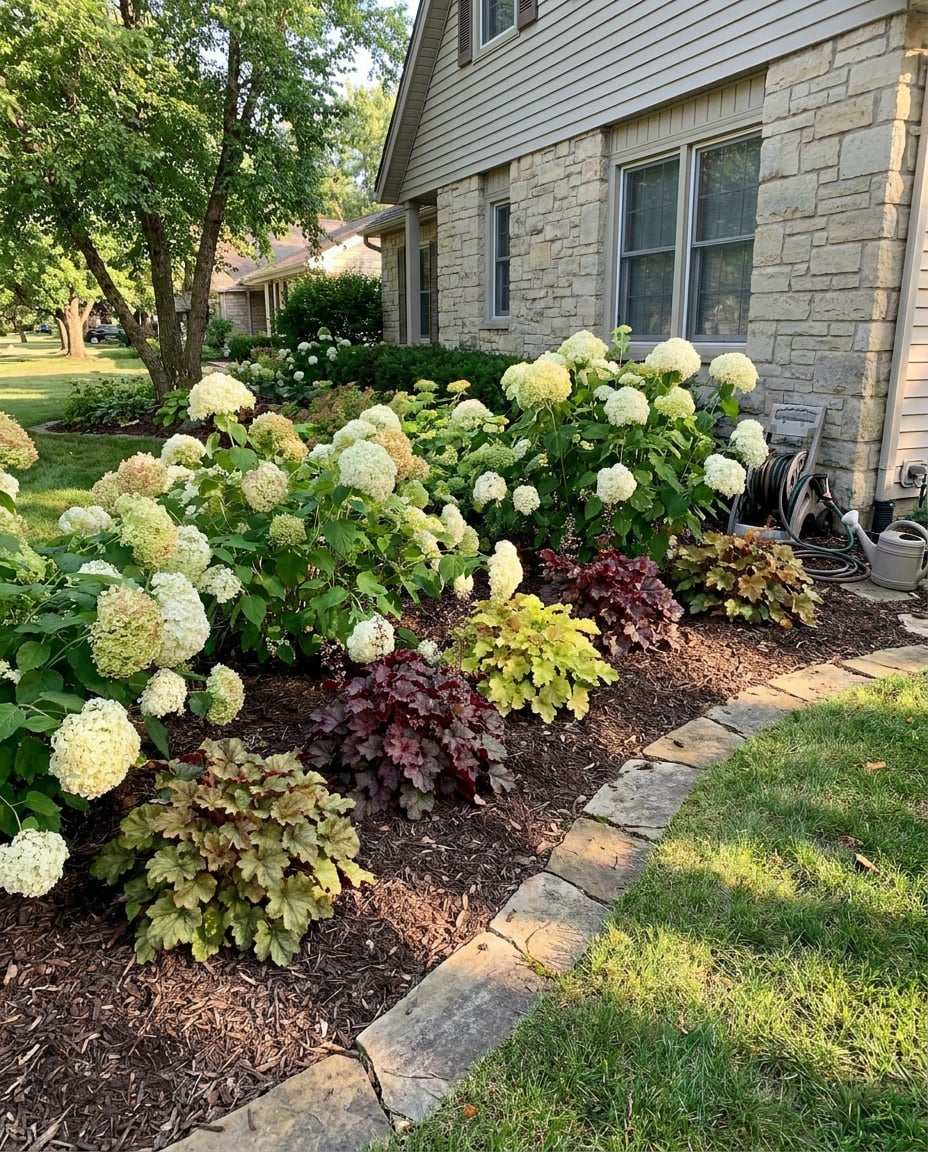
Shoving massive blooming shrubs right up against your siding is how you create a damp little mildew lounge. Hydrangeas need airflow, especially near shady foundation beds, so pair them with companions that won’t turn the whole thing into a sweaty green wall.
If your hydrangeas are planted in the right spot but still refuse to bloom, we also have a guide on the mistakes that keep hydrangeas from flowering and how to fix them.
Boxwoods (USDA Zones 5 to 9)
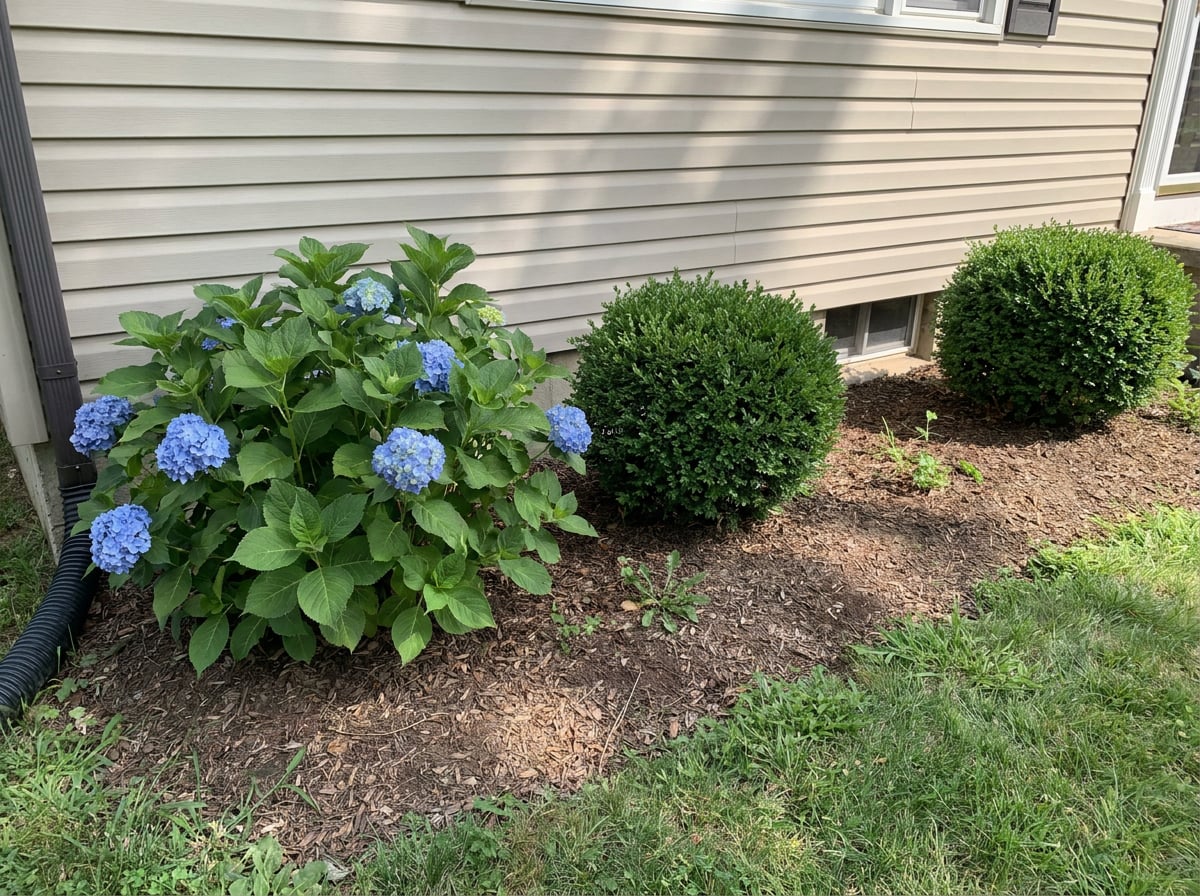
Do you think jamming a dense evergreen right into a hydrangea’s ribs looks good? Nope. That thick boxwood foliage traps humidity like a cheap sauna. Give them about three feet of breathing room, and keep the base open with mulch instead of stuffing every bare inch with more plants.
Best hydrangea match: bigleaf, smooth, oakleaf, or panicle hydrangeas, as long as both plants have enough space and airflow.
Hostas (USDA Zones 3 to 9)
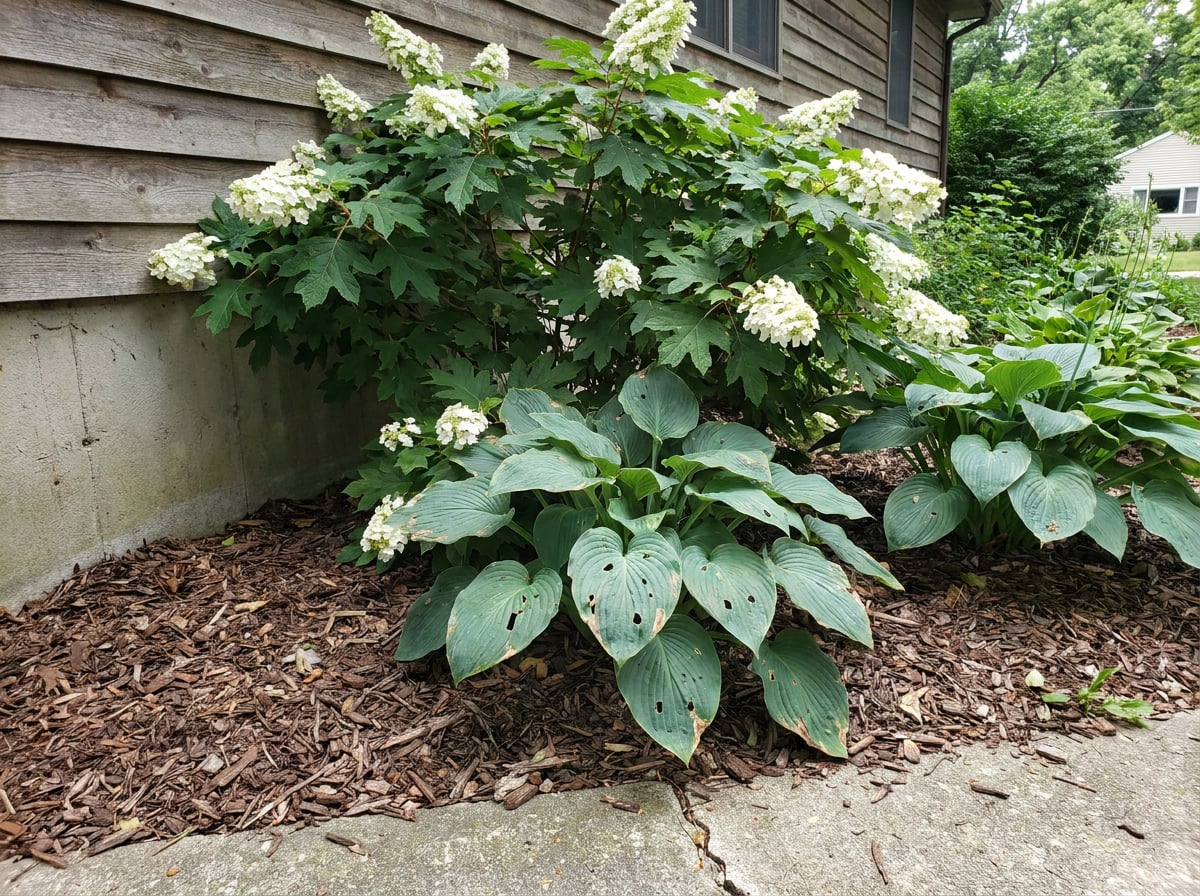
Hostas thrive in the bright shade cast by your roofline and the sprawling hydrangea canopy. They look like prehistoric shields, which explains why they can’t fend off even slugs.
Pick thick-leafed varieties like ‘Halcyon,’ and set them 12 to 24 inches out from the woody stems so the leaves can spread without crowding the shrub. Otherwise, your front porch hosta will be gone by August.
Best hydrangea match: bigleaf, oakleaf, mountain, or smooth hydrangeas in part shade or bright shade.
If slugs treat your hostas like a midnight buffet, we wrote a guide on natural ways to keep slugs out of the garden.
Heuchera (USDA Zones 4 to 9)
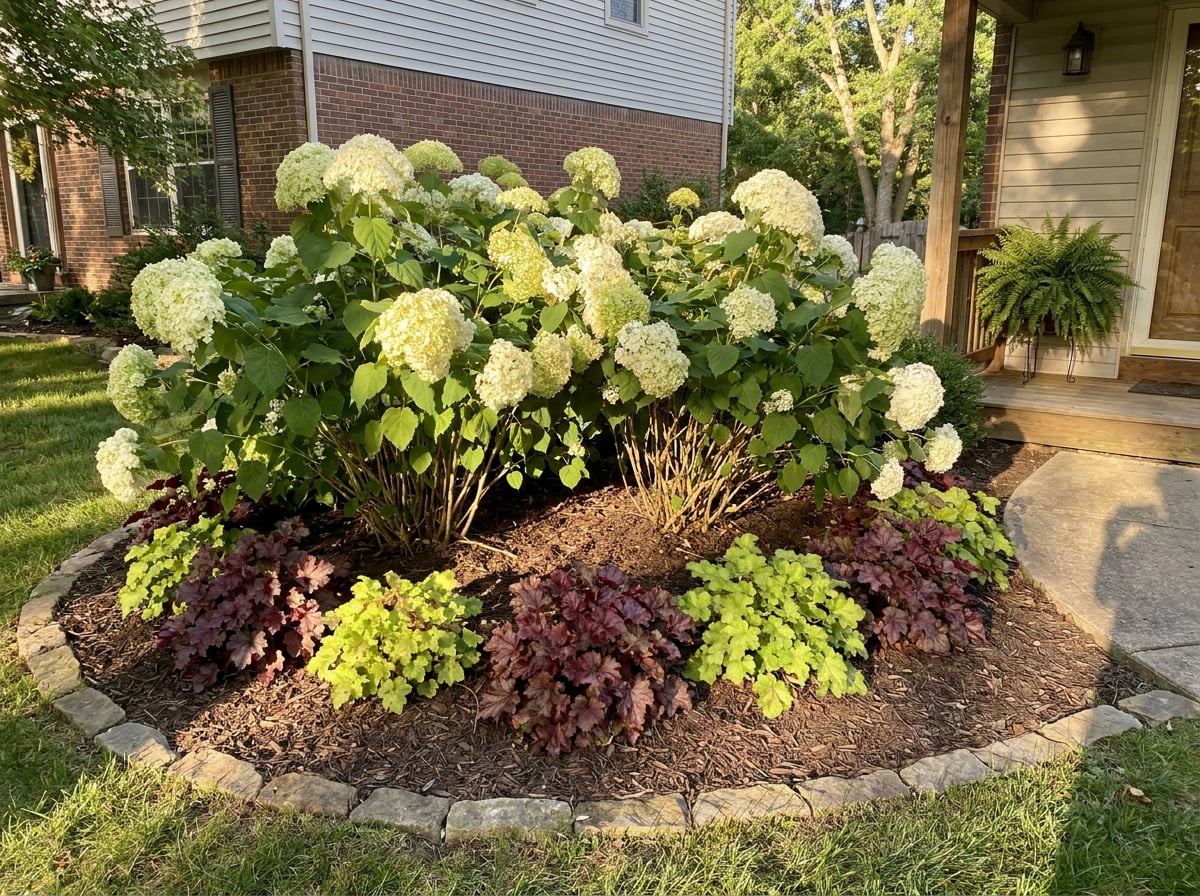
Heuchera solves the color problem at the base of the bed without stealing all the root space your hungry hydrangeas want for themselves. Use the burgundy or lime ones to hide the woody ankles of older shrubs.
Keep them 12 to 18 inches forward so the crowns stay visible and air can still move.
Best hydrangea match: bigleaf, oakleaf, mountain, or smooth hydrangeas in part shade.
Small Evergreens (USDA Zones vary by type
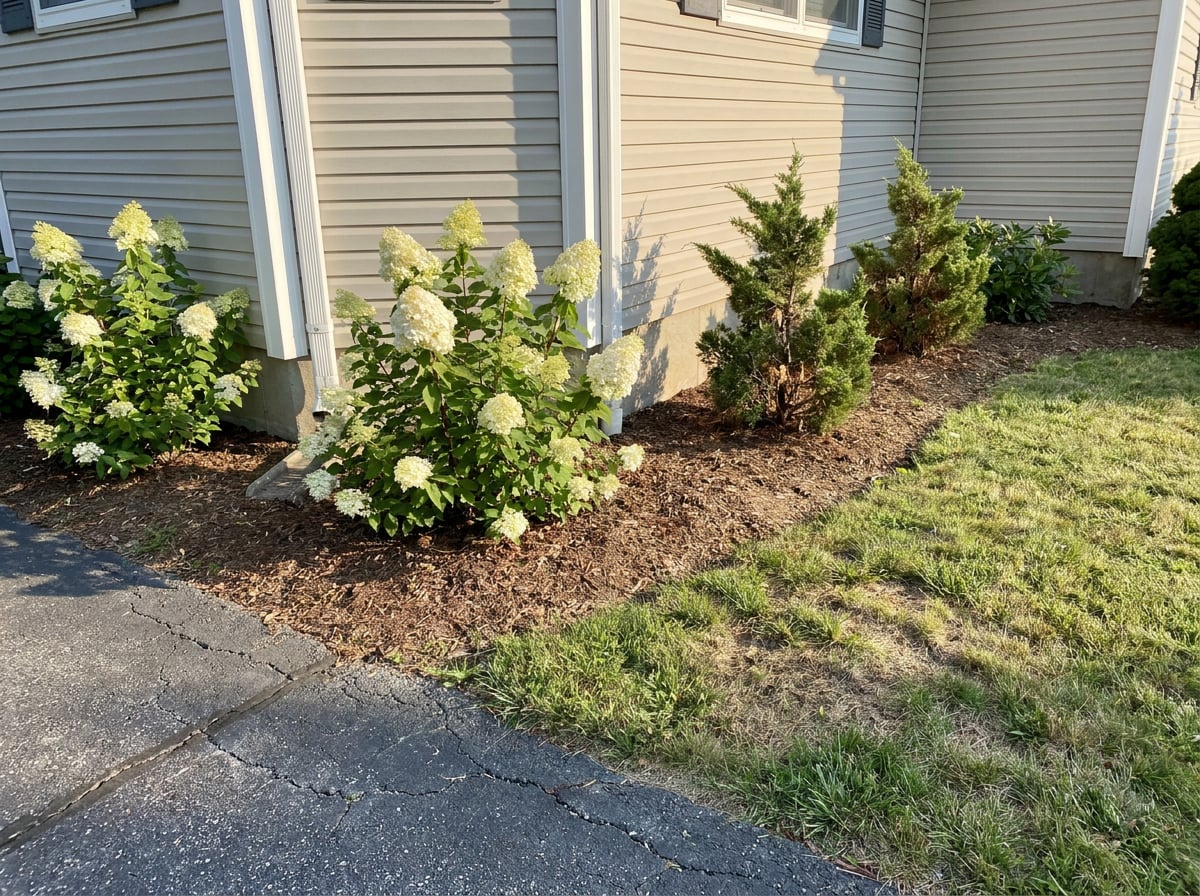
Why look at a depressing collection of gray sticks for half a year? Small conifers anchor the winter landscape when the hydrangeas give up the ghost. They hold down the fort when everything else looks dead and dramatic. Give them at least 2 to 3 feet of space, or more if the evergreen gets wide.
Best hydrangea match: panicle hydrangeas with sun-loving evergreens, or bigleaf and oakleaf hydrangeas with shade-tolerant evergreens.
If winter structure is exactly what your yard is missing, we have a full guide on small evergreen shrubs that keep the garden looking alive year-round.
Hydrangeas Along Walkways
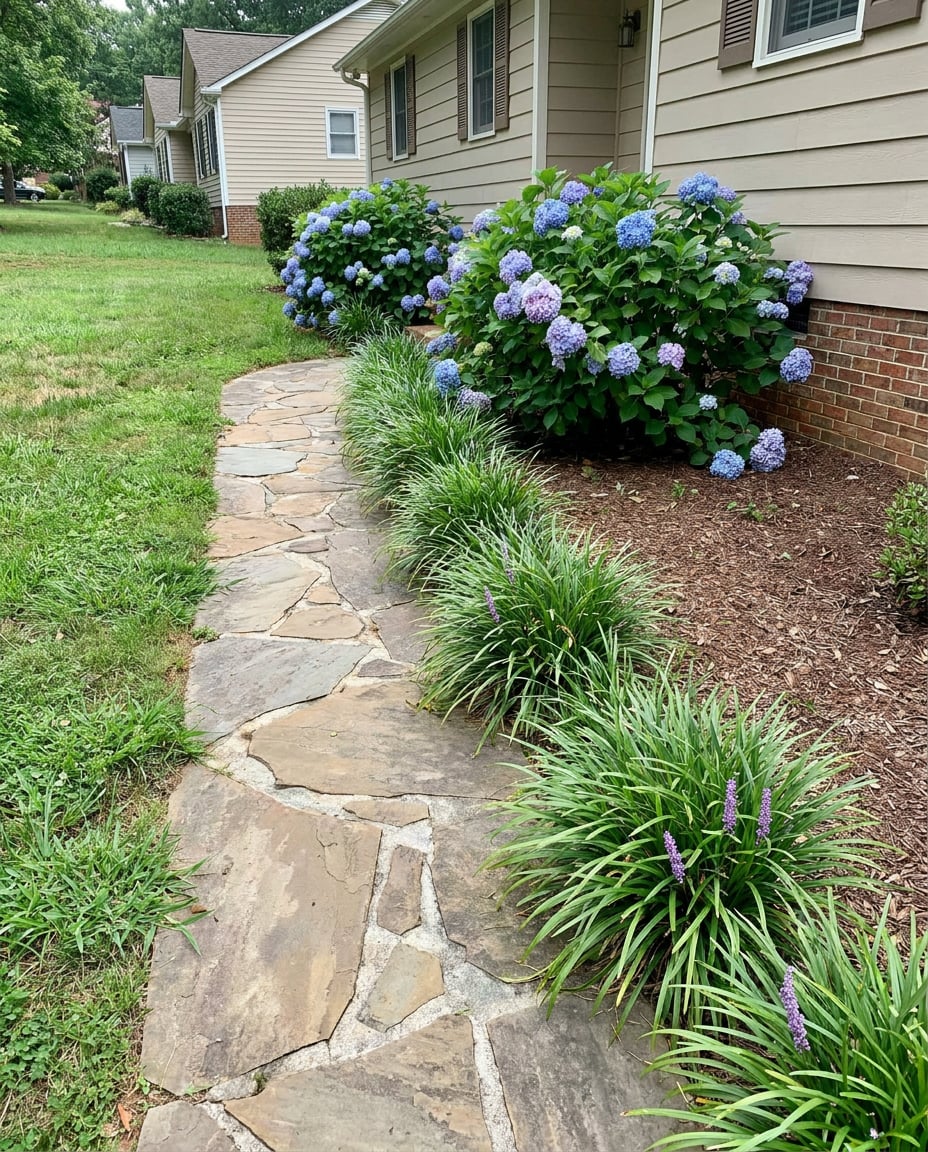
Walkways require an iron boundary. Hydrangeas will gladly swallow a sidewalk whole if you plant them too close, so give the shrub enough room to reach its mature width without body-checking every ankle that passes by. At least their neighbors need to be disciplined.
Dwarf Boxwoods (USDA Zones 5 to 9)
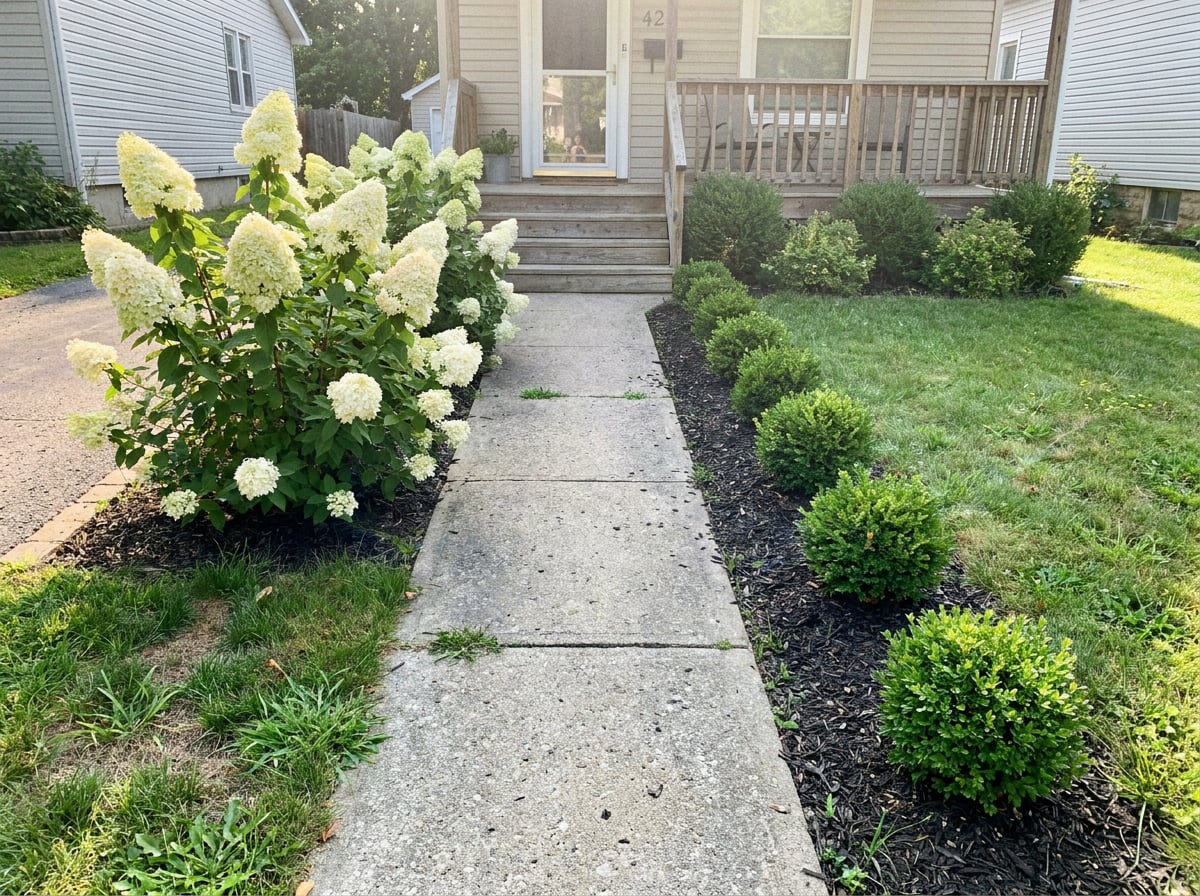
They actually deliver on the promise of clean edges, which is a miracle for a walkway border. Give them a simple drip line or slow, steady watering at the base, and they repay you by keeping the entire entry looking sharp and organized year-round.
Keep them about 18 to 24 inches from the hydrangea’s outer branches so the plants can touch visually without wrestling for air.
Best hydrangea match: panicle, bigleaf, and smooth hydrangeas along walkways or front borders.
Liriope (USDA Zones 5 to 10)
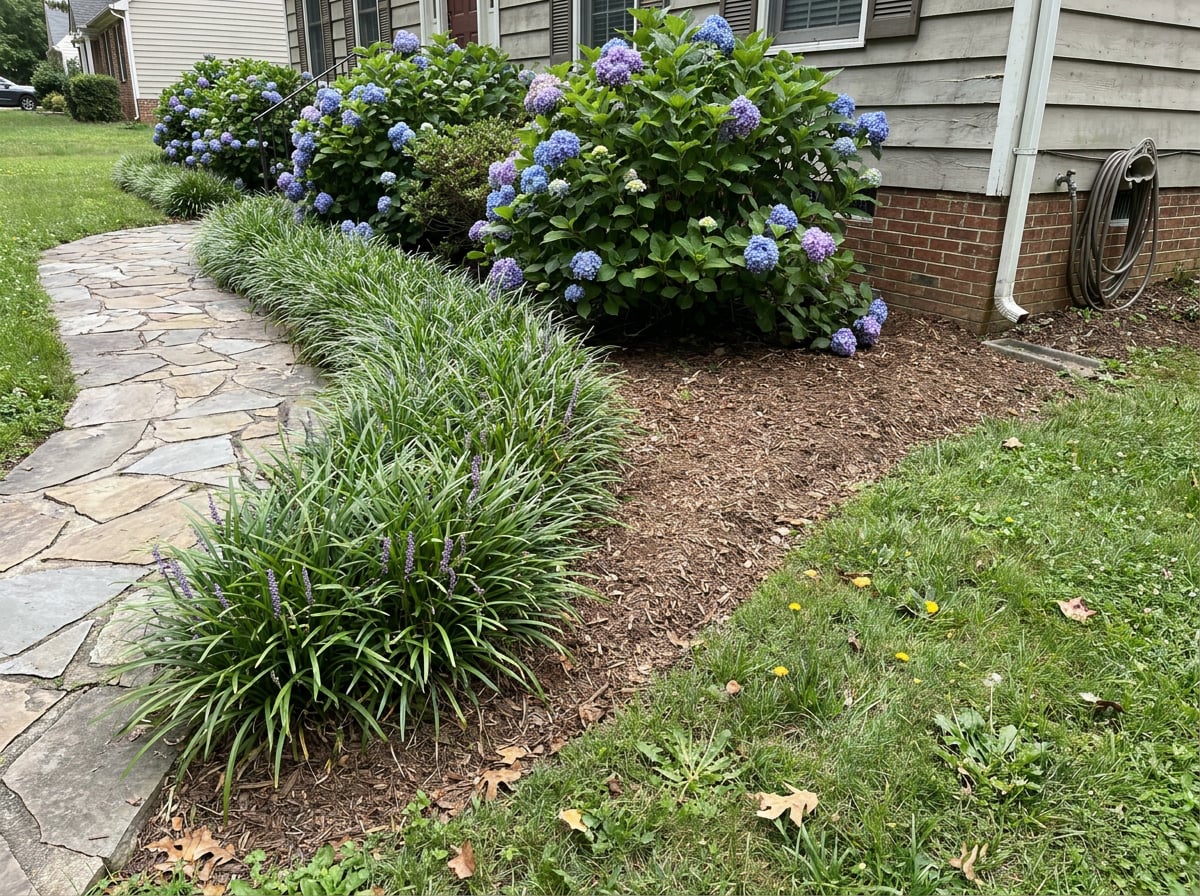
Liriope handles stray bicycle tires and ignores dogs. Drop it down like a heavy-duty rug along the pavement to frame the hydrangeas’ chaotic summer growth. Keep it 12 to 18 inches forward so it fills the edge without creeping into the shrub’s crown.
Best hydrangea match: bigleaf, oakleaf, smooth, or panicle hydrangeas along borders and walkways. Clumping varieties are best if you want a neater edge.
Catmint (USDA Zones 3 to 8)
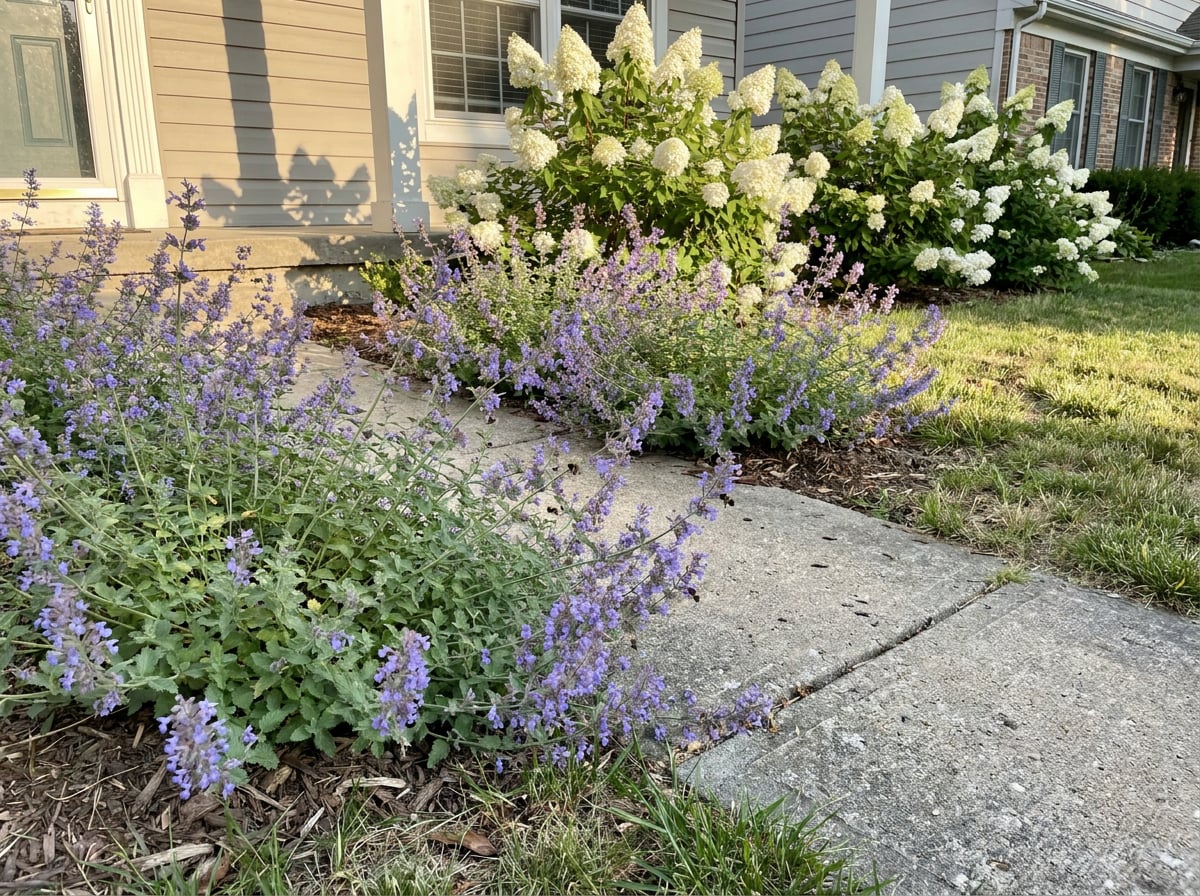
Catmint brings a specific manic energy to the sunny spots where the concrete meets the lawn. It spills over the edges, and bees go crazy for it. Cut it back hard after the first bloom so it doesn’t claim your county.
Set it 18 to 24 inches out so it can flop politely instead of collapsing into the shrub like a purple drama queen.
Best hydrangea match: panicle hydrangeas, since catmint prefers more sun.
If you want more of that pollinator chaos, we also put together a guide on flowers that attract bees to the garden.
Low Ornamental Grasses (USDA Zones vary by type)
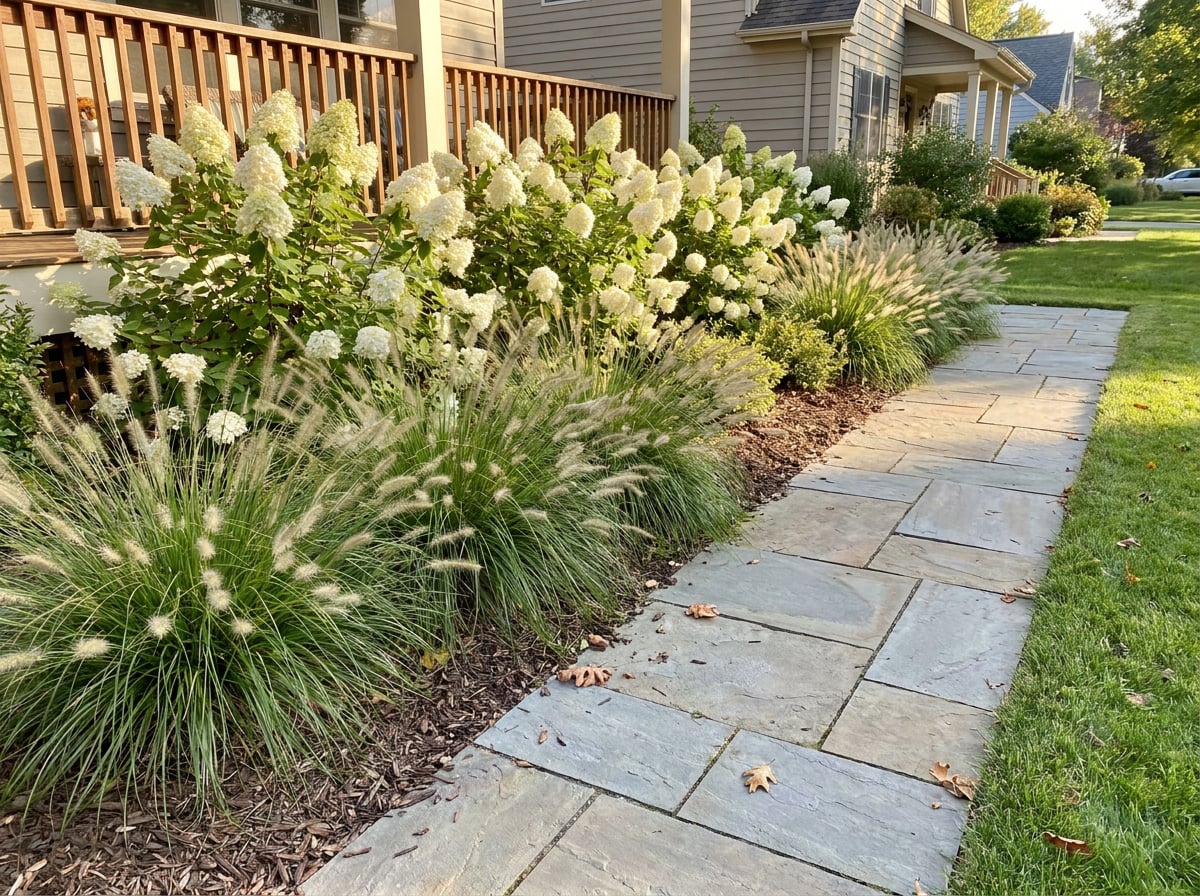
Low grasses add the movement you need to break up the heavy density of all those shrubs but don’t bury them in hydrangea shade and expect miracles! Set them 18 to 24 inches out from the shrub so the grass can fan without turning the sidewalk into a prairie ambush.
Best hydrangea match: panicle hydrangeas in sunny spots, or sunnier edges of mixed hydrangea beds.
Hydrangeas Along a Fence or Property Line
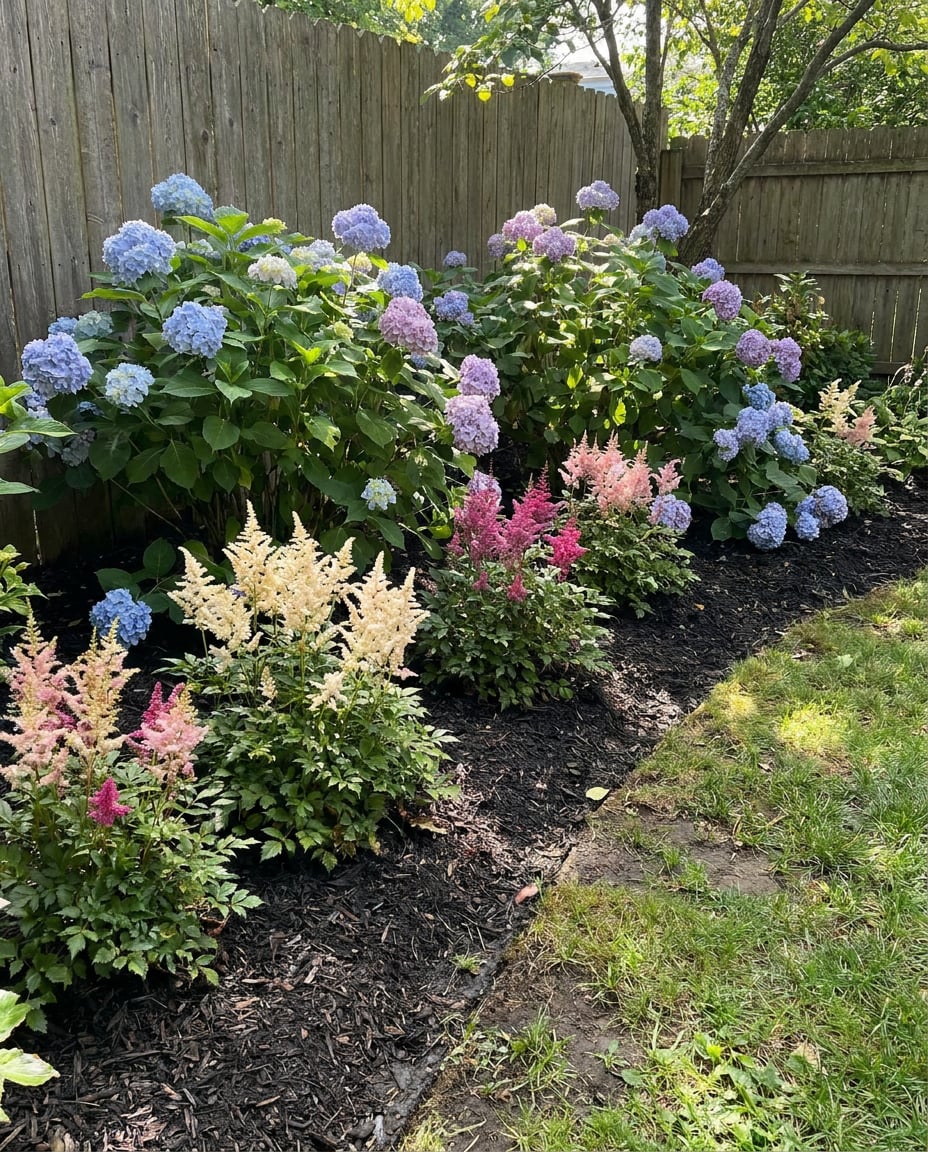
Property lines are the frontiers of domestic warfare. Use hydrangeas as heavy artillery to blur the boundaries, then layer them to keep the neighbors out of your business.
If privacy is the real mission here, we also explain non-invasive privacy shrubs that grow fast without turning into a neighborhood problem.
Ornamental Grasses (USDA Zones vary by type)
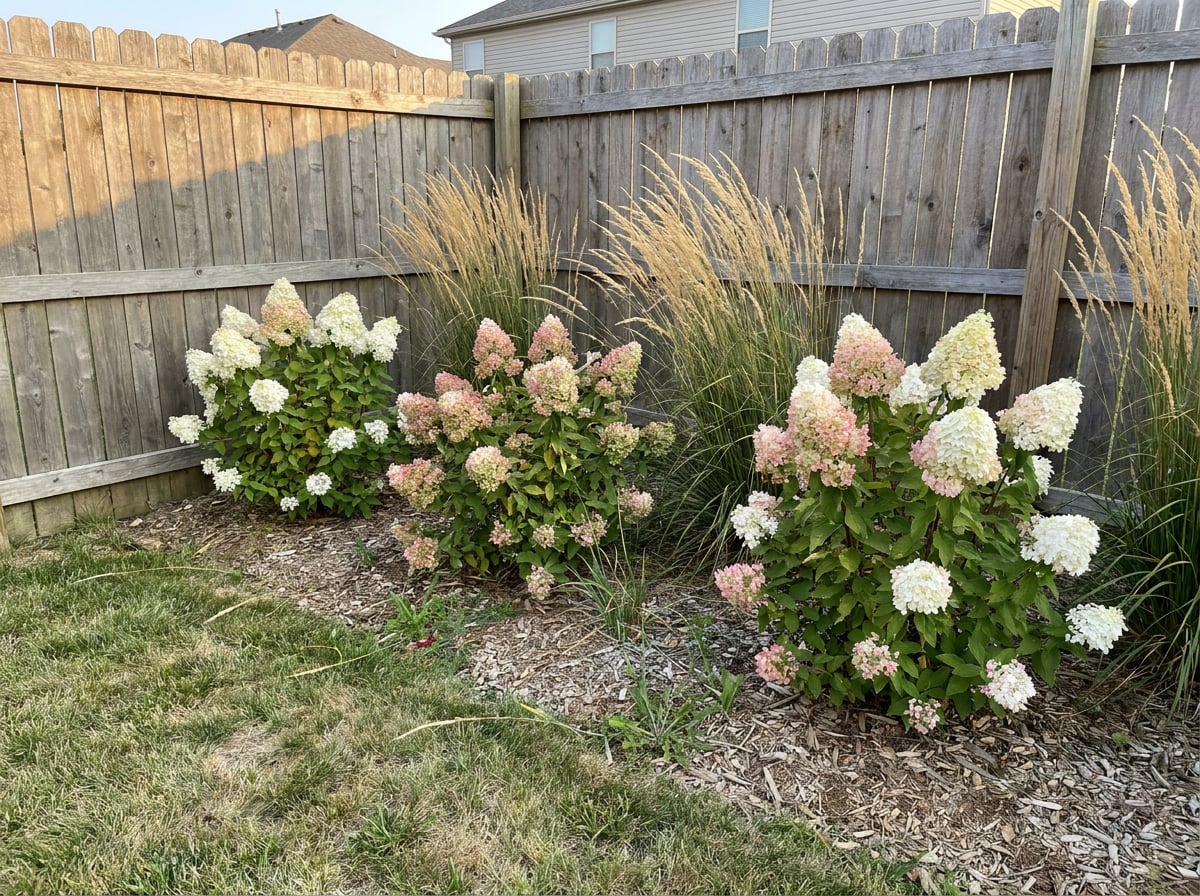
Tall feather reed grass adds sweeping motion behind your shrubs and takes the hard edge off a fence line. It stands tall, grows fast, and stays upright through the winter without flopping. It helpfully drowns out the neighbor’s terrible music with a soothing rustle.
Plant it about 2 to 3 feet behind the hydrangeas so the grass rises as a backdrop instead of tangling into the blooms.
Best hydrangea match: panicle hydrangeas along fences, property lines, and sunny back borders.
Hostas (USDA Zones 3 to 9)
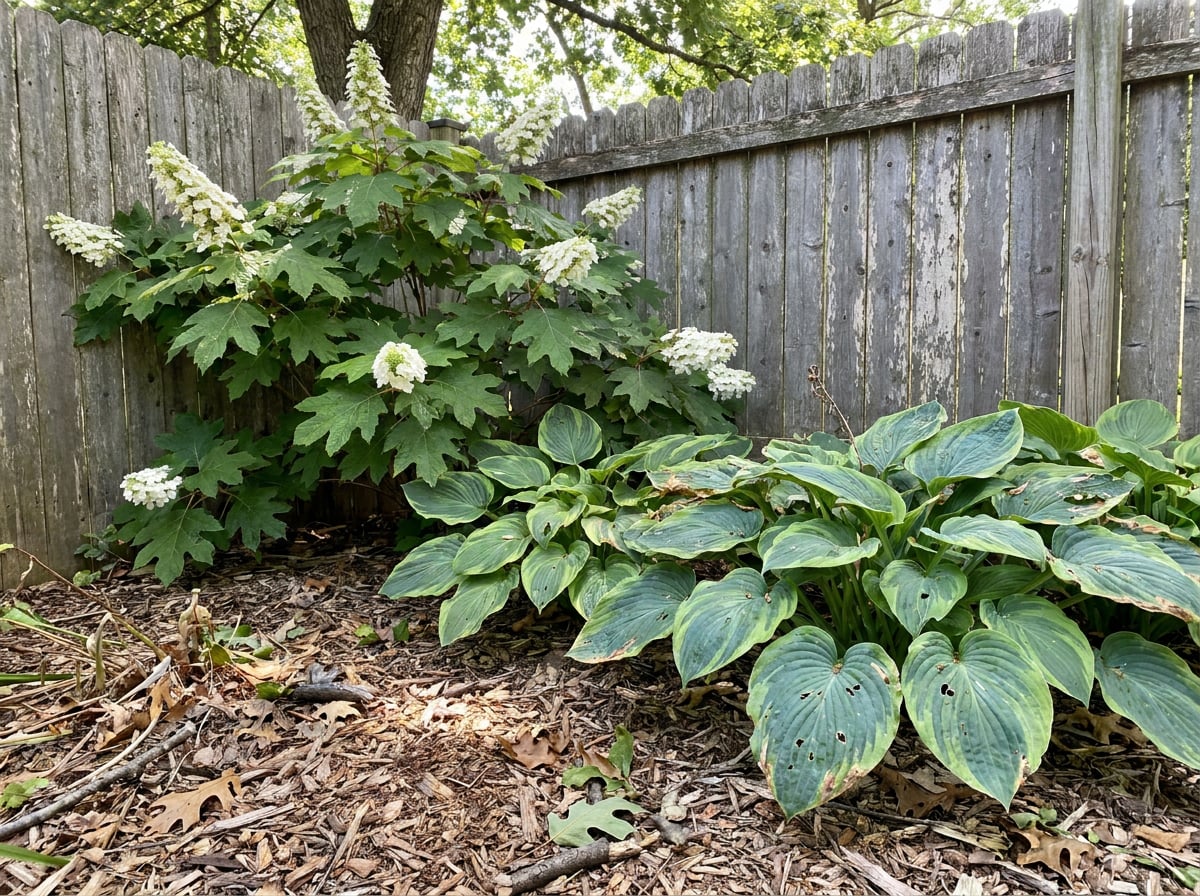
Deploy massive varieties like ‘Empress Wu’ in the dark corners where the fence cuts off the afternoon sun. They occupy space like an aggressive landlord and help shade out weeds once they bulk up.
Plant them about 18 to 30 inches from the hydrangea, depending on the hosta’s mature size, so those giant leaves can spread without mugging the shrub.
Best hydrangea match: bigleaf, oakleaf, mountain, or smooth hydrangeas in part shade or bright shade.
Astilbe (USDA Zones 3 to 8)
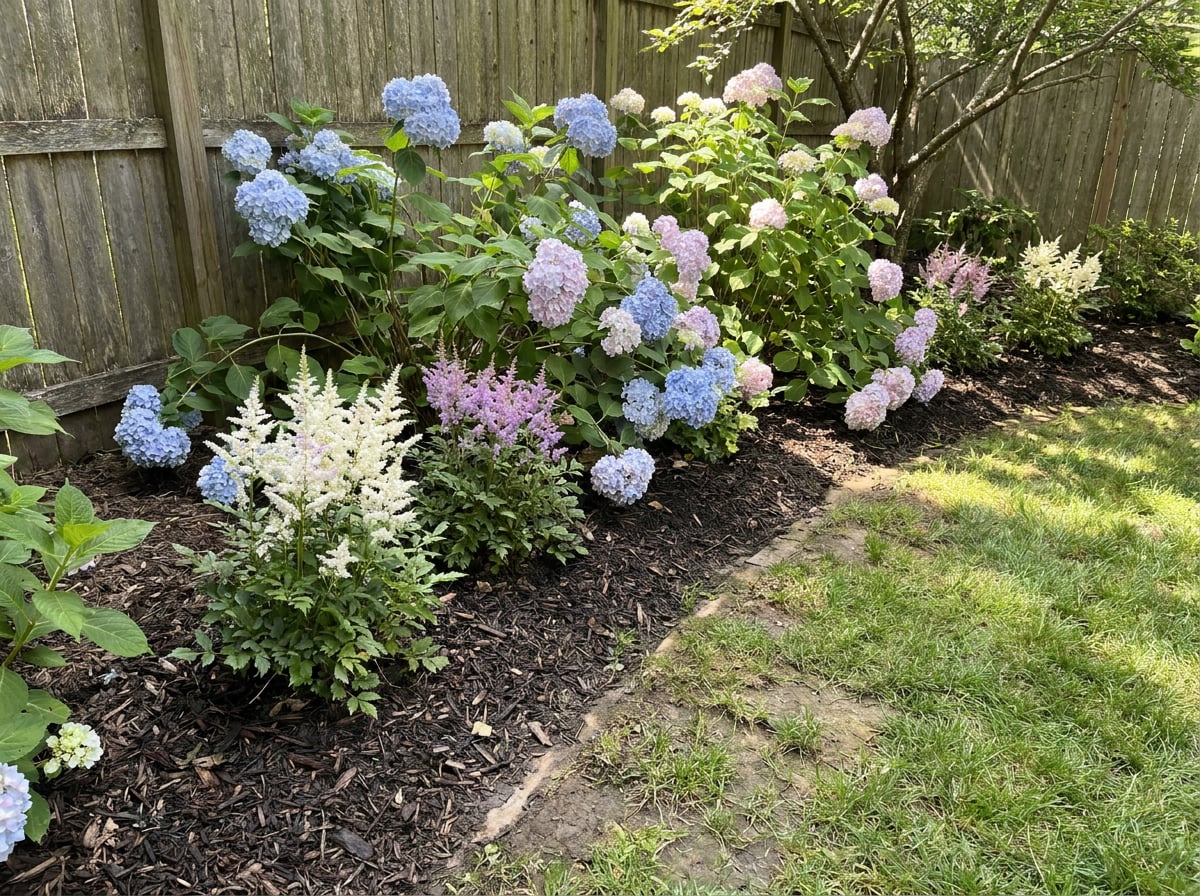
Feathery, colorful astilbe plumes contrast sharply with the hydrangeas’ heavy heads. They look delicate, but they can hold their own in moist soil (as long as you don’t roast them in afternoon sun!).
Plant them 12 to 18 inches forward in small drifts, so they fill the bare middle ground without crowding the woody stems.
Best hydrangea match: bigleaf, oakleaf, mountain, or smooth hydrangeas in part shade with consistently moist soil.
Inkberry (USDA Zones 5 to 9)
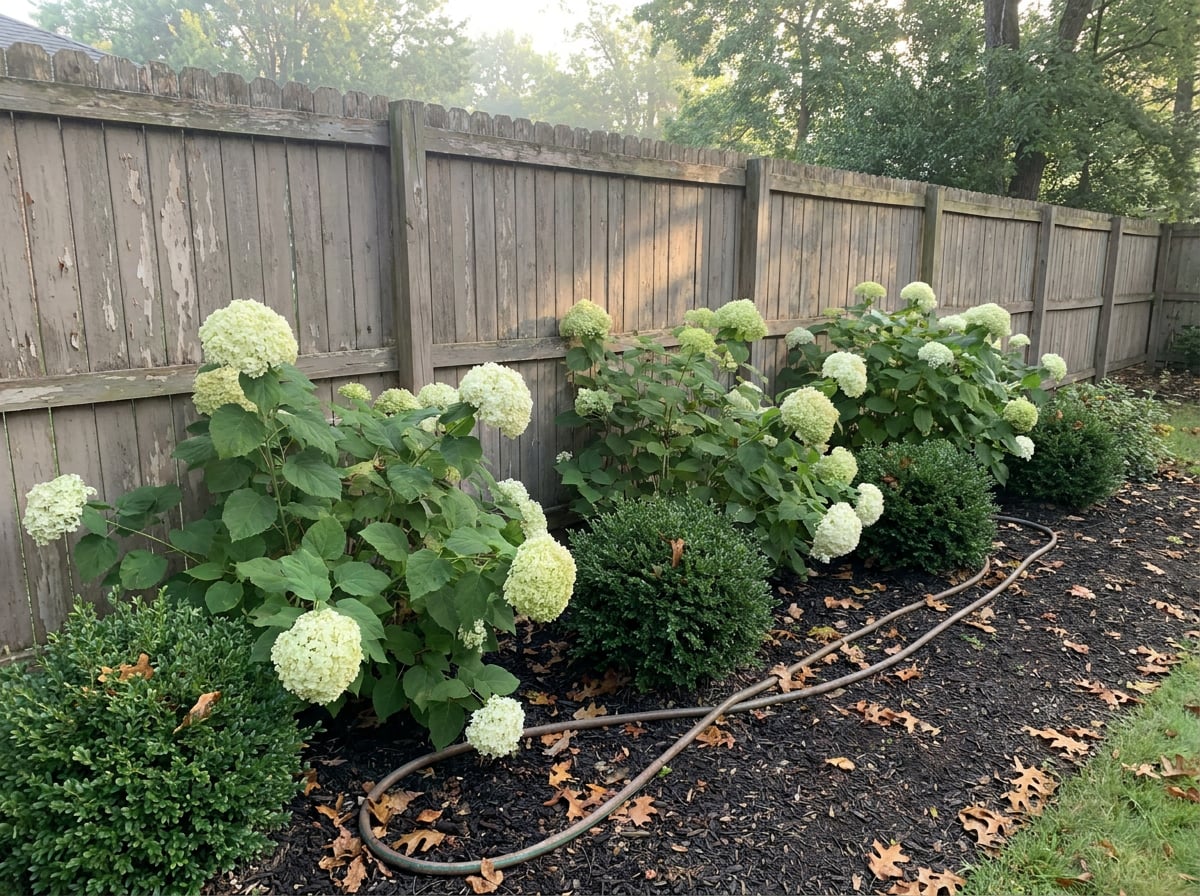
Inkberry along a property line is your insurance policy against a bleak, midwinter view. Unlike boxwood, it’s less known for that sickly yellow-brown winter bronzing, especially if you choose compact cultivars like ‘Shamrock’ or ‘Strongbox’.
Give it about 2 to 3 feet from the hydrangeas so it can stay dense and rounded instead of getting swallowed by summer blooms.
Best hydrangea match: bigleaf, smooth, oakleaf, or panicle hydrangeas in moist, acidic, well-drained soil.
Hydrangeas in a Front Yard Garden Bed
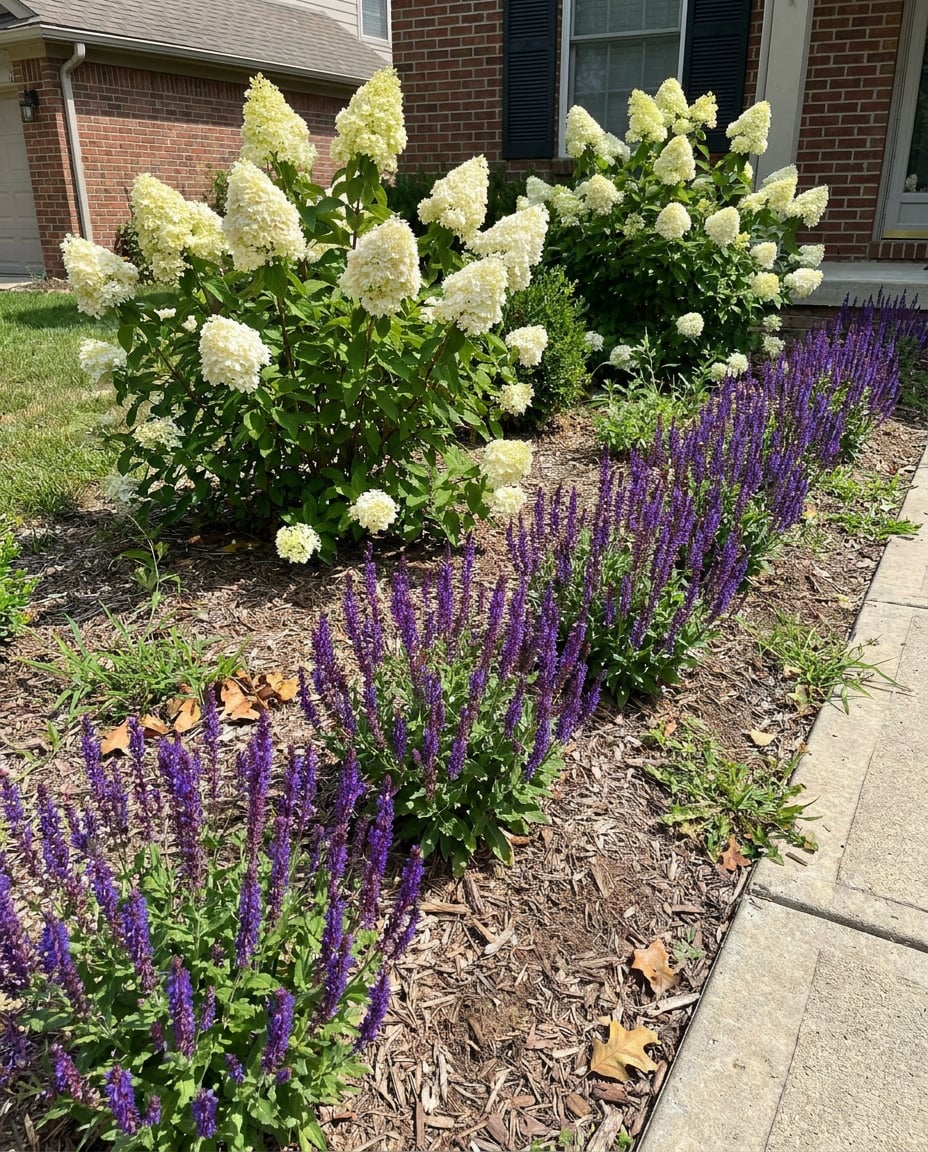
This is a calculated, multi-tiered display bed, not a random hole dug near the foundation. Your success here depends on building layers that actually make sense: taller backdrops, medium fillers, and low edges.
Boxwoods (USDA Zones 5 to 9)
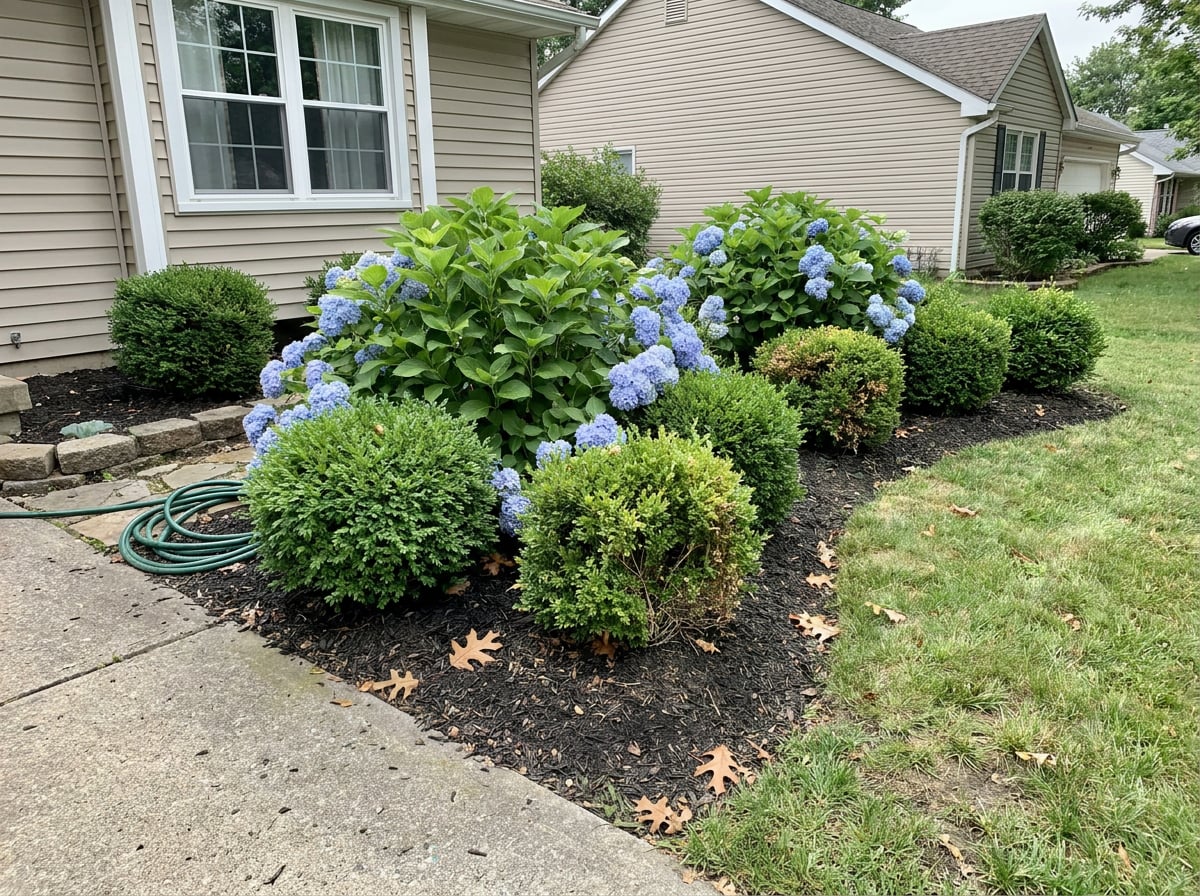
Good ol’ boxwood provides the bones a floppy hydrangea bed desperately needs. Use ‘Green Mountain’ if you need a tall, upright shape for the back layer. Or stick to ‘Winter Gem’ for a low-mounding border that anchors the front edge.
Leave about 2 to 3 feet between shrubs so the bed keeps its structure without turning into a mildew convention.
Best hydrangea match: bigleaf, smooth, oakleaf, or panicle hydrangeas, as long as both plants have enough space and airflow.
Roses (USDA Zones vary by type)
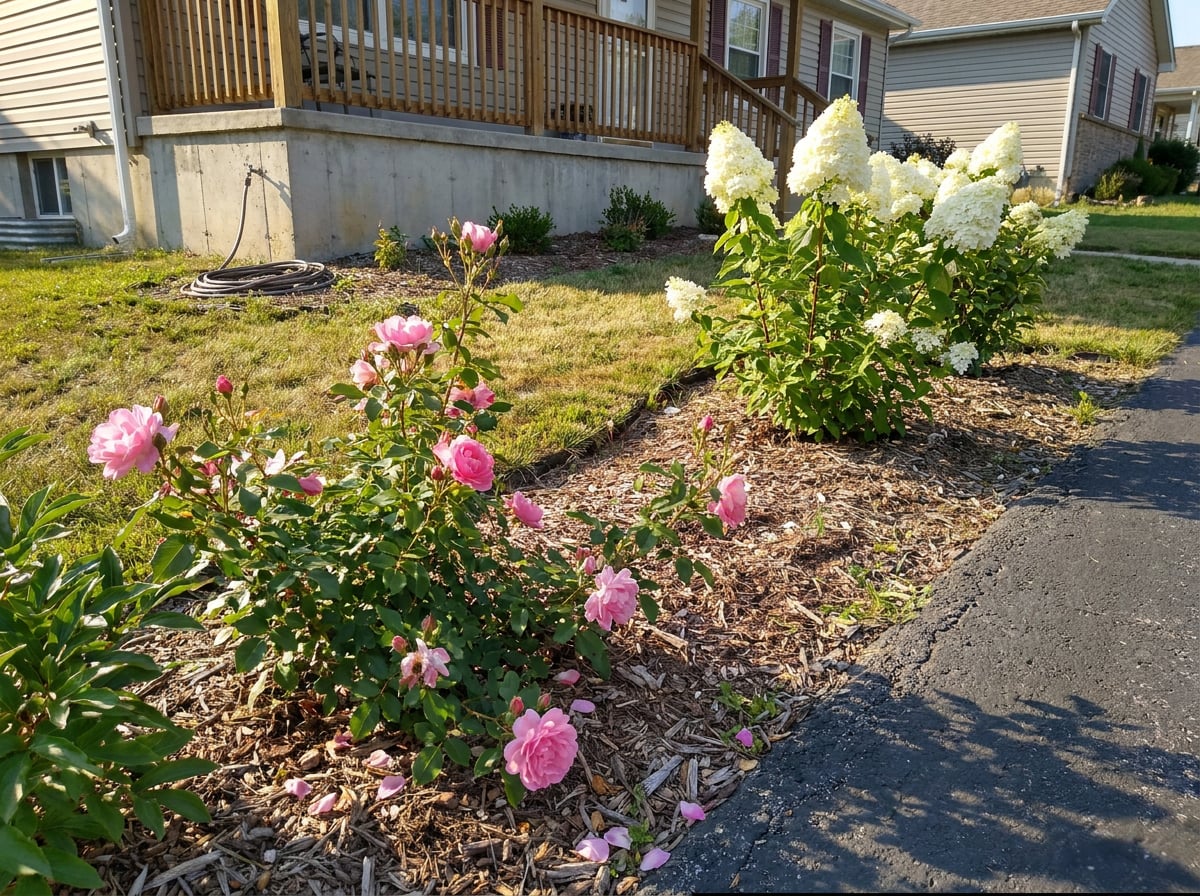
Shrub roses inject non-stop color into the mid-layer while your hydrangeas are still yawning toward bloom season. Use Knock Out, ‘At Last,’ or Flower Carpet roses in the sunny front of the bed, not buried under hydrangea branches like floral hostages. Leave about 2 to 3 feet between them so both plants get sun and airflow.
Best hydrangea match: panicle hydrangeas or other hydrangeas growing in a sunny bed. Roses are not the best choice for deep-shade hydrangea plantings.
And if you want those roses to keep earning their spot, we explain how to deadhead roses for more blooms in a separate guide.
Salvia or Catmint (USDA Zones 3 to 9)
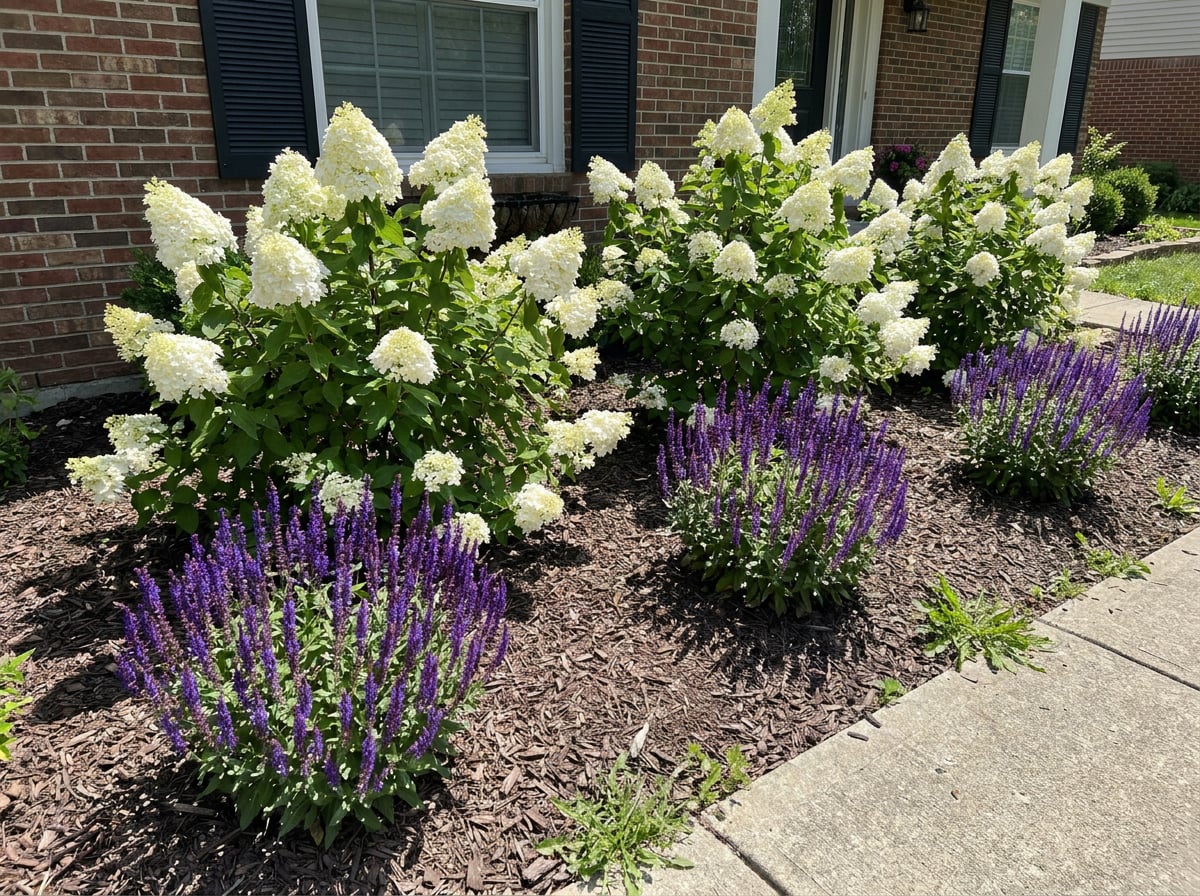
Drop in ‘May Night’ Salvia or ‘Walker’s Low’ Catmint to fill the gaps and unleash a purple spike-fest along the sunny edges. Both draw in bees and create a vivid smoke screen that hides the bare bottoms of your dramatic shrubs.
Keep them 18 to 24 inches out from the hydrangeas so they can bloom hard without getting swallowed.
Best hydrangea match: panicle hydrangeas or sunny front-yard beds where both plants get plenty of light.
Heuchera (USDA Zones 4 to 9)
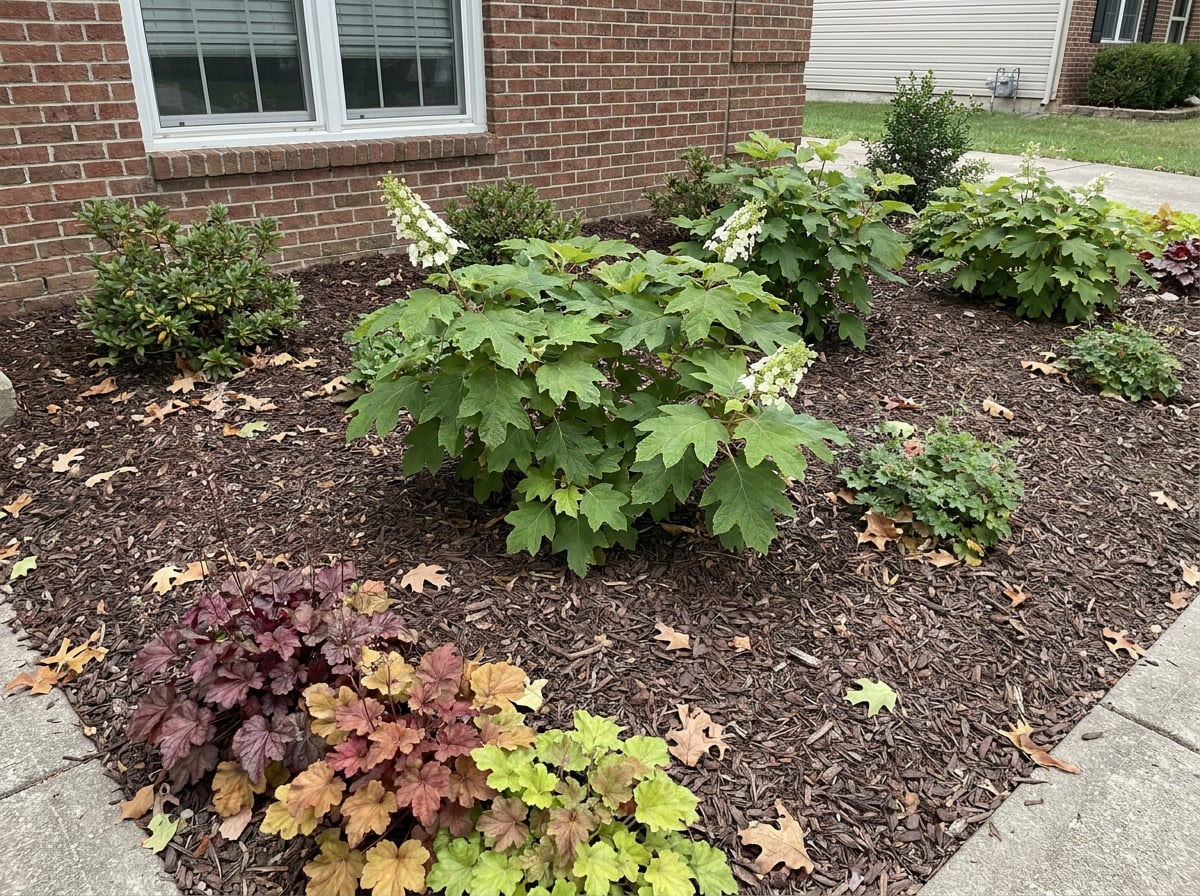
Heuchera wrap up the front edge with a low carpet of colored foliage. Its rich burgundy, caramel or lime leaves provide a crisp, border long after the flowers get cancelled. Tuck it 12 to 18 inches in front of the shrubs so they show off without getting buried.
Best hydrangea match: bigleaf, oakleaf, mountain, or smooth hydrangeas in part shade.
Hydrangeas Near Patios or Seating Areas
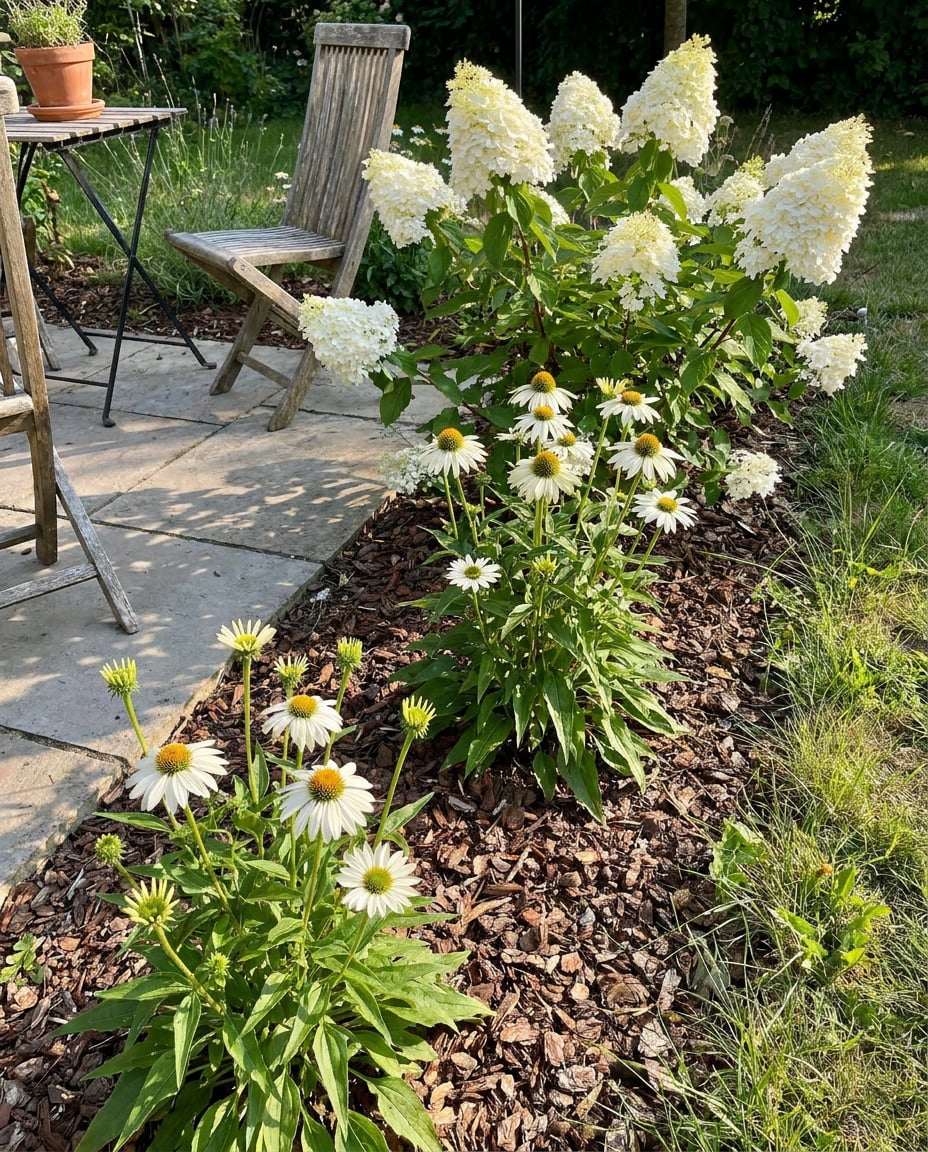
Outdoor living spaces need a softer, relaxing frame, not a shrub wall that makes guests feel like they’re being slowly absorbed by the landscaping. Keep the pairings simple here, and leave enough walking room so the patio still feels like a place to sit, not a plant hostage situation.
Container Evergreens (USDA Zones vary by type)
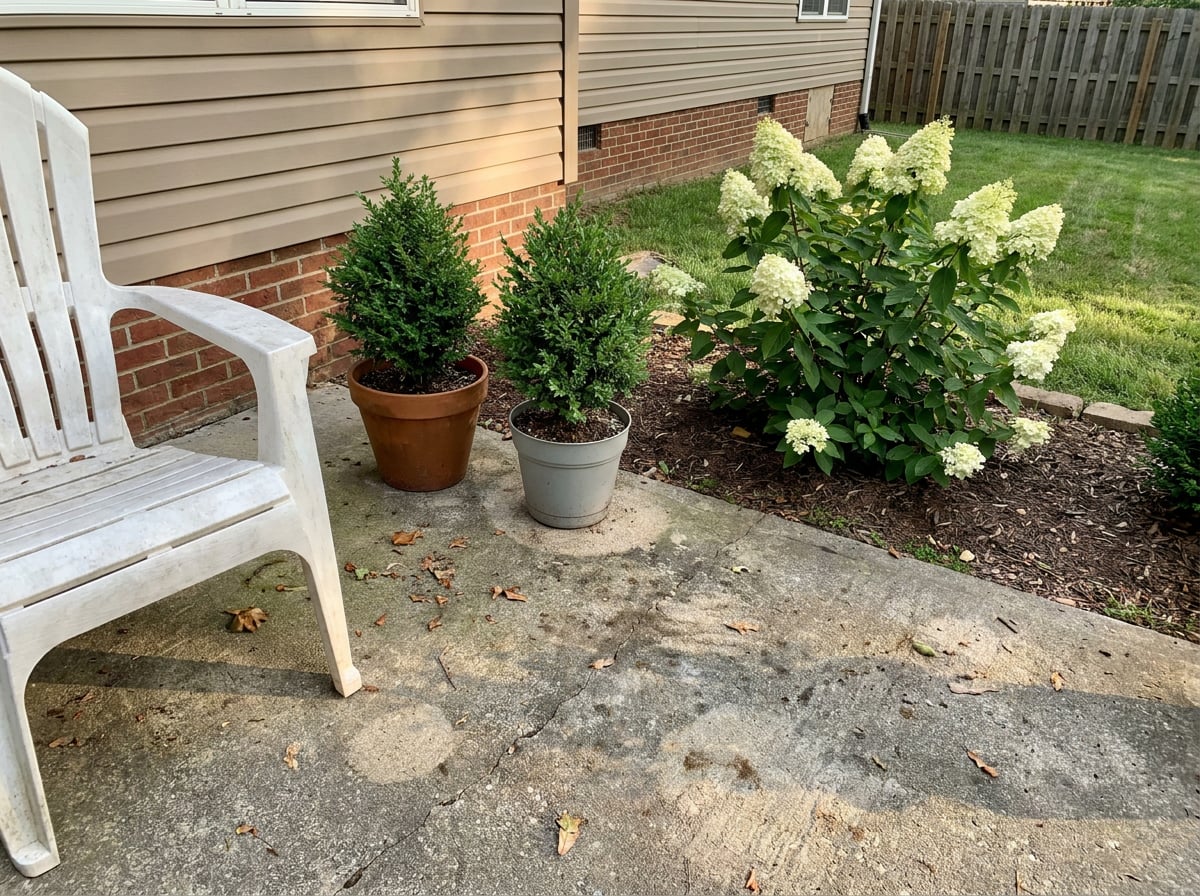
Flanking your seating area with potted conifers creates an instant sense of privacy and structure. A dwarf Alberta spruce or a ‘Blue Arrow’ juniper gives the patio clean lines without turning the whole floor plan into a shrub maze.
Keep the containers a few feet from nearby hydrangeas so everyone has room to breathe, including your guests.
Best hydrangea match: nearby panicle hydrangeas in sunny patios, or bigleaf, oakleaf, mountain, and smooth hydrangeas if the patio gets afternoon shade.
Hostas (USDA Zones 3 to 9)
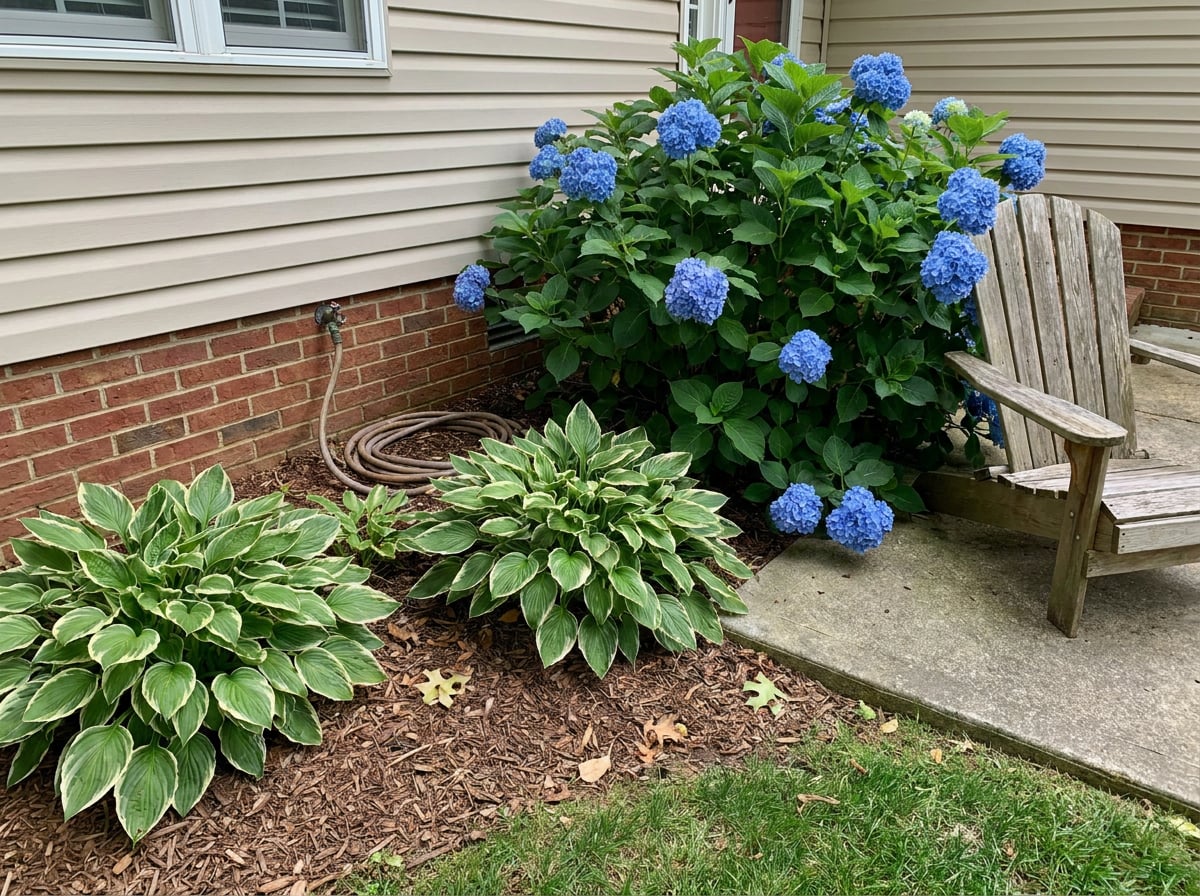
Hostas soften the harsh concrete or stone edges of a shaded patio with their broad leaves. They sit quietly, unlike 100% of toddlers, providing a cool frame that feels calm and orderly right next to your seating.
Plant them 12 to 24 inches out from the shrubs, depending on the hosta size, so those big leaves can spread without crowding the hydrangeas.
Best hydrangea match: bigleaf, oakleaf, mountain, or smooth hydrangeas in part shade or bright shade.
Ferns (USDA Zones vary by type)
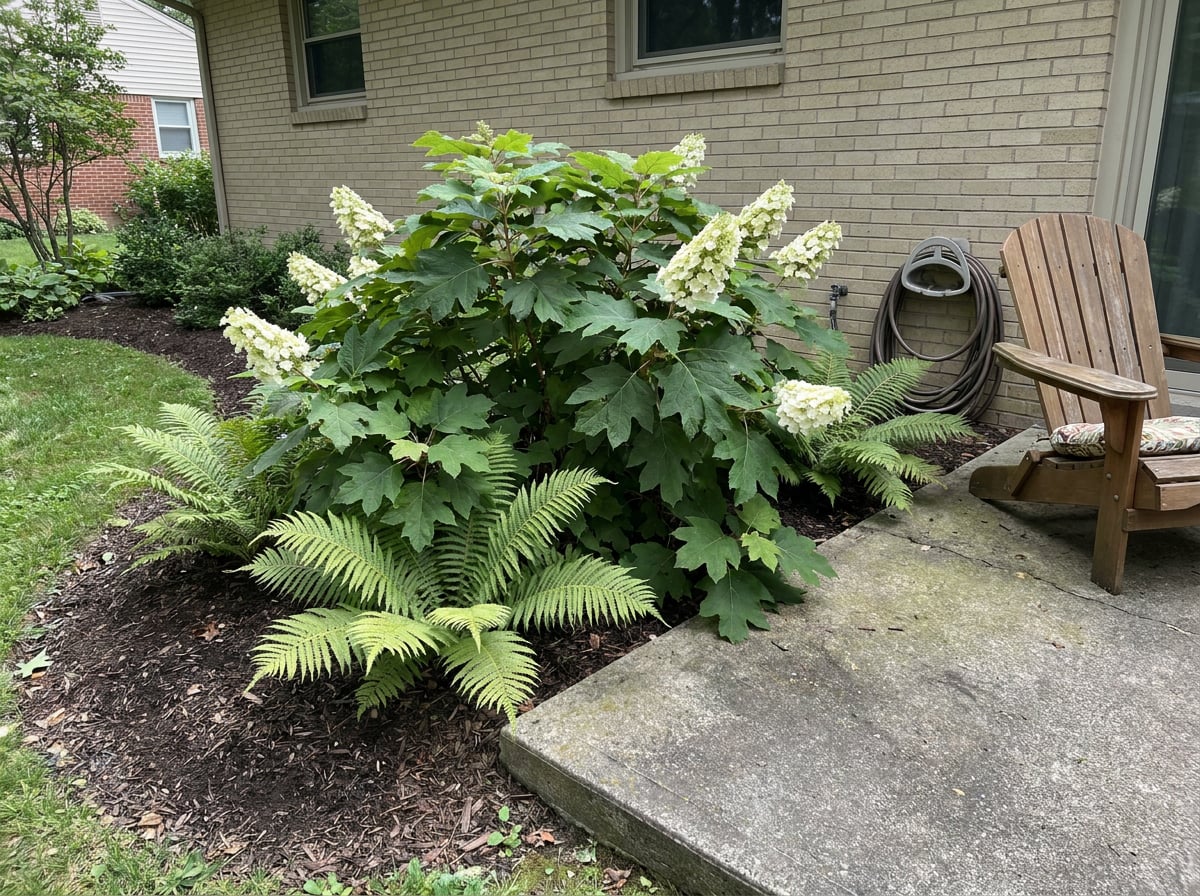
Ostrich fern and autumn fern bring airy texture to a shaded patio bed that needs to calm down. Their delicate fronds contrast with the massive presence of nearby hydrangea blooms, creating a woodland resort vibe you can afford.
Keep them in moist soil and tuck them 18 to 24 inches from the shrubs so the fronds can spread without disappearing under the hydrangeas.
Best hydrangea match: bigleaf, oakleaf, mountain, or smooth hydrangeas in shaded, moist beds.
White Flowering Perennials (USDA Zones vary by type)
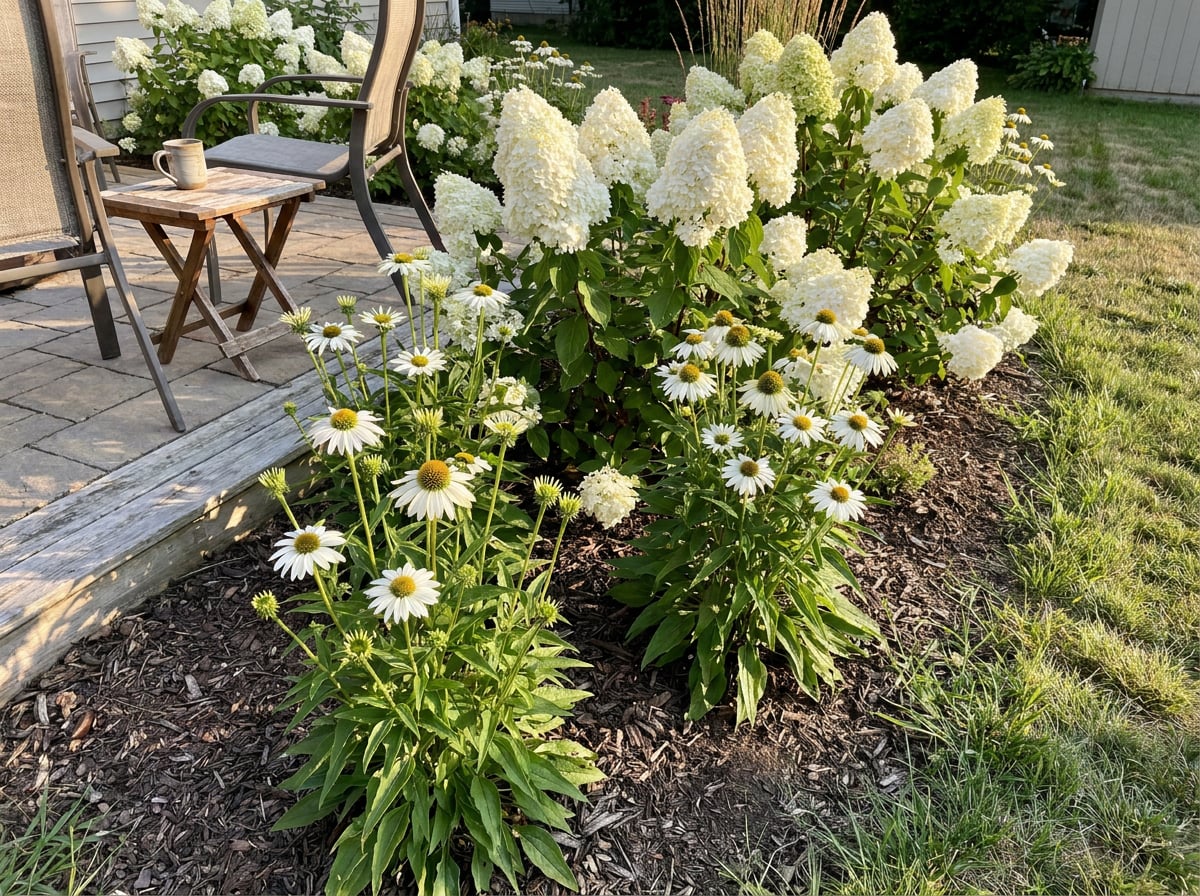
White flowers keep the patio from turning into a color circus, but don’t treat every white bloomer like it wants the same life! Use white echinacea on the sunny side, and save white astilbe for the shaded, moist corners.
Keep them 18 to 24 inches out where the flowers can soften the edge without vanishing under those giant bloom heads.
White echinacea: panicle hydrangeas or sunny hydrangea beds, since echinacea needs more sun.
White astilbe: bigleaf, oakleaf, mountain, or smooth hydrangeas in shaded, moist beds.
If that shady corner needs more than astilbe, we also have a guide on flowers that grow better in shade than full sun.
Ground Control to Major Blooms
This is your proof that beautiful hydrangea gardens don’t happen by accident. What does happen by accident is a wall of floppy, waterlogged mopheads holding your Amazon delivery driver hostage.


